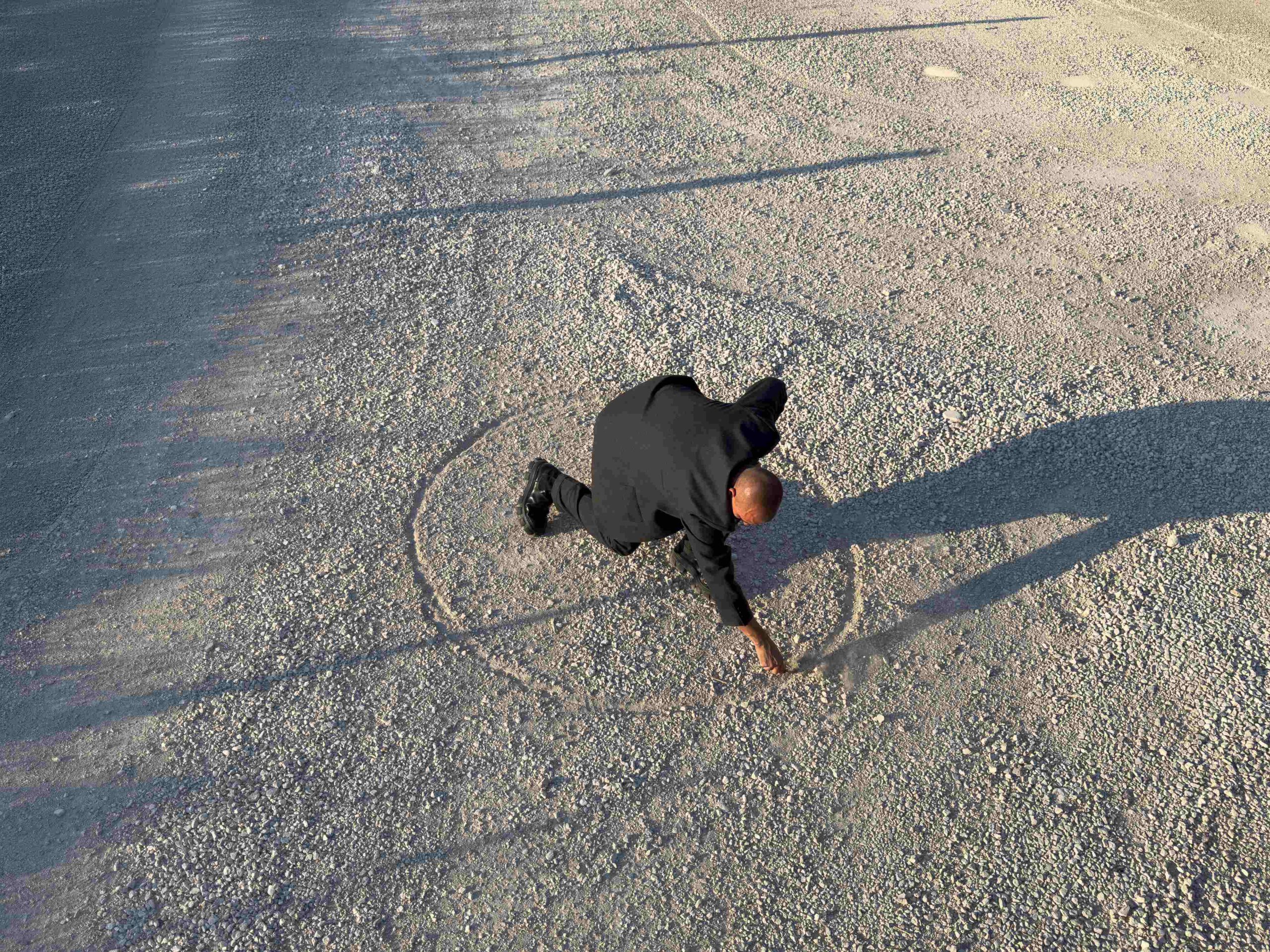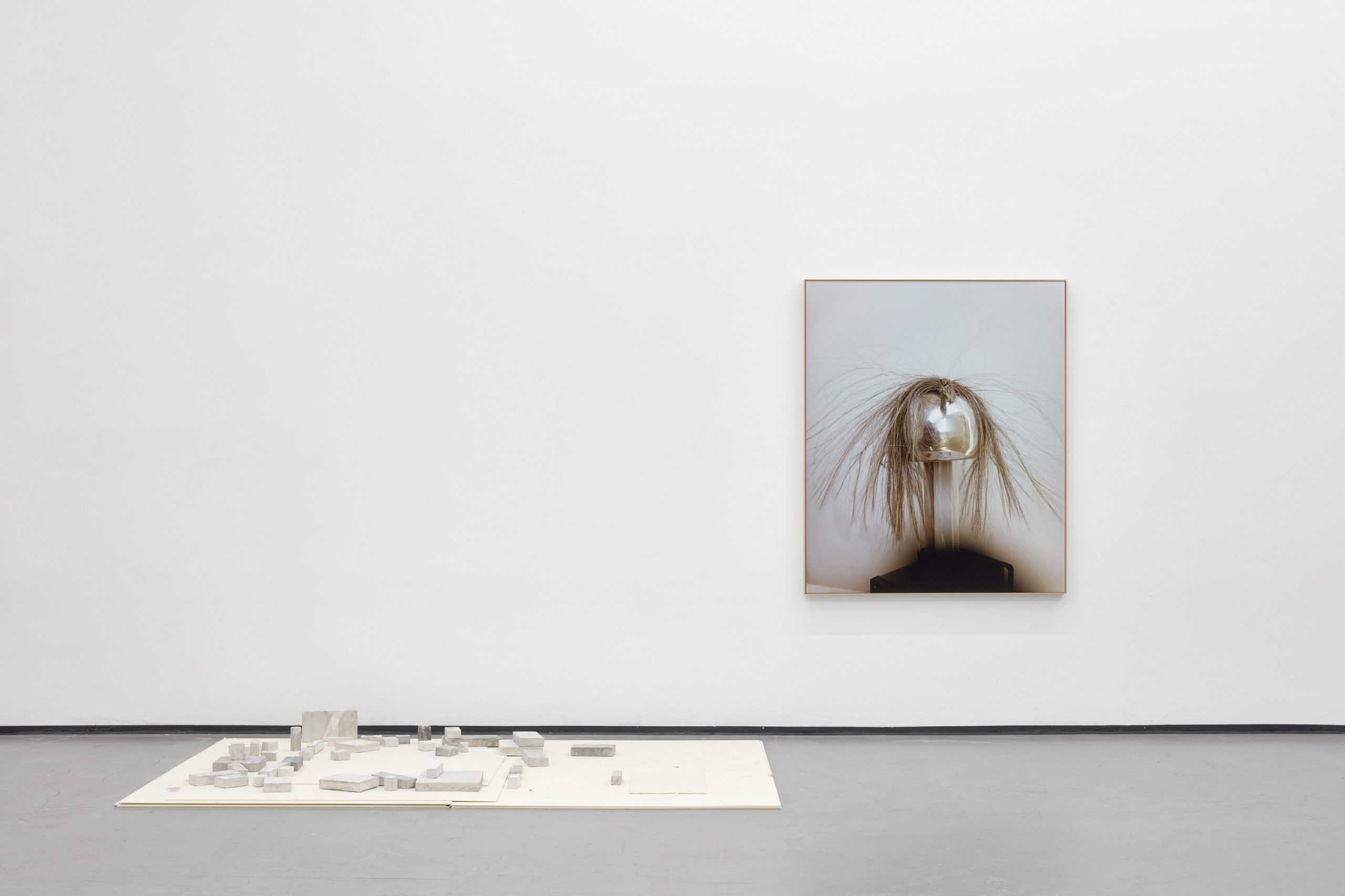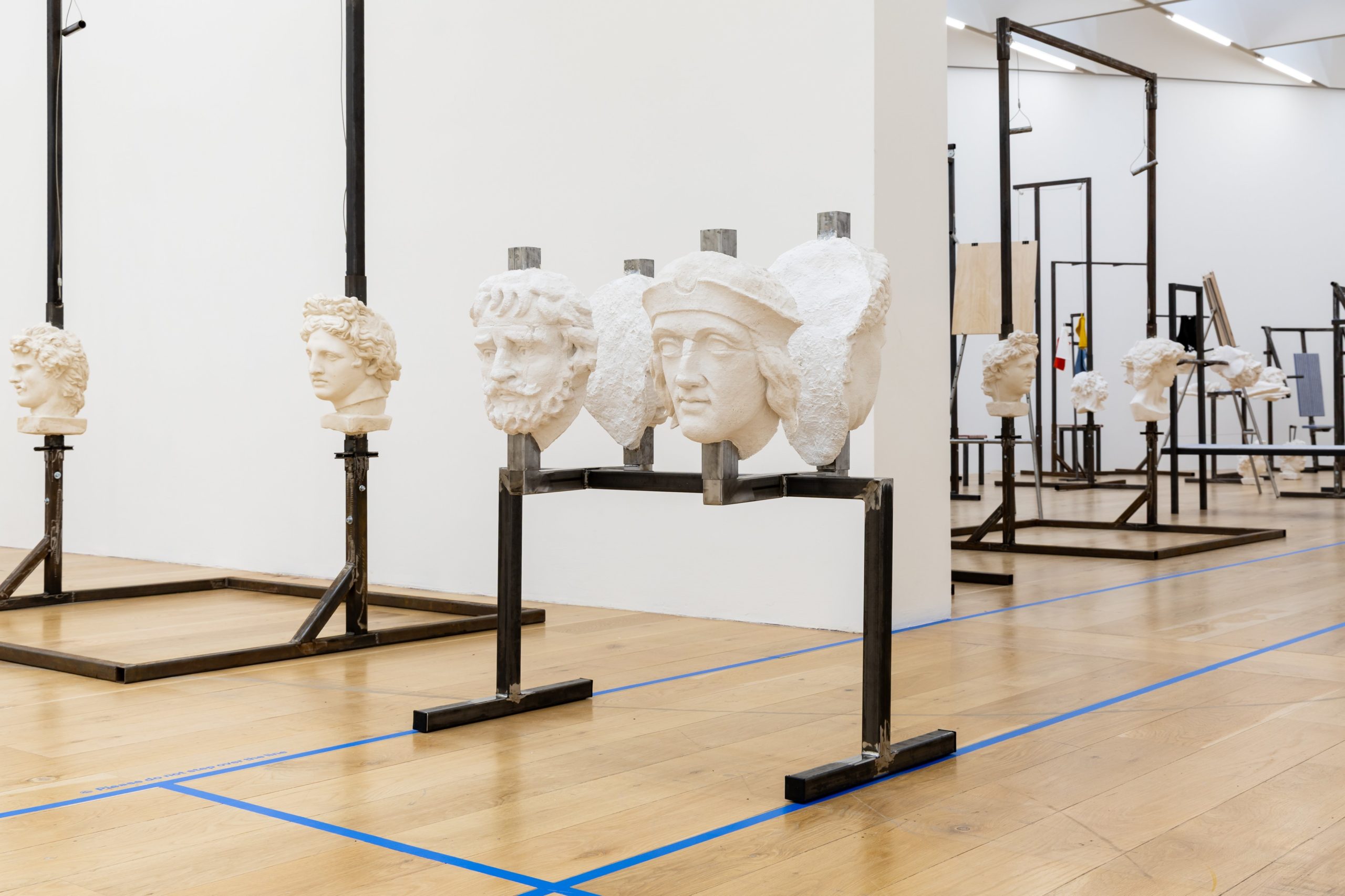
*A line from Anne Carson’s poem “The Glass Essay,”in which the Canadian poet and essayist moves through the psychologically resonant spaces of her family home while grieving a relationship and reflecting on her identity.
“The house, even more than the landscape, is a ‘psychic state,’ and even when reproduced as it appears from the outside, it bespeaks intimacy,” the French philosopher Gaston Bachelard wrote in his seminal book The Poetics of Space (1957).[2] Bachelard’s phenomenological approach shifted the understanding of architecture away from pure physics and geometry to embodiment, perception, and psychological resonance. Despite drawing on Jung’s theory of archetypes, Bachelard believed that it was not psychology but rather poetic images that reached the deepest layers of the human unconscious. His influential theory, centered on the inner “house of dream-memory,” on space as a vehicle for poiesis (from the Greek phrase meaning “to bring into being”), established a dialogical correspondence between concrete forms and subjective experience.
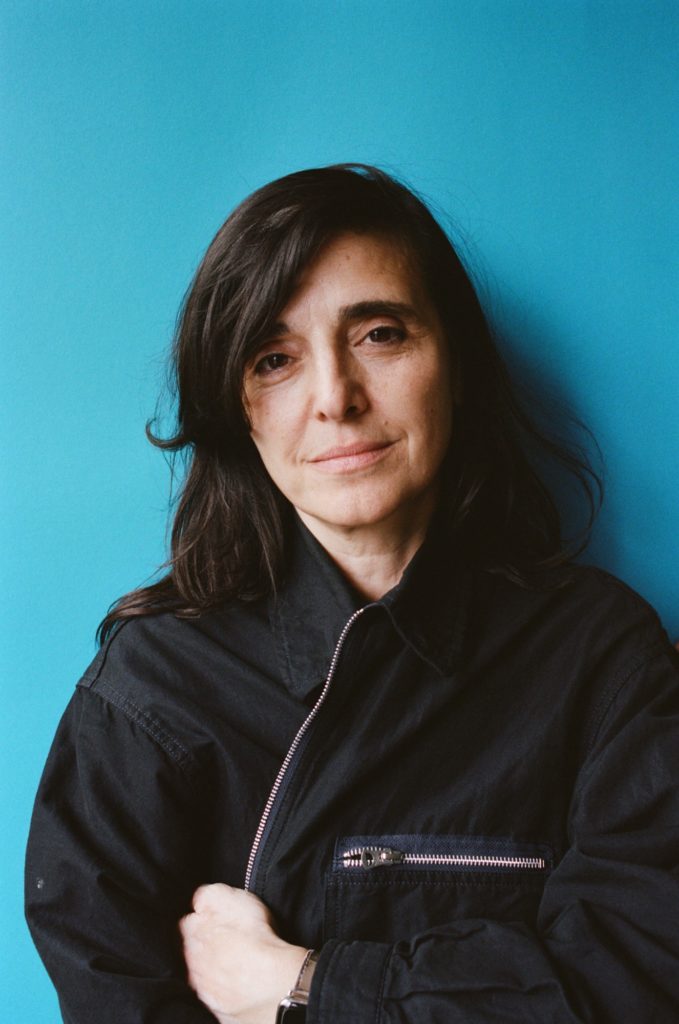
Bachelard’s theory of poetic image, which, as he argued, gave form to the past’s imprint on the human psyche not by literally reproducing it but by making it reverberate anew in the body, finds a meaningful counterpart in the work of Berlin-based, Georgian-born artist Thea Djordjadze. Over more than twenty years of practice, spanning sculpture, painting, and installation, Djordjadze has developed her own sophisticated poetics, which, to paraphrase Bachelard, does not transcribe lived environments into art, but instead creates spatial reverberations between mind and matter, past and present — the latter informed by the artist’s experience of Georgia’s complex history as well as her art-historical readings.
Ranging from configurations of found objects, such as hula hoops repurposed as a stackable sculpture in “Possibility, Nansen,” her 2007 solo show at Studio Voltaire, London, to liminal spaces between studio and exhibition — for instance, in the 2016 solo presentation “To be an upright position on the feet (studio visit),” for which the artist transported her entire studio to Secession in Vienna (“I even brought the nails, I took them out of the walls”) — and to interventions blurring the lines between industrial design and exhibition display, such as her 2024 solo show at Sprüth Magers, London, titled “framing yours making mine,” Djordjadze’s complex, site-specific installations convey a sense of embodied memory unfolding in space.
To appreciate the dialectical complexity of her work, one can turn to the 2008 group exhibition “When Things Cast No Shadow,” presented as part of the 5th Berlin Biennale. In the exhibition, Djordjadze’s installation, “Deaf and Dumb Universe,” at the Neue Nationalgalerie in Berlin, consisted of distinct sculptural clusters staggered throughout the ground-floor atrium, ranging from distressed wooden pieces resembling ordinary chairs and tables to a shelf-like piece with stacked small sculptures. With much of the composition strongly suggesting a house structure — beams, rooms, domestic furniture, and decorative objects — the work conveyed a sense of intimacy, at times recalling the lonesome dreaminess of Alberto Giacometti’s The Palace at 4 a.m. (1932). And yet, in its streamlined design and predominance of white and neutral colors, the installation also echoed the aesthetic prevalent in museum displays. Placed within the museum’s modernist steel-glass building designed by Mies van der Rohe, it felt deliberately contrapuntal, resonating with and yet subtly disturbing the architect’s sparse geometries and transparencies.
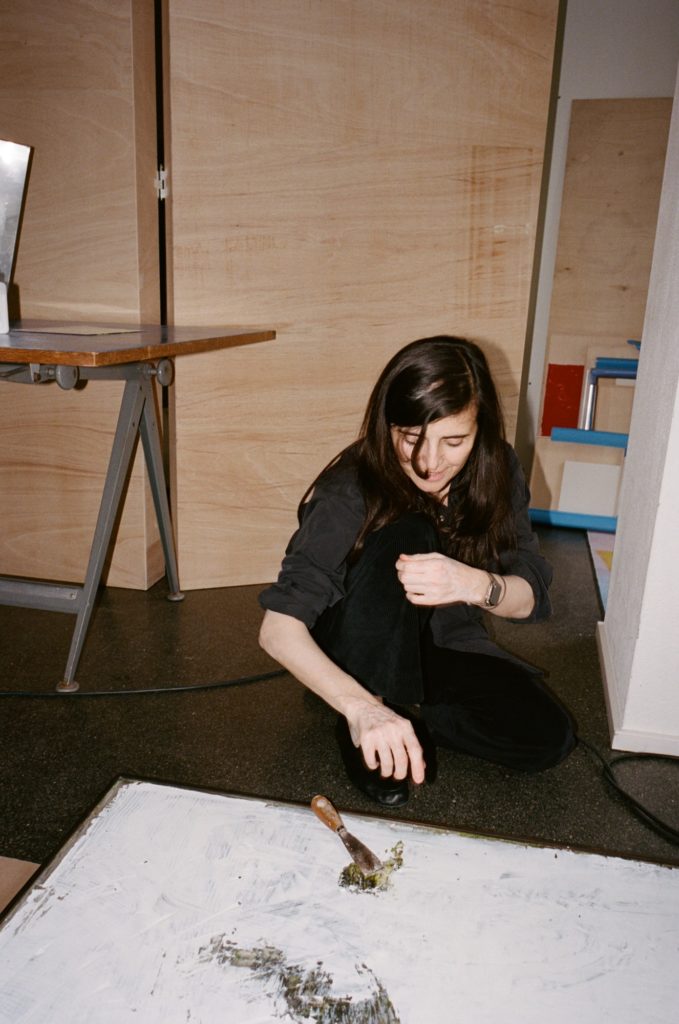
During my visits to Djordjadze’s studio in Berlin, our conversations ranged from the spatialized writings of Georgian Futurist and Dada poets to the tensions and unexpected affinities between poetry and geometry, conceptual art, performance art, and musical composition. Djordjadze, whose father was a pianist, compares her repeated use of the same sculptural pieces in new configurations, each instance dictated by her sense of the exhibition space itself, to the way that a musical fugue introduces a melody and then recursively layers it throughout. “Every time it repeats, it opens up something,” Djordjadze says.
Though never discussed explicitly, the fugue was always present in her childhood, echoing Bachelard’s idea of sensorial referents subconsciously imprinted in memory. Likewise, one senses in Djordjadze’s process the internal logic of returning to, repeating, and reshaping forms, her sculptural language opening up psychic possibilities and ultimately mirroring the human mind’s plasticity.
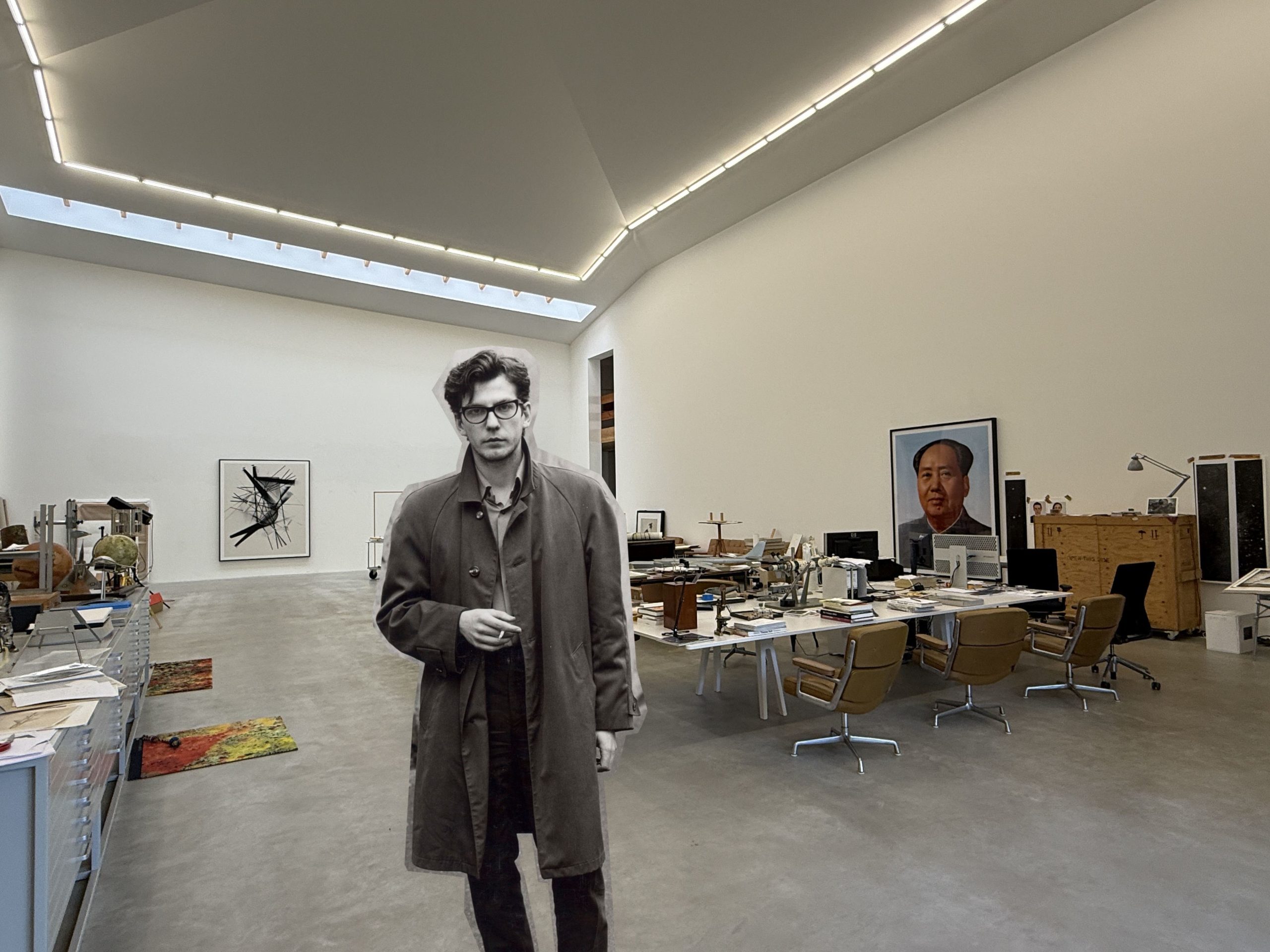
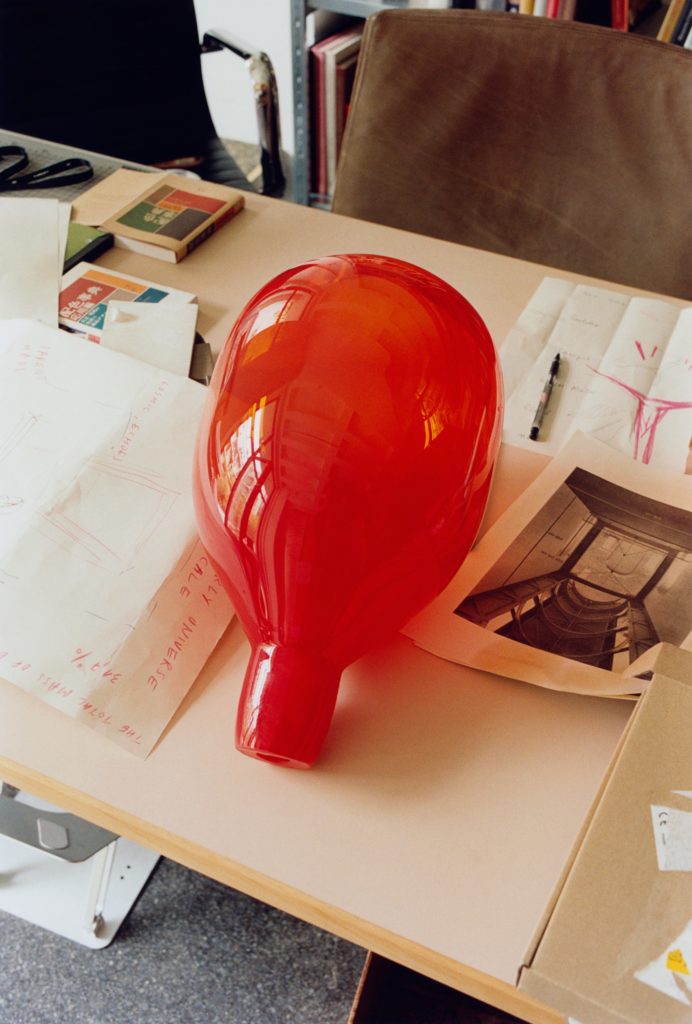
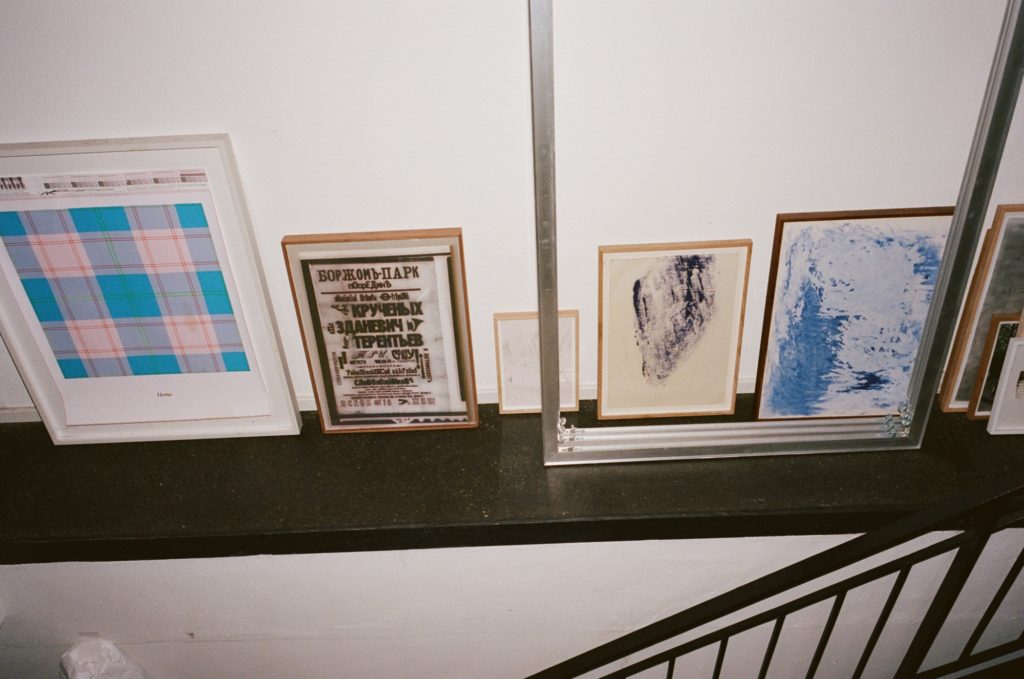
Her studio’s post-industrial loft bears traces of this process, sheltering reference books, preliminary models and sketches (working more and more in metal, she makes most of her pieces these days in industrial workshops), and elements from previous shows: the blue window curtains from her past installations at Malmö Konsthall and at Kölnischer Kunstverein, Cologne, or, upstairs, a modular wooden partition used to create a storage area, similar to the one featured in her 2025 exhibition, “Edi Hila | Thea Djordjadze,” at Hamburger Kunsthalle.[3]
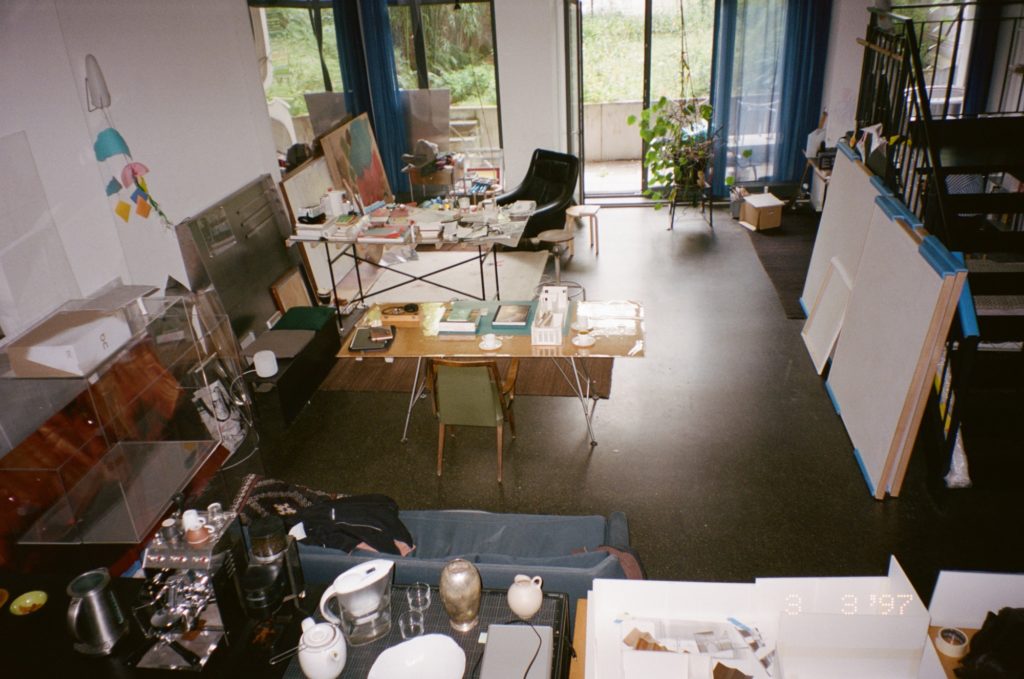
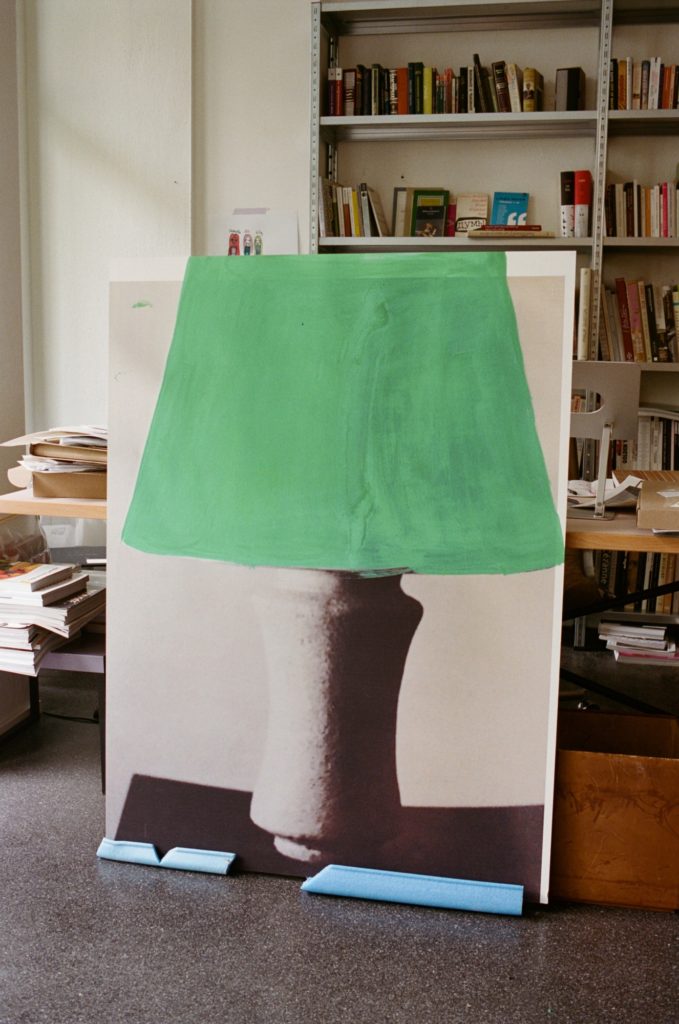
As I look at the latex painting leaning against the studio wall, and the carpet under our feet, covered with paint and dust brought in by visitors, I can’t help but think of her objects and materials as actors awaiting their cues, ready one day to step center stage.
Certain materials, such as vinyl, resonate in surprising ways. She explains, “I ordered it, and when it arrived, its smell transported me someplace from my childhood. It is not only architecture or poetry that creates a movement; a scent can do it as well.” One might say that her materials — steel, latex, Plexi, copper, plywood, plaster, and vinyl, among others — are always reflective (or, to use Bachelard’s term, reverberative); at times literally, at others by bringing out a residual affect or awakening an intuitive curiosity.
In “Edi Hila | Thea Djordjadze” at Hamburger Kunsthalle, Djordjadze’s sculptural pieces, made of metal, vinyl, glass, and Plexi, created a strong sense of reflectivity. The powerful light lent the vinyl a semi-liquid quality, bringing out the way she harnesses solid, industrial forms while remaining attuned to the possibilities of more ephemeral effects. “So many artists just shut out the light — I tend to open up the space to it,” she says. A reproduction from the exhibition, included in the monograph spanning her career from 2007 to 2025 (published by DISTANZ), captures light pouring in through high windows, casting rhythmic shadows across her enclosed space.
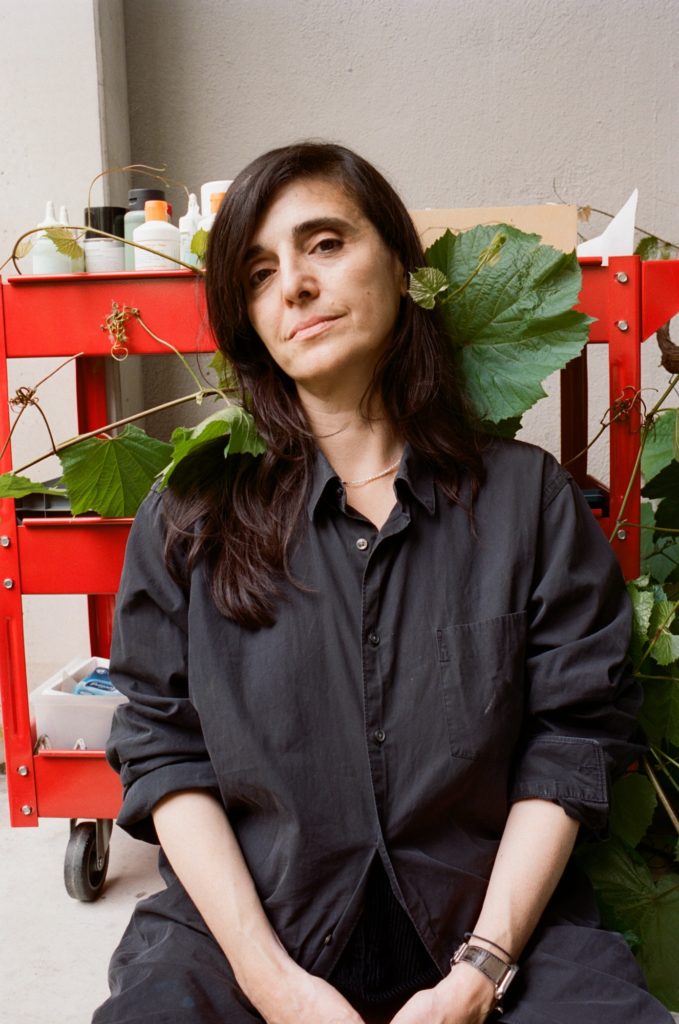
Djordjadze studied realist painting in Tbilisi in the 1990s, and though aware of Constructivist legacies, she at first saw them as an imposed Soviet aesthetic, given Georgia’s history under the communist regime. After immigrating, first to Amsterdam, she briefly experimented with performance using her voice, then turned to sculpting industrial materials at the Kunstakademie Düsseldorf, where she studied under the conceptual artist Rosemarie Trockel. Minimalism’s austere ethos, however, struck her as deeply male-centered, as did the presumption, expressed by some colleagues, that motherhood (she has two children) would end her career.
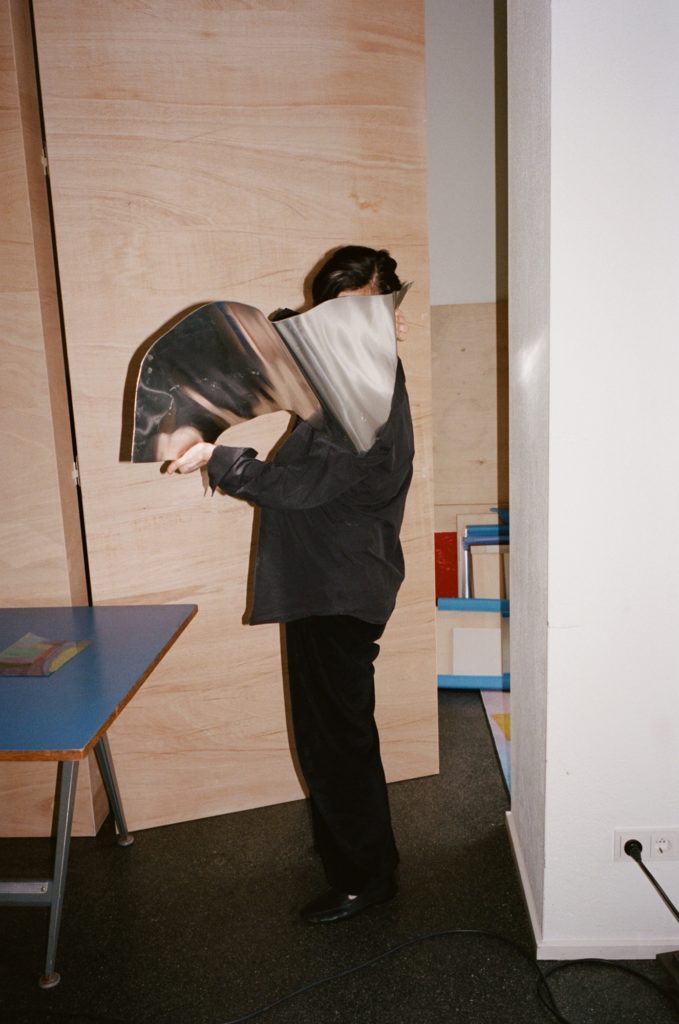
“Why shouldn’t I speak of fragility?” she asks, partly crediting her upbringing in communist Georgia and her witnessing of the breakdown of the Soviet Union with her awareness of life’s inherent fragility. She shows me a sheet of remarkably pliable metal that she sometimes bends to the point of nearly breaking, meeting fragility with resilience.
A similar tension courses through her installations. Though minutely planned and visualized, they paradoxically convey a feeling of chance, suggesting that any system is vulnerable to disequilibrium. This is evident in Djordjadze’s 2024 exhibition “framing yours making mine” at Sprüth Magers in London, for which she repainted the floor, making works float in space; in the whimsical lopsidedness of a table-like sculpture with a pair of shorter legs in her 2013 Kölnischer Kunstverein solo show “november”; and in the diagonal enjambment of a rectangular board, as if propping up the museum wall, in her 2021 exhibition “Thea Djordjadze: all building as making” at Gropius Bau, Berlin.
Or, perhaps most poignantly, in her installation titled As sagas sa at dOCUMENTA (13), Kassel, in 2012. Djordjadze used the space of a greenhouse in the gardener’s compound in Karlsaue Park, where she brought in dirt from outside and covered it with a rectangular glass vitrine.
When water condensed inside the structure, the dirt sprouted green — a perfect example of a system reaching a productive tipping point, revealing its generative potential.
Djordjadze not only constructs, dismantles, and reconstructs systems; she also makes viewers aware of them by highlighting the ways in which organization — curating, building, arranging, displaying, and so on — conditions their perception and interaction with space. For her exhibition at Gropius Bau, for instance, she hung metal sculptures above the habitual eye-level, forcing viewers to look up and notice the building’s remaining Wilhelmian-era molding.
Her attentiveness to museum display and to space itself — including the urban environment — reveals that systems are never neutral; environments are both aesthetic and social constructs. In this context, Djordjadze brings up the two matte-gray metal vitrines currently in her studio, whose shapes, in varying colors and sizes, recur in her installations. “Sometimes I put the sculptures in a vitrine, and sometimes the vitrine itself becomes a sculpture,” she says.
In modernist fashion, Djordjadze plays with the relationship between figure and pedestal, as she did, for instance, in the 2017 exhibition “Jumping out of an age we found uninhabitable” at Triennale Milano, where she presented Fausto Melotti’s box-like relief sculptures, called teatrini, inside her own “little theaters.” Another example is her 2008 solo show “Thea Djordjadze” at Sprüth Magers, Cologne, in which a glass-and-white-cube structure allowed visitors to walk through an enclosed space, its walls displaying prints and small sculptures on shelves, as if they had entered a miniature gallery or museum. Inspired by Surrealist flânerie, the installation induced movement, turning a kinetic body into a site of lucid daydreams.
Similarly, the vitrines situate memory, imprinted in the body, within the exhibition space. Their form dates back to the late 1950s, when the Georgian anthropologist Alexander Javakhishvili and the painter Avtandil (Avto) Varazi built handmade wooden vitrines to display archaeological artifacts at Tbilisi’s Dimitri Shevardnadze National Gallery.
“I often reproduced in my mind and imitated the shapes of [Javakhishvili] and Varazi’s vitrines, but I assumed they were a mere fantasy. In a way, it was like staging a fantasy exhibition: a lucid dream,” Djordjadze says, her words resonating with Bachelard’s idea of daydreams taking shape in concrete forms.
It was only years later, during a trip to Tbilisi, that a local curator heard Djordjadze’s story and located the vitrines: “It turned out that they did truly exist, and that I had seen them in my childhood. They were the material imprint on my memory.”
Other imprints are those of urban spaces. At Hamburger Kunsthalle, for instance, Djordjadze’s installation generated a syncopated movement revolving around forms that alternatively blocked, opened, diverted, and invited passage. The two large movable metal walls she created for the exhibition presented a clear spatial obstacle, yet a cut in the lower part of one of the walls also offered an opening. Similarly, inside a metal frame, a wire mesh alternated with empty voids, embodying an idea of both entrapment and escape.
Djordjadze links the installation to street protests in Tbilisi against Georgia’s authoritarian government — not as a direct echo, but rather as a way of exploring the politics of space and how it can be reorganized and reactivated by a social body. “Imprints of social actions on urban architecture interest me — even if I think of them in a more intuitive way,” she explains.
In Tbilisi, such social actions included using street underpasses to stage concerts, thus reclaiming public space for collective use at a time when culture has otherwise become expensive and therefore exclusive. In this sense, Djordjadze’s deconstructed and open-ended city “home” — with its impressions of windows, walls, and doors, of divisions, enclosures, and passages — makes her industrial materials resonate with the subconscious potential of past actions. Meanwhile, the provisionality of her constructions can also be read as a poetic embodiment of modernity’s unfinished projects.
In the artist’s words, “It has always been my dream to build a house that is open to everyone — a utopian idea of a ‘continuous space,’ where there is the possibility of people always being socially together. It might be another lucid dream, but in my work, it becomes a formal principle with one exhibition flowing into another — even if the cycle isn’t yet fully clear, or complete.”
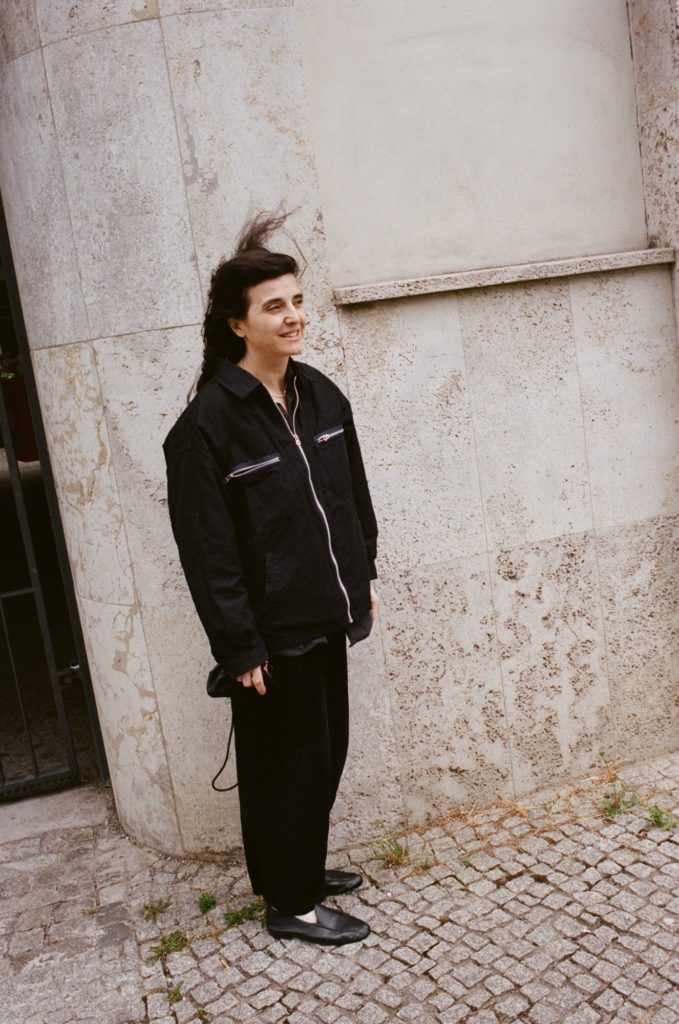
Artist: Thea Djordjadze
Creative Direction: Alessio Avventuroso
Photographer: Osma Harvilahti
Photographer assistant: Phuong Anh Nguyen Le
Retouch: Grading Bureau
Production: Flash Art Studios
Location: Artist’s studio, Berlin
[2] Gaston Bachelard, The Poetics of Space (Beacon Press, 1969), 72.
[3] The exhibition co-presented the paintings of Edi Hila, an influential Balkan artist bearing witness to historical and social changes in Soviet and post-Soviet Albania.