The history of cinema is, as Mary Ann Doane meticulously outlines in her book The Emergence of Cinematic Time[1] (2002), also the history of modernization and a map of our changing conceptualization of time. Technological developments in cinema have kept pace with industrialization and capitalist acceleration, shaping our experience of duration in the process. While early cinema appeared to democratize the archive, allowing us to directly capture events as they unfolded in the present rather than relying on documents and testimony, we are now faced with an overwhelming glut of real and artificially generated images that complicate our understanding of history and memory and in some cases, render both in a state of total free fall. It is a crisis of where to look and what to look at. It is against this backdrop that we encounter the hypnotic and visually intense films of Yalda Afsah.
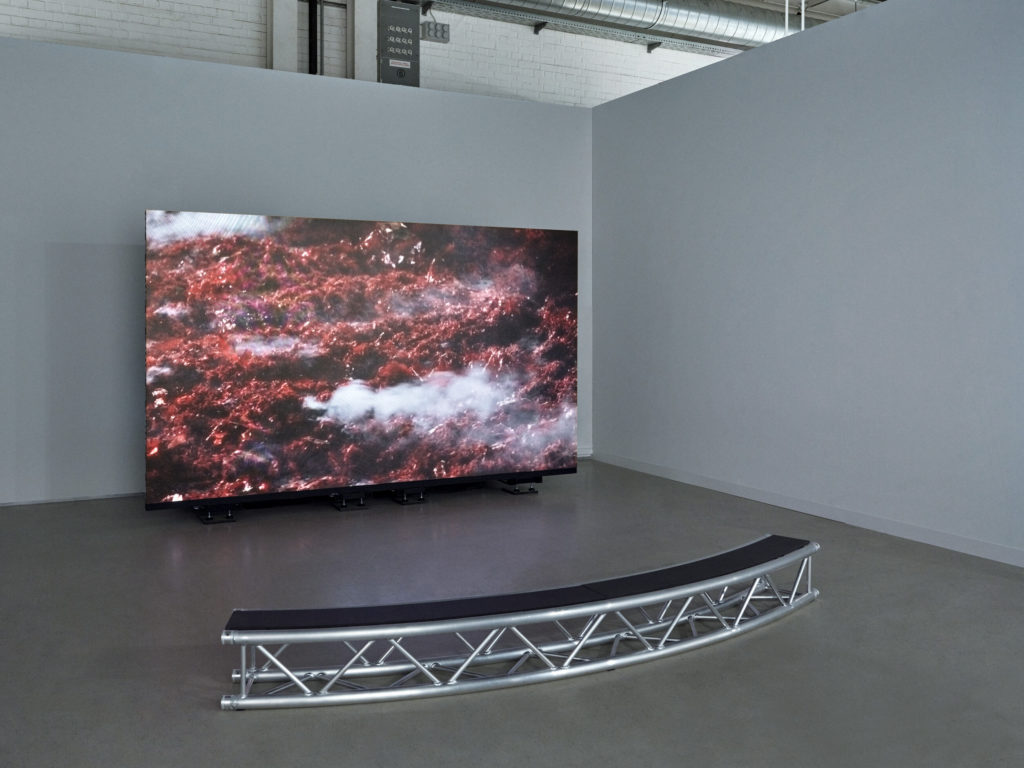
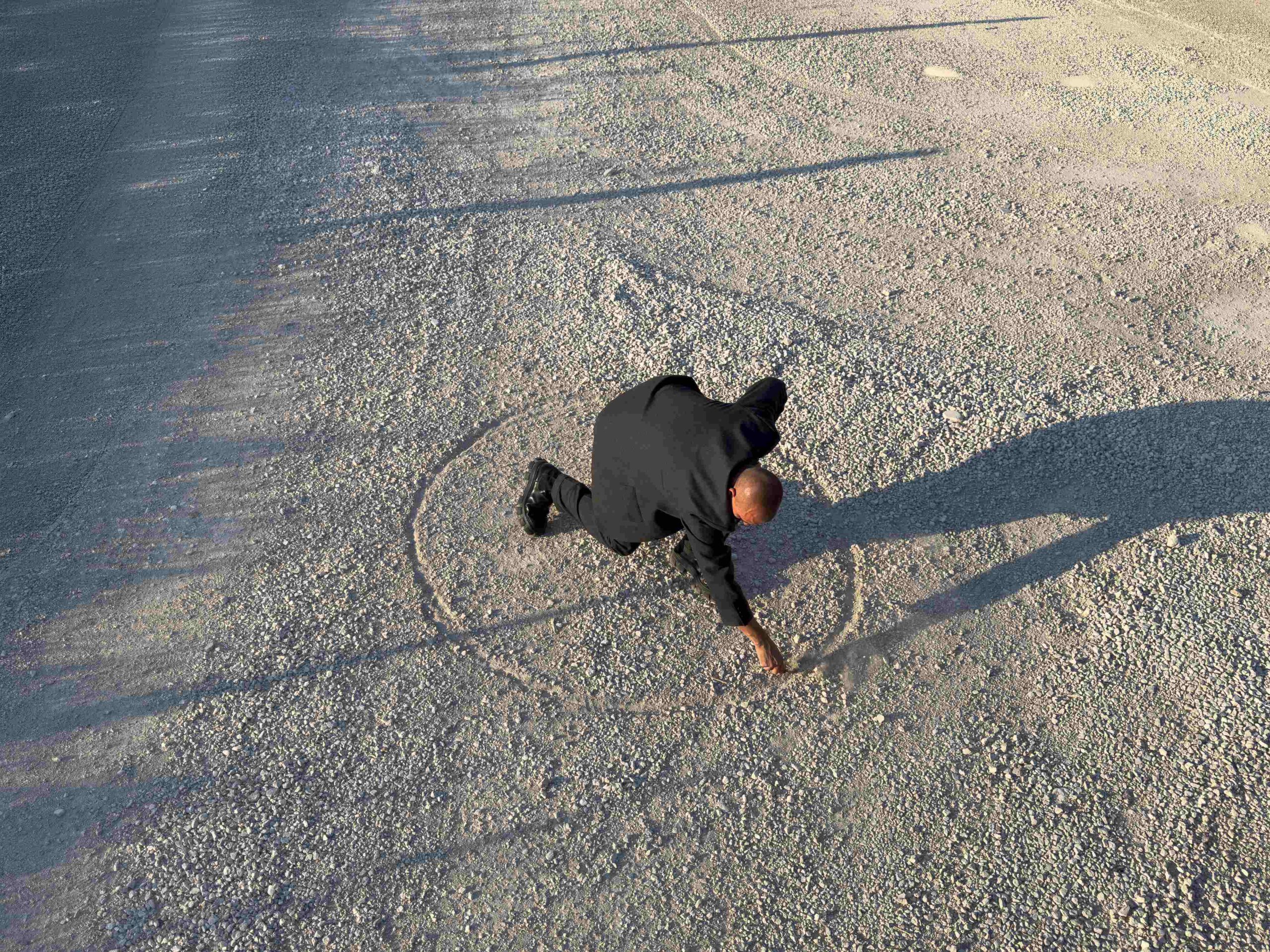
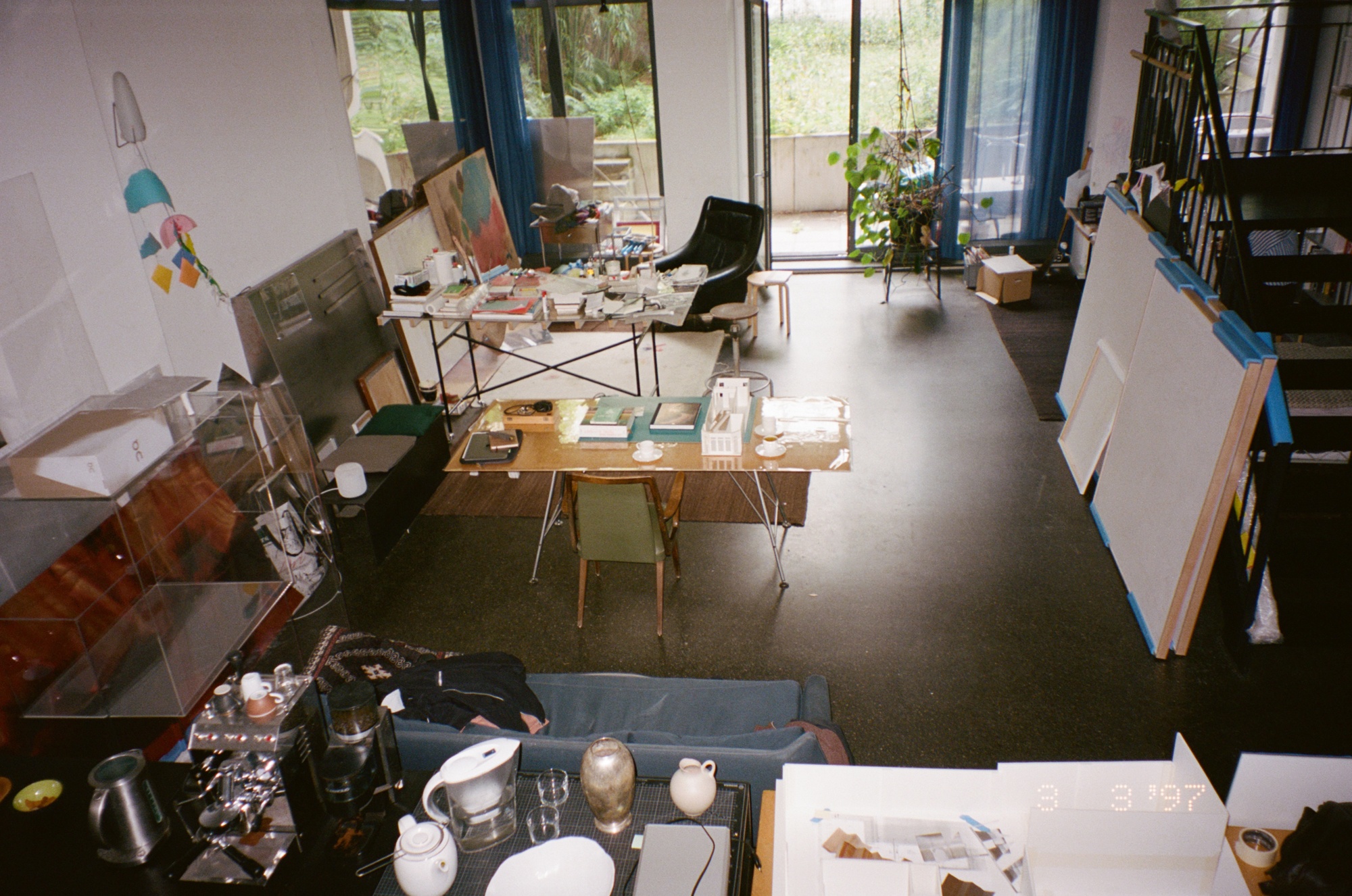
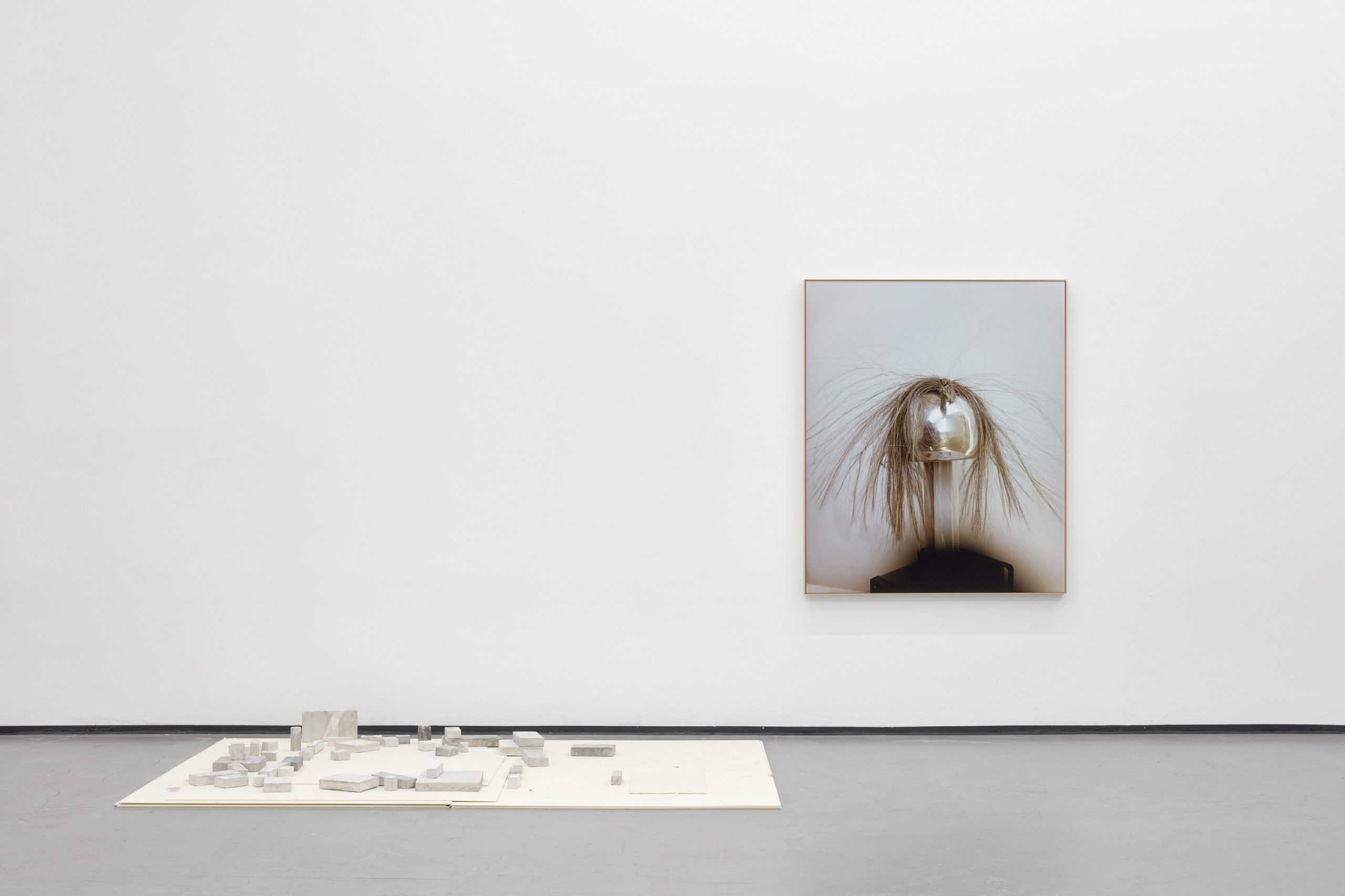
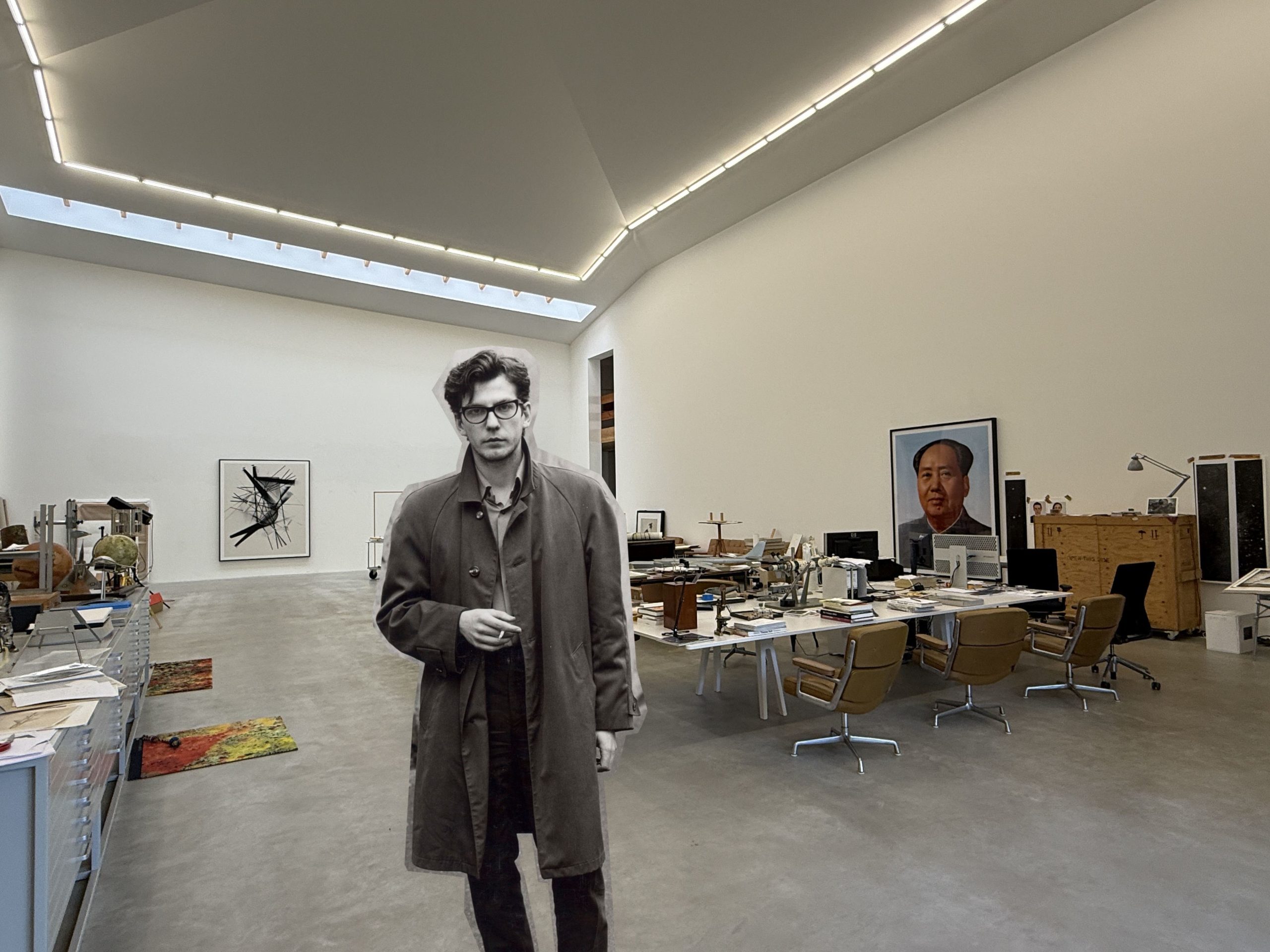
Photography by Choreo. Courtesy of the artist and Galerie Molitor, Berlin.
To keep time with modernity, is also to become entangled in the machinations of power. To its enduring advantage, power has always been skilled at evading representation and often even detection. The question of its presence, and more crucially for Afsah, its mechanics, returns again and again in her practice. Previous films have explored tradition, ritual, masculinity, community, and human/nonhuman relationships. In an early three-part film series (Kabatas, 2012; Fillmore, 2013; and Atlanten, 2013), Afsah took three tarp-covered buildings under construction in Istanbul, San Francisco, and Berlin as her subjects. In these films we see the foundations of Afsah’s filmmaking: deliberate but elusive narratives; precise framing that anchors the viewer within the image while simultaneously prompting questions about what is out of shot; the slippage between fact and fiction; and the disjointed but seductive use of sound. As I watch, I wonder if the subjects are public buildings, perhaps with civic functions or sites where knowledge is produced. One even looks as though it could be a museum. Through Afsah’s camera though, we are only shown their endless, impenetrable walls, and the wind, which occasionally lifts the tarp in brief flutters, offering a glimpse of what is going on behind. Like many of Afsah’s films, each work plays with our sense of public and private space, the monumental and the intimate, the real and the fictionalized.
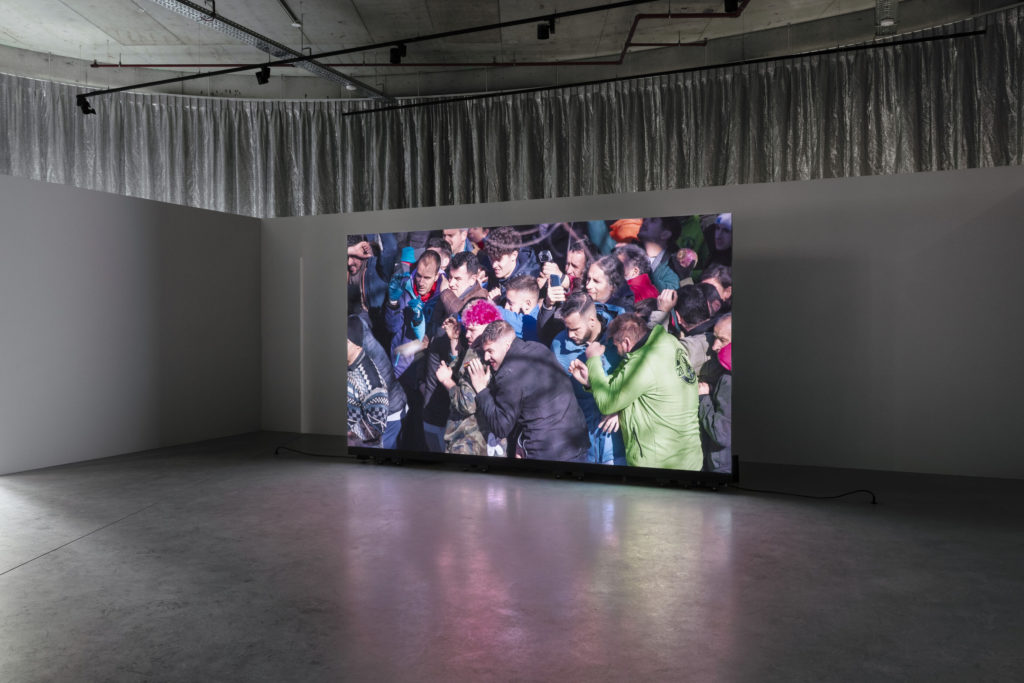
Afsah cites the films of Sharon Lockhart, James Benning, and Betzy Bromberg, the latter two of whom she studied with at CalArts, as key influences. The influence of Benning’s interest in repetition and slow duration, with films like 13 Lakes (2004) and Ten Skies (2004) is clear in Afsah’s own concerns, as well as Bromberg’s approach to sound and abstraction, evident in films such as Voluptuous Sleep (2011). Afsah describes her filmmaking process as being as much about sound as it is about images and she has a long-standing, close collaboration with sound designer Steffen Martin. Lockhart’s film Goshogaoka (1998) is another particular influence. The film is a lauded and artful study of the tightrope walk between the staged and the real. Afsah’s work is also interested in this boundary. She uses footage from real events, manipulating it to construct a new narrative through the editing process. For example, Vidourle (2019), which documents a group of seemingly adrenalin-fuelled young men who appear in moments full of anticipation and at others slightly forlorn. We’re never shown the full context of what they are up to; a game? a fight? Or some kind of ritual? In this way Afsah’s work sits in conversation with documentary practice, but remains distinct from it being less interested in “truth” and more in the fiction of its construction.
The artist’s latest series takes the five elements – the foundation of all things – as its starting point. So far, Afsah has realized three of the series: fire (HEAT, 2026), earth (Jarramplas, 2024), and the cosmos (PAN, 2026) with air and water still to be realized. Each film takes a religious ritual or folk tradition, involving one of the elements as its focus. PAN (2026), its title perhaps a nod to one of Afsah’s favored filmic techniques, the pan shot, documents the practice of Paneurhythmy. The film begins in total darkness. Tiny figures with headlamps trace their way across the black screen, their path unclear beyond the small circle of light illuminated directly in front of them. The wandering figures are climbing Bulgaria’s Rila Mountains in preparation for the Divine New Year, a ritual of the Universal White Brotherhood. Widely considered a cult, the Universal White Brotherhood was created by Bulgarian spiritual teacher Peter Deunov in 1897 and banned in communist Bulgaria in 1944 before regaining popularity following the fall of communism in 1989. The ritual takes place annually, at dawn in mid-August when the earth’s natural, cosmic energies are believed to be at their peak. More than two thousand people barefoot and dressed in white, ascend the mountain to cycle through a series of movements in unison that are thought to promote a cultivated unity between humans and the cosmos.
As with all of the films in the series, PAN was shot over the course of a single day (the duration of the ritual) using just one camera. This requires Afsah to embark on a kind of choreography of her own, an improvised performance of movement and reaction dictated only by events. This sharp and short temporality contrasts with the pace of the editing process, which can take around six months, as well as the films themselves, which frequently involve the slowing down of footage.
Afsah’s filmmaking, with Martin’s sound design, brings a mesmerizing, retrofuturist, otherworldliness to the opening scene. It appears as a fascinating anachronism, where history and a forgotten future coalesce. As the sun rises at the beginning of the film and the surface of a lush, rocky landscape becomes visible, Martin’s score pulls us into an atmosphere that oscillates between a gentle hum and strange, vocalized crescendo. The illusion of this other world is only broken when one of the figures stops to snap a photo on their iPhone. The present rushes back in.
It’s this present that Afsah insists we sit with, as throughout the film, she carefully documents the Uniqlo-esque jackets and plastic raincoats of the participants alongside the historic routine they diligently work through together. This choreography of shared belief, collective experience, and ambivalent social control registers on the faces of Afsah’s various subjects as peace, boredom, discomfort, and elation, raising questions about their motivations, desires, and personal and shared histories. Like a film played again and again, each ritual rebirths the past each time it is performed. I first watched the film in Venice as part of Afsah’s solo exhibition Still in the Dark at Ca’Buccari earlier this year. The audience, packed into a white painted room, crammed full for the opening, seemed to mirror the same craving for community, acceptance, and perhaps even transcendence, that appeared on screen.
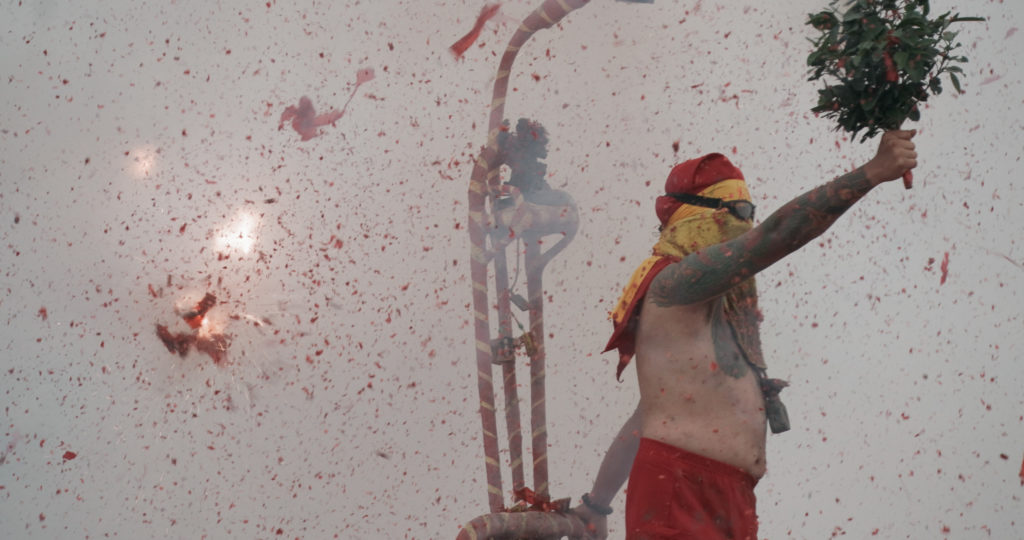
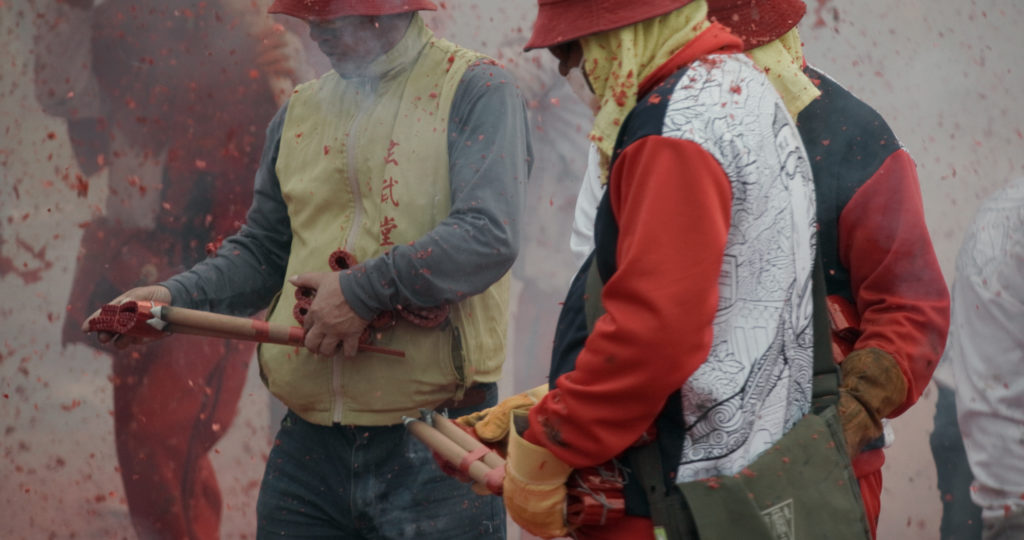
This mirroring of the experience of cinema, continues in the other two films in the series, Jarramplas and her latest film HEAT. The first depicts the centuries-old annual Jarramplas festival in the Spanish town of Piornal, Cáceres. There, participants hurl around thirty-five tons of turnips at the namesake el Jarrampla, represented by a real person wearing a costume and armor who will likely have waited for years, sometimes decades, for the honor – many families register their children at birth. The second documents the even more physically intense Bombing of Master Han Dan, which takes place annually in Taitung City, Taiwan, and involves bombarding another real and bare chested stand-in for Han Dan with exploding firecrackers. Both are intense and fantastical spectacles of community resolve and collective violence.
The origins of both rituals have been lost or obscured over time, but numerous theories persist. Jarramplas might derive from the Spanish word arramplar, which means “to steal” or “to plunder”: its central figure a thief, chased and humiliated through the streets by the townspeople. Alternatively, he might also be a turncoat warrior condemned to eternal punishment for defecting during the Moorish domination of Spain. Master Han Dan might either be a Martial God of Wealth who hates the cold, with firecrackers serving as a symbolic way of heating him up whilst also bringing good luck, or he may represent a local tyrant whose penance was served by being blasted to death by explosives.
These blurred origins mimic our contemporary relationship with images. Of the hundreds, possibly thousands of images we consume each day, we rarely have access to the circumstances of their beginnings. If cinema initially democratized the archive, it now finds itself caught in an obfuscating crisis of chaos, and overwhelm.
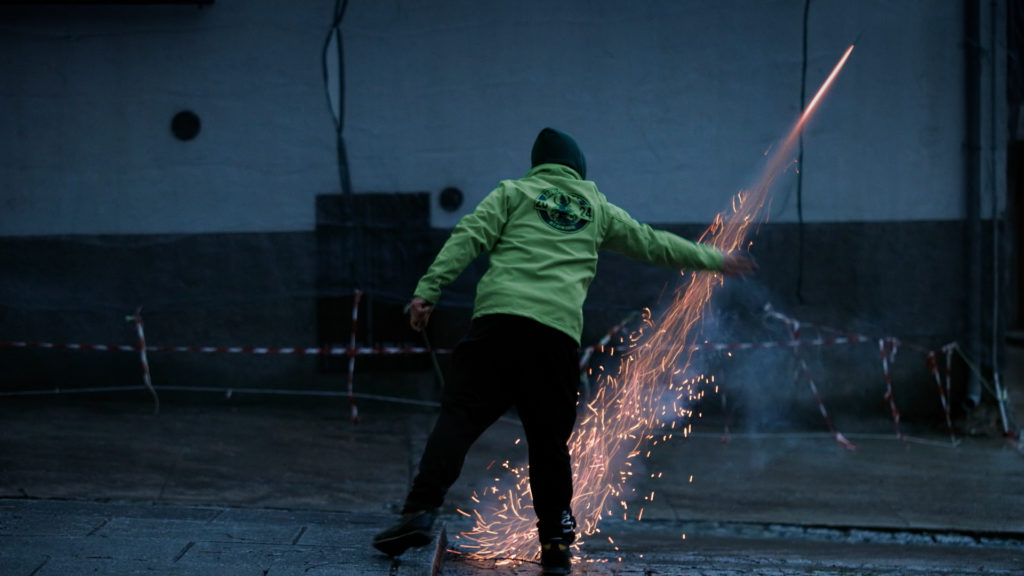
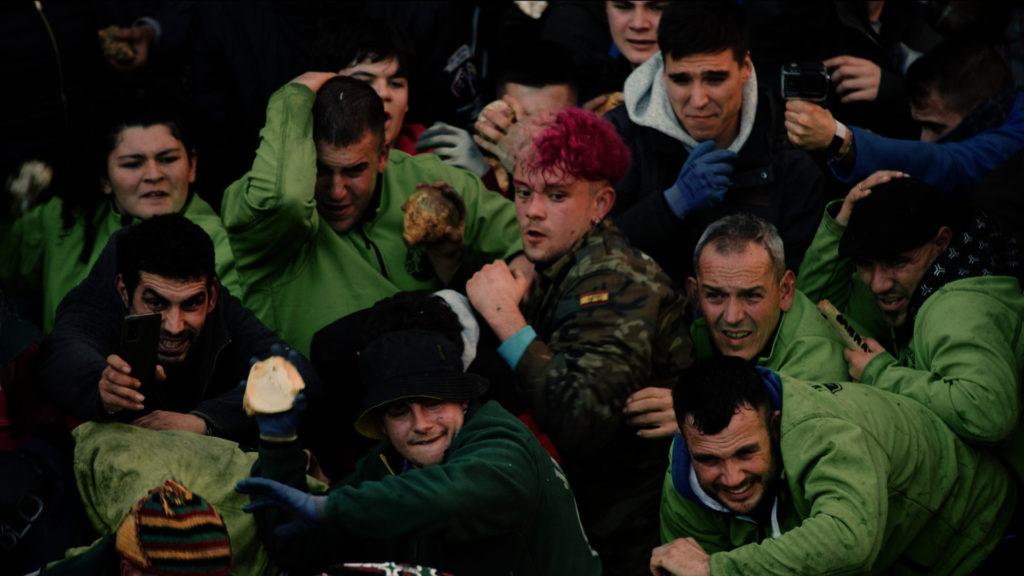
It is the scenographies of violence in these two films that are most striking. In Jarramplas, the crowd’s target is never shown, leaving us to wonder who or what the crowd are pelting with their vegetables, perhaps it’s even each other. These scenes of ambiguous opposition, rage and violence that have become familiar and permeate our everyday lives. In HEAT, Afsah’s camera repeatedly focuses on the shards of red plastic that encase the firecrackers. As the firecrackers explode, the plastic fills the air like weather. In one shot, what appears to be thousands of plastic fragments cover the ground in red, in a scene that evokes the blood-soaked-floor of an abattoir. This fictionalized gore is also countered by moments of tenderness. Sound is used to isolate intimate, human moments among the explosions like the gentle fizz of a man lighting his cigarette among the festival goers.
Concerned with these equally threatening and playful spectacles of violence, Afsah’s films slowly but firmly find their way back to us, the viewer. The artist allows the violence and vague intent of spectatorship to hang in the air. Both films linger over slow-motion shots of individuals coming to real and fictional, consensual and non-consensual physical harm, implicating us in ambiguous scenes of violence that question our complicity and curiosity, while underscoring a more generalized breakdown of the social order in which we play an active role. Afsah creates a space that demands we look, or rather, don’t look away. And why don’t we?
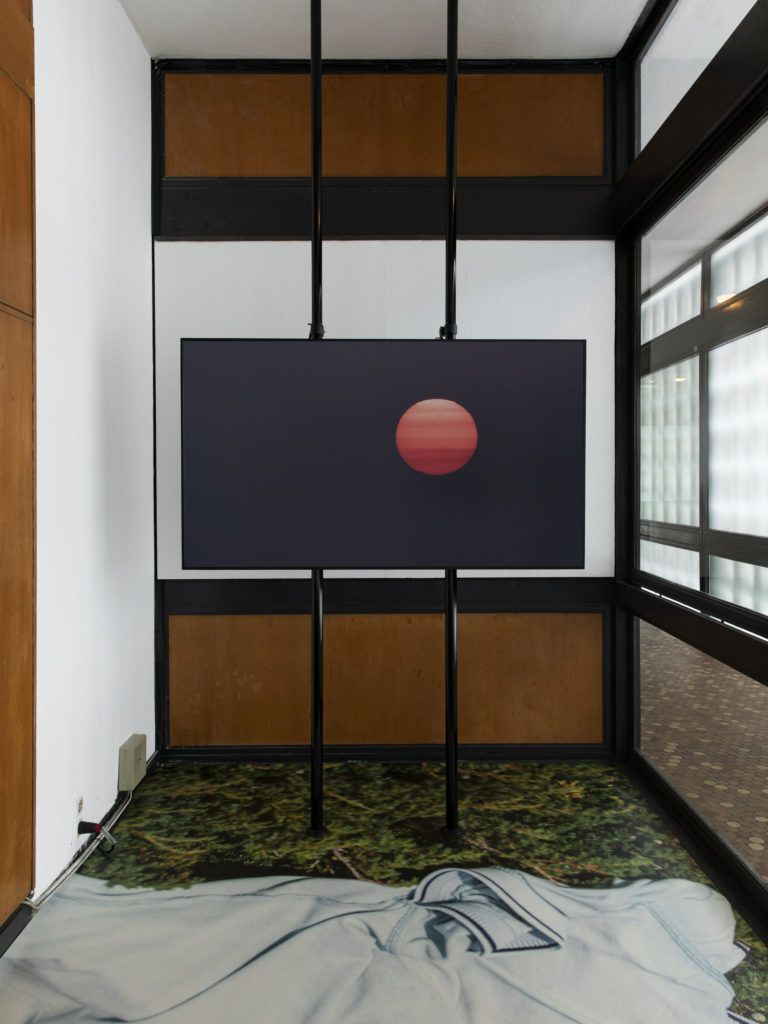
James Benning has always described his remarkable film Ten Skies (2004) – ten, ten-minute, fixed, single-camera portraits of ten skies in the US – as an anti-war film. Made concurrently with the war in Iraq, the film uses the slow unfolding time of the present and undeniable, natural spectacle of the sky to ensure we look, and listen more closely. Benning’s stated effect was to provide an antithesis to violence through the peacefulness of his images.[2] At moments, it also creates space for the mind to wander, perhaps back to things we haven’t yet made time for. The film remains as relevant today as in 2004. Yet, since Benning made that film, our relationship with images has changed dramatically. Now, every day through our phones we encounter hundreds of images of extreme violence, warfare, and genocide, alongside images of our friends’ holidays, soothing ASMR videos, and ad campaigns. Many of us scroll right past, unable to watch, paralyzed and overwhelmed by what we see.
Afsah’s films intervene in these accelerating logics of sensory consumption. Where Benning’s Ten Skies demands and provides space for peace and reflection, Afsah’s films strip us of our contemporary habits of looking and listening and then confront us with them anew. Our playful curiosity and our troubling complicity are left hanging in the air side by side. There is a persistence, to the point of almost repetition in the artist’s filmmaking, typified by her films that revisit similar ideas and formal approaches over and over again across each series. This repetition belies an insistence that the questions which arise through her films are not left in vague perpetuity. Instead, the artist provides us with the tools to look and listen differently and implicates us all in the active search for understanding.
[1] Mary Ann Doane, The Emergence of Cinematic Time: Modernity, Contingency, the Archive (Cambridge, MA: Harvard University Press, 2002),
[2] James Benning, “Testing Your Patience: An Interview with James Benning,” by Tony Pipolo, Artforum, November 15, 2011, https://www.artforum.com/features/testing-your-patience-an-interview-with-james-benning-180723/.