In Shirana Shahbazi’s show, “All at Once. An Interplay with Li Tavor” (2026) at the Kunstmuseum Luzern, her 16mm film An Other Place (2023) is projected in a darkened alcove. In its 4-minute, 18-second duration, a small geometric room finds movement through its shifting shadows — the subject of the shot looks like a miniature fashioned from the pale balsa wood typical of architectural models. Set against a two-toned red background, an unseen light in motion changes the terrain of the scene, so a different composition emerges with every frame, bearing the hallmarks of the artist’s work: film grain, geometric shapes, and blocks of color that speak to each other within the four boundaries of the shot.
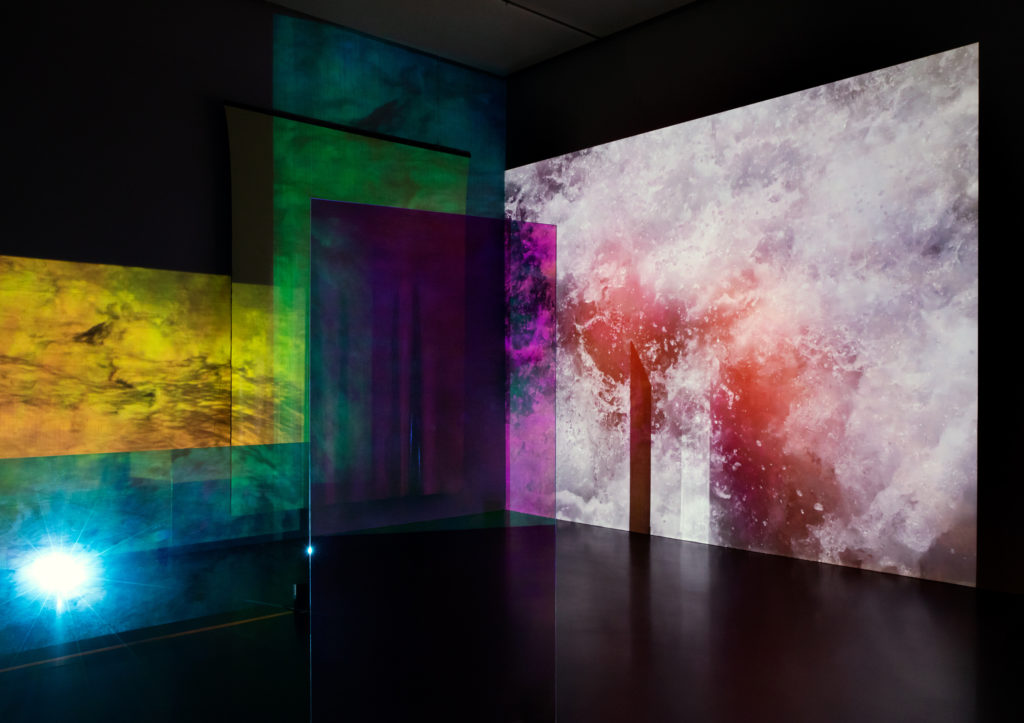
Seeing her image animated presents a deconstruction of the aesthetic she’s developed through decades of practice. While a photograph is static — occluding the many hints of its creation — a video camera, able to capture multiple views, makes the viewer privy to another layer of truth: an image is a plane that is the result of its condition of capture. It’s the confluence of subject, color, light, and the will of the creator.
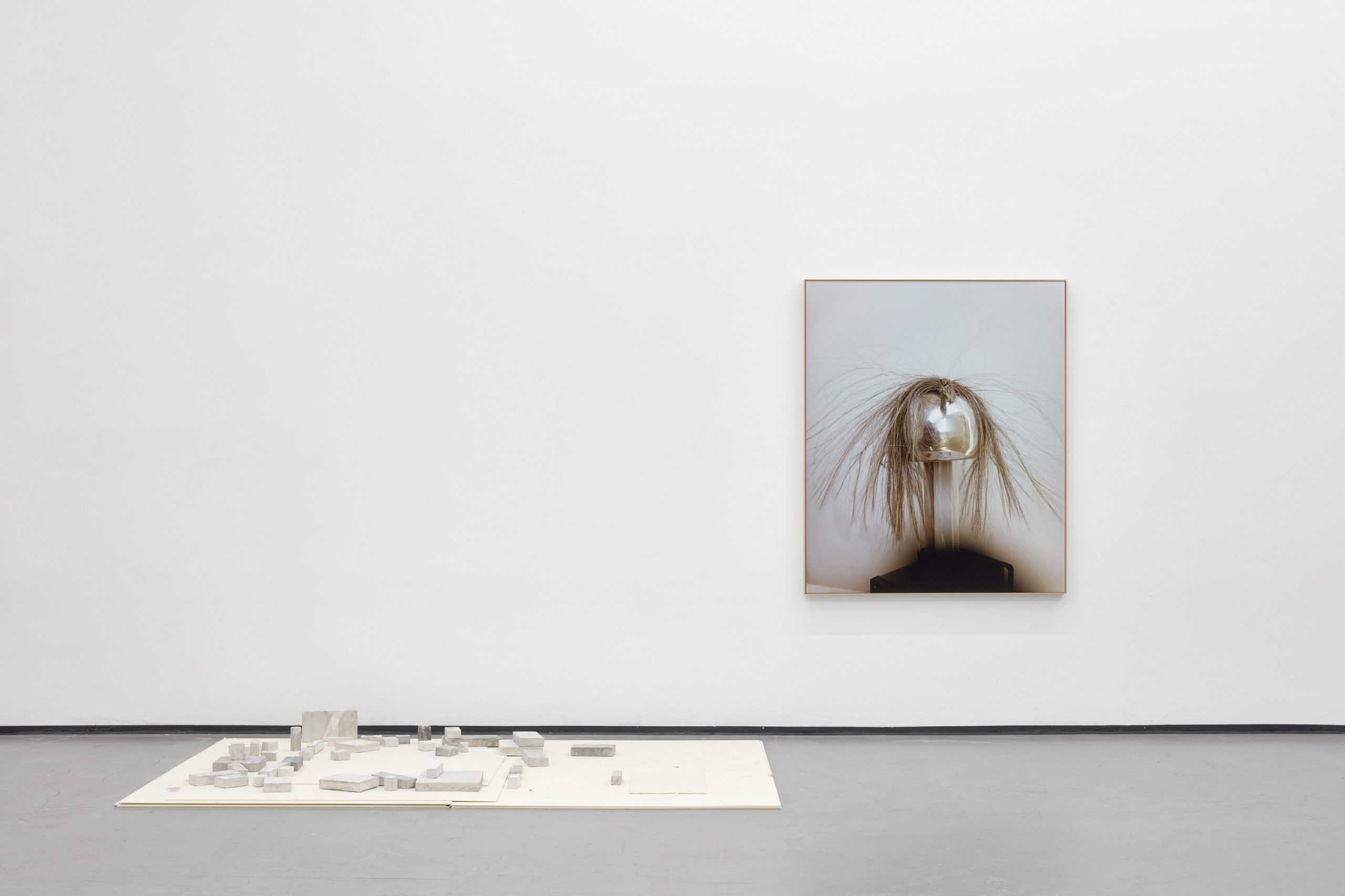
An Other Place then moves out of the film and into the exhibition space with the display of Displacement_31 and Displacement_32 (both 2024), silver gelatin prints hand-colored by the artist and placed in thick, colored ceramic frames. They are hung on a section of free-standing wall with a swath of tiles projecting from its edge onto the floor. In their small scenographic displays, the reality depicted within the two abstract works spills into the exhibition space, ready to test the audience’s reaction to being engulfed by color.
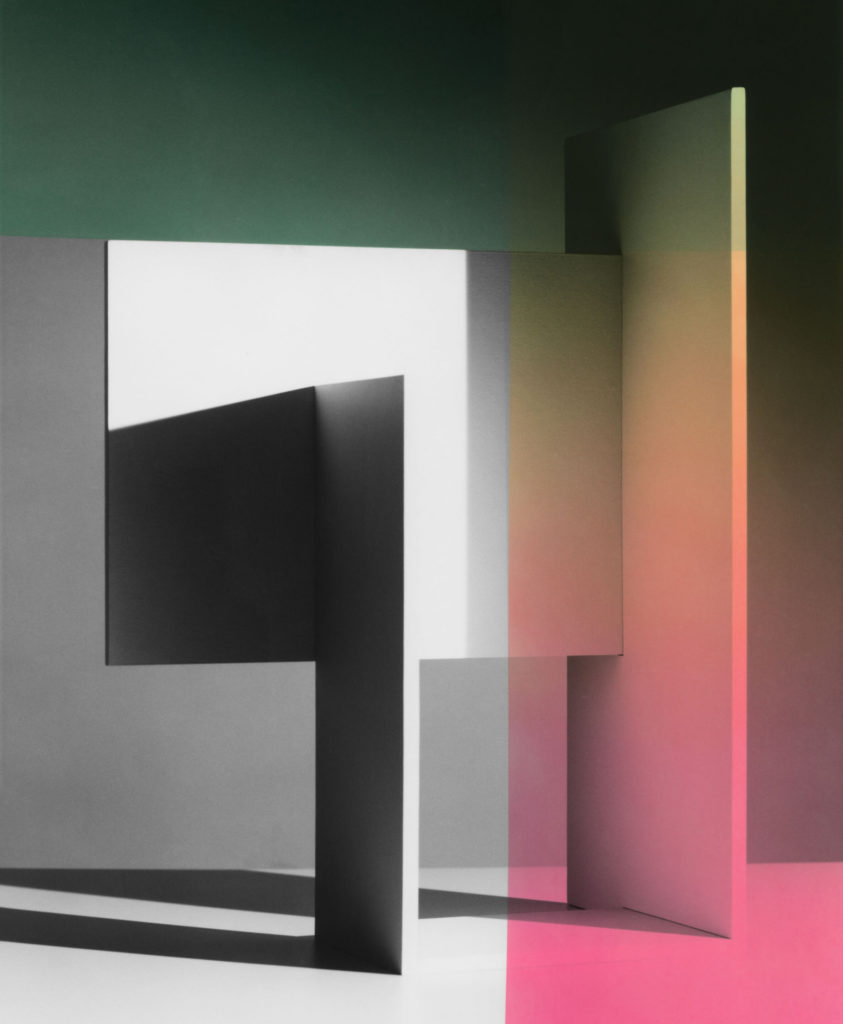
Here, where two planes meet, putting high-contrast tones and hues in dialogue with one another, there’s an almost clinical presentation of the science behind perceived color. It recalls the charts used by an ophthalmologist to screen for sight deficiencies. We may often forget that vision is a physical response of the body; it’s a sense that is both fleeting and an ever-changing process of cognitive synthesis. But in the dayglow colors and clash of Shahbazi’s work, there’s a heightened awareness of its somatic capacity.
Cognizant of this potential effect, the artist leverages the interplay of light and subject to invoke not just a physiological reaction, but an emotional one. In another of the exhibition’s rooms, the series “Falling” (2026), black-and-white lithographs on cotton paper, mounted along the circumference of the space, capture people falling into water, their tumbling heads, limbs, and garments creating a vertiginous view of a maelstrom of bodies. Breaking up any clear procession through the room are several upright, transparent panels covered in dichroic film that, depending on the angle and the light, reflect the viewer’s surroundings in sunset orange while filtering the image behind them into bright cyan.
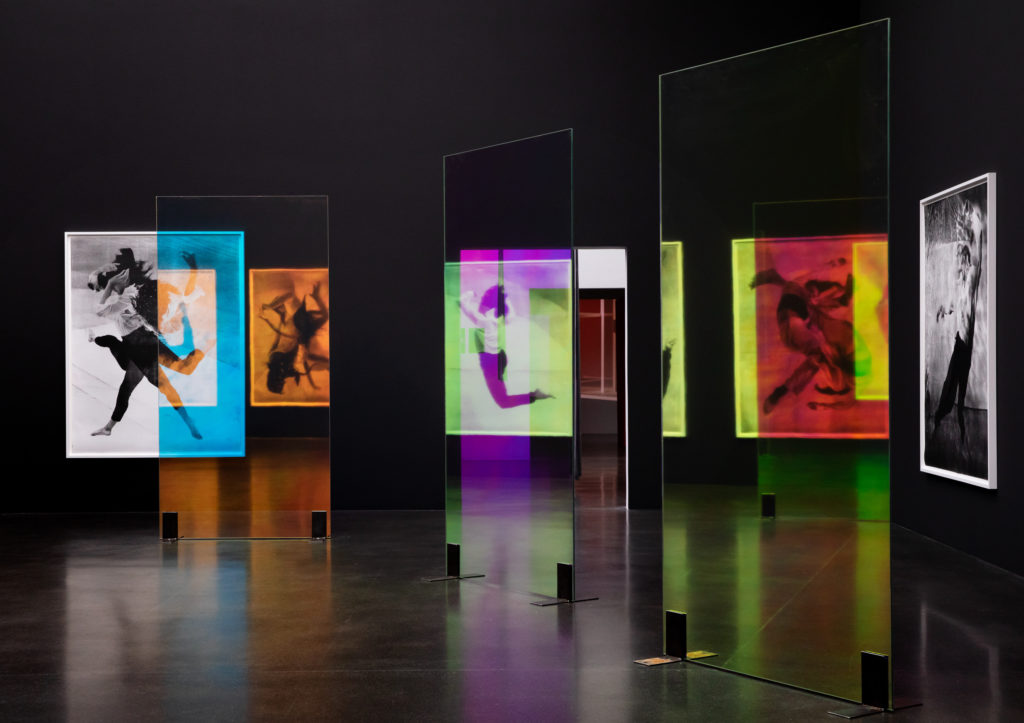
The result is a kaleidoscope of refracted images that overlap, obstruct, and elude. It becomes difficult to locate the source of the figure in view, making orientation within the space a challenge. Despite the old adage that “seeing is believing,” a simple optical trick is enough to call all of that into question. Shahbazi extracts and manipulates the elemental parts of a composition, creating a mirage that challenges the notion of the image as an objective medium.
Functioning similarly to those dichroic panels, Li Tavor, a longtime friend and collaborator of Shahbazi, created towering latex sheets (all 2026) that hang from the ceiling, forming oblique angles within the room that discourage any direct procession through the geometric cells of the exhibition space. A collaborative work, the curtains have a distinctly seductive, fleshy quality that is characteristic of latex — the pieces show irregularities, drips, and thin sections through which light penetrates. The panels are dyed in Shahbazi’s purples, magentas, blacks, and other hues.
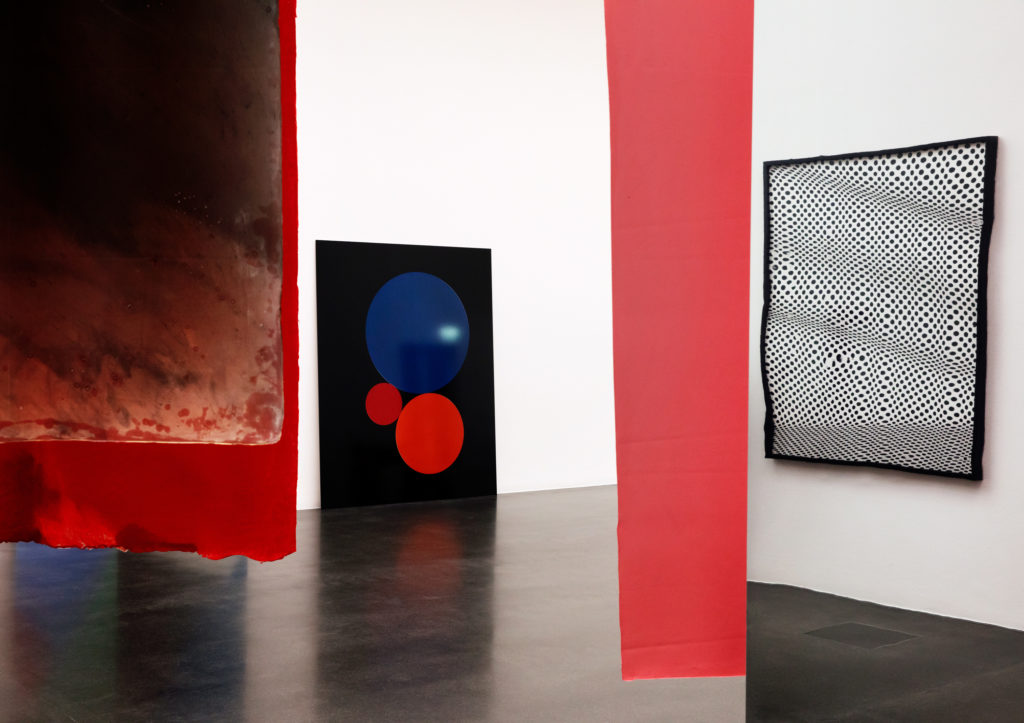
Seeing where the latex drips and forms globules recalls the early processes by which film stock was developed – sensitive media, dark rooms, and carefully timed chemical baths. Viewing this material cropped to four edges and hanging in a museum, in dialogue with Shahbazi’s framed photos, foregrounds the question: what constitutes a photo, or perhaps more philosophically, what constitutes an image? Born from color and material, rather than a recognizable subject, Tavor’s latex sheets share a kindred line of development with Shahbazi’s photographic works, one that seeks to subvert the privileging of capture and result, favoring instead attention to the intricacies surrounding technical formation. In this transposition of Shahbazi’s aesthetic sensibility into a material form beyond the film-based image, through latex that’s inescapable both in its scale and its evocative nature, the exhibition pushes the audience to confront the ways in which we validate and conceive of an image.
“All at Once. An Interplay with Li Tavor” thus becomes a kind of laboratory in which the image is carefully dissected into its elemental parts and put on display. As color and shape are presented in different amalgamations — in dripping latex, refraction, and projection through 16mm film projection — Shahbazi underscores the cognitive and psychic power of color.