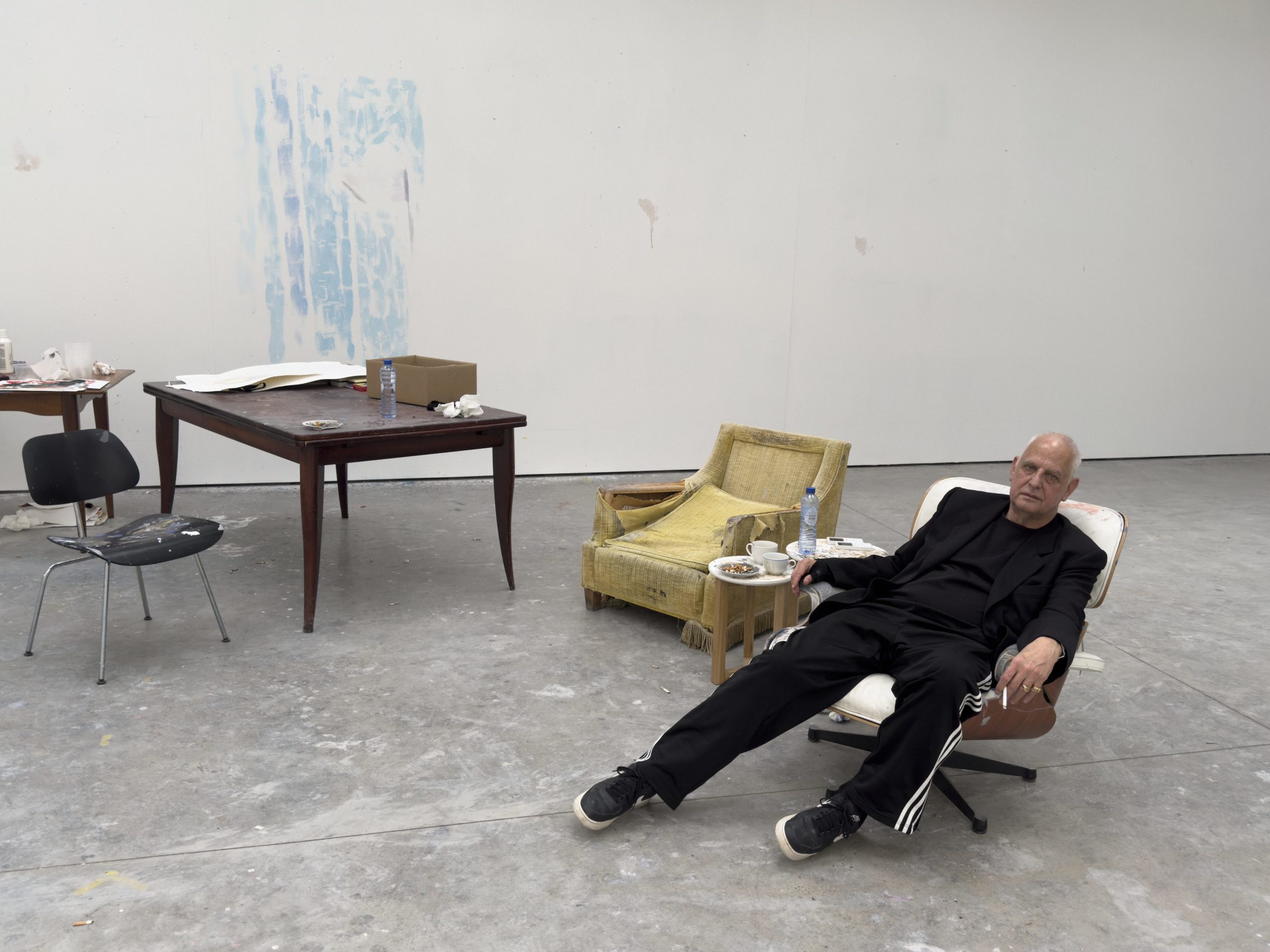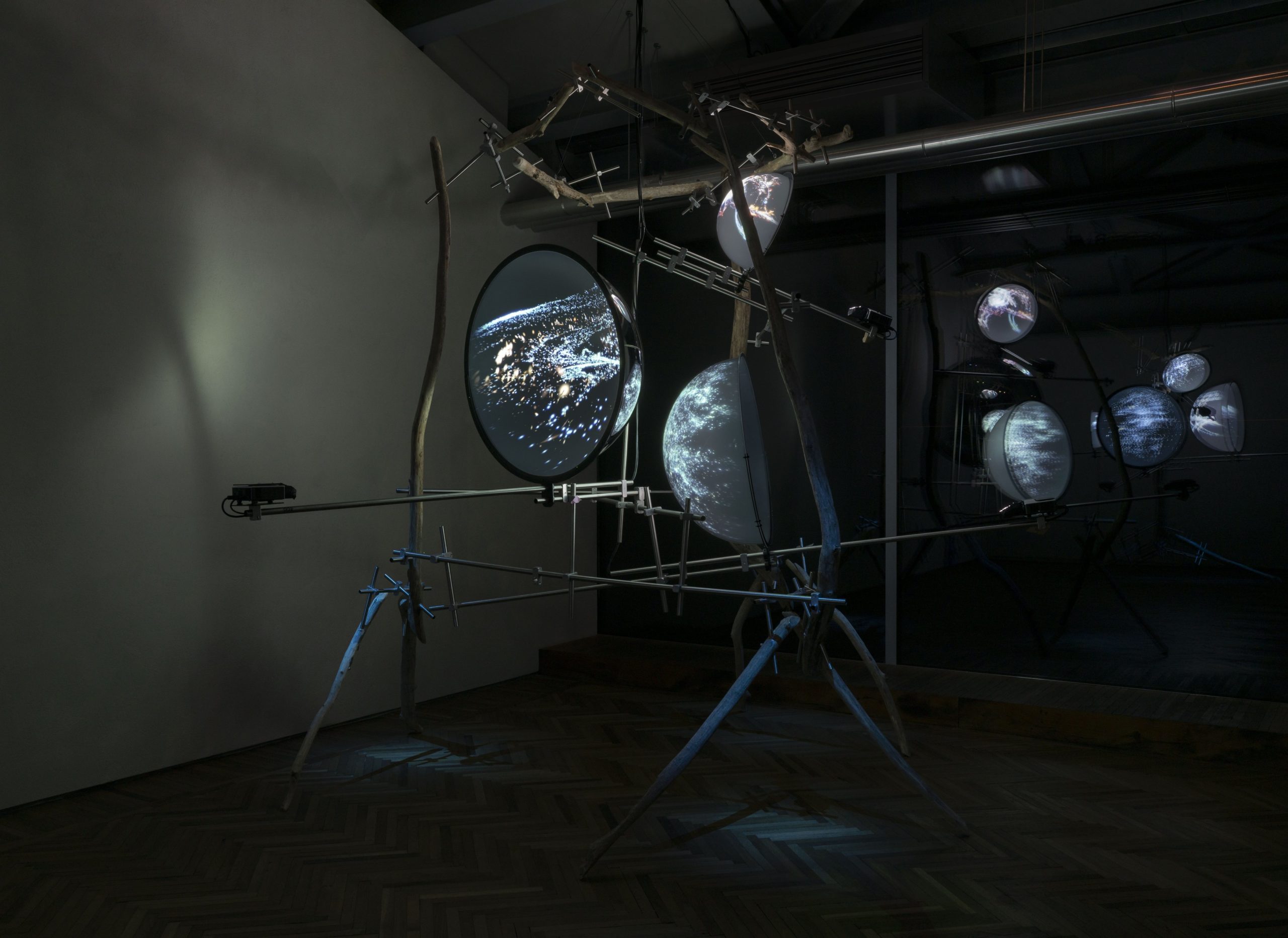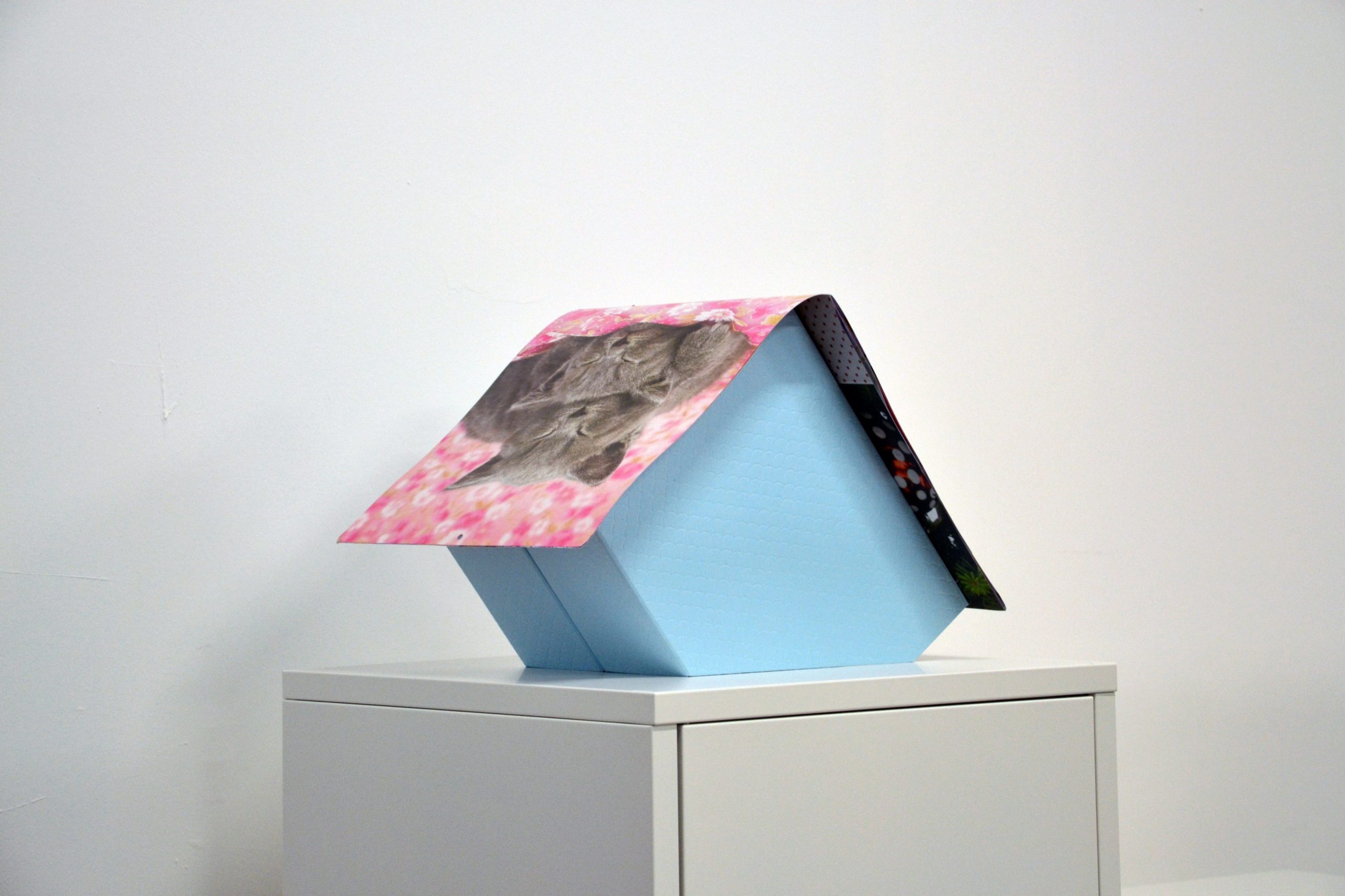
“The door of a house was just opened after a month. All of the windows are closed and the plastic blinds are pulled down. There’s thick, musty, wall-to-wall carpet. It’s summer. Someone left meat, cupcakes, and candy out.” This was the prompt Adam Gordon gave to Texas-based perfumer Hans Hendley, who, on the occasion of Gordon’s recent exhibition “The Torture” at ZERO…, Milan, produced a particularly queer scent. The multilevel show’s entrance was blocked by a heavy black portiere that dressed the gallery’s exterior. There was no front desk or sign-up sheet to mediate your next steps. Once you decided to leave the daylight behind and move beyond the curtain, you entered without instruction, cast into the abyss of your own proverbial viewfinder.

Those who are partially familiar with Gordon’s work might recall his “photo- realistic” paintings that surface online or at the occasional art fair. They may know of his formal education at the classical painting school Lyme Academy of Fine Arts, or about his semi-professional body-building regimen. But many are unaware of his deliberately elusive installation work, which, for all intents and purposes, insists on a “had to be there” condition. His strict no-phone attitude does not do him any favors, nor does it help describe the work – even for dedicated followers… “These spaces are so particular. A visceral bodily experience or the instinctual reaction to smells, sounds, and objects in low light creates a practical problem for documentation,” says Gordon. Those who understand this tension attribute the same level of deliberateness and care to the environments as they do the construction of his paintings. His installations are designed, illuminated, layered, filtered, choreographed, and executed to place the viewer in a low-grade panic, activating an early evolutionary detection system that misleadingly suggests that you are in control of what you are seeing.
In some of the installations, once your eyes adjust to the light level, there may be only a metal cable or rope at your waist, along with the texture beneath your feet, to offer any point of reference. Often a substantial barrier separates the viewer from a framed space beyond: one-inch-thick glass, bulletproof acrylic, or a peephole cut through a door. The photographic term “reciprocity failure” comes to mind, where light and time must be calibrated to correctly expose an image in low-light conditions. Platonic forms, plastic bodies, human bodies, miniature dolls, objects held or worn — such as drills or backpacks — alongside gates, tulle, and a recurring mirror ball populate Gordon’s life-size dioramas. The objects, positioned behind barriers, do not function as representations but as triggers, eliciting responses to the specific line of their silhouette or the negative space they create. You may be confronted by the impulse to classify a figure as prepubescent or elderly. Within his exploded Rorschach test, Gordon capitalizes on our modern hypochondria of being both examiner and patient.
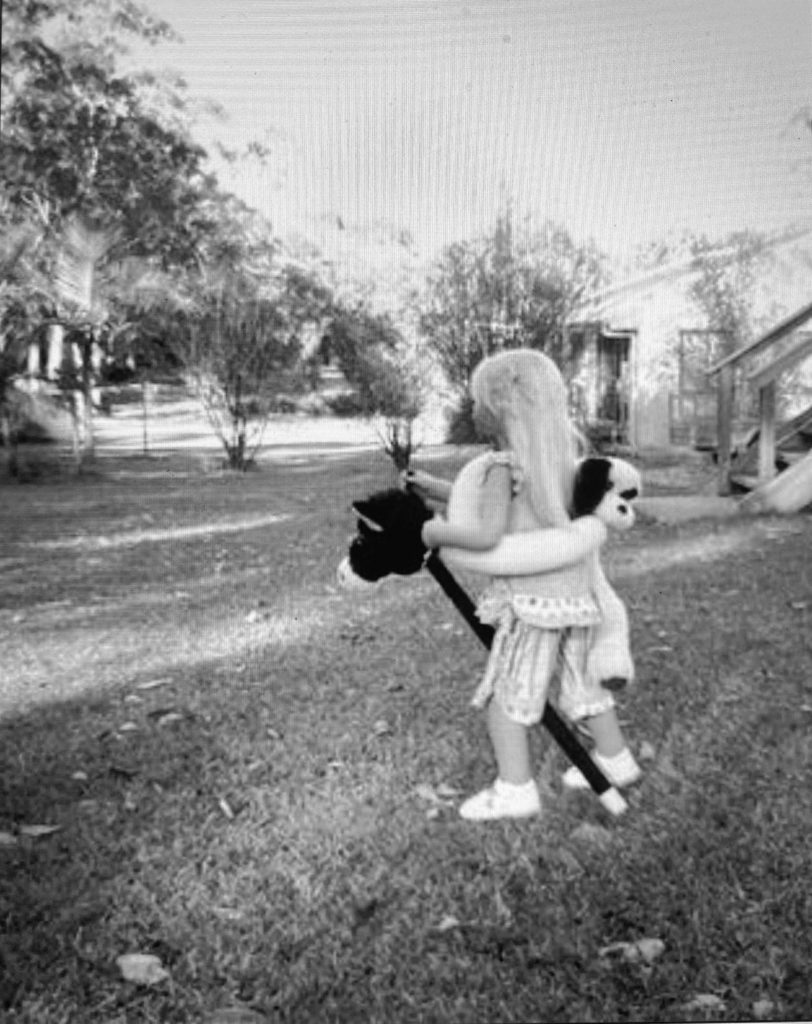
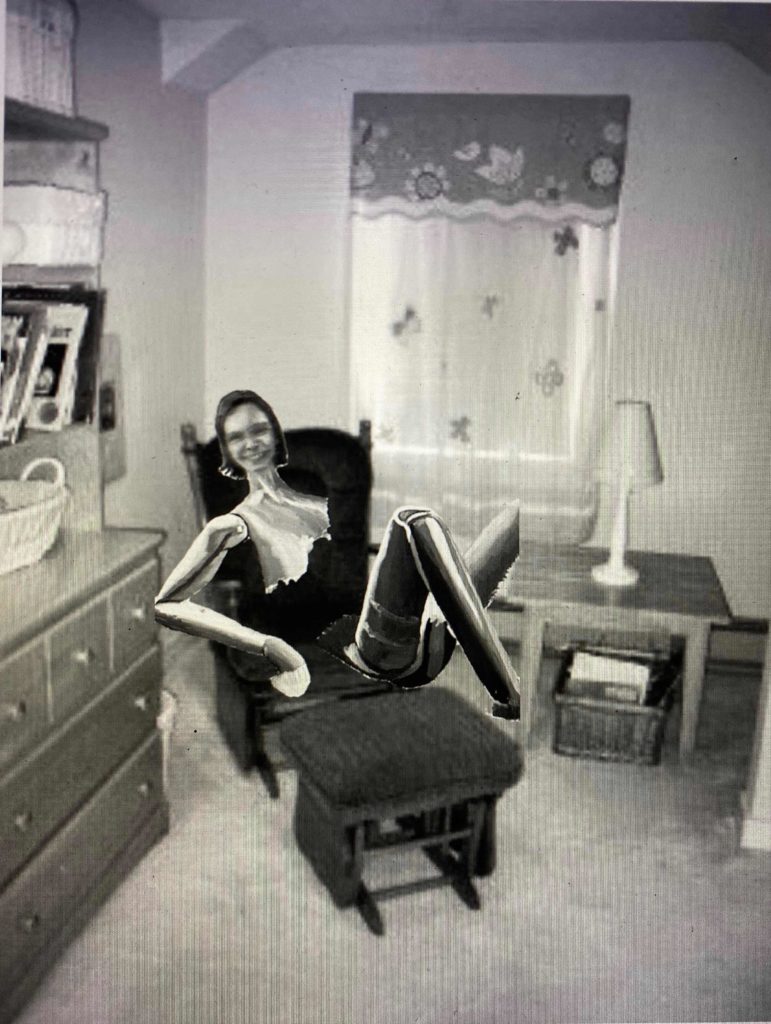
This brings me to a necessary impasse: it is neither possible nor useful to claim what Gordon’s work is about for him. Any attempt would be erroneous. We can take a different tack, however, and examine some of the structural concerns and strategies he has formulated, through insights by him and accounts from others I have spoken to. There — maybe — we can tease out some essence from his process.
The term “valley of the uncanny” first appeared in a small Japanese journal, Enajii (Energy), in 1970. Its author, Masahiro Mori, a professor at Tokyo University, authored its first English translation for Robotics and Automation Magazine in 2012. The TLDR tells a story of our path from creating a robot that is purely functional, to something cute, and consequentially the limits of what is considered human-like. The “valley” is a dip in that route, where we are confronted by the uncomfortable terror and curiosity of something that is almost, but not, like you. The more lifelike the humanoid, the more unsettling the impression. It has been proposed that this reaction stems from an ancient alert system, evolved as a means of self-preservation against nearby threats — other animals or hominids encountered by Homo erectus. Because our species is itself a combination of different hominids, our ability to sense bad outcomes, albeit through trial and error, has been proven successful, perhaps until now.
I spoke to artist Jim Hodges a few days after he visited Gordon’s show in Milan. “I feel like I was thrown into a process of perceiving a mirage, where I am asking myself if what I am seeing is what I am supposed to be seeing. The first floor had a warm glow, I was getting closer to something out of reach… a sensation of seeing an interaction between two characters… a mirage of an interaction and I was merging with it, but the room also felt lifeless and cold.”

When I asked Gordon about the first floor, he recalled Charles Ray’s 1993 work Firetruck, a life-size toy that was parked outside of the Whitney Museum on Madison Avenue. “In some ways I was thinking about being a giant and placing things in the room as if it were a dollhouse complete with different objects, windows, and stairs.” Around the corner muffled music was emanating from a staircase. Hodges told me, “the upstairs had a safe comfortable color and plastic feeling, but downstairs was dark, dank, and definitely had a living presence. Someone was down there. Someone was with me.” Gordon provided a score to the lower level, which was also used for some promotional materials. It had the quality of a singular keyboard trying to do the job of an orchestra. Its slow processional timing mimicked the painful drawl of “Canon in D,” though the resemblance was uneasy at best. The piece’s gothic grandeur was intermittently overlaid with a baritone, encrypted voice. The message suggested defeat — a resignation mixed with duty. Hodges continues: “There were a series of columns stretching far back, it was very dark… but there was a dim light on the floor shining onto an object that I could not see. But its shadow filled the entirety of the opposing wall. Illuminated within this object’s shade, just barely lit, looked like a very large man or woman sitting on a sheet staring at me. They were up against the wall with their arms in front, stiff like a doll, dead or maybe alive?”
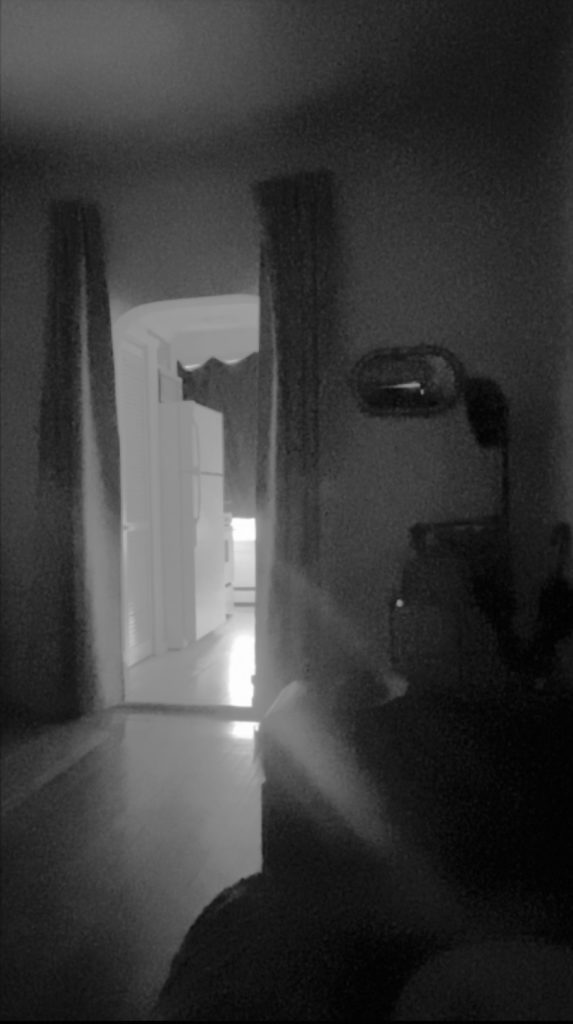
Hodges’s account of the basement figure immediately recalled Manet’s The Dead Christ with Angels (1864), a painting whose power lies not only in its mortal subject but in its point of view. In a recent conversation, artist and F Magazine contributor Matt Kenny framed the work through the idea of role-casting. According to historian John Elderfield, Manet painted the scene from the perspective of Mary Magdalene, indicated by the verse inscribed on the rock (John 20:12). Manet, dying from syphilis at the time, collapses author and witness: “We are Mary,” Kenny wrote. While The Dead Christ with Angels may share a closer formal relationship with the basement figure in Gordon’s work, it’s more interesting to note how this concept of role-casting could be imposed on viewers without consent, through intentional structural decisions. In the final act of Quentin Tarantino’s Inglourious Basterds (2009), high-ranking Nazis, including Hitler, gather in a movie theater. The Jewish protagonist, who owns the cinema, plots to lock the doors and burn everyone inside. As she delivers her final decree, the camera cuts to the perspective of the theater’s projector. In that split moment, the screen in the film becomes the screen in your theater — and the viewer is role-cast as a burning Nazi.
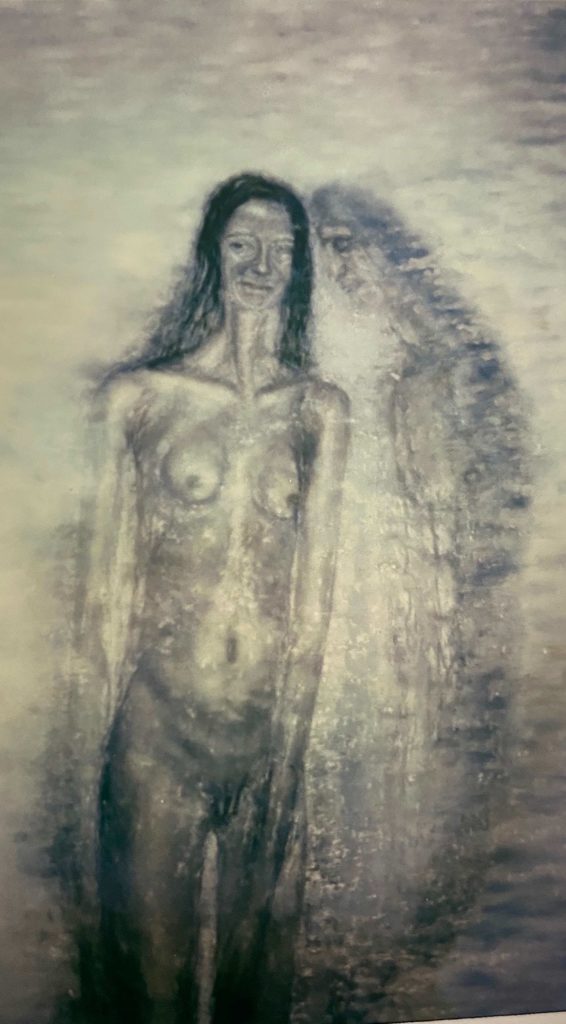
Gordon’s meticulous considerations place physical constraints on viewers that heighten their awareness of their role within the work. You are cast as an uncanny version of yourself, set in relation to the person others are familiar with. Confronted with the inability to decipher what you are looking at, you are placed at odds with the beliefs you hold to be true. It’s a clever inversion of a classic art experience: an embodied process that departs from the mystical consensus-projection that enforces dogma around artifacts like the Shroud of Turin or an autographed Elvis record. Rather than offering an image onto which belief can be placed, Gordon’s installations withhold legibility altogether.
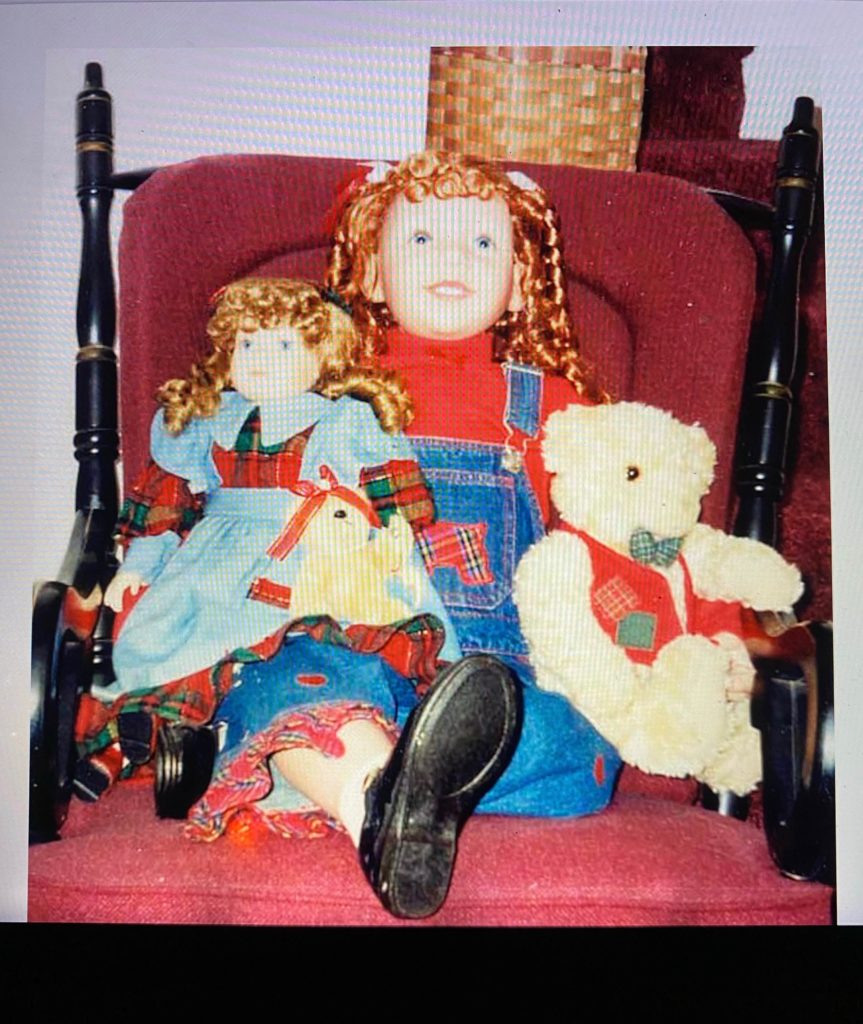
In that absence, examples of introjection in your own life rush to the surface. Words that are not yours, and memories of where they came from, obstruct your reasoning. You — the insignificant and forgettable one — begin to observe yourself as just another object in the room, no more distinct than the mountain, the trees, the river, or the birds outside. Everything is provisional. Everything is pain dissipating at a given rate. Gordon creates conditions; he does not impose beliefs. The work is structurally anti-surrealist, refusing the associative fantasy that deceptively returns the viewer back to the mean. Instead, he restricts the point of entry so severely that all that remains is the endless distance between the other Holy Trinity: me, myself and I.
“The whole theory of the universe is directed unerringly to one single individual — namely to you.” — Walt Whitman