Greetings from January 1, 2026, on actual pen and paper!
Sara MacKillop’s practice starts here. But not with the nihilism of creative production under the affable thumb of ChatGPT, nor with the melodrama of touchless tech-refusal theater. The London-based artist begins with something quieter and more subliminal. It’s the kind of low-grade melancholy and absurdity of constant self-optimization and outmodedness that long predates our AI crash-out and the demise of the em dash. MacKillop’s sculptures are objects of prepackaged individuality, creativity as customizable compliance, made through interventions with the lightest critical touch upon the humblest analog technologies of order and display: blank wall calendars, empty shopping bags, shrink-wrapped girly pop gift wrapping. What materializes is an affective state between deadpan malaise and dead-inside optimism with sentimental cheer, elicited by the “simple things,” in the myth where the self can always be better organized, arranged, disciplined — just… better. New year, new Trapper Keeper agenda/diary, new you.
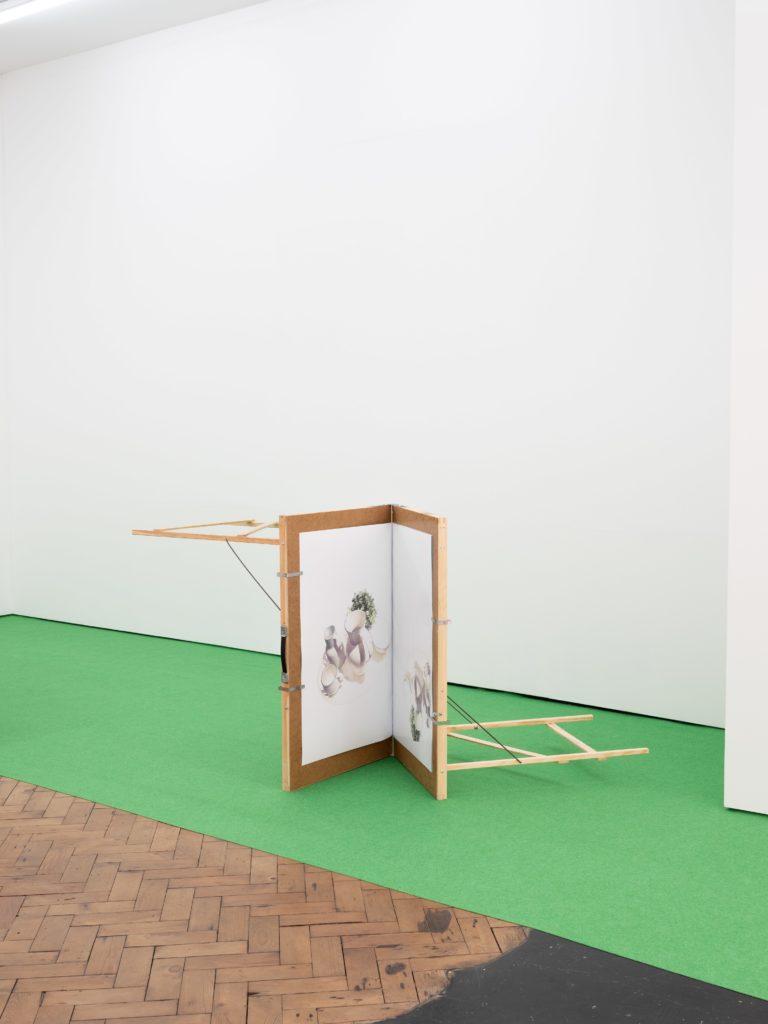
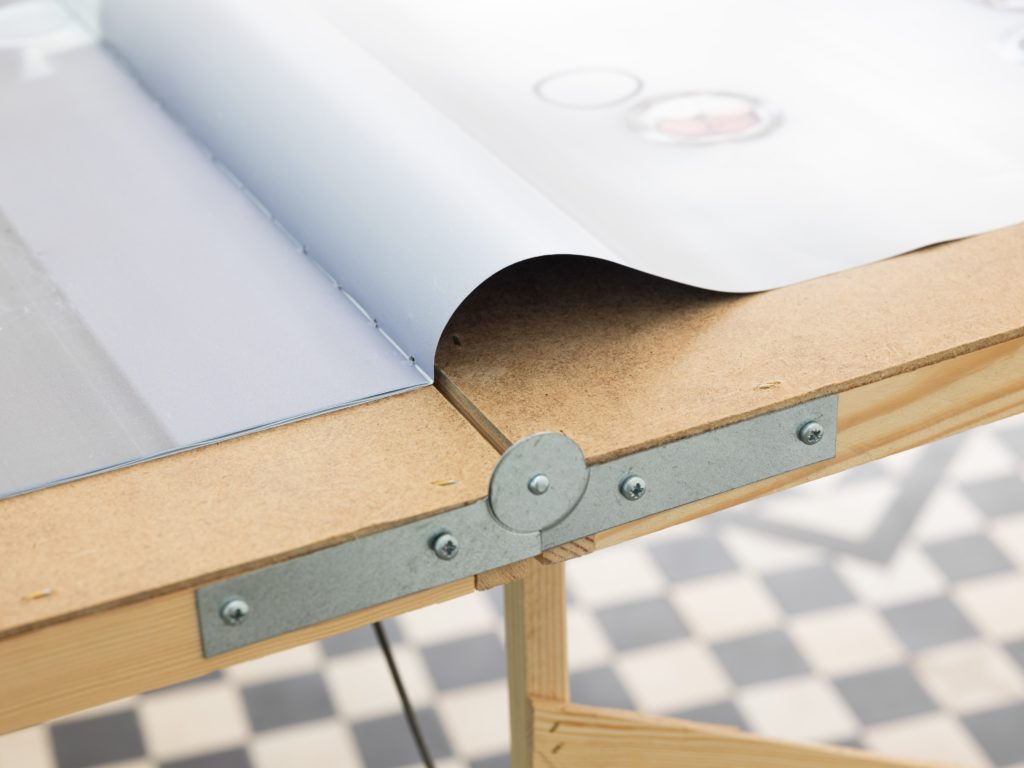
MacKillop’s sculptures might be understood as the emotional and material byproducts of the world’s very real fiction in which systems claiming to support us present themselves as neutral, even nurturing, while reinforcing the problems they claim to solve. Our challenge is no longer world-changing, only managing ourselves to fit within it. But rather than corporate bureaucratic languishing, MacKillop’s aesthetic registers more as “Does It Spark Joy?,” à la organizing consultant Marie Kondo, or self-soothing in the stationery store or of educational classroom creativty aisle. In her work, the pleasure elicited is real, but hope is running out of ink. What structures are left to record or hold individual meaning, and did we ever have any to begin with?
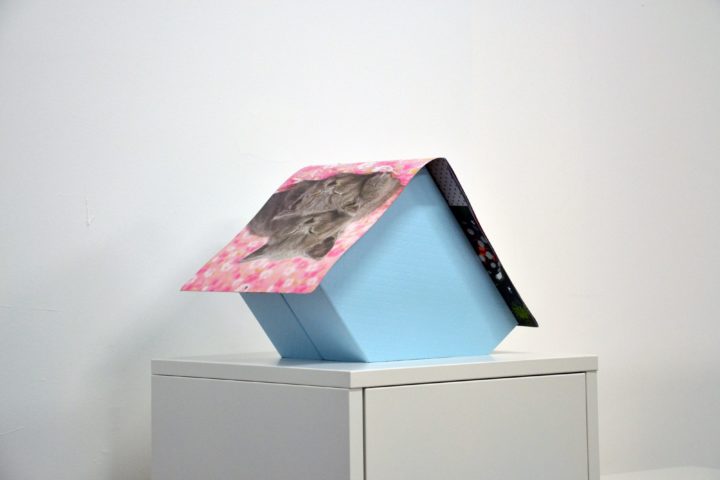
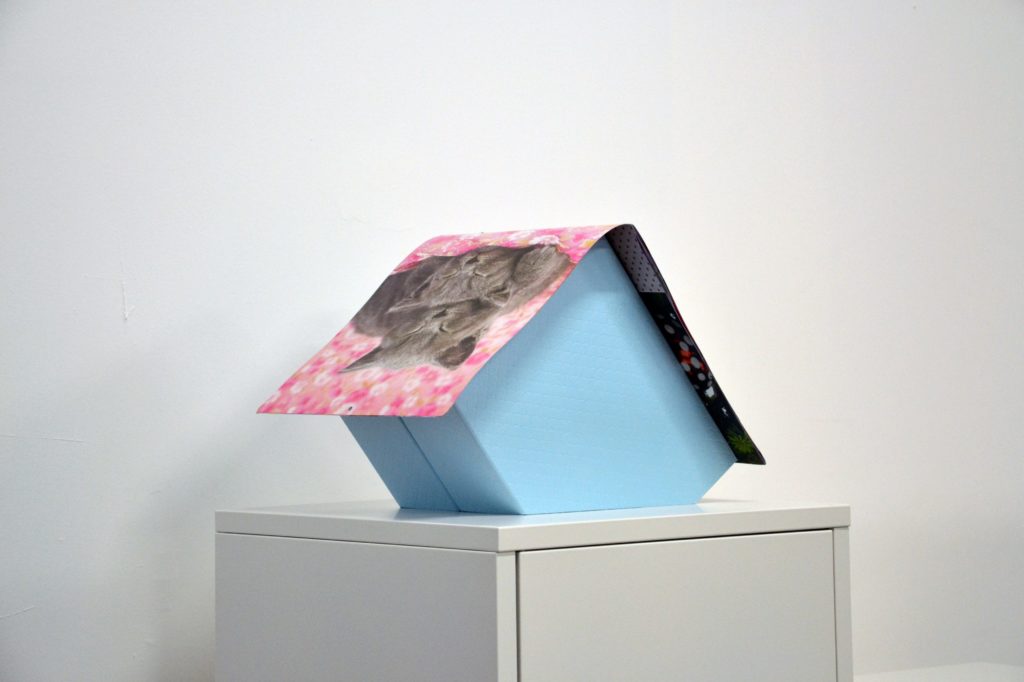
While her hard-edge forms allude to modernism’s imperative of “universal” design, the scale of her critique softens in the minutiae of consumer culture and home office decor. It seems appropriate that her sculptures often take the form of Container Store architecture in a series of maquettes for little modernist dwellings titled (as with most of her works) after exactly what they are. The “Calendar Houses” (2021–ongoing) series is constructed from empty archive boxes pushed together in perfect symmetry. These objects covertly rebrand the pressure of perfection under roofs made of wall calendars decorated with stock images of innocent sleeping kittens or a galloping horse in a sunny field. Plastic and cardboard surfaces of faux marble and handsomely color-blocked browns and yellows recall the Pantone Color of the Year now applied to big-box merchandise, holding the ersatz memory of design so quickly out of date.
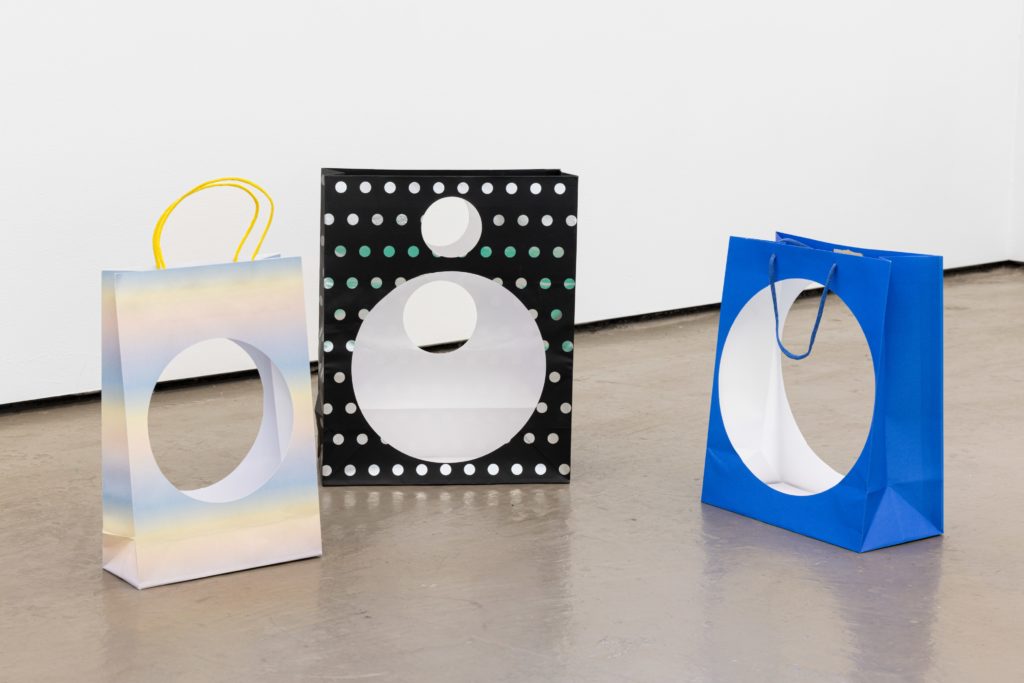
MacKillop’s attention to material has the temperament of slowing down: to notice the pristine geometry of unopened packaging, or nearly imperceptible aging in markings of wear and tear. The sculptures are the actual items altered or composed just enough to draw attention to the ephemera and texture of retail’s physical margins. The calendars simply drape with futility. Rolls of commercial-grade packaging paper surrender to buckles and creases, carrying the material’s own memory and paper trail of unnecessary surplus. In “The Cutaway View” (2025) exhibition at Good Weather in Chicago, a garden of shopping bags — some blank, or for gifts, or branded as fast fashion — rests on a green display carpet somewhere between showroom flooring and Astroturf. Perfectly round holes, surgically cut in the bags just so, are meant to accommodate a vinyl record. Like many of her sculptures, these operate both as bespoke and serial production, etched with repetition and time’s physical grooves — and, ultimately the white noise of it all. Like Sylvie Fleury’s resonant sculptures of luxury goods packaging, MacKillop’s ephemera inhabit the aesthetics and processes of consumption without either embracing or disavowing them. But her attention is different, directed at flimsy remnants of commerce that register the short-lived satisfaction of a guilty little H&M treat around the corner from pre-virtual therapy to fill the literal hole of the systems in which we dwell.
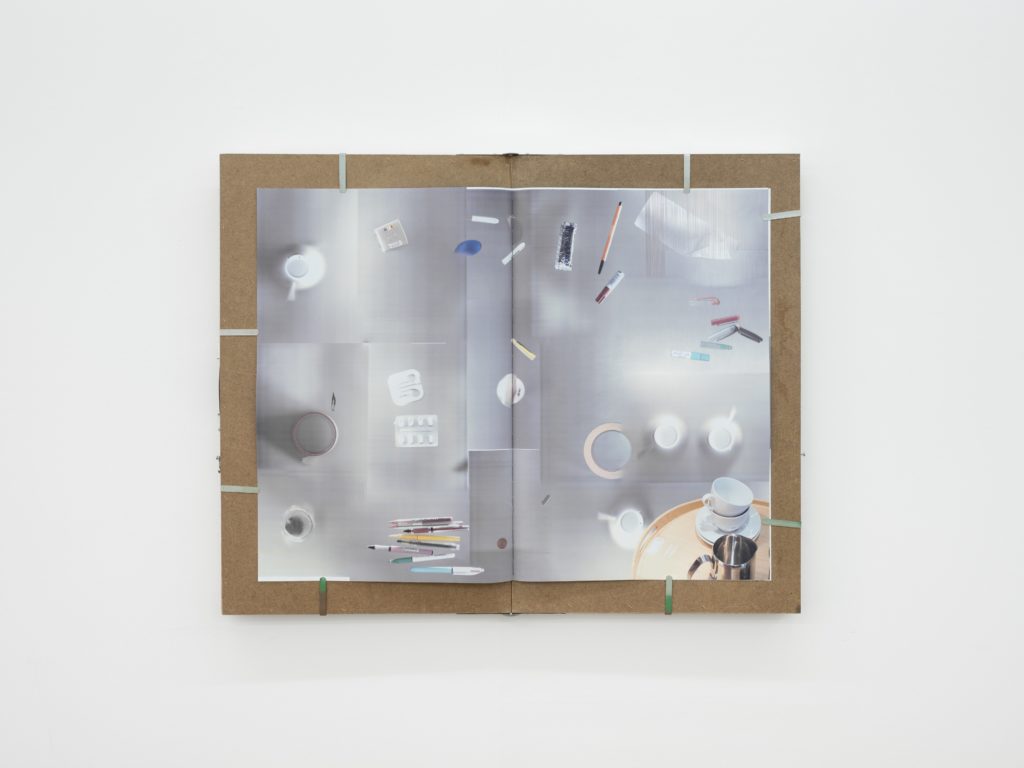
MacKillop’s affective installations are as much about excess as they are the absence that results from excess, over and over and over. In this way, the structure of her exhibitions offers a kind of poetic minimalism and bleak, stuttering modularity, like the dregs of furniture left at a closed-down IKEA — the subject of Ikea Tottenham (2023), one of her many artist books, which she also considers exhibitions or sculptures as in her 2024 show, “Expanded Pamphlets” at Roland Ross, Margate. As she re-installs iterations of related series for each show, the promise of clarity or comic relief produces its own structural fatigue, equal parts comfort and depletion as they hover at the threshold of not mattering or appearing not to matter. For instance, the signature display carpet, which first appeared in the exhibition at Roland Ross, arose as a “temporary solution” of cheap pragmatism to hide the noise of the gallery’s beautifully aged, checkered floor. In a related, seemingly practical gesture for her exhibition “Meanwhile…” (2025) at Final Hot Desert’s apartment venue in London, the artist choreographed upright rolls of wrapping paper to block the viewer from entering the domestic rooms upstairs — a useless barrier the artist compares to a decorative pinecone employed to stop people from sitting on a fancy chair.
Similarly impotent are an ongoing series of low non-barriers, first shown at Kunsthal Charlottenborg in 2013, that the artist calls “pen fences.” These are assembled from repeated images of vertical writing implements scanned and printed at monumental scale, shown flat against the gallery wall — a “fence” in the form of a long banner of inkjet prints made from photographs of capless colored pens or chewed pencil ends.
Arranged into continuous borders along the gallery’s perimeter, they become understated vessels for turning inward and looking back to the art histories that have delineated what art can or should be. Such economic, slyly literal gestures embody the efficiency our world expects from daily life, but are delivered with a Sturtevant-esque poker face, or Lily van der Stokker’s pastel minutiae of femininity, and a reticent wit distinctly her own. “That’s so you,” she mimics, comparing her work’s structure to an “in-joke” that keeps returning among friends. Recalling the vertical lines motif of Daniel Buren’s monochrome awning stripes begun in 1966, her pen fences expand our well- worn knowledge that institution and commerce are never neutral, always time-stamped with subjectivity and cultural specificity.
MacKillop’s cheeky re-imaginings of male-dominant hallowed works are meant to be footnotes, but they hit with precision. The holes in her bags, as she notes, might recall Gordon Matta-Clark’s Conical Intersect (1975), in which he carved derelict buildings to expose architecture’s violence through rupture. In MacKillop’s minor version, your museum gift shop souvenir literally can’t hold the thing it intends to, where that thing is an alternative to the grandiose systems that got us here.
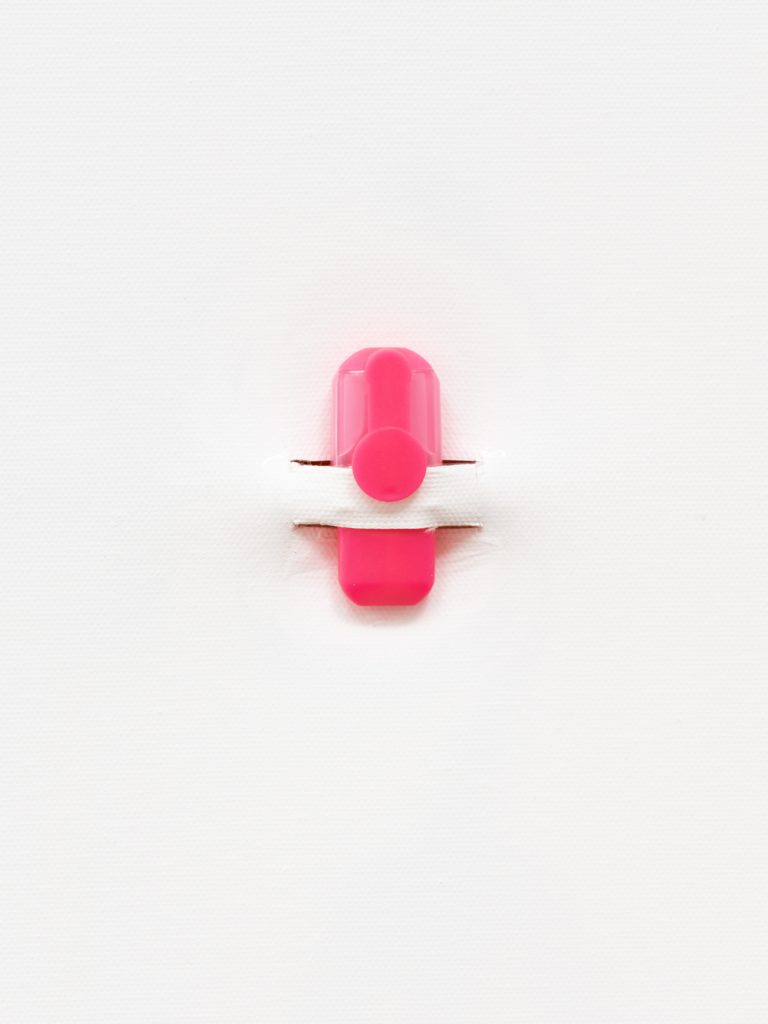
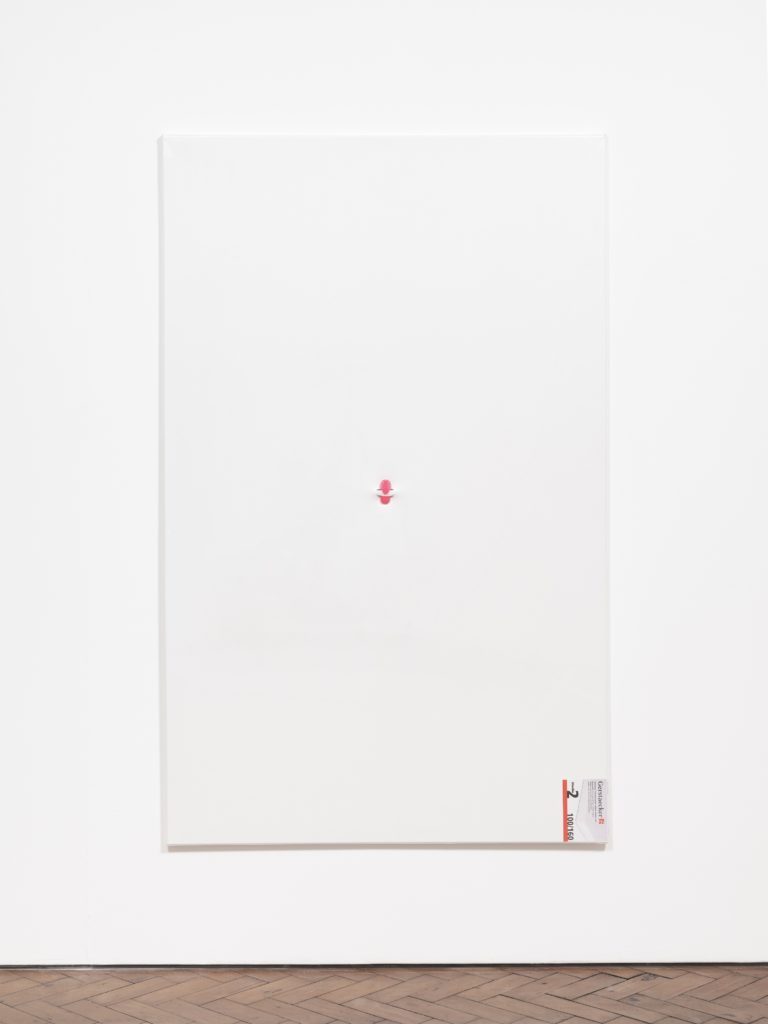
If there’s ever to be a new “universal” language in the wake of modernism’s continued failings, maybe it resides in the tiniest gestures: a series of mini highlighters in the printing press’s primaries of cyan, yellow, and magenta, free with a new dry-erase board, or inserted carefully into a hand-cut crevice in a mass-produced canvas still wrapped and labeled. One might read these acts as nods to Lucio Fontana’s radically sliced canvases of 1966 — here reimagined as “Conceptual Art Lite” souvenirs — or as assisted readymades of domestic culture, somewhere between Sandra Lee’s Semi-Homemade and Martha Stewart–style corporate craft. Traced back to Barnett Newman’s “zip” paintings, we find a clue to what MacKillop is really getting at: the potential for expression in its most elemental forms. Today, self-expression comes from consumption, but also from awareness of voids and time limits and, perhaps, beginnings that have come to live as aspiration without fulfillment.
Mark Fisher wrote, “The tiniest event can tear a hole in the grey curtain of reaction which has marked the horizons of possibility under capitalist realism.” In MacKillop’s work, that tiniest event — the unspectacular dull ends of pencils gnawed via a screenless boredom future generations will never know — may not even feel like potential, but it persists. Turning away from the manifesto-driven gestures of the past or, harrowingly, the past still present, her practice is cyclical. What emerges in MacKillop’s work is a sensitivity to what’s left behind by systems claiming to help us cope — and that never quite do. If the productivity tools and organizational aids can’t make us feel better, maybe poetry and humor on the margins can. MacKillop suggests that if there is hope here, it is not located in improvement, but in attention.