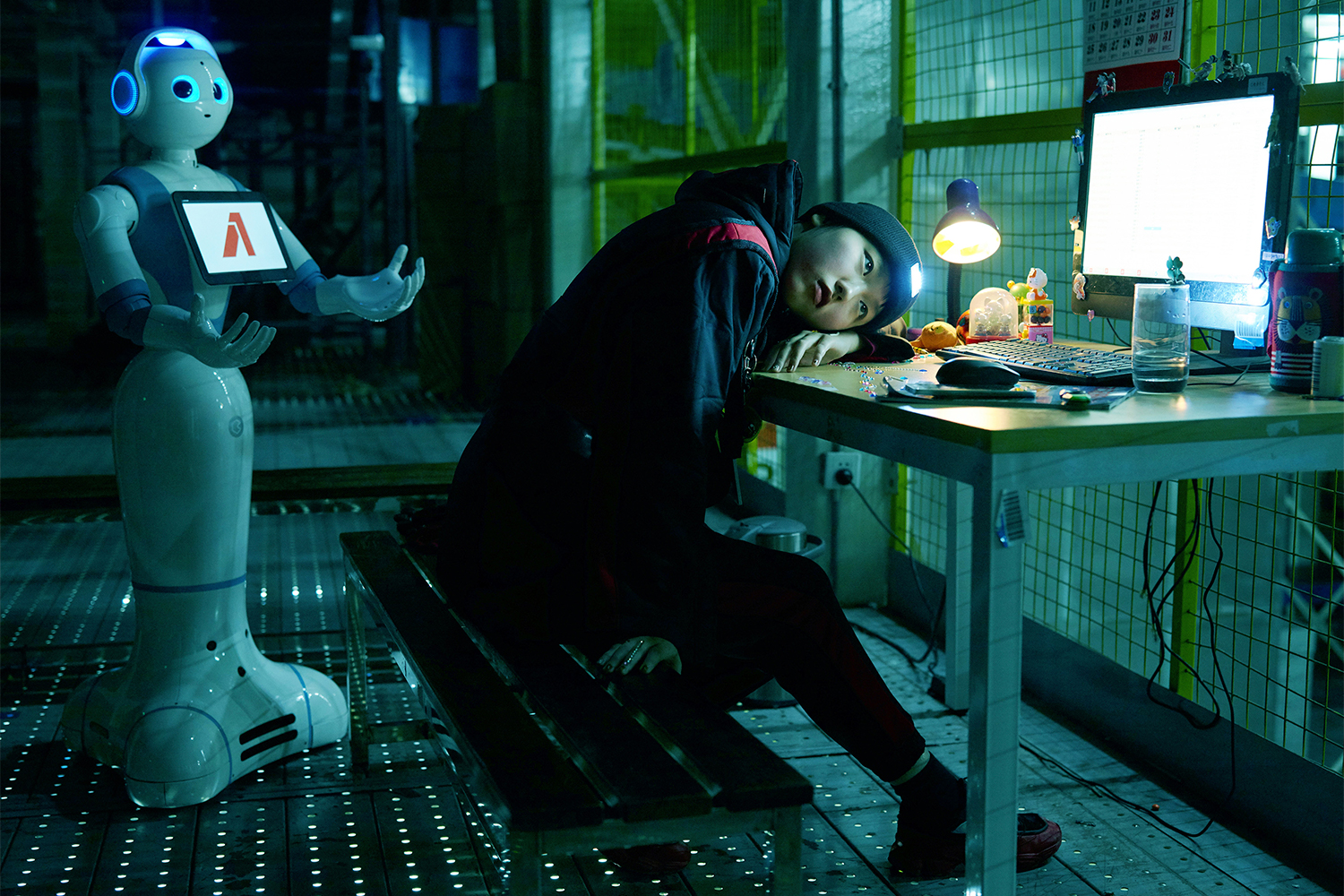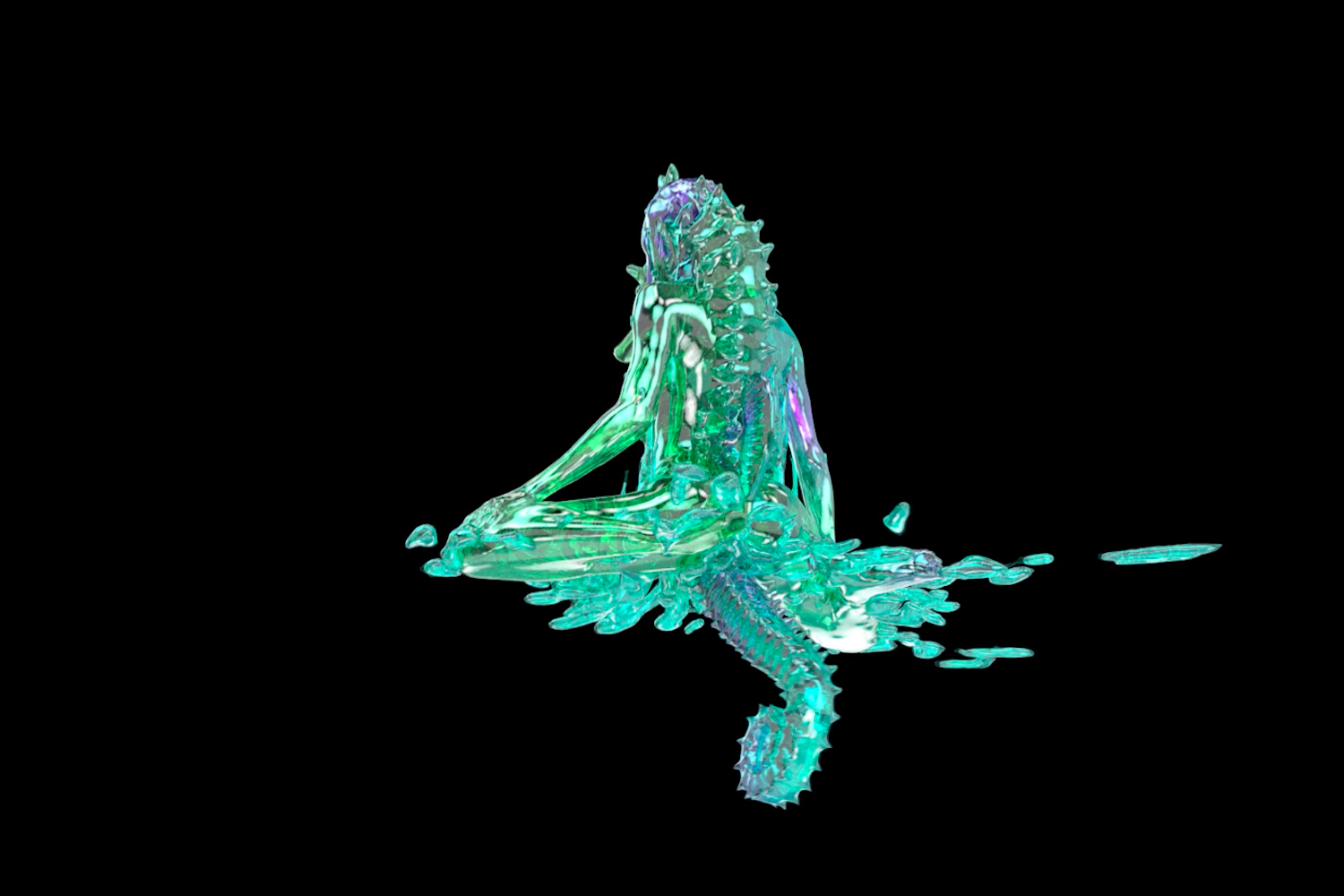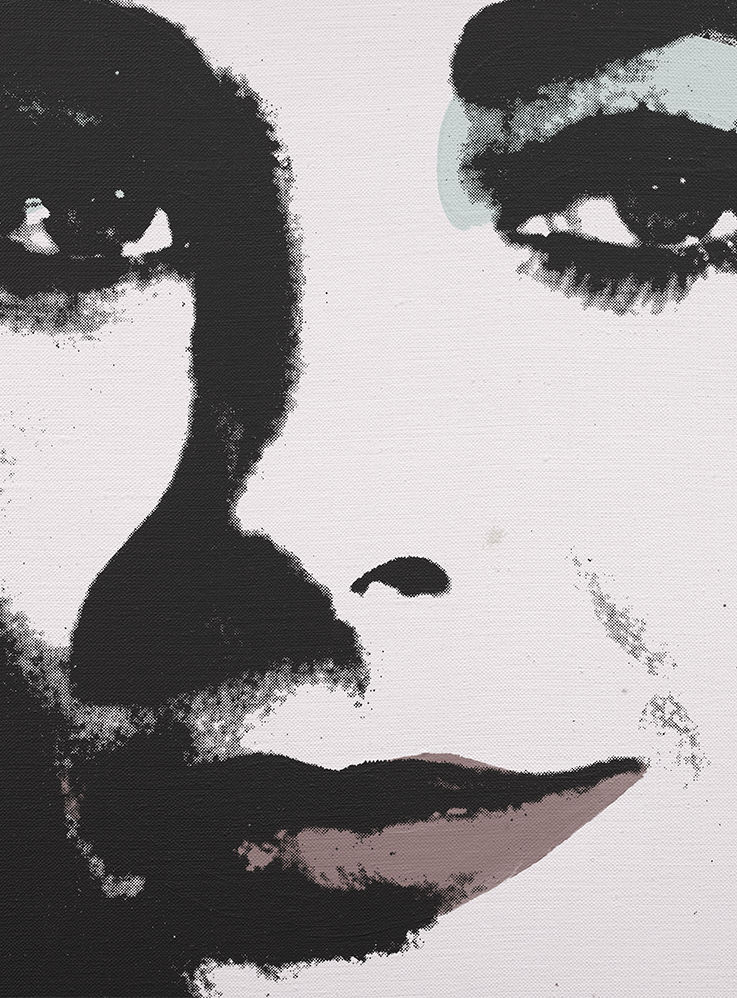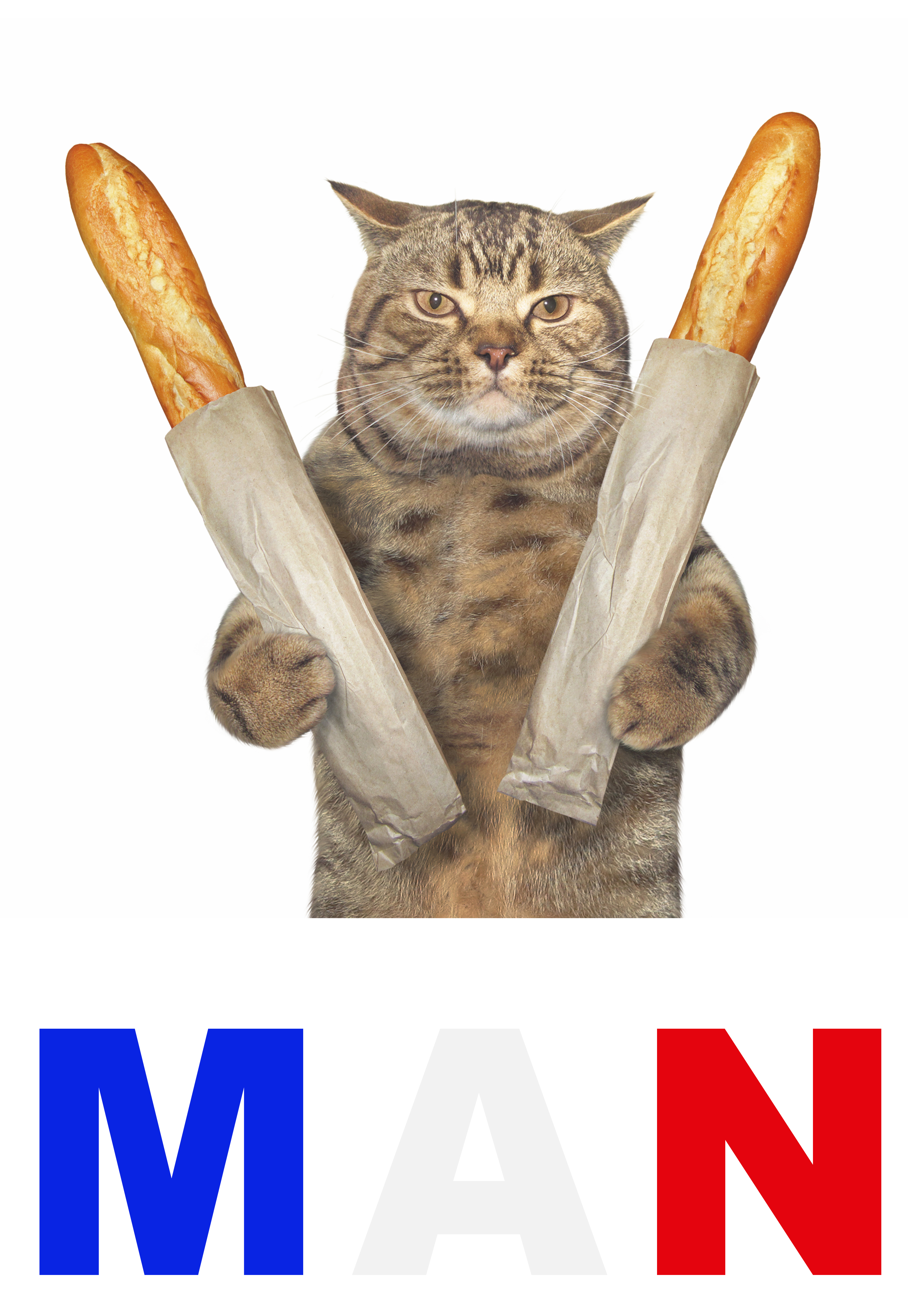
When you go underwater, space takes on a different density: light is absorbed and refracted, vision becomes blurred, objects appear larger and closer, sounds travel faster, movements are slower, all while pressure forces you to regulate your breathing. Submersion is not only a geological condition but a media regime. It names a state in which images circulate at high speed and low resolution, designed to evade duration while saturating the present. “The Island,” Hito Steyerl’s solo exhibition curated by Niccolò Gravina at Osservatorio Fondazione Prada in Milan, unfolds within this system, taking its title from an artificial island discovered off the coast of Korčula, Croatia: a Neolithic structure that remained submerged for approximately seven thousand years at a depth of four and a half meters. Here, the island — long underwater — operates not as an archaeological object but as a remainder — a minimal unit of sense, a residual form whose heptagonal geometry becomes entangled with a heterogeneous set of temporalities and discursive regimes: science fiction, quantum physics, biochemistry, historical geopolitical catastrophe, post-historical AI slop, and deep time / junk time.
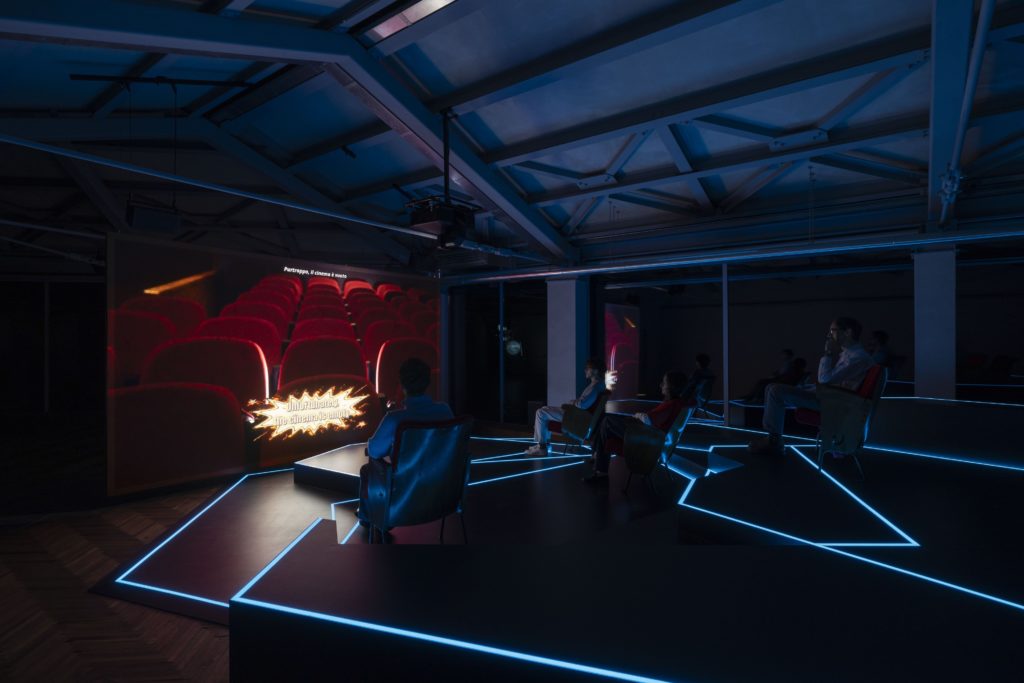
Here, the submerged island becomes a figure for a broader process, currently driven by a tsunami of artificial images that are low in resolution, high in circulation, and structurally disposable. Designed to evade time while nevertheless saturating the present, these images form the background against which Steyerl’s work persistently returns, deconstructing the nexus between digital technologies, the intensification of algorithmic power, and the progressive dispossession of individual and collective agency. What emerges is an oscillatory, critical assemblage — fluctuating between diagnostic clarity and speculative escape routes from the necrosis of simulation — aimed at challenging the persistent condition of aesthetic fatigue.
Through “The Island,” Steyerl stages two implicit and ancient questions that traverse the contradictions of the exhibition experience: How does one construct a form while remaining within the ambiguous interface between reality and image? And how do we move across a terrain already deformed, gaseous, and semi-putrefied by the pseudo-chaos of algorithmic production?
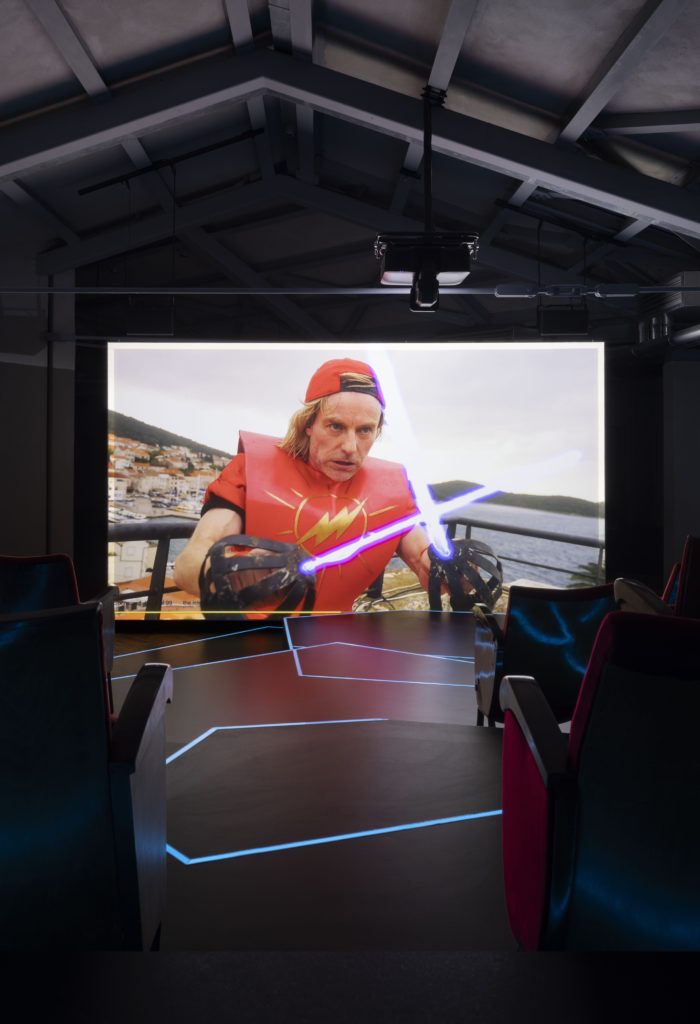
Orientation within this curved, post-Cartesian medial space is addressed through the convergence of science fiction and quantum physics. Steyerl mobilizes both as operative epistemologies for alternative constructions of meaning. The former, conceived as a projective tool capable of reconfiguring the real by incorporating its internal antagonisms rather than escaping them, is anchored by Darko R. Suvin, a seminal theorist of the genre. Suvin recounts the genesis of this urgency by recalling how, in 1941, he witnessed the explosion of a bomb in front of his city’s post office, seeking cognitive refuge in the sci-fi serial Flash Gordon’s Trip to Mars (1938). Quantum physics, by contrast, enters the exhibition as a materialist challenge to newtonian ontology, foregrounding the molecular coexistence of multiple states within a single temporal frame. These two epistemic strands intersect on the exhibition’s first floor, where video interviews with Suvin and quantum physicist Tommaso Calarco are put in dialogue with Croatian archaeologist Mate Parica and Sachi Shimomura, daughter of biochemist Osamu Shimomura. He was awarded the Nobel Prize in 2008 for the discovery of GFP (green fluorescent protein), following his studies of the luciferin molecule in Aequorea jellyfish. These latter images, whose documentary status remains deliberately ambiguous, operate as enlightening interruptions within a darkened spatial field. Like Suvin in Zagreb, Osamu Shimomura also witnessed an explosion during childhood — the atomic bombing of Nagasaki — and, like Suvin, he would later devote his research to a form of light capable of illuminating the opacity of the reality. In the film The Island (2025), presented on the second floor and found by following a blue LED line that traces a vector through the darkened space, Flash Gordon returns to Korčula to save the world from the visual debris generated by the explosion of simulated images. Here, science fiction continues to function as an operation of assimilation and sabotage of reality’s factual dislocations. Montage becomes a critical device that — echoing the quantum entanglement invoked by Calarco in a dialogue with Flash, anxious about losing the war against AI slop — serves to cut the fabric of reality and condense it into new configurations and discontinuities.
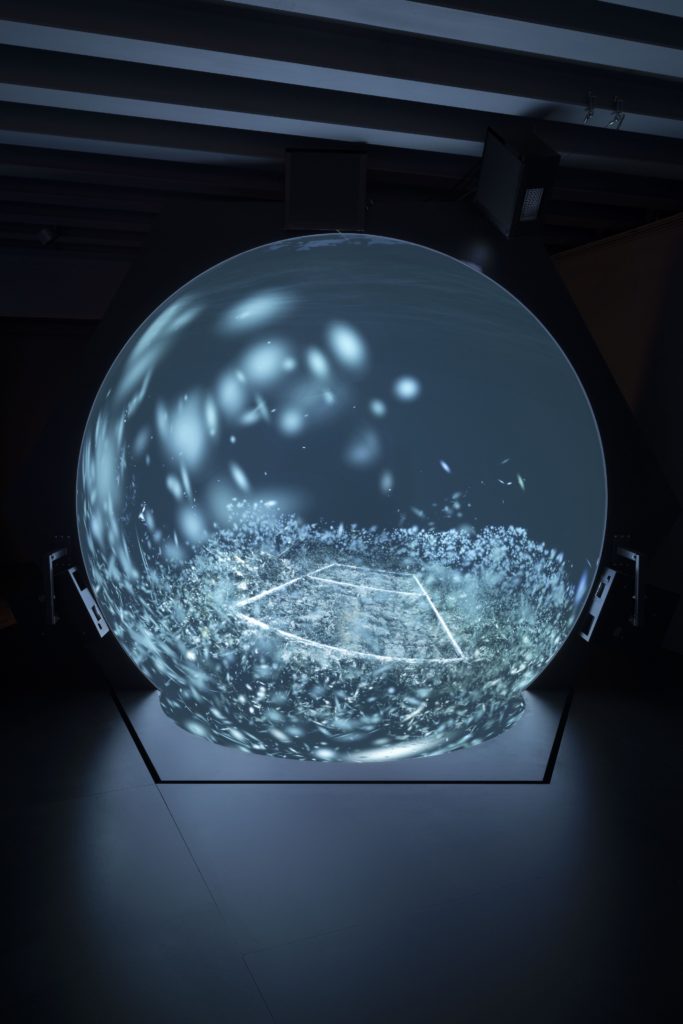
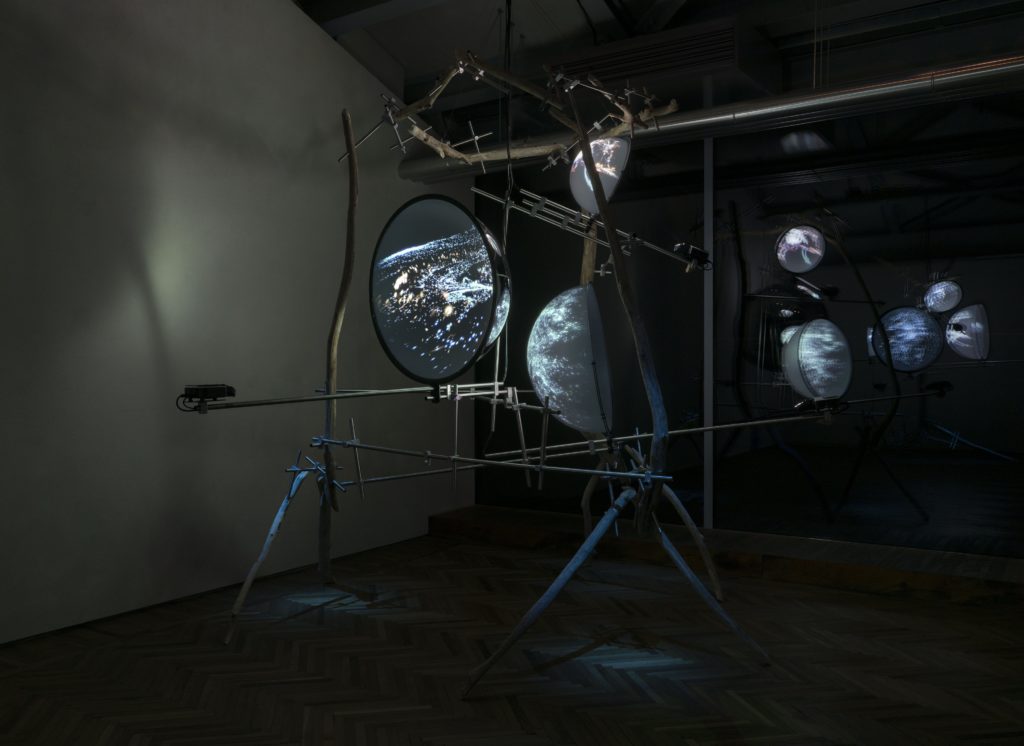
This logic of entanglement is then mirrored in the higher harmonics of the traditional Dalmatian klapa choir that accompanies and concludes the film. The choir’s song functions simultaneously as closure and renewal: an intuition of return — to the island, to the human gesture — and of a possible breathing space from the submersion of meaning. It stages a human entanglement of bodies and voices that sing to the waters of the Adriatic Sea today, as they did thousands of years ago. “The Island” may thus be said to intercept a deep duration, stratifying heterogeneous temporalities and languages while allowing each subject to navigate this strenuous density of aesthetic stimuli. Rather than offering a guaranteed promise of redemption, the body re-emerges as a contested site of labor, stretched within the ongoing struggle between dispersion and synthesis, visuality and performativity, atomization and community. The body persists as a submerged particle, moving with effort through a semantically dense field in the aftermath of the simulation’s detonation, negotiating its duration within a present that no longer guarantees continuity.