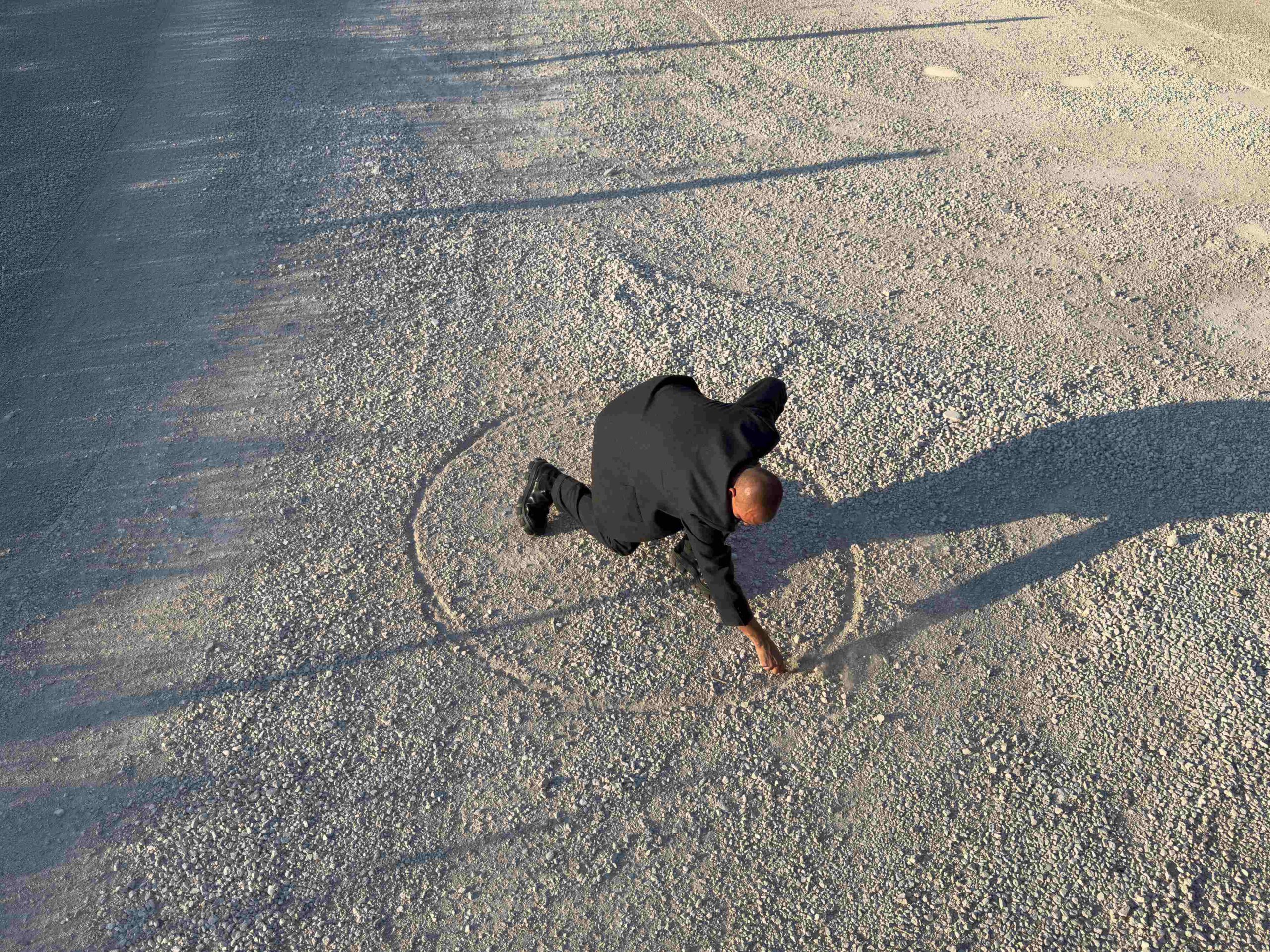
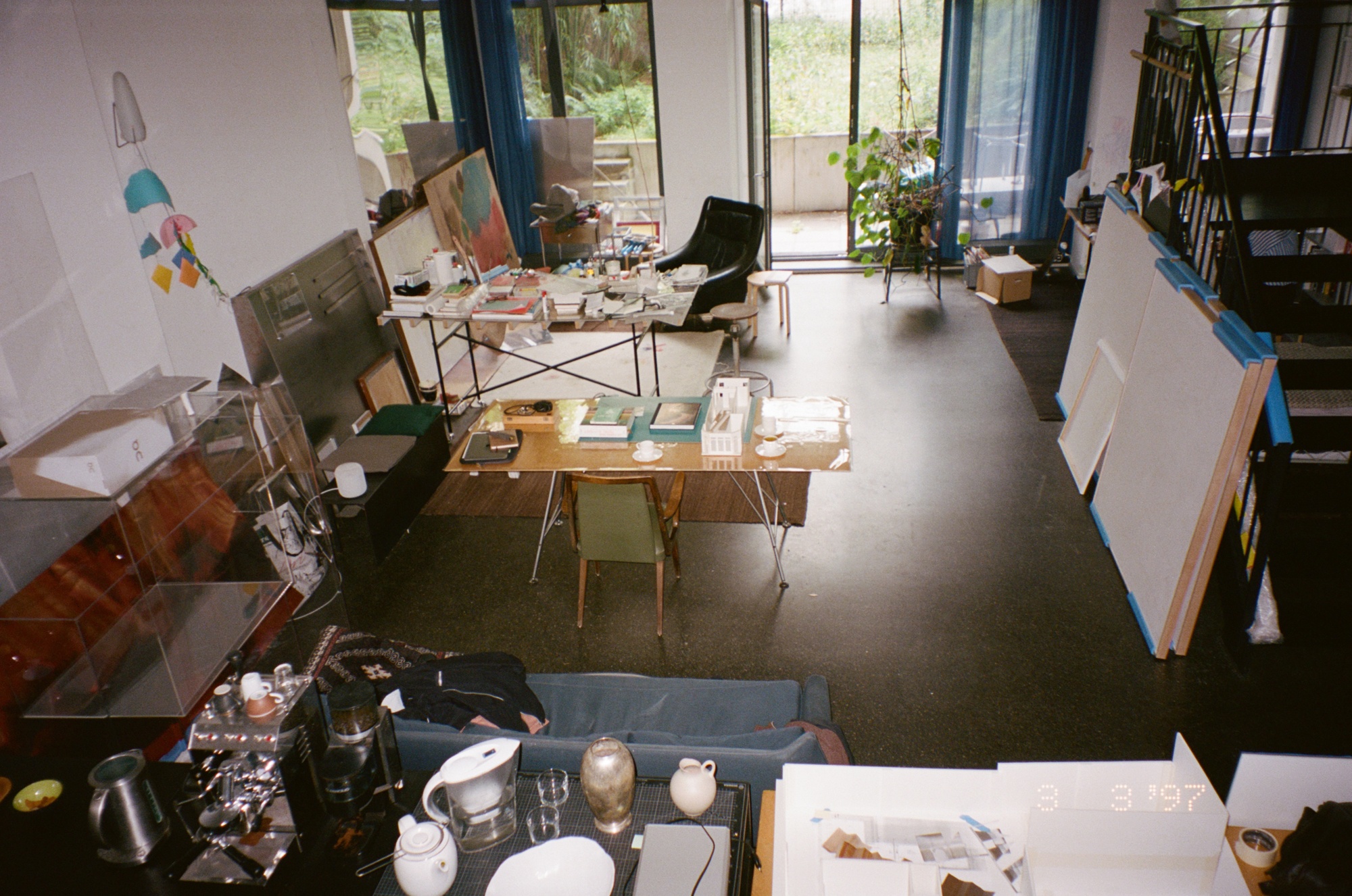
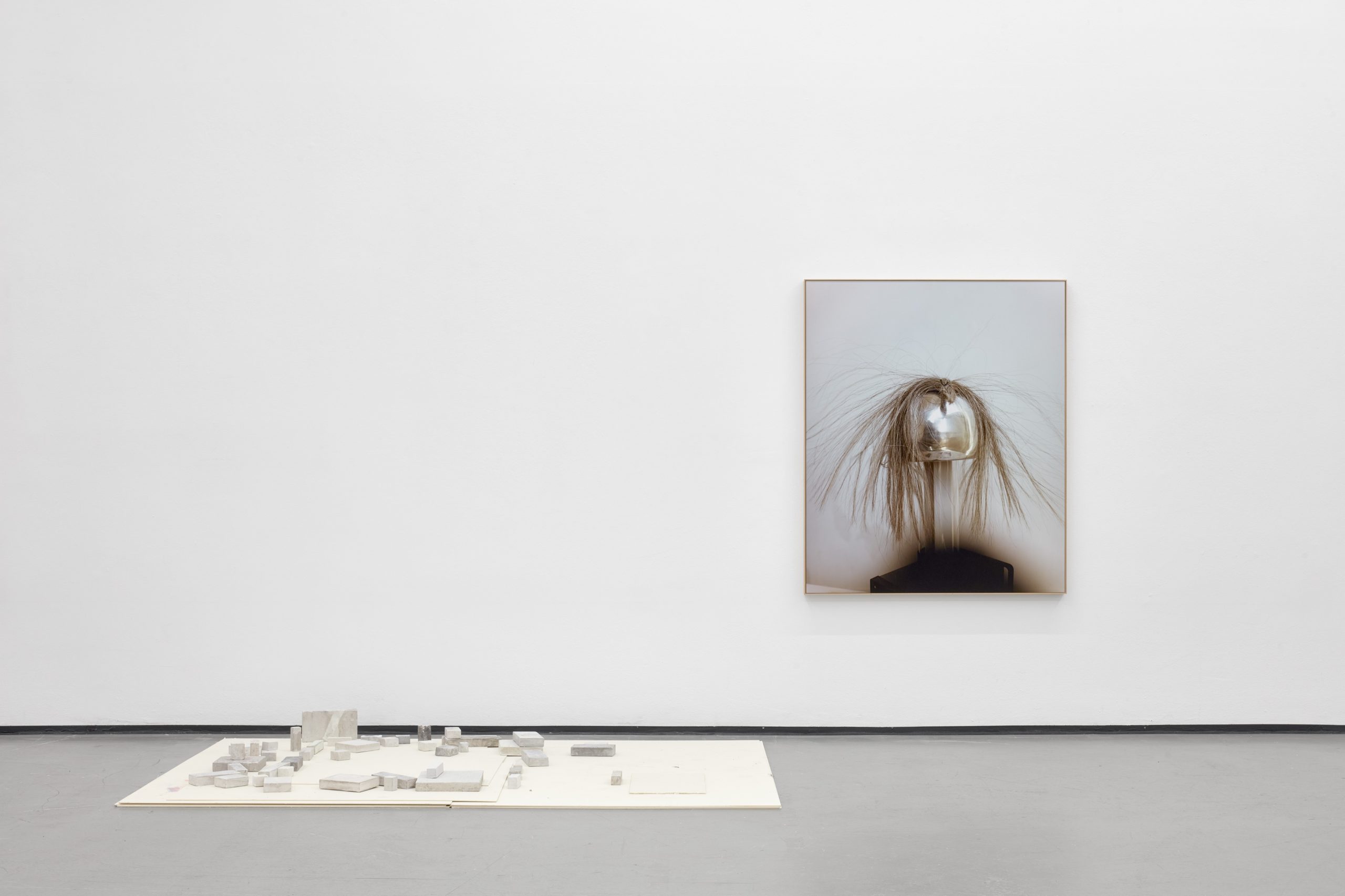
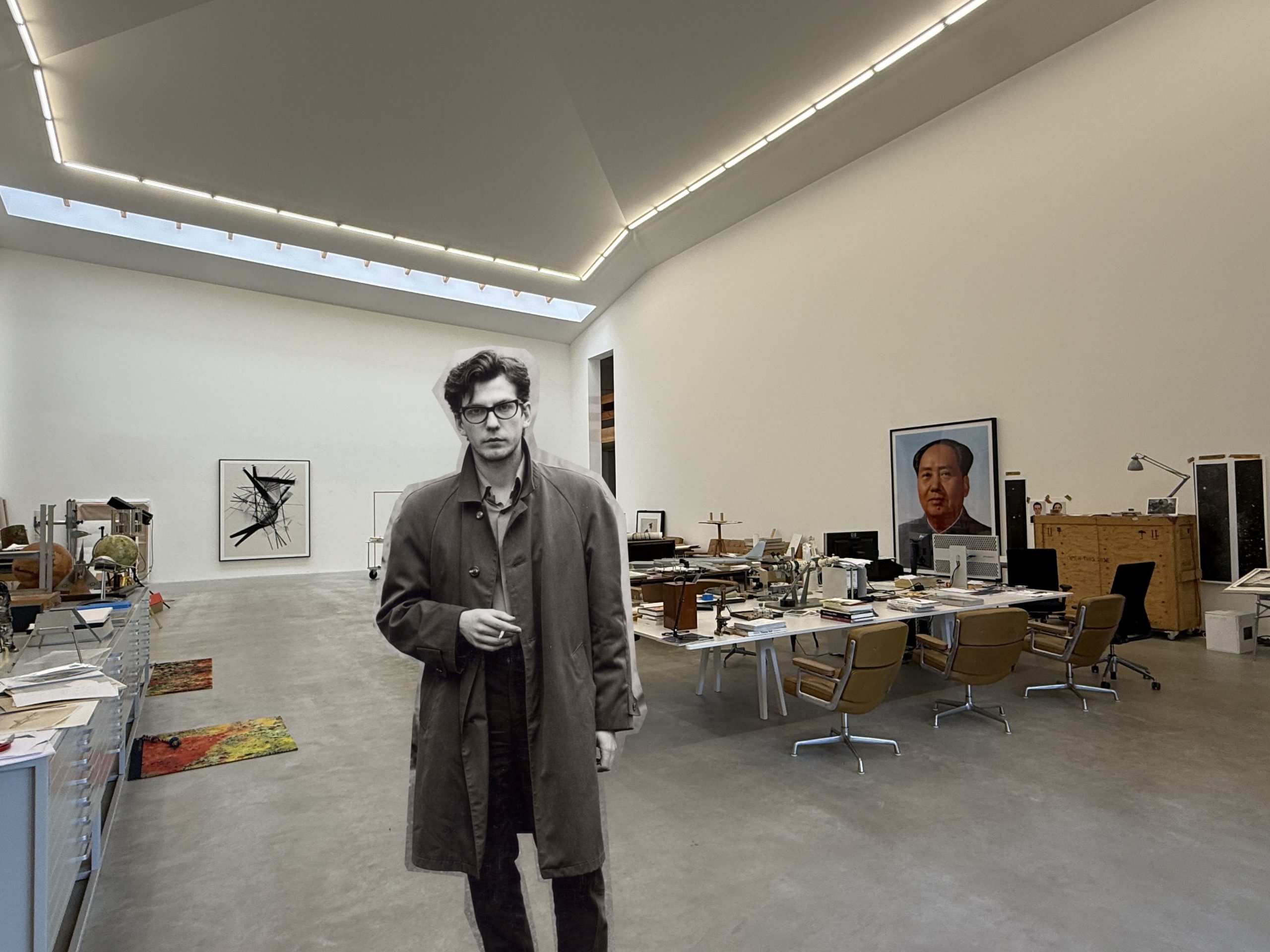
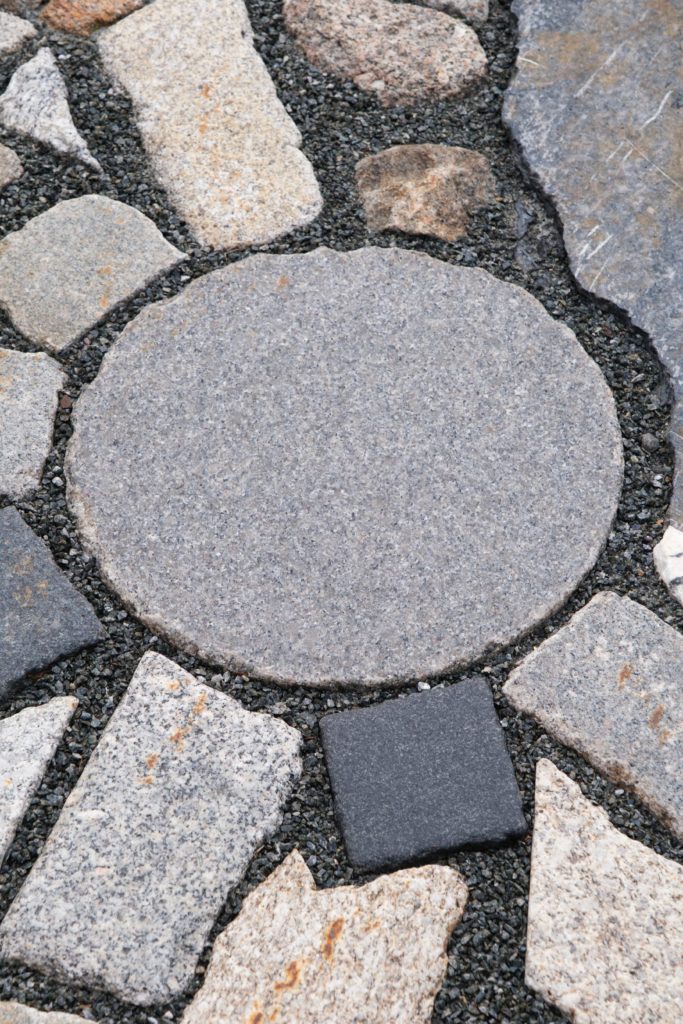
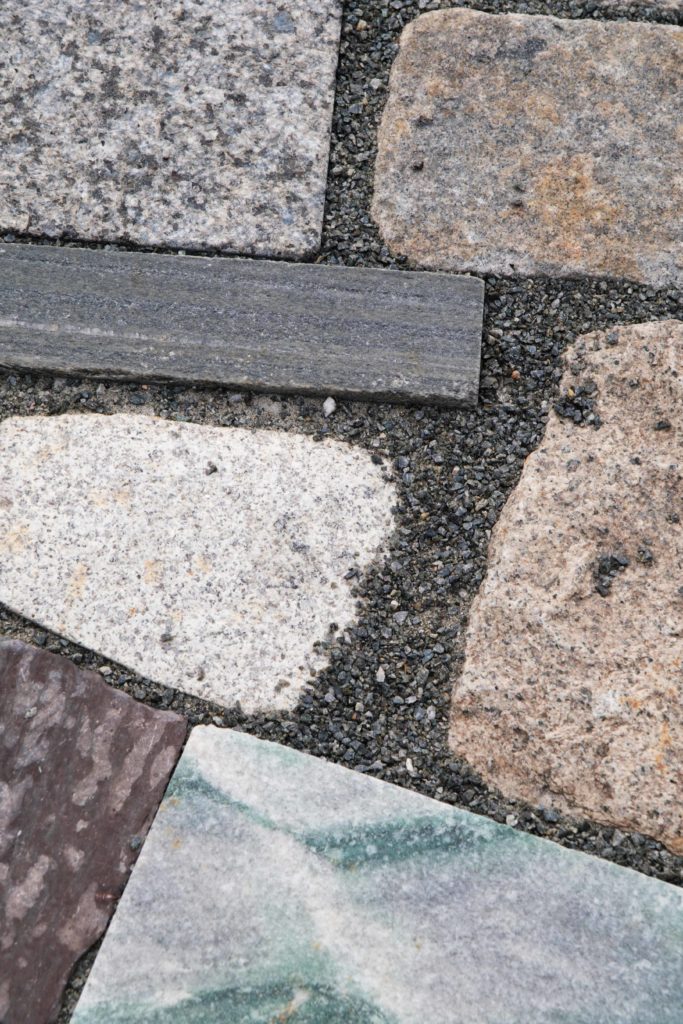
The entrance to Oslo’s newly rebuilt government quarter opens onto a wide public square. Part of it is an eight-hundred-square-meter floor laid from hundreds of stones: granite, marble, gneiss, and slate, in different colors, shapes, textures, and sizes. Officially launched in June 2026, it is a work by the Palestinian artist Jumana Manna, titled Sebastia, composed of stone gathered from across Norway. Municipalities were asked to send what they had, and around a hundred did — material pulled from old bridges, dams, museums, town halls, and schools. Their original shapes were kept intact, assembled without being matched or smoothed into a single pattern.
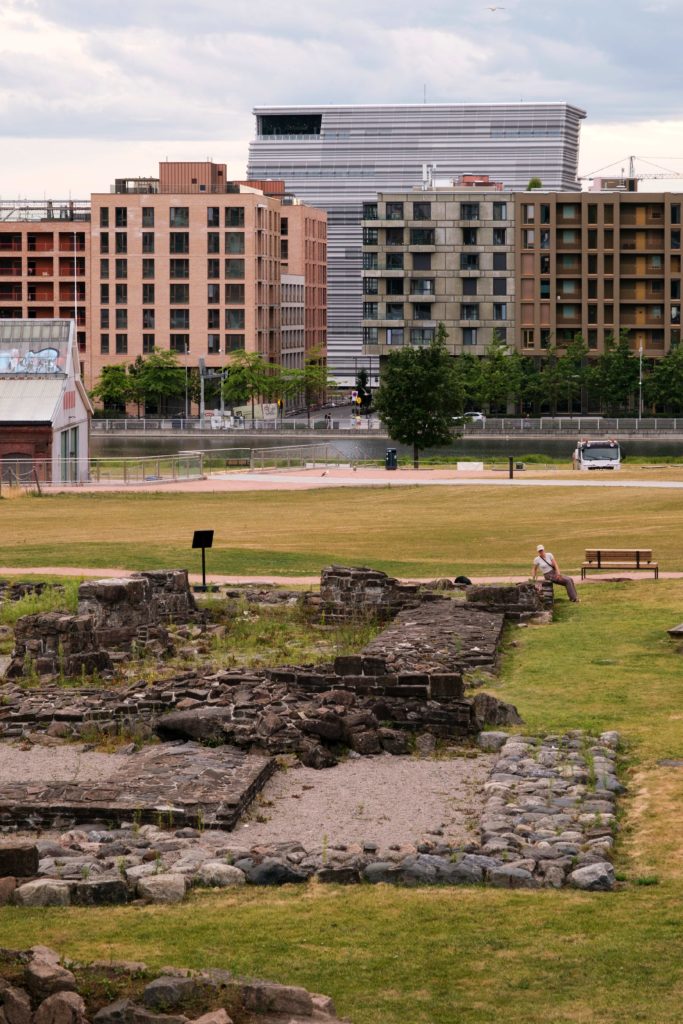
In dry, bright weather, Sebastia can read almost as a single gray surface. But when the weather turns and the floor gets wet, the colors deepen — red separating from gray, one rough granite texture from another. On this ground, in July 2011, a far-right extremist detonated a bomb, killing eight people, before continuing his attack at a summer camp for the Norwegian Labour Party’s youth organization, held on the island of Utøya, killing a further sixty-nine people, most of them teenagers. It was a cynical attack on ideals of openness and pluralism, on the very idea of a nation held together by difference.
As happens elsewhere in Europe, reactionary and xenophobic politics frequently attempt to delimit who is considered Norwegian. For example, the right-wing party Fremskrittspartiet (The Progress Party) recently suggested that only citizens should be allowed to vote in municipal elections, while simultaneously implying that foreigners are a threat to democracy and Norwegian culture. One possible reading of Sebastia is that no such monolithic culture exists. What it means to be Norwegian is constantly in flux, an amalgamation of diverse local cultures, histories, and people in exchange with one another.
Manna’s work echoes Édouard Glissant’s politics of relation –– diversity not as a threat to the whole but as its condition, its parts in contact without being reduced to one another[1] –– or, in the phrase Fred Moten made his own, “the consent not to be a single being.”[2] It is a fitting image of a city where close to a third of the population has roots elsewhere. I was born and raised in Oslo, but for the past ten years my sense of the place has shifted, been shaped by being on the inside of its institutionally diverse art scene. Having spent most of last year abroad, partly in major art hubs like London and New York, I’ve become increasingly aware that the conditions that sustain art are different here. Sebastia is a fair emblem of how art is supported in this city — a whole held up by its parts, each keeping its own ground.
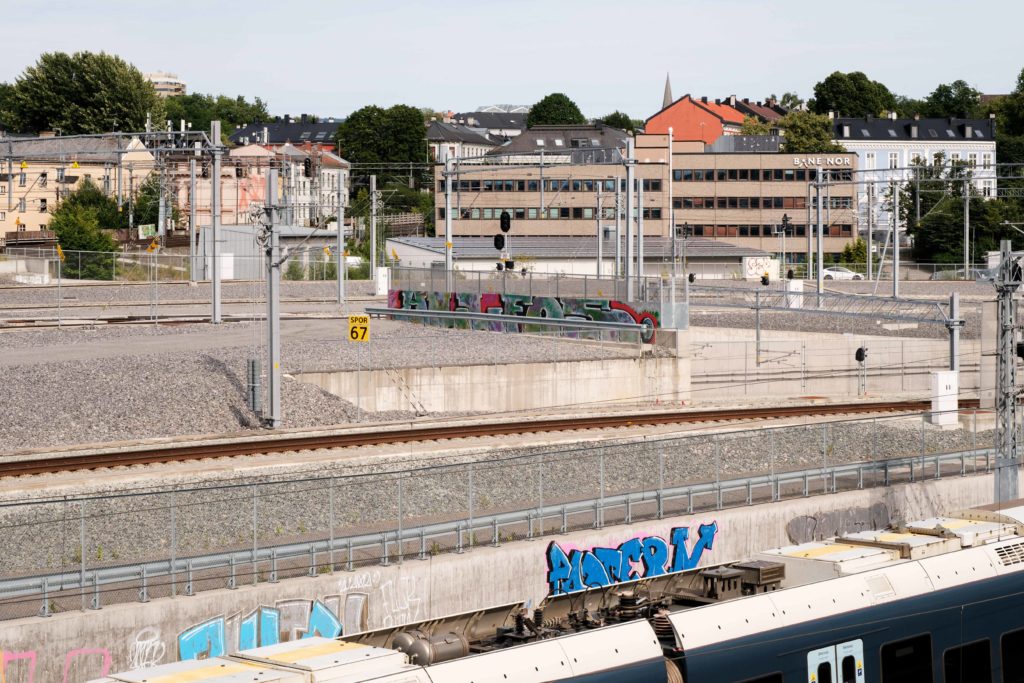
In many art capitals, the oldest institutions are also the largest — the vast state museums with their long histories. In Oslo, those keepers are the newcomers: the Munch Museum, now rebranded simply MUNCH, and the National Museum of Norway, both raised in the last five years on reclaimed waterfront at the city’s edge, each a dark block among the skyscrapers. What is long-standing is the artistic life itself, much of it artist-run. Oslo Kunstforening (OK), a membership-based organization showing contemporary art, was founded in 1836 and is still running. Since 1936, it has occupied Rådmannsgården, built in the 1600s, one of the oldest surviving buildings in the city, and today a protected monument. I always find myself drawn to its first floor, a kind of palimpsest layered with torn wallpaper in deep, faded colors and dense patterns and ornament from another century. In late spring 2026, OK marked its 190th anniversary, for which the artist Anna Sofie Mathiasen made drawings and collages based on the institution’s own archive. Because the building is protected under the Cultural Heritage Act, the works could not be hung on the walls; instead, they were mounted on a steel pipe running across the room.
Whereas Oslo Kunstforening has artists among its members, some of the city’s most influential art spaces are entirely artist-run. Kunstnerforbundet, founded in 1910, is one of the oldest artist-run spaces in Scandinavia: organized as a company whose shareholders are exclusively artists, programmed primarily through open calls, while presenting up to four solo exhibitions at once, six times a year. Kunstnerforbundet is located in a townhouse in Kjeld Stubs gate, adjacent to the city hall. Its main gallery, Overlyssalen, or the Skylight Hall, was designed in 1919 by Gudolf Blakstad and Herman Munthe-Kaas, the same architects who would raise Kunstnernes Hus around a decade later.
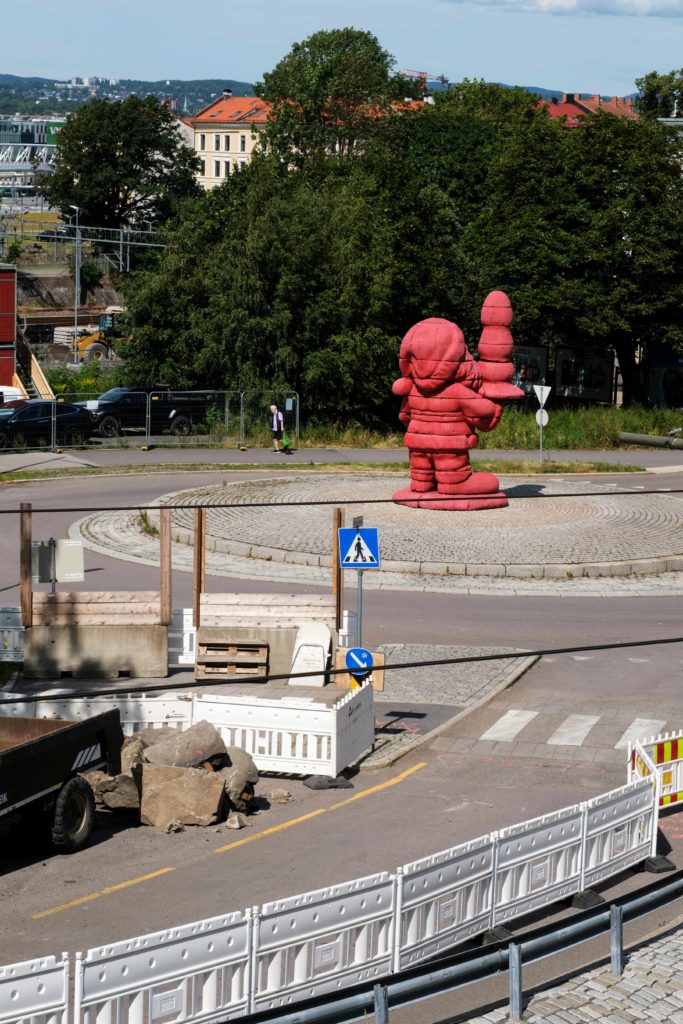
These two buildings share a signature: daylight dropped from overhead through a ceiling of glass. The artist-owners of Kunstnerforbundet financed the Skylight Hall themselves, off the back of what they had earned selling art during the boom years of the First World War. The space has remained the institution’s centerpiece ever since and is still among Norway’s most prestigious exhibition spaces. Some of the artists involved were Norwegian pupils of Henri Matisse, and Matisse himself participated in exhibitions held here in 1916 and 1918.
This spring, the Skylight Hall held a single film by Norwegian artist Øystein Wyller Odden — one of my favorite uses of this storied room. Unlike most artists who tend to treat the space as a backdrop for monumental or visually vibrant works, Wyller Odden carefully captured the conditions of the space itself, tracing scratches on the walls, the reinforced glass ceiling, as well as its embedded steel wire forming a grid of small squares. Shot during the night with a high-speed camera, originally built to analyze airbag and rocket tests, the room flattened into something almost graphic. The soundscape was also notable: a low drone, the amplified noise of the room’s electrical grid, was felt throughout the body as much as it was heard. It is, in the most literal sense, an exhibition about the infrastructure that holds art together.
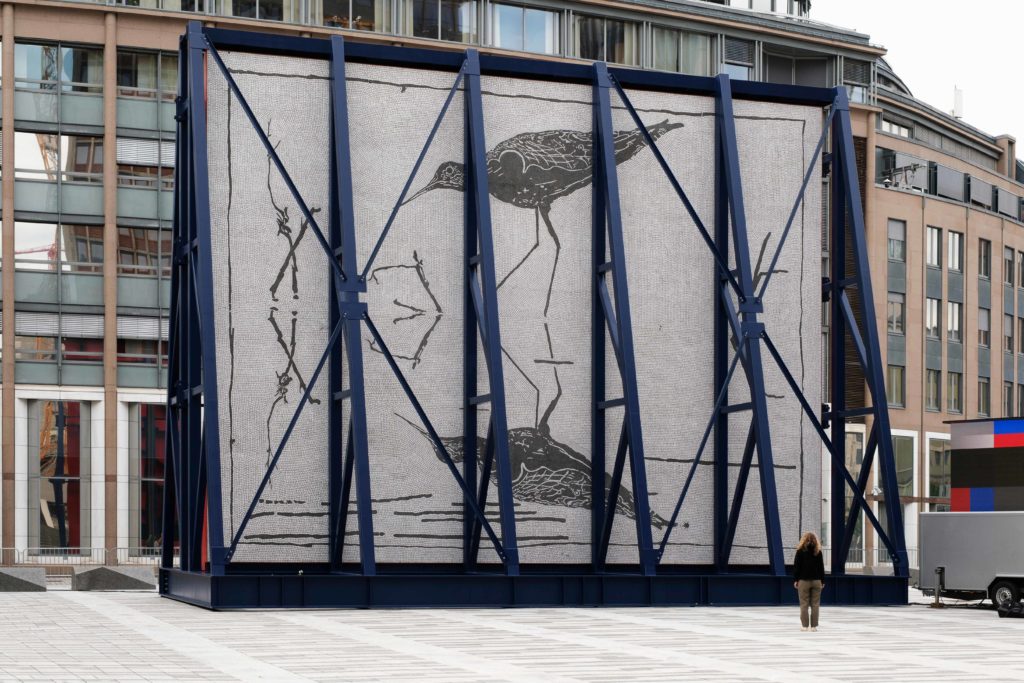
A few minutes uphill from Kunstnerforbundet is the institution I know best, which has been my workplace for the past three years. Kunstnernes Hus, or the Artists’ House, opened in 1930 just when Norwegian architecture turned from neoclassicism to functionalism. It has belonged to the artists from the outset, overseen by a foundation whose board is mainly artists, and an advisory board consisting of representatives from the different artist unions. The building even wears its structure openly, in the functionalist manner: the brick is laid so you can see it carries no load, that the frame behind does the work. Upstairs, reached by a long, deliberate staircase, are the two rooms the house is known for, a matched pair of top-lit halls, side by side and almost identical, each lit from above through a glass ceiling. When they opened, they were considered among the finest exhibition rooms in Northern Europe, and they still set the terms for anyone who exhibits here. Each year the rooms are given over to Høstutstillingen, the state’s Autumn Exhibition, Norway’s oldest and largest open-submission show, juried entirely by artists. Working here, I have watched it draw the largest crowds of the year, the rooms packed for weeks.
Kunstnernes Hus will also open the exhibition “Support Structures” this fall, gathering artists around the very condition on which this art scene depends: infrastructure, community, and relationships, typically the invisible foundations of any practice. The works leave the white room, spreading into the foyer and onto the façade, dissolving the lines between craft and design and art, between function and form, between the frame and the thing it frames. This theme is not abstract, as the building itself is in dire need of major renovations, and the institution is currently attempting to raise the funds to pay for it.
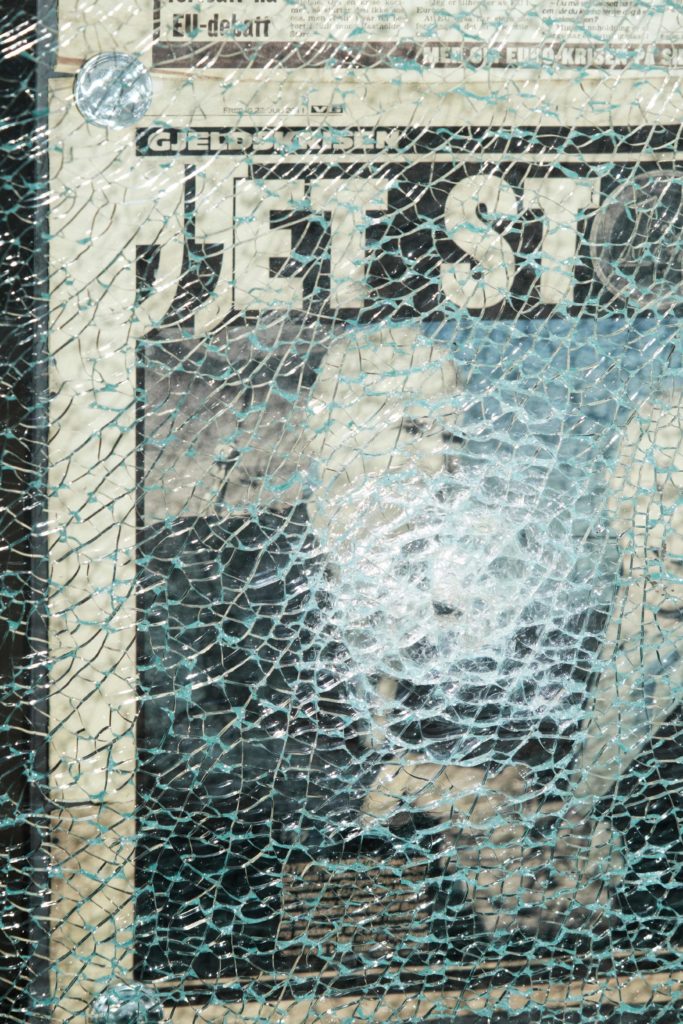
The show casts the term “support” widely, as social, emotional, functional. In Oslo, one form of it is unusually concrete: much of the scene’s support structure is built and maintained by the artists themselves, through their unions. Norway is a social democracy with a deep welfare model, and part of its art scene is arranged along the same lines. Norwegian art rests on a model devised in the 1970s to stand in for patrons it never had — no moneyed class, church, or court. In 1971, two years after oil was first extracted offshore, a survey found the majority of the country’s artists living in near poverty. A broad coalition of artists, writers, and composers came together in order to demand fair payment from the state. Kunstneraksjon-74 hinged on a three-point demand: payment for the public use of work, state commissions for public buildings, and a guaranteed minimum income for artists. Its purpose was also spatial — to enable artists to afford studios and to make sure that visual art was available to the public, without a market deciding who holds a place in the city.
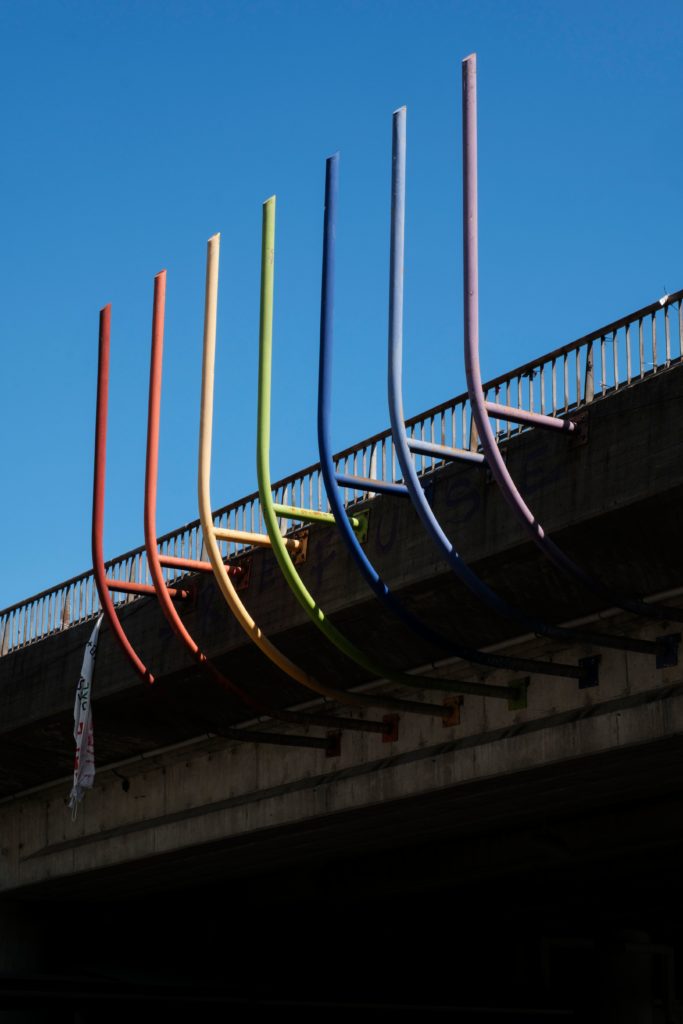
Today, the profession remains heavily unionized, and several of these artist organizations own or run their own gallery spaces, which are scattered across the city center. Many of the venues that program most consistently in Oslo are run by the unions, like Tegnerforbundet for drawing and illustration, Landsforeningen Norske Malere for painting, Norsk Billedhoggerforening for sculpture, alongside broader bodies like Billedkunstnerne i Oslo and Unge Kunstnernes Samfunn. They do more than provide administrative infrastructure; they actively shape the scene. These spaces often provide artists, Norwegian and international alike, the opportunity to have a solo exhibition early in their career, before the museums, larger institutions, or the commercial galleries take an interest.
The artist Marianne Heier, whose practice circles questions of the distribution of power within the field of culture, argues in a recent essay in the journal Billedkunst that the ground is giving way.[3] The guaranteed minimum income was abolished in 2012. State commissions shrink because the state now rents private buildings rather than building its own; underfunded institutions increasingly pass production costs onto artists; and studios are priced out of the center. A line hardens between the salaried staff who keep offices in the institutions and the freelancers who only pass through them. Spatially, it amounts to a slow eviction: art detaching from the public sphere, artists loosening their hold on central ground.
I keep circling back to Sebastia. Standing on it, what strikes me is its solidity: a floor assembled from hundreds of distinct parts, each the result of different contributions. It holds ground. The scene I have been describing shares many of the same qualities: sustained by many small institutions, collaborations, and acts of collective maintenance. A center that artists built and that, for now, continues to sustain and uphold.
[1] Édouard Glissant, Poetics of Relation, trans. Betsy Wing (Ann Arbor: University of Michigan Press, 1997).
[2] Fred Moten, consent not to be a single being, 3 vols. (Durham, NC: Duke University Press, 2017–2018), adopting a phrase of Édouard Glissant’s.
[3] Marianne Heier, “En trepunkts rakett,” Billedkunst (Norske Billedkunstnere), May 12, 2026, https://www.norskebilledkunstnere.no/billedkunst/aktuelt/en-trepunkts-rakett/.