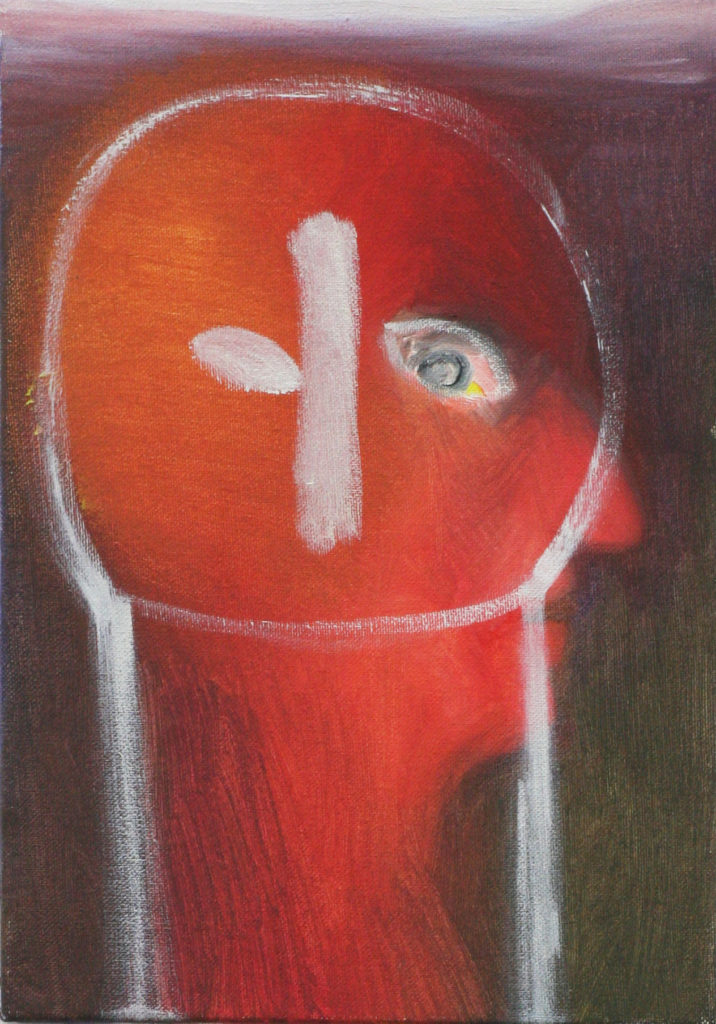
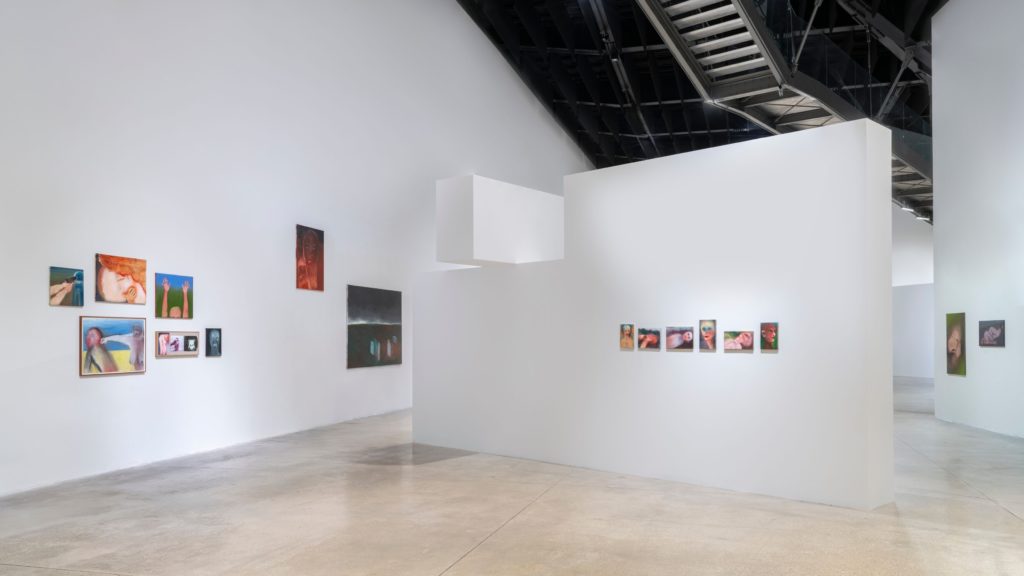
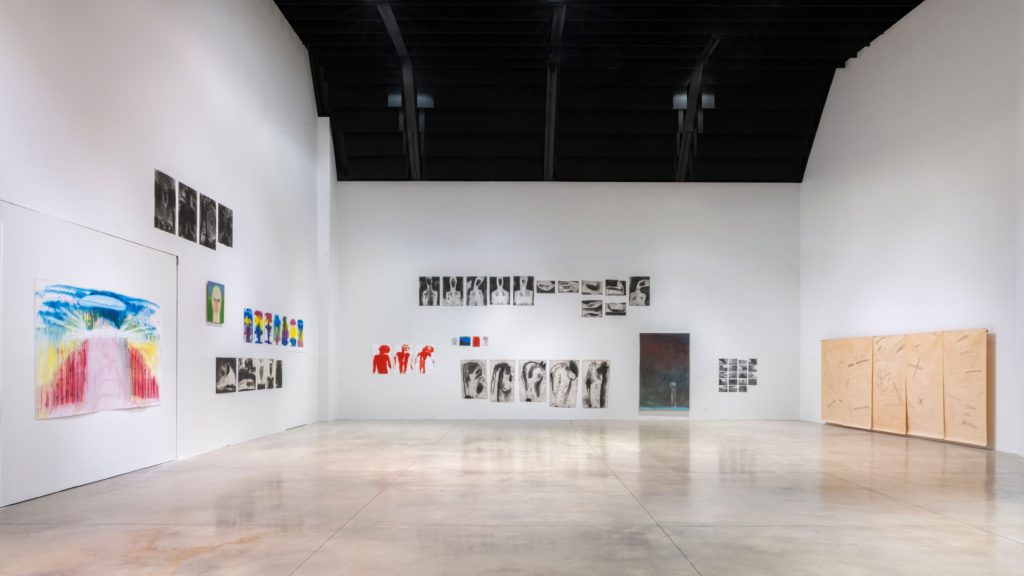
A visit to Miriam Cahn’s retrospective at MACRO in Rome, an exhibition that brings together more than 130 works across the museum’s largest gallery, immediately inspires reflection. From the moment one enters the vast space, it is clear that the artist, curator and museum director Cristiana Perrella, and exhibition designer Didier Fiúza Faustino with Bureau des Mésarchitectures have conceived the exhibition as a unified spatial experience. The display allows visitors to move freely while gradually uncovering overlapping layers of meaning, encouraging repeated encounters.
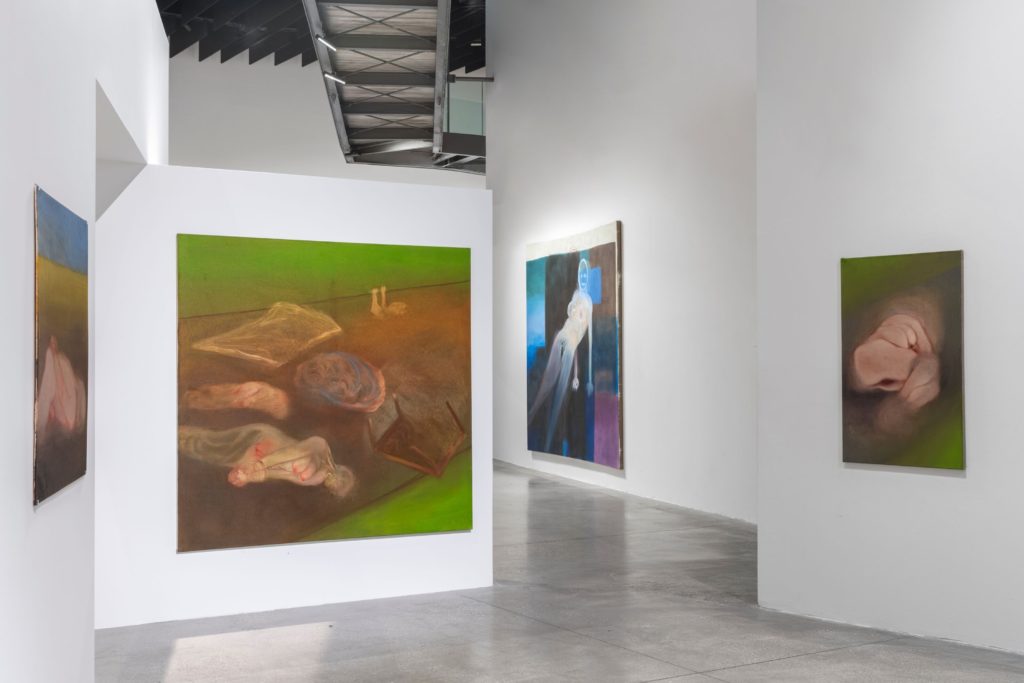
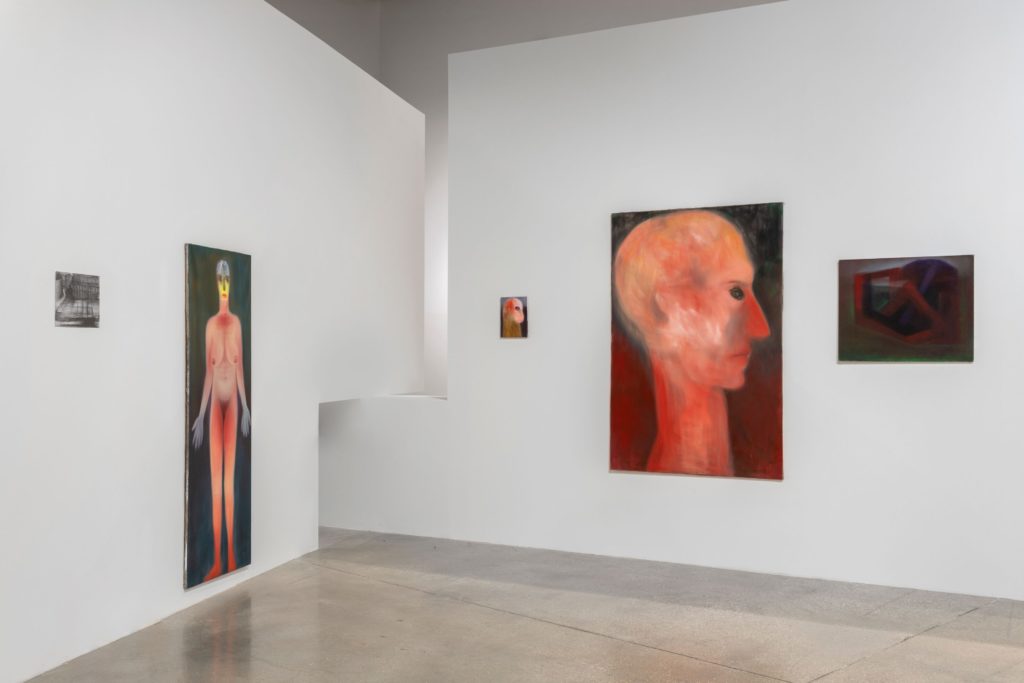
Works on paper, alongside oil paintings on cardboard, canvas, plastic, and wood of varying dimensions, run along the main gallery walls at different heights, sometimes suspended in small thematic constellations. This broad visual sequence, organized around recurring themes, is interrupted by two geometric structures housing the installation rooms titled Herumliegen / LYING AROUND (2022) and Familienraum / FAMILY ROOM (1996–2009). While Cahn has long worked in thematic series and clusters, she is perhaps best known for conceiving these self-contained spaces, which invite a more intimate relationship with carefully selected works. At MACRO, the two installation rooms, although physically separated within the main gallery, have a geometrically fragmented shape, with multiple breaks in the walls that provide brief glimpses of bodies and faces outside the rooms as one roams through the space. The sensation of being “looked at” by the many eyes emerging from violated and mutilated bodies, or from uncanny creatures, is further reinforced by the exhibition’s title, “Ciò che mi guarda” (“What looks at me”), which spans almost the entirety of the artist’s career from the early 1980s to 2025.
soldiers (men)
cars and carts
suitcases
water canisters
wood
sarajevo
women crying
picasso
WHAT LOOKS AT ME[1]
These are a few of the things that look back at Miriam Cahn, and, through the act of drawing and painting, that look at us as well.
There are four works in the exhibition that share the same title — WAS MICH ANSCHAUT/ WHAT LOOKS AT ME, all in uppercase — including a watercolor on paper from 2020 depicting a pink-faced dog-like creature, a dangerous one, even devilish, with dark eyes. Rendered in an expressionist manner, the work clearly recalls one of Cahn’s favorite artists, Franz Marc, and is positioned at the center of the “Mare Nostrum” grouping. It appears to watch over — and perhaps even govern (is this Europe?) — the exhausted bodies in migration.
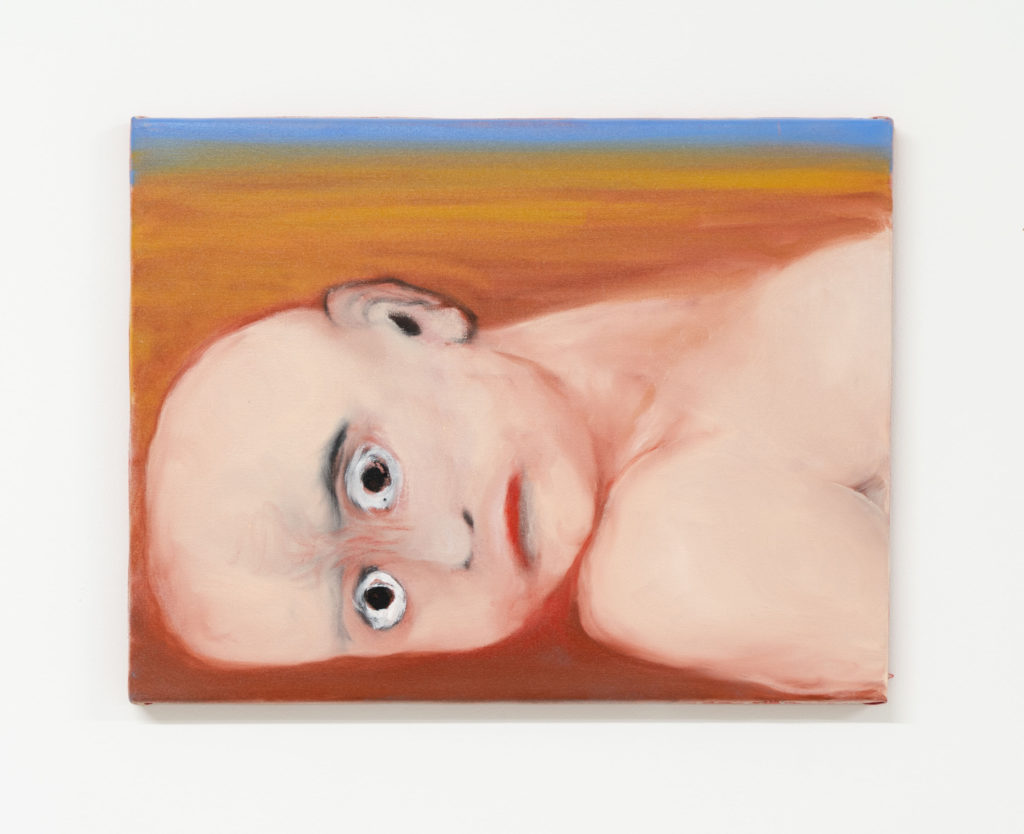
The retrospective traces recurring thematic threads, revealing both the persistence of certain subjects in Cahn’s practice and the evolution of her use of materials. The early charcoal-on-paper works bring back hints of the artist’s performative body as she worked on large sheets laid out on the floor, fully focused on the subject and realizing it within a few hours using her entire body. As is always the case in Cahn’s work, each image has multiple levels of meaning — at least two. There is the immediate reading, inevitably shaped by the viewer’s own experience, background, and vision, and there is the artist’s own framing, articulated through highly descriptive titles and precise dates. The introduction of color, which might initially suggest joy or lightness, instead becomes an almost literal representation of the fallout from atomic bombs in the series devoted to this subject that began in 1986, after the Chernobyl disaster.
And yet, as one leaves the exhibition — with all those eyes on us, often carrying the question, “Why is this atrocity still happening around the world?” — a lingering sense of absence remains. Cahn demonstrates how her practice has always been driven by an instinctive, physical response to the violence and injustices of wars. Yet her response to what is happening today is quiet, and perhaps requires a more subtle and attentive gaze.
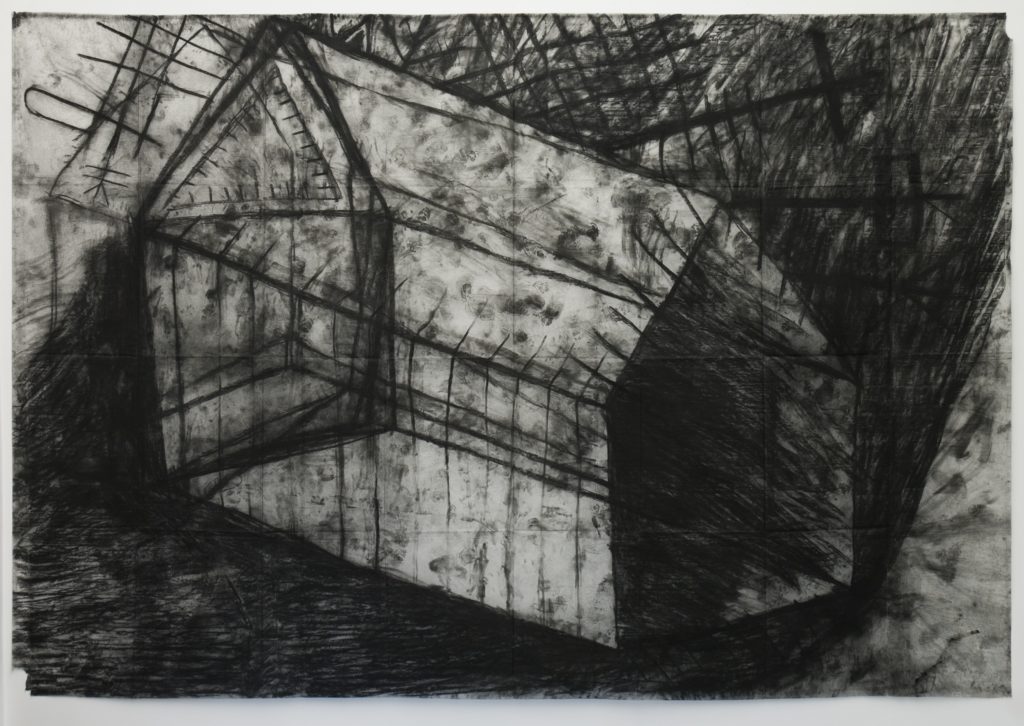
Although the exhibition is not arranged in strictly chronological order, it has such a circular layout that the very first work on display, MORGEN GRAUEN (kassandra) / HORROR OF TOMORROW (kassandra), (1980), is only a few feet away from Cahn’s most recent work, a series of small paintings portraying everyday objects, completed in 2025. The 1980 work consists of five large vertical drawings on paper, featuring words such as “ZERSTORUNG” (DISASTER), sketches of houses, an airplane, stylized figures, and cross-outs, accompanied by a constant, irritating sound, like an alarm. The sound is most noticeable near the work and gradually fades as one moves through the exhibition. Approaching the exit, while looking at those small objects that belong to our daily lives, it grows louder again: a reminder, an alarm that we have ignored for too long.
A grocery list, a knife, and two eggs — among the subjects in the small paintings — seem to reassure us about our comfortable lives, but Kassandra keeps sounding the alarm.
[1] The opening section of Miriam Cahn’s text, written between January and February 1994, read on the occasion of the exhibition “Picasso” (Haus der Kunst, Vienna 1994) and published in Miriam Cahn. Writing in Rage (Hatje Cantz, 2019), 131.