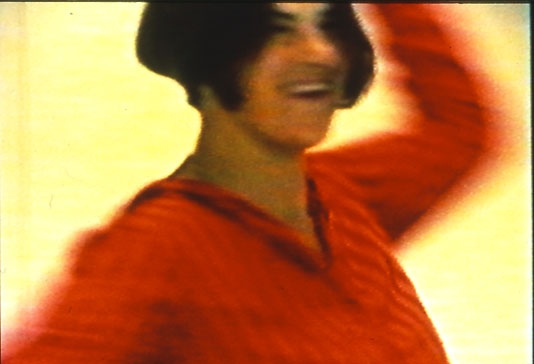
You have not yet fully entered when the word “slag” finds you. The gallery is still opening itself, the walls still orienting you, and already the slur is in the room: a teenager’s voice from a screen in Margate. Why I Never Became a Dancer (1995) is barely seven minutes long and constitutes the entire argument of the exhibition: that a woman’s body, from the very beginning, is the site where the world writes what it thinks of her, and that making art from that body is not an act of exposure but of reclamation, slow and never quite finished.
What “A Second Life” understands, and what makes it the most significant exhibition Tate Modern has mounted in years, is that vulnerability is not a quality Tracey Emin performs. It is the condition from which she makes. There is a difference between using your wounds as subject matter and allowing them to be the formal logic of the work itself, so that the art could not have taken any other shape, could not have been made by any other body. Emin did not negotiate with that distance; she abolished it and never looked back. To stand inside this retrospective is to understand what forty years of that refusal actually accumulates to; and to feel — in a moment when the female body is once again a legislative battlefield — that the work has acquired a new urgency its maker could not entirely have anticipated. Her practice was built against the forces — social, legal, sexual, medical — that seek to determine what a woman’s body means before she has the chance to say it herself. This is not a show arriving at the right moment by accident, but confirmation that the moment has finally caught up.
None of which is to say that Emin herself has been a consistent political actor. The woman who built a practice from working-class Margate endorsed David Cameron in 2015 and relocated to France in a manner that mirrored the tax logic her quilts once indicted. It would be dishonest, standing in these galleries, not to hold both things at once.
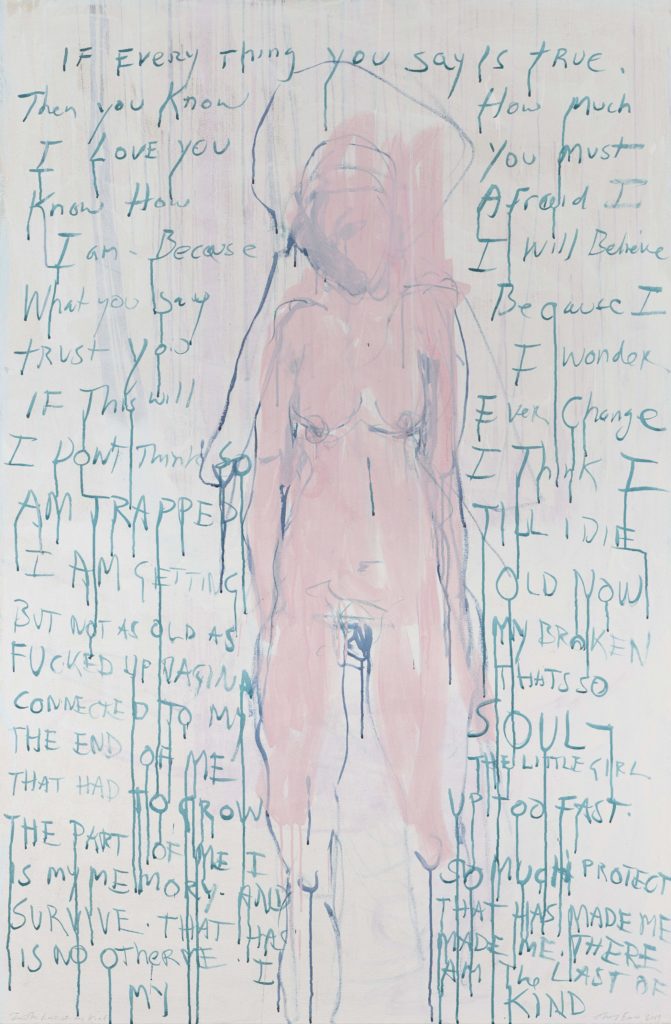
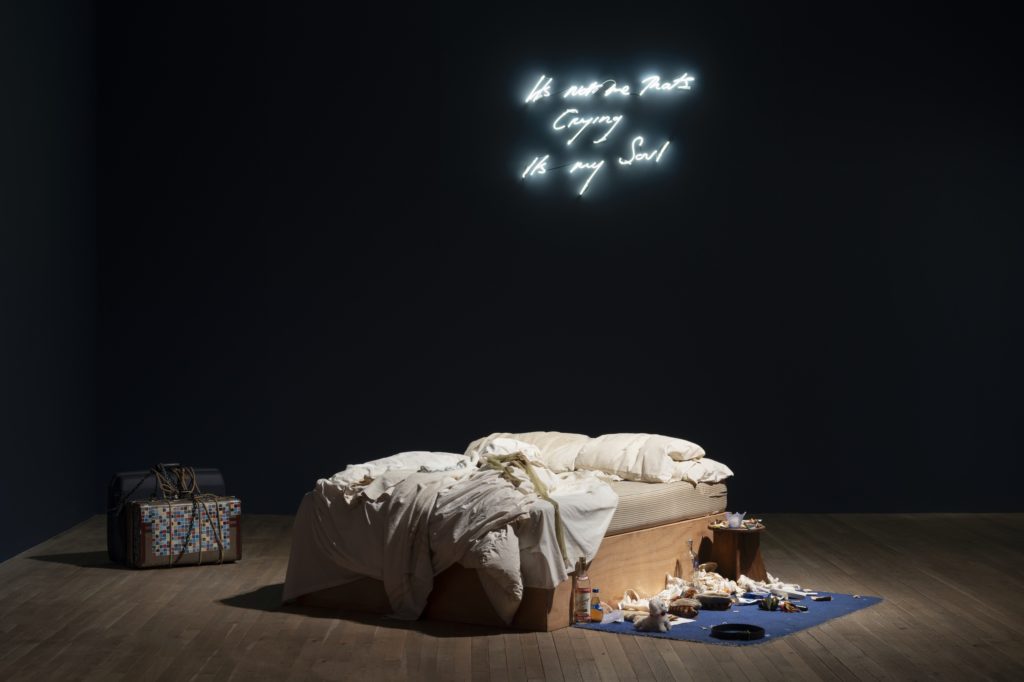
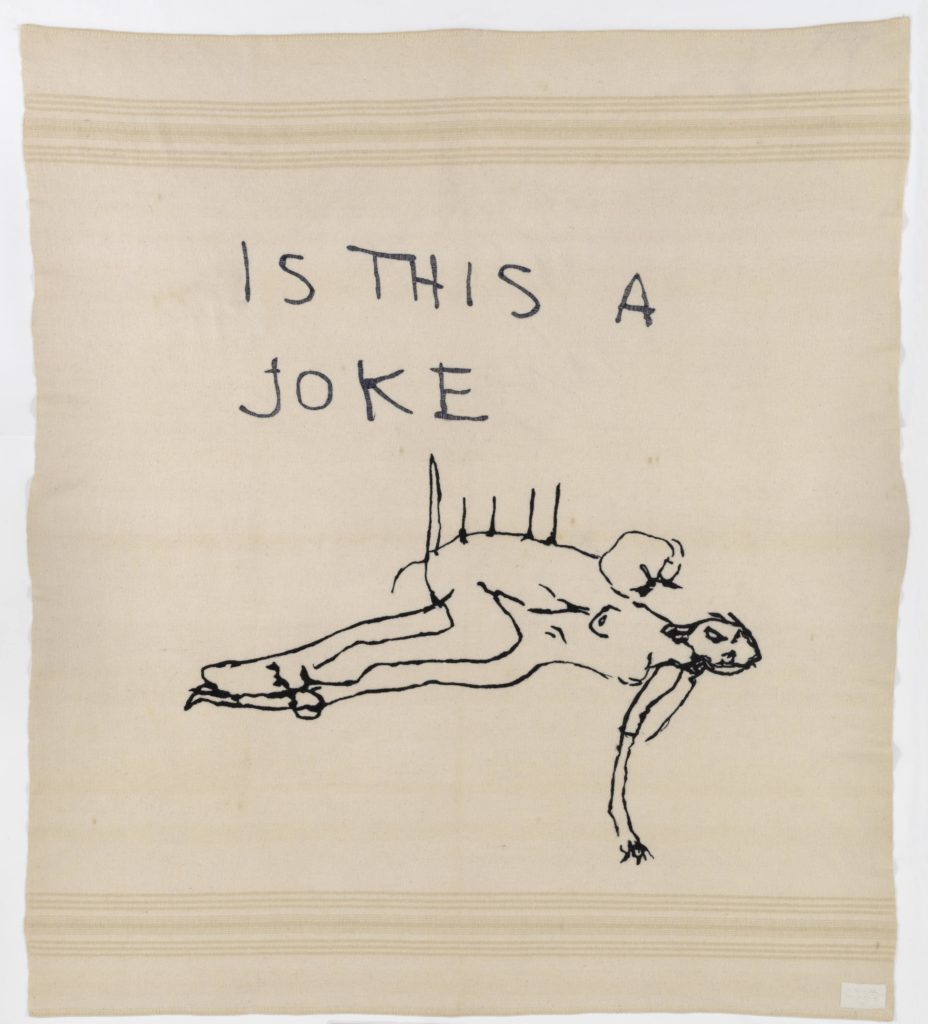
The early rooms do not flatter you. Tracey Emin CV (1995) — a journaled autobiography, a woman scribing her own life into the record — sits alongside the quilts, their appliquéd words pressed into fabric like scars on the body: AT THE AGE OF THIRTEEN WHY THE HELL SHOULD I TRUST ANYONE. The quilts have always been underestimated, perhaps because stitching is domestic, because it reads as soft. But there is nothing soft in sewing traumatic language into permanence. Mad Tracey from Margate. Everybody’s Been There (1997) is a masterwork of formal violence dressed as needlepoint. You have to get close to feel it. Then, the neons. Emin’s neons are sometimes discussed as though they were her most accessible works, their cursive declarations — Its Not Me Thats Crying Its My Soul (2011) — legible, even pretty, the kind of thing that ends up on posters; therefore another misreading. The neons are illuminated cracks in her visage. The handwriting is always hers and they aren’t aphorisms but confessions, glowing precisely because confession requires darkness around it to be visible at all.
My Bed (1998) arrives in the second half of the show, later than you expect, stripped of wall text by deliberate curatorial decision. Perhaps this is the point: the work has been explained, contextualized, mocked, and defended for nearly thirty years and does not need another sentence. And yet, beyond the interpretation imposed from the outside, I craved Emin’s own voice laid over it, her writing, her journals, the restless prose, recontextualizing the work now, in this body, from this vantage point of survival; telling us not what the bed was then, but what it means to her now in a life she was not certain she would have. Especially after illness, the installation holds new meaning, revealing that her bed was never a provocation created for scandal, but her place of survival; now because the body thrashing in it then is changed — surgically, fundamentally, irrevocably — and that change is the whole story the exhibition has been quietly telling you from the moment you walked in.
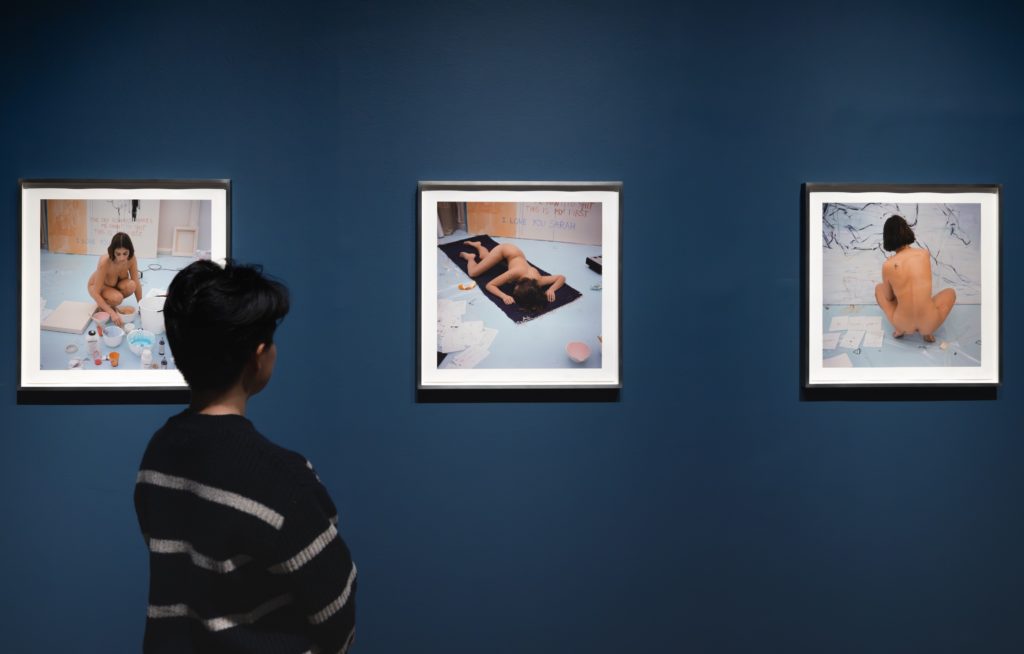
The corridor between these bodily timelines is where this is most undeniable. Ten polaroids, Self-Portrait 12.11.01 (2001): a body sovereign in its own desire, the grain and warmth of the format making the skin look lit from inside. Opposite, recent iPhone photographs of the same body: post-surgery, stoma visible, the flatness of the digital image giving none of the softness that film would. Twenty- five years between them and no distance at all. The exhibition catalogue, edited by Maria Balshaw and Alvin Li, includes an essay by Johanna Hedva, who argued in “Sick Woman Theory” (2016) that illness and the sick body constitute an inherently structural and political condition — a form of systemic refusal — rather than a merely private and personal one.[1] Audre Lorde, in The Cancer Journals (1980), wrote of the pressure placed upon women to render their altered bodies invisible — to perform wholeness, to protect others from the evidence of survival — as though a woman’s wound were a social inconvenience rather than a fact that deserved to exist in the world.[2] These photographs, and Emin, refuse to make the body’s reality illegible.
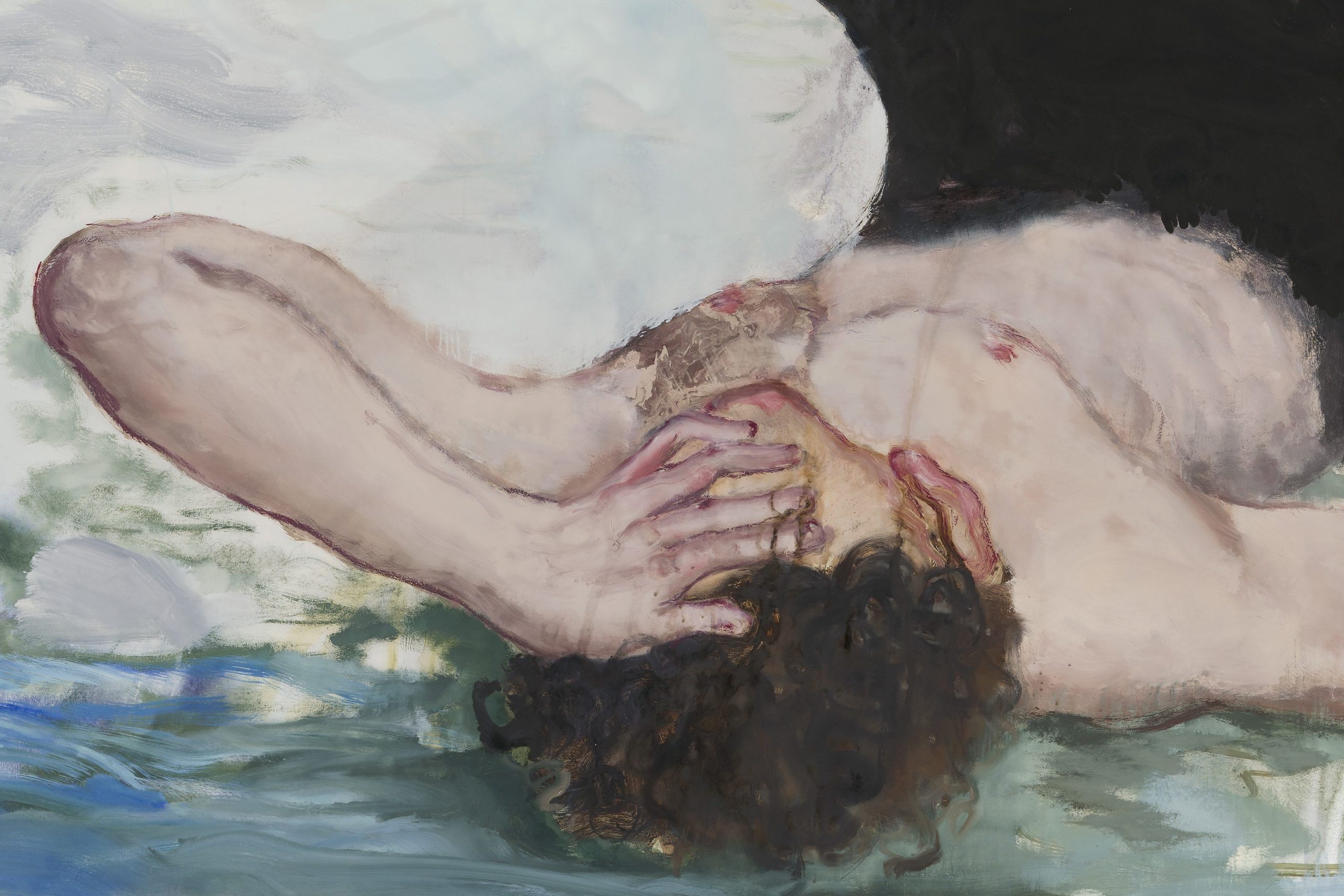
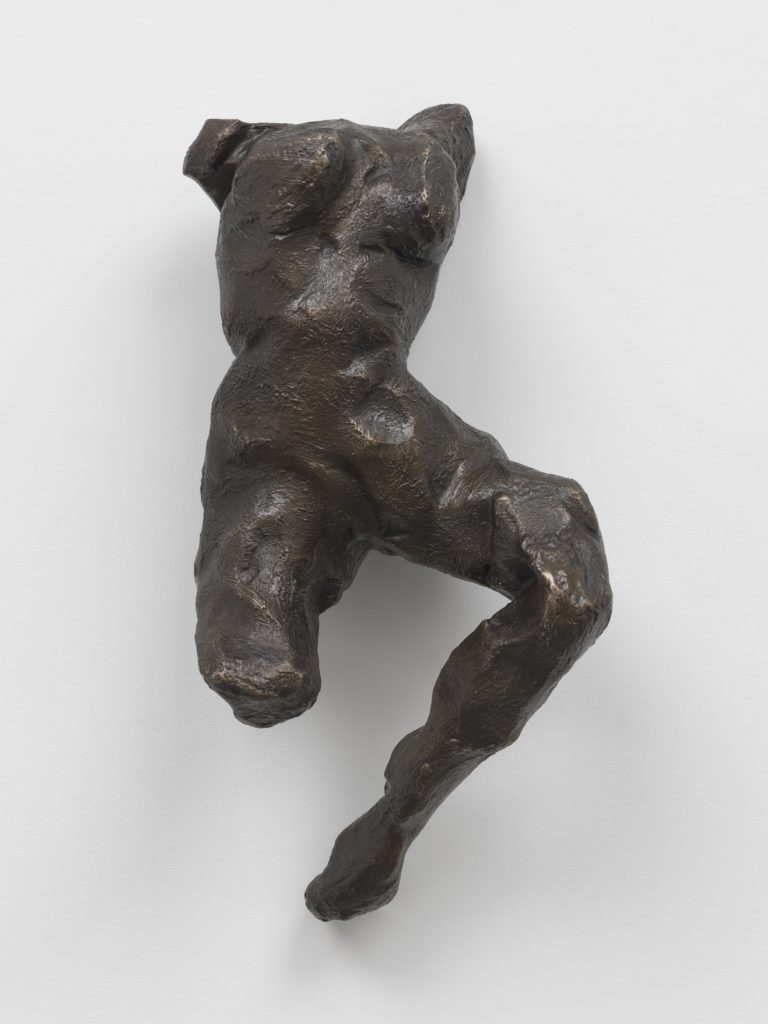
The final two rooms are the mausoleum, which is also the most alive place in the building. The large-scale paintings — The Bridge (2024) above all others, a figure suspended between states, dissolved and reforming — carry the full weight of everything that precedes them. Ascension (2024) in patinated bronze and Death Mask (2002) sit among the living paintings, honest rather than morbid, the way only the truly brave can be honest about endings.
Anne Boyer wrote that illness poses to the body a question the body cannot answer.[3] What Emin does in these final rooms is refuse the question’s terms entirely. What I appreciate most, after witnessing such struggle throughout, is that she still persists: is still painting, still here, attempting to make and build and paint and sculpt herself a second chance at life.
[1] Johanna Hedva, “Sick Woman Theory,” Mask Magazine, January 2016.
[2] Audre Lorde, The Cancer Journals (Spinsters Ink: 1980)
[3] Anne Boyer, The Undying: Pain, Vulnerability, Mortality, Medicine, Art, Dreams, Data, Exhaustion, Cancer, and Care (Farrar, Straus and Giroux: 2019).