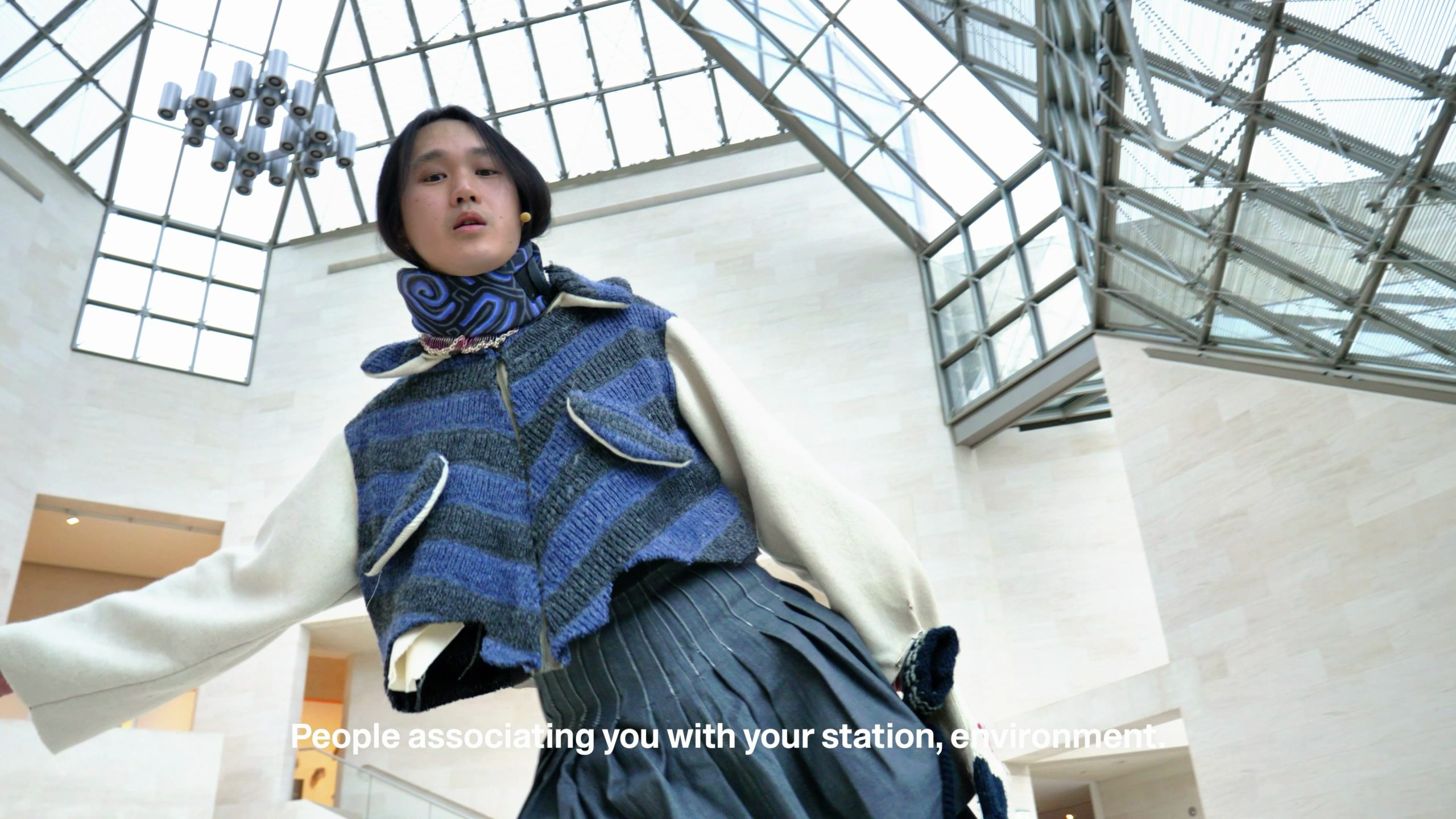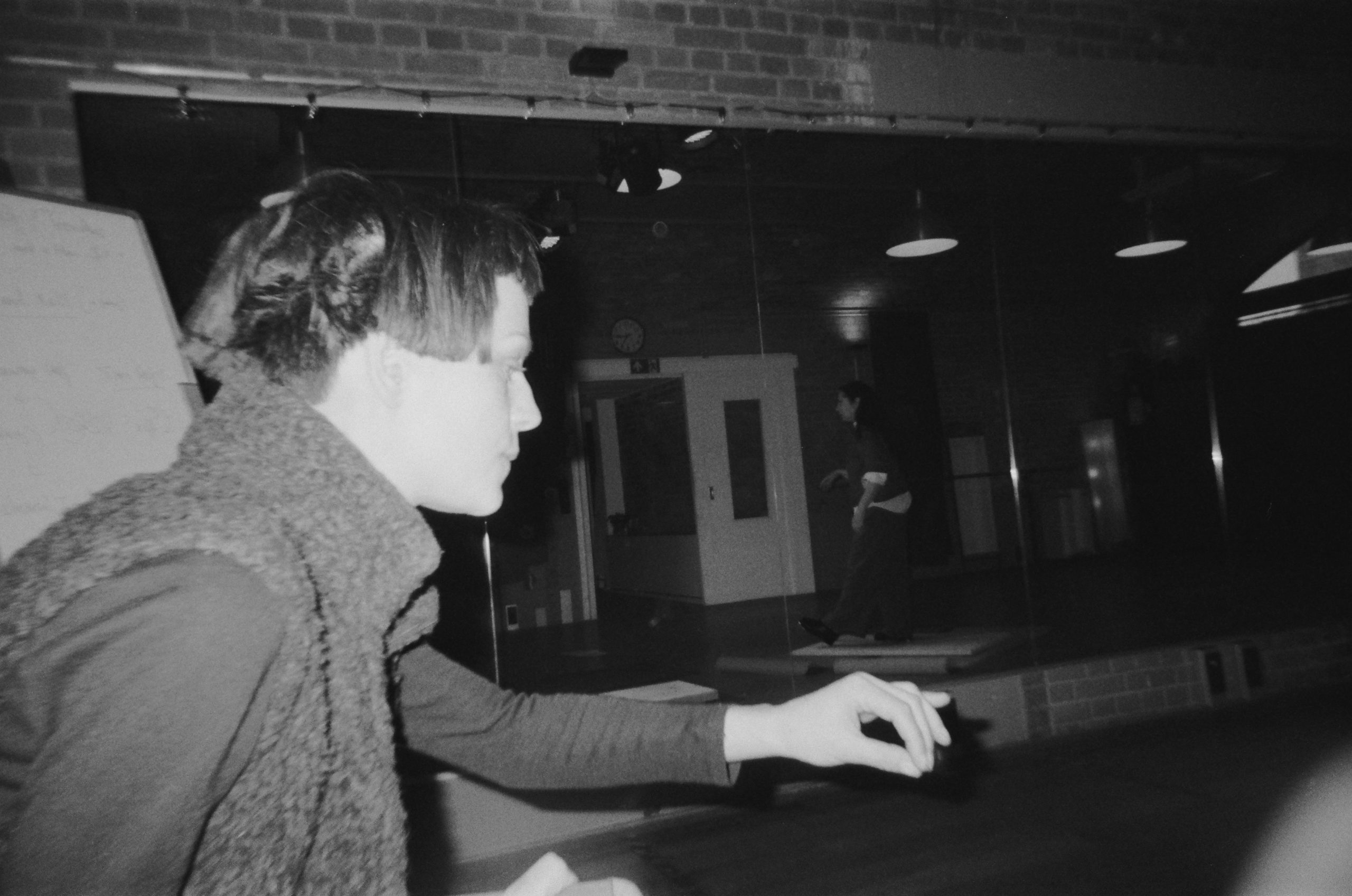
I first encountered Ian Waelder’s work at Kestner Gesellschaft in Hannover, in “thereafter” (2025). What struck me was how insistently the works seemed to not want to be noticed. Many were hiding — leaving it up to the visitor to seek them out. Small porcelain forms resembling shoes and noses were tucked into cardboard and plastic-foil-covered glass boxes on the floor, or hovering against the walls of dimly lit cardboard corridors that absorbed sound and disrupted orientation. Clay smears, tea stains, drips, and other residues accumulated across surfaces, forming a constellation of impressions that suggested a private history emerging only as afterimages. Waelder’s elliptical practice is drawn to forms that resist full disclosure — negative spaces, omissions, glitches, “footnotes,” as he often refers to them, and fragments of memory that refuse to fully reveal themselves.
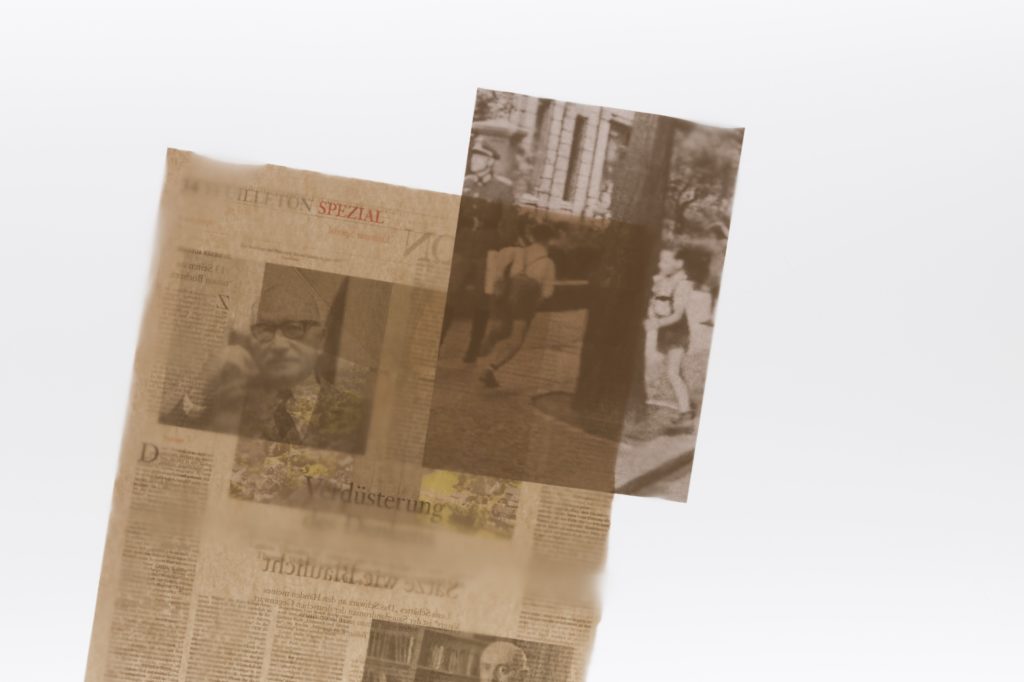
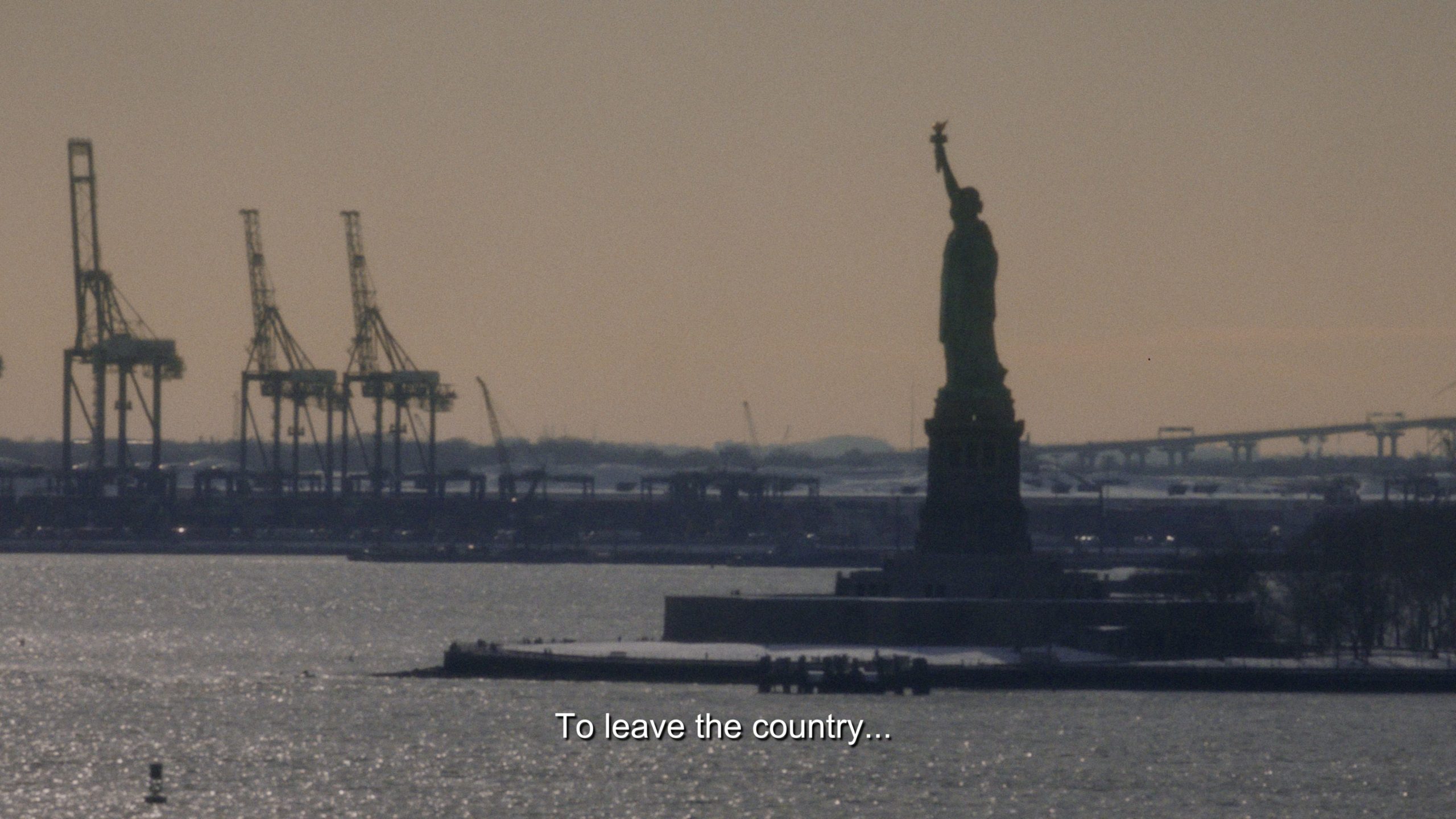
Central to this artistic strategy is the idea of the stain — incidental marks and traces through which memory and history surface indirectly, settle into material, and spread. This affinity can be situated within what Hal Foster described as an “archival impulse”[1]: a post-conceptual tendency toward fragments, incomplete records, and unstable forms of historical retrieval. The furtive, or fugitive, quality of his work is also partially autobiographical: born in Madrid in 1993 and raised in Mallorca, Waelder is the first member of his family to live in Germany since his grandfather, Friedrich Wälder, fled the country in 1939, after being detained at Welzheim concentration camp following Kristallnacht. Forced under the Nuremberg Laws to sell the family’s 1935 Opel Olympia before escaping to Chile, Friedrich became Federico Waelder in exile, the umlaut disappearing at the border. In Santiago, Federico became a jazz pianist; he died in 1989, four years before Ian was born. The altered umlaut — the ä of Wälder becoming the ae of Waelder — haunts the practice both as a methodology of omission and imperfect transmission. This echoes Derrida in Monolingualism of the Other (1998), also referenced by Waelder, who describes the structural impossibility of never fully possessing a language: a condition in which one speaks only in a tongue that is never fully one’s own. German belongs to Waelder’s family history, but not as a language inherited transparently: it is the language of the country his grandfather was forced to flee, and of the newspapers the artist now reads every morning in Frankfurt.
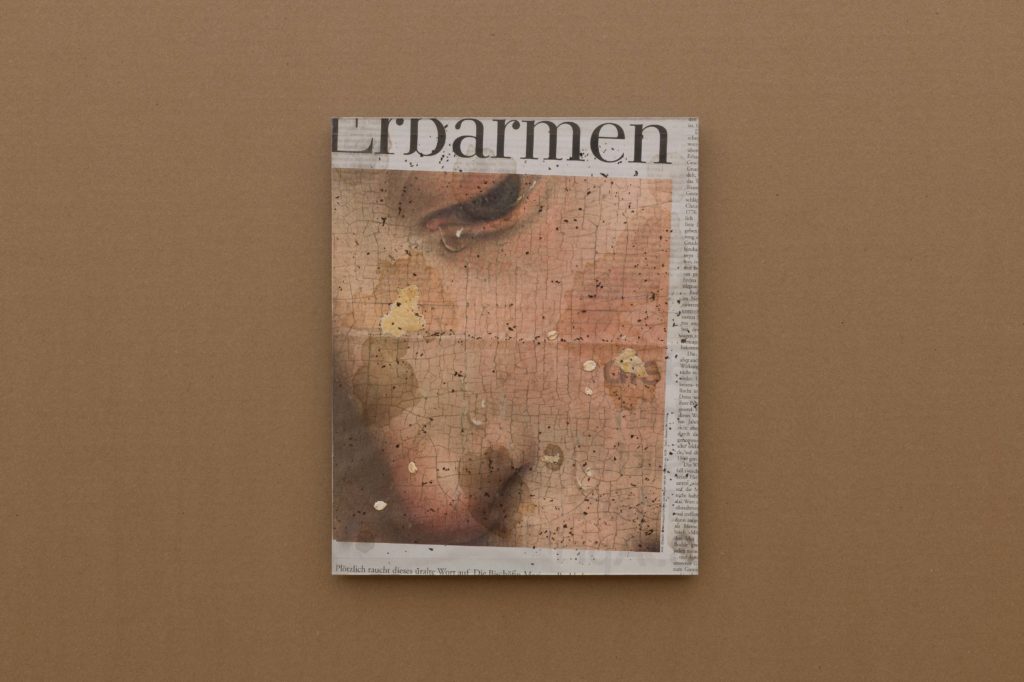
These newspapers have formed the basis for an ongoing diaristic body of work that began after his move to the city in 2021. Copies of Die Zeit, Süddeutsche Zeitung, and other German newspapers become surfaces marked by the residue of daily breakfast — black tea, grease, crumbs, jam, and fingerprints — sealed beneath museum-grade glazing on Dibond. In Mercy (Leak) (2025), tea stains and croissant residue spread across a page bearing the headline word Erbarmen (“mercy”), partially obscuring and rewriting the printed text through seepage and absorption. In Seated (Standing) (2025), breakfast residue settles across a Die Zeit spread depicting Thomas Mann and his daughter Erika at a public event — Mann, a figure synonymous with German literary identity, set against Waelder’s own familial relationship to Germany as a site of rupture, expulsion, and return. While this series can, through its politically charged metanarrative, be interpreted as an act of historical intervention into the newspaper as a symbol of the canonical archive, I read it more as part of a more mundane ritualistic-diaristic process through which the artist layers these official records with his private everyday presence.
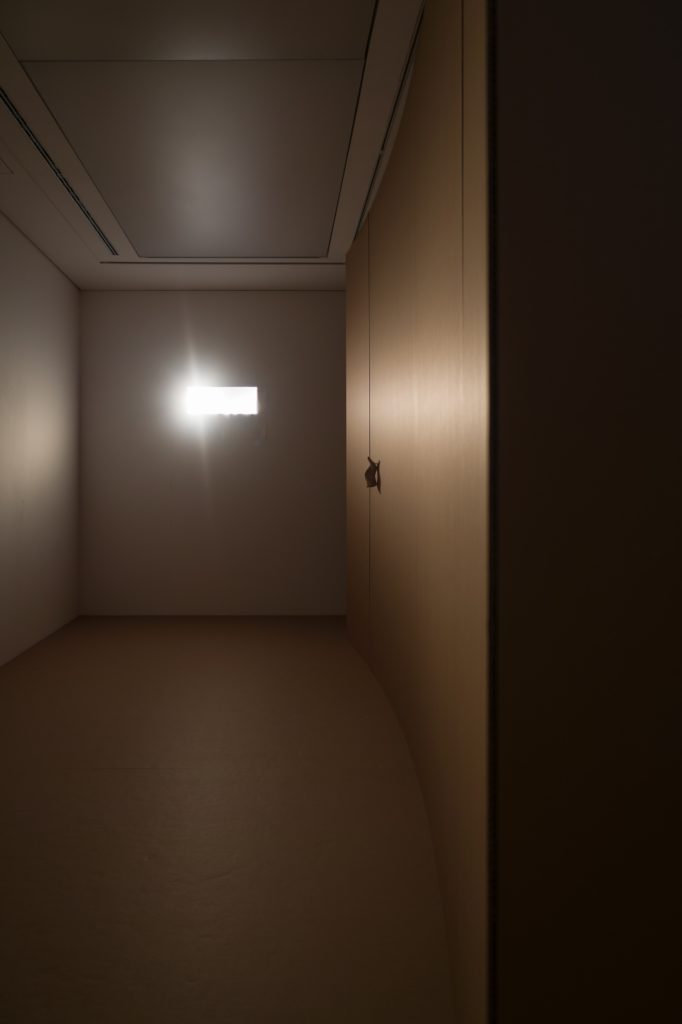
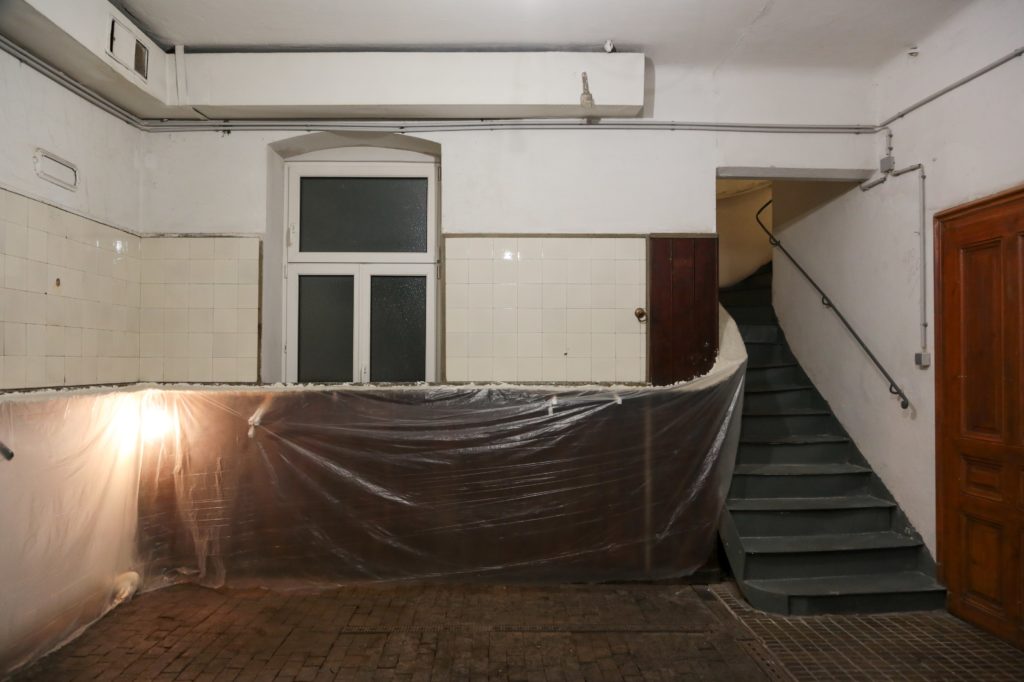
This logic of concealment extends beyond individual objects into the architecture of the exhibitions themselves, producing conditions of obstruction and delayed revelation. Exhibition-making, and the notion of choreographing a specific kind of encounter, form an important extension of his sculptural practice. Cardboard is one of his main materials for spatial intervention, owing to its associations with packing, transport, and provisionality; galleries often resemble storage sites, transitory or abandoned interiors, self-contained spaces within which time stands still. At Es Baluard, Palma de Mallorca, “even in a language that is not your own” (2023–24) transformed the museum into a honeycomb-like cardboard structure navigated through narrow passages and softened floors, with light filtering unevenly through the cells while the material dulled surrounding sound. Within this exhibition, viewers watched a muted video through a peephole inserted into the wall in the work You Who Are the Stranger (Moth Joke) (2023); over time, fingerprints and skin oils accumulated around the aperture, turning the act of looking into another residue. At LAURENZ in Vienna, “accompaniment” (2025) transformed the industrial basement largely through plastic film, concealing parts of the existing architecture and giving the space the feel of an abandoned house or improvised construction site — sculptural objects were hidden behind or barely peeking through plastic sheets. At GAK Bremen, “A Room for 1993–” (2026), the artist created a low-ceilinged chamber viewers had to crouch to enter. This was plastered with hundreds of analogue photographs of a monstera plant Waelder’s parents received the day he was born, which he has been documenting over the course of many years — a kind of marginal, humble living archive that accumulates duration organically in the corner of a home.
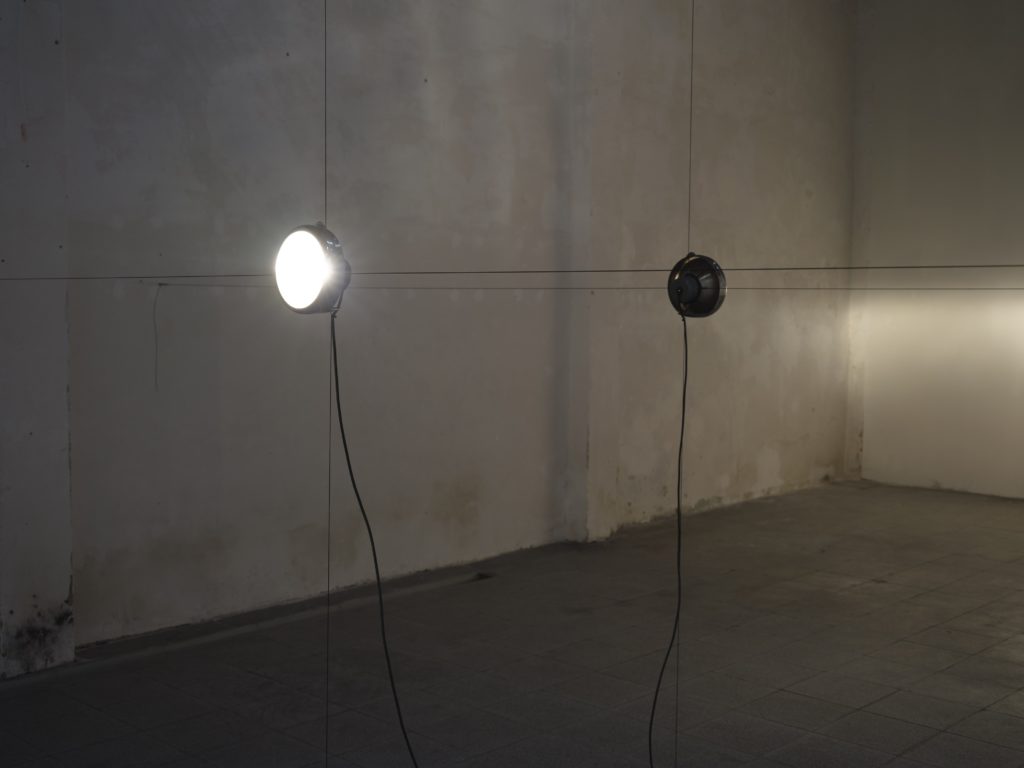
Within these environments, certain forms return insistently, each time altered through material, context, or concealment. The Opel Olympia has found representation through secondary, iterative fragments and traces. In “Is it like today?” at ethall, Barcelona (2022), two original headlights from a 1935 Opel Olympia were suspended and wired in tension, facing one another across the gallery at eye level; their bright beams made sustained looking almost impossible, the car appearing only as a disembodied spectral glare. From Hip to Fingertip (Opel Upside Down) (2022), produced collaboratively with Waelder’s father, Juan, was made from the acrylic-resin remainder of a mold taken from an Opel sculpture – the work preserves the hollow left after the sculptural form was removed, a translucent negative cast held together by putty, iron rods, and wall residue. Collaboration recurs throughout the practice as a way of approaching family history through shared handling and imperfect transmission rather than singular authorship. Later appearances of the car become increasingly peripheral — in Background Vehicle (Running Scene) (2025), a nearly six-meter triptych of plotter-printed canvases isolates a running child from archival footage in which the Opel originally appeared in the background, pushing the car further toward disappearance.
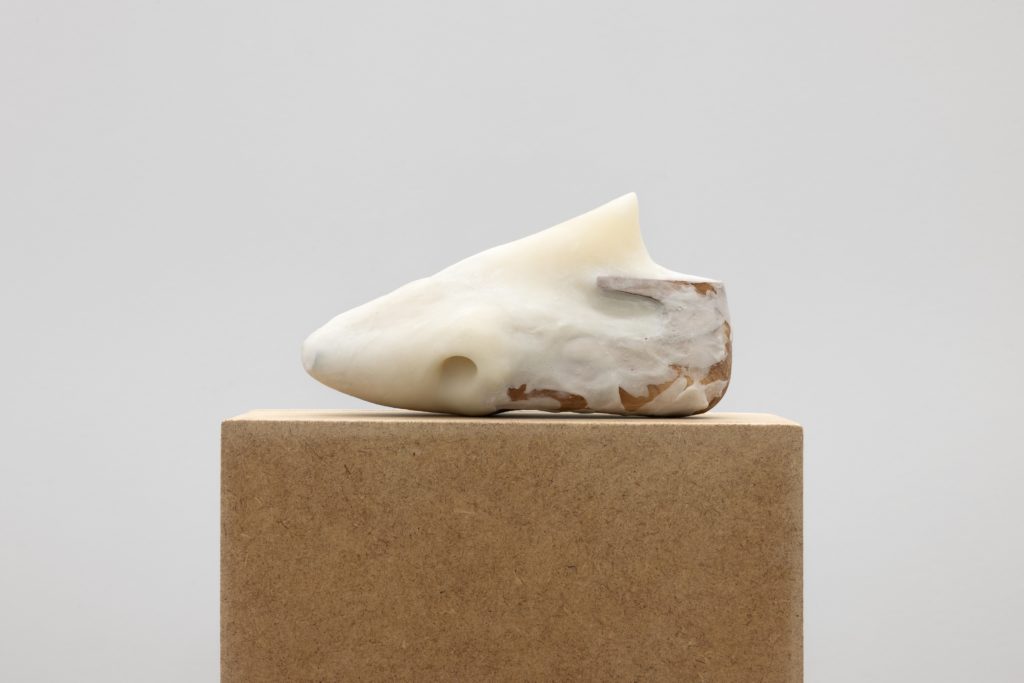
A recurring vocabulary of porcelain sculptural forms, such as the nose, the sneaker, and, most recently, the tongue, form an interconnected cluster of bodily, autobiographical fragments running through the practice. Juan speaks affectionately of the “Waelder nose” as a feature inherited across generations, and Waelder returns to it repeatedly, testing how likeness survives material translation. An early iteration, A Nose Is A Nose Is A Nose (2022), consisted of a tiny white silk-clay nose protruding almost imperceptibly from the wall near the gallery entrance. In Self-Portrait as My Father’s Nose (2025), installed on the façade of Kestner Gesellschaft, eight enlarged papier-mâché noses — produced collaboratively with Juan from a clay model he sculpted himself — protruded from the building’s exterior, coated in birdseed, fat, beeswax, and agar-agar, and designed to be consumed by birds, insects, and weather. The exaggerated Jewish nose remains inseparable from the visual history of antisemitic caricature, and Waelder does not attempt to neutralize that discomfort. The inherited feature, the stereotype, the joke, and the devotional gesture toward his father are held in tension within the same on-the-nose sculptural act. At Es Baluard, A Nose Is A Nose Is A Nose (Injured Bird, the Streets Are Still the Same) (2023) presented a more hybrid form of a papier-mâché nose lodged inside a worn sneaker inside a cardboard shoebox — an awkward still-life displayed on the floor as if barely worth noticing, and yet sealed beneath anti-reflective glass in the language of museological display.
Sneakers and shoes are yet another recurring form — connected to Waelder’s skateboarding practice that has been entangled with his artistic work from its earliest stages, as well as his childhood memories of his father working in a shoe shop. The artist has described skateboarding as having been formative to his perception of space, bodily movement, chance, and architecture. Wooden shoe lasts recur throughout the exhibitions, preserving the contour of an absent foot as a mold preserves the outline of a removed object. His ongoing Bystanders (2025) sculptures are casts of shoe interiors threaded with laces: sculptures that give physical shape to absence. Sprain (38) (2023) and Sneaker (2025) are variations on the same theme — the former installed on the wall, the latter on a tall, narrow wooden plinth — each merging a porcelain nose with an antique wooden shoe last into an absurdist, compressed head-to-toe portrait of sorts. The frequent fusion of these forms throughout the practice suggests a loose and associative treatment of meaning, in which noses and shoes don’t appear as stable signifiers and instead become entangled extensions of one another. The most recent iteration is Bystanders (Public Ashtray) (2026), installed porcelain casts resembling both tongues and shoe soles, placed along the wall outside GAK Bremen for the exhibition “Zungen” (tongues). The series returns to Derridean questions of language as a structure of slippages, traces, and deferrals, in which meaning is never fully secured or possessed — evoking the foreign tongue, the Freudian slip, or the phrase lingering at the tip of the tongue, just out of reach. The sculptures invite the accumulation of cigarette ash and debris from visitors and passersby. Like the façade noses, these works remain open to erosion and gradual transformation, dissolving ideas of permanence and authorship over time.
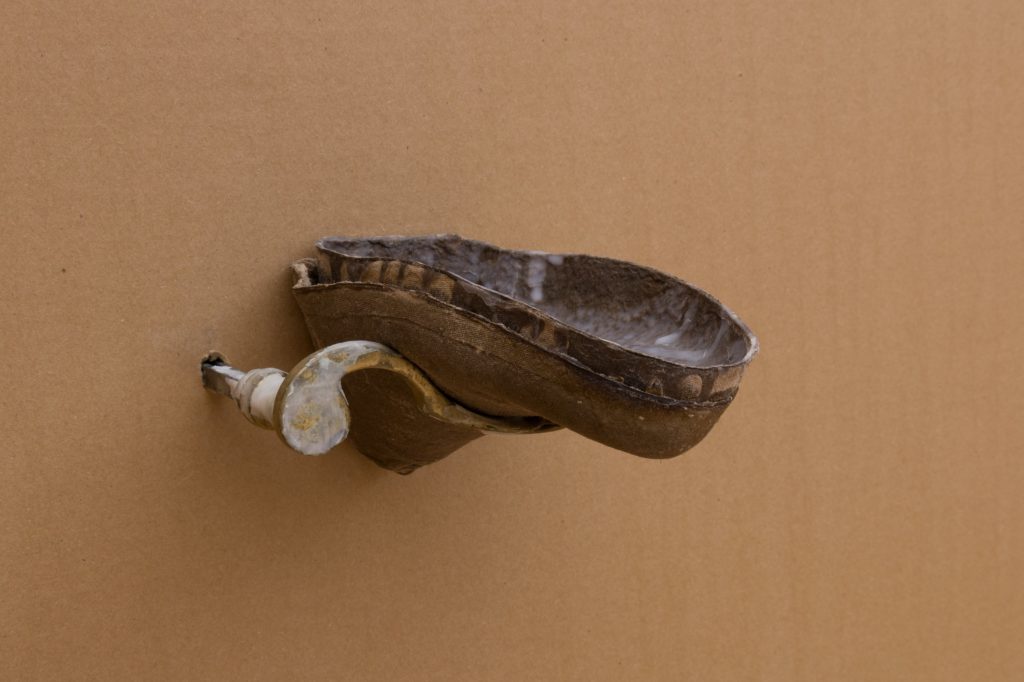
Part of what makes Waelder’s work so affective — and less clinically detached than some of the cooler conceptualist lineages it partly emerges from — is the intimate and occasionally sentimental register of these forms. Noses and sneakers are universally recognizable objects that carry bodily familiarity and everyday attachment; their accessibility lends the practice a generosity that resists hermeticism, folding the personal into the universal. There is also a persistent strain of humor running through this vocabulary. Waelder has said that he often has Andy Kaufman performances playing in the studio, and something of this slapstick yet intellectual comic register can be felt in the work. There’s an attentiveness to and a playfulness with his relationship to the audience, the slight awkwardness of objects that protrude or conceal themselves, and the disorientation of moving through his exhibition environments, where peepholes require a childlike act of looking.
While these haptic, visual forms give the practice its recurring iconography, sound offers its most fragile form of archival translation. Federico Waelder’s piano improvisations return repeatedly in mediated and imperfect records of retrieval rather than reconstruction. In (FRIEDRICH) (2021), released through the fictitious label Heutigen Records and later broadcast monthly on Frankfurt radio, Waelder transferred a cassette recording of his grandfather’s 1987 jazz improvisation onto vinyl — carried across cassette, vinyl, and radio, the recording shifts in texture and fidelity with each transfer. This instability becomes the subject of As Far As I Can Recall (2022–23), where Waelder whistles Federico’s improvisation from memory, the melodies drifting in and out of recognition and often dissolving into hesitation. In As Far As I Can Recall (Dad on Piano) (2025), the same composition passes through another body: Juan attempts to replay it on a slightly out-of-tune piano found in Waelder’s Basel studio. He is not a pianist. The work preserves every uncertainty and failed transition as the melody gradually loses coherence — producing an interrupted, hesitant composition that is, in its fragility and incompleteness, both uncanny and deeply affecting.
In Archive Fever (1996), Derrida argues that the archive is not a neutral repository but a structure shaped by what he calls mal d’archive[2] — a compulsion to preserve that is inseparable from a drive toward destruction and decay. Waelder’s practice unfolds within this tension. Rather than reconstructing the past, the works trace the unstable conditions through which memory survives: through residues, substitutions, degraded transmissions, and partial returns, forming a glitchy archive that resists certainty and closure. I found myself thinking of the figure of the magician, or the psychology of the magic trick, in relation to Waelder’s work: partly because of Houdini’s infamous disappearing acts, analogous to the way Waelder’s recurring visual motifs repeatedly hide, withdraw, and resurface across his installations, but also because of the psychological choreography of the works themselves, which manipulate attention, concealment, and delay. A sense of wonder emerges through an unwritten contract between audience and performer, artist and viewer, requiring a temporary suspension of disbelief upon entering these total environments of architecture, sound, and objects. What remains after the encounter is a lingering disorientation, as fragments of the work continue to resurface and activate within the viewer’s own minor, private histories.
[1] Hal Foster, “An Archival Impulse,” October 110 (Fall 2004): 3–22
[2] Jacques Derrida, Archive Fever: A Freudian Impression, trans. Eric Prenowitz (Chicago: University of Chicago Press, 1996).