The press communication for Sanya Kantarovsky’s show “Basic Failure” led with his painting Boy with Cigarette (2026), in which a hollow-eyed boy stares blankly into the distance, portrayed in heavy strokes of oily blues and whites. The piece is very small and it has a frosting-like texture; the boy’s long, tensile fingers are seemingly extruded from the viscous paint. The work looks like it was made at the turn of the twentieth century instead of at the onset of the twenty-first. It conjures the feeling that Kantarovsky, long since dead, had left this collection behind to some trust for perpetuity’s sake. That the setting for the show is Palazzo Loredan in Venice, a sixteenth-century Gothic edifice and home to the Istituto Veneto di Scienze, Lettere ed Arti, only emphasizes the temporal peculiarity of his work.
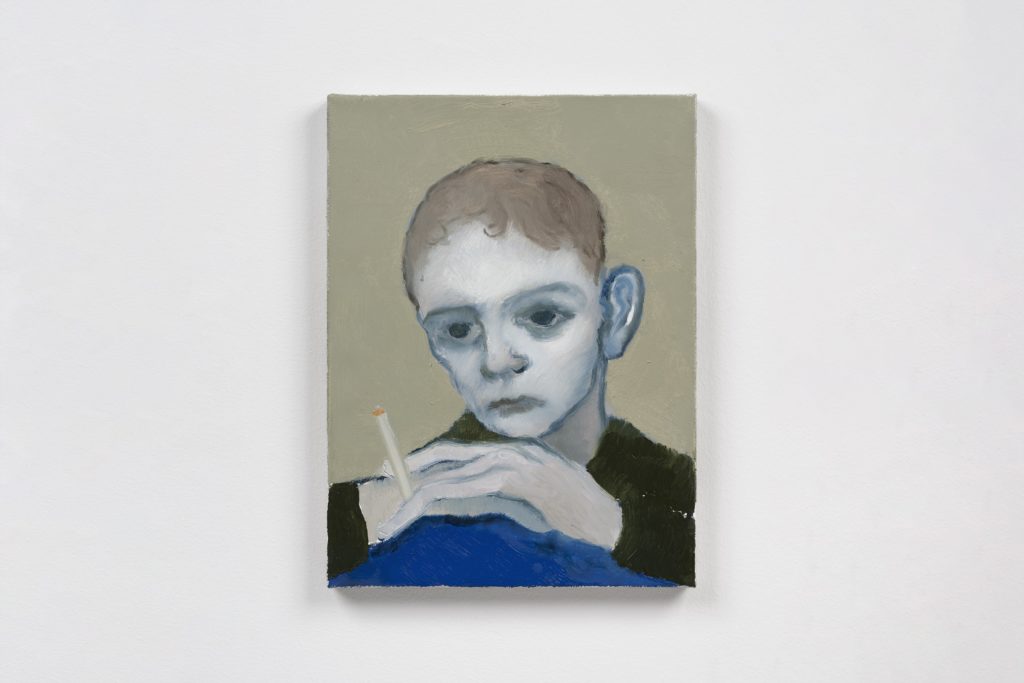
Boy with Cigarette opens the show as well. He is too young to be smoking a cigarette, yet not so naive as to resist this gesture of premature adulthood and self-destruction. In a way, he nonchalantly pulls the hand of death near him. Seen in the exhibition, the feeling that this image is heavily drawn from the legacy of European painting can’t be shaken. Thomas Gainsborough’s The Blue Boy (1770), in which a young boy is poised, positioned, and performing the appearance of adulthood, depicted in a wash of powdery blue, comes to mind. Though that is too arrogant, too obvious of a connection. The eroticism of Egon Schiele’s figures, both somehow mundane and ecstatic, also flickers across the boy’s face as the cigarette lingers, beckons, from his fingers.
Though what struck the strongest chord was the parallel between this work and Picasso’s blue period from 1901–1904. Picasso’s works became drowned in that sulking hue when he discovered that his friend Carles Casagemas had committed suicide. To the detriment of his income, his works became marked by portraiture, the deep color, and an air of mourning. These themes are also threaded through “Basic Failure,” where death, the perversion of the body, and the bruise-like colors of rigor mortis are similarly inescapable.
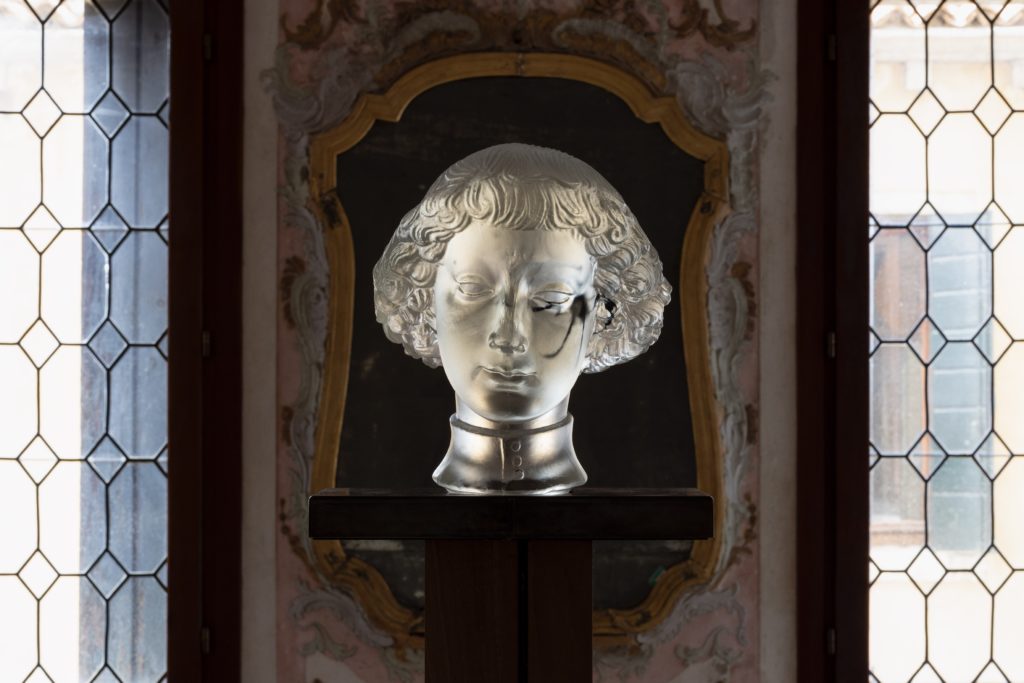
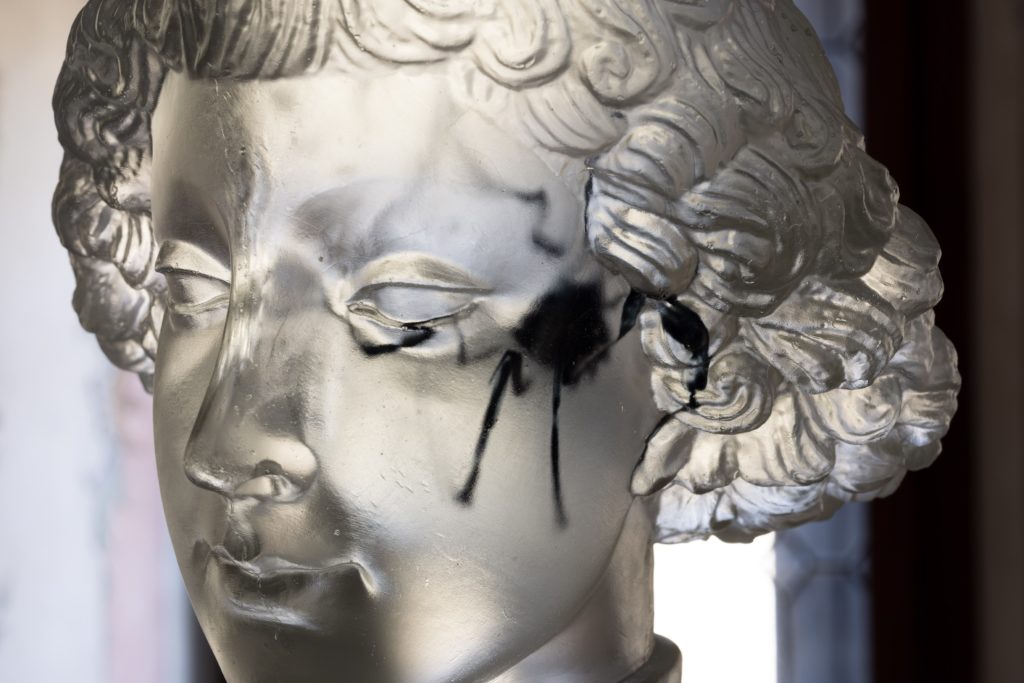
Amid this frenetic early twentieth-century referencing, his style morphs while heavily alluding to classical mythology. In this way, Kantarovsky becomes a kind of necromancer of artistic movements, conjuring and reconjuring the past into contemporary compositions, refusing to let them fade to time. Some artists are explicitly named in his titles, like Sub (Goya) (2026) and Foreign Body (Gagini/Scarpa) (2026). In other works, the referencing happens within the technical execution of the painting.
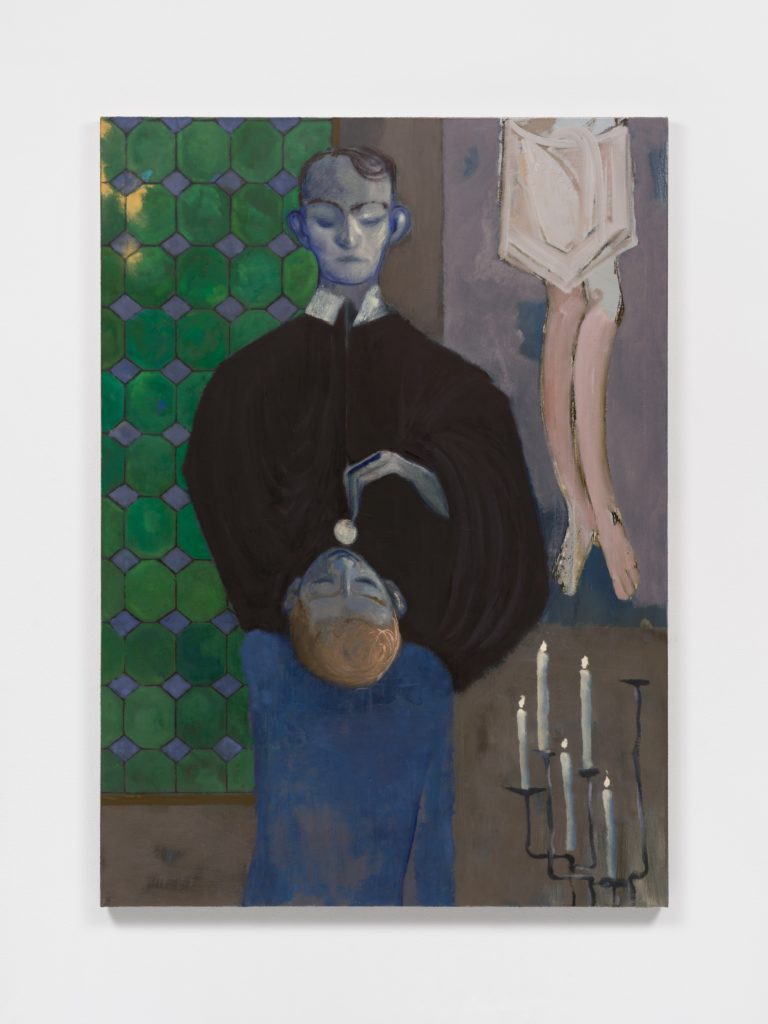
In Basic Failure (2026), a figure in the foreground, depicted in basic blocks of colors and lines, slips a coin into the mouth of a disembodied head. This act recalls the ritual in Greek mythology of placing a coin in one’s mouth or atop one’s eyes to ensure passageway into the afterlife by means of the river Styx. And once again, the figures appear in a phantasmic mix of blues and whites that evokes not only melancholy but also suggest that they have passed from this world into the next.
In the background, a body shown only from the waist down, with a crotch covered in a swath of cloth, dangles from an undepicted source of suspension. The peach-pale tone of the legs, in comparison, suggests that blood is still circulating and death is fresh. The lower body and its covering evoke Christ’s crucifixion and, in its flatness, the painting doesn’t feel too dissimilar to Gauguin’s The Yellow Christ (1889). This form, which suggests both death by hanging and Christ on the cross, may speak to Kantarovsky’s anxieties about dying. It’s as if he doubts that suicide, the most intentional form of bringing an end to life, will really cease suffering. The spirit may still be forced to resurrect or journey further into an afterlife. And perhaps therein lies the basic failure: the slim chance that death, the twin truth of birth, may not bring a certain end.
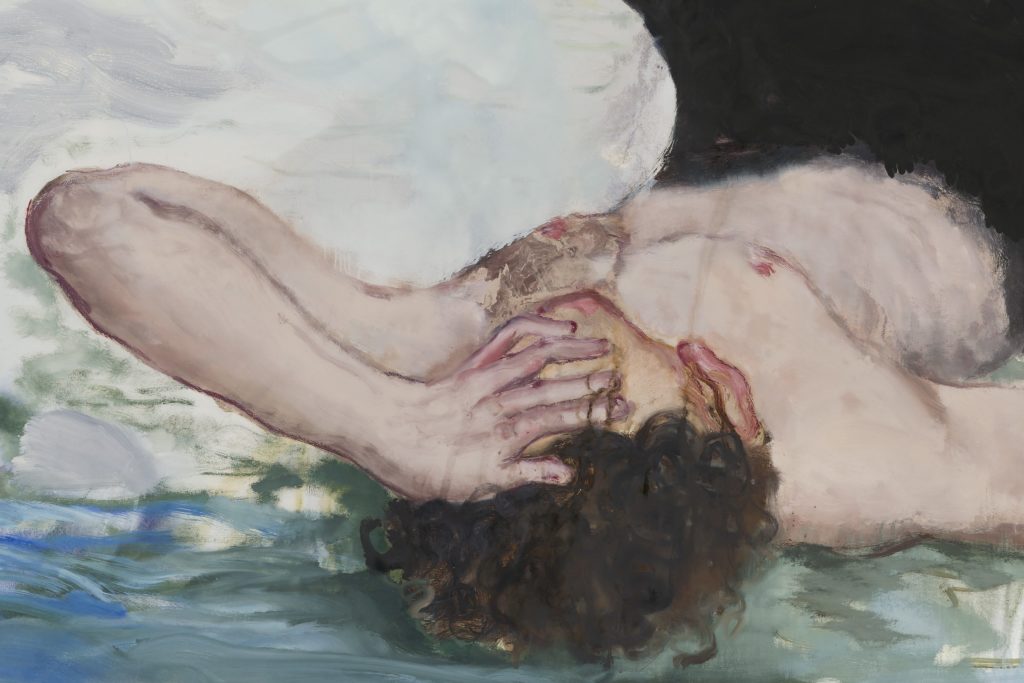
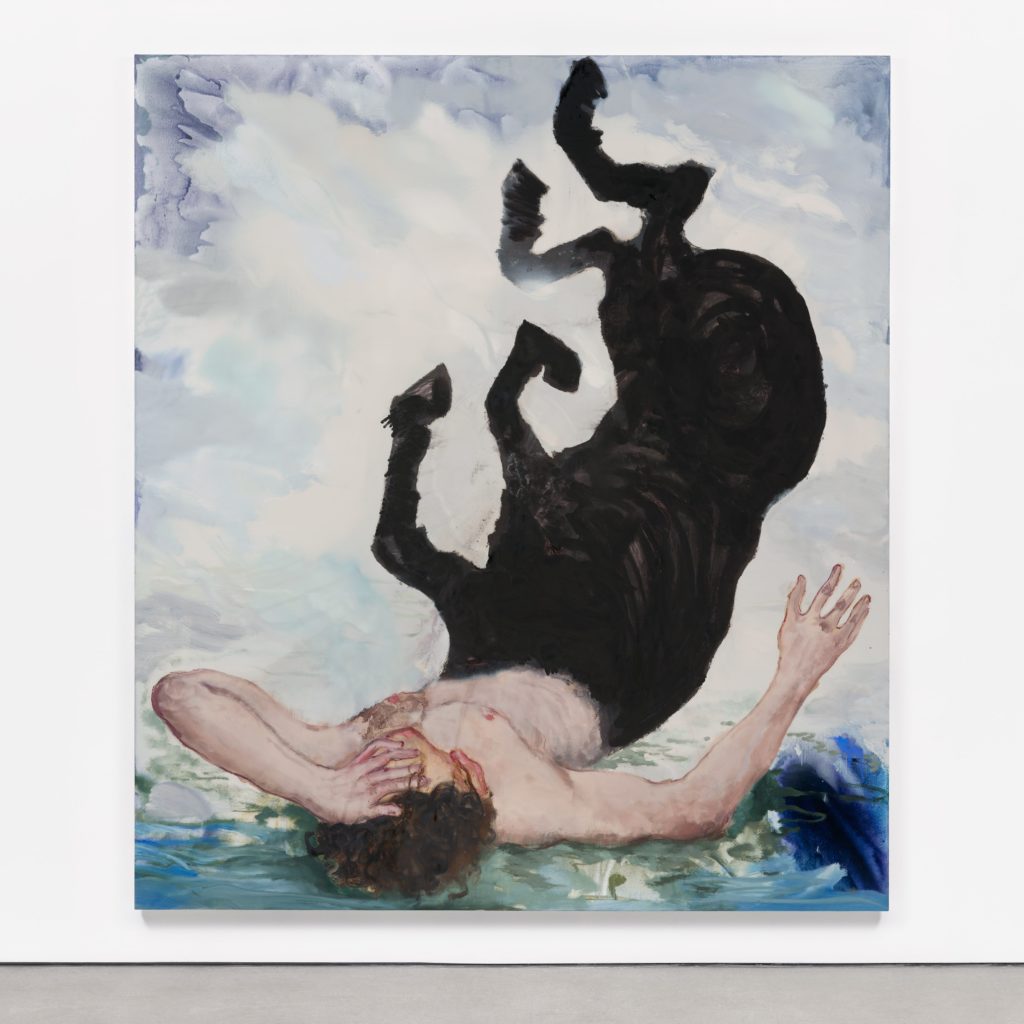
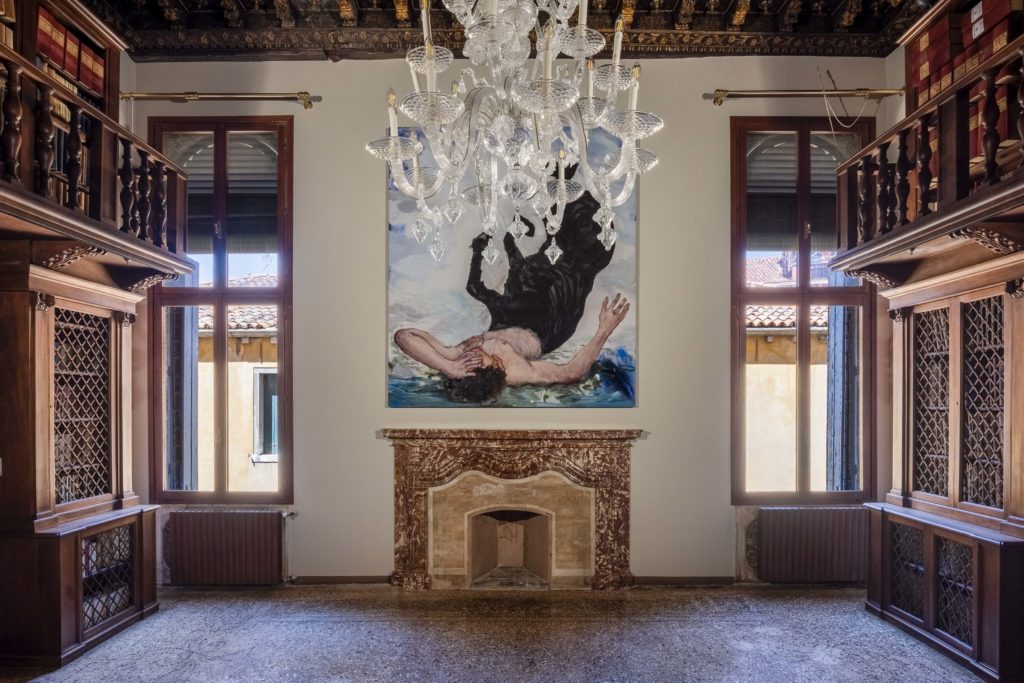
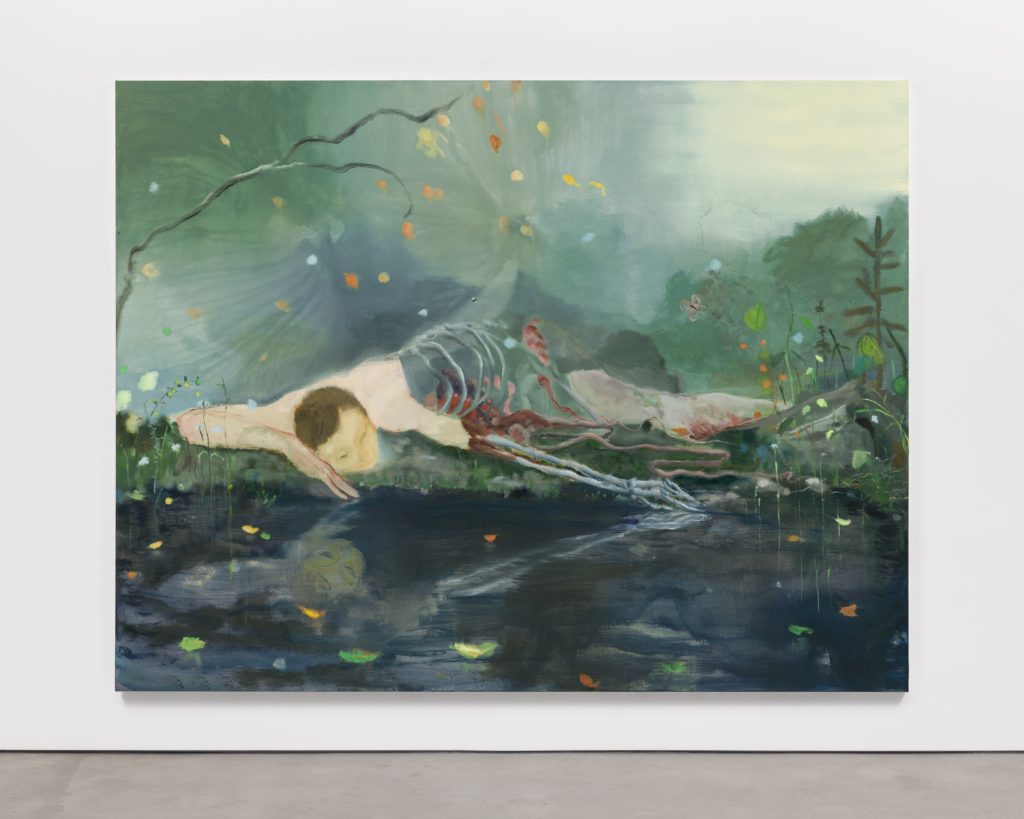
The afterlife, which is supposed to bring comfort, is framed as a taunt, and Kantarovsky thrashes against it wildly in his paintings. Within Reenactment (2026), a decaying narcissus-type figure stares into the water as his flesh gives way to a skeleton that reaches into the liquid that holds his reflection. In Death of a Centaur (2026), the mythic beast falls fatalistically upon its human shoulders while its horse corpus splays defiantly in the air, reaching into the beyond. These works disintegrate off the bone, succumbing to death’s calls, while also persisting in exploring the field of life that’s been set forth on the canvas. As “Basic Failure” negotiates between death and the spirit, Kantarovsky suspends his audience in a temporal and figurative purgatory.