Transparency is supposed to be a virtue — in politics, in institutions, in architecture. Glass buildings promise openness; democratic language promises accountability. But transparency can also be a form of control: a demand that everything be legible, explicable, reduced to a single reading. Architect Anne Holtrop approaches opacity as an alternative — not as concealment, but as a refusal to flatten complexity. Holtrop’s buildings resist functional expression: you cannot tell what they are by looking at them. His material processes are precise but deliberately indeterminate, pursuing outcomes he does not yet understand. From Bahrain, where he has lived and worked for the last twelve years, Holtrop describes how the extreme constraints of the Gulf produce an architecture that is more alive, precisely because it cannot rely on European assumptions of comfort and control. What emerges is an argument against the idealized, the static, and the already-known.
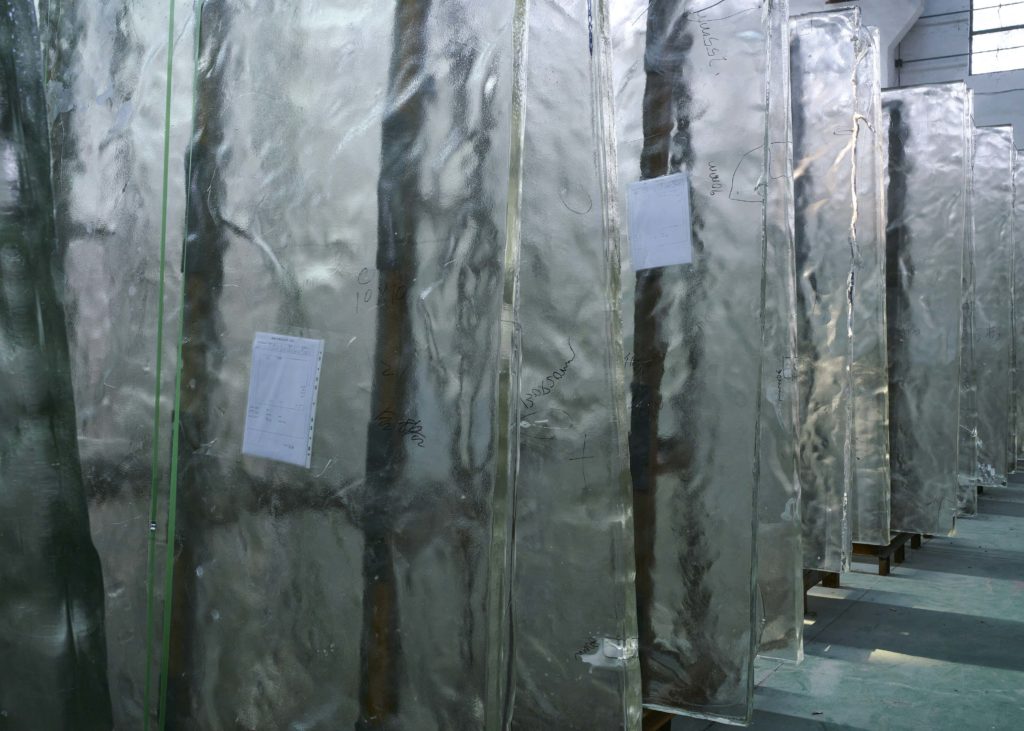
Jack Self: Anyone who is familiar with your work will know it is deeply connected with materiality. I would also say that one of the beautiful things about your work is the lack of a need for control. It doesn’t mean it’s not precise, but there is an indeterminacy in the outcome of your material experiments. The thematic of this issue is transparency. In a simplistic way, of course, you often work with cast glass — most notably at the Misk Art Institute, which is a kind of frosted wedge situated in a Riyadh wadi (a dry riverbed or valley). Much modernist architecture was made of glass because it was assumed that literal transparency also meant metaphorical transparency. Are we at a point of living in glass houses everywhere? Do you feel there is too much transparency in the world, and is this reflected in design culture?
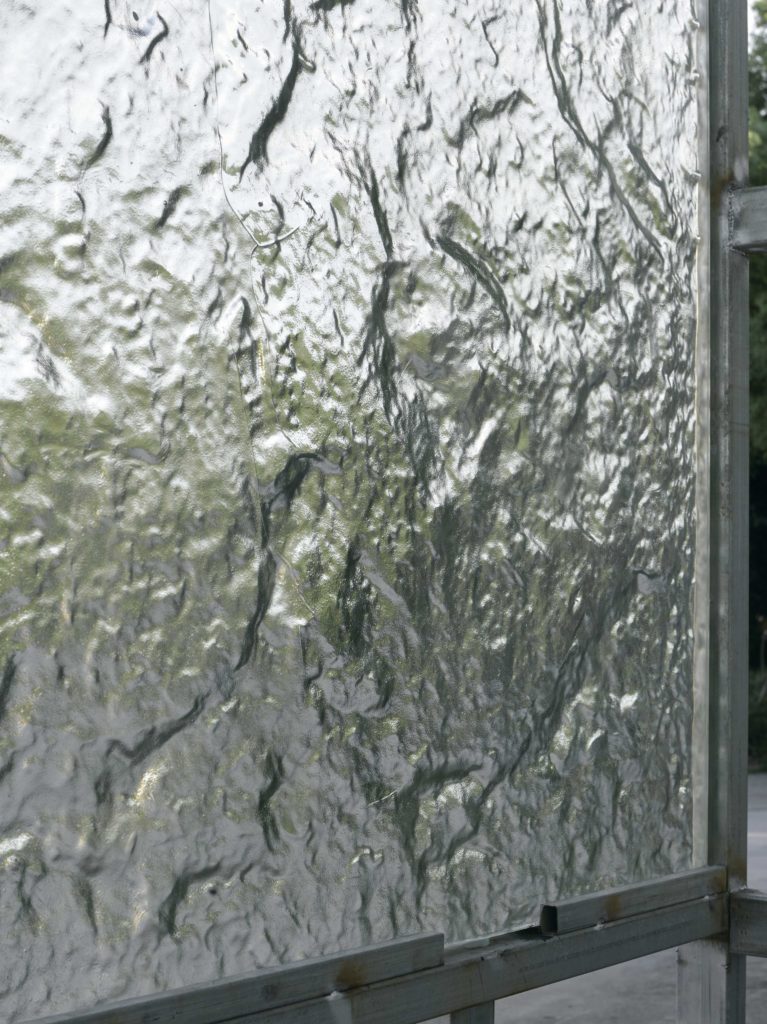
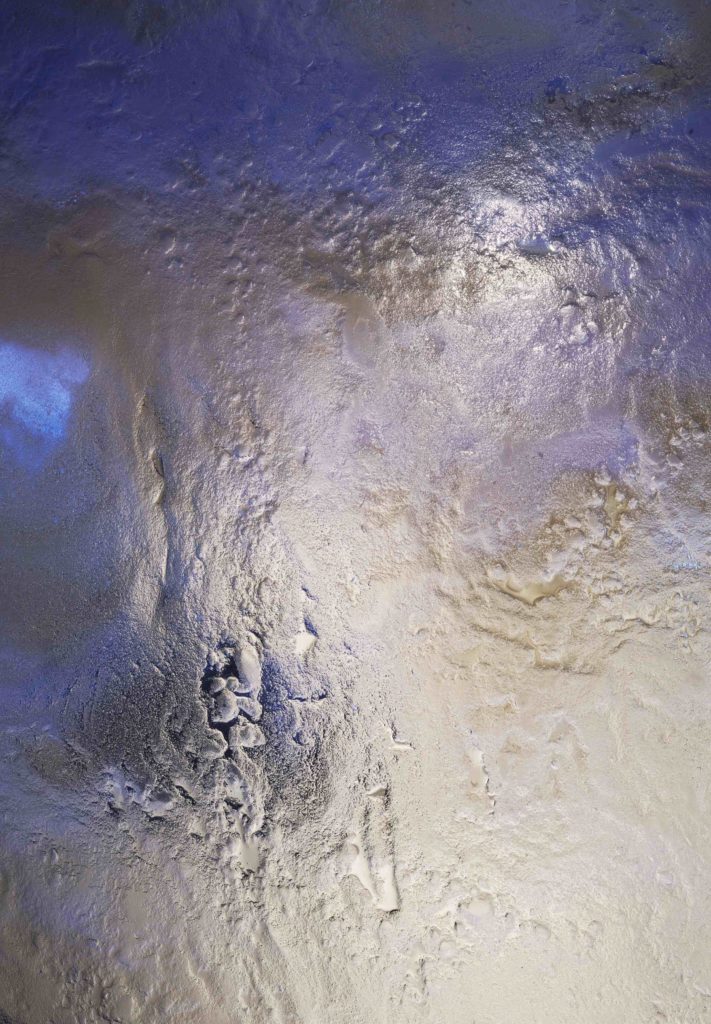
Anne Holtrop: What I strive for in my work is not to have one clarity or one understanding. I like it when the work is very specific but still has an openness in how it can be understood and experienced. Having a preconceived outcome is something I really try to avoid. I focus much more on processes of making — from industrial processes to craftsmanship — rather than defining an outcome. I want to leave certain elements undefined, so they don’t serve only one singular purpose. The idea of glass as a transparent material is a very idealistic idea, and a very singular one. I prefer glass as a materiality that is fluid, moldable, that can take many forms. For the Misk Art Institute, we are producing the largest cast glass panels ever made. We’ve spent five years defining the raw ingredients, building new ovens, developing casting and testing methods — there was no institute in the world that could test this type of glass. We entered into this process naively and openly. In general, I don’t like architecture that strives for an ideal state of being. That feels extremely static to me.
JS: One of the shifts I’ve seen post-2008 is a move away from modernist ideas of didactic architecture. Many modernist buildings are supposed to stand as examples and images — finished, clean, and meant to teach you something. I’ve always been inspired by conceptual art, particularly Fluxus and the early work of Yoko Ono. The form is a consequence of the idea. You follow the process to its natural conclusion and accept whatever results. You’re always surprised, because it can’t be controlled — and therefore it’s not didactic. It’s an exploration.
AH: With Fluxus, as with Dada, the process was the key to the work — there was not so much of a concern with formal outcome. I do appreciate this dedication to process, but I am also concerned by the results. I used to mistake the way I work for chance, but I don’t think that’s true anymore. It’s very concentrated, very focused. There’s a lot we’re engaging in simultaneously — there’s just a will not to pin it down or make it purposeful for one thing. Architecture today is often driven by external needs to “fulfil” a criteria — sustainability, a social purpose, urban regeneration — some cause that is set. I’m much more interested in the experiential part of architecture: the direct physical engagement in space and in the materiality of space that is open for all of these aspects but not made to serve one singular purpose. Not fixing things gives me freedom. Change is definitely a condition I like in the work — and change is the opposite of an ideal state. The glass work we do is specifically to create a condition of space left over to environmental conditions: the weather constantly defining a condition of space. Glass becomes a kind of material transmittance between the constantly changing surroundings and the spatial conditions it sets out.
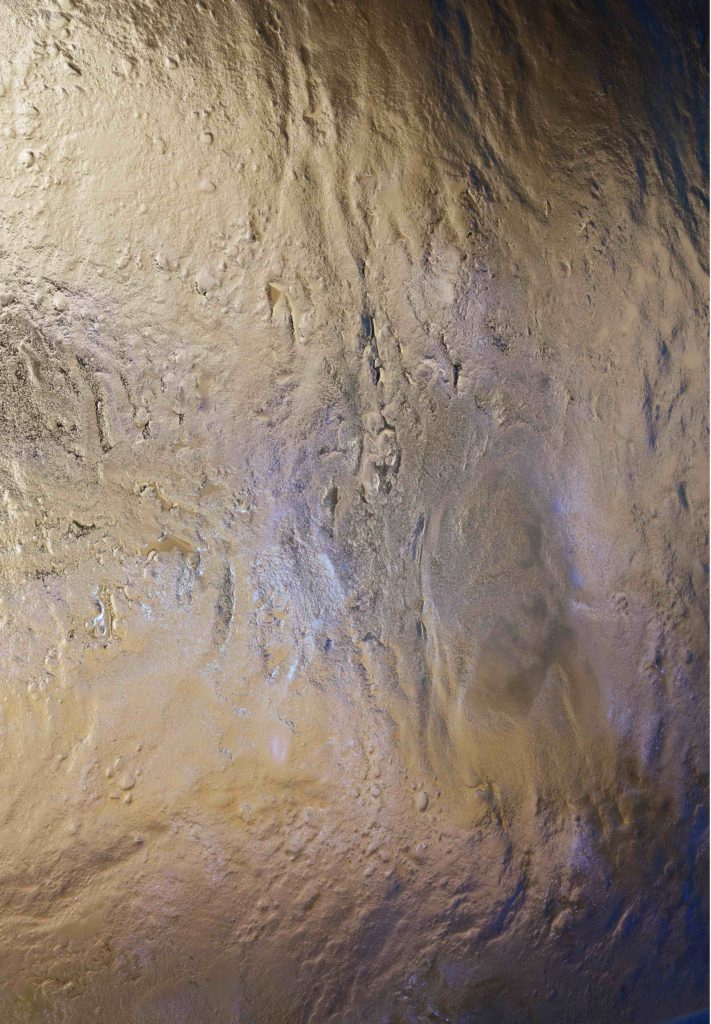
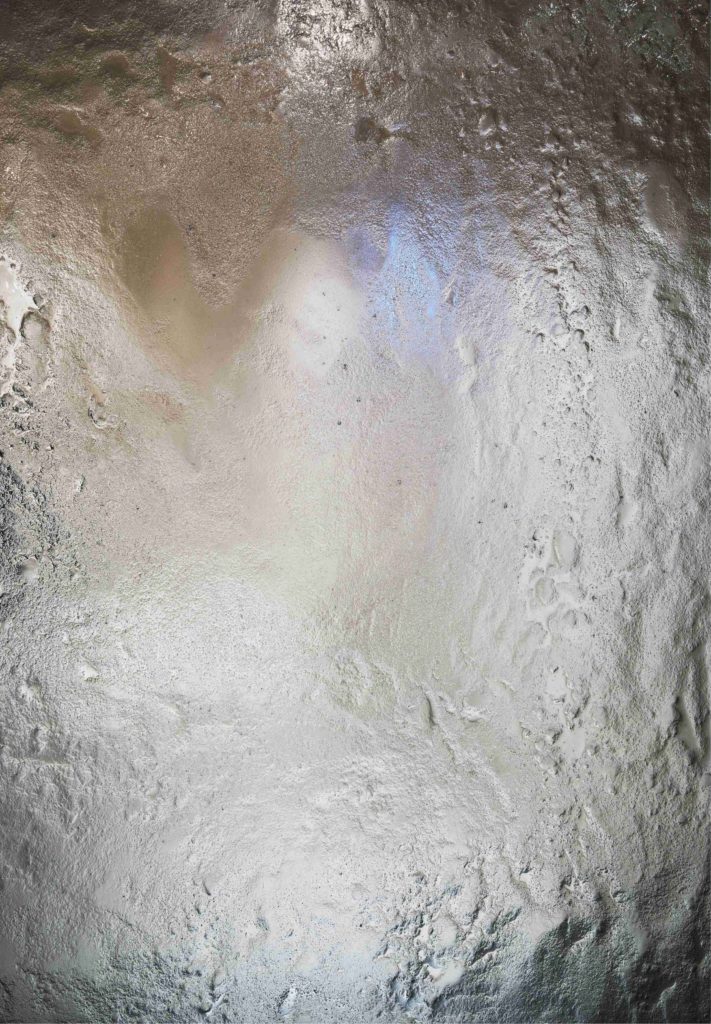
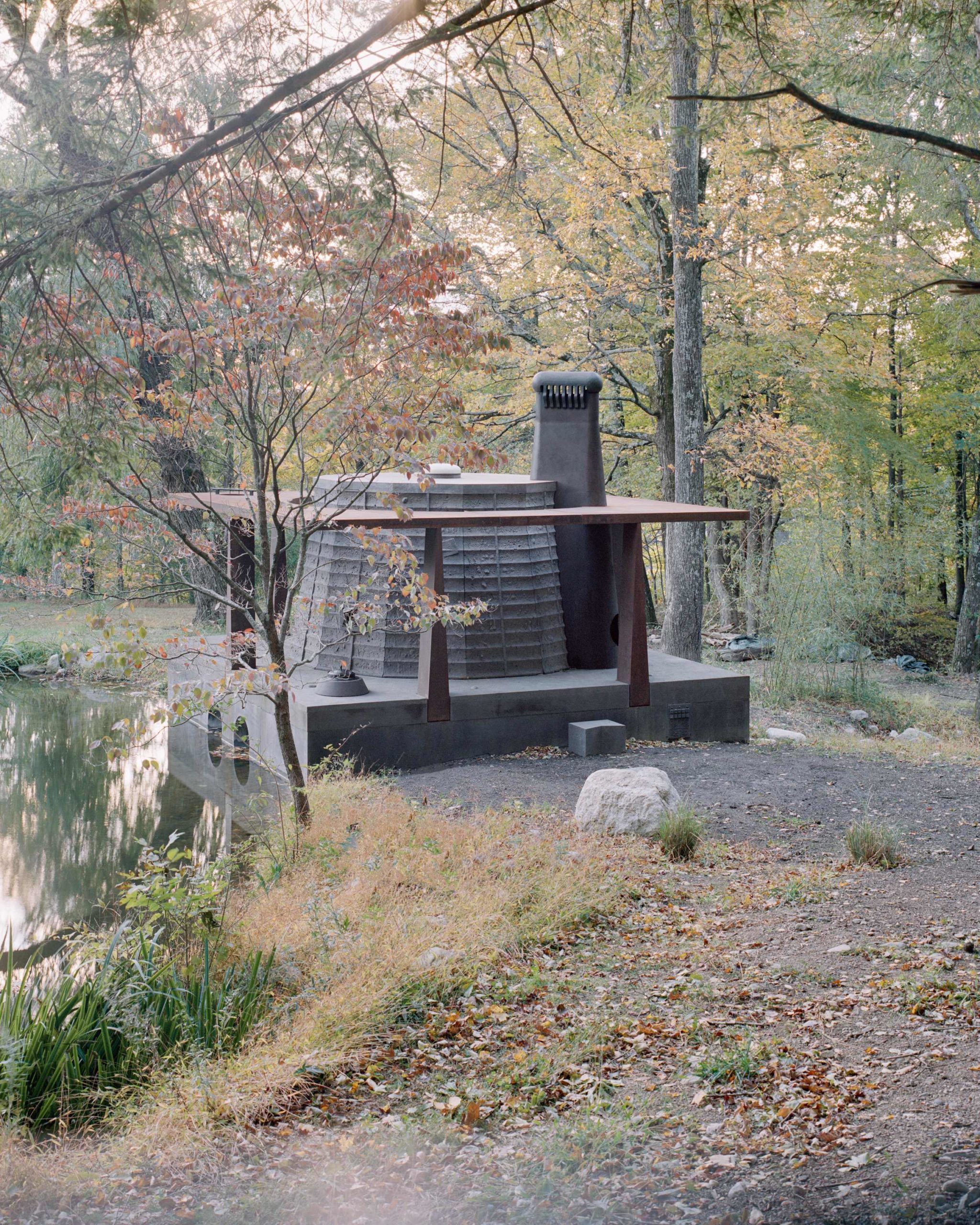
JS: In Western architectural history, there’s been a big drive towards the expression of function: a house looks like a house, a factory looks like a factory. You can “read” the façade of buildings as diagrams for what happens inside — bathroom windows here, stairwell there. I’m thinking mainly of Corbusier. Although a good example is OMA’s Seattle Library, where the diagram for the building stacks all the functions and then wraps it in a glass shell. When I look at your work, I can’t often tell what the purpose or function of the building is. When I look at your Manama Customs House, if I didn’t know it was a customs house beforehand I would have no way of guessing. What is your relationship with the expression of function?
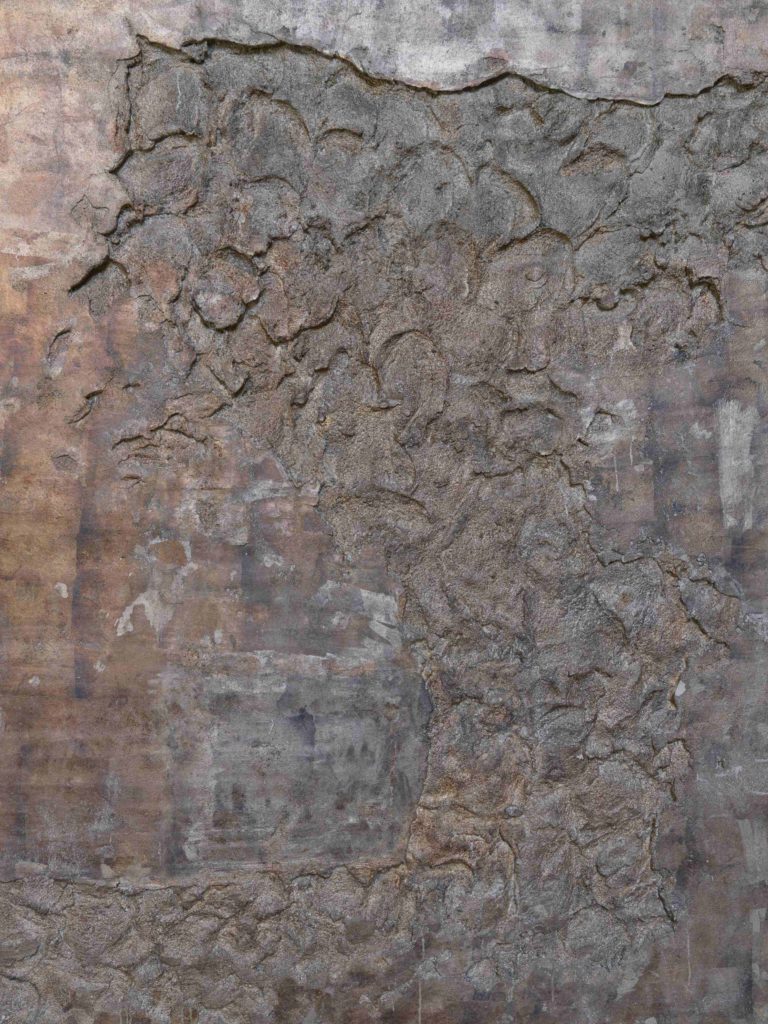
AH: Without making too blunt a statement, my architecture is certainly not a representation of its function. It is much more a response to the conditions of the place itself. These spatial conditions can be appropriated — that building could be a customs house, or a post office, you could decide to live in it, and so on. With OMA, I think it’s more about program and how to exploit programming as a spatial condition. Their projects for Jussieu or the Très Grande Bibliothèque were the key inventions here — how program can become a spatial material. For me, space and matter are very similar — they are of the same kind, just in very different states. More and more, the materiality is not stable, not fixed, and in that sense space is not fixed either. That’s about the performance of space, your engagement in it, how time and use play a role. Function is almost a planning tool — you need sixty square meters for a living room. But we never use it as a tool to design with.
JS: You’ve said architecture should respond to the specifics of its place. Of course, this is not true of colonial architecture, which takes a central template from Europe and plants that copy everywhere. You’ve been living in Bahrain for twelve years. What you’re describing shows a lot of respect for the place and its people — a desire to respond rather than dominate. How has being in Bahrain changed the nature of your work?
AH: One obvious thing was the extreme weather conditions. Everything I used to work with doesn’t last here — within a week European materials and construction processes get cracked and melted and peel away. This condition encouraged a mineral sensitivity in my work. Bahrain is also very limited in its resources. I came from Europe, where any material or construction product is available at all times. Here, you cannot buy anything off the shelf — which is nice, because you have to invent a lot of materials from scratch. It’s an enormous effort, but you’re engaged from the start. With limited possibilities, limited craftsmanship, limited building skills — everything you manage to make feels significant. The conditions are not comfortable, and the weather pushes it further. I’m not safely working from Amsterdam, flying into a foreign country to say “you need to do this or that.” I’m living it, building up from within. We work regionally now — Kuwait, Jordan, Palestine, Saudi Arabia. That engagement already makes the work more site-specific, because it’s born from here.
JS: How does it change your psychology to see that kind of stability threatened?
AH: What I learned about myself as a European is that we are very much governed by our moral views. This moral sense almost obstructs us from engaging positively — our opinion is already defined before we act. Being from the Netherlands, it can be even worse: mental attitudes that assume extremes, like black or white. Being here has opened my perspective. These places are not so different from each other. We are not in a barbaric, uncivilized environment — all people are quite similar, with similar wishes for life and ambitions. I started to feel that the things we want to impose on places, rather than engage with them, are not very valuable or helpful. The first Gulf War was the war we all know because it was so mediatized — the first real-time war. Our experience of the current conflict between US-Israel and Iran is even more extreme. We turn off our phones at night at the moment, because there are so many messages and alerts. The next day you scroll Instagram and WhatsApp to see what happened overnight. It definitely plays on your nervous system. Last night, close to forty missiles were intercepted in the sky. Bahrain is an extremely small country — you hear the impacts everywhere. But what matters more to me is an updated engagement with the world. I feel much more of a world citizen since I moved here. I feel culturally very European and love so many things about it. But a more open engagement with the world would serve us all better.
JS: I’ll pick up briefly on the question of moral judgment. I don’t know if you remember, but we met in person briefly in Dubai a few years ago when Shumon Basar was hosting his Global Art Forum. Shumon asked me what I thought of Dubai. I said I did not generally care for the white people in Dubai. I also said that there’s a lot of moral judgment about the UAE by Europeans, yet the structure of Dubai is exactly the same as Western Europe. In London, the people working in servitude are invisible — they live at the fringes, concealed from the image of the city, even though they are essential for its functioning. In Dubai, those people in service professions are more visible — standing at the door, waiting by the cars, loitering on the street. In some ways, the brutality of both societies is the same, but one feels more honest about the injustice of its conditions, while the other tries to hide its violence. This is why I have a problem with treating transparency as simply good or bad. There’s one version that is overwhelming — too much information, everything too visible. But then there’s what you’re describing: a recognition of similarities between peoples.
AH: When you deal with transparency, you simultaneously deal with obscuring. To focus only on one aspect is to completely miss the point. That’s why I like this theme of “fuck transparency” as a provocation — it doesn’t make sense to focus on just that one element. Architecture is often explained in one-dimensional terms. If it’s about glass, it’s a glass building because it has to be transparent — that’s a completely simplified explanation, because nothing is about one thing. When you allow the presence of all its states, you engage in a more truthful way with things. You open up all of its possibilities of existence.If you look at the world, it’s the same. Allow all the possibilities of existence rather than narrowing down to a Western-dominated view on what should happen in the Middle East. I think the Arab world feels quite united as a counterweight to a Western-dominated view of imposing ideologies and objects on this part of the planet. There is a shared identity of always being dominated, always being made dependent.
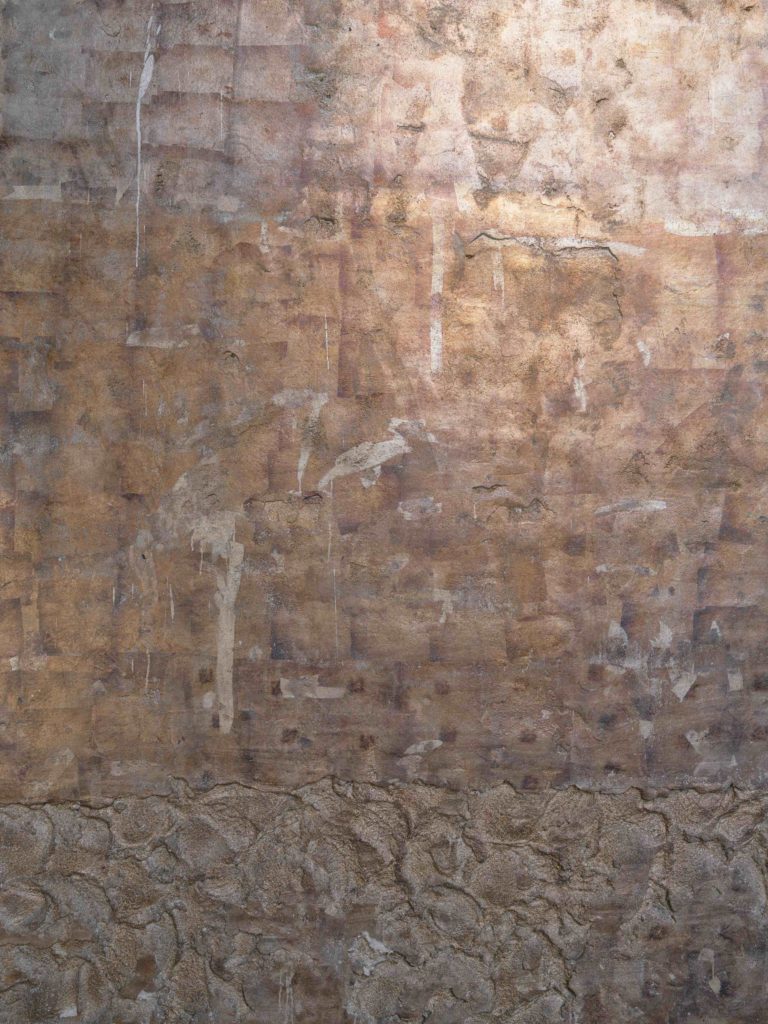
JS: In the art world, artists historically haven’t had to explain their work because it’s self-evident. Nobody would ask Rodin to write an essay about his sculpture. But architecture has this constant need to explain itself, to make itself transparent. What you’re describing could be seen as a form of opacity — a refusal to explain. Do you feel a desire to leave some things unsaid, to not overexplain?
AH: Absolutely. Things can become much richer if you don’t have to explain them. The problem isn’t explaining — it’s explaining things in a very narrow understanding. When you say a design serves this one purpose and there’s no other way of understanding it, that’s where it becomes problematic. I always favor making an architecture that I also don’t understand yet. Working with something I haven’t seen, haven’t experienced, don’t know what it’s about — this makes things so much more exciting and explorative. In a competition, if you already have to say “this is because of that, therefore we do that,” you’re just making what you already know, in a simplified way. It serves a clarity that helps convince a client. But is that really the goal?
JS: We are forced to describe design in a language that relates to risk. Architecture is expensive, so its stakeholders want to know that risk is controlled. They need reassurance, and this must be formatted in language that they understand. The way many architects have agreed to this system of language is a great shame for architecture.
AH: You’re right. We are in a risk-averse moment. There’s so much instability around us — maybe it even supports taking less risk. If you’re in a comfortable situation, you’re more open to taking some.
JS: That’s the hardest thing for me about the time we live in. I am of a view that all this instability is being driven by climate change, which creates social attitudes that drive nationalism, xenophobia, instability, in-grouping, othering. These emotions are driving geopolitical uncertainty. On one hand you have this obviously uncontrollable, high-risk global condition. At the same time, living in Western Europe, I sometimes feel this must have been how it felt to live at the end of the Soviet Union: everyone pretending that peril can be measured and managed, when it very obviously cannot.
AH: A big shift for me is living in a non- democratic country. Strangely, I never felt so directly involved in a society as I am here. I take much more care of the people around me who need help than I ever did in the Netherlands, where you trust that institutions will handle things. The involvement is more direct.
JS: Here’s my source of optimism. How do societies end? My understanding is that it ended when enough people no longer believed it existed. There’s not necessarily a revolution or armed conflict — just a lot of people stop believing it is valuable. The way I would characterize the last fifteen years is as a rolling series of civil rights movements in the West. Each one has not solved anything, but it’s called something into question. I’d start with Occupy and the invention of the 99 versus the 1% — suddenly everyone is aware of wealth inequality. Then #MeToo, Black Lives Matter, Greta Thunberg and Extinction Rebellion. The pandemic — which questioned linear time and the idea that each generation is definitely going to be richer than the last. Then October 7th, which forced a recognition that imperialism and colonialism are still very active. Most recently, we have the Epstein files, which show that society is run by truly horrific elites. I can’t imagine how a society comes back from all of this. How it rediscovers its own reason for being. Living in Western Europe, I have no idea what the purpose of my society is beyond its own preservation through perpetual violence. Yet this is where I see optimism: when enough people come to this realization, I do not believe it can continue.
AH: I’m also a positive person. I try to act upon my own values rather than being submissive to what I think should be done or what is the right thing to do. In my work and in my person, I don’t mind taking a risky position that may not be the majority position. Of course, that comes with resistance — support doesn’t come immediately. But if you live by your own values and try to act upon them, you can only bring good — because you are trying to take care, to be responsible, to be respectable. Otherwise they’re not values.
JS: I have one final question. I’ve noticed anxiety is worse when you’re doing nothing — scrolling, consuming, absorbing. And the best way to address it is to do something. Anything. Even something small. Do you agree, and do you have any advice about what we can each do?
AH: Physical activity is an amazing game-changer for your mental state. Yesterday I woke up and I did a lot of gardening. You’re not even bothered by the questions: Does this make sense? Am I going to stay here? What’s the outcome of this war? Those anxieties disappear because you’re directly engaged. Cooking is also fantastic — so rewarding because you have the outcome immediately. In my work I do the same. I’m not trying to answer where we’ll be in months or years. It’s a day-to-day engagement. We come to the studio and think: What are we going to work on today? That keeps you going. It’s a good remedy against anxiety — against getting frozen in the impossibility of doing something. Don’t try to answer all the questions. Focus on your engagement with things, the people around you, what you have in your hands. That’s what I learned in Bahrain. I’m a very physical person. I need to feel things, sense things myself — embodiment rather than mental understanding. I often don’t know what we’re working on; it’s just a response to the senses.