When Ivan Cheng and I first spoke over lunch in Venice this spring, our conversation disappeared almost immediately into a muffled recording accidentally captured through Cheng’s headphones sitting in his bag. The failed translation of our live encounter into a neat audio recording felt strangely appropriate. Across live situations staged as systems of circulation, videos that treat performers and cameras alike as devices for transmission, or his ongoing series of vampire novels, Cheng’s work repeatedly returns to questions of language, spectatorship, and the conditions under which meaning is produced. The ambient, a term that recurs throughout his practice and thinking, emerges less as atmosphere than as a diffuse condition of attention: something infrastructural and difficult to locate directly. Rather than treating performance as a privileged site of immediacy, Cheng approaches it as one strategy among many: a mutable framework through which attention can be organized or redirected.
A few days later, we spoke again between Berlin and Stromboli about his recent exhibitions and the uneasy relation between artistic labor and visibility.
Raoul Klooker: When I think of you, I think first of all of the incredible amount of text you produce.
Ivan Cheng: Huh?
RK: When we did the exhibition “Ambientals/The Craft” at OCT0 in 2023, you made The Craft (2023), a film with three different performers, and then Ambientals (2023), your performance at the opening, was shown soon after. The engraved tile works were stepping stones toward our book Confidences/Oracle (2024), the third volume of your series of vampire novels, which adapted your performances from the prior year into a fictional narrative around these performance scripts.
IC: But I was just working to balance the show.
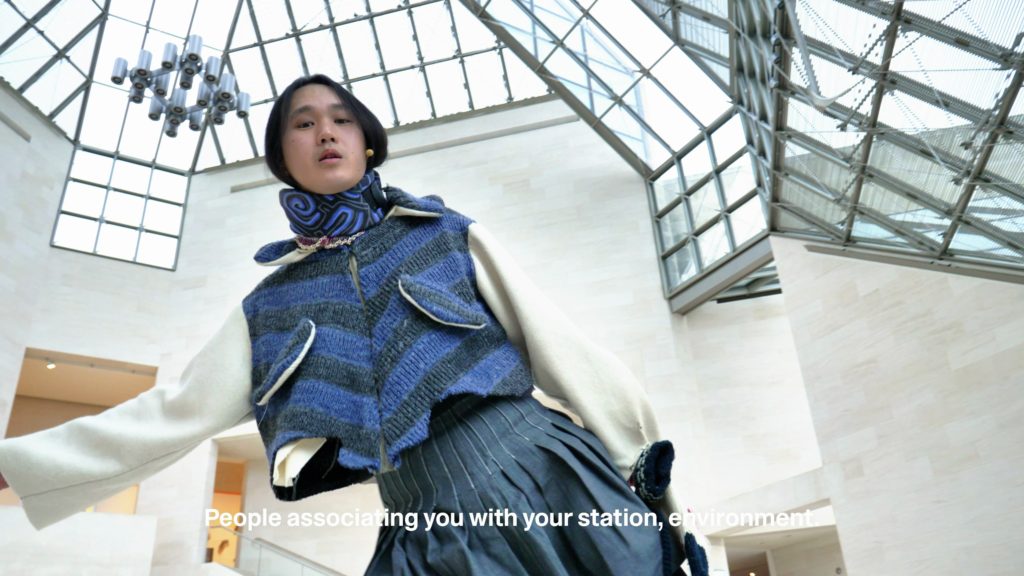
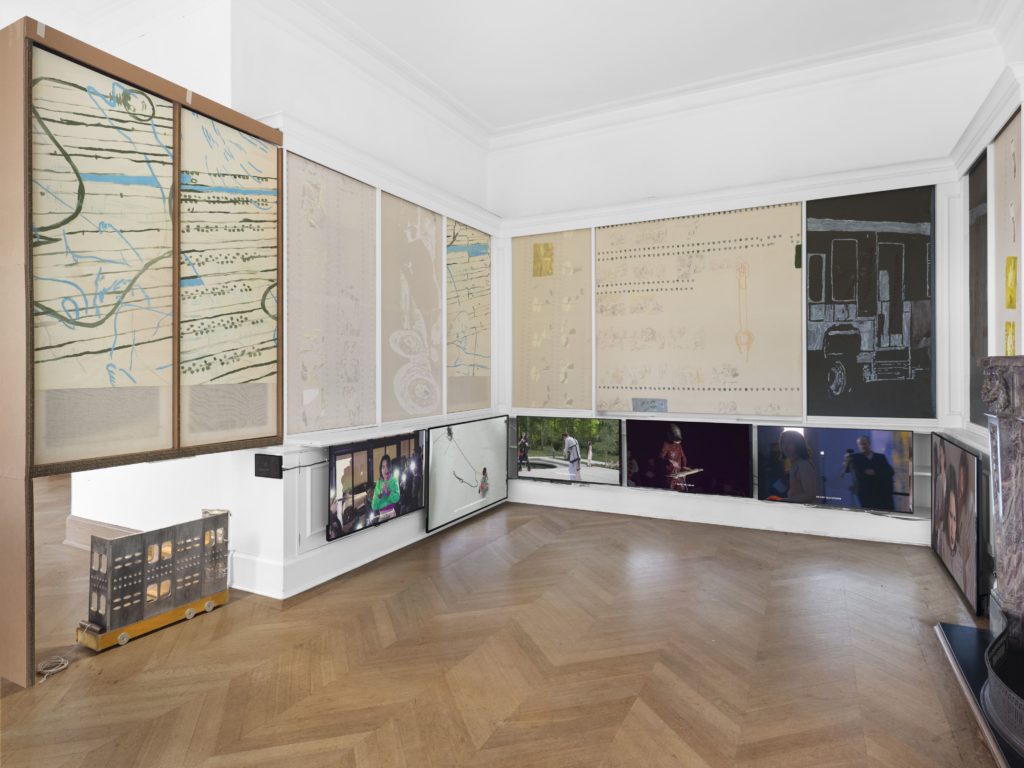
RK: And even now as part of your current show “Casemates” at MUDAM, Luxembourg, for example, there’s this digital tool where visitors, both in person and online, can dump any files from the computer. It also includes a text, a story about a housemate. So for me, this is a huge amount of text production.
IC: Maybe I’m just being contrary, but neither the writing nor the performing and staging feel like the key parts of my practice. They’re just tools that I work with to meet a public.
RK: Yes, but even if that is true, it’s quite impressive how you produce all of this text and the scripts and so on, staging these live performances, but also making these publications, videos in different types of institutions and very different levels of production available to you. And most of the time, this work doesn’t result in objects for sale.
IC: Like most artists, I think I’m trying to make the work that I’d like to see. And that means leaving a lot of space for open thinking in the work. But what if we jump past site-specific adaptation? Let’s ignore performance and talk about novels, which are the purest documentation of my performances, or which complicate liveness better than video.
RK: Sure, start from the first one.
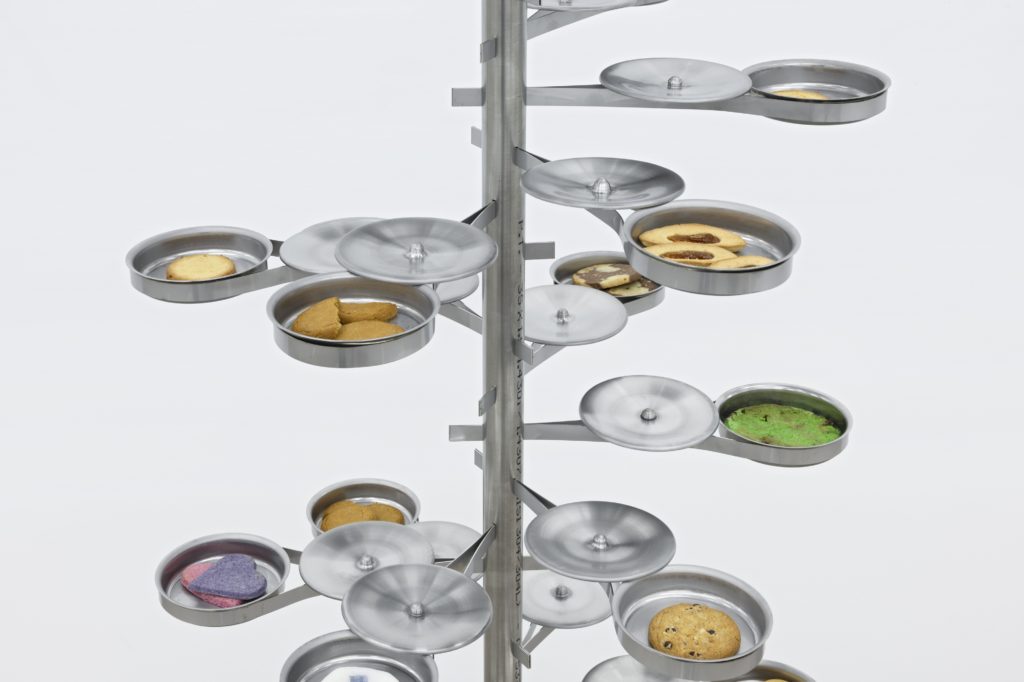
IC: I wrote a murder mystery novel during COVID for a group show with friends in Amsterdam, Virtue and the City (2020). My chopped-up old performance texts form the meat of the book, hung on a busker earning tax-free cash from other people’s intellectual property getting chopped up. I wrote Confidences/Baseline (2021) for Julius Pristauz’s Viennese wood-storage closet. An accessibility cookie rail, made with Thorben Gröbel, was a place to lean and read a vampire book against, with cookies to accept, like in an internet browser. I love that book — some sections are so pure and unedited, no one read it in full before it came out. It met the criteria for being a “novel” more through Sabo Day’s design than its formal contents, and was put out by TLTRPreß.
RK: Hmm.
IC: Then that was in the world and read front to back. I could smell that it didn’t meet expectations. My ego hurt. My banal desire that people think I’m a good writer overcame me, despite never trying to fill the novel formula. But writing is craft, and needed to be honed beyond performance texts to confront what I thought “good” meant. When we met in Marseille, I was working on Confidences/Majority (2022), book two, published by After 8 Books for the Edouard Montassut show “Milieu” (2022). They also put out the fourth book, Confidences/Production (2024) too. I tried so hard to make a book that one could read from front to back.
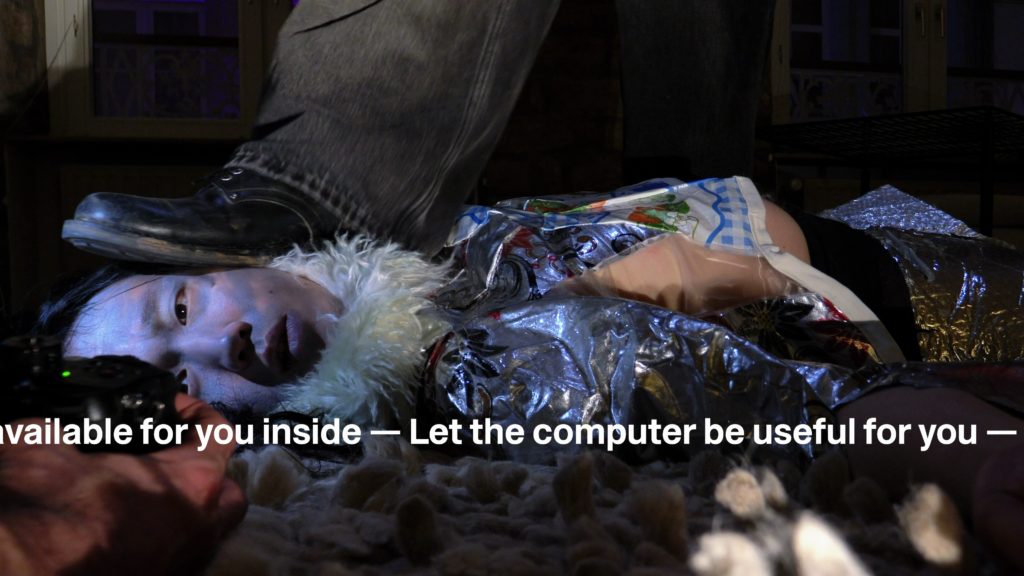
RK: So you suffer from format comprehensibility, while trying to also benefit from its assumptions. You told me you were pleased that, for your show “Serial Surrogates (Absolutely USB)” last year at the Nicoletta Fiorucci Foundation in London, the performances were only announced after the opening, because otherwise people would not be able to just see the actual exhibition for what it was, as though they were missing out on the real thing.
IC: Yes, the curator, Vittoria de Franchis, invited me to do a “library” show, so “Serial Surrogates (Absolutely USB)” amplified my obsession with the USB (Universal Serial Bus) as transport, sequencer, and transmission. Live performances would dilute the discursive tightness around technology. During Frieze week, we did Boffins (2025) in Daiga Grantina’s exhibition at Fiorucci; and for the finissage, I thought it best to not present my own writing or “work” for the closing, rather show my own body as device for transmission. I asked Sophia Al Maria to send me old scripts to test her theory that I could be a good actor. She wrote me something new instead. As audiences, I feel we’re getting conditioned to lend power to the event and the idea of a “shared” liveness. We should be trained to suspect the event as subsidiary to the actual goal. Performance isn’t seen clearly enough as a strategy and device. Often it’s deployed for “extreme presence,” rather than dissolving the antiquated “subject” and invigorating the role of the audience. What happened to the critique of the spectacle? Lol. Excellence and immersion have become naturalized as the desired product of performance. I am guilty of wanting to meet this sometimes. My work appears super content heavy, but I think it can be seen as a mask. It’s ultimately kinda empty! There are things I care about and can’t give up. Then there are gorgeous ornaments, which happily also pass as the core of the work.
RK: So how does that come into play in the exhibition at MUDAM, where you work with performers and you’re absent after the opening, but there’s nonetheless a kind of event character.
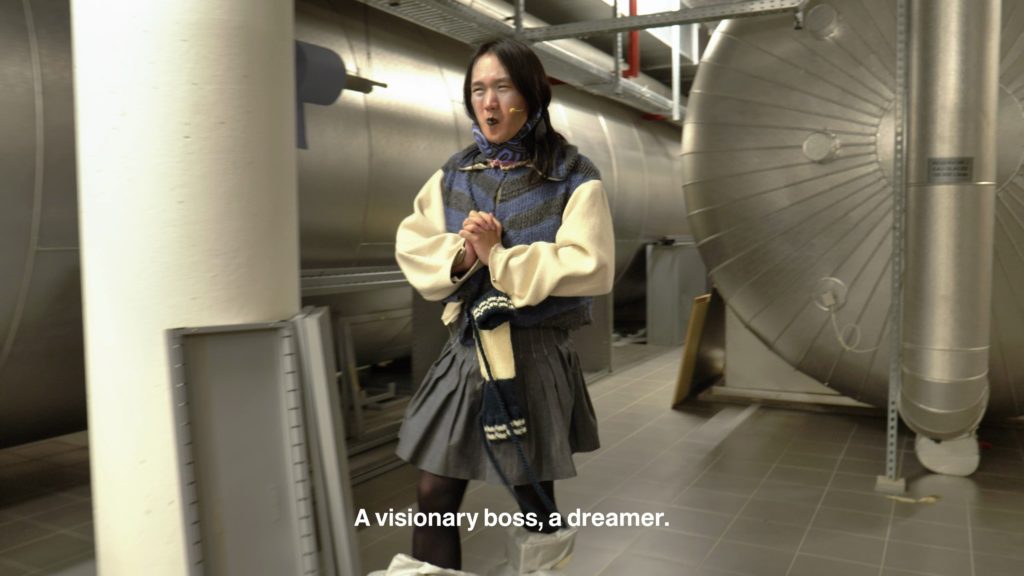
IC: I approached that commission thinking about how “performance” could be directly positioned as working in contravention or extension to the traditional function of a museum, or directly meet the demand that it goes further. Trash and our perception of waste became the approach, and language in the methodological exhibition score was suggestive of a (closed) circulation. The main performance is the digital dumpster you mentioned earlier, The Reservoir (2026), while The Fountain (2026) is the theater-style arrow toward it; live performances that corral the public into being an audience in the show logic. The videos —turned off for this so the gallery becomes a clunky live-viewing-apparatus — were made for the show: The Fortress (Boss) (2026) is explicitly introductory and shot in/around the museum, and then there’s Hard Drive 2 (2026), which is a megamix of eleven videos, scrolling four channels with stereo mixdown. For scheduling and practical reasons, the performers Lev Babych and Jeanna Serikbayeva both had a dance background.
RK: But you’ve also established a group of collaborators around you — Arvo Leo on camera, Good & Bad doing garments.
IC: Yes, my most regular and truly wonderful collaborators. But I get the feeling I’m permitted to budget them into the work because they’re fundamental to shaping my work towards a stable image. How else could attention be produced in a saturated field? Does the ambient or diffuse still register? I actively diversify. I do different things, and people get bamboozled by the productivity.
RK: Yeah.
IC: This chafes me; but why? Am I trying to avoid a bourgeois sense of industriousness, or flout accusations of professionalization? Does having multiple balls in the air allows me to make mistakes with low stakes? Or am I truly experimenting? I am a disciple of fandom, and favor obsession to passivity. I like when people have deep knowledge of what I do, and want to play with the line between generosity and overload. My undergrad degree is for clarinet playing; I am intimate with the force of specialization and expertise. But now I scream/sing alongside dodgy clarinet in a rock band.
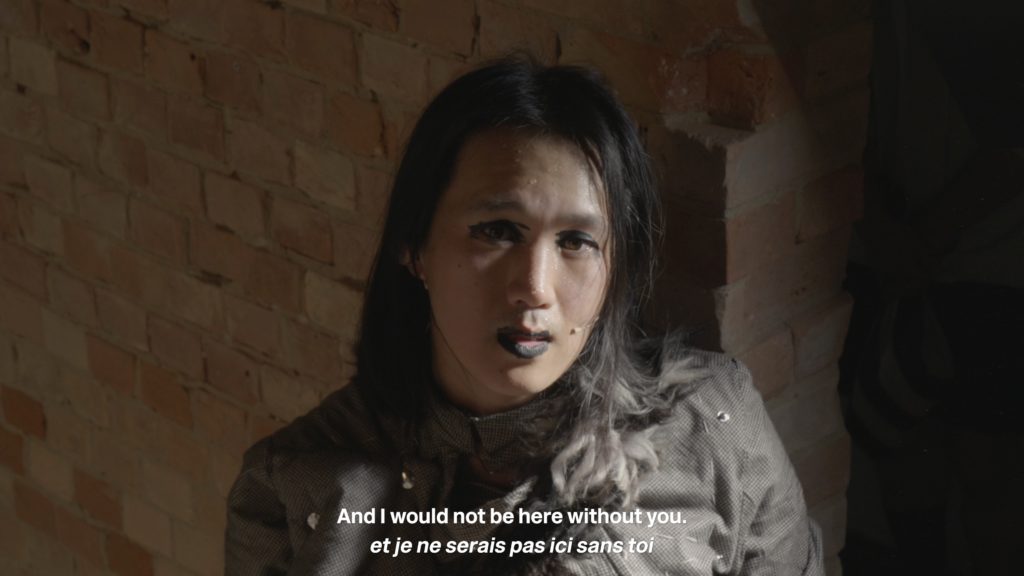
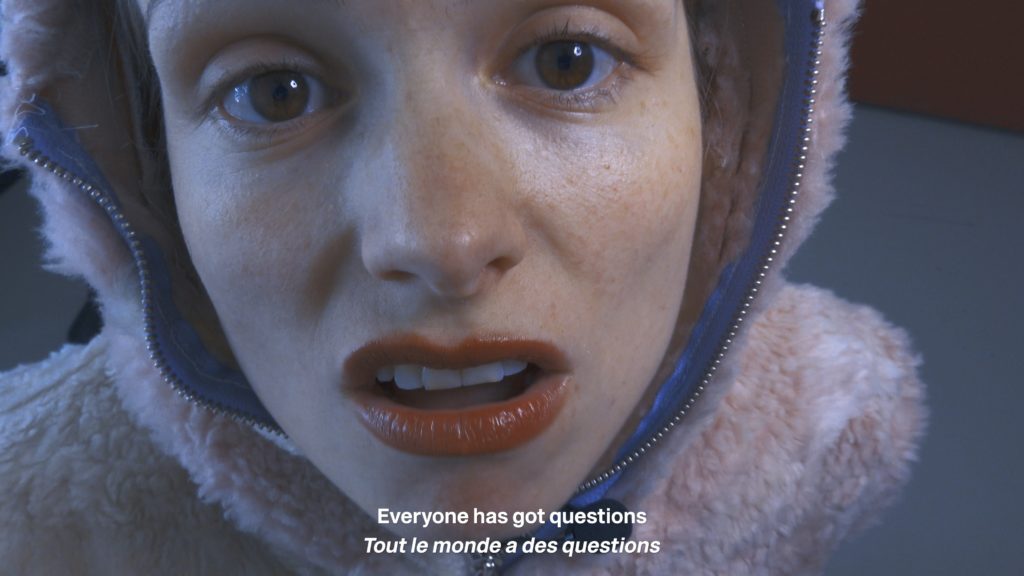
RK: Yes, the band 33. You just released a record, Tripolar, in April. Would you ever combine your work with the band with an exhibition as Ivan Cheng?
IC: I doubt it. I can’t imagine that being interesting; it’s not a clear enough genre project. Part of the pleasure of 33 is that it’s collaboration — shared with Billy, Alex, and Cem. Working with Alex, I just finished a “solo” record of songs from my 2025 shows. It’ll be released by Fiorucci and Axis Axis — so the humiliation ritual of releasing music in an art context is part of the fun. The most boring thing in my head right now is: Should it be released under Ivan Cheng? Or another name? Why am I trying to protect my name like a brand? Shut up Ivan, who gives a ****?
RK: Well…
IC: I’d love to believe an audience is capable of complexity and mental striation without the boon of a new project name.
RK: Can you already say something about the Aspen project or not?
IC: Sure, there’s a lot that’s still open. It’ll be part of AIR Aspen, which the Aspen Art Museum organizes in summer. I’m on a site visit for a project in Stromboli that will happen just before it, and there’s similarities. The tourist economy and intensity of natural beauty are something to balance out. At first I thought the best solution for Aspen was a thirty-meter-high hologram of myself in the nature preserve. We’re still waiting to confirm the location. There’s a landfill that’s gorgeous, mountains of organized trash that are surrounded by natural mountains. Bears wait until the workers leave to feast. It’s very soon. I tell myself I make sharper and smarter decisions out of necessity, but sometimes I wonder if I’m missing the fundamental incision into the structure of presentation. Can anything good be produced when burdened with artificial urgency?