As I write this, I’m in New York. But I’m homesick, so I’m driving down Sunset Boulevard through Ed Ruscha’s 12 Sunsets (1965–2007). Accessible via the Getty’s website, sixty thousand digitized negatives from the work are presented with an interface that simulates a driving experience. Starting in 1965 and continuing on and off until 2007, Ruscha, with a motorized camera strapped to the back of a pickup truck, photographed the buildings along the north and south sides of the city’s iconic and mythic thoroughfare, which extends from Chinatown to the Pacific Coast. Originally published as an accordion book, the work uses photography to catalogue the city’s built environment with little intervention. The photographs, presented in horizontal sequence, capture the city’s long lines and the sensation of movement with which most people experience the city via car window. Now, the work serves as an impressive archive that documents a changing architectural landscape. Ruscha’s piece is moving to me in its simplicity, its scope, its dedication. There is an apparent obsession in wanting to capture the city’s evolution over time, to layer the past and present, to show all as it is, which quickly becomes evidence of what it was.
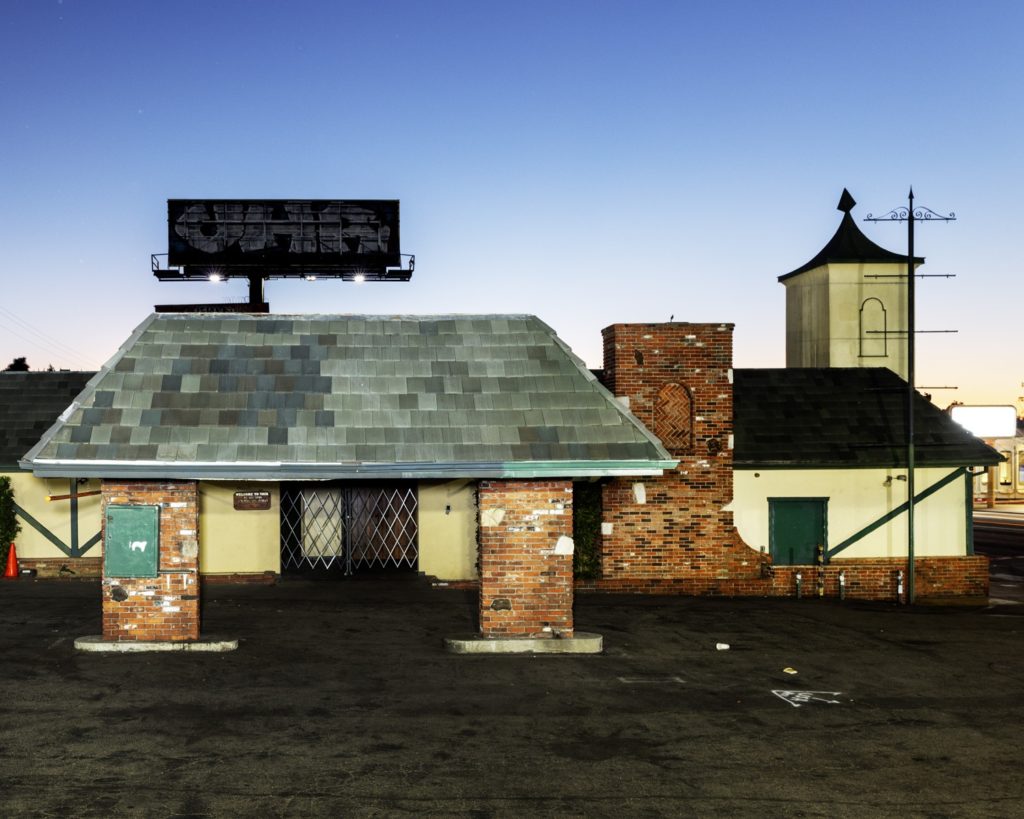
In my animated red pickup truck avatar, I pass blocks I recognize with emotional precision. As evidenced in Ruscha’s archive of photos, one building that has hardly changed in forty-two years is Taix French Restaurant, which stands on the narrow end of a triangular lot between Alvarado Street, Reservoir Street, and Sunset Boulevard. Two of his photos of the restaurant from 1974 and 1997 are nearly indistinguishable except for the make of the cars in the foreground. The place’s consistency over the years is impressive given Los Angeles’s reputation as a city without history. The impression of permanence runs contrary to the pace with which buildings and businesses appear and disappear on the rapidly gentrifying east side. Buildings are flattened and rebuilt with such frequency that one hardly notices anymore. I spent much of my twenties at Taix. This month will be the end of an era, as they say: this month, I will turn thirty and Taix will close its doors after ninety-nine years in business. We lose places like this all the time. The city is always changing, and we’re always getting older, but certain endings take on a greater poignancy.
Taix (pronounced Tex) was founded in 1927 by Marius Taix, a Frenchman from Alsace drawn to California by the Gold Rush. Living in an enclave among other frogs downtown in what was known as “Frenchtown,” Taix opened a bakery in 1882. When he died in 1926, his son, Marius Taix Jr, a pharmacist, took over the bakery and opened a restaurant at 321 Commercial street in 1927. The restaurant moved to the Echo Park location in 1962, where it has remained since.
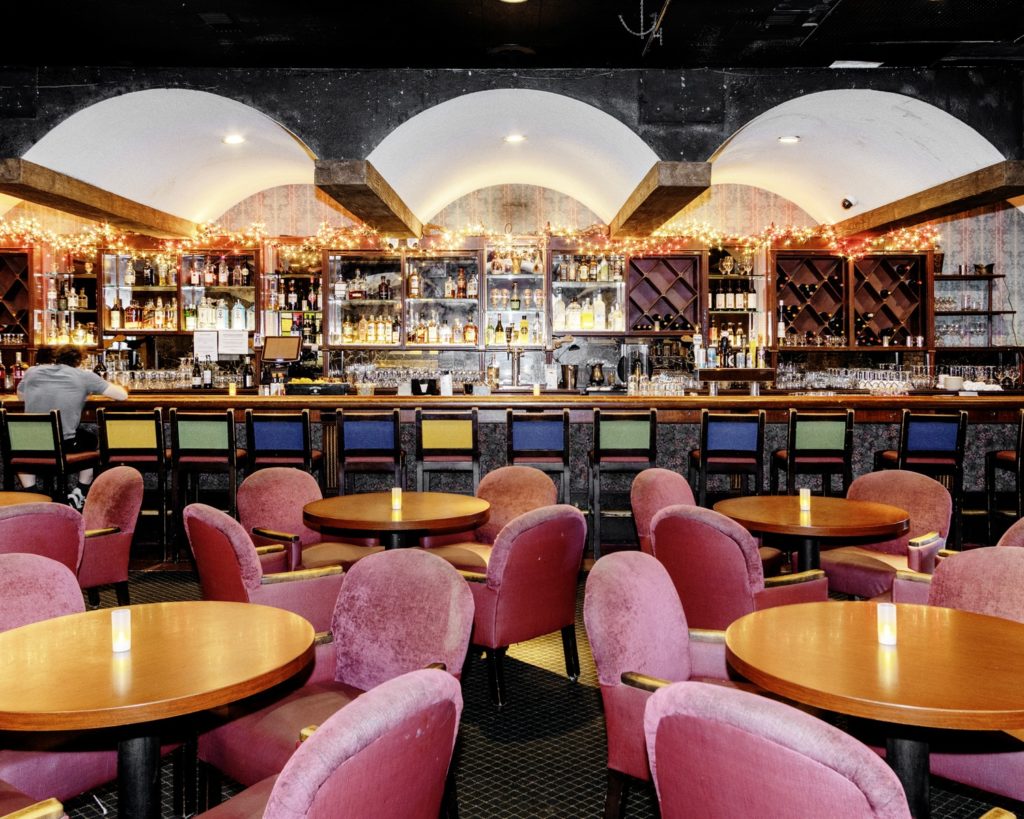
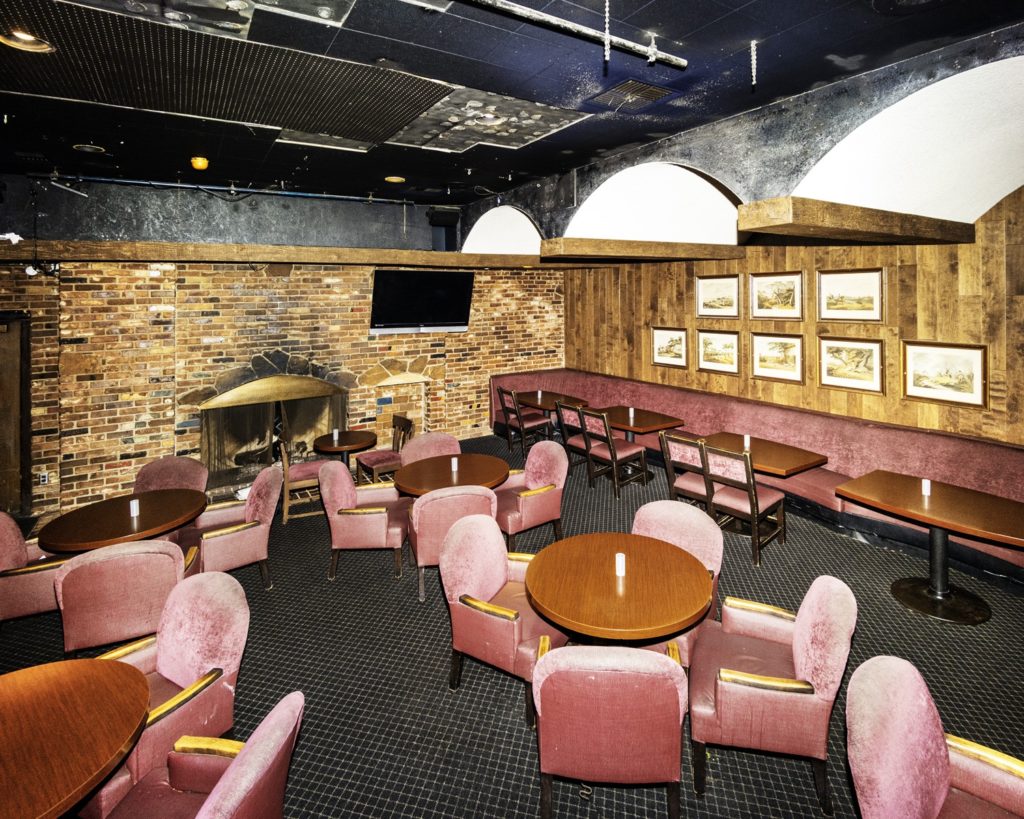
Vast, lowly lit, carpeted and windowless, the restaurant’s interior feels comfortably situated in the past. It’s the kind of sprawling restaurant from days of yore, when dining out had a three-act structure: cocktails at home, a long dinner, then dancing or a night cap. It was gloves and champagne and tablecloths and ashtrays and waiters with bowties. Taix recalls the world of midcentury Los Angeles restaurants like Chasen’s, the Brown Derby, or Trader Vic’s. Its bar has even served as the set for one of Don Draper’s haunts. It’s from a time when restaurants were designed to be cavernous yet intimate; the lack of windows was meant to suspend one in time. The restaurant has multiple banquet rooms that are used for private parties, but over the years have also been used for performances, art shows, etc. The owners seem pretty laissez-faire about the events that occur there; they are game to host anyone who will bring in business. Sometimes it turns into a kind of nightclub rather than a restaurant. I’ve been there on New Year’s Eve when I’m pretty sure at least a thousand people were in the building. Guests were spilling out of the Champagne Room and the Rhône Room (one of the private rooms with a mural of the Rhône River Valley). On a normal weekday evening, the 321 Lounge, with its dark wood tables and rolling upholstered red chairs, is filled with Echo Park townies, Gen X musicians and artists, old couples eating pea soup, solo diners, and drinkers watching sports at the bar.
Today the restaurant possesses a kind of novelty, a faux-fancy kitsch that defines the taste of a certain millennial diner. Speaking as one of these diners with a fetish for nostalgia, I’m always looking for an old restaurant with a varied crowd, large martinis, and chairs that feel like couches. But more than that, I’m drawn to places that offer a welcome respite from the aggressively trendy overpriced and oversalted joints that have begun to clutter the city.
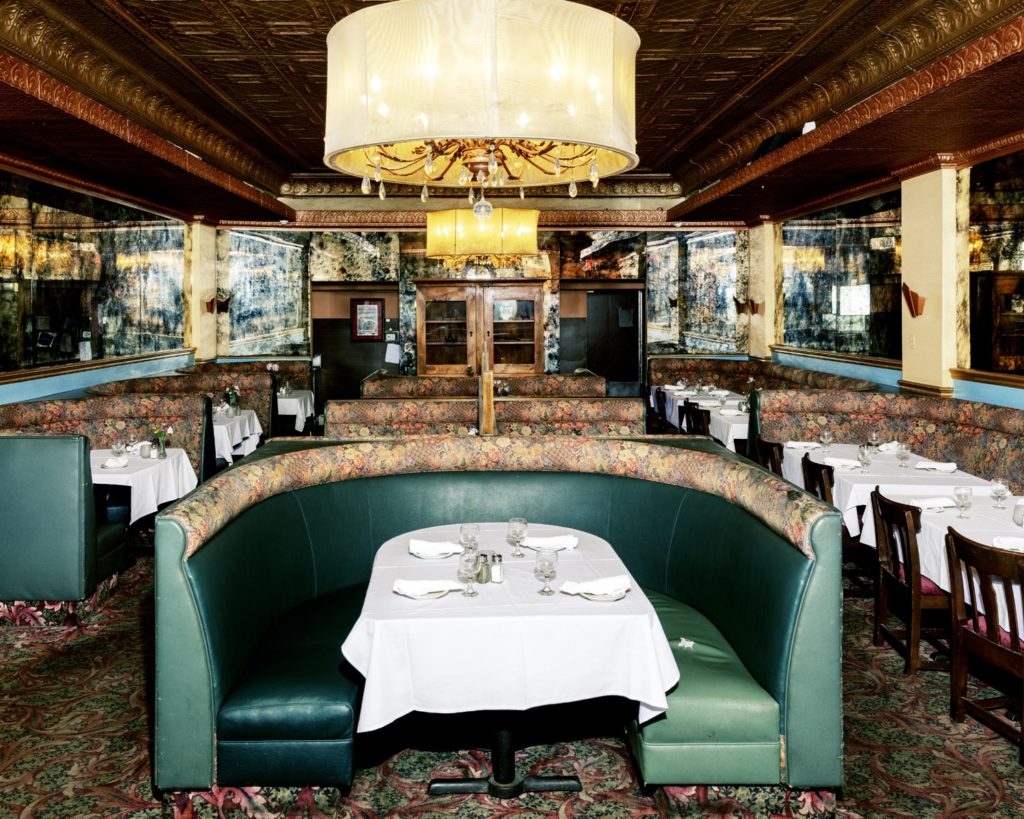
Taix’s draw is certainly not the food (I tend to stick to just drinks or a burger rather than explore the French-inspired entrees, which include escargot), but I never go to restaurants for their food. I prefer Taix for its ambiance, dark and warm, with its tenured staff that likes to chat. I like places that act as some sort of social hub. Taix hosts many overlapping social scenes. In one night I might run into five people from disparate groups. I’ve gone there with every person I’ve dated in LA, possibly every person I’ve slept with, and if we did not go there together then I ran into them there at some point. Because of the low spotlighting, sometimes it is hard to recognize guests. People stop at the lounge’s entrance, which is flanked by a stained- glass partition, and scan the room for familiar faces, sometimes having to squint.
Obviously, most buildings in Los Angeles have windows. California architecture typically incorporates its infamous sunshine and draws from its natural surroundings. But LA architecture is also known for its inconsistency and novelty, sometimes to the point of humor. For example, what is an Alsatian chalet doing in the middle of Echo Park? Taix’s building mimics the architecture of its owner’s origins with its pan de bois, the timbered framing on the outside, brick chimney, and rustic shuttered windows. The windows, however, are trick windows; they cannot be seen through. They seem to be merely attached to the building’s facade. There is no evidence of them on the inside. They are another diversion from LA’s typical architecture, opting for dimness rather than dousing the space in sunlight. Before they stopped serving lunch, Taix was one of the only places where one could go at 3 PM for some respite when the brightness outside was simply unbearable.
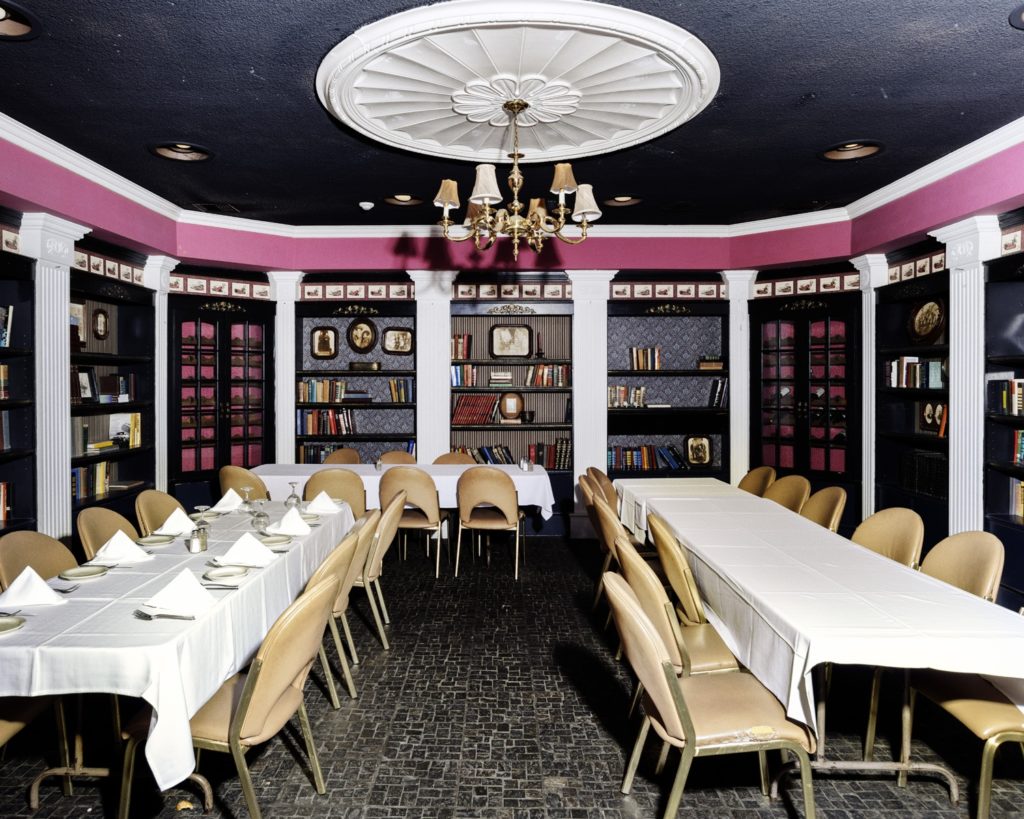
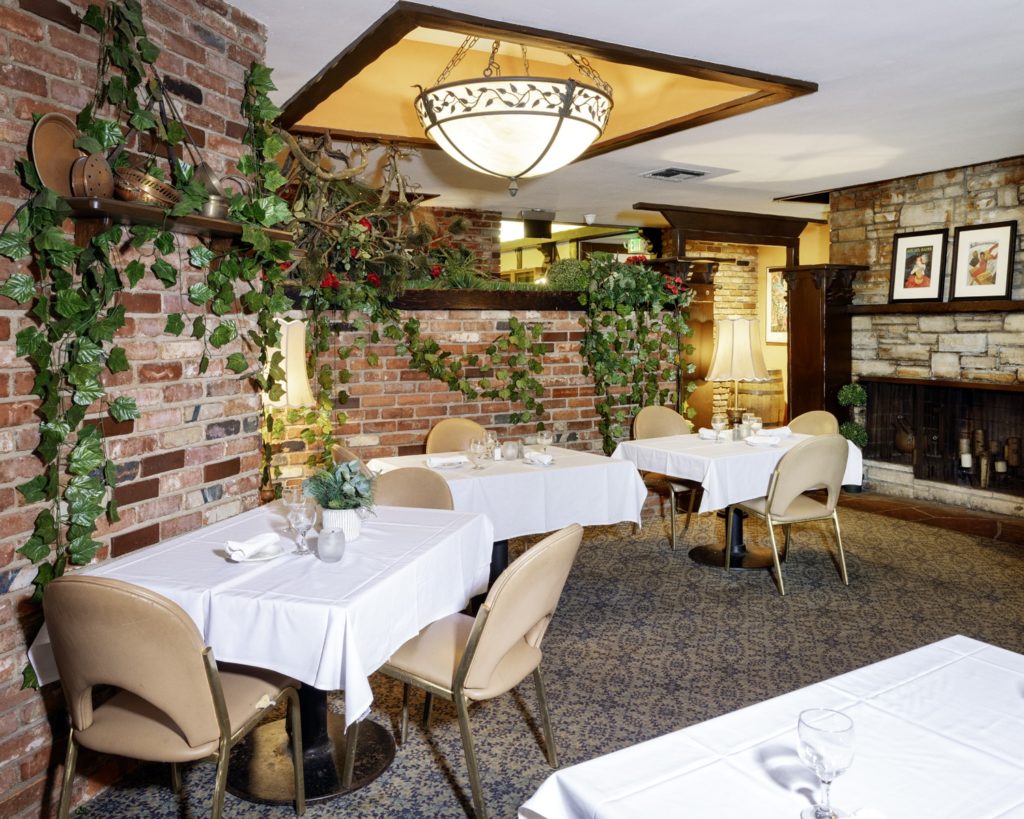
Given the building’s opaque architecture, the restaurant’s layout is still obscure to me. There seems to be no end; I don’t think I’ve ever been able to trace the perimeter. I’m not even entirely sure where the kitchen is located. The food appears — at one point served by a man in a vest and a beret — as if out of nowhere. After the pandemic, the restaurant went through a period of constant adjustments. The white tablecloths were eventually replaced by little paper placemats with scalloped edges. At one point the menus were two eight-and-a-half-by-eleven pieces of printer paper stapled together. The glassware changed, then returned to the branded cups. The tablecloths came back and then were gone again. There was a sense for a while that the place was hanging on by a thread. But after a few years it seemed to be back to its booming self. Likely in the wake of this post-pandemic period, the Taix family decided to sell the building to a development group, who plan to tear it down and put up a six-story multi-use apartment complex in its stead. An ad hoc community called “Friends of Taix,” whose Facebook group has more than five hundred members, have attempted to prevent the building’s demolition. The restaurant was designated a historic monument in 2021, but this designation did not protect the building from demolition. It was only able to protect the exterior signs and the old cherrywood bar (which the Taix website boasts is the oldest in Los Angeles). A new iteration of the business will supposedly open on the new complex’s ground floor in 2030.
The architectural renderings of the planned development show exactly the world in which I do not want to live. It is a world that looks like a video game of the future, dull homogenous mall-like structures adorned with “murals showcasing a local artist,” which you know just means a nonsensical wash of geometric shapes and a woman of ambiguous race with flowers for hair. The renderings are the spooky inverse of Ruscha’s documentary images of the past. Slivers of artificial sunlight fall on animated shadowy figures as they move across a brightly painted and patterned crosswalk that the rendering’s captions refer to as “users.” I’m struck by the odd wording of a caption that points to the restaurant’s sign: “Historic Taix sign reused to commemorate existing restaurant.” Commemoration implies honoring something of the past. How can you commemorate something that exists? Revealed in this jumble of contradictions is the admission of destruction and the low-priority of preservation. It’s especially hard to imagine Taix, with its heavy wooden details and deep reds and greens, slotted into a glassy, airy retail space with street-facing windows beneath apartments lived in by upwardly mobile young professionals. The restaurant’s intimacy will disappear with the architectural transformation.
It’s always a strange mourning when a business like this closes. It’s the kind of loss one feels when a celebrity dies — a brief, shallow sadness that you recognize is a bit silly. But in this case perhaps the restaurant’s closure signifies a larger change, a canary in a coal mine for the increasing gentrification that’s creeping down Sunset. Silver Lake’s legacy businesses, less than a mile west, are already in their second or third wave of gentrification. The sense of loss comes from a knowledge that nothing better will take its place. We will find no pleasure as these shadowy users admire the building’s murals or sidle up to the cherrywood bar now surrounded by windows, because everything else around it will have changed. For one thing, I’ll be thirty.