Brook Hsu’s “The Barcelona Pavilion” at Kraupa-Tuskany Zeidler begins with a paradox: a building conceived as an emblem of permanence that existed only briefly. Designed by Ludwig Mies van der Rohe and Lilly Reich for the 1929 International Exposition, the original Barcelona Pavilion was dismantled in 1930, almost immediately after its completion.
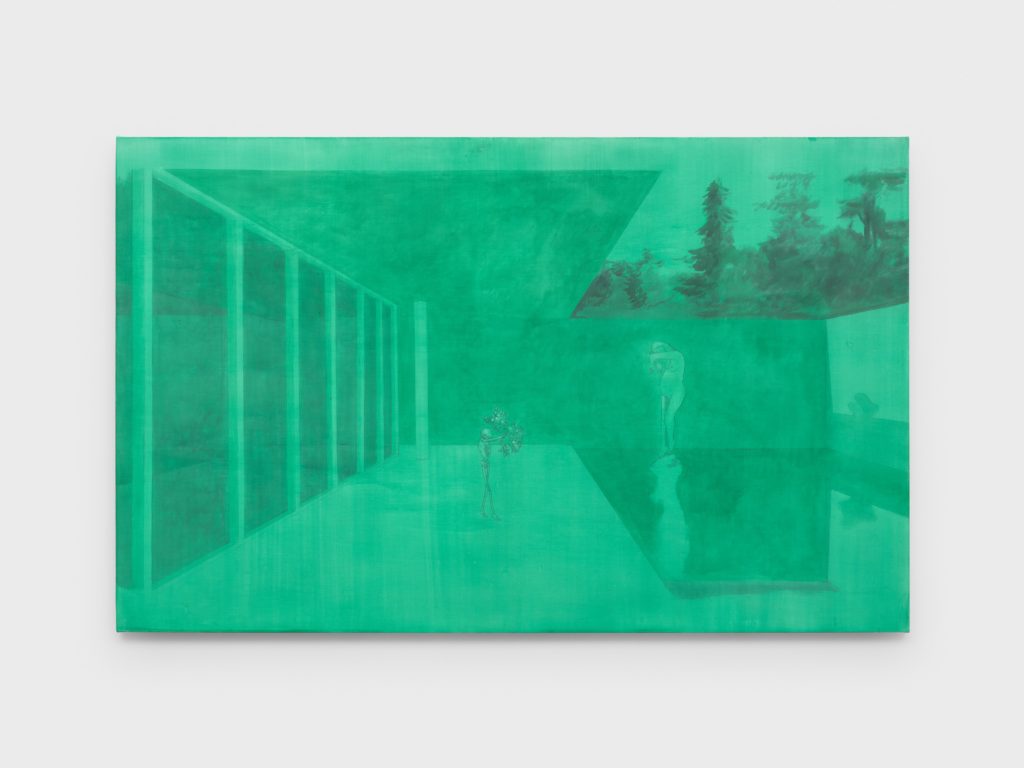
Hsu approaches this contradiction less as a problem of architectural history than as a lingering psychological condition. The pavilion becomes a structure through which disappearance can be repeatedly staged and reimagined: a building conceived as permanent, dismantled almost immediately, yet continuing to circulate through memory, reconstruction, photography, and projection. The pavilion was even rebuilt between 1983 and 1986. In Hsu’s account, the pavilion no longer functions simply as an architectural icon; it becomes a site onto which forms of attachment, loss, and recurrence are continually displaced.
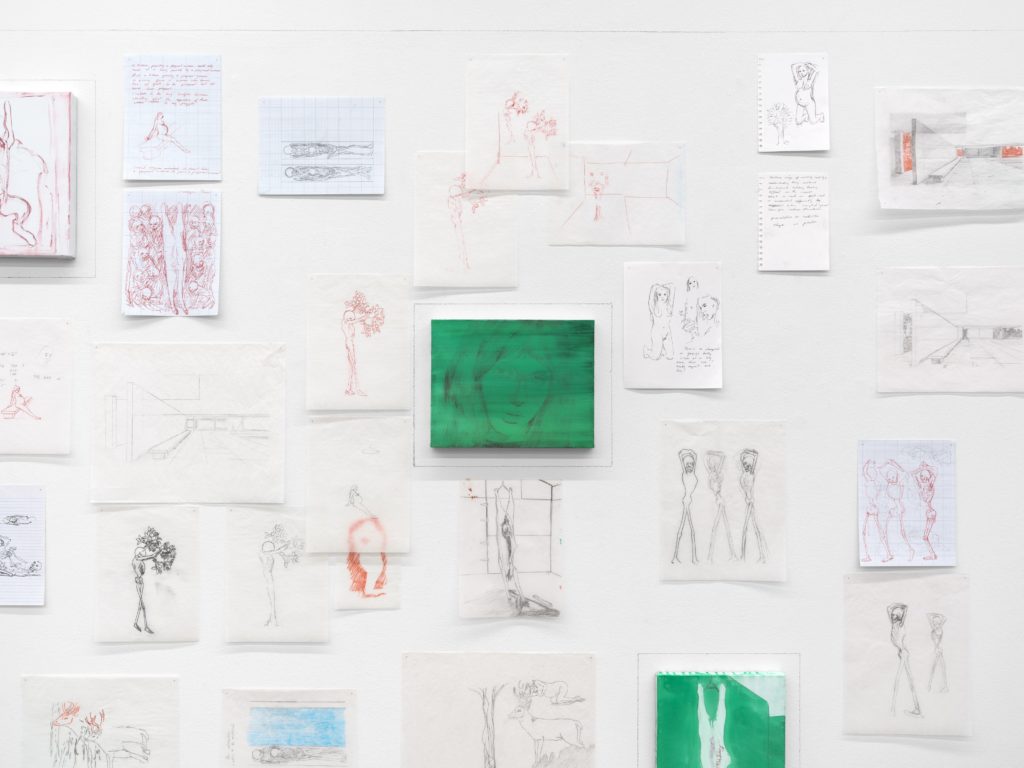
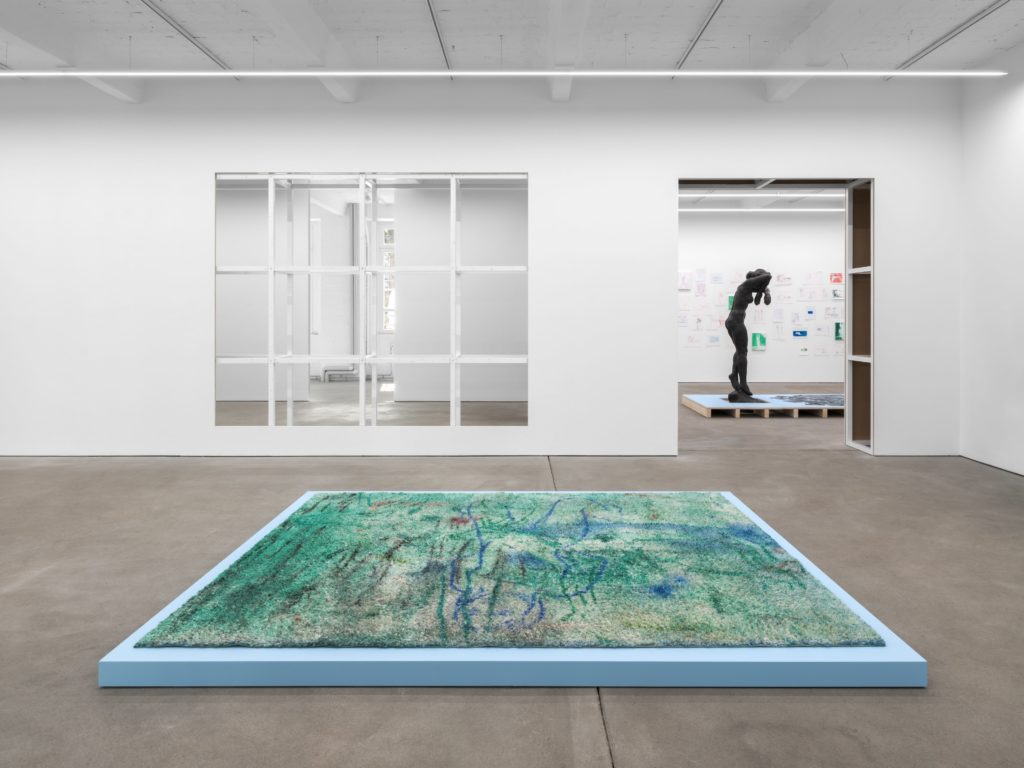
Since 2024, Hsu has returned repeatedly to the pavilion motif, though here the work expands into something more intimate and emotionally exposed. The instability of a structure built only to vanish intersects with the experience of maternal grief, creating an atmosphere shaped less by symbolism than by suspended emotional pressure. The recurring presence of Nacht (1926–30) by Georg Kolbe deepens this sense of bodily absence without allowing the exhibition to collapse into allegory.
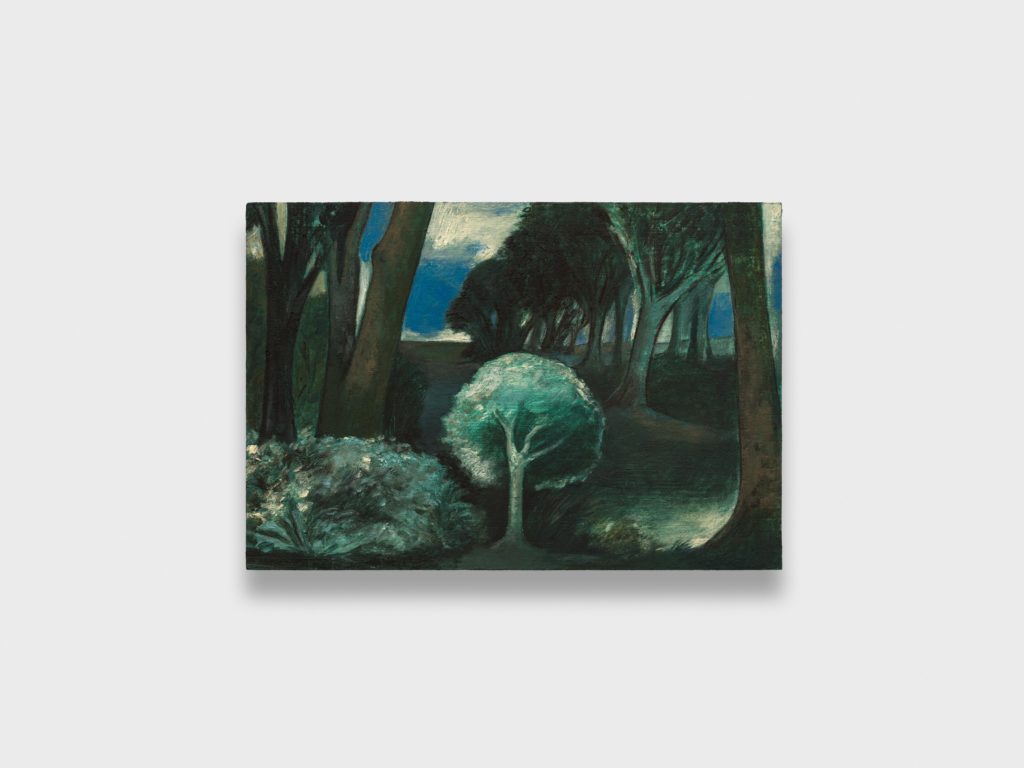
One of the exhibition’s strongest qualities is its refusal of visual or narrative resolution. Rather than imposing a singular system across the works, Hsu allows each piece to maintain its own emotional and material logic. The exhibition opens with a hand-signed document describing the future reinstallation of the works, foregrounding the provisional condition of the show itself. Interrupted by a small painting on wood, Tree in a Landscape (2026), the gesture feels almost anti-aesthetic: less an introduction than an administrative fragment temporarily displaced into the gallery.
That instability extends into the exhibition’s material structure. A large, beige shag carpet occupying the main room originally served as the floor of Hsu’s studio, accumulating stains, marks, and residues over the course of a year. Hsu has long used carpets as supports for painting, often sourcing them from anonymous retail environments, but here the carpet’s banality becomes essential.
Its neutrality absorbs duration. Rather than functioning as a backdrop, it operates as both archive and image-in- formation: a surface upon which works were made and through which the exhibition gradually emerged. What initially appears empty or passive instead accumulates traces of labor, repetition, and delay. The space does not simply contain the exhibition. In this sense, the pavilion becomes inseparable from the work it hosts, not merely framing the image but participating in its gradual construction and continual reconfiguration.
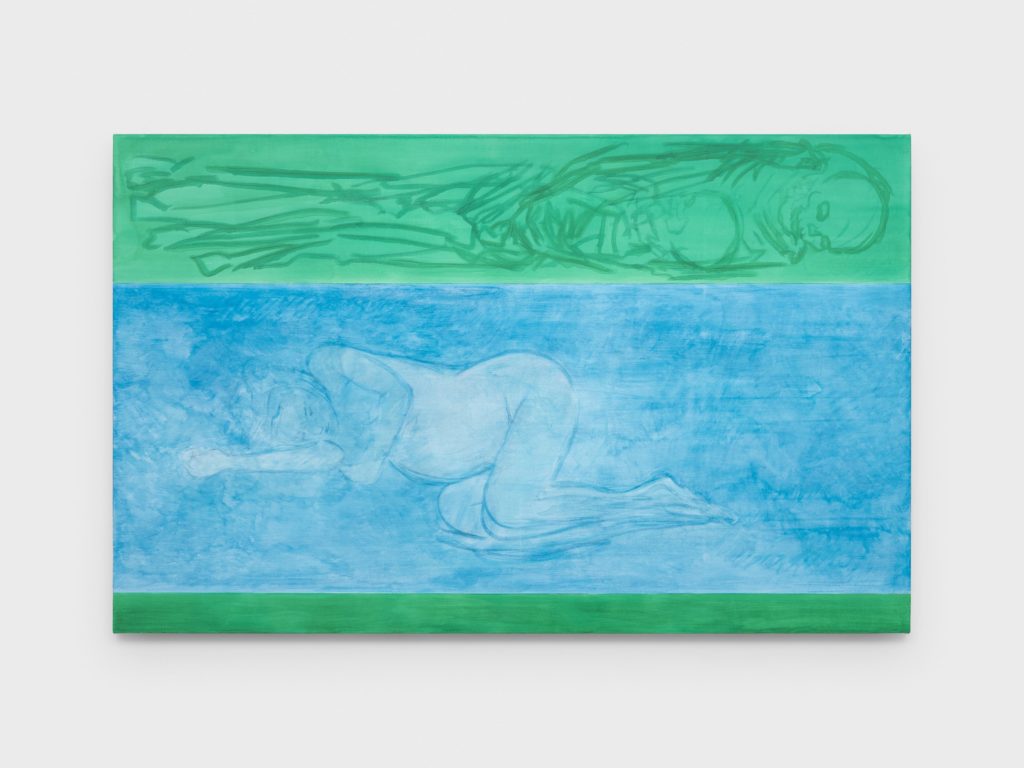
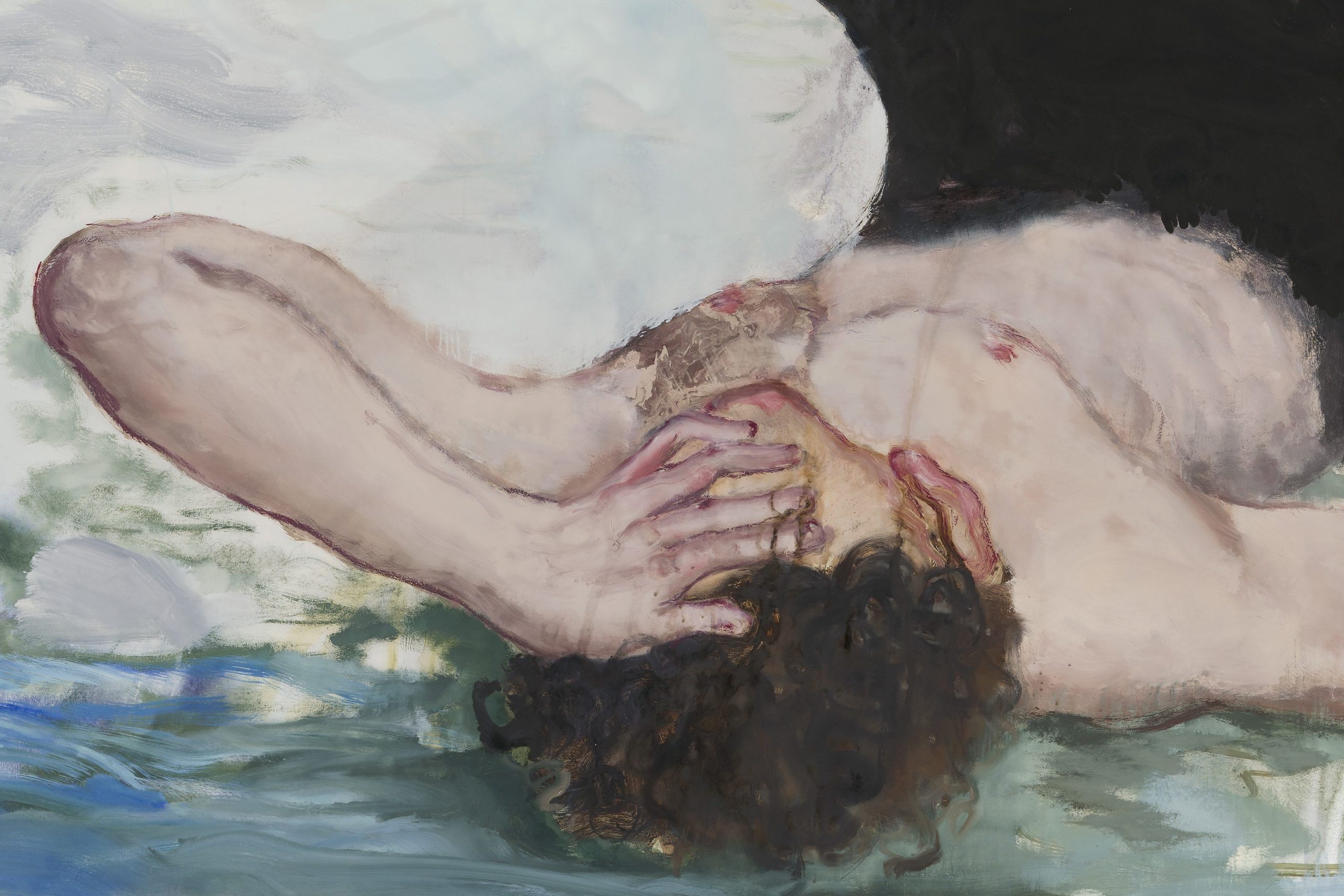
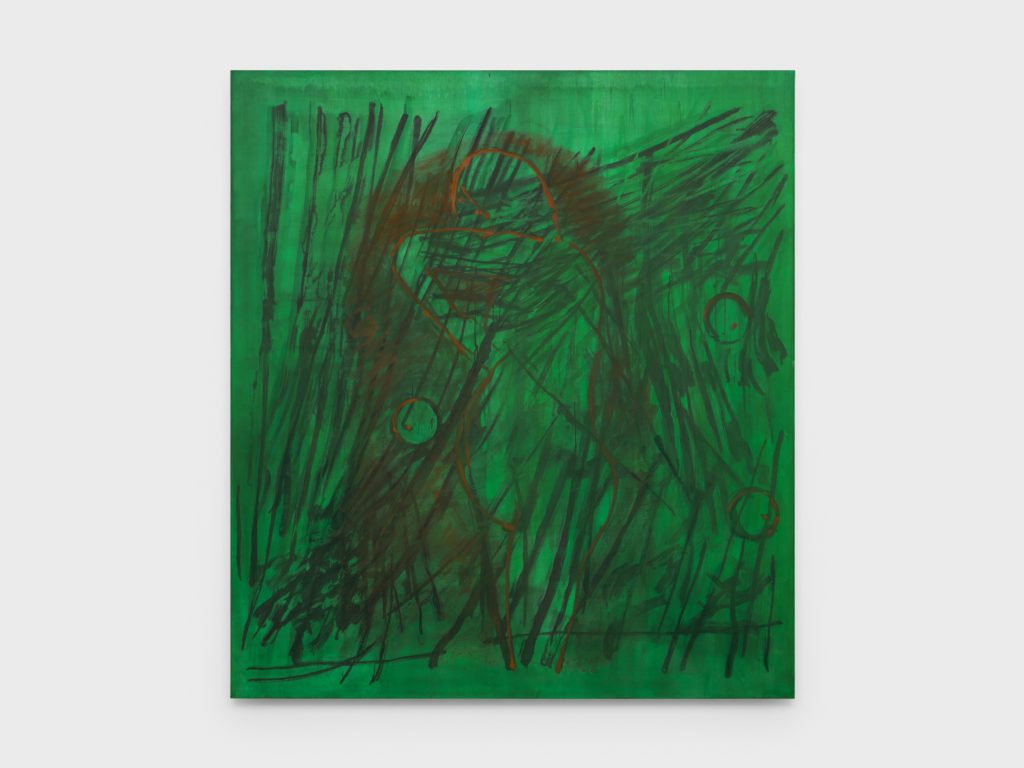
In Hope (2026), Hsu turns explicitly toward maternal loss. A pregnant figure stands isolated against a flattened blue field, framed by two horizontal green bands that introduce a restrained structural tension. Near the top of the painting, a larger skeleton embraces a smaller one. The image evokes mourning, attachment, and psychic intimacy without hardening into symbol. Hsu’s strength lies precisely in this refusal to stabilize meaning; the skeletal forms remain suspended between tenderness and devastation.
Elsewhere, the Barcelona Pavilion itself appears less as architecture than as unstable perception. In Blue Wall, Brown Sky (2026), Hsu paints reflections of the pavilion’s walls in glass windows, dissolving solid structure into shifting planes of color and light. The blue of the wall feels intuitive rather than coded, as though discovered through prolonged attention to the motif rather than assigned symbolic weight.
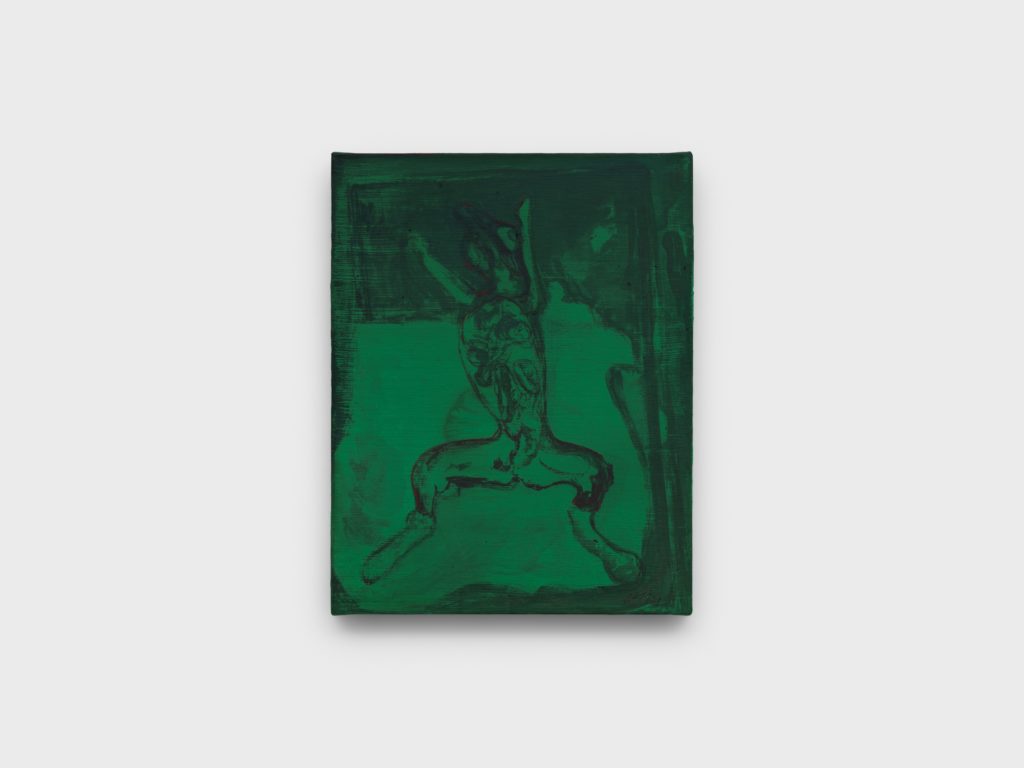
The exhibition’s most unsettling turn arrives through paintings of meat and hunted animals, particularly Flayed Rabbit (2026), which introduces a visceral register into the show’s otherwise restrained atmosphere. These works emerged from intuitive arrangements within Hsu’s studio, placing pregnant and female bodies into uneasy proximity with images of flesh, consumption, and mortality. Hsu never resolves these associations; instead, she leaves their discomfort fully exposed.
In Elk Carcass and Flayed Antelope (both 2025), Hsu works from photographs taken in Wyoming, drawing directly from personal experience. The elk was photographed in the garage of a friend who died shortly afterward, and the work is dedicated to his memory. The antelope was killed near the artist’s home on a sagebrush plateau. These biographical details matter less as narrative than as evidence of how intimately the works are tied to lived experience and emotional residue.
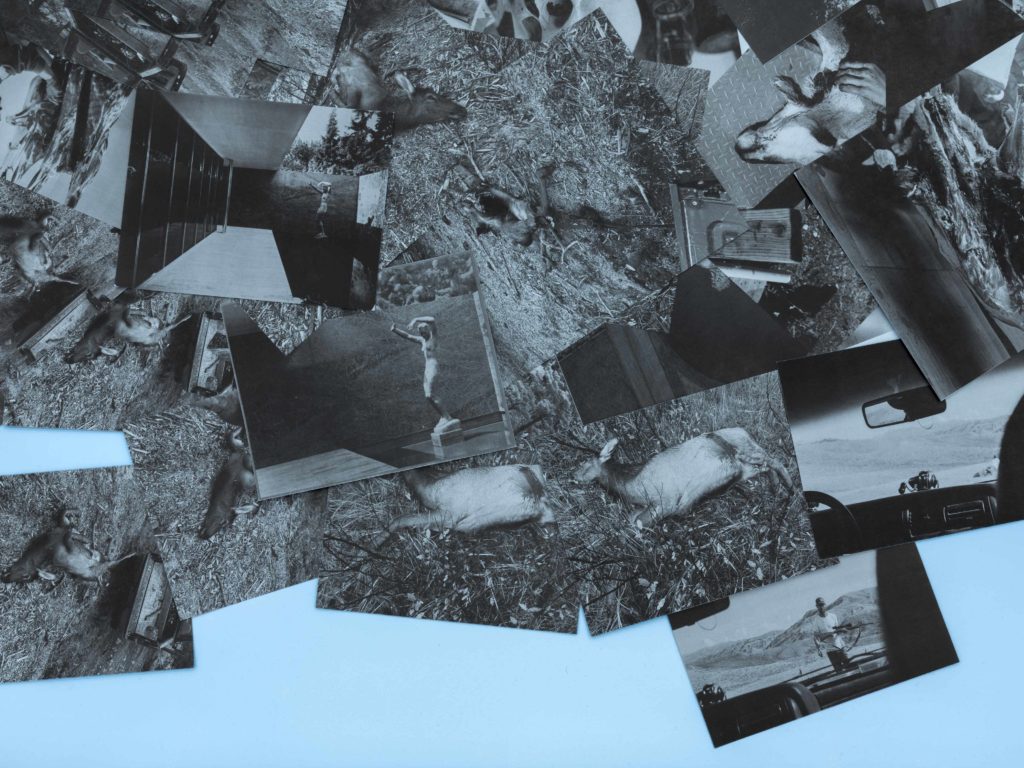
Photography becomes even more layered in Untitled #1 (2026), where personal images intermingle with archival material from the Georg Kolbe Museum and the Fundació Mies van der Rohe. The exhibition increasingly opens outward, functioning less as a closed composition than as a network of relations between artworks, institutions, bodies, and viewers. Projection — both psychological and perceptual — becomes central to how Hsu approaches memory and attachment.
By the time the viewer leaves, attention returns almost involuntarily to Tree in a Landscape (2026), near the entrance. What first appeared incidental or administrative begins to register differently: as a final suspended image lingering between departure and return. In Hsu’s exhibition, nothing disappears cleanly. Everything remains in a state of partial persistence.