“A trembling dissolution filled the birds — The substance of their being was undone,
And they were lost like shade before the sun.”[1]
— Attar, The Conference of the Birds
“What follows is an attempt at flight.”[2]
— Sigmund Freud
In The Conference of the Birds, a twelfth-century long-form poem by Persian poet Farid ud-Din Attar, all of the world’s birds embark on an epic flight in search of their ruler, Simurgh. By the end only thirty birds remain and, when they finally arrive, they come to realize that stripped of their individual egos and worldly distractions by the trials of the journey, they themselves have become Simurgh, the one they were searching for. The poem ends as the birds’ individual forms dissolve into the divine, consumed by pure light.
Birds landed in Lotus L. Kang’s work a year ago: an ink drawing of a crane on photopaper, its own image mirrored at its feet (Mesoderm (You III), 2025); small plaster and aluminum sculptures on rolled mesh and nylon inside one of her modified greenhouses (Receiver Transmitter (49 Echoes I), 2022–25); and forms in porcelain and bronze, carefully placed on a mirror-topped tatami mat (Receiver Transmitter (Born inside death), 2025). Most of the birds appeared in the process of being fed: parent and child perched on a branch together, or lone chicks waiting expectantly, hungry mouths wide. They were often seen alongside their own reflections, a doubling that hinted at the hatchlings proximity to both life and death: precious and hopeful as much as they are gasping and vulnerable.
In Attar’s poem, the flight of the birds expresses the soul’s difficult transformation from the material to the divine; their loss of ego allows something more profound to take shape. Flight, or rather its failed attempt, is also the same term that Freud draws on to posit that we cannot escape the self. However much we might long to, there is simply nowhere else to go: “The ego cannot escape the internal danger by means of flight, as it can an external one.”[3]
Within Kang’s practice the boundaries of the self are harder to locate. Like her hatchlings, which hover between states, it is neither totally dissolved or concretely defined. Instead, the artist, the work and in turn the viewer, is implicated in a continual process of always becoming. Unfolding from feminist and decolonial theory, East Asian spiritual practices, Chinese medicine, and poetry, Kang’s understanding of the self — how it is formed, what it holds, where it can go — is in perpetual movement. Like glittering mercury, it continues to move between states, absorbing, reflecting, reshaping itself.
The year prior to the arrival of the birds, Kang presented her first work using 35mm film and sound, Azaleas (2024). A length of film was wrapped around a rotating steel frame and accompanied by a sequence of lights that illuminated the film at different intensities and intervals. Its form evoked a rotary film dryer, giving it a provisionality that suggested you were encountering the film in its process of being made. The works title is taken from Kim Sowol’s 1925 poem of the same name, considered a foundational work of modern Korean poetry that expresses the traditional sentiment of han — a lingering unresolved sorrow, a longing. This sentiment is captured in the poem through the story of a protagonist who deals with the pain of a departing lover by laying azalea petals down in their path: “Step by step, on the flowers placed before you, tread lightly and go.” Filmed at the Brooklyn Botanic Garden, outside of azalea season, Kang was only able to capture pink roses on film, a stand-in for the true object of her desire.
Longing is a feeling that returns in Kang’s work, over and over again. The work persistently grasps at the edges of experience — desire, love, loss, inheritance — lingering in the place just before one thing ends and something else begins. When we spoke recently, a couple of weeks before I wrote this text, Kang mentioned she’d been reading Catherine Malabou’s book Ontology of the Accident: An Essay on Destructive Plasticity (2009). Malabou writes about the concept of an “explosive plasticity;” a state often caused by extreme trauma, which transforms the self through rupture rather than gradual becoming. Contradicting Freud’s idea of an indestructible psyche incapable of escaping itself, Malabou argues for an expanded understanding of the self where identity is fragile, volatile, capable of abandoning itself and escaping into something else: “These types of being impose a new form on their old form, without mediation or transition or glue or accountability, today versus yesterday.”[4]
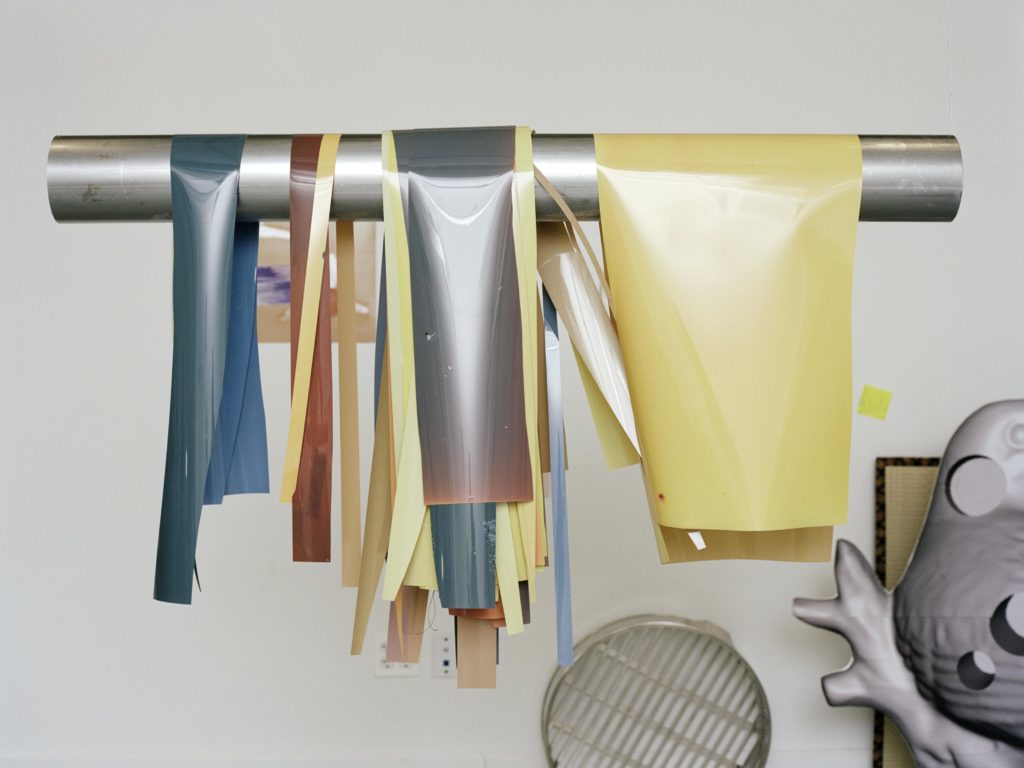
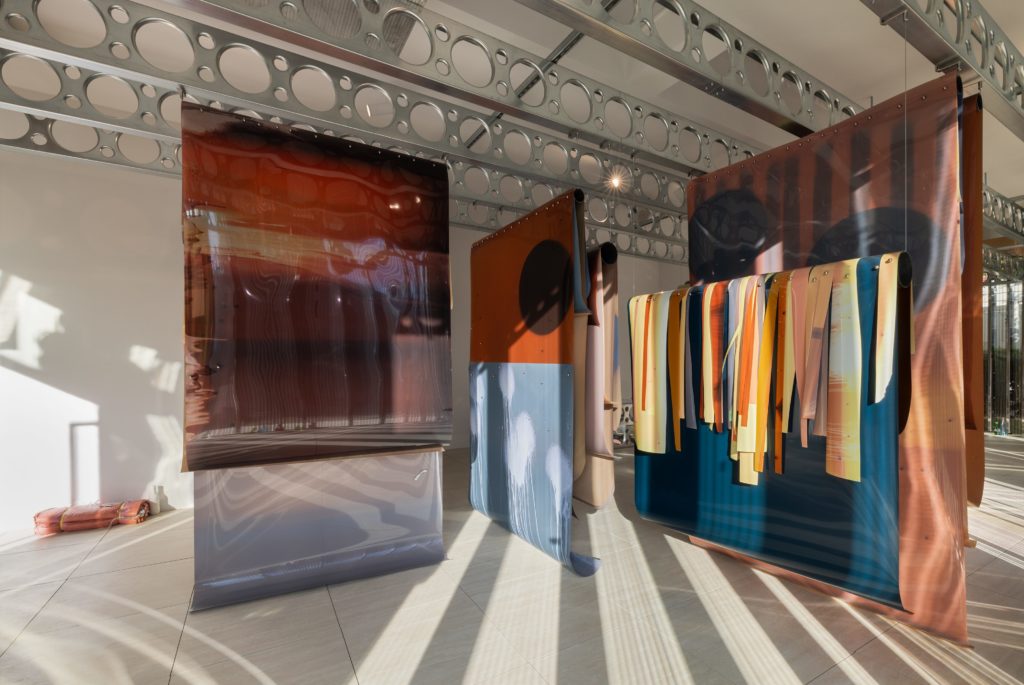
Through Malabou’s “explosive plasticity” I’m reminded of the condition of Kang’s unfixed sheets of film, a recurring material in her work for more than a decade. Each has undergone a process Kang refers to as “tanning.” Suspended against windows, inside purpose-built greenhouses, and within exhibitions over weeks or months, the films continually accumulate impressions, some visible, others unseen, of the space and the people around them. While we were working together on Kang’s Chisenhale Gallery commission “In Cascades” (2023), she told me that their ability to do this was not limitless; eventually the film will have taken all the light it can bear and will bleach out altogether. I remain preoccupied by the image of a form that, totally and inescapably, will one day efface itself, erasing the traces of personal and collective memory, drops of water and architectural outlines — years of work — once imprinted on its surface. A total absence that records an untenable abundance of presence.
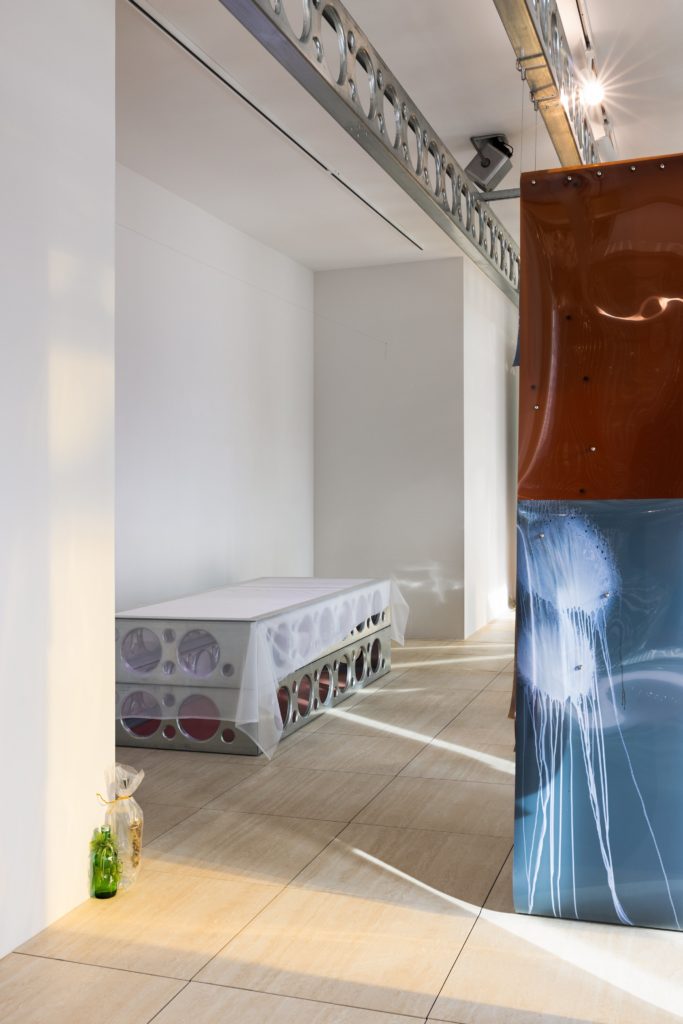
At Kukje Gallery’s Hanok and K3 gallery spaces in Seoul earlier this year, the birds appeared again in Kang’s exhibition “Chora.” The title is taken from the work of influential theorist Julia Kristeva. In the Hanok’s central interior courtyard, or madang, a baby bird appeared enlarged to monstrous proportions, mouth wide open, head turned up toward the sky and perched on a piece of lotus root, another recurring motif in Kang’s work. In her Chisenhale Gallery commission, the space of the madang was evoked by the placement of film to create a loosely formed enclosure in the center of the installation, complicating the viewer’s sense of inside and outside as they moved through the space; another liminal boundary. At Kukje Gallery, Kang displaces the traditional form of the hanok by decentering the madang. Refusing the fixity of the architecture, Kang instead rebuilds it inside K3 using Super Joist and mirrors. The original courtyard is repurposed as a chora instead.
For Kristeva, the chora is a pre-linguistic, pre-conceptual, womb-like space of fluid maternal-infant connection. The birds have a proximity to this state — as close to life as they are to death. Positioned on the boundary between oblivion and being, today and yesterday, they, like Malabou, seem to ask what it means to hold within ourselves the destructive ability to take off when our reality cannot be born. Here, enlarged to almost human scale, they take on a different quality: stronger and almost menacing, as if their insatiable need might tip over into a destructive impulse at any moment. They embody a kind of relentless longing — for the “mother” body, for nourishment, for life.
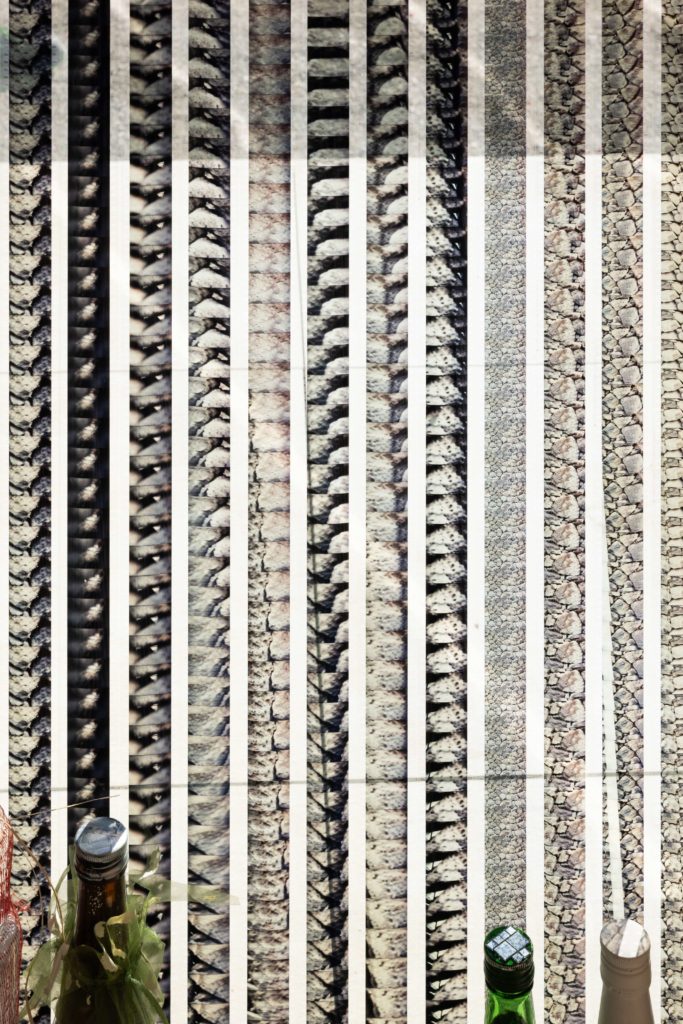
On the displaced madang inside K3, Kang projected 8mm and digital films onto the courtyard, interweaving footage from the artist’s journey to mudflats in the Jeolla Province of South Korea. Ecotones, where two different ecosystems coalesce, these diverse landscapes come together through the tidal flows of various bodies of water. Every year, hundreds of thousands of migrating birds are sustained by mollusks that thrive in the nutrient-rich soil; a transitory space that provides essential sustenance for the long journey ahead. Formed from the settled volcanic ash of the geologically tumultuous Cretaceous period, which culminated in the mass extinction of 75% of the world’s living things, the mudflats also emerge from a radical and violent remaking of the world. Filmed by Kang on analogue film, this landscape of new life and ancient death speaks to time, bodies, and selves as perpetually layered experiences: a dense sediment of becoming.
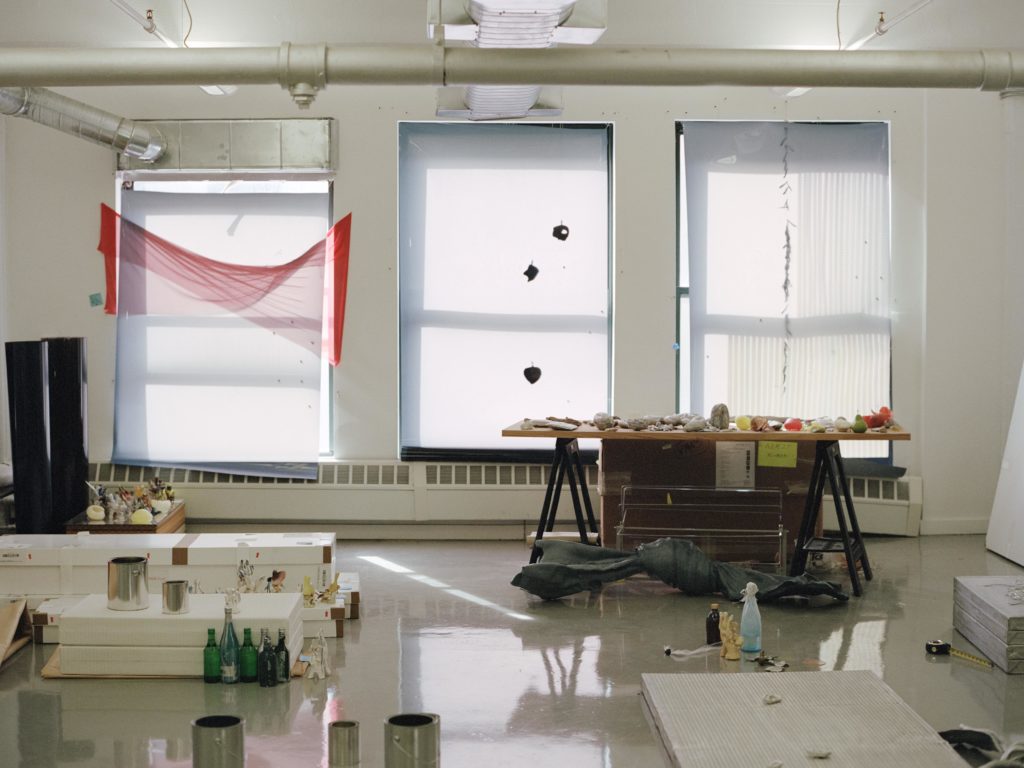
The same mudflats surface again in The face of desire is loss, Kang’s latest body of work in the Bvlgari Pavilion at the 61st Venice Biennale. Appearing on 35mm film, footage from Kang’s 2023 visit to the flats climbs the three exterior glass walls of the newly constructed pavilion in the Giardini della Biennale. The film is illuminated by a custom light program that projects three different colors, each referring to liminal times of the day – dawn, noon and dusk. It merges and competes with the sunlight, causing a chaotic sweep of shadows and barely legible images that appear to touch everything inside. This density of contact continues in the space. The swathes of Kang’s industrial light-sensitive films are more densely layered than ever before, with light both bouncing off their gleaming surfaces and permeating them. One of the films has ruptured, as if something has propelled straight through it. For the first time, Kang has included ribbon-like pieces of film, placed on top of the larger rolls. These strips are off-cuts, created when Kang trims and slices the film in the process of its making. The film has always been vulnerable, contingent, but here it also appears punctured and shorn. Around the borders of the space, soju and sake bottles are affixed with mirror tiles, adding to the array of light that dances across the space.
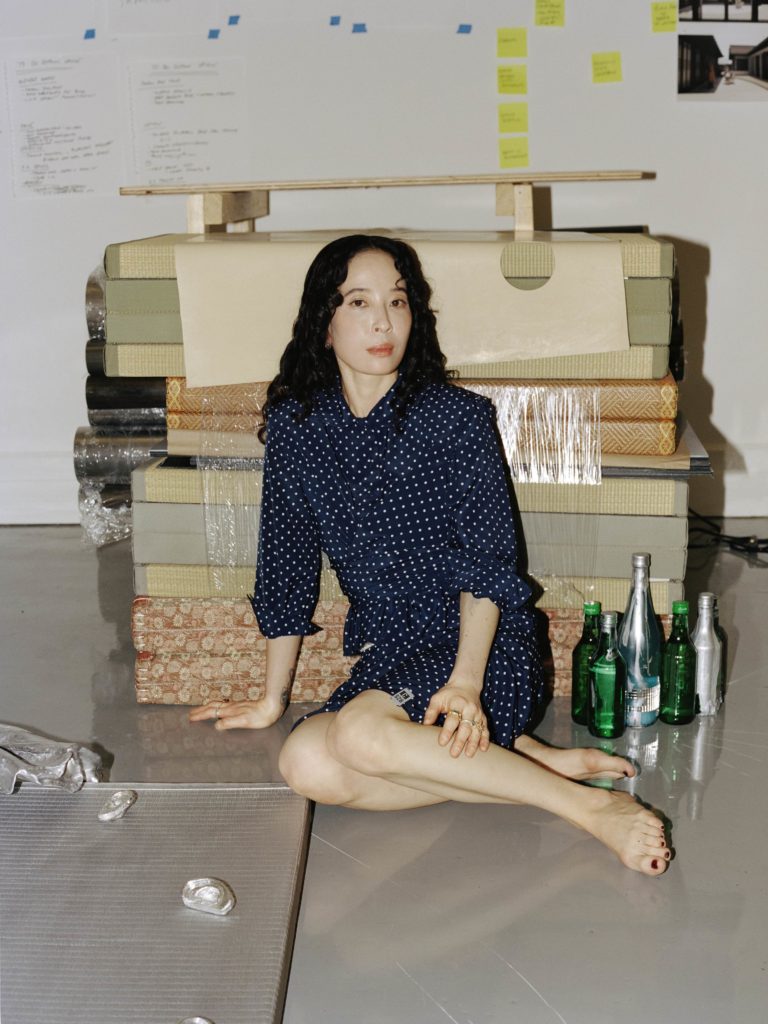
In Venice, Kang’s Receiver Transmitter tatami mat sculptures, an ongoing series since 2023, have evacuated the floor, traveling up the walls and to the ceiling. There, placed atop the Super Joist, a series of plaster birds are fixed to one of the mats and suspended upside down. It appears as if the birds themselves have disappeared, leaving only their reflections behind. Here the birds are entirely cast in white plaster, some dipped haphazardly in silver. Located somewhere between coming into being and coming undone, we seem to encounter them in the middle of a process. The title of the series frames the mats as a technology, perhaps one that helps the body rest, grow and repairs itself. On the boundary between wakefulness and slumber, they are also sites of dreaming. Freud famously connected dreams of flying to a subconscious longing for sex — desire itself as a form of flight. This is an exhibition that is abundant with desire —light, structure, and forms from the last five years of Kang’s work flood the space, touching, overlapping, one layered on top of the other in a dense strata. Still, hovering there uncomfortably and impossibly suspended from a tatami mat on top of the Super Joist, there is the possibility of taking flight: leaving it all behind and arriving somewhere entirely new. The arrival of birds in Kang’s practice signals the expansive and also unsettlingly destructive ways the self can move. If Freud’s understanding of the ego is that it is contained and inescapable, Kang’s is characterized by its ability to come undone — to submit to the gleaming sunlight, as well as the abundant shadows. We are, as Kang said to me when we last spoke, not continuous but full of disruptions.
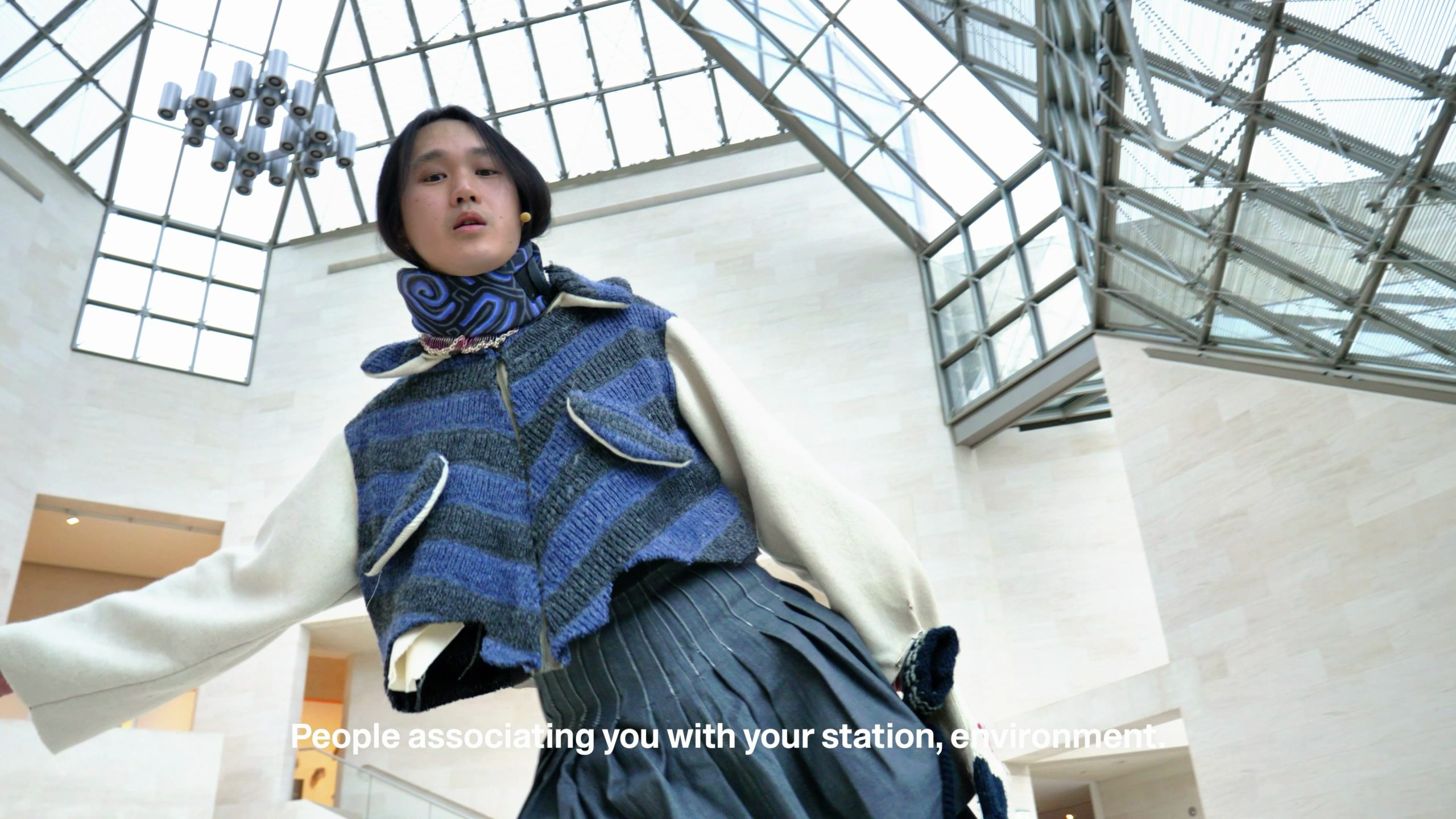
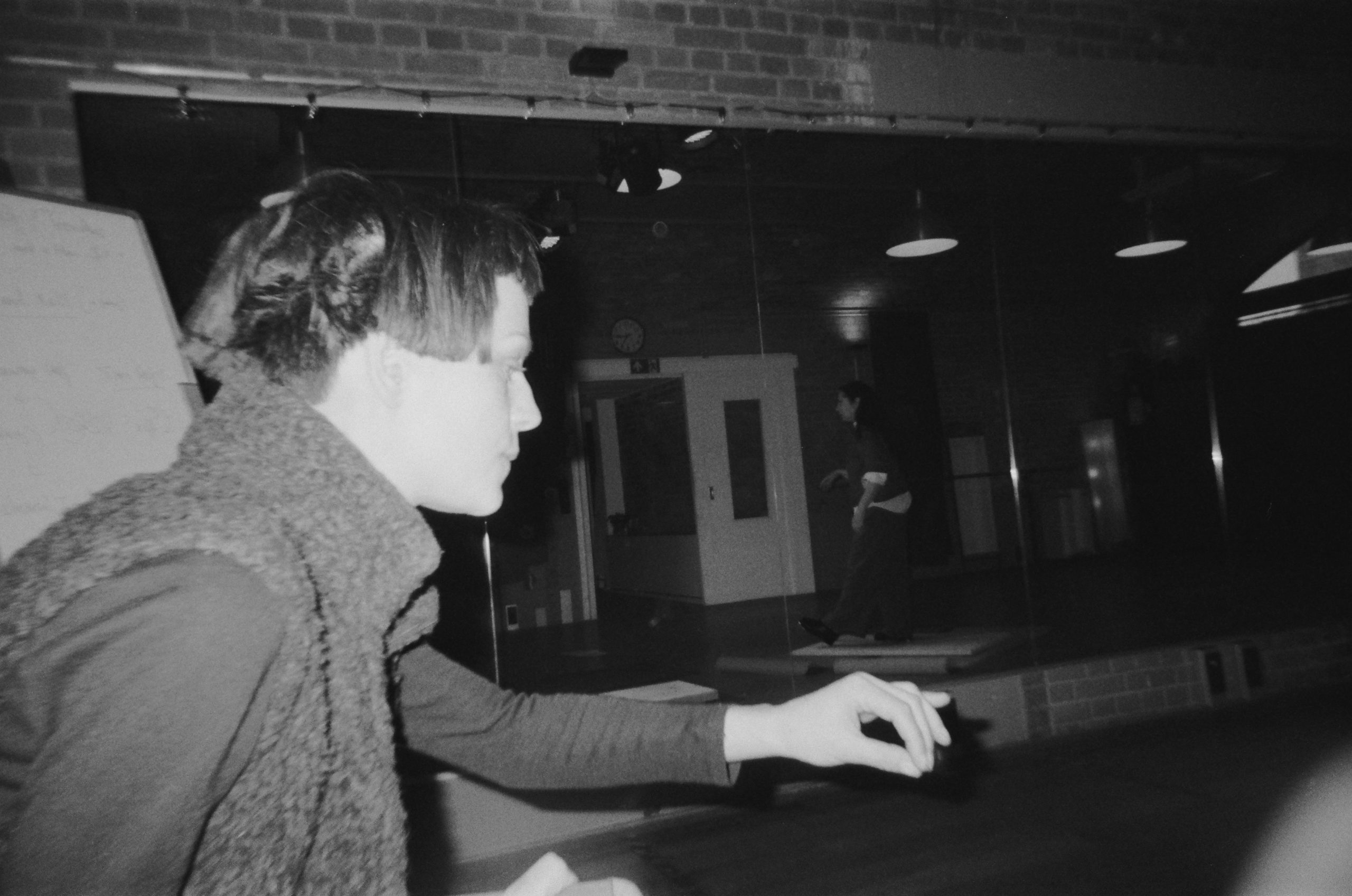
Artist: Lotus L. Kang
Photographer: Jeff Henrikson
Creative Direction: Alessio Avventuroso
Stylist: Ketevan Gvaramadze
HMU: Miki Ishikura
Production: Flash Art Studios
Clothes: Commission
Location: Artist’s studio, New York
[1] Farid ud-Din Attar, The Conference of the Birds, trans. Afkham Darbandi and Dick Davis (Penguin: 1984), 219.
[2] While commonly attributed to Freud, the quote paraphrases his 1910 analysis of Leonardo’s obsession with aviation: Sigmund Freud, Leonardo da Vinci and a Memory of His Childhood, trans. Alan Tyson (W. W. Norton & Company, 1964), 82
[3] Sigmund Freud, “Inhibitions, Symptoms and Anxiety,” trans. James Strachey, The Standard Edition of the Complete Psychological Works of Sigmund Freud, vol. 20 (Hogarth Press, 1959), 145.
[4] Catherine Malabou, Ontology of the Accident (Polity: 2012), 6.