Heat holds its breath in the air. The continuous sound of the neighbor’s TV plays in the background, aligning with the fan’s rotation, which produces an awkward mechanical rhythm, like the accelerated ticks of a clock. I go to the kitchen to pull the pot off the stove — zero nine zero zero in the evening, the phone buzzes.
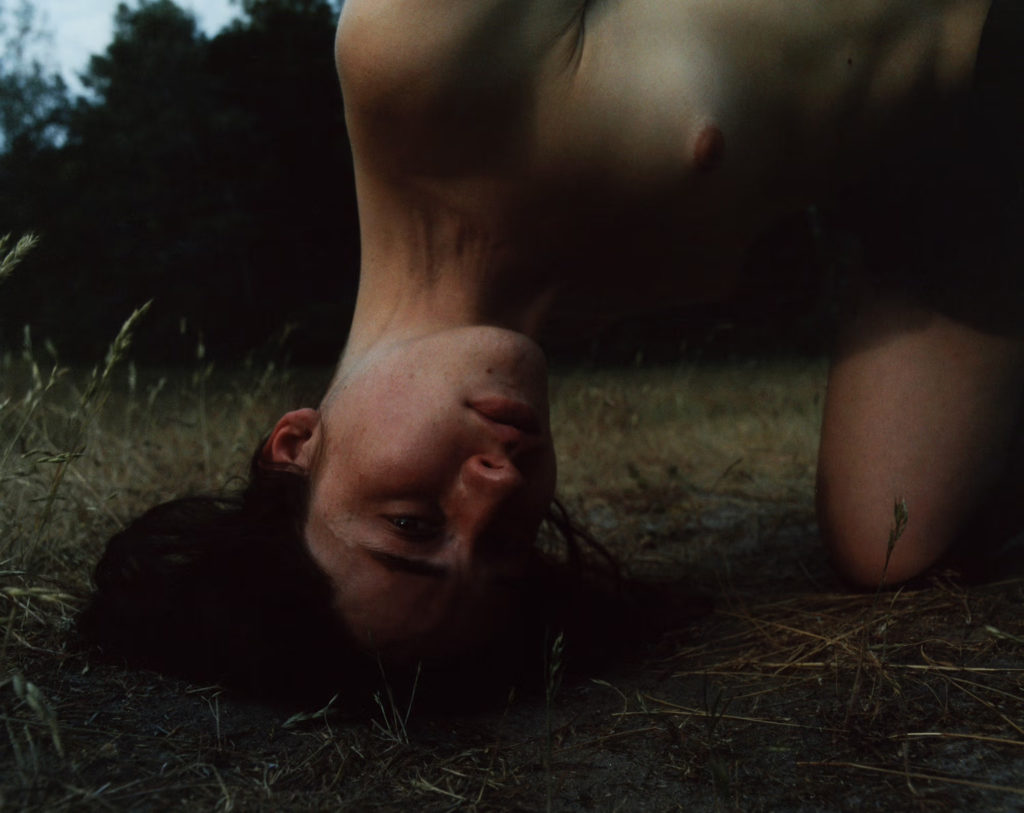
Stepping back into the room, the perspective lines have gone crooked. Three stains appear on the striped wall. They seem to be the concentric outlines of a leak, half-hidden behind the bedside table, where some clothes, coins, and cables have been piling up over the last two days. The marks now form a current on the surface. Each circle is larger than the one inside it, like a set of matryoshka dolls. They ripple at a damp frequency, almost overlapping one another.
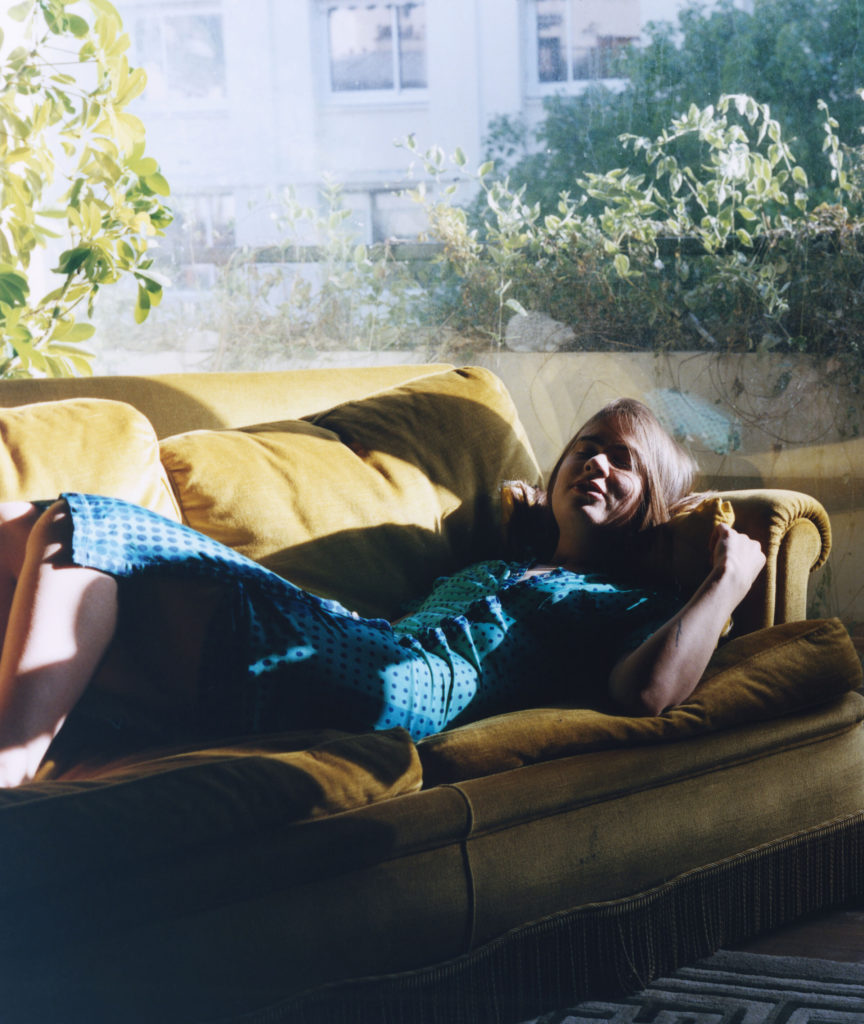

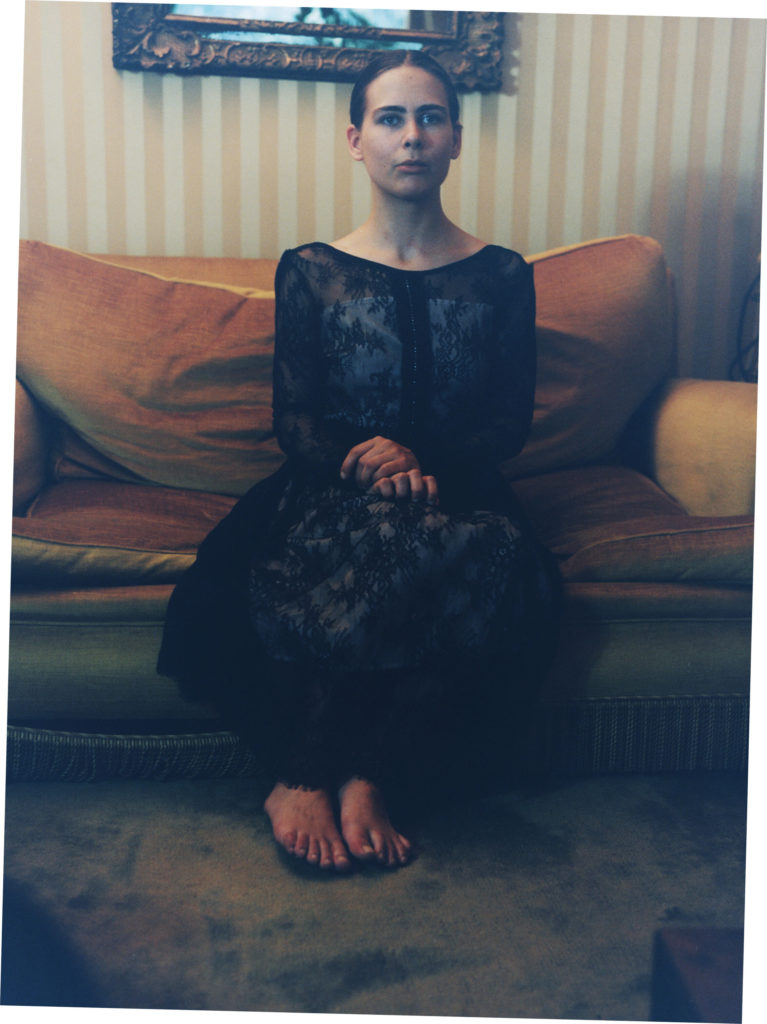
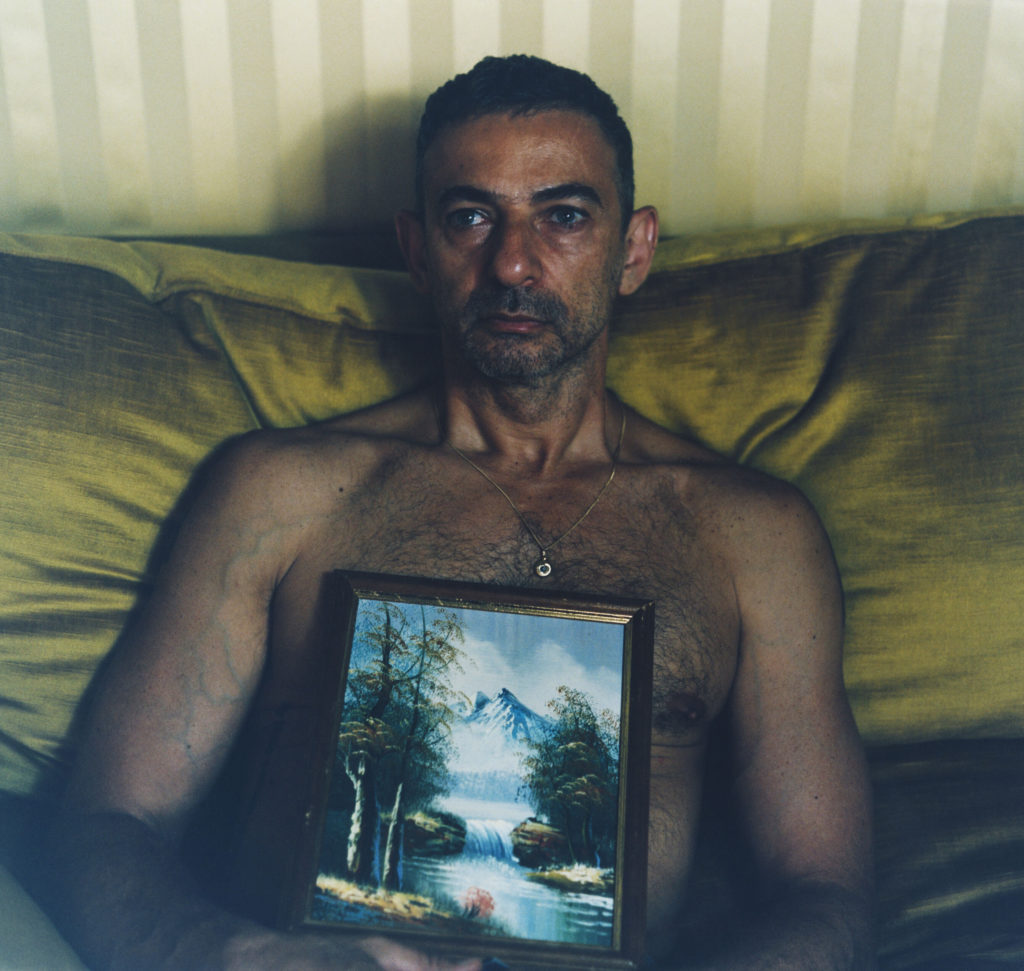
From this point in the room, I cannot move. I cannot move, or this precise distance will change. A step in any direction and the stains slide out of place, and something else will distract me. This room is completely conditional — a space subject to constant alterations. An uneven light filters through the tears in the shade of the table lamp, while the spills gather into their own pattern. From here, the water marks slowly begin to populate the wall — rising from the edge, as if claiming the territory.
All the things present themselves now, not as a composition, but as the approach of a presence. As soon as my attention slackens, they will rearrange. I watch them one by one, each keeping its own time and its own ways: there are coils everywhere, and they are spinning at the folds of furniture. The sound of the fan lingers. A blanket wrinkles on the sofa and its embroidery — made of ochre and orange threads — whirls into itself with it. A wooden ladder rests against the side of the room, just by the stripped mattress and its pillows. After a few minutes, I leave my position. As I move, the surroundings scatter once more. Step by step, the pile of things — a thousand and seven —recovers the stains, and this private alignment dissolves.

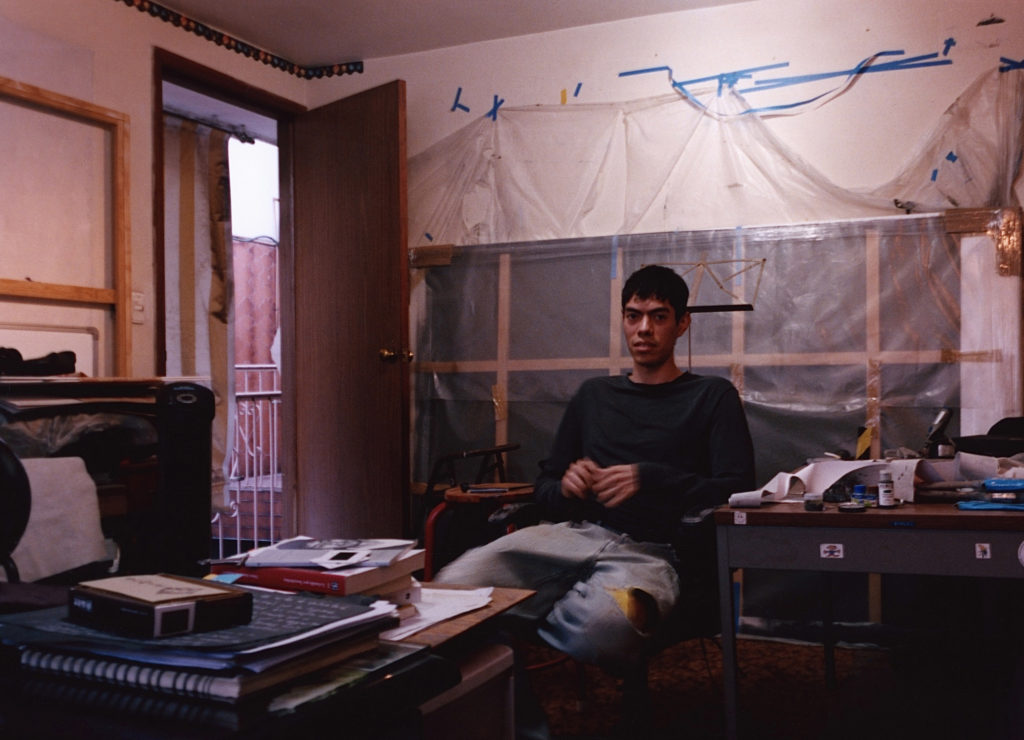

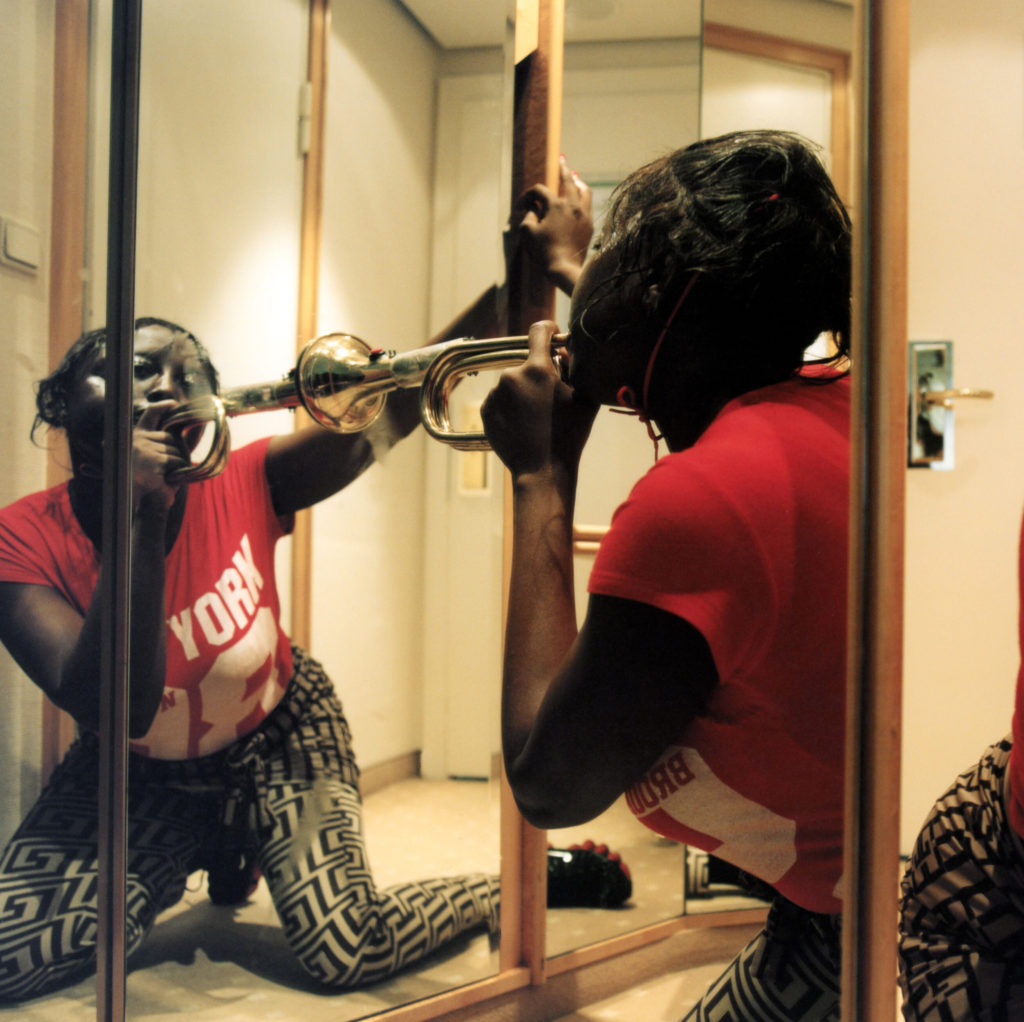
Something like a portrait has taken place — slowly recorded, accumulated rather than caught. The stains only show themselves from where I’m standing, and they disappear the moment I move. Not the quick theft of a profile, not a decisive moment, but something closer to the long patience of a wall that has stood beside someone. Joan Murray wrote that the action of water is the nearest thing to a person[1]: it seeps, it settles, it slips. A likeness is not taken but left — and even so, it is found only from the right distance.
There is an itch in a leak. Structural damage is revealed as the successive wave of sweat and deodorant on a silk floral fabric. It is driven by discomfort and closeness. What else becomes visible only when wet, at the hot center of things?

[1] Joan Murray, Poems, Yale Series of Younger Poets, foreword by W. H. Auden (New Haven: Yale University Press, 1947).