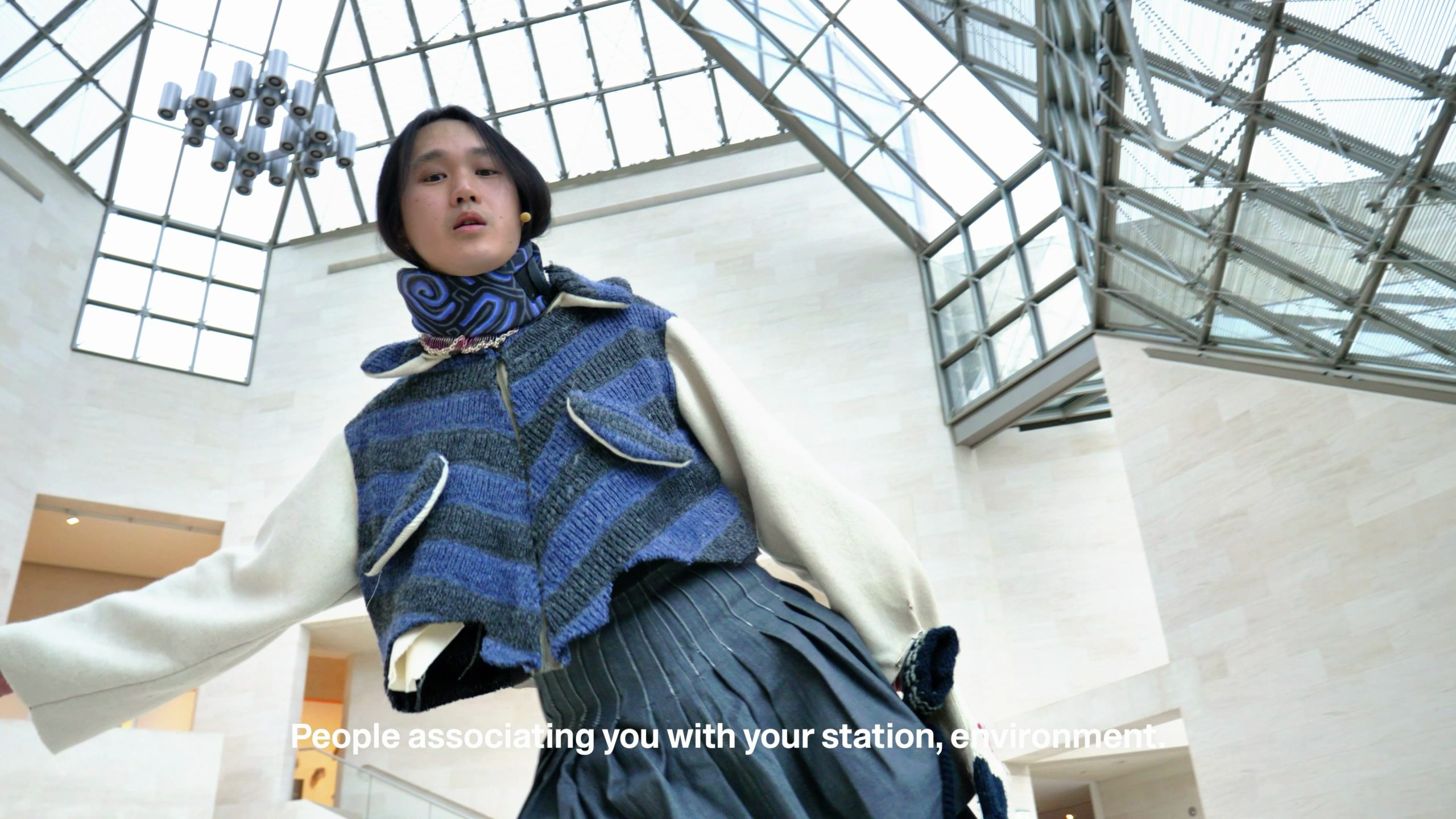
On a balmy evening in late April, after Lina Lapelytė’s performers had finished performing, Sam Bardaouil said Berlin’s Hamburger Bahnhof knows something about time. Bardaouil is co-director of the national gallery of contemporary art, a nineteenth- century former train station just north of the river Spree, which has been gutted and transformed into an art venue. Moments earlier, Lapelytė’s songs had echoed beneath the lofty cast-iron rafters, where people once rushed to trains in one of the fastest- growing metropolises of the nineteenth century. Her performers were re-stacking some of the four hundred thousand fragrant pinewood blocks that make up her installation: a whimsical intervention in a space built around an ideal of rationality and speed, rooted in industrial modernity. The work is immersive, community-oriented, and it invites participation, a “monument to time, care, and coexistence,” as the press release has it. The performance was titled We Make Years Out of Hours. At a moment when I, like many others, am wondering what there is still to love about Berlin, I find myself asking what this city knows about time and the traces it leaves behind.
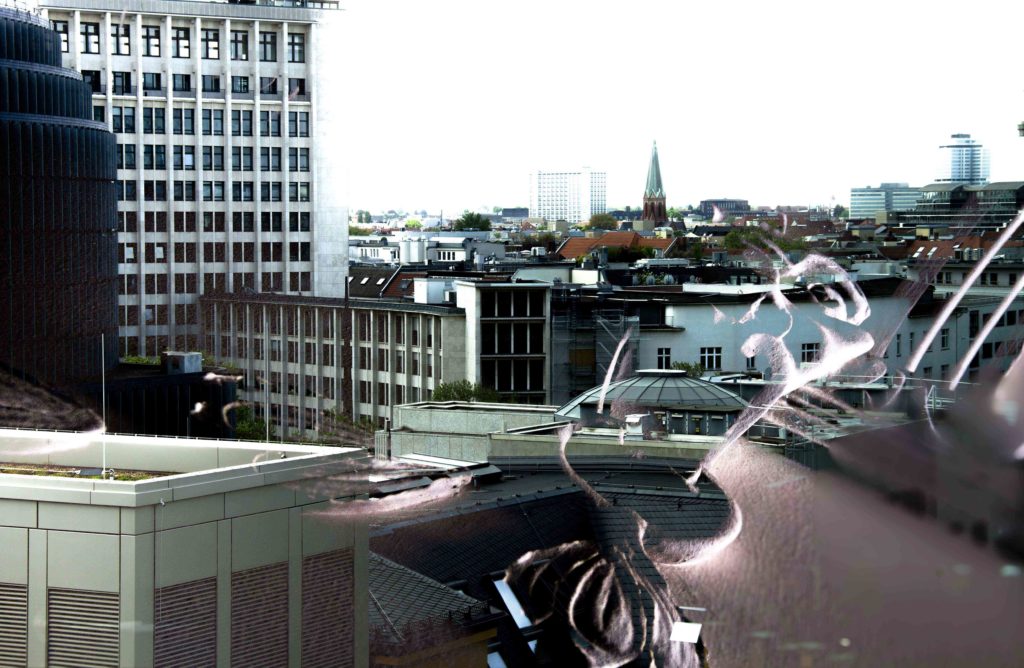
“Erase the traces”: this exhortation belongs to Neue Sachlichkeit (New Objectivity), an aesthetic stance against expressionist sentimentality, and serves as an appeal to modern coldness in the work of poet and playwright Bertolt Brecht, where it recurs throughout his poetry collection Handbook for City-Dwellers (Aus dem Lesebuch für Städtebewohner, 1926–27). Cut all ties. Out with the old. Be radically contemporary. In Brecht’s interwar manifesto, urban nomads relinquish their names and identities. They remain perpetually on edge. Berlin was the city for dissolved modernity: young, rapidly expanding, a confluence of expats and cultures, a central European railway junction, the epicenter of steam-powered acceleration. Brecht yearns to become a stranger everywhere, yet his poetry is haunted by a wide-eyed fear of urban uprootedness.
No one is from here, really. The Teutonic Order settled these plains in the thirteenth century, after realizing they were late to the Crusades to the Holy Land. They expelled the West Slavic tribes, drained the swamps, and built fortifications, leaving virtually no trace of the previous inhabitants except in language: Berlin derives from a Slavic word for wetland. The marshes consist of sand deposited by glaciers that once stretched from Scandinavia across the Baltic toward what are now Brandenburg and Poland. The city is built on sand, wrestled from terrain that swallows people and objects without leaving a mark.
Eternal youth is one of Berlin’s most enduring myths. The city only truly became a metropolis in the late nineteenth century, when its population exploded. Tenement blocks were built to accommodate workers and carve out space for the bourgeoisie. These apartments are coveted today, but they were once cramped, dark, poorly ventilated, and of ill repute. By the early 1930s, Brecht’s asphalt city had more inhabitants within a smaller footprint than present-day Berlin: modernity condensed into urban form.
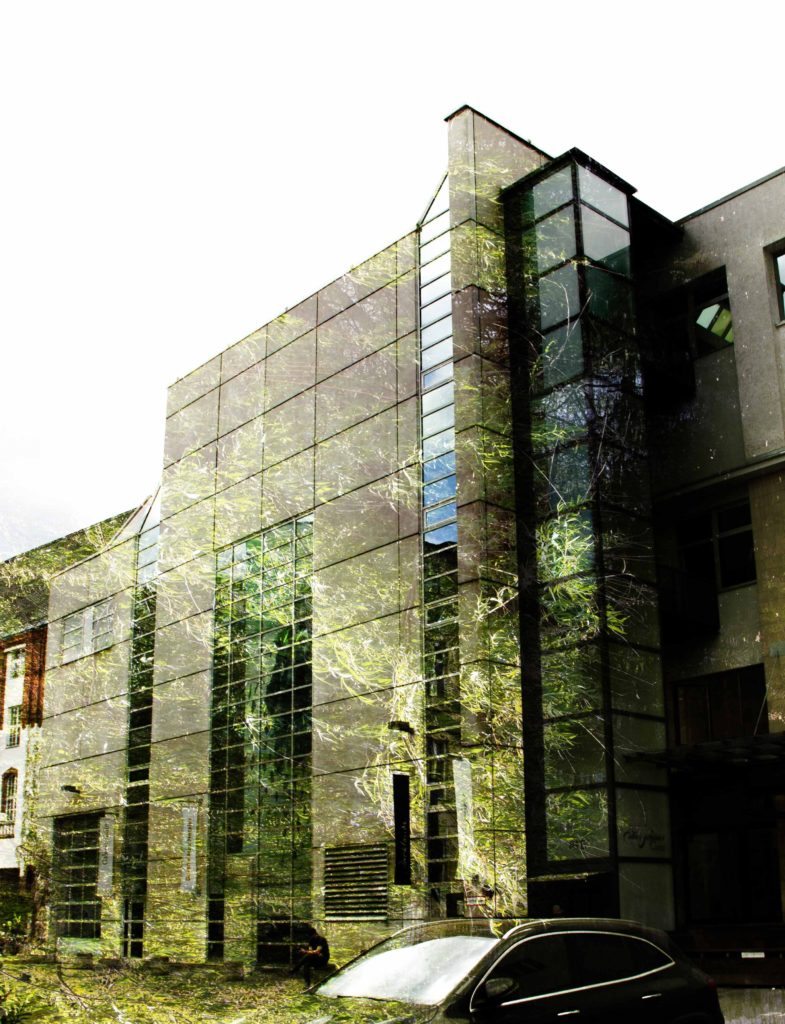
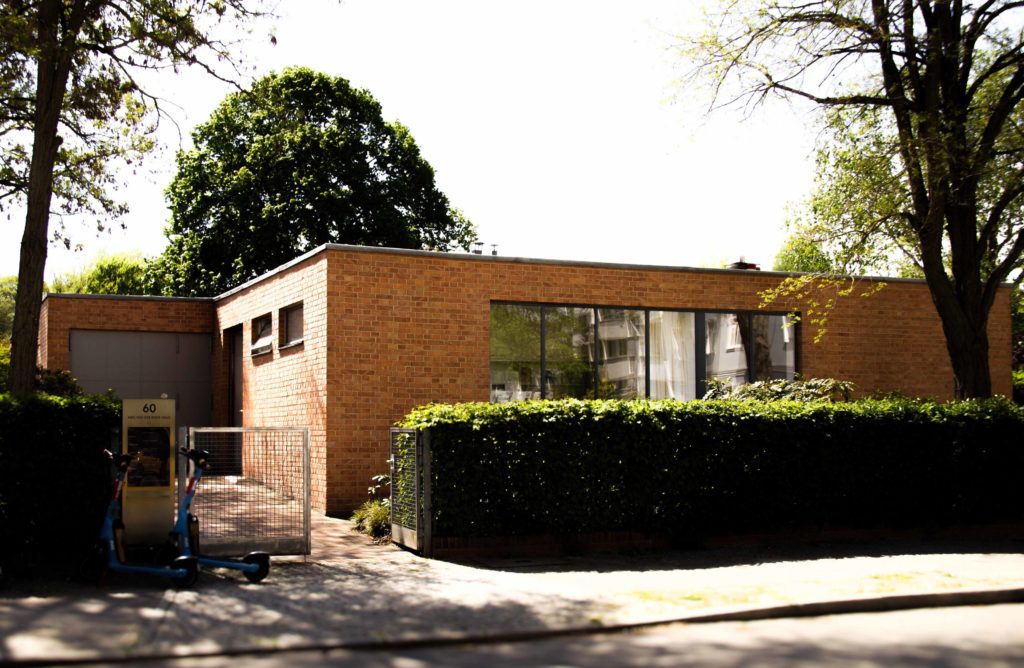
If you leave Mitte, with its theaters and cinemas dating back to the Weimar Republic, and travel northeast beyond the coffee shops and playgrounds of Prenzlauer Berg, through neighborhoods where soccer supporters mark territory with graffiti as though engaged in a clandestine gang war, you will eventually arrive the residential district of Hohenschönhausen. Tucked away near a lake stands a bungalow: a remnant of Bauhaus modernism and a harbinger of the International Style, all light and space. Mies van der Rohe designed the bungalow as a bourgeois home. It is more glass than brick, more right angles than ornament, conceived as an antidote to the suffocating interiors of nineteenth-century domestic life. The house seems like an old-world tryout for Mies’s North-American buildings such as Farnsworth House (1951) in Illinois. Villa Lemke, named after its initial owners, was forgotten for decades before reopening as an art space in the early twenty-first century, the traces of its former residents carefully removed, the interior restored to its original condition.
The institution remained dormant and largely unknown until very recently when a new curator took over. Dennis Brzek debuted with a domestically scaled show that brings together mostly polite work that centers the space: subtle sculptures, small- scale videos. Among them is a site-specific installation by Dora Budor, Nicotine Museum (2018/2026), for which the artist traced the outlines of furniture and picture frames — based on archival photos — in a nicotine-hued spray, as though the space had only just been vacated. Mies himself left Berlin in 1938 after failing to ingratiate himself with the Nazi regime.
The Nazis had grand ambitions to remake the capital, yet their schemes left surprisingly few traces in the cityscape. Places where the Nazis planned their mass murder — sites where the erasure of Jewish life and a Europe-wide war were plotted — are strewn about the city. One of the strangest among them is a former administrative building for the Nazi air force in a leafy district in southwest Berlin. Built only a few years after Mies’s transparent villa, it couldn’t be more different. Under the terms of the Treaty of Versailles, Germany was forbidden from maintaining an air force, meaning the building’s actual purpose had to be kept secret. That mattered little to architect Fritz Fuß, who designed a sternly symmetrical travertine façade and a dark sandstone interior to project a will to power.
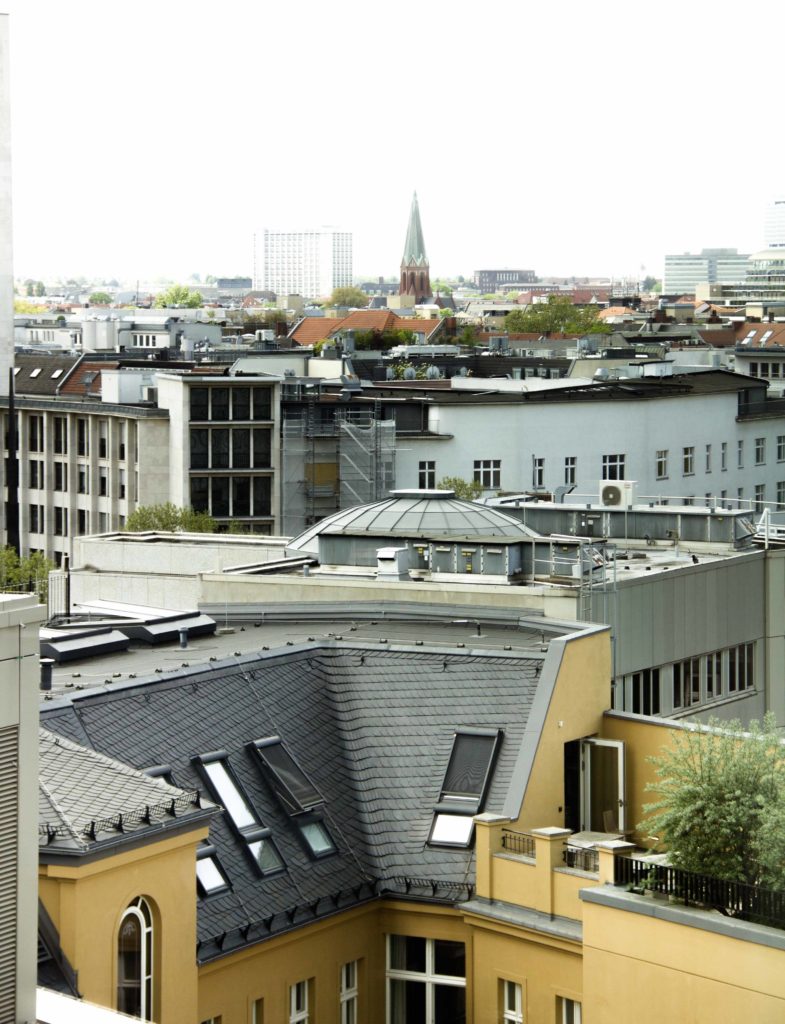
Most art spaces in Berlin occupy repurposed buildings, and this one, which has doubled as a movie set, including for Quentin Tarantino’s Inglourious Basterds (2009), now houses Fluentum, a collection dedicated to video and media art. Markus Hannebauer, a software entrepreneur, began collecting time-based work in the early 2010s. One of the institution’s early group shows was titled “Time Without End” (2021), and Fluentum joined the many institutions in Berlin, partially privately funded, with a discursive program and publications. Such spaces often found homes in old bunkers and office buildings that were unoccupied after historical ruptures.
The war left destruction in its wake and the city was partitioned. After 1945, many buildings were taken down. In postwar Germany, demolition was framed as a form of cleansing — Vergangenheitsbewältigung, a reckoning with the past — though philosopher Klaus Heinrich argued in his lectures on Karl Friedrich Schinkel, Prussian architect and city planner, and Albert Speer, Hitler’s architect, that it amounted less to reckoning than to the erasure of traces. The myth of constant renewal drew seekers of eternal youth. “A city no longer inhabited, not simply left behind, but haunted by meaning and culture, this state of being haunted keeps the city from returning to nature,”1[1] wrote Jacques Derrida in Writing and Difference (1967). Those who came to Berlin could never quite decide whether it was a promised land or a cursed one. They strove to live in abandoned lofts, bunkers, and basements, they turned them into clubs, homes, and art galleries. These spaces know something about time, and perhaps that is why they can’t be left alone.
After reunification, contemporary art in Berlin did not consolidate around a single institution but proliferated through countless spaces, some commercial, many defiantly not. It is often said that the city’s largest institution is its network of project spaces. This energy still isn’t exhausted, and there are still project spaces that feel exciting, such as Buzzer Reeves, which opened only a few years ago in a Kreuzberg apartment with a view of graffiti-covered elevated railways, and which hosts group shows that extend well beyond the Berlin scene.
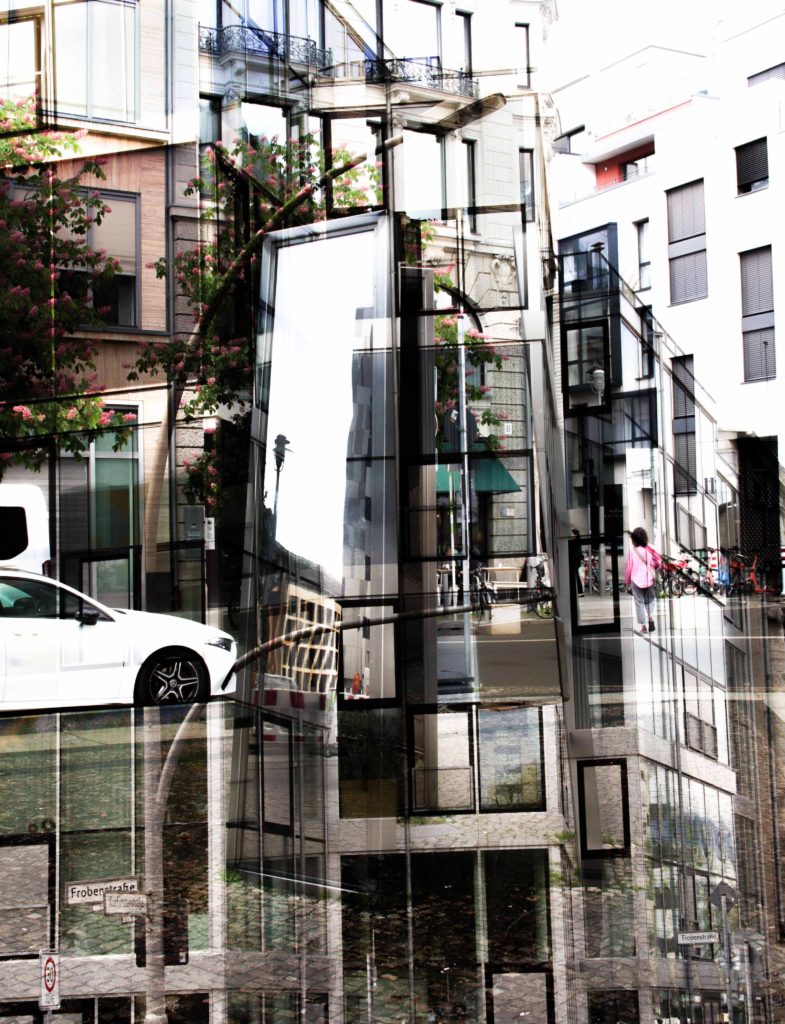
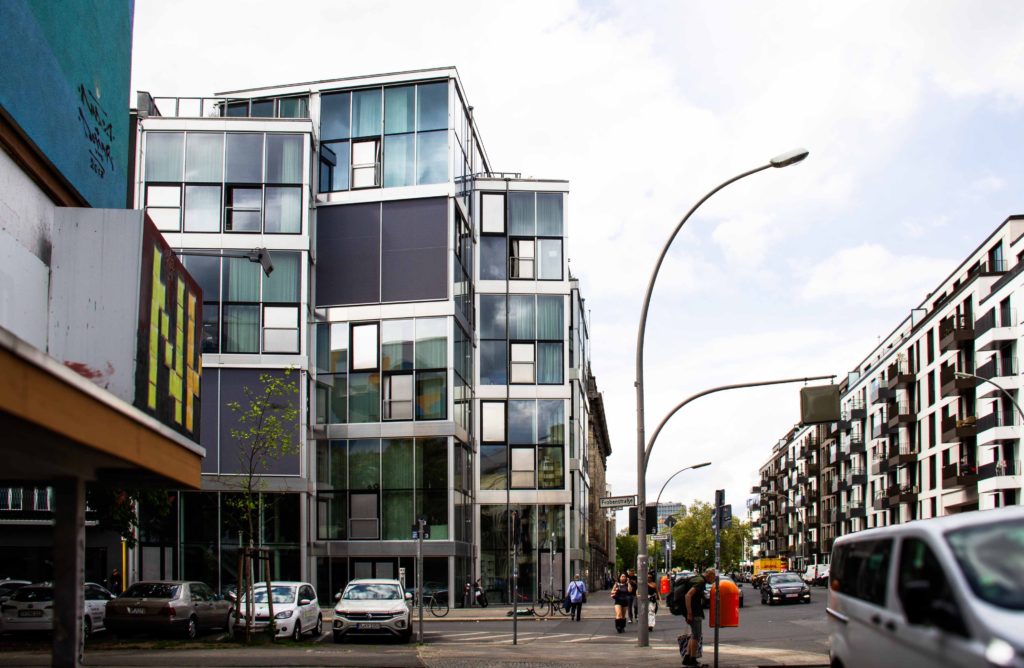
A handful of self-organized projects have turned into institutions and permanent fixtures of the cultural landscape. KW Institute for Contemporary Art, housed in a former margarine factory in the city center, is one example. Another more recent one draws on the model of cooperative housing: Building Group Kurfürstenstraße 142, completed in 2022 and designed by architect Sam Chermayeff. The crystalline volumes occupy a street corner in Schöneberg, appearing almost alien in an area associated with prostitution and drug use. Separated neatly from the street, behind a glistening saw-tooth facade, there are apartments. The units are not clearly delineated; there are no hallways, only continuous space to live and work. Chermayeff’s studio proposes communal living as an antidote to digital atomization. The ground floor houses galleries, including Molitor and KOW, the latter having relocated three times in less than a decade.
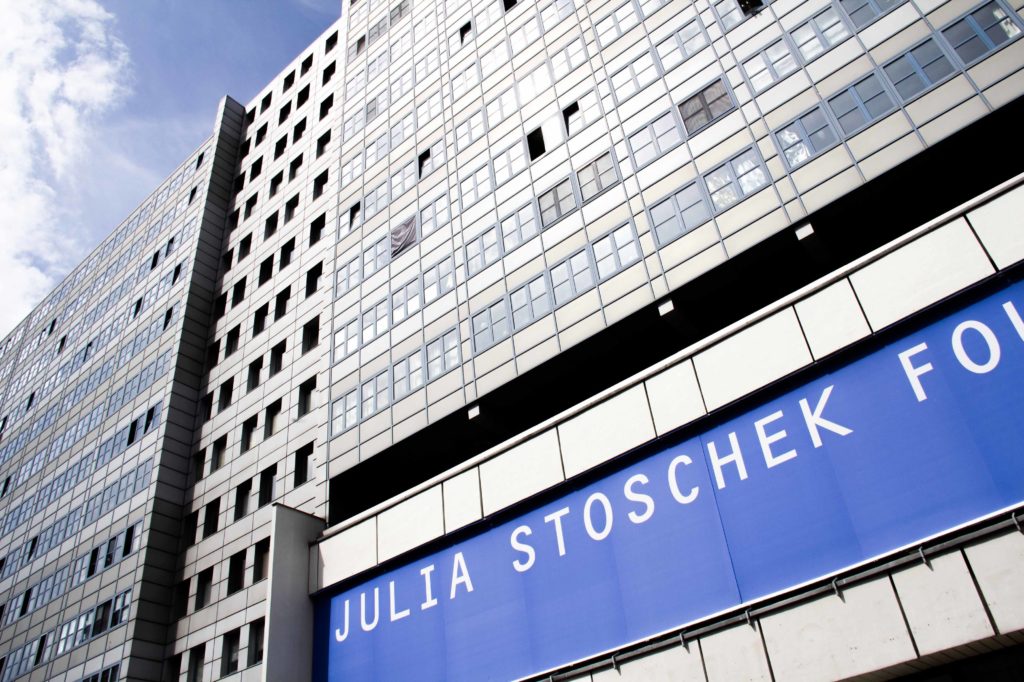
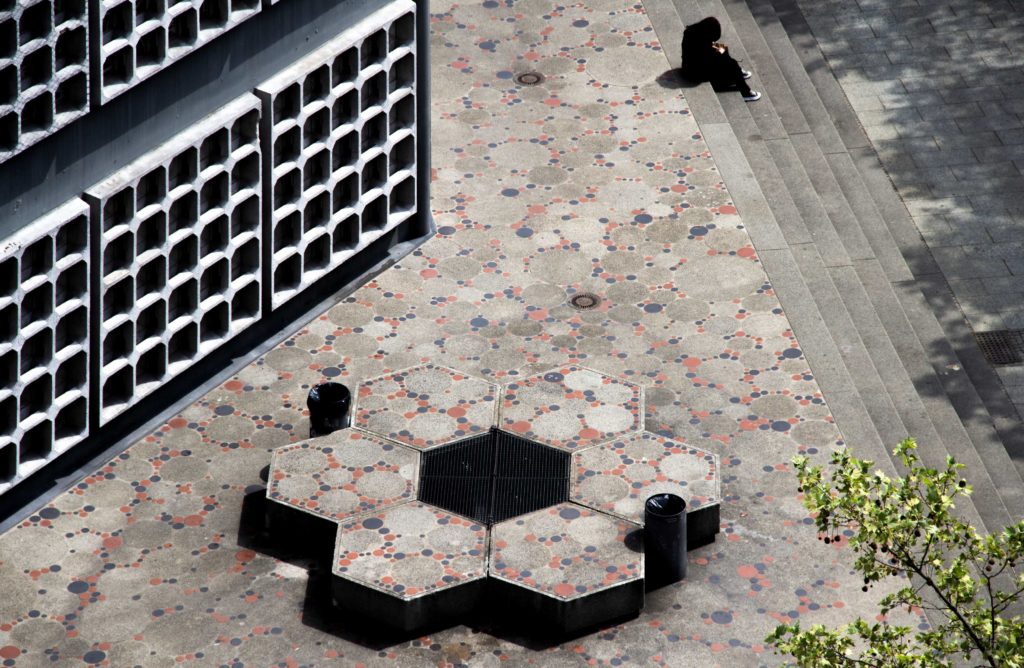
After the financial crisis of 2008, Berlin’s cultural sector appeared increasingly exhausted by improvisation and temporal solutions. There was a hunger for institutions, new ones, that mimicked some of the logic of project spaces and squats. They would not turn into stuffy museums, but they would become permanent. On the corner of a four-lane avenue lined by GDR-era high-rises, inside the former Czech Cultural Center built in the 1960s, the Julia Stoschek Foundation established its Berlin outpost roughly a decade ago. A movie theater and a range of gallery spaces lend themselves to white- cube or black-box exhibitions. The foundation specializes in time-based art, and the sober structure, with its large windows, has that inimitable run-downiness, paired with spatial interventions that forego structural change and maintain the visibility of the old structure and prime it for a new cultural use. Architect Johanna Meyer-Grohbrügge modified both façade and interior, rendering the already delicate modernist structure even more ephemeral by installing folded curtains in front of the walls. It lends a softly theatrical air, but also intimacy, as if visitors are being let in on a secret, maybe an allusion to the family fortune, which helped build the sizable collection. Stoschek’s great-grandfather, an entrepreneur, was entangled with the Nazi regime and used forced labor, which the collector addressed after public pressure.
In the spring of 2026, one week before Gallery Weekend, the foundation announced that it would close its Berlin branch and directs its focus toward Los Angeles and Düsseldorf, a region within Germany with traditionally strong art patronage. A piece of received wisdom says that Berlin has not developed a culture of contemporary art collecting, and a string of failed art fairs attests to that. It is easy to read the move as the sign of a failed experiment: Berlin, over.
People wanted to leave, and they’d announce it on social media. Some did actually go, some stayed, and others came back. Berlin in the mid-2020s is divided, defunded, and increasingly uncertain of itself, while the creative class reassesses its relationship to the city. For the longest time, Berlin provided a respite from downward mobility felt by the generation that came of age after the Great Recession of 2008. Berlin allowed newcomers to shed the marks of home — wherever home had been — and inhabit a kind of suspended nowhere in which both arrival and departure could be postponed indefinitely. Yet this nowhere has its own history, which became apparent after October 7, 2023, when the cultural scene bristled at a specific culture of memorialization, and cancellations and withdrawn invitations followed pro-Palestinian protest. Around the same time, the conservative government cut the cultural budget by 135 million dollars, which was not just harmful to the network of project spaces but also to smaller institutions and festivals.
It seemed like the myth of Berlin as a hold-out against neoliberal financialization had shattered. But these developments really started almost three decades earlier. It is true that the city remained economically dysfunctional for decades — much like 1970s New York — and that this dysfunction contributed to its appeal. Yet the municipality was equally committed to monetizing public assets. Berlin’s identity as the studio of Europe and the art world’s busy backyard has been integral to its branding. Already in the early 2000s, however, the city sold off unused land and city-owned housing over more than a decade to fill the coffers. A governing coalition of socialists and social democrats signed off on the sale of more than ten thousand lots and the privatization of sixty-seven thousand apartments; the utopia of a hold-out against market forces dissolved early.
Lina Lapelytė’s performance was part of a commission by Chanel, and it hails a change in the Berlin art world that makes its institutions resemble the international scene with galas and fashion collaborations. The city is aging into itself, as critic Kate Brown put it in an Instagram post.[2] The temporary and improvised becomes permanent. Perhaps the city loses its mythology, but that was built on sand anyway. Berlin has never been a good place for nostalgia.
[1] Jacques Derrida, Writing and Difference, trans. Alan Bass (University of Chicago Press: 1978), 5.
[2] Kate Brown, https://www.instagram.com/p/DXwkbtJiInD.