Digital artist Renwei Liu has created a distinctive visual language which he utilises to examine the increasingly unstable relationship between information, perception and reality, as evidenced in his digital artworks Delay Zone (2025), Edited Reality Series (2025-2026), Reverb News (2025) and Semantic Glitch (2024).
Liu works primarily with digitally manipulated visual structures, moving image and sound. He investigates how algorithms and digitally manipulated environments shape and mould our experience as individuals living in an increasingly screen-based society.
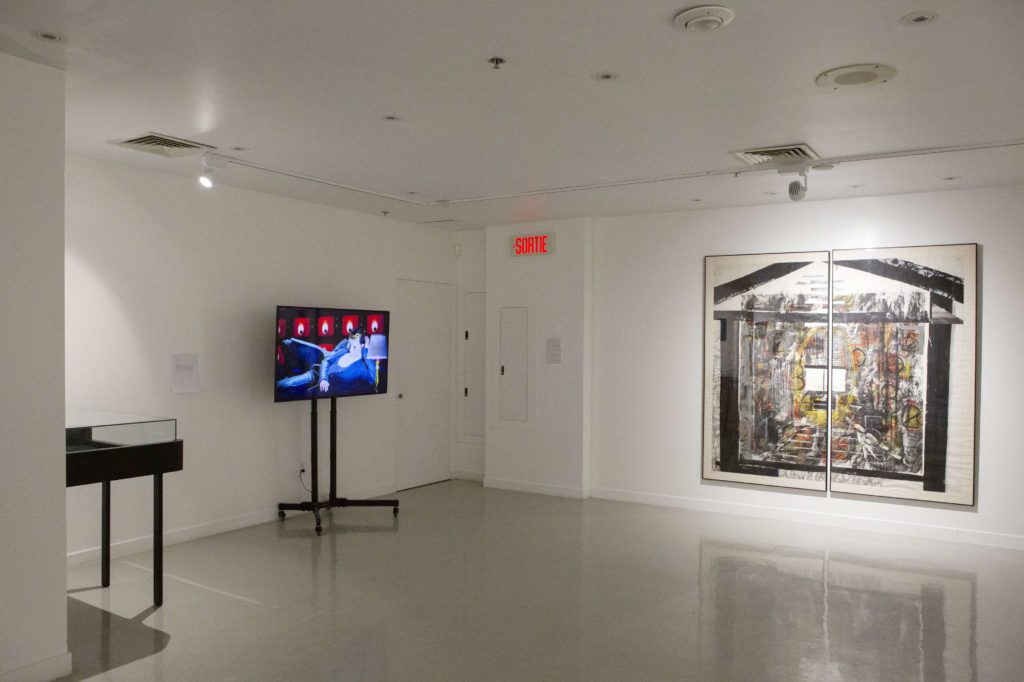
Through his digital films he comments on the relentless assault of filtered and perfected images that shape our daily lives. As a result, his digital artworks represent the mechanisms of contemporary life and offer a vision of a dystopian future where our minds and actions are increasingly manipulated and regulated.
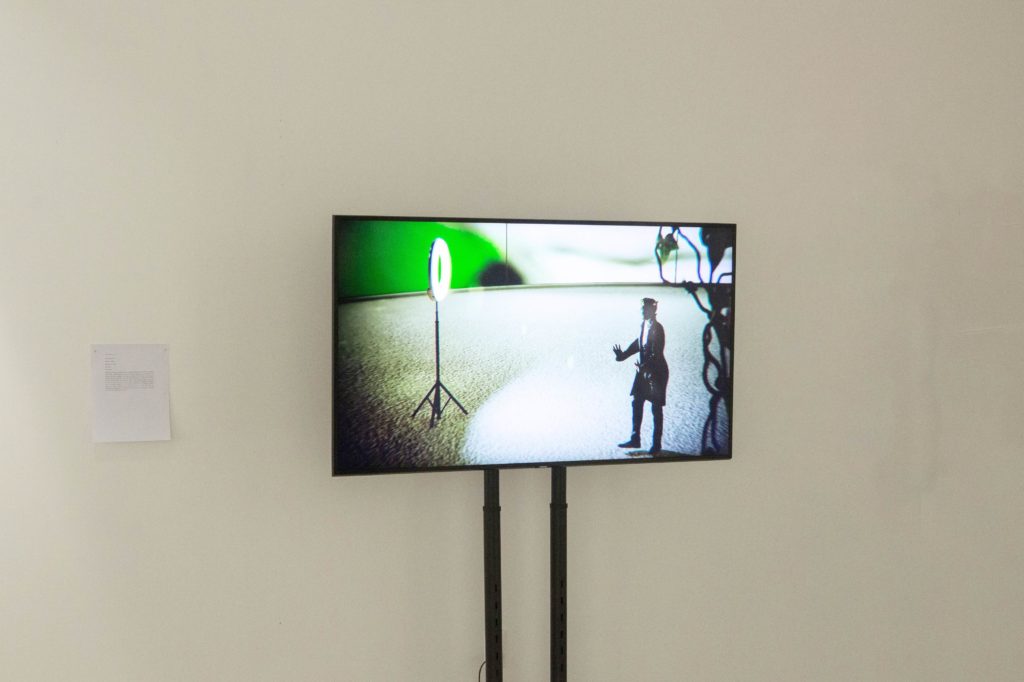
Delay Zone (2025) is a visually and sonically arresting digital film that opens on a monochrome sequence recalling Old Hollywood glamour in a studio with cameras and lighting equipment. Stylishly dressed figures in a nocturnal 1950s setting take on a more contemporary aura when they hold up mobile phones towards a suited conductor-like figure preaching or talking from a lectern. The people surrounding him seemingly idolising him and literally putting him on a pedestal, the scene appears to comment on contemporary celebrity culture and our obsession with screens and filtered images of perfection. The scene morphs into startling technicolour with a view of multiple, red-lipped mouths protruding from a bright green wall. Red and green cinematic code for danger or horror, and the lips talk like a living Tower of Babel or the Bocca della Veritá of ancient mythology. Liu’s clever use of retro Gothic font associated with vintage horror movies such as John Carpenter’s 1978 classic Halloween adds to the sense of drama.
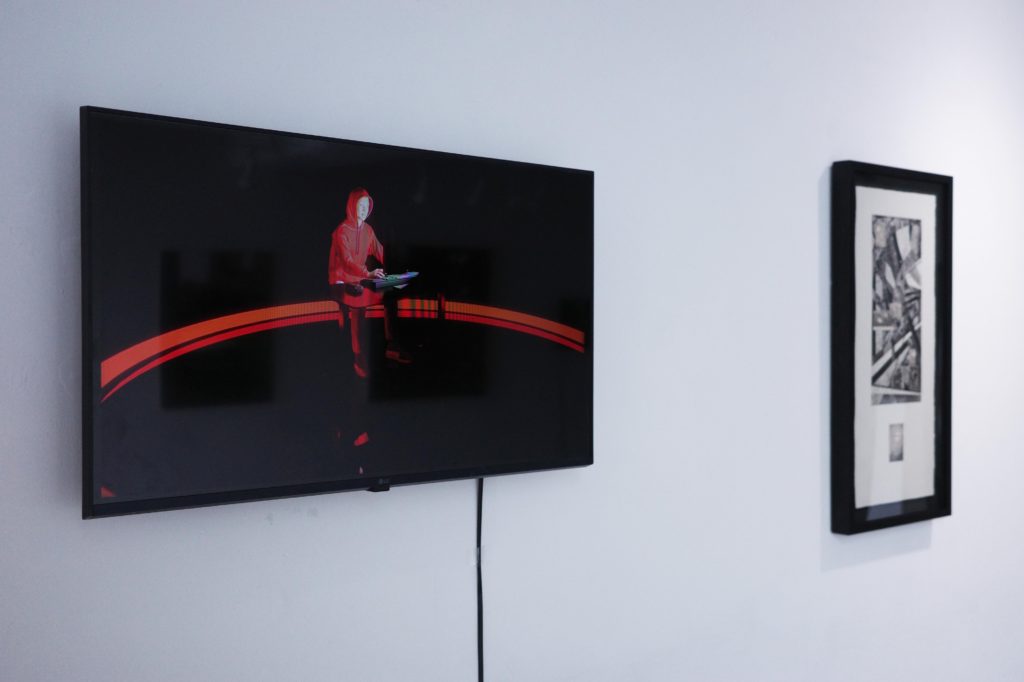
Reverb News (2025) is equally cinematic, and Liu again uses red to create an eery sense of impending doom. We are invited into a dystopian future where the camera pans through a red-lit kitchen and settles upon a hooded figure sitting at a table inspecting a plate with one yellow-yoked egg on toast as a narrator talks about the system eliminating the need for independent thought. As the camera zooms in on the yolk, a few small red specks are visible, indicating blood or imminent danger and the figure is transported into a black room lit up by red discs, before his face morphs into a robotic visage.
Liu’s digital films are visually captivating, and he succeeds in combining a cinematographer’s eye with a story-teller’s intellect and a Millennial’s view of contemporary society and how the next generation have grown up with screens, filters and algorithms which threaten to erase their individuality. He has created a visual language that infuses his digital imagery with the Surrealist wit of Duchamp, combined with a style combining a knowledge of cinema history with futurism.
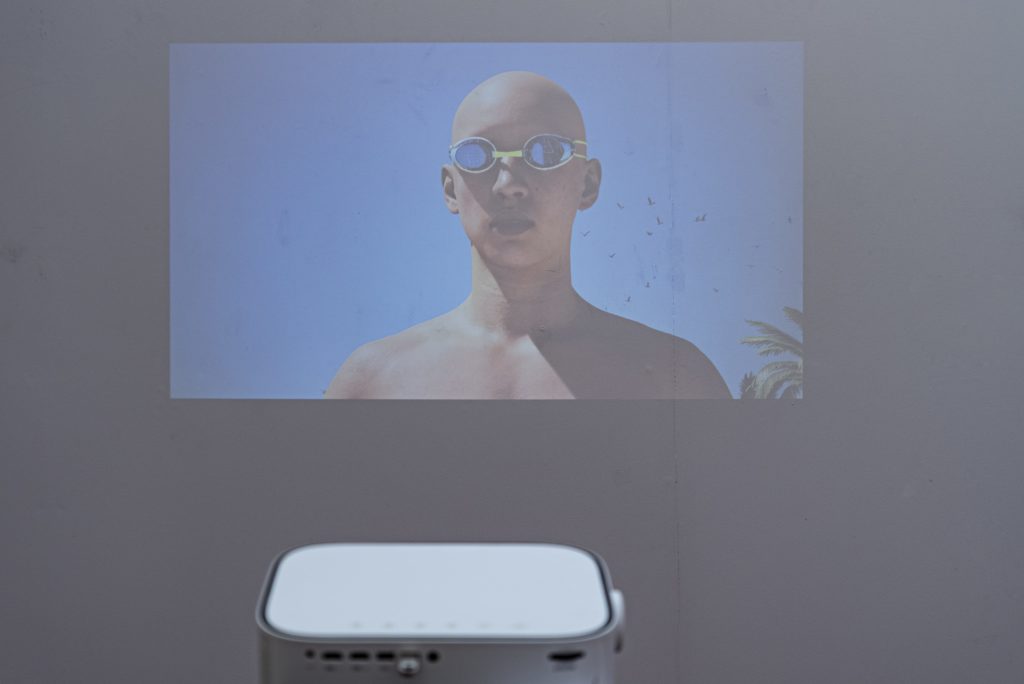
Digital film Semantic Glitch (2024) presents a more hopeful visual aesthetic than Delay Zone and Reverb News, depicting a Utopian vision of a man on a Paradise Island, exercising in an azure, blue sea and warming up for a run in a green field. Yet the soundtrack lends a menacing tone to the scenario, which feels like something out of The Truman Show, a simulated version of a perfect reality that doesn’t actually exist.