
What does it mean to be “vaguely Asian”? For ten years, CFGNY, the art/fashion/performance collective founded by Daniel Chew, Ten Izu and Tin Nguyen, has used the phrase to describe its work. They use the term in press releases and interviews, presenting it as an aesthetic frame that would seem to link the many facets of their practice, and yet it is rarely defined or elaborated on. Like their acronym, which has been made to stand for everything from Concept Foreign Garments New York to Cute Fucking Gay New York — or nothing in particular — “vaguely Asian” is slippery and strategically evasive, a category that seems to ironize itself.
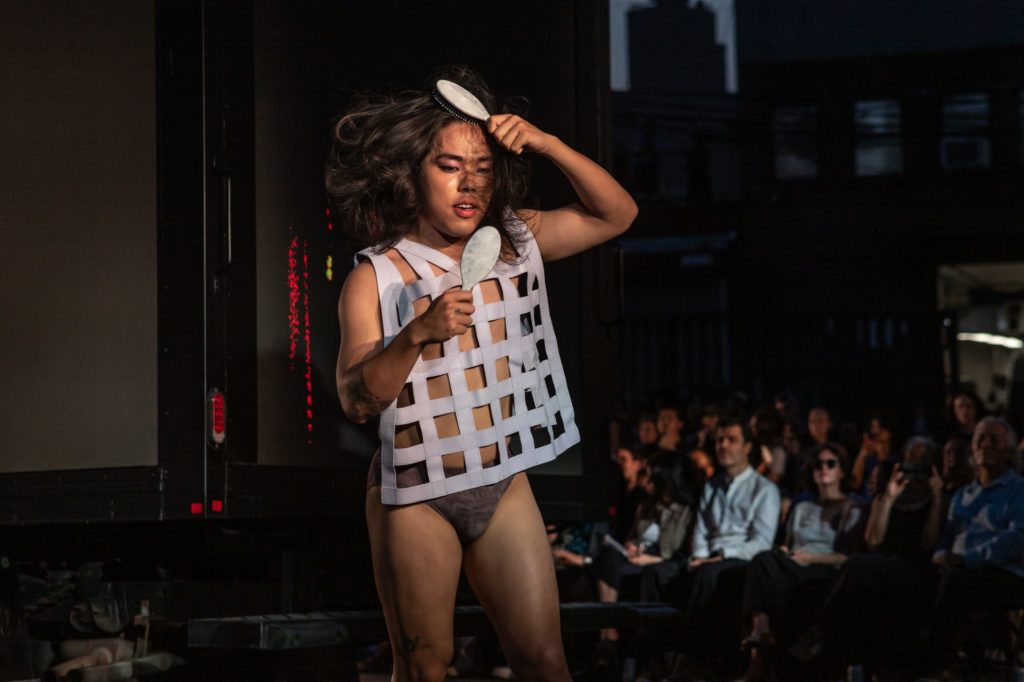
On Friday, July 17, 2026, CFGNY marked its tenth anniversary with a performance at Amant in Brooklyn. Co-presented with The Kitchen, the event coincided with CFGNY’s exhibition “Puddles into Pond” (2026) at Amant and came on the heels of the collective’s participation in this year’s Whitney Biennial. Part fashion show, part institutional history and, finally, a full-on party, the evening inevitably brought to mind Bernadette Corporation, which likewise used the runway to collapse distinctions between fashion, art, performance, and social experiment. But whereas that antecedent collective mobilized the spectacle of the fashion show to investigate commodification and the death of the avant-garde, CFGNY reroutes it through the unstable categories of diaspora and identity.
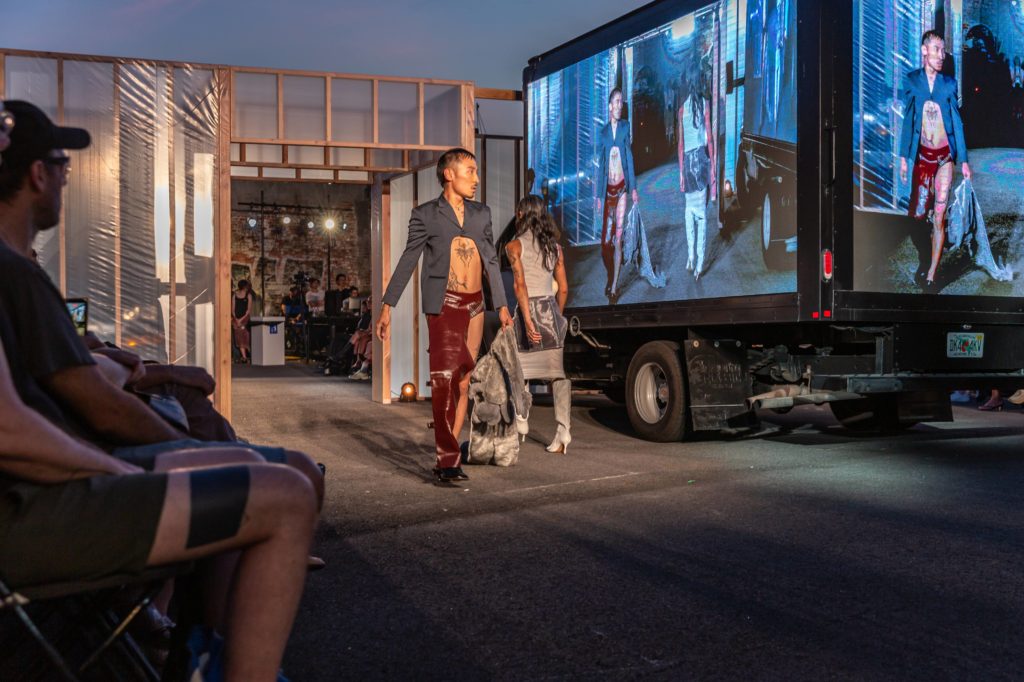
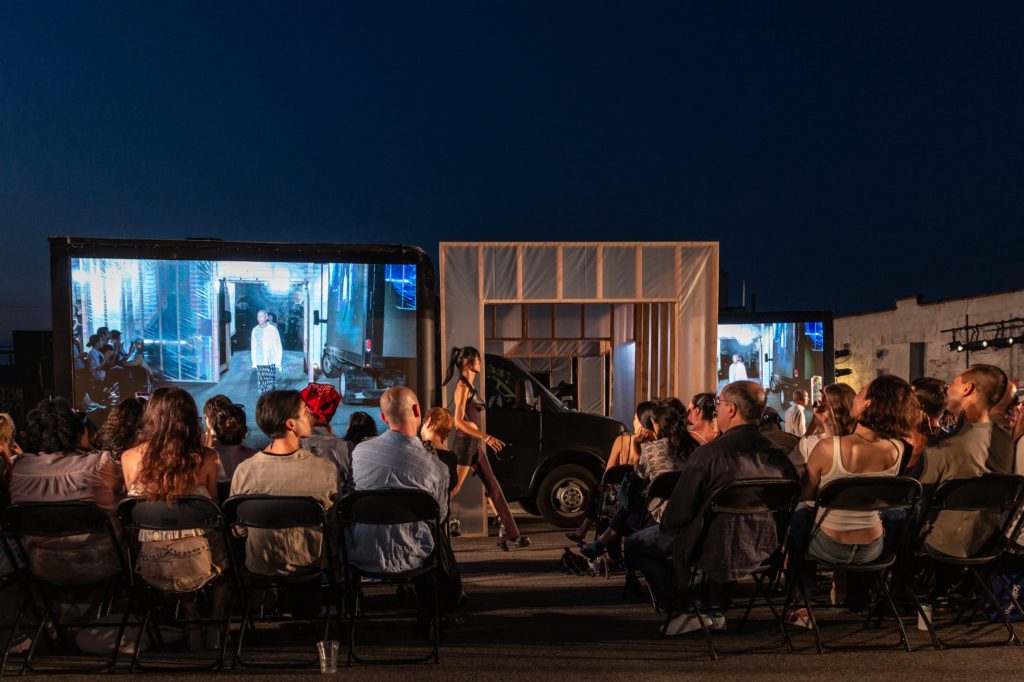
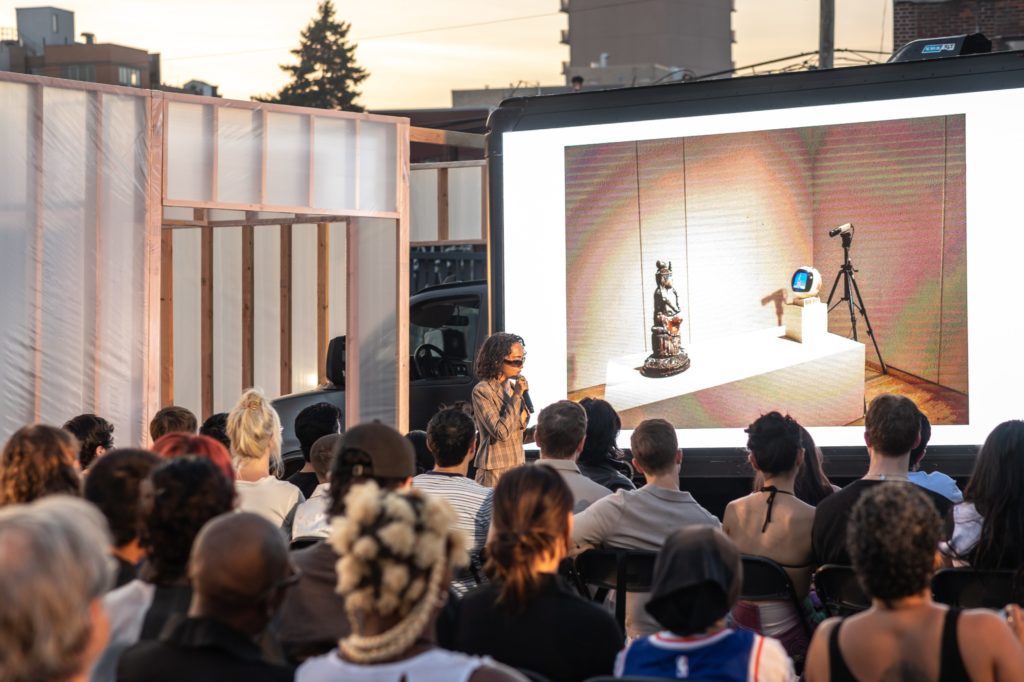
Friday’s event incorporated elements of dance, sound, video, lecture, and runway show, all held together by Angelique Rosales Salgado, assistant curator at The Kitchen, who served as the evening’s MC. Camp and confident, Rosales Salgado kept things moving with a controlled looseness, even as the performance seemed always on the verge of coming undone. She announced that, for one night only, CFGNY stood for “Can’t Forget Gossip Needs You.” Presenting a history of the Sony Portapak and the early years of The Kitchen, while weaving together Nam June Paik, Shigeko Kubota, Joan Jonas, Merce Cunningham, and Charles Atlas, she offered gossip as the lens through which to view that history: who knew or collaborated with or influenced whom. The canon had a group chat, she seemed to say, holding up a mirror to the assembled and highlighting how the messiness of social life is the hidden engine of tidy art historical narratives.
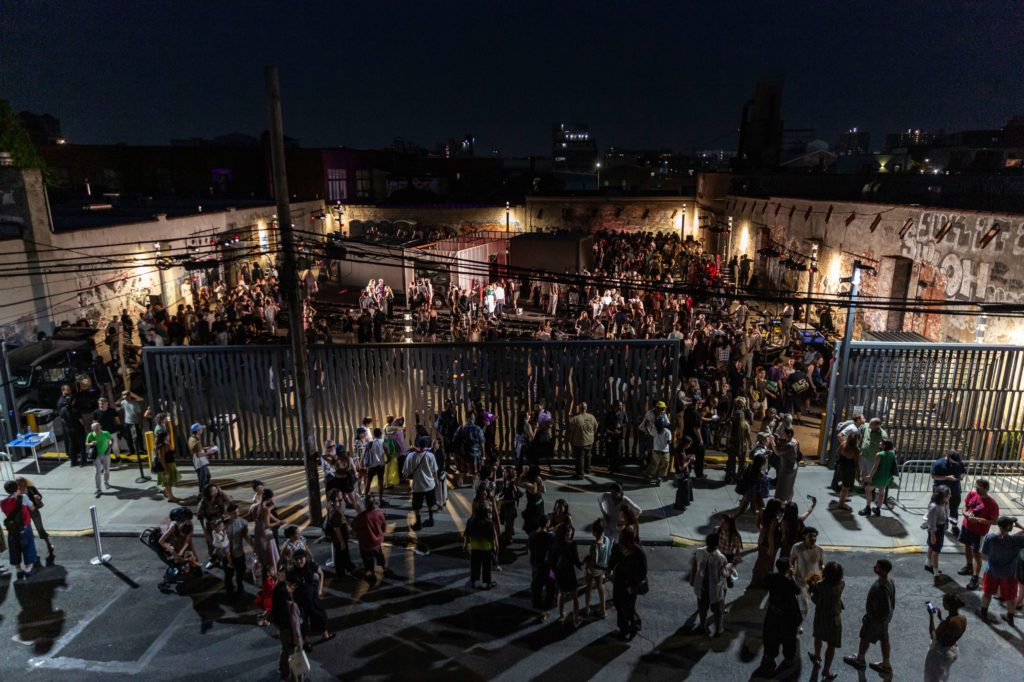
As the runway show got underway, live camera feeds cut between performers and screens, turning bodies into images in real time. Diane Severin Nguyen walked while FaceTiming, adding another screen, another camera, and presumably another audience to the proceedings. The performance seemed increasingly interested in watching itself being watched.
The collection itself felt more resolved than in earlier CFGNY presentations, technically more ambitious, and more confident in its construction. Made by tailors in Ho Chi Minh City, the garments no longer seemed to sit adjacent to the performance; they carried their own authority as fashion while still participating in CFGNY’s larger questions of circulation, replication, and value.
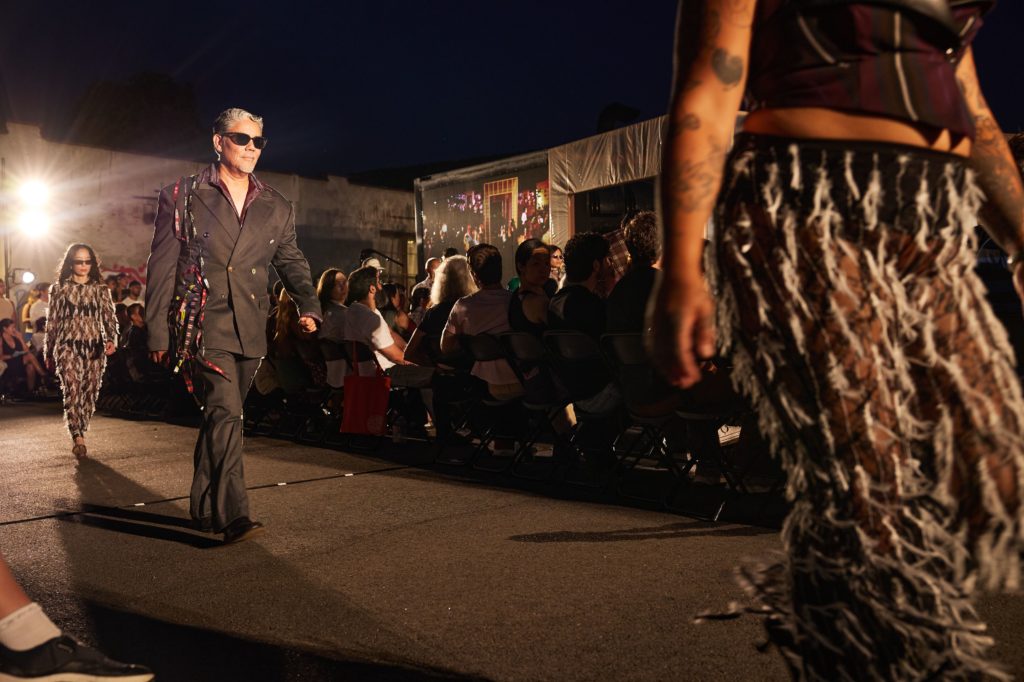
A commitment to social infrastructure was reflected directly onto the casting. Over thirty-five artists, culture workers, and scene fixtures walked in the show. Among them were artists Paul Pfeiffer and twins Hannah Hur and Lotus Kang; actors Ken Leung and Blake Abbie; chef Anthony Ha; and Lumi Tan, former curator at The Kitchen. They are all members of a community, to be sure, but one couldn’t help wondering how different this felt from what, in another context, might read as the corny, self-congratulatory cheerleading of something like “Asian excellence.” It’s a question that is, I think, baked into the collective’s adjectival phrase, “vaguely Asian.” There is already something inherently absurd in the term “Asian,” which smooshes the wildly disparate histories, languages and geopolitical realities of several billion people under a tidy little umbrella. How can it really mean anything? Asian is always and necessarily vague. The redundancy of the adverb “vaguely” is thus itself vaguely satirical. It is a camp gesture that both undermines and affirms the necessity of an idea at once abstract and real, useless and vital. Just like fashion.