Flash Art uses cookies strictly necessary for the proper functioning of the website, for its legitimate interest to enhance your online experience and to enable or facilitate communication by electronic means. To learn more about cookies please see Terms & conditions

Flash Art
Flash Art
Shop
  • Home
  • CURRENT ISSUE
  • Features
    • Archive
    • Conversation
    • FOCUS ON
    • On View
    • Reviews
    • Report
    • Studio Scene
    • The Curist
    • Unpack / Reveal / Unleash
  • STUDIOS
    • Archive
      • DIGITAL EDITION
      • Shop
      • Subscription
      • INSTITUTIONAL SUBSCRIPTION
      • Contact
→
Flash Art

#328 Nov 2019–Jan 2020, REVIEWS

9 December 2019, 4:00 pm CET

Nora Turato Serralves Museum / Porto by Pedro Alfacinha

by Pedro Alfacinha December 9, 2019
1
2
3
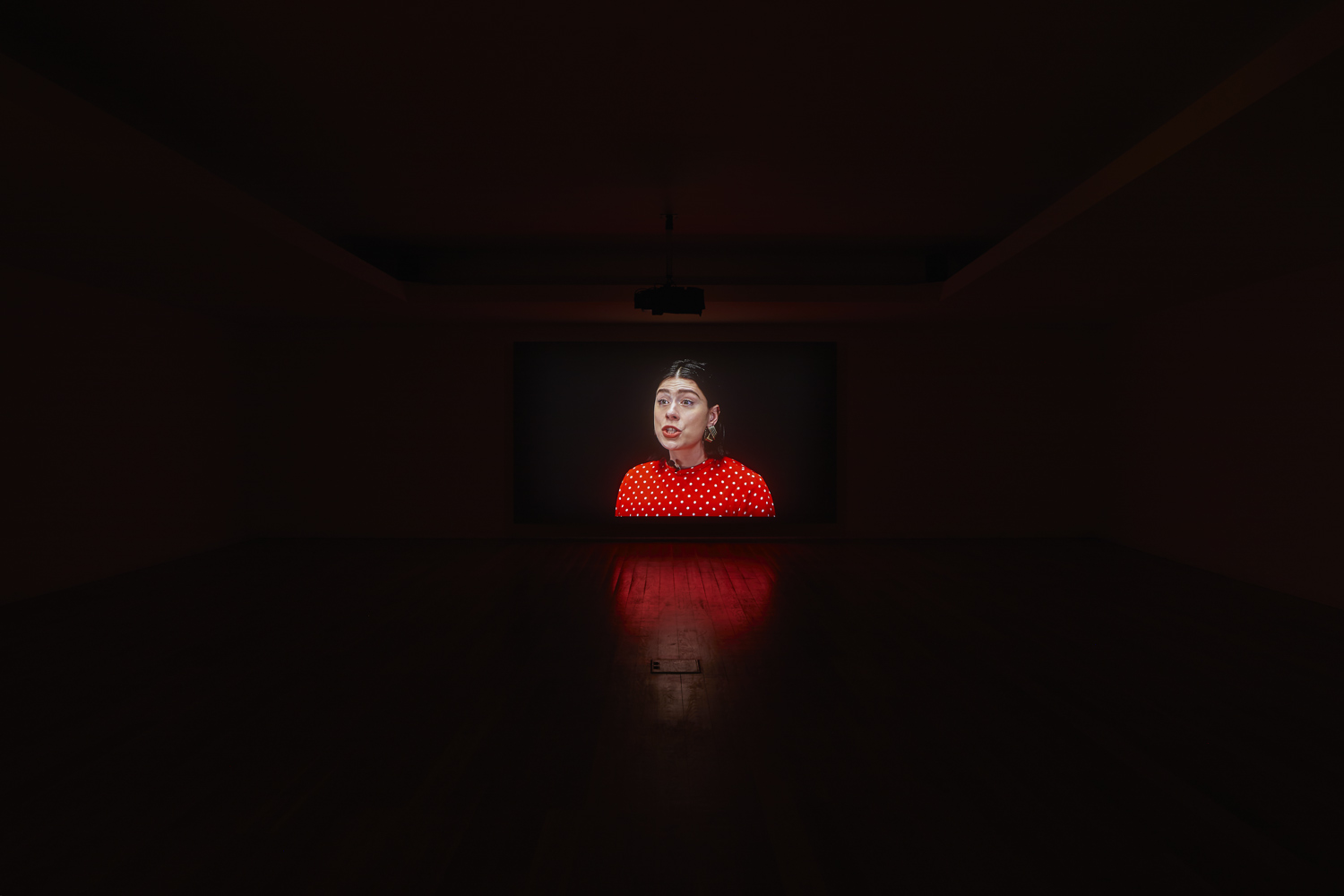
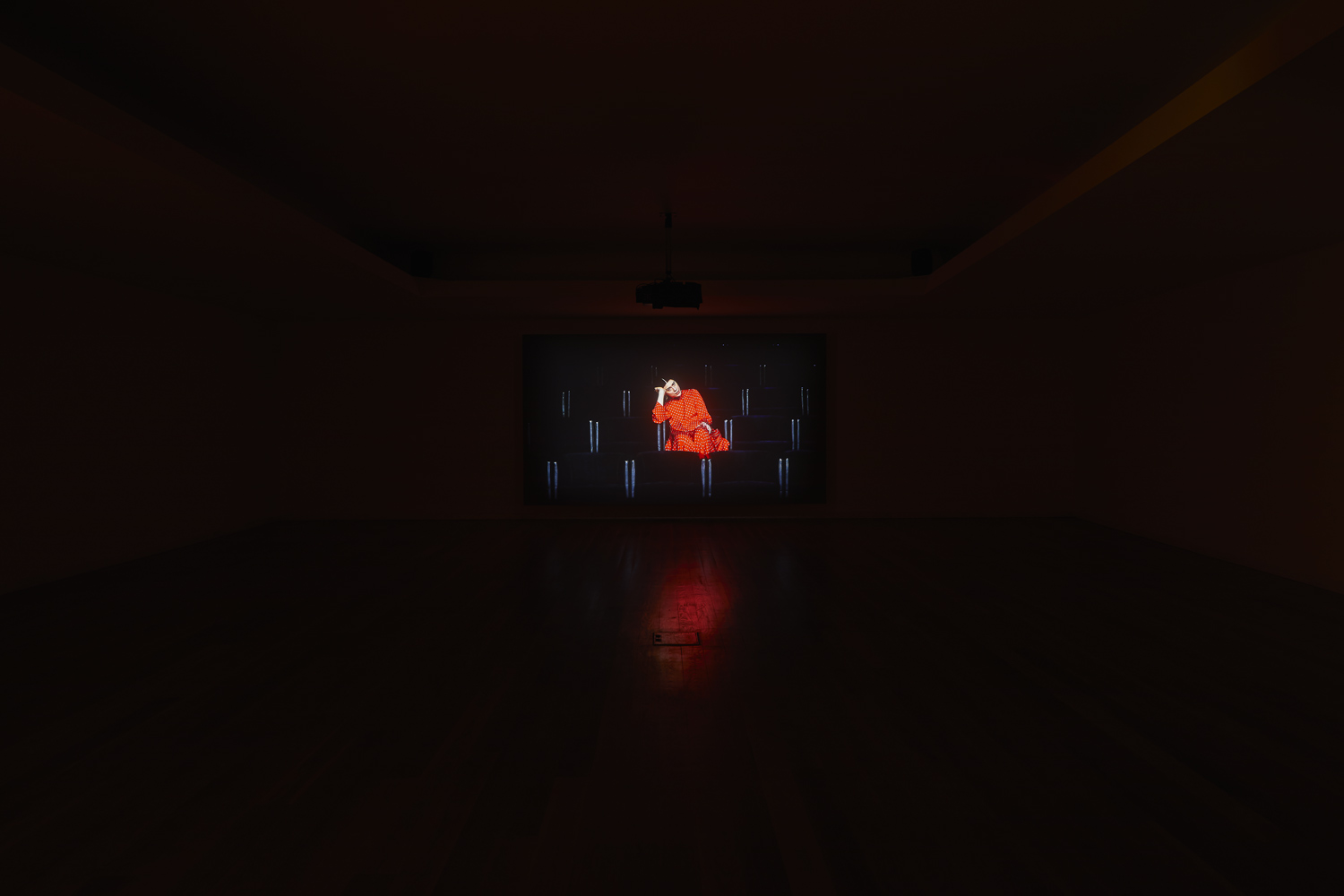
Nora Turato, Someone ought to tell you what it’s really all about, 2019. Installation view at Serralves Museum of Contemporary Art, Porto, 2019. Photography by Filipe Braga. Courtesy of Serralves Foundation, Porto.
1
2
3
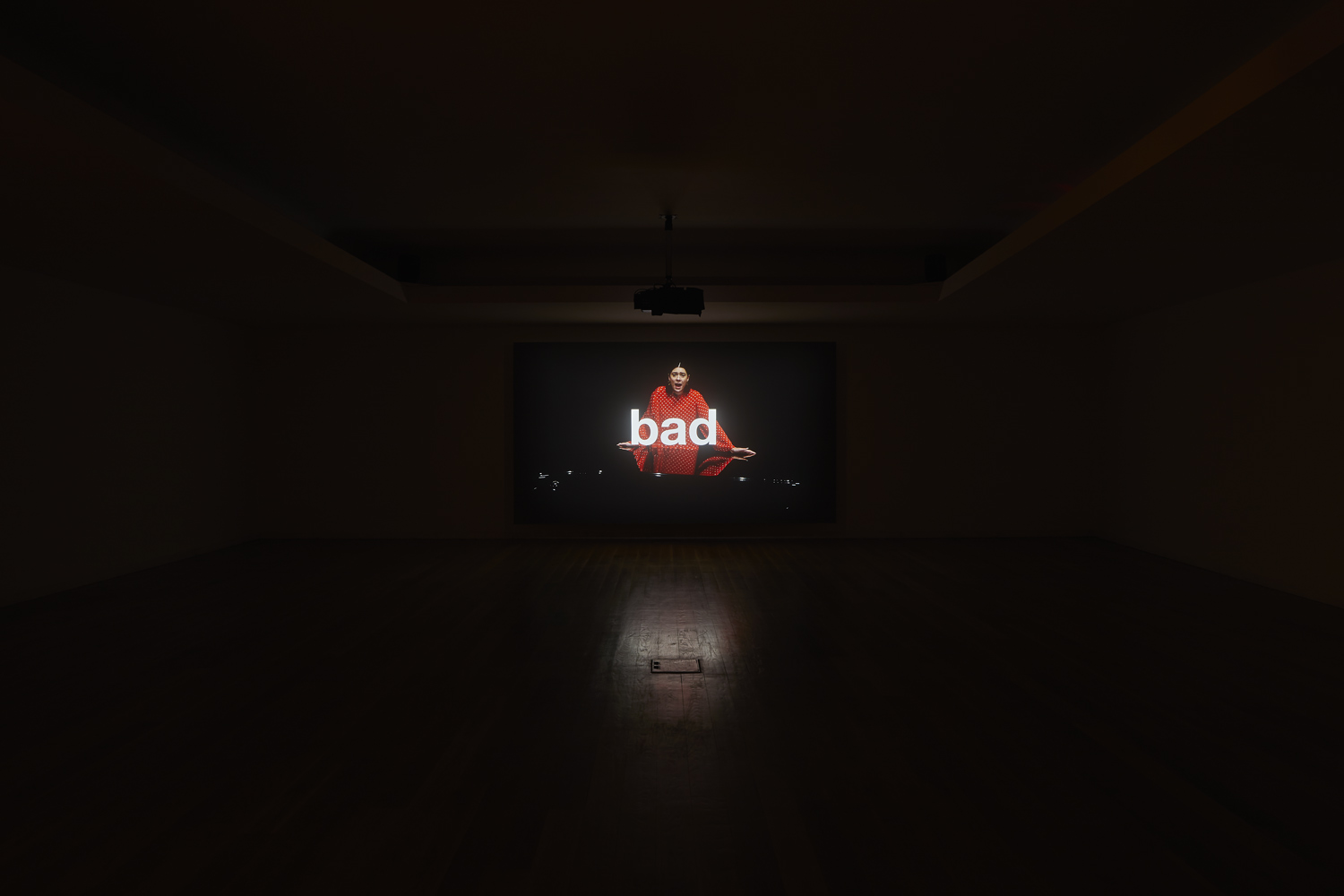
Nora Turato, Someone ought to tell you what it’s really all about, 2019. Installation view at Serralves Museum of Contemporary Art, Porto, 2019. Photography by Filipe Braga. Courtesy of Serralves Foundation, Porto.
1
2
3
Nora Turato, Someone ought to tell you what it’s really all about, 2019. Installation view at Serralves Museum of Contemporary Art, Porto, 2019. Photography by Filipe Braga. Courtesy of Serralves Foundation, Porto.

For her first solo exhibition in Portugal, Nora Turato drove her two greyhounds, Taco and Tuna, all the way from Amsterdam.
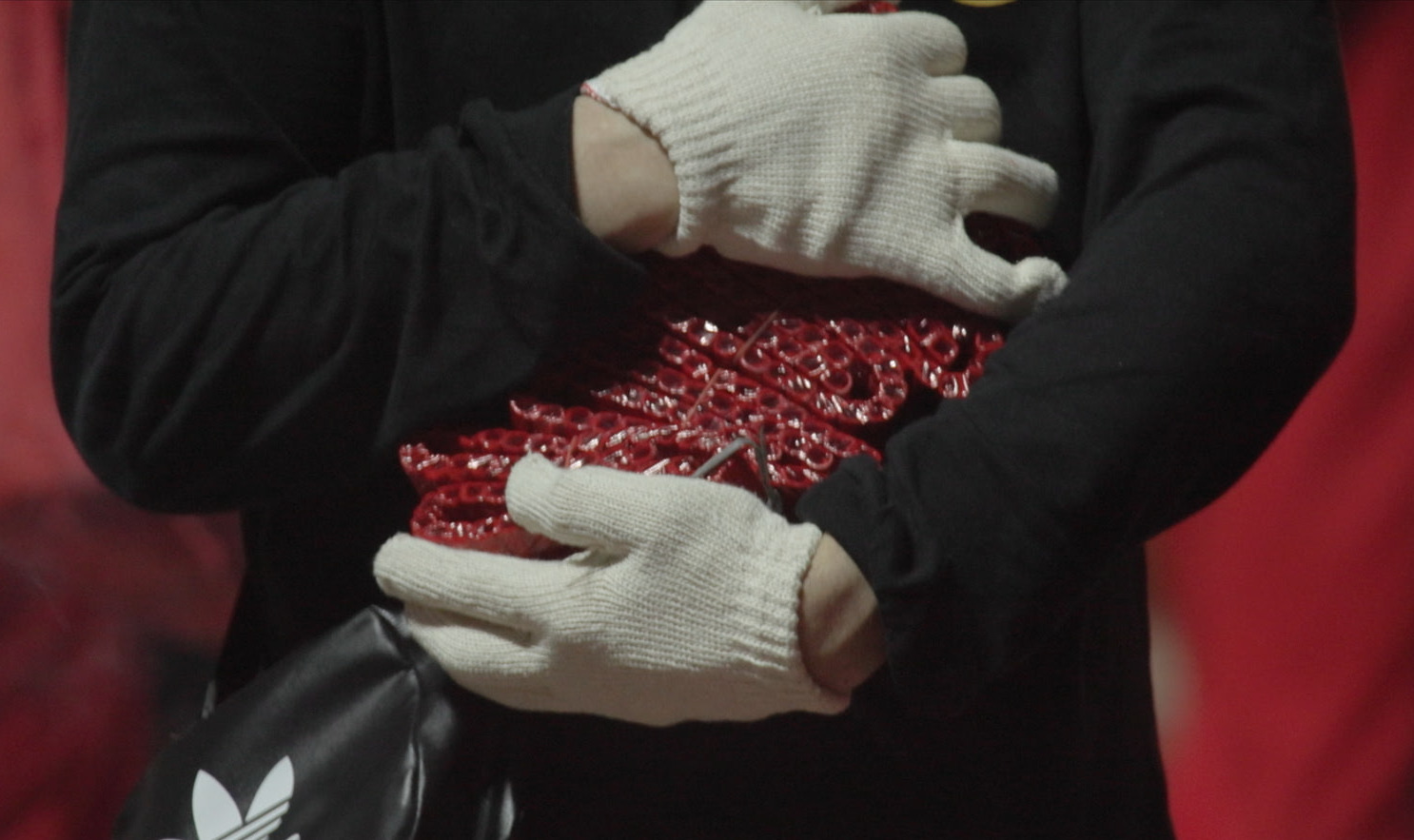
In the video titled Someone ought to tell you what it’s really all about, shot this summer in an empty auditorium at the Serralves Museum and now being shown at the museum’s contemporary gallery, the two dogs are more than mere extras; rather, they lend both symbolism and familiarity to what would otherwise be an autonomous piece within the wider context of Turato’s work.
Usually operating a broad, intertwined system of outputs for her practice, which includes monumental murals, paintings, audio pieces, and powerful spoken-word performances — in which the full extent and detail of her work really comes to life — Turato’s process is an endless cadavre exquis between herself and the ever-expanding cacophony of overwhelming information that surrounds us all. But with her bold, loud, caffeine-driven ways, the artist appears to be thriving where most of us have surrendered, and has created a beautifully complex, poetic dominion of her own.
Someone ought to tell you what it’s really all about employs a new strategy though — not only is the artist confined to a screen, but the screen itself is isolated in a dark and quiet room of the museum. It imposes a reinterpretation of the artist’s role as a performer, as the screen diffuses and flattens her image, and the audio system compresses the volume of her voice. We are no longer struck by the sheer power of her presence, nor is our attention spiked by the ephemeral; this is a performance, yes, but one you can watch in a loop.
Openly inspired by John Cassavetes’ Opening Night, in which the main character goes progressively rogue to the point that one can no longer decipher whether she is adhering to the script or not, Someone ought to tell you what it’s really all about aims at “reclaiming the right for a an artist to make a mistake,” as if Turato, concerned with the speed at which her work is disseminated, decided to lock it into a continuous rehearsal, isolated by the stage and the screen, with only her two dogs as beacons of the real world.
Felix Gonzalez-Torres “Sweet Revenge” Museo Reina Sofía/ Madrid

25 September 2026, 10:38 am CET

Seamus Heaney begins his “Elegy (For Robert Lowell)” (1977) [1] with an observation that seems pretty self-evident: “The way we’re…

Read More

The Object, the Ego, and the Self. Bogdan Ablozhnyy

23 September 2026, 9:59 am CET

In Bogdan Ablozhnyy’s The Case of Paranoia (2025), a mannequin’s hand is placed against the wall at waist height. It…

Read More

Everything it is it has*. Thea Djordjadze

21 September 2026, 8:35 am CET

*A line from Anne Carson’s poem “The Glass Essay,”in which the Canadian poet and essayist moves through the psychologically resonant…

Read More

Xochi-Calli: The Architecture of the Inchoate. Carlos H. Matos

17 September 2026, 9:43 am CET

Xochi-Calli is a multisensory, immersive work by Mexican architect-sculptor Carlos H. Matos, set within the woodlands of the Lacasapark Art…

Read More

© 2026 Flash Art

  • Terms & conditions
  • Contact