Anne Imhof: I have immense respect and admiration for you as an artist, and I am very lucky to call you my friend! The first time we started to talk in depth about art was when we saw Rashid Johnson’s show at the Guggenheim and hung out afterwards. Such a beautiful day.
Tyler Mitchell: Yeah. That was pretty much a month or two after DOOM (2025) happened, right? Or it was pretty close to it. I remember that day, and I remember the day you came to my show “Wish This Was Real” (2024) at C/O Berlin really vividly.
AI: Me too.
TM: That felt quite vulnerable because I think you were experiencing my work in the physical form for the first time. Then I remember going to your show “Wish You Were Gay” (2024) at Kunsthaus Bregenz just the day after it opened. It was the first time I experienced a full solo exhibition of yours and I was really blown away. I had seen works in group shows, and done lots of looking online but never a full show like that. I felt late to the party! Bregenz was amazing for me because I’m such an image person. Photography and film are my native language. So when people described you primarily as a performance artist, which I guess one could say you are, but I want to challenge that a little bit in this conversation too, I think that intimidated me a bit. Like, maybe I didn’t know how to properly engage with performance. But when I got to your show, it was the opposite. The work felt immediate and urgent. And I understood it right away. So I want to ask you: when I experienced your sculptures and installations in Bregenz, it felt like I was watching an artist who is incredibly attuned to space. Do you think about space as your primary material? It certainly feels that way. The way you choreograph how people move through a gallery, or even block them off with crowd barriers, really struck me. I am honestly obsessed with that. It was a real light-bulb moment for me.
AI: I remember your show in Berlin. I was alone, going from work-to-work. It felt like entering your world. I became aware of the intimacy you produce in images, how endless and vast they feel at the same time and how they extend beyond the frame. What stayed with me most was the intelligence of bodies and all they carry. There’s All American Family Portrait (2018), an image of a family with their two children that you shot for Document Journal, I return to often when I think about your work. Your vision and how you see family, how you frame it, and where you position the viewer in relation to it. Time and space feel essential to both of our practices. “Wish You Were Gay” was also about family, about coming out as a queer person, about raising a kid in my young adult life that felt especially vulnerable.
TM: I want to ask you more about that.
AI: It was about the body memories.
TM: It was about the body.
AI: Muscle memories!
TM: When you walk into the museum in Bregenz, there’s that video of you on the ground floor. I read it as an immediate confrontation with the artist, or maybe the artist confronting herself. Then, moving up through the building, I was struck by how implicated I felt in what you staged. It actually made me think about my own work. My pictures are me coordinating a kind of performance. I set an intention, I set certain variables, but I don’t fully control the outcome. I sense that in your practice, just in a much more live way. Another phrase I kept coming back to was “world building.” There’s collaboration, of course, but you still have this fully formed world with its own symbols and logic. How did that develop? Is it intentional? Accidental? Rooted in childhood?
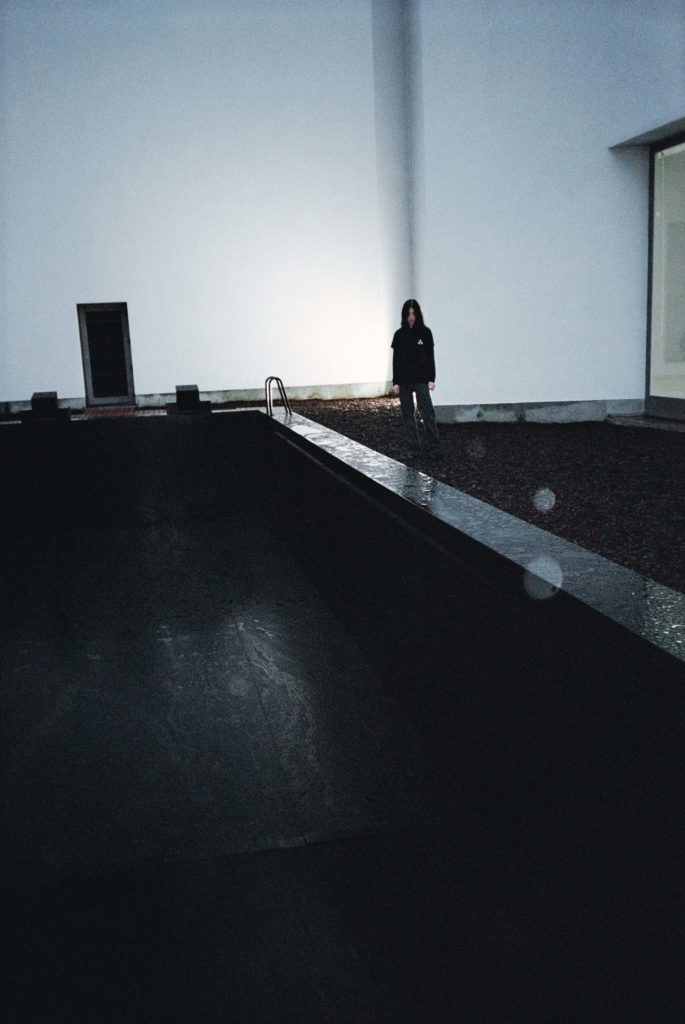
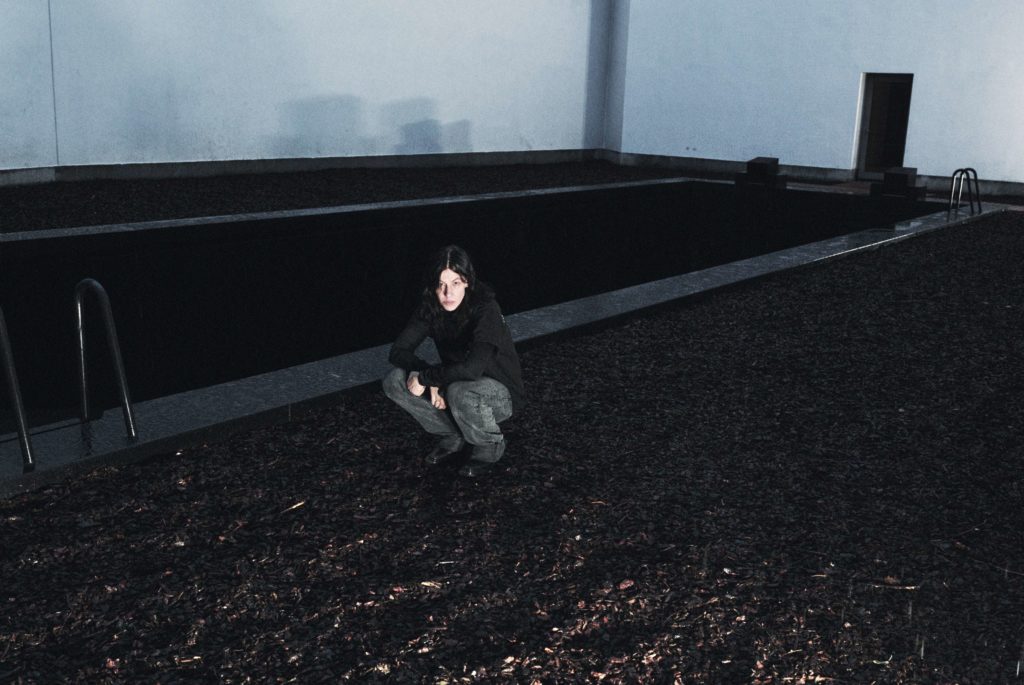
AI: “Wish You Were Gay” was, on the nose, a show about performance but built from objects and images. I first began thinking about performance early on while photographing my friends. I remember wanting the moment to last forever, I truly was in love with the moment, not with the image as such. In that sense, there’s something similar between us: you freeze time, and I stretch it, I try to make the moment last. I draw from lived experience, but also imagining future experience, and compose in time and in space. You create this frozen moment in time, that is the picture you take, which is the composition. I think of you coming to Porto to take my portrait… the rain, the low light, you asking me to stand next to the pool. That made me think about how much of that moment is planned, and how much is about relinquishing control and letting the other person respond. With dance, I’m very aware of how intelligence lives in the muscles. But there’s also an intelligence in how we look at things, a kind of visual or mental muscle memory. The brain as a muscle. Images train that muscle. They shape how we perceive, individually and collectively. And I’m curious how you think about that responsibility when you’re making images. Is there a brain muscle memory of society?
TM: I absolutely had the sensation that I was inside an exhibition by an artist who wanted me to feel aware in my body. Most shows the viewer waits for images to deliver meaning or information, but your exhibition experience was totally different. It felt participatory because of the way you staged the objects. It honestly raised my pulse just moving through the space. When you talk about photography as a kind of coordinated performance, that still really resonates with me. I’m always trying to walk that line between the familiar and the unfamiliar; bringing the viewer to water,but not forcing them to drink. I try to avoid the didactic image. Instead, I make pictures that feel recognizable enough, often tied to my childhood in Atlanta, but twisted just enough to feel slightly uncanny. I think of them as “lightly staged.” I like that in-between space where the viewer has to resolve what feels found or caught, and what is actually constructed. Photography is slippery that way. We all carry assumptions about authenticity and artifice in our collective imagination. Especially now, when the role of the image is already so questioned, what excites me is making photographs that don’t sit neatly in either category, but straddles the line of many things.
AI: I think there’s a desire in both of our practices to create from a place where an image is coming up but isn’t fully there yet, right? It’s almost like a ready-made that you find, and let’s say the ready-made is like an experience. A moment you recognize, a sliver you capture… then wanting to push it further and to give it form because something connected. That’s where questions of pose come in for me. What is a pose? How long is it held? What does it contain? If you have a movement in time vs a pose, for example. It’s so beautiful. That compression, how much desire and time can sit inside one image, is what makes your photographs feel so charged to me.
TM: I’m trying to find a gesture. There’s obviously intuition involved. I’m thinking about a picture I made of two brothers. The younger one had fallen asleep on his older brother’s chest. I didn’t photograph the sleep itself, but the picture just after, as he woke up, when there was this small sliver of drool sliding down onto his chest. I could never have planned that. But somehow that tiny accidental moment holds everything the picture needs to say. We’re all so visually literate from day one that you have to work hard to stretch the everyday into something meaningful, or bring the extraordinary back down to earth. It’s about catching something that subverts expectation and, for me, feeling both ordinary and extremely charged at the same time. I want to turn it back around to you. You’re working with sometimes hundreds of people, and I want to touch on DOOM, which is the other major piece of yours that I’ve experienced. In DOOM, I really let go of my usual inner inhibitions and submitted myself to the experience in a way that I found very transformative. We were already set up with the expectation of a timer, a countdown, and that fascinated me. I found myself wandering, drifting between moments, sometimes away from the main action and then back again. I was hyper aware of my body and my position in the space in a way that I’m not usually in exhibitions. It felt genuinely exciting.I think that’s what draws me to your practice. Something about the variables you set up for the viewer, whether primarily performance or sculpture, they simply raise your pulse. Can you talk about that? How do you set that up for people? How do you think about gesture, dance, and performance when you’re working at that scale, with so many bodies involved?
AI: First is the desire that something goes on for forever. That the time you are in one space with the other person lasts forever and one moment in time feels infinite. Like it does when you’re falling in love. What you described earlier, taking the image just after the moment, when something has already shifted, really stayed with me. That’s where the poetry is for you. My work can feel like an overload of images, gestures, even disciplines. When I work with performers, part of it is about their excellence, what they do best, and how to meet that as an artist, how to be present enough to really collaborate. What became very clear to me in DOOM was how much the work exists in the audience. Someone like you will see things I could never anticipate, because you bring your own history, your own way of seeing. In that sense, everyone saw their own piece. That made me question how much I’m deliberately placing meaning, and how much meaning emerges through the viewer, through timing, perception, and experience. DOOM was important for me because it clarified something fundamental: that dance as a form was carrying more than any individual reference or image. The stricter the form, like in ballet, the more the smallest deviations matter. The clearer the pose, the more impact there is in what slips, bends, or breaks.
TM: I absolutely had the sensation that I was inside an exhibition by an artist who wanted me to feel aware in my body. Most shows the viewer waits for images to deliver meaning or information, but your exhibition experience was totally different. It felt participatory because of the way you staged the objects. It honestly raised my pulse just moving through the space.When you talk about photography as a kind of coordinated performance, that still really resonates with me. I’m always trying to walk that line between the familiar and the unfamiliar; bringing the viewer to water, but not forcing them to drink. I try to avoid the didactic image. Instead, I make pictures that feel recognizable enough, often tied to my childhood in Atlanta, but twisted just enough to feel slightly uncanny. I think of them as “lightly staged.” I like that in-between space where the viewer has to resolve what feels found or caught, and what is actually constructed. Photography is slippery that way. We all carry assumptions about authenticity and artifice in our collective imagination. Especially now, when the role of the image is already so questioned, what excites me is making photographs that don’t sit neatly in either category, but straddles the line of many things.
AI: I think there’s a desire in both of our practices to create from a place where an image is coming up but isn’t fully there yet, right? It’s almost like a ready-made that you find, and let’s say the ready-made is like an experience. A moment you recognize, a sliver you capture… then wanting to push it further and to give it form because something connected. That’s where questions of pose come in for me. What is a pose? How long is it held? What does it contain? If you have a movement in time vs a pose, for example. It’s so beautiful. That compression, how much desire and time can sit inside one image, is what makes your photographs feel so charged to me.
TM: I’m trying to find a gesture. There’s obviously intuition involved. I’m thinking about a picture I made of two brothers. The younger one had fallen asleep on his older brother’s chest. I didn’t photograph the sleep itself, but the picture just after, as he woke up, when there was this small sliver of drool sliding down onto his chest. I could never have planned that. But somehow that tiny accidental moment holds everything the picture needs to say. We’re all so visually literate from day one that you have to work hard to stretch the everyday into something meaningful, or bring the extraordinary back down to earth. It’s about catching something that subverts expectation and, for me, feeling both ordinary and extremely charged at the same time. I want to turn it back around to you. You’re working with sometimes hundreds of people, and I want to touch on DOOM, which is the other major piece of yours that I’ve experienced. In DOOM, I really let go of my usual inner inhibitions and submitted myself to the experience in a way that I found very transformative. We were already set up with the expectation of a timer, a countdown, and that fascinated me. I found myself wandering, drifting between moments, sometimes away from the main action and then back again. I was hyper aware of my body and my position in the space in a way that I’m not usually in exhibitions. It felt genuinely exciting.I think that’s what draws me to your practice. Something about the variables you set up for the viewer, whether primarily performance or sculpture, they simply raise your pulse. Can you talk about that? How do you set that up for people? How do you think about gesture, dance, and performance when you’re working at that scale, with so many bodies involved?
AI: First is the desire that something goes on for forever. That the time you are in one space with the other person lasts forever and one moment in time feels infinite. Like it does when you’re falling in love. What you described earlier, taking the image just after the moment, when something has already shifted, really stayed with me. That’s where the poetry is for you. My work can feel like an overload of images, gestures, even disciplines. When I work with performers, part of it is about their excellence, what they do best, and how to meet that as an artist, how to be present enough to really collaborate. What became very clear to me in DOOM was how much the work exists in the audience. Someone like you will see things I could never anticipate, because you bring your own history, your own way of seeing. In that sense, everyone saw their own piece. That made me question how much I’m deliberately placing meaning, and how much meaning emerges through the viewer, through timing, perception, and experience. DOOM was important for me because it clarified something fundamental: that dance as a form was carrying more than any individual reference or image. The stricter the form, like in ballet, the more the smallest deviations matter. The clearer the pose, the more impact there is in what slips, bends, or breaks.
TM: Yeah, let’s talk about that. I’m interested in how you related to form, especially the idea of beauty, and the sculptural body in dance. Ballet is such a strict, predetermined language of gesture. I’m curious: Are you trying to break it, or inhabit it and reshape it from the inside? I imagine some people might expect something more confrontational based on your earlier work. How do you think about beauty and classical forms of performance now?
AI: A few years ago, I realized I was becoming interested in ballet. I started thinking about how the female body is portrayed in ballet, how it operates. There’s this image of untouchable female beauty that extends far beyond what happens on stage. Working with Devon Teuscher on DOOM and getting to know more of the history of classical ballet, I discovered that it’s passed on as an oral history. The idea of form and beauty is passed from ballerina to ballerina over generations. That confrontation with discipline, with inheritance, with expectation is what drew me in, and it’s what challenged me.
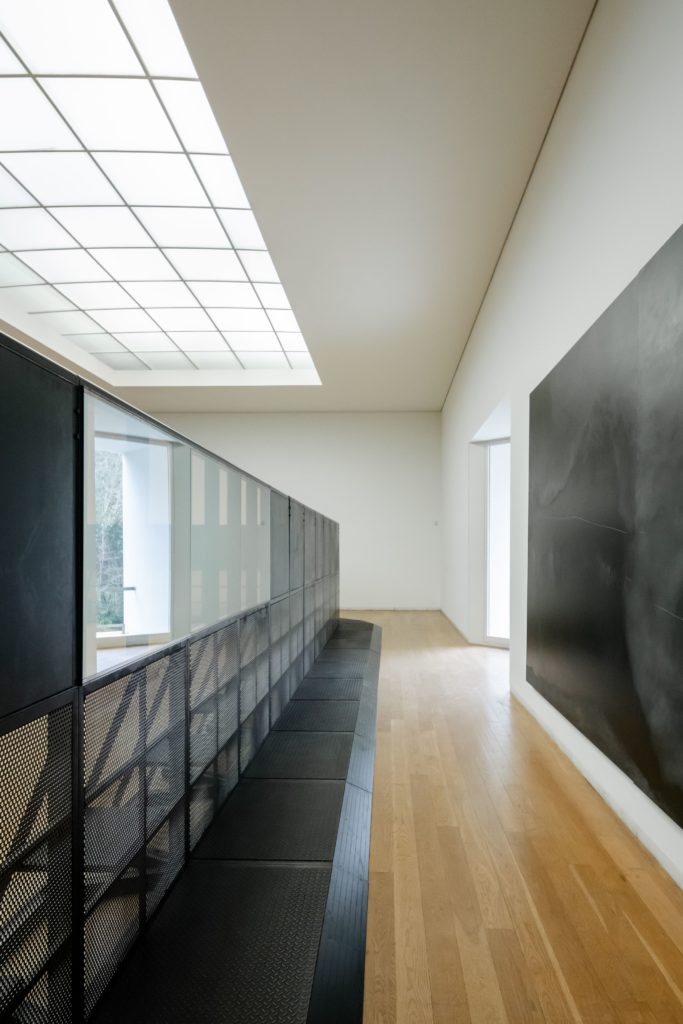
TM: What’s coming to mind for me is this kind of evolution, or maybe even a confrontation, with something you once bristled against. I think most people who saw your early works wouldn’t immediately think of ballet. And yet, somehow, it feels inevitable that you’d want to engage with something so rigorous and classical, something so tied to ideas of beauty. I keep thinking about the installation of Citizen (2025) in Serralves Museum of Contemporary Art. It’s particularly powerful. It’s not easy to translate the experience of DOOM into an exhibition format, and I thought it was really smart to treat it as a completely different work, rather than a document. I thought it was a wonderful way to eschew traditional performance documentation. There’s always that question with performance: How do you convey it later, or do you even try to? Can you talk about that? How do you think about that shift, creating a live performance versus translating it into an exhibition like “Fun ist ein Stahlbad”?
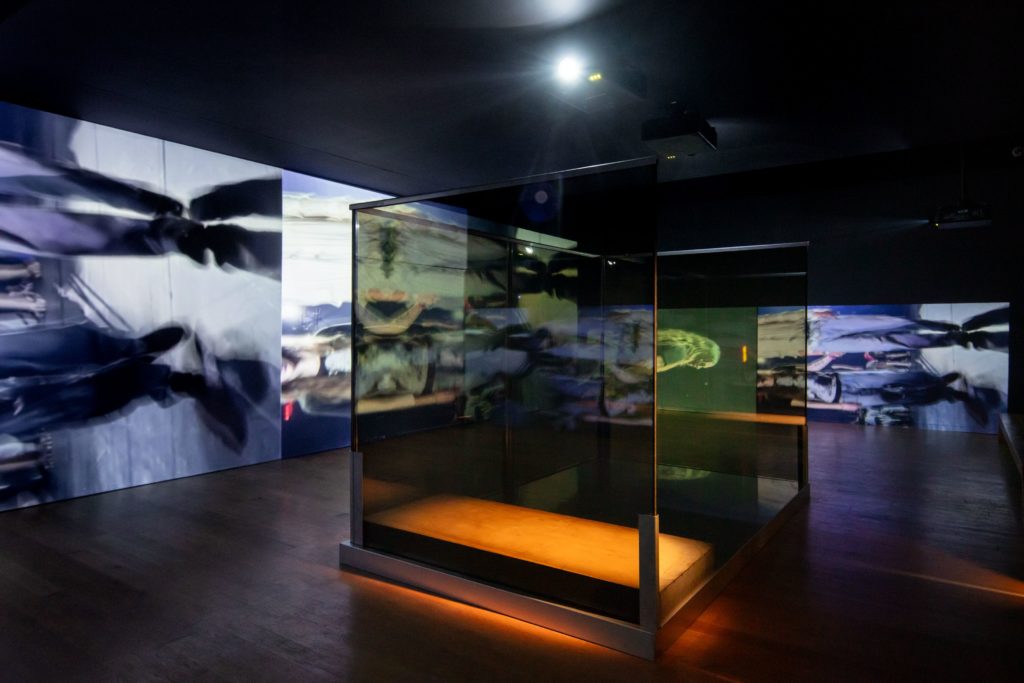
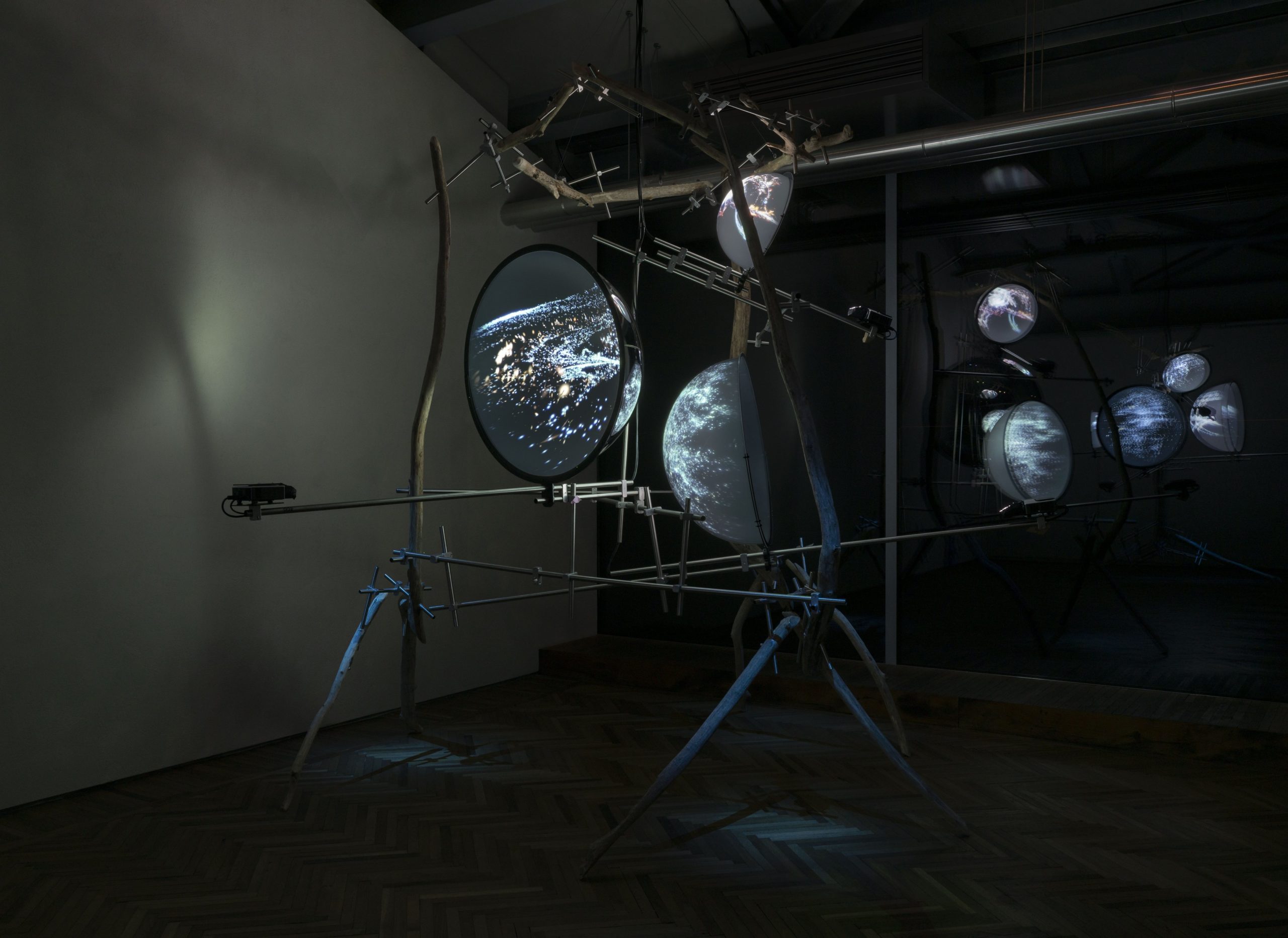
AI: Citizen is made from material filmed by a performer in the piece. The performer filmed from her iPhone to be live streamed on the jumbotron. She followed characters through the piece, even to the backstage that functioned simultaneously as their private spaces. These moments appeared intimate and introverted, showing their inner dialogues and thoughts. She filmed, for example, Xavier Days doing a flexn solo over four nights in one of the locker rooms in the back. In Citizen, it’s presented as a four-channel video, with each channel showing a different night. You see Xavier making the same movement with small variations. At first glance it could be four camera perspectives, but it’s not, it’s four different evenings, four different performances. He’s so exact because of his memory and his muscle memory, even though it’s not scored.
TM: There’s almost this POV camera-like aspect to it, which I find strong. And then there’s this almost breaking of the discipline of dance itself. You think you’re watching one dancer repeat the same movement from four different perspectives, but in reality it’s four different nights. He’s so exacting with his body, so precise in his muscle memory, that the distinction disappears. And it may not matter whether the viewer knows that consciously, but it feels baked into the piece. Am I reading that correctly?
AI: DOOM was partly created through live direction and exchange. With Xavier, for example, I texted him during a performance to ask whether we could try inserting his solo into a moment that had just opened up. I just asked him: Hey, do you want to try the solo spontaneously and you take the stage right now? He’s experienced in responding to that kind of situation, and it worked, not because it was planned, but because it was tested in real time. That kind of responsiveness was central to the piece. It wasn’t about me controlling everything, but about shaping the work together, in front of the audience. That approach continues in the exhibition, even though the materials are different. I still work until the very last moment.
TM: Which I documented! [laughs]
AI: It was so beautiful for me that you witnessed this moment because it’s not easy… A lot of things are intuitive, and although my intuition never fails me, it’s not always right. Sometimes I make the last step and it’s one too many. But that’s what it is.
TM: That’s part of the practice. I get the sense from hearing you talk, that that, in and of itself, is the rush. That is what makes the art-making worth it.
AI: It’s urgency.
TM: Right? It creates that urgency, that heightened pulse, like you’re right on the edge of getting to something that is truly exciting, that will reveal itself. That rush feels important.
AI: There has to be a certain moment where it can’t be avoided. That’s the urgency of it. I don’t know if you have that too.
TM: I do too, in a different way. I’m certainly always tinkering to the last minute. Cropping or re-cropping a photo, playing with it’s scale as well. Once I decide on a scale for a photograph, that’s the scale in which that work will always be presented so it’s quite a weighty decision. There’s also the making of the photographs in which I’m trying to find a special moment that negotiates the tension of embracing certain cliches whilst also avoiding them. Moments that are between staged and found. This is particularly crucial when navigating representational photography and Blackness as the viewer brings their own loaded baggage to such images.
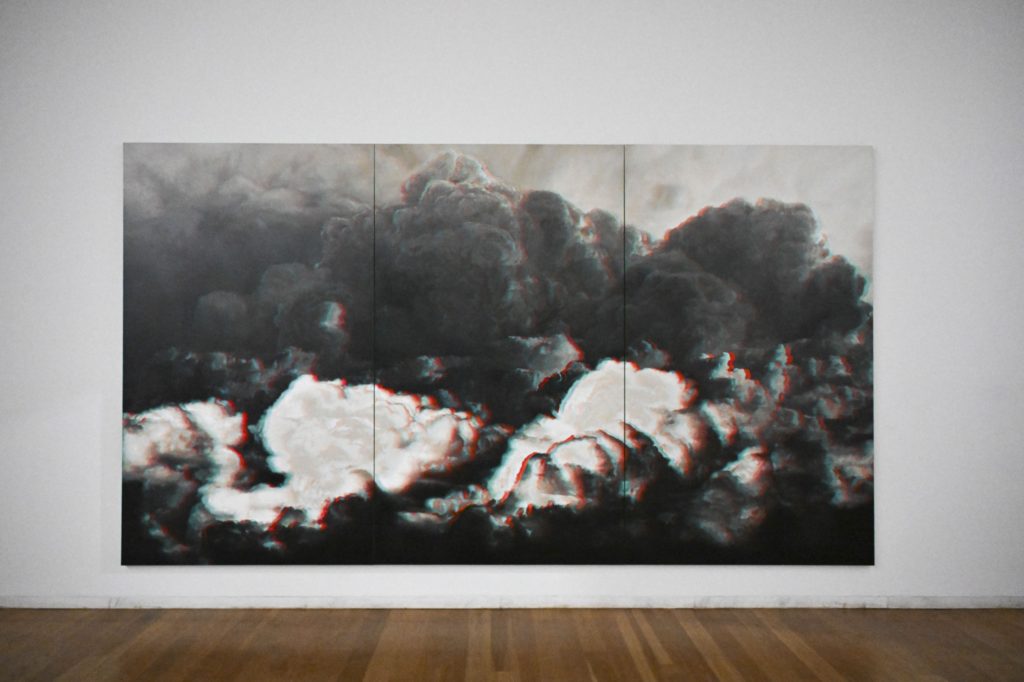
AI: I think you’re a master in navigating that tension very precisely. What I want to add is that with flexn and ballet, the storytelling of each discipline is always present, whether I intend it or not. The story isn’t something I impose. It comes from the performer. It’s their body, their history, their way of moving that carries meaning.In ballet, the story is very clear and codified… It’s often the same story being repeated. With flexn, the story feels more open, more porous, more shaped by lived experience. Placing these two next to each other allows something to crack open. I don’t know if I’ve fully succeeded in doing that, but I feel that the question of storytelling has become more urgent for me through this process.
TM: What’s the archetype of story you’re trying to tell? You took on something as loaded as Romeo and Juliet, and I want to hold that thought as I bring it to “Fun ist ein Stahlbad.” When I walked into your show at Serralves… first of all, what an incredible museum… I was genuinely floored. The way you used the building was so thoughtful. I really have to give you credit. I think this was another one of those jaw-on-the-floor moments. As an artist, it was deeply inspiring to encounter a practice so different from my own and still walk away thinking about how to carry what I felt back into my work. So I want to start at the beginning as well with the Serralves show. How did you arrive at the ideas that became the show? How did the conversation develop, especially with the curator Inês Grosso, who seems brilliant? What were the core questions you were working with, and what did you want the viewer to leave with, even before the reveal of the pool?
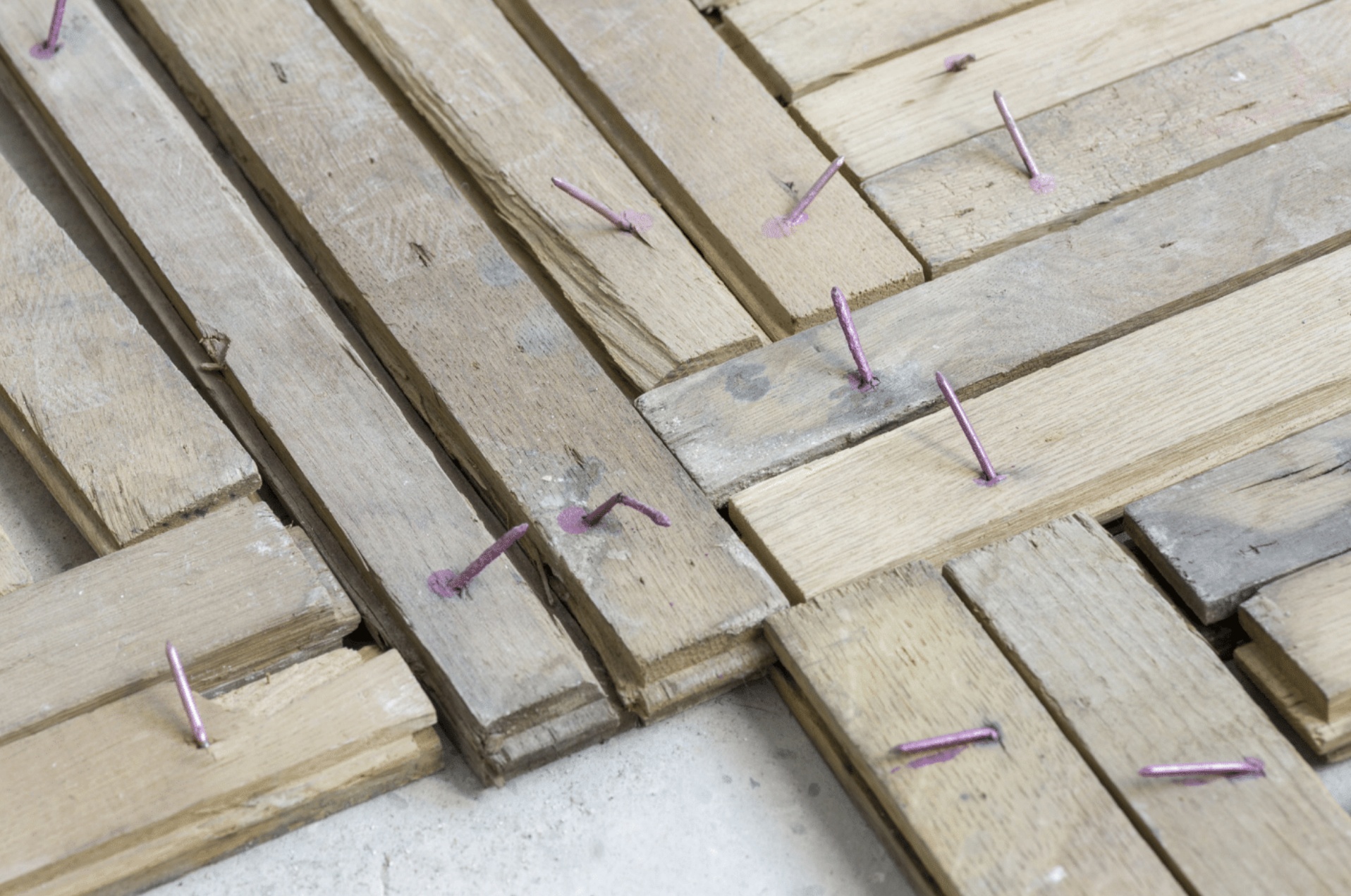
AI: I wanted to focus on the found object and the ready-made, but transforming it into something that is produced, that I form and shape as an object that comes close to the original, but is uncannily deviant from it. So the crowd barrier sculptures, for example, in previous exhibitions were spread throughout the whole space, almost formless. In Serralves Museum I wanted to put them into one sculptural form. So I built Arena (2025), a ring that is enclosed where you can’t enter. I wanted to make this one sculptural gesture, and that allowed me to leave the room with the walls almost free. I wanted to have the building correspond with the sculpture. Same with Tower (2025), of course the tower is a diving platform. It’s inspired by the diving board that is still in the former exclusion zone in Chernobyl where the disaster happened in ’86.
TM: Which I’m so fascinated with, by the way.
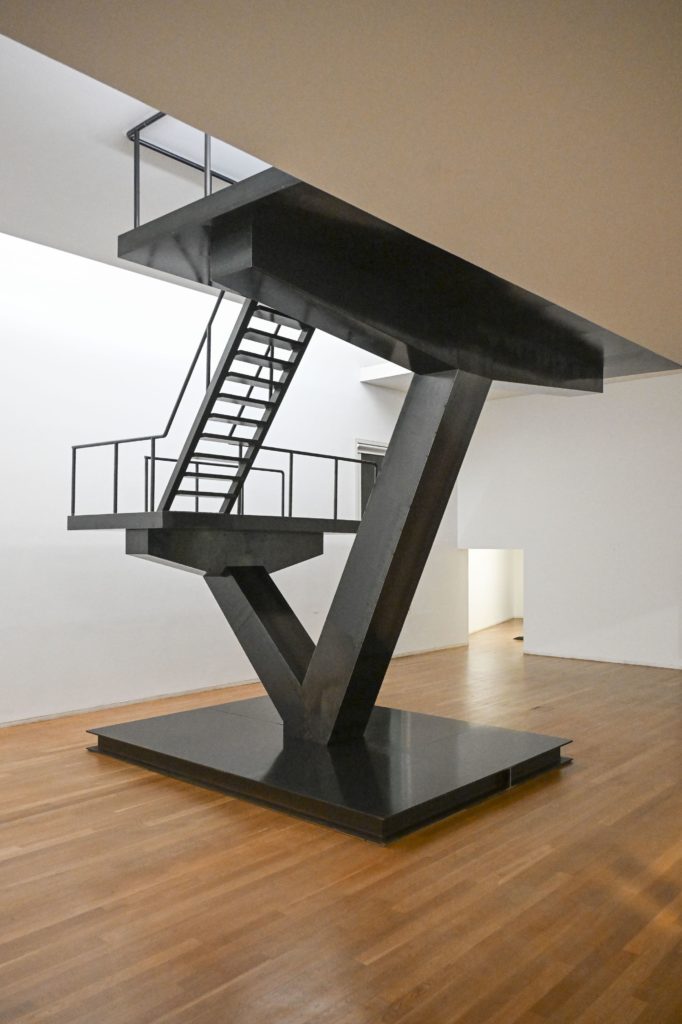
AI: Me too. I worked with it for a video piece called Youth that I made. In the work, horses basically run freely through urban landscapes as a herd. It’s basically a utopian moment in a complete dystopia.
TM: Seeing the diving board in your show, I immediately felt this tension between utopia and dystopia. And it hit something personal for me. About ten years ago, I actually made a video of myself at the pool of the private school I attended in Atlanta. I didn’t go to the public school I was zoned for; instead, my parents put me in a predominantly white Christian private school. The kind you can probably picture. It had an enormous Olympic-size pool. I was maybe one of ten or so Black kids in my class, and suddenly I’m expected to perform well in swimming class. It carried a racial charge that was impossible to ignore.Years later, I went back and filmed myself climbing the diving board. It became this metaphor for so many things… preparation, risk, stages of life, expectation. The act of standing there, about to jump, held all of that.
AI: Also the height from the floor. What if there is no water? There is this idea of death in there too.
TM: Totally. And it was right there in the piece. I follow the feet slowly up the stairs to this very high diving board. It felt almost like your sculpture. I think that’s why it moved me so viscerally when I first saw your rendering of it in your studio. And then, when I came to document the show, I was struck again by all those associations to the fear of swimming. The question of whether there’s even water below, the height, the uncertainty of landing. I found myself thinking about all of that while looking at the piece. And so I just want to say it hit something very deep for me.
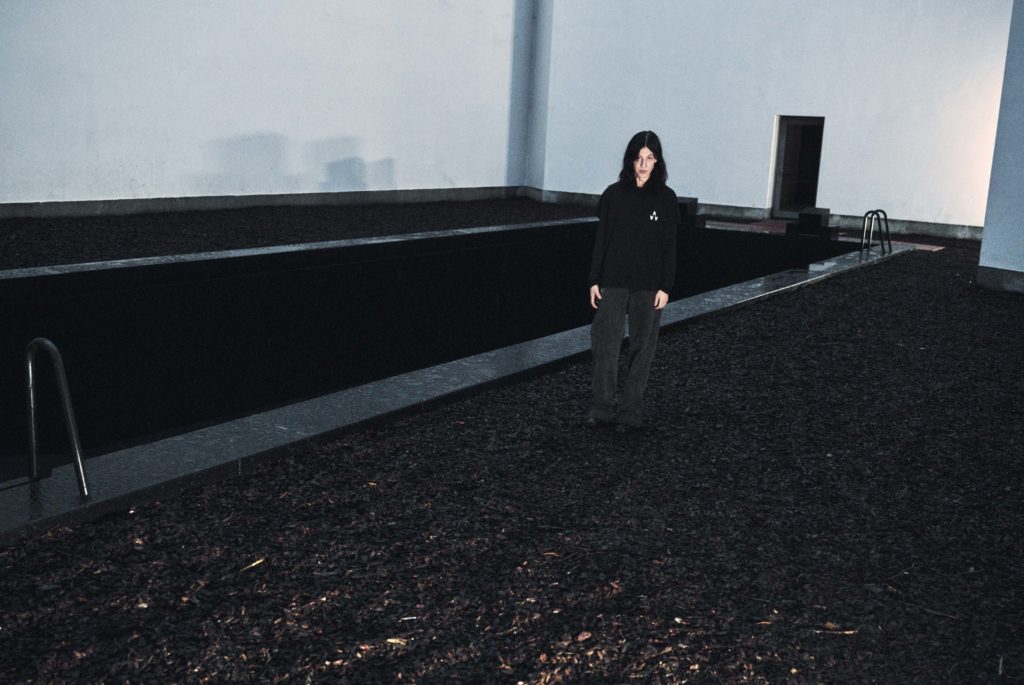
AI: In a way, it is also about how the body is perceived in this moment, singled out among other bodies. When you’re on top of a diving board and people are looking at you, there is an expectation that’s created, right? Will they jump? There’s also a lot about the body in relation to others. How is my body different? How do I relate? What does it mean? Everybody leaves their clothes in the locker rooms and then they go out. For me, there’s a lot of depth in there, just in my body memory and what it did to me. That has to do with being queer, being in that environment, and having to fulfill a certain expectation of grace, of speed, of all these things, just to be able to swim, right?
TM: Even how you land in the water, what kind of splash you make. Everyone will judge you! [laughs] If I back-flop and it’s this massive splash, are people already laughing by the time I come up for air? These are all real questions.
AI: I had swimming lessons at the swimming pool in the little town I grew up in. There was this competition, and all the parents came and watched from the bleachers. I didn’t understand that the competition was about speed. I thought it was about diving. And so I jumped in, and dived as deep as I could, all the way to the bottom. I thought I won. Then I came up and everybody was racing. I was so embarrassed. I don’t know how I could have missed it or if I missed it on purpose, because I knew I wouldn’t have been able to win. I didn’t have the means to compete with the others. I don’t know if there is something in the sculpture that has to do with the challenge of comparison, competing and what the water holds.
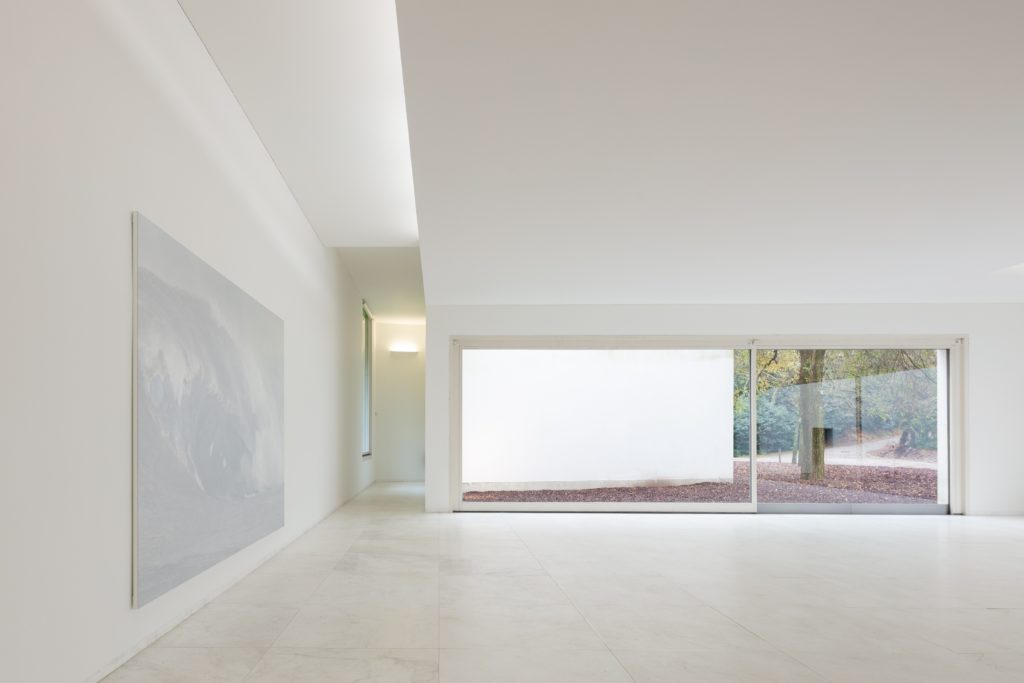
TM: I think there are moments in all of our lives where we suddenly become so hyper aware of our bodies and our differences. As a kid especially, you just want to fit in. So when something exposes that difference, you carry that so deeply in your muscle memory. It shapes who you are, how you relate to everything else later in life. And I can feel all that in your work.The other thing I keep coming back to is this idea that anyone standing on a diving board instantly becomes this object of public spectacle. There’s something unavoidable about that image. It makes me think about you, the artist, standing in that position. Do you see any of that metaphor in the work? Is there something in the show that reflects your own journey as a very public-facing artist, or do you resist that reading?
AI: It’s interesting that you say that, because I think you’re right… even though I wasn’t consciously thinking about it while making the work. If we stay with the image of standing on a diving board, with everyone watching, some want you to fail, others want you to succeed, that’s what visibility does. It creates an intense vulnerability. You make yourself visible, and with that comes both recognition and the risk of being attacked. That feels very present in our culture right now. There’s a Kafka text I often think about, The Great Swimmer (1920). A figure returns home after winning a world record in swimming, and during the celebration they have to give a speech and say: I don’t understand your language. I can’t even swim. There must be some mix up. For me, the place where work really comes from is vulnerability, moments of pain or clarity, when things suddenly come into sharp focus. My career unfolded very quickly, especially around Faust and DOOM, and there was a sense of having to move faster than I could fully process. I’m still catching up to those moments, but now in a much more visible position.That visibility allows people to see you as a figure rather than as a person, and it invites a lot of projection. I wanted to ask you about working across different fields. Photography carries questions of representation very directly. Thinking about your recent work, especially Superfine: Tailoring Black Style (2025), those images hold an enormous historical and cultural weight. They matter deeply, and they reshape how visual memory is carried forward. It connects to what we talked about earlier, how images shape a kind of collective muscle memory. You’re working in a space where art and fashion are inseparable. I’m curious how you experience that position, the responsibility, the freedom, and the visibility within it.
TM: If there’s any part of the conversation I hope people remember, it’s this. That’s exactly what I saw in that diving board: that spectacle and the vulnerability of stepping into view. I relate to the acceleration you describe. Visibility has a way of turning you into a symbol faster than you can understand what’s happening. But underneath that, of course, I’m still only human. Still catching up.
AI: It’s still you doing this work, and that matters. The work carries real meaning for many people who look to you and see you as someone able to hold this moment and make it accessible. That book holds so much historically, culturally, emotionally, but it’s also about your eye, and how you see something like dandyism as an expression of difference and otherness. To insist on that difference, and to make it visible, to make a book about it feels especially important right now.
TM: When I got the call about participating in that catalogue and exhibition, I knew right away it mattered. It’s absolutely connected to the question of being a public figure. Dandyism is already about the performance of the self in public, especially against dominant codes of dress. Those turning points in my career have often required me to step up, represent myself, and accept a certain vulnerability in the work. And how does an artist deal with that? You sort of simply get on with the work. You stay with it.
AI: What stayed with me was how much knowledge is held in those images, in the garments, but also in how they’re worn. There’s exaggeration, but also withholding. That tension carries responsibility, and it matters when those images circulate.
TM: Photography is often all we have left of those performances… They have to be connected somehow! That’s the burden of the photograph! [laughs]
AI: This connects to representation and responsibility, and to the way memory is shaped, very differently from an algorithm. That brings me back to fashion. There’s often a double standard, where fashion or commercial work is seen as reducing art, while the art world claims a higher moral ground. I’m interested in how that speaks to you, and whether working with fashion allows you to claim things that aren’t always possible within art alone.
TM: This is a conversation we’re both probably tired of, but it’s one we have to have, because we work in it. These are the modes that actually shape culture. Our work moves into the world in ways the art world claims to value, but often doesn’t fully facilitate.
AI: Don’t you think it’s porous? I never really felt the danger was about diminishing value. The monetary stream isn’t clear anymore, it’s very much the same field, and the distinction is often just upheld symbolically.
TM: It depends on what people want their image to be. For me, photography is where some of the radical innovation has happened through fashion. The white cube was far from my reality growing up in Atlanta. I was never taught how to negotiate in or relate to those spaces. I’m not interested in subduing one side of myself in favor of the other. I am both. Each offers a different way of accessing culture.At the end of the day, I see myself as someone who bears witness.
AI: I’m excited by what art can do, even though we can’t control what happens because of it. I can only stay with what feels right. The distinction between art and fashion often comes back to a fear of complicity with capitalism.
TM: That’s very real. Why would we silo these things if the people who witness our work don’t? That feels like the right note to end on.Is there any misconception you’d like to clear up?
AI: I don’t really believe in misconceptions. But it can hurt when people project things onto you.
TM: How to accept when someone sees something in you that you don’t recognize in yourself?
AI: Same question to you.
TM: People often assume I’m European. I always tell them I’m from Atlanta, Georgia, and they go you are?! Maybe it’s my hair or the way I dress. It says a lot about what people expect certain aesthetics to belong to.
AI: Maybe the misconception about me is that I’m a cynic, that I work with irony… but I’m very sincere. I’m not emptying things out. I’m very serious about the romance.
TM: I see that sincerity in the work.
AI: I couldn’t be further away from cynicism.
TM: The final question: Is there a dream project you’re excited about?
AI: I think I want to make something very small. Like a duet.
TM: That feels like a beautiful note to end on.
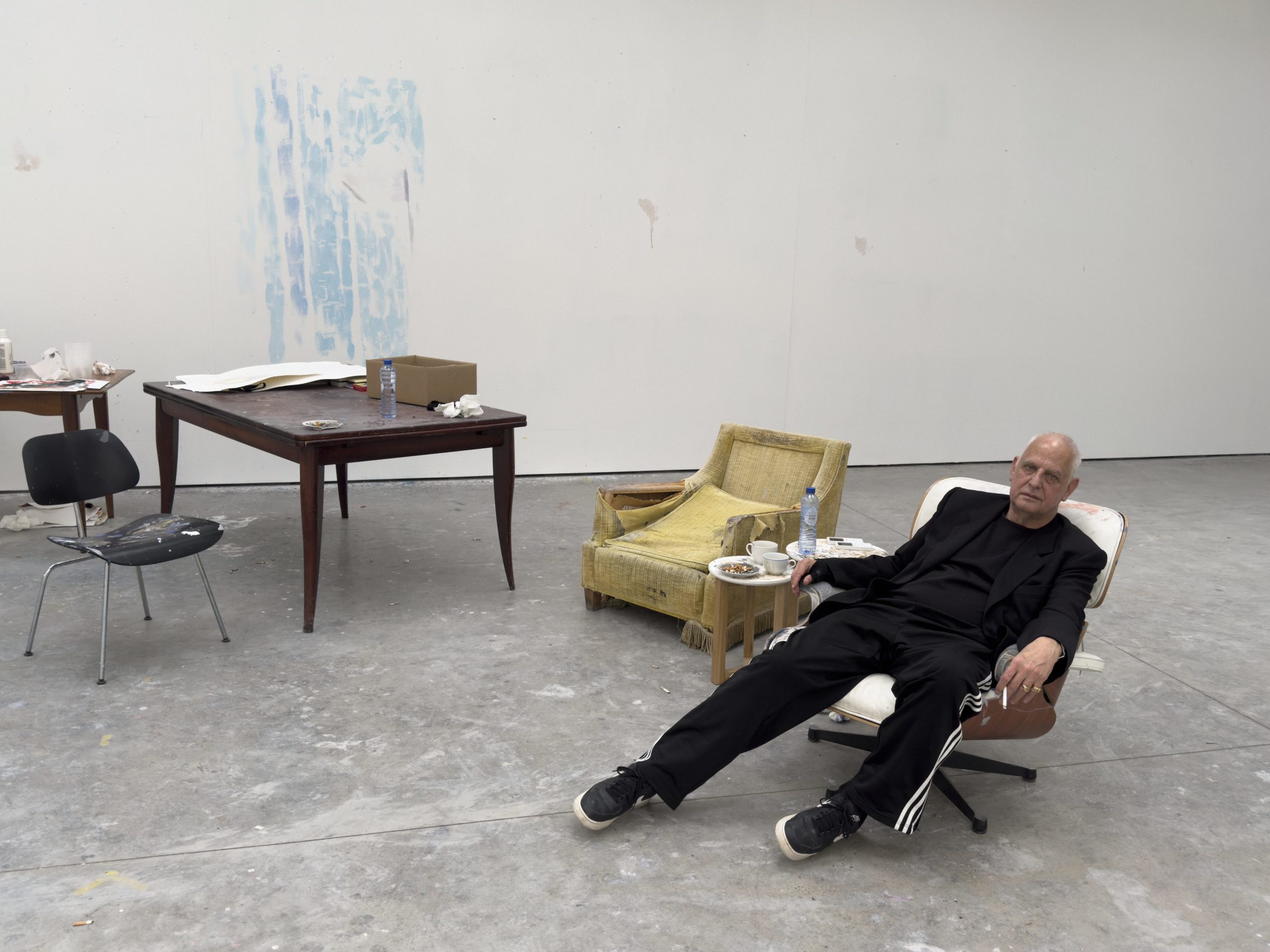
Portraits courtesy of Tyler Mitchell.
“Fun ist ein Stahlbad,” on view from December 2025 to April 2026, was organized and produced by the Serralves Museum of Contemporary Art in collaboration with Anne Imhof, and curated by Inês Grosso, the museum’s Chief Curator, with Exhibition and Installation Design by Andrea Faraguna. The photo session between Anne and Tyler took place during the installation of the exhibition.
Conversation Concept and Editorial Development by Estella Sirotta.