As I arrive in Basel’s old town, on my way to Maja Ruznic’s solo exhibition “Who Tastes Fire and Cannot Speak” at Contemporary Fine Arts Gallery, I’m stopped by an unexpected sight: some thirty-odd men, young and old, dressed in full traditional Alpine attire, seated at a long table outside a restaurant, each facing a pint of beer, singing softly together. The heatwave currently pushing the city to record highs makes me momentarily question what I’m seeing. Each man delicately slips between chest and head voice as arpeggios dissolved into one another, never quite beginning, never quite ending. It was less like a group chanting than light refracting through moving water. Pulled out of my harmony-induced trance, I realize I’ve stumbled upon the 32nd Jodlerfest, the Swiss festival that brings thousands of yodelers, alphorn blowers and flag throwers into the city’s winding streets — an event Basel hasn’t hosted since 1924.
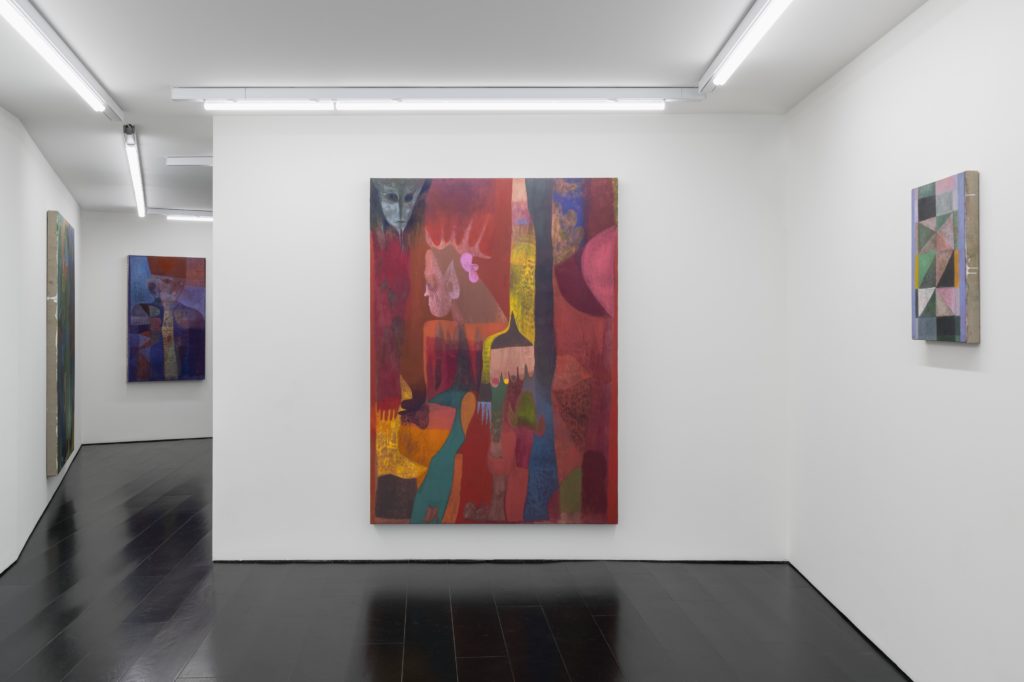
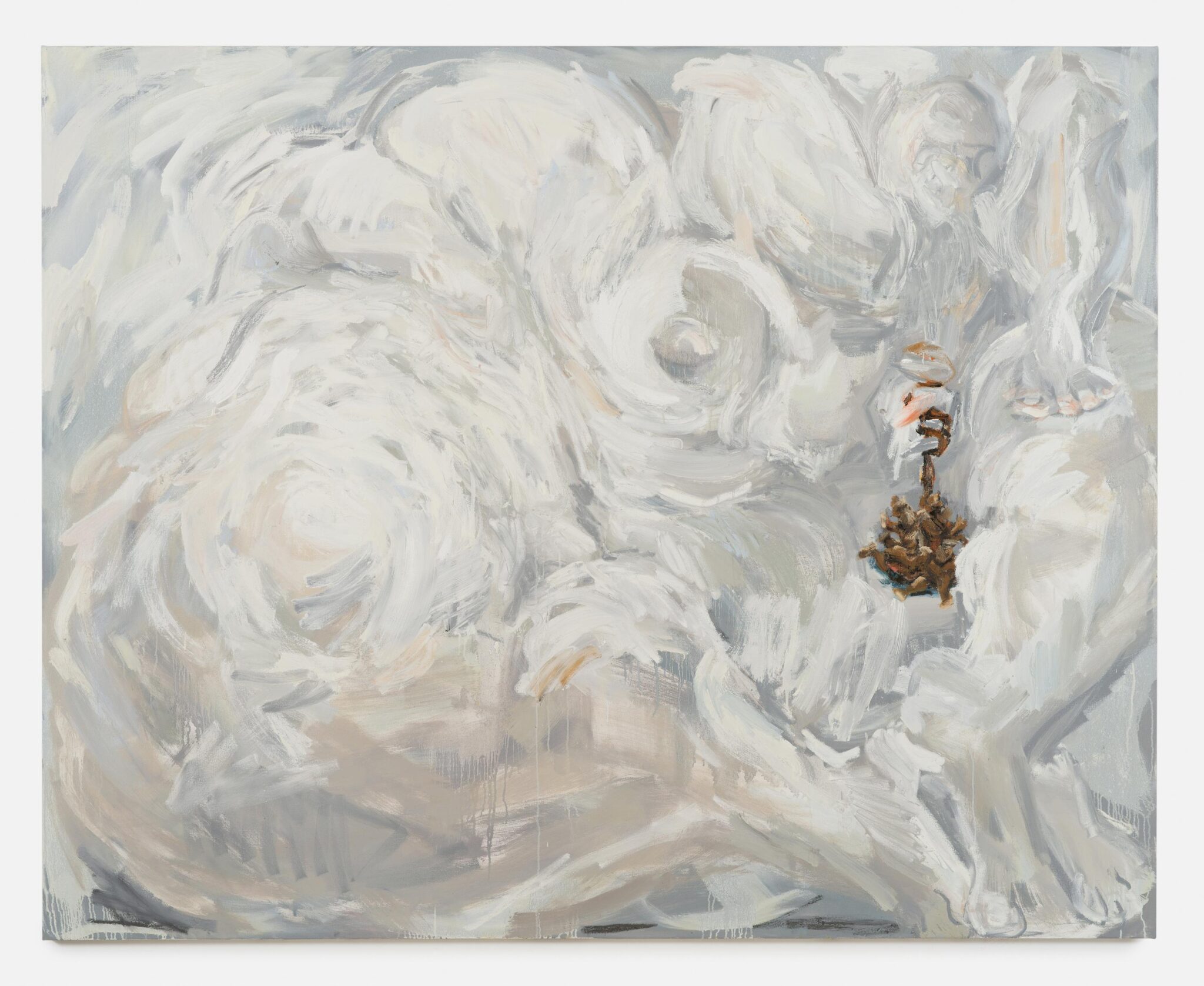
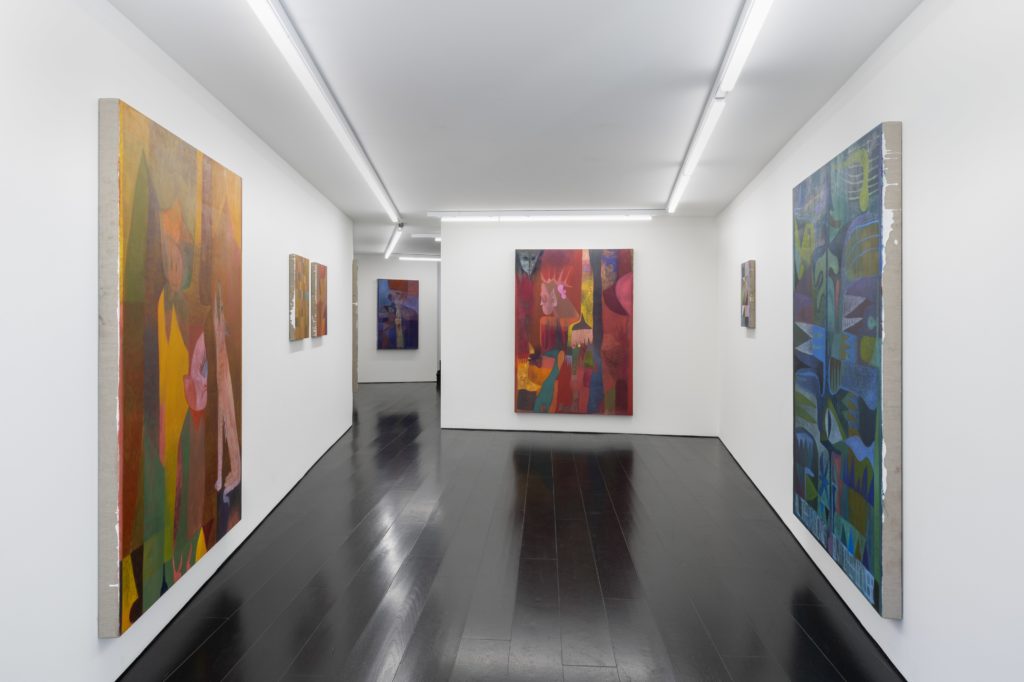
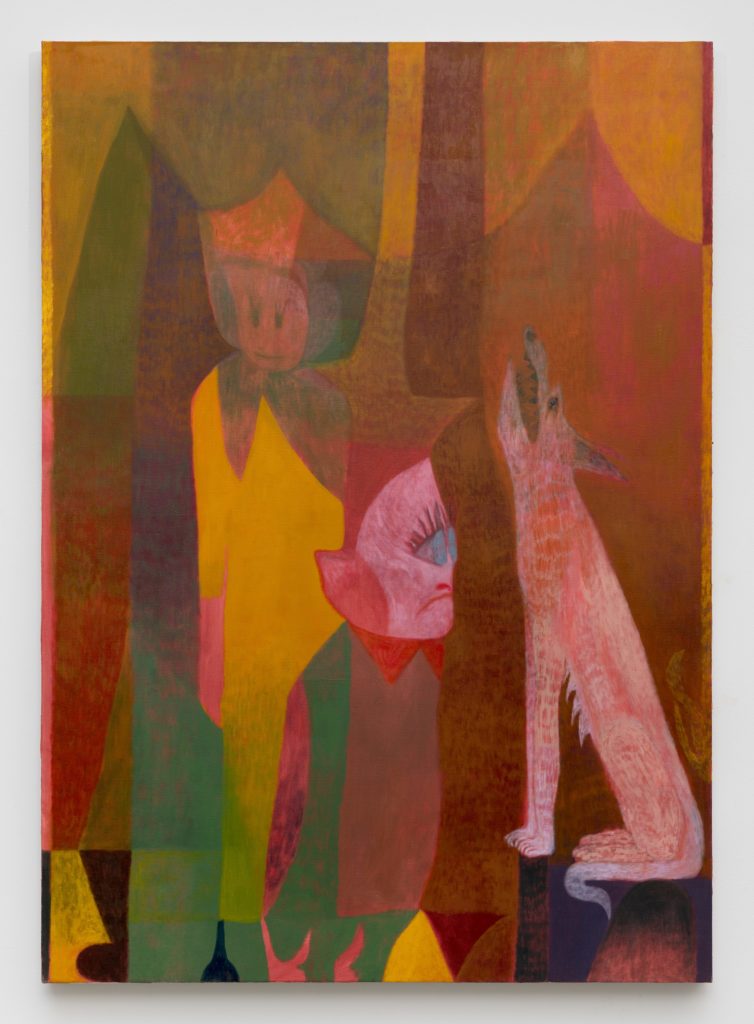
Upon reaching my destination, ten medium-to-small oil paintings, freshly made by Ruznic, await me. Most of the figures are rendered through what feels like an intentionally meandering brush, shapes superimposed with an improvisational attitude that leaves the canvas at once flat and compressed. Human and animal-like forms hint at each other rather than resolve, bleeding together instead of standing apart, slipping endlessly between background and foreground. The effect is heightened by thin paint applied in rough, blotchy, repetitive strokes. Brushwork that suggests restless movement while letting the richly saturated pigment show through in layers with an intensity no reproduction can really capture.
With more yodeling drifting in from outside, I find myself circling an old artists’ reckoning: music seems to possess an ancestral capacity to move us more immediately than the visual arts, especially in forms that don’t lean on the technological polish our eyes and ears now expect. In the endless contest among media for sensual superiority, we demand far more of painting than we do of music, which appears to render the cavernous depths of feeling with an almost effortless precision, whereas visual art, however accomplished, seems forever to fall just short of that immediacy. We don’t feel we’re “reading” music the way we feel we’re reading a painting — even though music’s directness is arguably no more innate than painting’s (being a set of conventions and listening habits absorbed so completely they now pass for nature). If music’s advantage is that it doesn’t represent, then painters chasing that same immediacy have historically stripped representation away too — abstraction as the visual arts’ answer to the same ache, often built within philosophical systems that gave artists color theories, geometries, and cosmologies to work from.
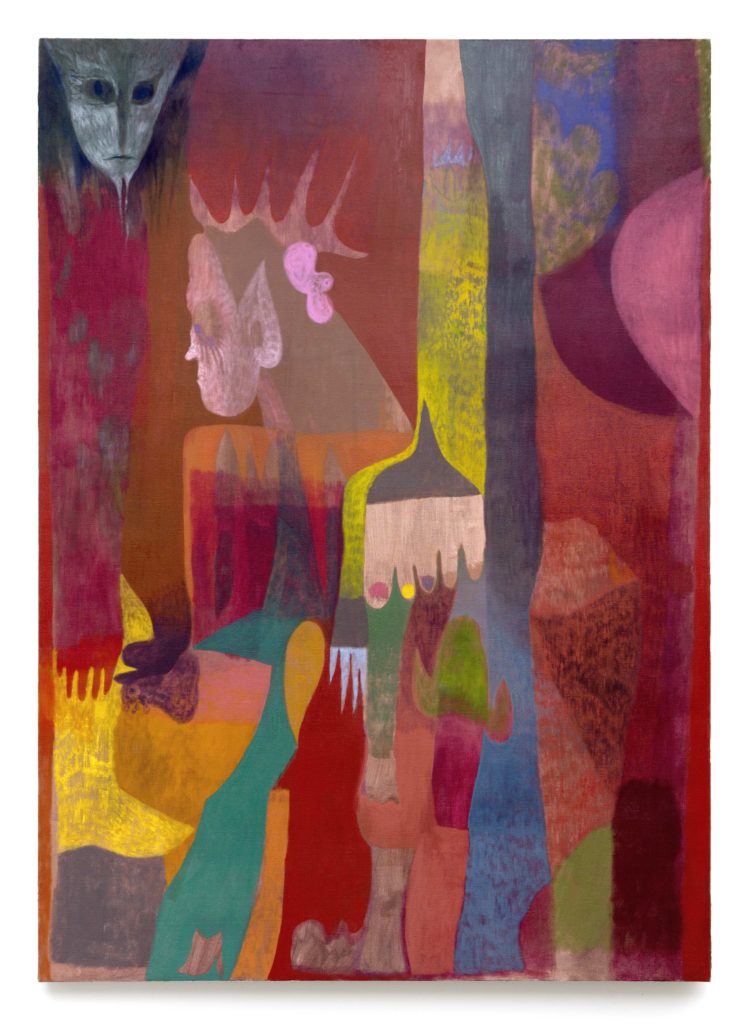
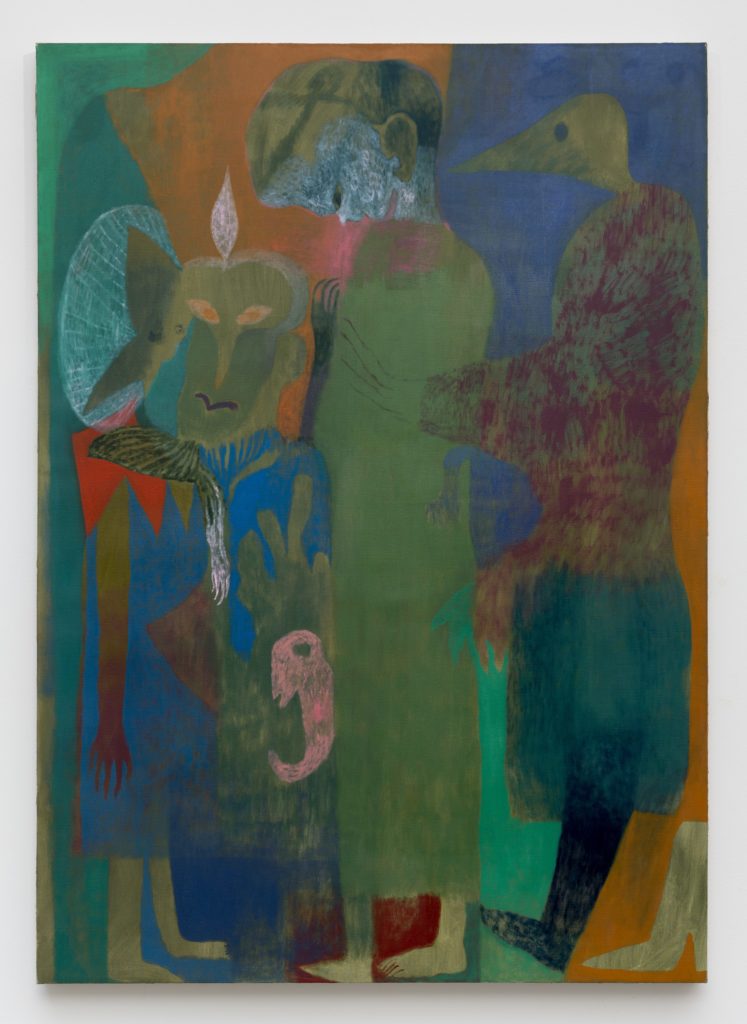
Ruznic’s own route is psychological, closer to séance than to doctrine. Her figures surface unbidden, three-quarters formed, arriving from a childhood in wartime Bosnia spoken of obliquely, filtered through a long-standing interest in Jungian analysis and the idea that painting can function as a kind of active imagination, a place where the unconscious is allowed to draw itself.
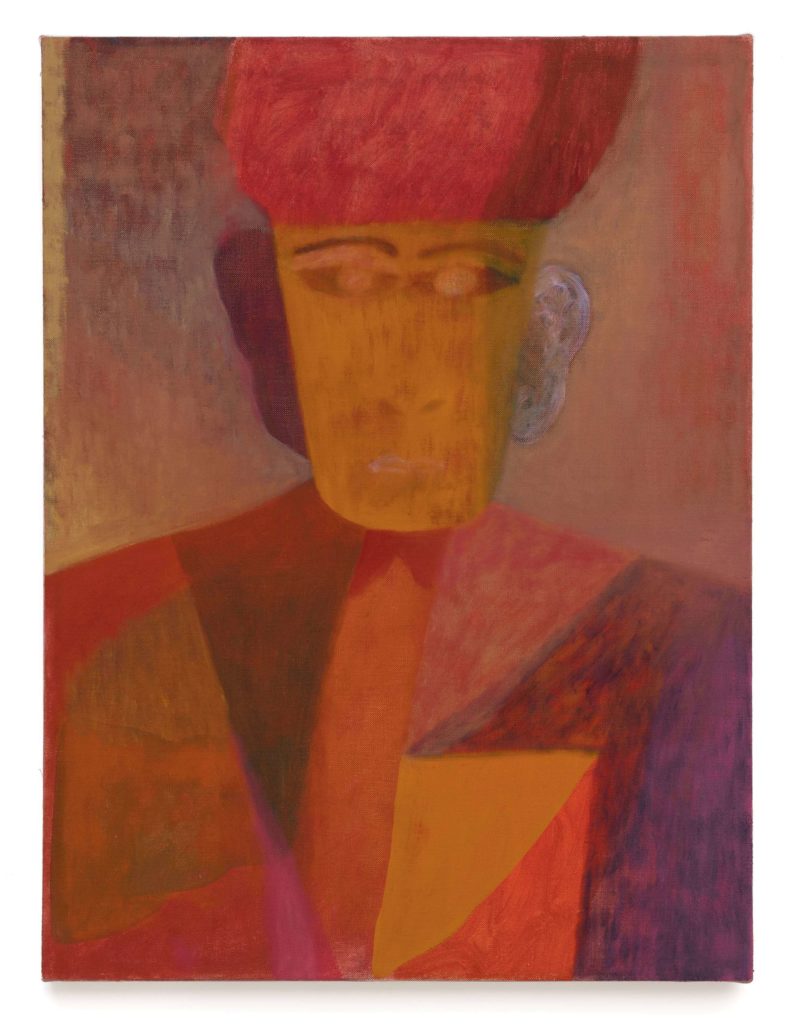
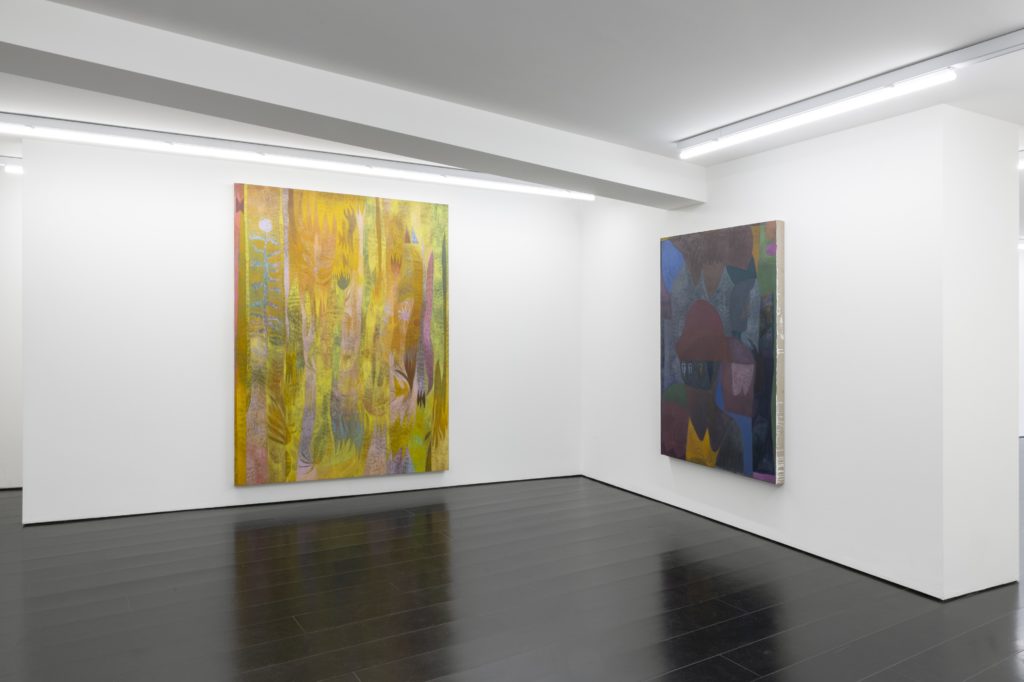
There’s no cosmology behind these canvases, no fixed vocabulary of color or geometry to decode; instead there is a trust in the hand’s own drift, in staining and wiping and reworking until a face (or the ghost of one) seems to arrive on its own terms. Perhaps that’s why the work resists settling into either representation or abstraction: it isn’t chasing music’s directness through a system, but through something more like listening — waiting for an image the way one might wait for a melody to resolve, knowing it might not. Like the yodeling outside still refusing to quite begin or end, Ruznic’s figures are doing much the same in paint: hovering in the half-sung, half-said.