I traveled to Glasgow to see an artwork I’d already spent years looking at: a 1991 self-portrait of David Wojnarowicz, face emerging from the earth, eyes closed, lips pursed over uneven teeth. It anchors a major retrospective at this year’s Glasgow International, the Scottish art biennial that scatters contemporary art across the city. Far from the spectacle of the perennial fixtures on the art-world’s calendar (no gondolas, no Björk), Glasgow International feels refreshingly unperformed. I had never visited Glasgow before. My introduction was a few days spent naively riding the Clockwork Orange, cursing no-show buses, and slowly learning the city through pilgrimages to its artistic happenings.
The past year has been difficult for Glasgow’s art ecosystem. In January, the Centre for Contemporary Arts (CCA) announced it was unable to secure a sustainable financial position and would subsequently enter liquidation. Its closure unfolded against a backdrop of deepening cuts to Glasgow Life, the cultural body responsible for ten museums, thirty-two libraries, and a major concert hall in the city. Then, in March, an unattributed fire broke out in a vape shop on Union Street, next to the train station, the effects of which were still felt months later. In my cab to the hotel, the driver was puzzled by my excitement for the art on show, given the city’s recent history. Yet over the following few days, that enthusiasm was quietly vindicated. Amid the closures, cuts, and uncertainty, I was struck anew by art’s stubborn ability to endure.
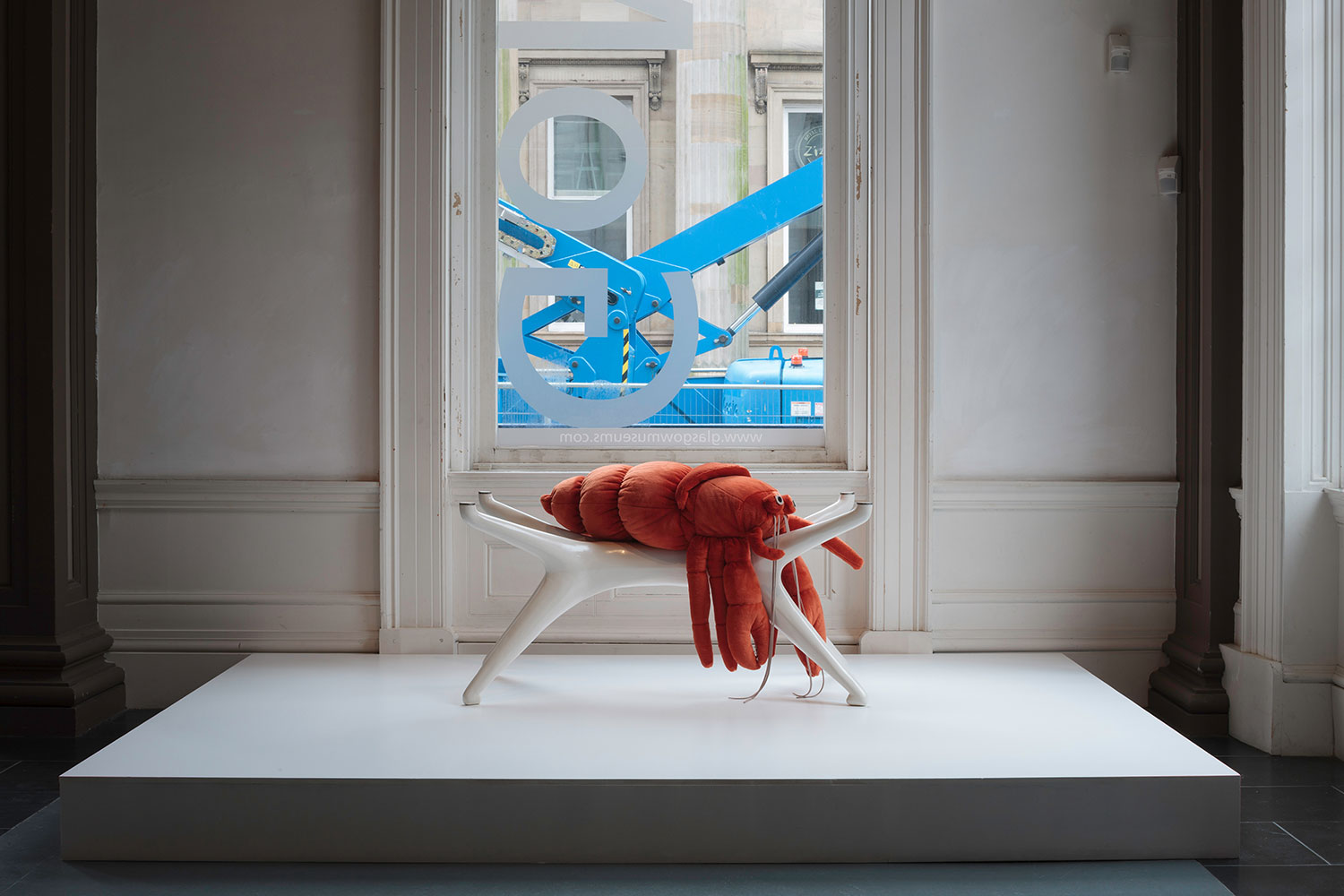
The 11th edition of Glasgow International had no unifying theme or title, as many before it, I’m told. Yet despite this deceptive openness, the coherence of the festival never wavered. Both international and local artists were brought into dialogue, forming a rich chorus of thoughtful and thought-provoking presentations. Highlights included Rehana Zaman’s “Plantation,” a solo exhibition that included a new two-part film work on migrant farm labor in Pakistan and Scotland; and Lisette May Monroe’s “Hard Lines”, a guttural, gossipy installation of heartbreak and betrayal. But two exhibitions struck me most. For they improbably brought downtown New York up north. Greenwich Village by way of Glasgow.
The first, and the reason I made the trip, was “Some Day This Will All Be Crumbling Ruins,” The Modern Institute’s inaugural Wojnarowicz retrospective at its new outpost in a derelict Georgian townhouse. There’s a fitting, albeit imperfect, parallel between the show’s location and its subject. Set on the Clyde’s south bank, it gestures toward the West Side Piers, where New York’s unclaimed, unregulated waterfront drew underground artists to the Hudson’s edge. After Manhattan’s maritime industrial collapse in the 1960s, the waterfront became a site of sexual and artistic exploration, caught between deindustrialization and redevelopment. Wojnarowicz was a regular, cruising the piers and tagging the walls with his distinct visual language. By the 1980s, they’d become an informal art museum: “It was the best museum in town,” says a voice in Andreas Sterzing’s 1983 film on the ground floor. The derelict Scottish house (most recently a strip club, empty for fifteen years) provides a poignant frame that evokes Foucault’s notion of heterotopia: a real space that temporarily holds incompatible conditions together, much like the piers themselves. Come September it will undergo redevelopment to become the gallery’s permanent site, making this installation notably transient.
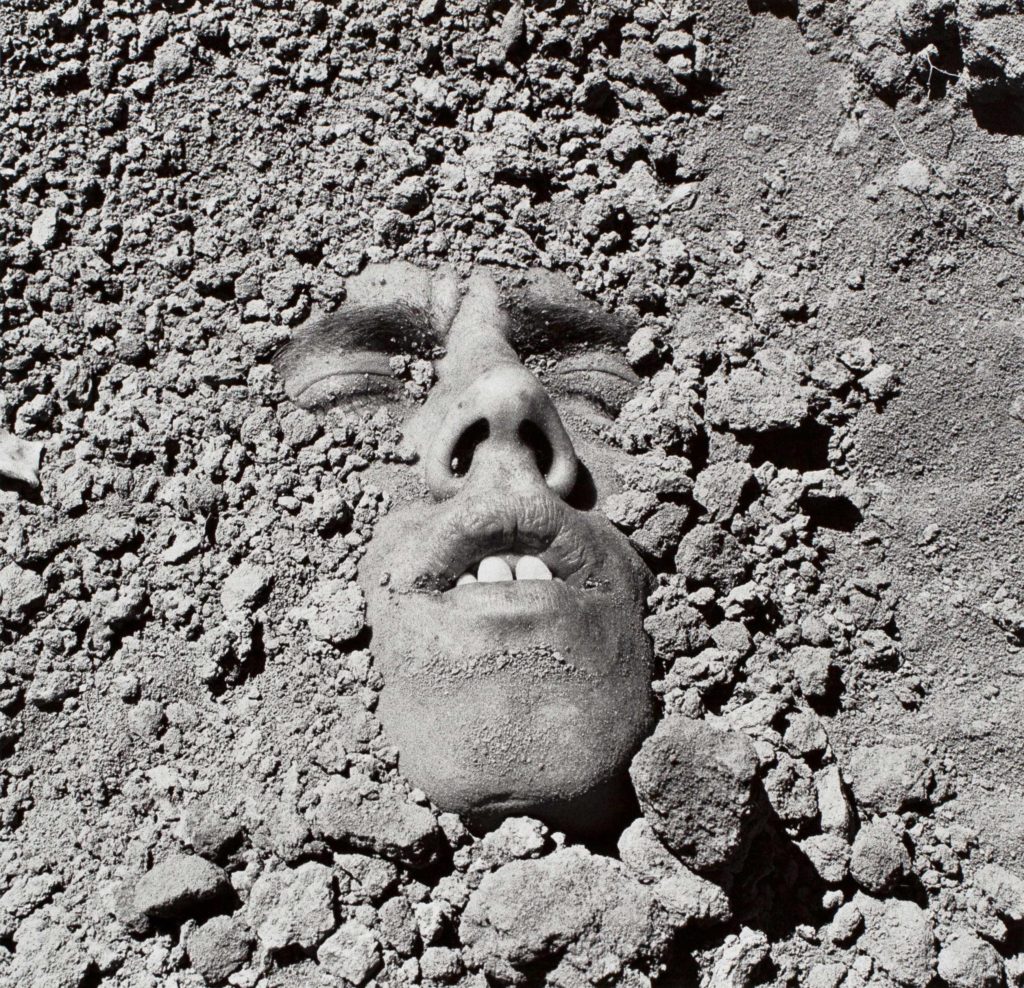
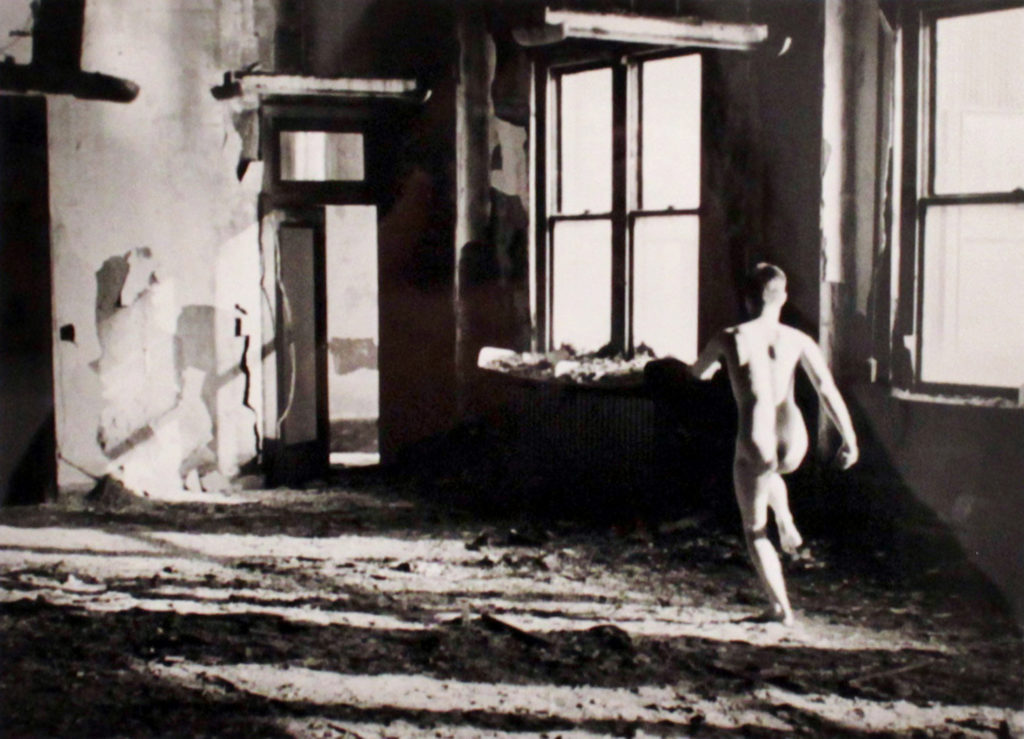
The exhibition itself is nonlinear, spread across four floors. As you enter, Wojnarowicz’s sandy portrait welcomes you in. Nearby, vitrines hold ephemera — Polaroids, press releases, postcards, snapshots from the piers — that introduce the rage and beauty of an iconoclast whose practice defied categorization. Spanning poetry, sculpture, collage, photography, painting, and film, the exhibition offers a rich introduction without overwhelming. The exhibition leaves us at the threshold of his world: from “The Sex Series” (1988–89), its landscape punctured with pornographic peepholes, to a recreation of his “Friendly Cow” (1983) mural from Pier 34 in the townhouse basement.
The top floor turns acutely to Wojnarowicz’s relationship with Peter Hujar. Twenty years apart in age, they met in 1980 and went on to develop an indescribable bond. At crowded gatherings they signaled to each other with two fingers held up behind the head, like rabbit ears. It was Hujar who urged him toward visual art and left him his camera after he died. Following Hujar’s death, Wojnarowicz took exactly twenty-three photographs, describing the body before him as “this body of my friend, this body of my brother, my father, my emotional link to the world.” Three of these images are on display. Hujar died of AIDS in November of 1987; Wojnarowicz tested positive the following spring. Above the photographs, fragments of an unfinished film for Hujar play through the ceiling, visible only through gaps in the floorboards. Catching them feels, uncannily, like looking through the piers themselves.
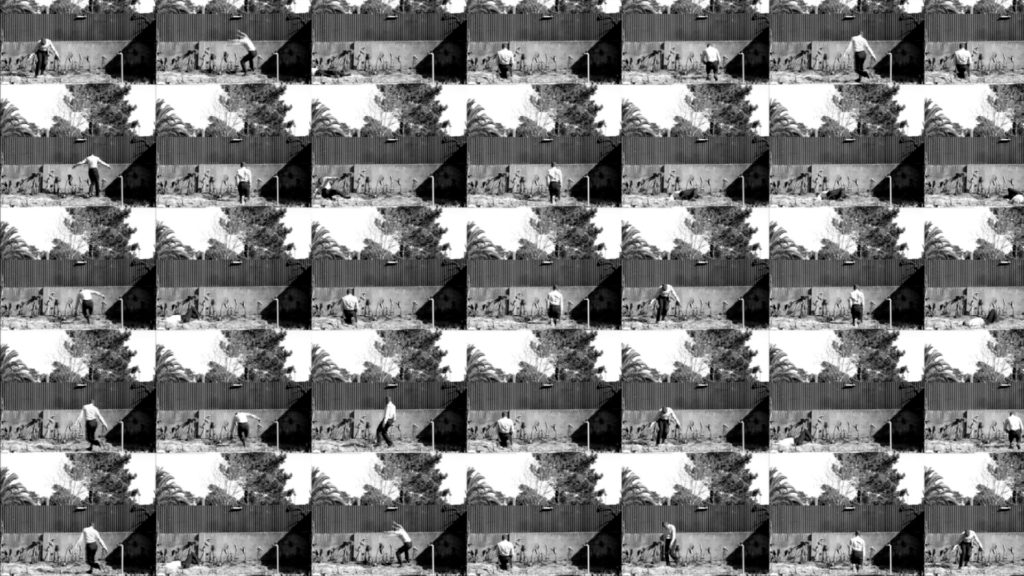
The second exhibition, “I only have apple juice…,” curated by John Douglas Millar and France-Lise McGurn, was held in a gorgeous coach house across the city. Described as “an errant exhibition about the errant part of an artist’s work […] the bits made with and for intimate others. The rich pickings,” the show included Vince Aletti, Paul Becker, Phil Collins, Moyra Davey, Patrick McAlindon, France-Lise McGurn, Gary Schneider, and Peter Hujar.
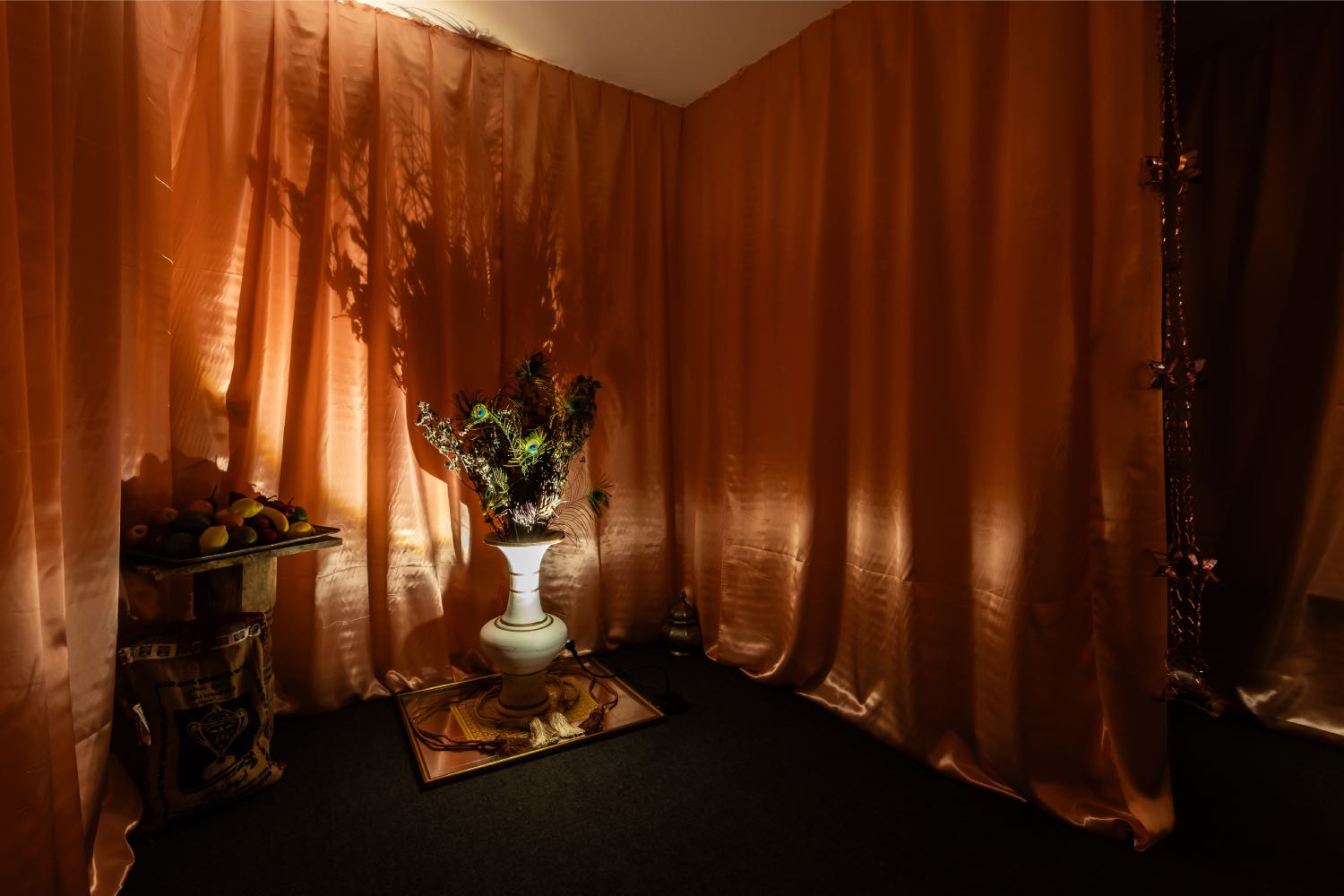
This wasn’t a downtown show per se, but Hujar’s presence recurred throughout, most directly in his own unpublished color portraits from East 14th Street, 1973, first made for a Village Voice commission that never made it to print, now shown as a rotating slideshow above a bed. In Moyra Davey’s Horse Opera (2022), his monograph Portraits in Life and Death (1976) briefly surfaces, and his image appears in Vince Aletti’s latest homoerotic collage, placed atop the dining table. And again in Gary Schneider’s erotic experimental film Salters Cottages (1980). This short, made in a holiday cottage on Long Island with Hujar, Schneider’s partner John Erdman, and friends Suzanne Joelson and Gary Stephan, playfully explores the exhibitionist desire to observe and be observed. Shot on 16mm film, the fragmented narrative unfolds through scenes of nudity, smoking, and surveillance. Hujar plays a narcissistic voyeur, enjoying the camera gaze as much as the camera enjoys him, dressing slowly into his white briefs. I sank into a pink leather sofa and watched the fifteen-and-a-half-minute film on loop for nearly an hour, unnervingly comfortable for something so eerie.
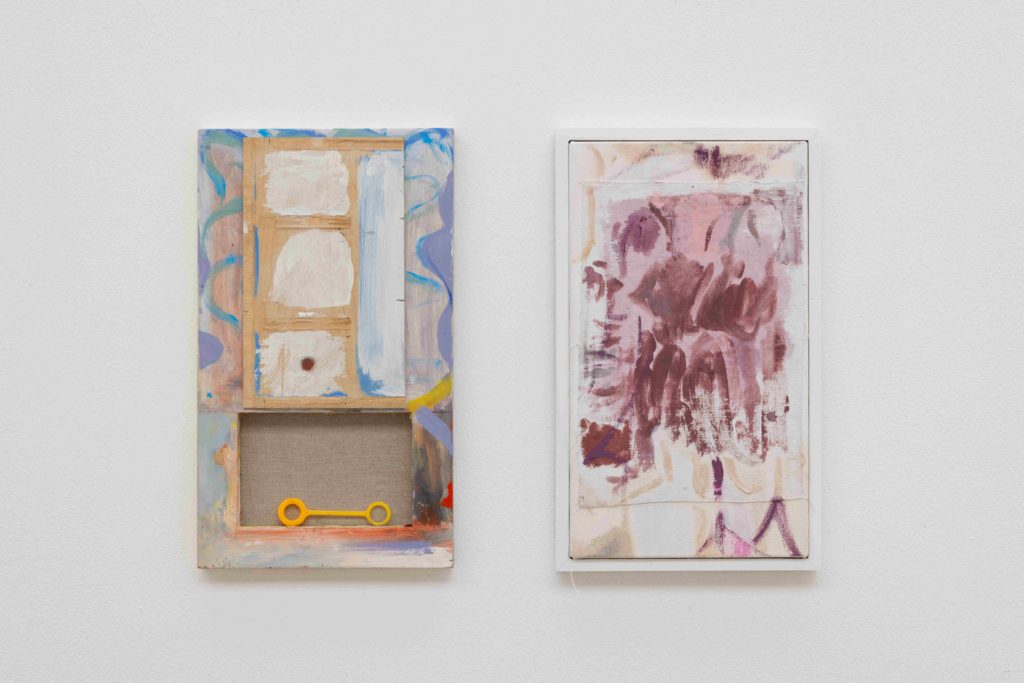
Being in a domestic house shifted the register of the work. Visitors moved through the exhibition while those living there went about their day: making coffee, going to the bathroom. I ran into a fellow writer, and we circled the rooms the way you’d circle a house party, drifting between art and small talk with little distinction. Without institutional distance, without wall text holding the work at arm’s length, I was propelled into an intimacy rarely offered by the conventions of contemporary art viewership.
Downtown New York will always hold my art-historical interest, and increasingly the mainstream’s too. But these two exhibitions left something that outlasts their run. Like the piers, both shows were temporary, in time and in space. The coach house will go back to being a house. The townhouse will be renovated, made respectable again. Nothing here was built to last. Not even the festival that housed it. But the work does not ask to last. It asks only for a wall, briefly, and someone willing to look.
Before my journey home, I killed time, as one does, in a bookshop. There was Wojnarowicz again, this time on the cover of Olivia Laing’s book Funny Weather: Art in an Emergency (2020). I stood and re-read the essay on Wojnarowicz before heading to my platform. She describes that very portrait as “defiance in the face of extinction.” Wojnarowicz died of AIDS-related complications not long after it was taken. Visiting Glasgow International, I recognized the feeling I’d had the first time I read Laing’s book — a reminder of art’s political capacity for resistance and repair. Both the biennial and the book serve as compendiums of thoughtful encounters with artists and practices that insist on art’s ability to speak on its own terms. A reminder well worth any length of train travel.