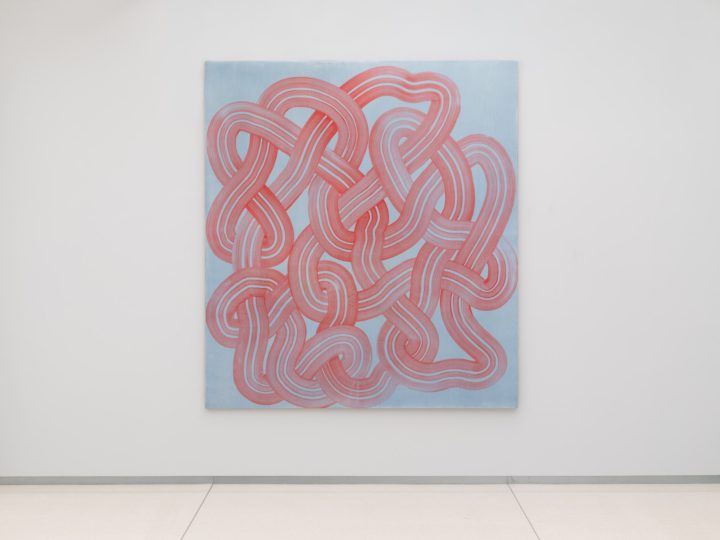
The foyer of the Museum of Recent Art in Bucharest immediately resists the conventions of the white cube. Black walls, upbeat dance music from the café, and a Mercedes sitting beneath a drape set the tone before the works even come into view. The museum spans a basement floor, currently dedicated to photographs by Constantin Brâncuși, and three upper levels presenting the last forty-five years of French artist Bernard Frize’s paintings. Ranging from some of his earliest works from 1980 to the present, the exhibition offers a retrospective showcasing how a practice built on a set of rules and methodologies has continually redefined the relationship between painter, process, and material.
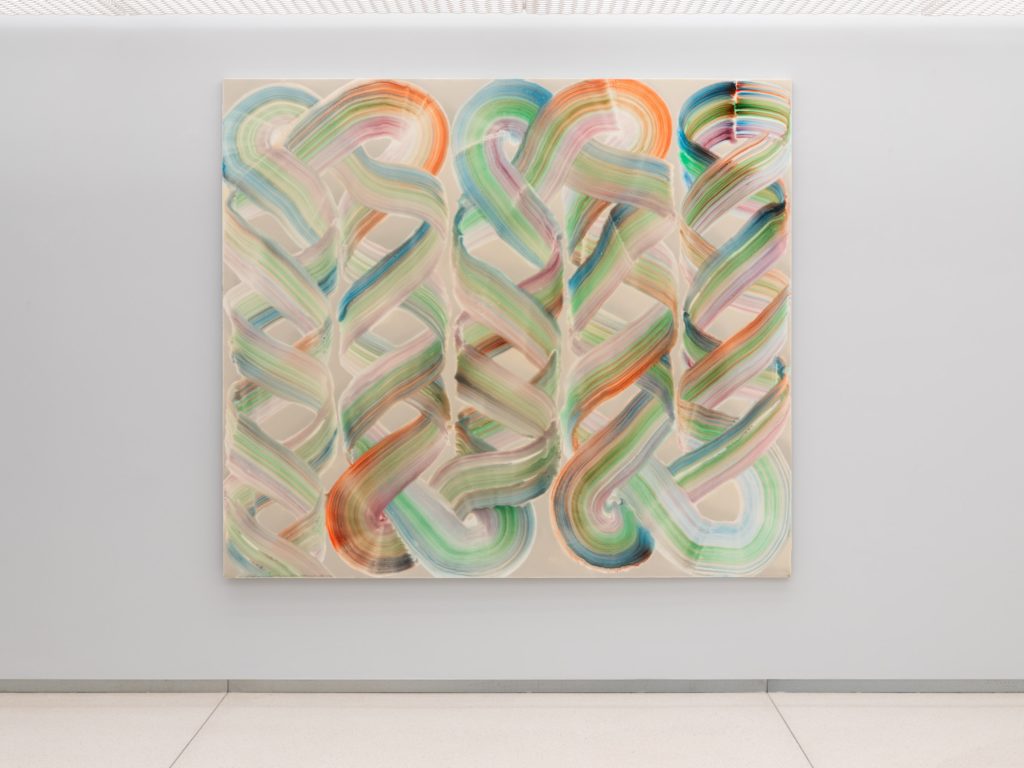
Frize’s practice inevitably puts the artist’s role into question. Since his practice leaves little room for subjectivity, Frize’s methodology resists the romantic image of the painter guided by intuition and expressive gesture. What becomes clear after seeing the works is how much of Frize’s creative process is left to chance, as a symptom of his rules. Three colors of paint dragged across the canvas pool into a brown puddle at one end, pencil lines drawn as guides shine through the paint, and resin bubbles as resin as it often does, despite the artist’s best efforts. After forty years, these incidents no longer read as accidental, but as intentional structural components of the work.
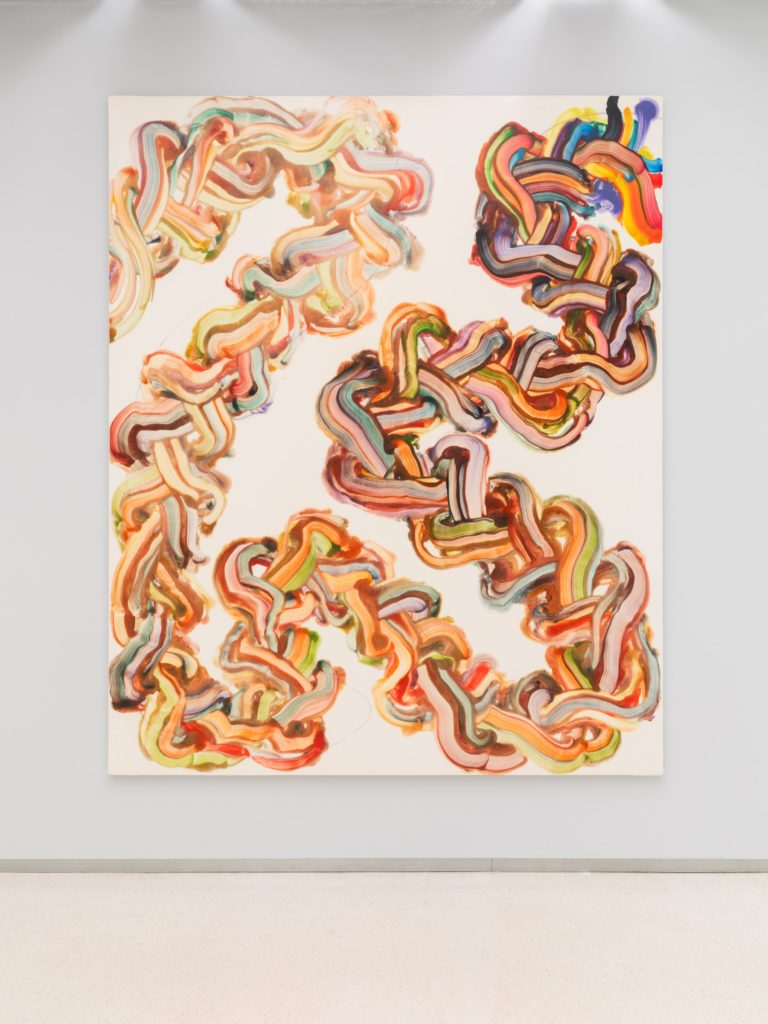
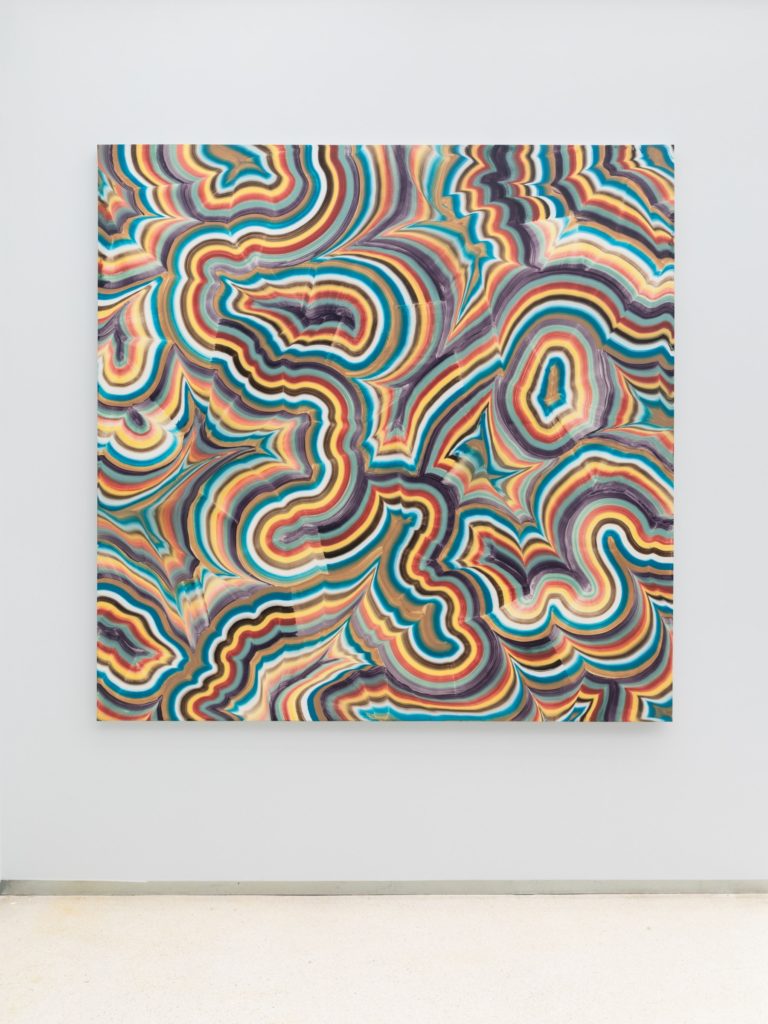
By establishing guidelines and allowing paint to obey gravity rather than gesture, Frize shifts authorship to process. Works like Gael (1993) and Cinq vues dans un carré (1992) are painted one way, flipped the other, and then hung back in their original orientation, revealing something resembling a landscape or the inside of a geode. Other works, like Suite à Treize Nº1 and Suite à Treize Nº2 (2007) show what else Frize can do with his method, as an endless loop weaves its way across the canvases. Neat lines and crisp edges make these two some of the more rigid works in the show, but their very presence proves the point.
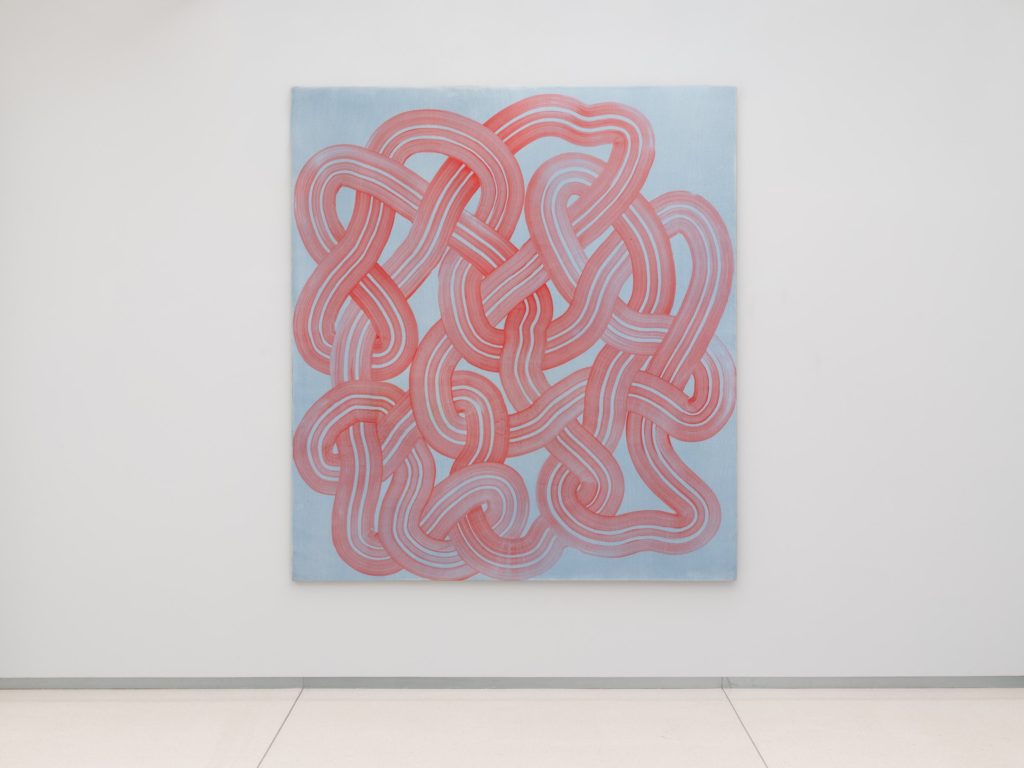
Frize’s reliance on a predetermined approach places him within a lineage of artistic practices associated with Sol LeWitt and Roman Opalka. Whereas their systems often eclipse the material object itself, Frize’s paintings continually return our attention to paint. The variation in technique and style undermines the assumption that procedural painting inevitably produces monotony, as does the sheer number of works spread over three floors. So where do the limitations of Frize’s rule-bound practice come in? I’m not sure they do. Frize engineers situations in which chance becomes another one of his materials, like paint itself. The pencil guides below the paint give the painter the freedom to create before execution, the acrylic paint runs its course, and the resin freezes its movement.
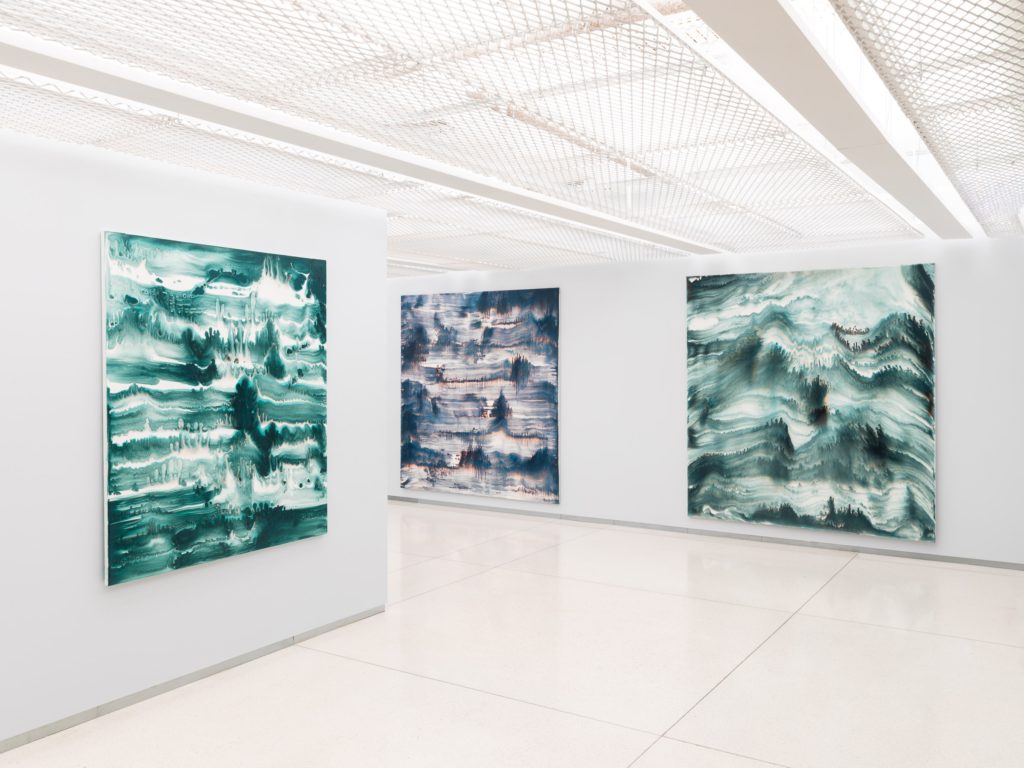
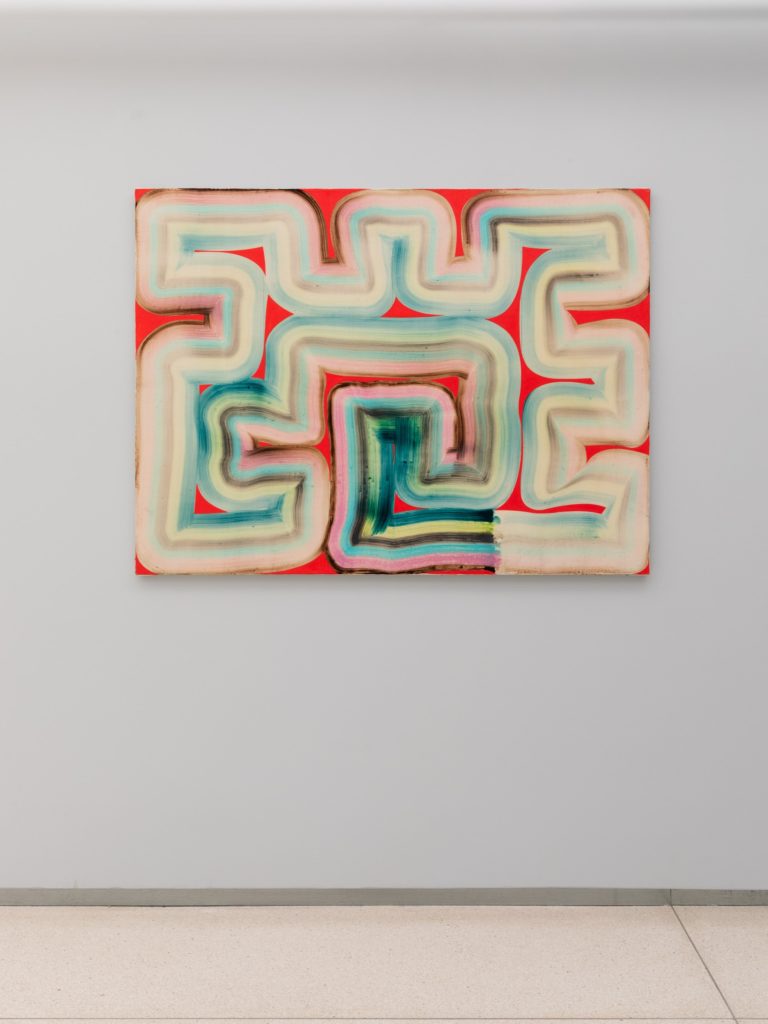
Frize utilizes the medium of paint as a painter, rather than as an image maker. He paints, encapsulates the paint’s its path along the canvas in resin, and asks the viewer to find the image for themselves. The limitations lie less in Frize’s self-imposed rules than in the medium itself, asking painters to master paint rather than the image. In Frize’s hands, the painting is less a picture than a record of negotiation with his chosen material. Authorship resides not in control, but in designing the conditions under which paint is allowed to assert itself.
“Bernard Frize,” curated by Gregory Lang assisted by Elena Stanciu, will run from May 22 to August 16, 2026 at Museum of Recent Art in Bucharest.