With “Other Spaces – Photography in the Américo Marques Collection (Part I),” MACAM – Museu de Arte Contemporânea Armando Martins continues to explore one of the central questions underlying its identity: how private collections are transformed when they enter the public sphere. Rather than functioning merely as a venue for displaying privately owned works, the museum presents collecting itself as a curatorial practice — one through which histories, affinities, and interpretative possibilities are constructed. The exhibition is less concerned with the collector’s personal taste than with the ways in which artworks acquire new meanings through processes of selection, juxtaposition, and public encounter.
Since opening in Lisbon, MACAM has occupied an unusual position within the city’s cultural landscape. Located in the restored eighteenth-century Palácio Condes da Ribeira Grande, the institution combines a contemporary art museum with a five-star hotel, creating a hybrid model that challenges traditional distinctions between exhibition space, heritage site, and hospitality environment. This format reflects broader shifts in the relationship between cultural institutions, private patronage, and public access. At the centre of MACAM’s program is the Armando Martins Collection, which brings together more than six hundred works by Portuguese and international artists and serves as the foundation for a series of exhibitions, commissions, and site-specific projects. Within this context, private collections are approached not simply as reservoirs of important works but as evolving structures of knowledge.
Curated by Adelaide Ginga, “Other Spaces” avoids the conventions of the photographic survey. Instead of offering a chronological account of the medium’s development, the exhibition proposes a conceptual itinerary informed by Michel Foucault’s 1967 lecture Of Other Spaces. Photography is understood here as a device for producing heterotopic spaces: images that interrupt ordinary perceptions of time and place, revealing reality as something constructed rather than merely recorded. The title therefore functions not as a decorative metaphor but as the exhibition’s organizing principle.
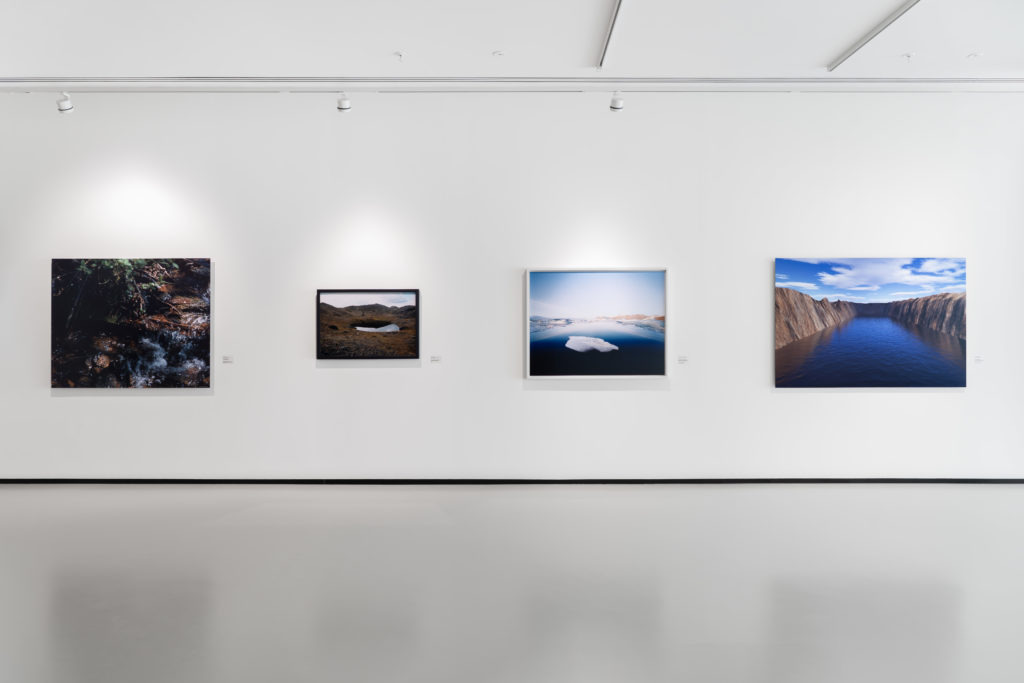
The exhibition unfolds through three interconnected fields — landscape, the human figure, and architecture — whose boundaries remain deliberately fluid. The initial galleries focus on landscapes that oscillate between the monumental and the apparently untouched. Here, photography becomes a means of examining territory, distance, and the act of looking itself. These images are not simply representations of nature; they investigate how landscapes are framed, occupied, and imagined.
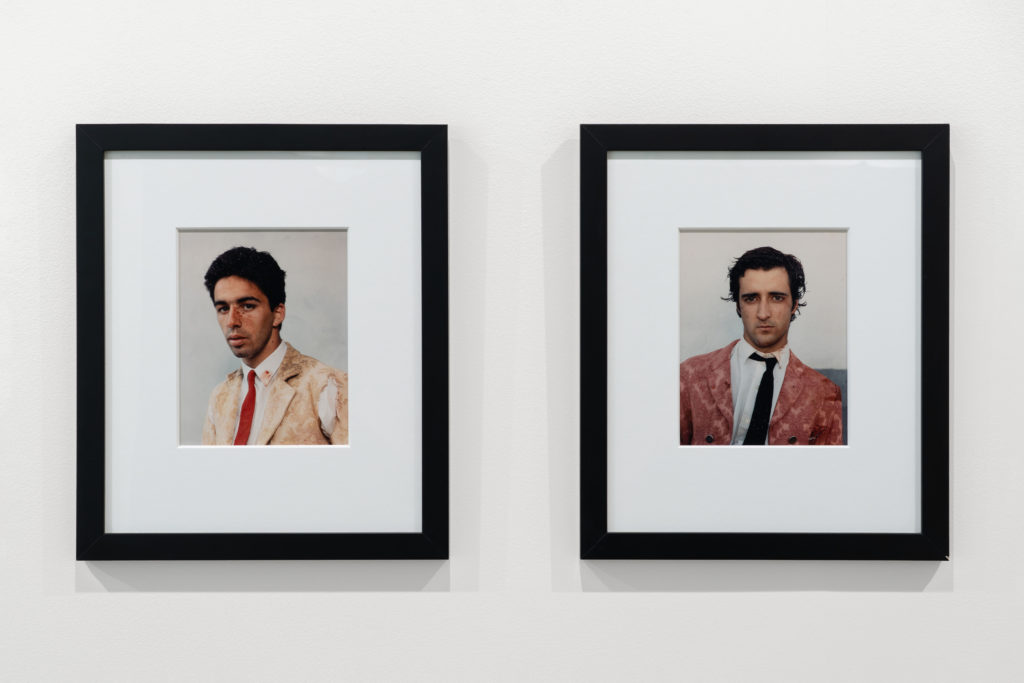
As the exhibition develops, the human figure gradually becomes its central concern. Portraiture, self-portraiture, performance, and staged photography introduce questions surrounding identity, gender, intimacy, and self-construction. The inclusion of artists such as Cindy Sherman, Helena Almeida, Nan Goldin, and Eija-Liisa Ahtila is particularly relevant in this context, not as a corrective gesture towards an established canon, but as part of a broader understanding of how photographic practice has been reshaped through expanded notions of embodiment and subjectivity. Their works position the body not only as an image to be captured but as a site of negotiation and artistic agency.
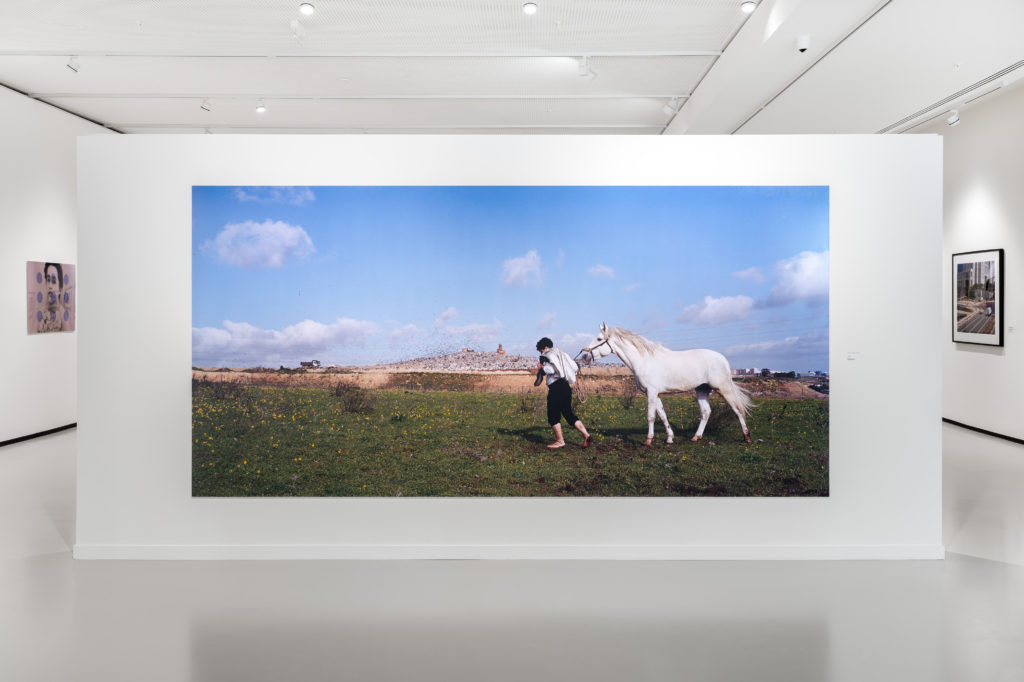
Architecture emerges in the final galleries as a reflection of social systems, memory, and collective behavior rather than simply as built form. Through the typological investigations of Bernd and Hilla Becher, the interior spaces of Candida Höfer, and the large-scale examinations of contemporary environments by Andreas Gursky, built environments become evidence of the ways societies organize themselves. The movement from landscape to body to architecture does not suggest a chronological progression, but rather an expanding reflection on the relationship between individuals and the spaces they inhabit.
This structure also reveals the internal coherence of the Américo Marques Collection. Although photography represents only part of its holdings, the collection demonstrates a sustained engagement with the medium’s conceptual and formal possibilities. Bringing together Portuguese and international artists from different generations, “Other Spaces” highlights photography’s diversity as an artistic language — one capable of moving between documentary observation, abstraction, performance, and critical reflection.
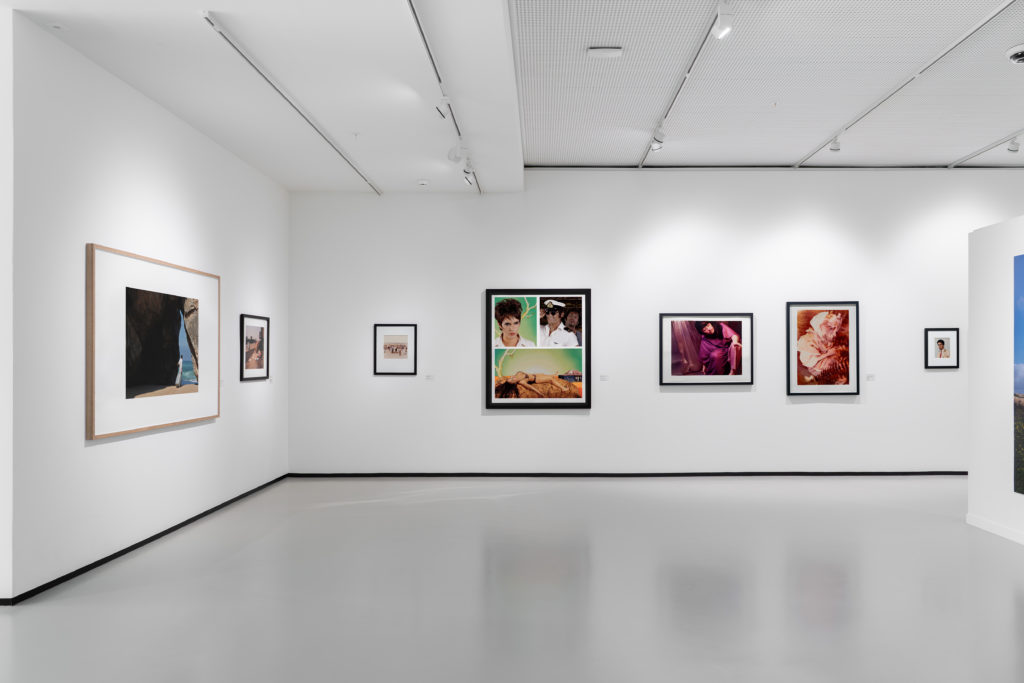
The exhibition’s conceptual openness is one of its greatest strengths, although in some instances the connections between individual works could be articulated with greater precision. Certain juxtapositions invite further interpretation rather than fully developing the dialogue proposed by the curatorial framework.
Ultimately, “Other Spaces” succeeds in shifting attention away from the idea of collecting as possession and towards collecting as a form of cultural production. The exhibition demonstrates that private collections are not closed repositories but dynamic structures whose significance changes through exhibition, interpretation, and public engagement. In doing so, MACAM presents photography not simply as a record of the world, but as a means of questioning how worlds are made visible.