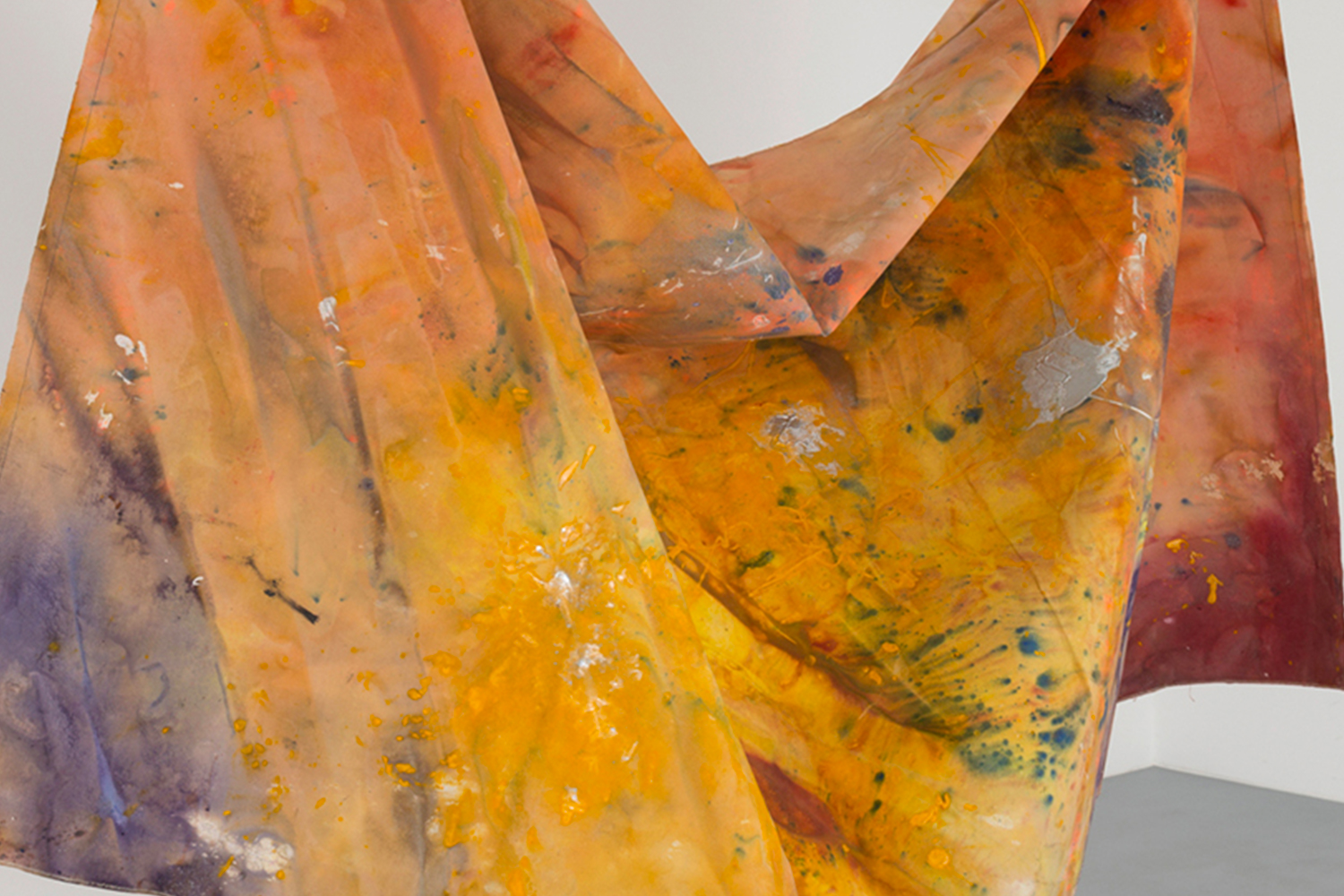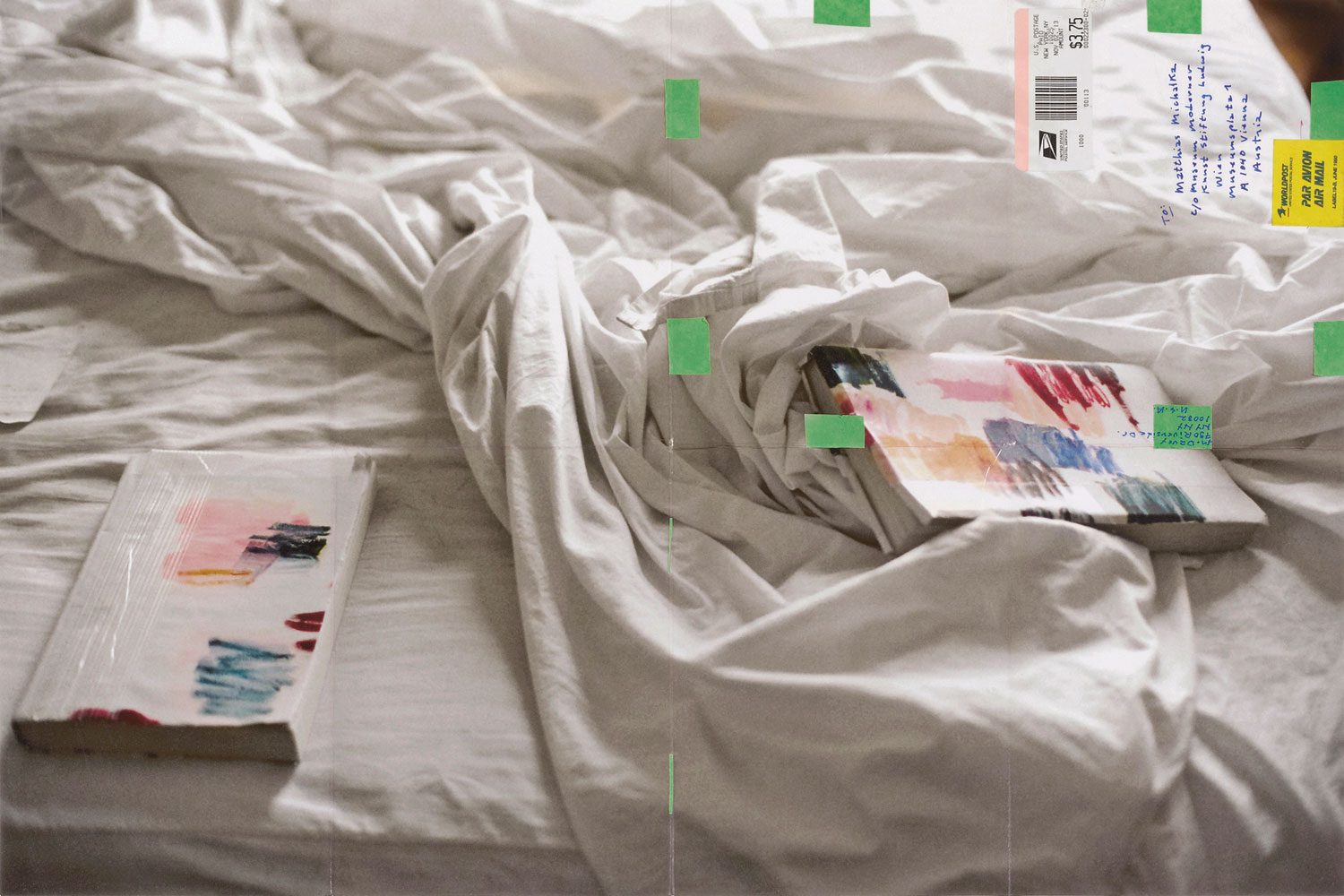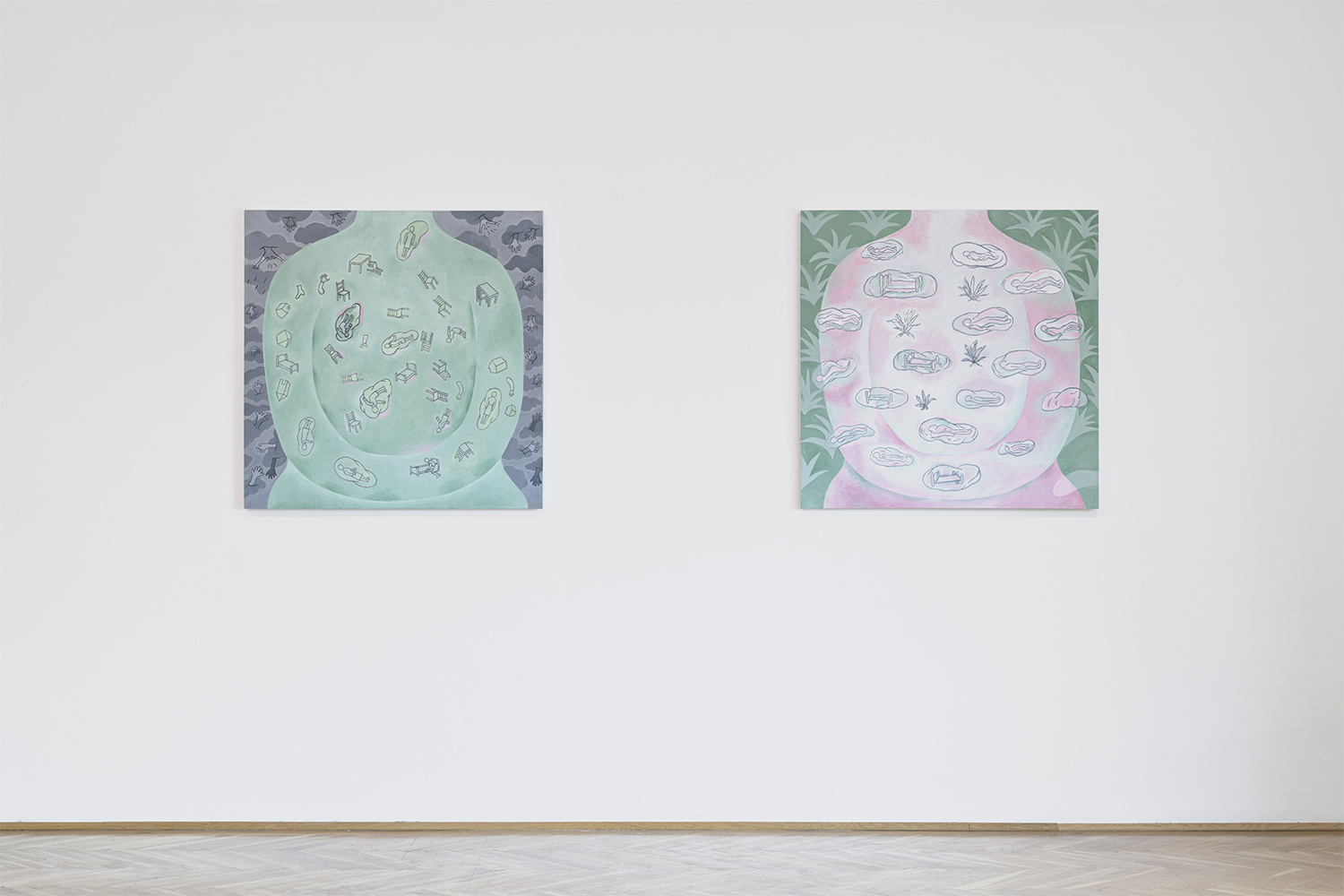
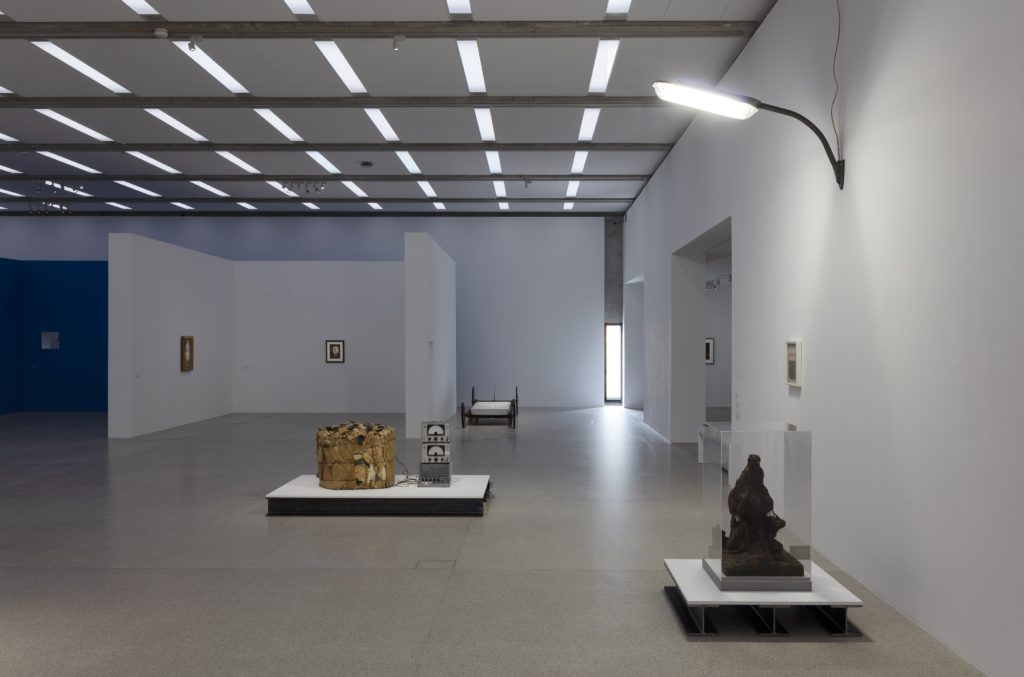
At mumok in Vienna, “Terminal Piece” does not begin as much as it is already underway. One’s sense is not of entry but of having been placed inside a relation that precedes understanding. A single work by Kate Millett holds the central room in suspension, not as origin but as nucleus, as if everything else had been arranged around something that refuses to settle into framing.
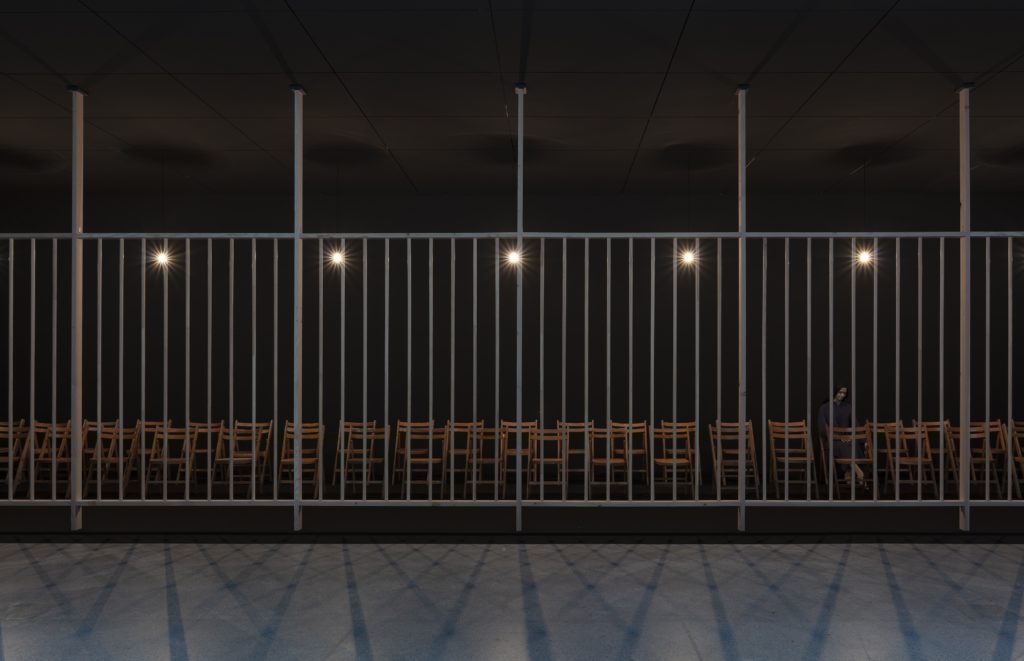
The exhibition takes its title from Kate Millett’s 1972 work of the same name, recently acquired by the museum and given a room of its own. That gesture — building a space around a single work — already sets the tone. The exhibition does not begin with a theme but with a pressure point: one object that seems to organize everything else by proximity — like gravity — over explanation.
“Terminal Piece” is also the first major exhibition under the direction of Fatima Hellberg, co-curated with Lukas Flygare. Something in the air of the museum feels slightly recalibrated. Not opened in a celebratory sense, but loosened, as if the institution itself had agreed not to close around its own logic — as if it were temporarily willing to let itself remain unfinished. In this sense “Terminal Piece” is not only a title. It is a condition of attention. It names a way of staying with something before it becomes legible.
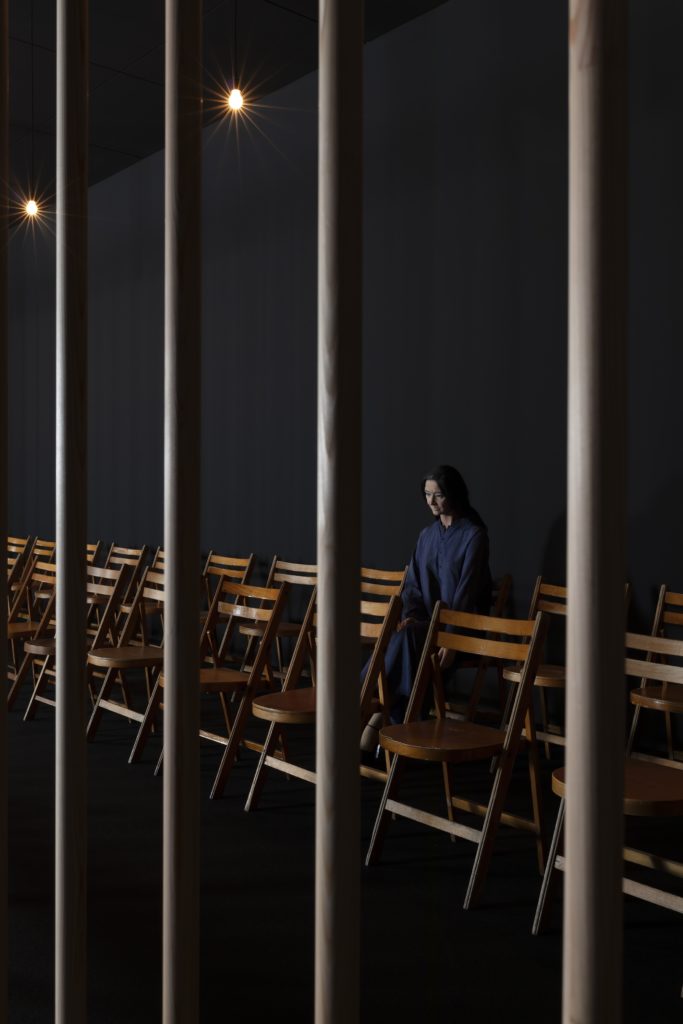
The work by Millett sits at the center of the first room, but “center” is not quite the right word. It behaves like an organism that has already established its territory. You enter and it is already looking. There is a bodily recognition of this, a slight reorientation: not “What do I see?” but rather “Where am I being placed in relation to what sees?”
Millett’s writing, her political and literary work, carries into this space without needing to be illustrated. The shadow of Sexual Politics (1970) is there, but, more insistently, so is the unresolved case she returned to obsessively: the murder of Sylvia Likens. What remains of the story is not simply violence but the structure and dynamics of its distribution: how it passes through family, neighbors, children, institutions; how it becomes communal without ever becoming visible as such.
The exhibition understands this as a method more than as subject matter. Seeing is never neutral. Looking is never outside.
Around this first encounter, the works begin to arrange themselves as variations of exposure in different acts.
In the first act, Megan Plunkett’s photographs, Dissembalancer 01–16 (2026), do not illustrate absence so much as circulate around it. She returns to objects handled by her mother during illness; small domestic things, residual gestures of attention made when attention itself was already waning. The images turn these objects slowly, insistently, as if rotation might produce a form of access. But nothing resolves. Instead, there is a soft persistence: the sense that looking again does not clarify, it only deepens the conditions of not-knowing. Nearby, Miroslav Tichý’s photographs (Various photographs, n.d.) introduce a more difficult ethics of looking. Taken in public spaces, often without consent, these photographs sit in that familiar but still unresolved zone where documentation and intrusion overlap without settling into either. The violence here is not located in what is shown, but in the apparatus of showing itself. The frames feel almost over-determined, as if style could compensate for the unease of origin. It cannot.
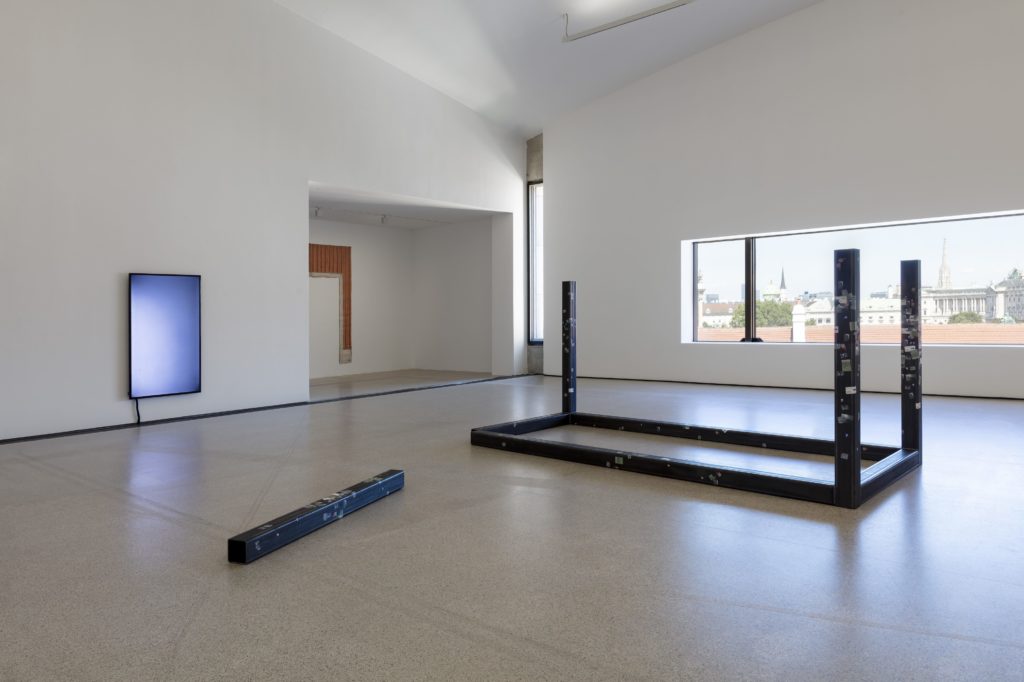
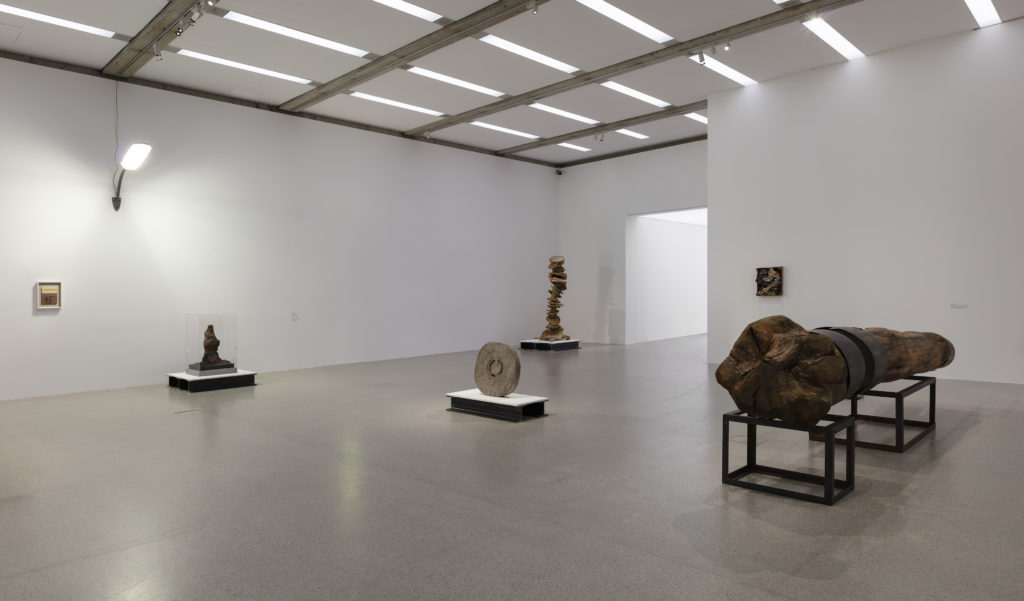
There are places within this section where the architecture of the museum becomes legible as a participant. Windows, once closed, have been reopened. Light enters unevenly, chasing color temperatures across surfaces. The museum stops behaving like a sealed container. It becomes environmental. Slightly exposed. Slightly late to itself.
Act II changes the air with Swallow (1995), a video work by Elisabeth Subrin that anchors the shift. The film holds two temporalities that refuse to align: the collective optimism of political movements in the 1960s and ’70s, and the private collapse of a single life moving through depression, illness, and eating disorders. One, you are 19 years old. You can’t read anymore. The work lets the contradiction sit, uncomfortably, as if the promise of progress had always already contained its own exhaustion. Television appears here not as a background but as a pressure, an image system that produces both identification and distance. What is shown is never only what is there. It is also what is expected to be seen.
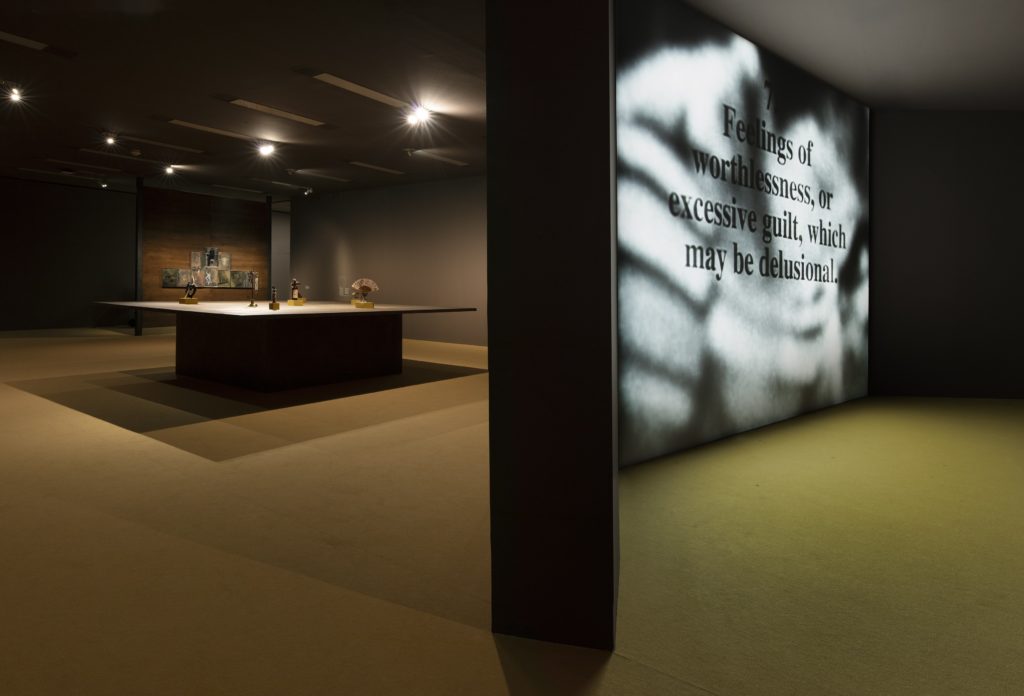
The work stages a temporal dissonance: progress as native form against life as discontinuity.
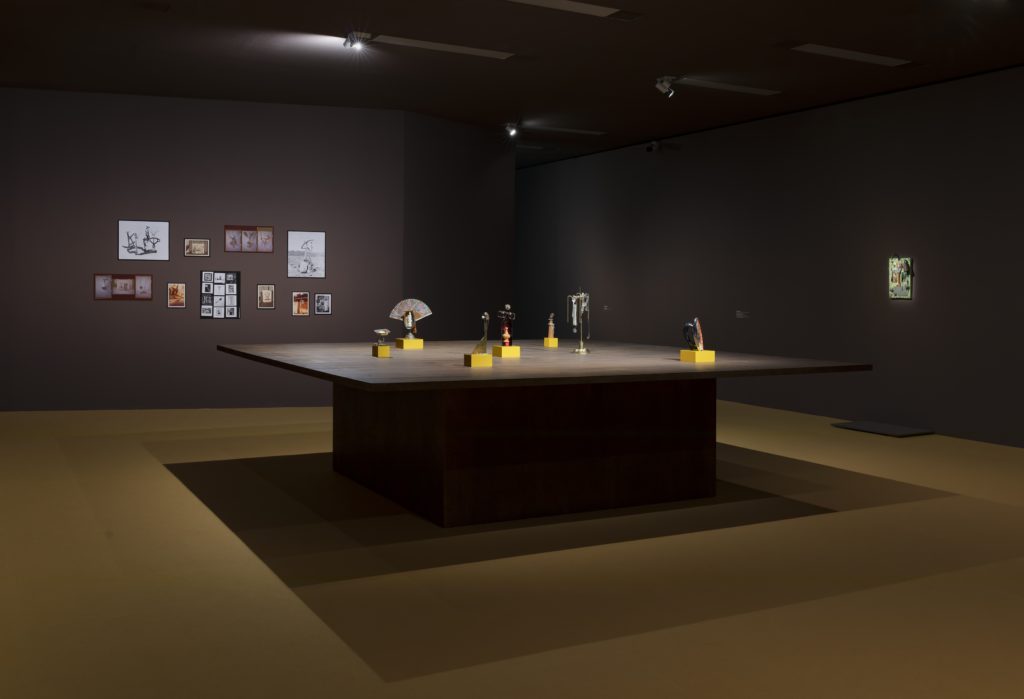
Around this work, small sculptural objects by artist Louis Goodman scatter the field. They resist hierarchy, scale, orientation. Some feel industrial but misused; others domestic but unplaceable. They do not ask to be interpreted so much as handled mentally, turned over without arriving at a stable conclusion. There is a lightness to them that is not innocence, more like refusal.
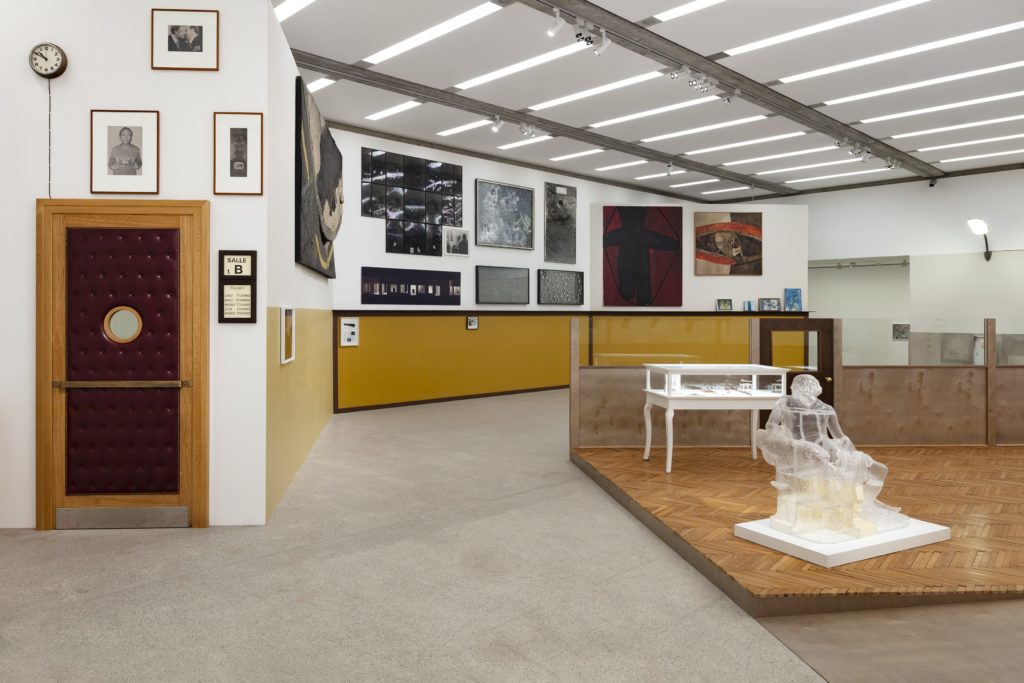
The space itself shifts accordingly. Carpeted surfaces, softened lighting, a sense of staged domesticity that never fully becomes comfort. The white cube is still present, but it behaves differently, more as costume. At moments it recalls a late-1970s interior, Southern Californian perhaps, but filtered through exhibition design: too composed to be lived in, too unstable to remain fixed.
And still, underneath, the question of attention persists. What does it mean to look when the conditions of looking are already part of what is being looked at?
Act III tightens this question again, as if the exhibition were returning to something it has been circling all along without naming.
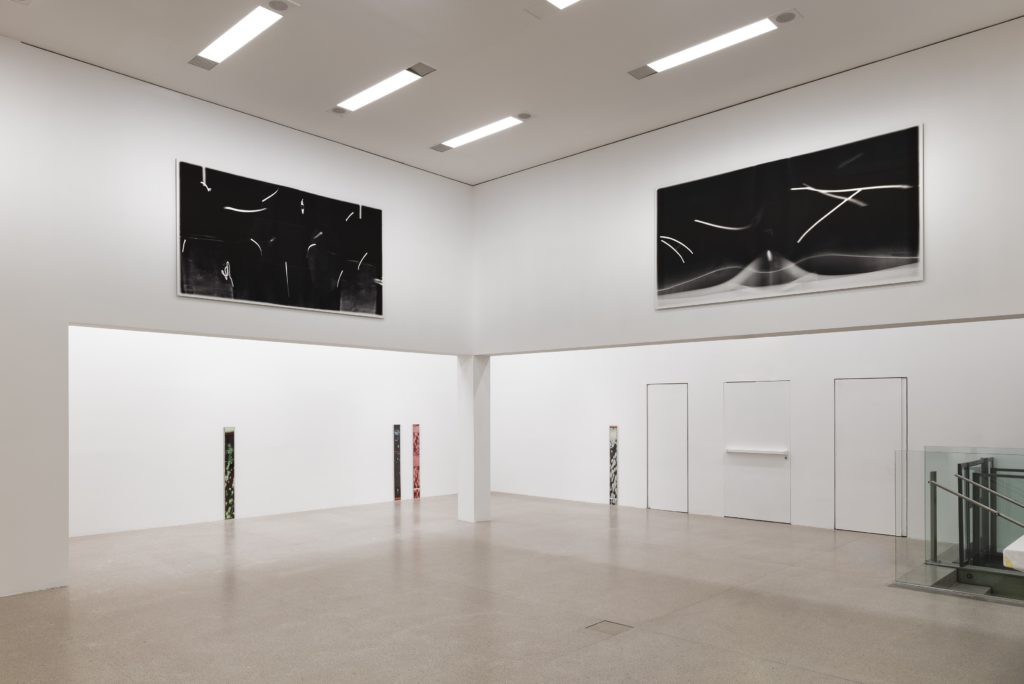
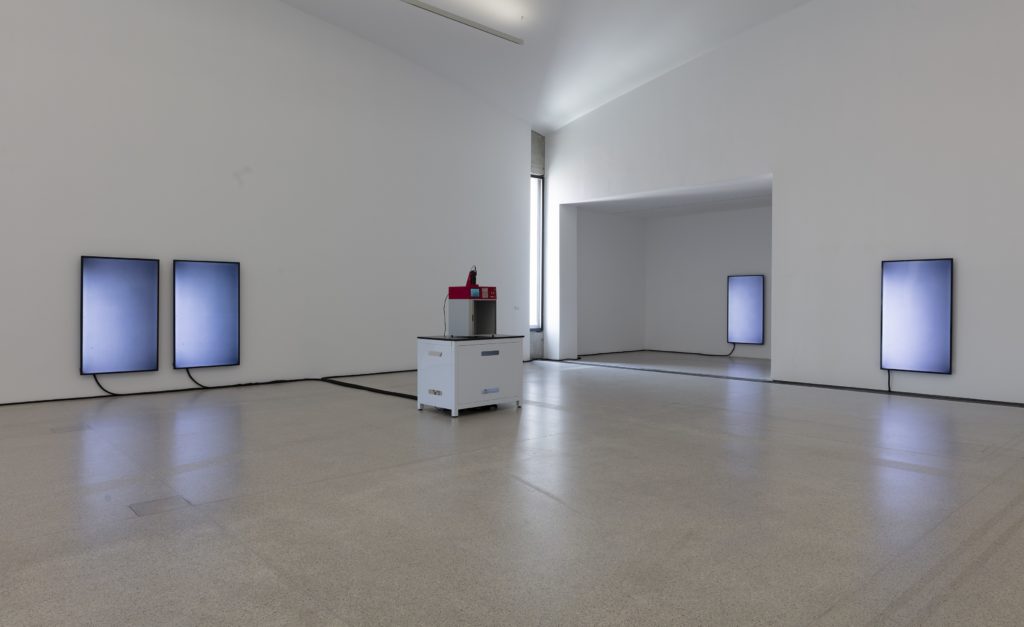
Works from Jean Fautrier’s “Têtes d’otages” (Hostage Heads, 1943–45) series arrive like dense interruptions. Produced during the Second World War, they do not represent violence so much as register its proximity. The surfaces are thick, almost wounded. Paint behaves less like image-making than like sedimentation. These are works that do not offer distance. They stay close, uncomfortably close, as if historical pressure had never fully receded.
From here, the exhibition opens into the collection in a way that feels less like expansion than accumulation. Christine Gironcoli, Annie Ernaux, and others appear not as individual statements but as variations on staging, on the difficulty of holding experience in form.
Ernaux’s images in particular, produced with Marc Marie between 2003 and 2004, feel suspended between documentation and emotional restraint. They do not dramatize. They withhold, and in that withholding they produce a different kind of intensity: one that does not rise but lingers.
Sara Deraedt’s staged photographs of dolls shift the register again: Baby being born out of a computer, Unborn baby inside of a computer, Unborn twins inside of a computer (2024–2026). Each image feels like a scene that knows it is a scene but cannot decide what role it is performing. The dolls are arranged with a care that borders on clinical attention. Yet something about them refuses closure. They remain slightly off, not uncanny in an exaggerated sense, but unsettled in their relation to being looked at.
Across all of this, anticipation becomes the real material of the exhibition. Not narrative progression, but the feeling that something is always about to happen, or has just happened too quietly to register. Time does not move forward so much as hover.
Even surveillance — explicit in certain works, implicit in others — appears less as technology and more like a condition. A work by Bruce Nauman titled Audio-Video Underground Chamber (1972–1974) sits like a delayed event. It records without declaring what counts as an event. It waits, and in that waiting produces a shared instability between object and viewer. Nothing happens, yet something is continuously being prepared. Surveillance here is not a device but a temporality: the suspension of certainty in the act of looking.
“Terminal Piece” maintains this state again and again and again.
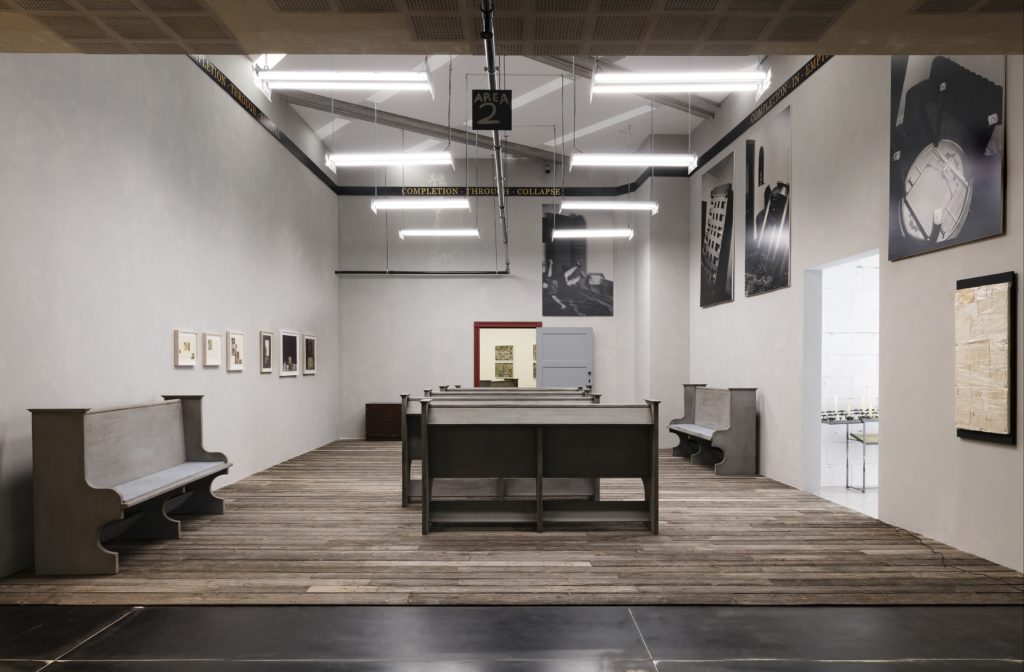
What remains after moving through its five acts is not a sequence of arguments but a pressure that persists. Seeing is never separated from being positioned. Being positioned is never neutral. And between those two conditions, the museum does not offer clarity but duration: a space held open, not to explain visibility, but to keep it slightly unresolved long enough that looking begins to feel like something that has consequences, even when nothing appears to change.