
In 2017, artist Isabel Nolan coined the term “dreamshook” in order “to describe when the wanderings of a sleeping or drifting brain stay with you for some time, for those days when you are haunted by sticky thoughts.” On the occasion of the 61st Venice Biennale, “In Minor Keys,” her installation for the Irish Pavilion, “Dreamshook,” questions the lingering impact of those reveries.
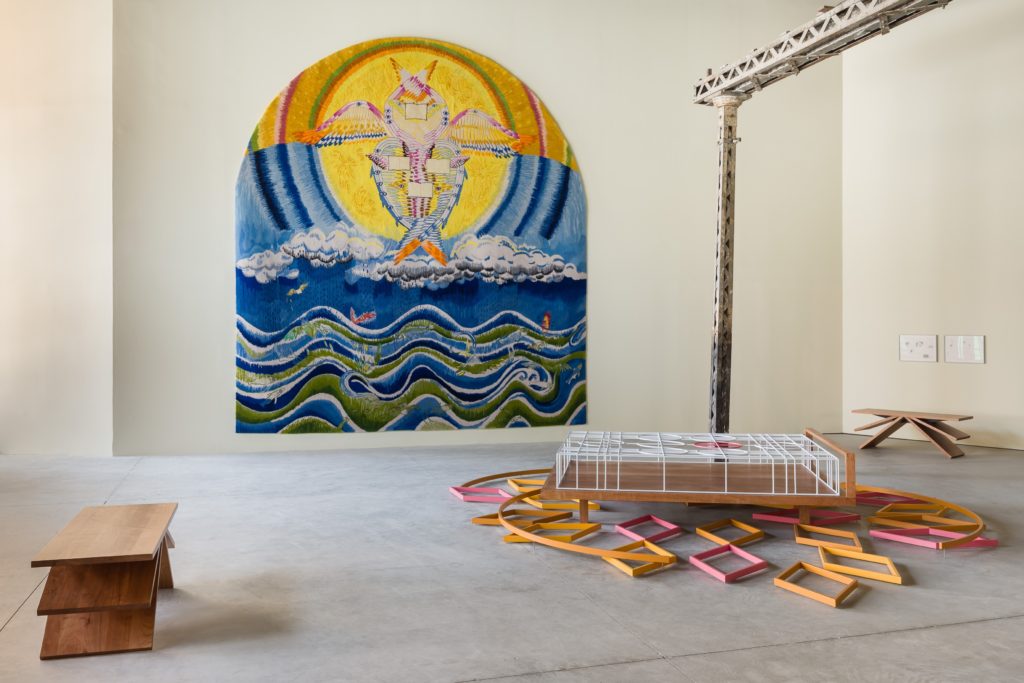
The two worlds inhabited across the boundary of sleep seem to be defined by deceptively simple dichotomies: eyes open or closed, conscious or unconscious, awake or dreaming. What happens when we sleep is a phenomenon that has been probed, analyzed, and theorized across multiple disciplines from the hard sciences to more occult cosmologies. The breadth of this inquiry forms the conceptual basis of Nolan’s practice, which references religious symbols, sixteenth-century literature, and maps of the universe. Yet no single field seems capable of accounting for the visions that emerge when we rest.
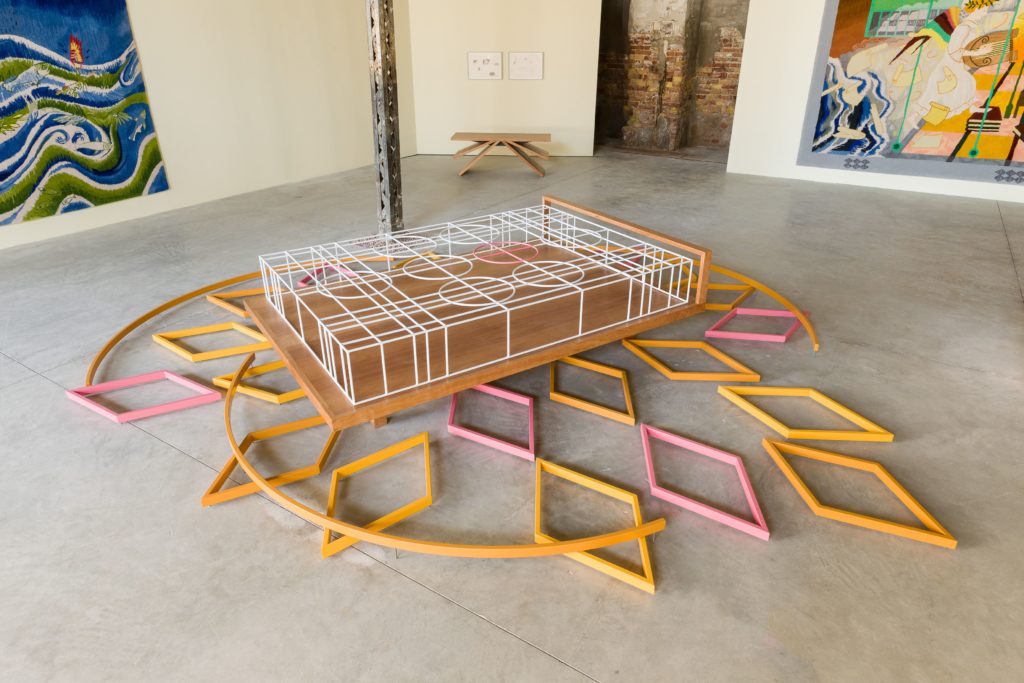
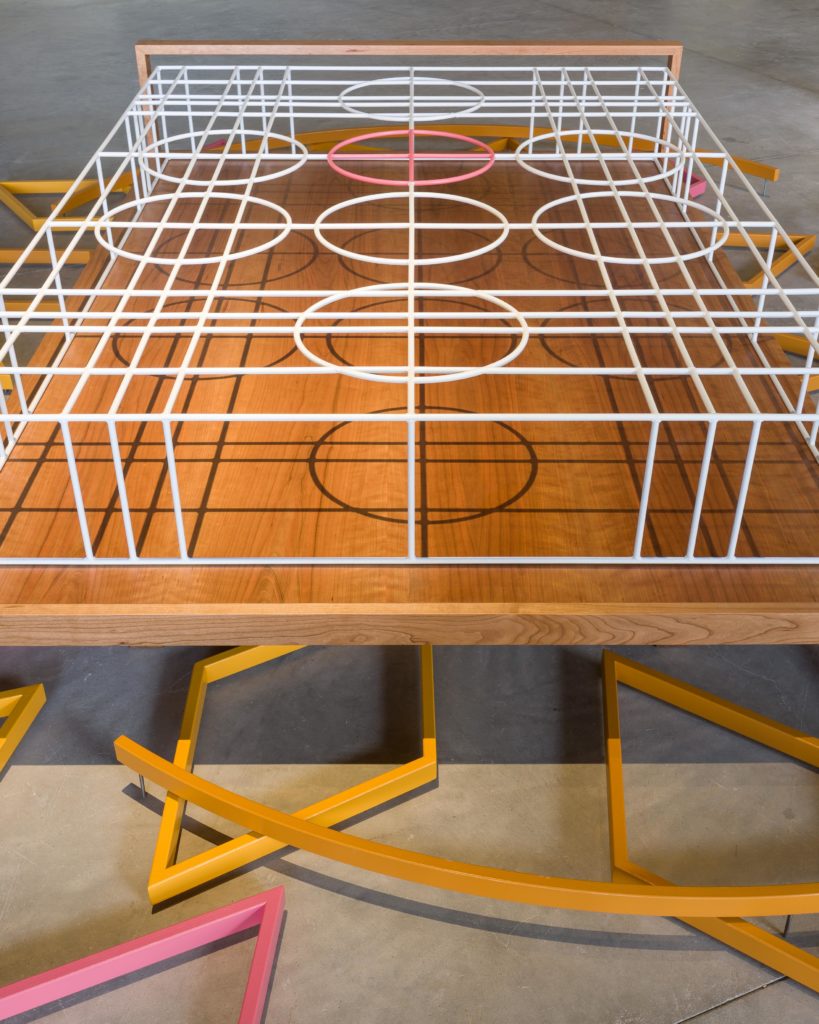
At the center of the room, the sculpture Dreamshook (2026) employs metal-formed geometries, color, and wood to create the profile of a bed. It appears to float atop a tessellation of diamonds that project outward from beneath its center. With its many negative spaces, it is clear that this bed is not intended for dreaming: it establishes the site of sleep without allowing it to occur. Instead, intersecting lines and curves generate another map of energies, tracing the flow of ideas and forces that arise from the mind at rest. Positioned at the heart of the installation, this metal-and-wood structure anchors the artist’s investigation.
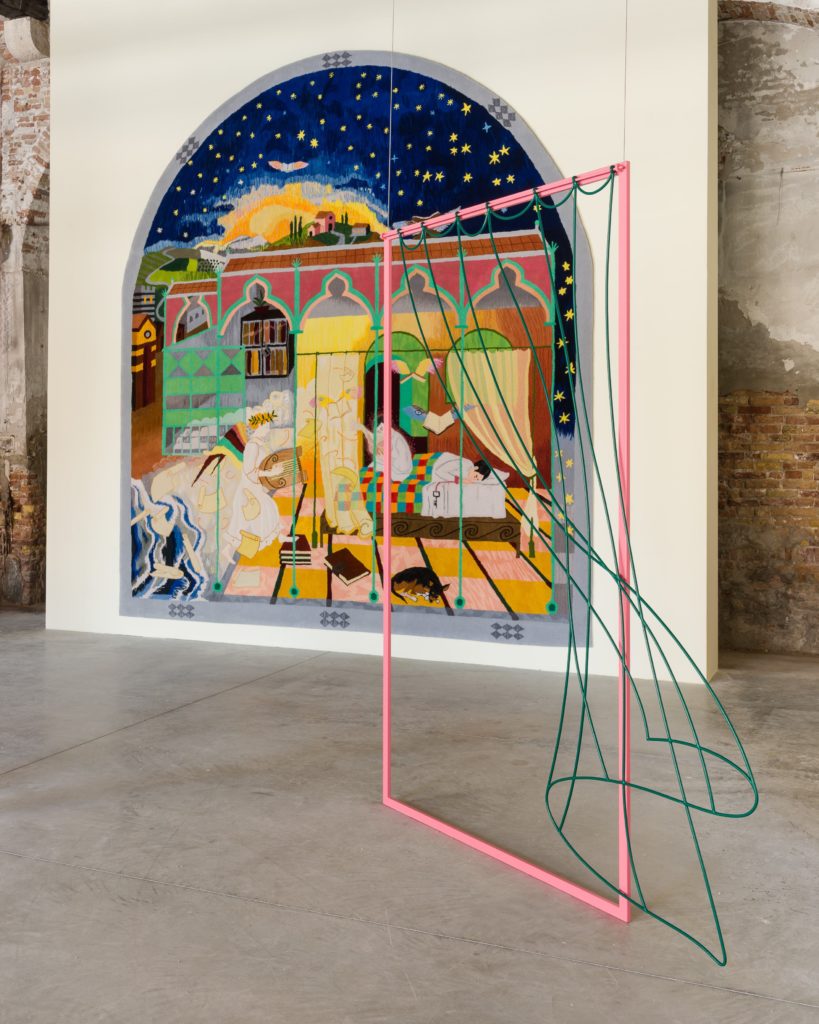
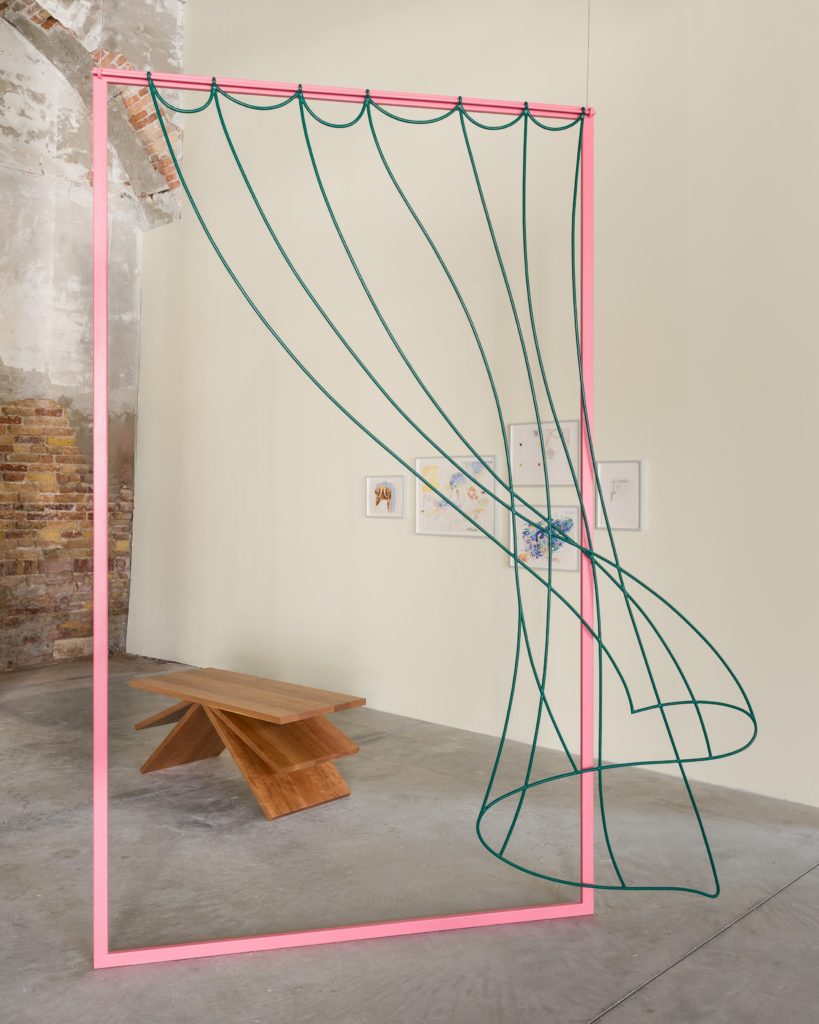
Suspended within a blush-pink metal frame, the work Oh! (2026) captures the profile of a curtain blown open by a gust of wind. Created with a series of curved metal bars coated in a contrasting teal hue, it renders a drawing-like representation of fabric caught in motion. Through this uncanny depiction of an everyday domestic object, Nolan opens the stage of her oneiric exploration. The viewer is neither set into motion nor completely at rest; instead, they occupy a liminal state. Viewed head-on, the object it depicts is immediately recognizable, but as one circles around it, its figuration begins to dissolve, leaving only slender traces of teal and pink. Ceci n’est pas une pipe — or a curtain — it seems to suggest.
Within “Dreamshook,” objects do not occupy the same three-dimensional space traditionally used to define reality, suggesting that reality itself may not be fixed but instead emerges through processes of perception and understanding. Looking through Oh! reveals the richly textured, carpet-tufted world of Nolan’s tapestry, Aldus Dreams of a Plentiful Supply of Good Books (2026). Within this high-pile arch, she depicts two figures of the Venetian publisher Aldo Manuzio (1450–1515). In his lifetime, he dedicated his career to publishing rare texts and disseminating Greek classics. He was notably credited for creating the compact, pocket-sized books that we are familiar with today.
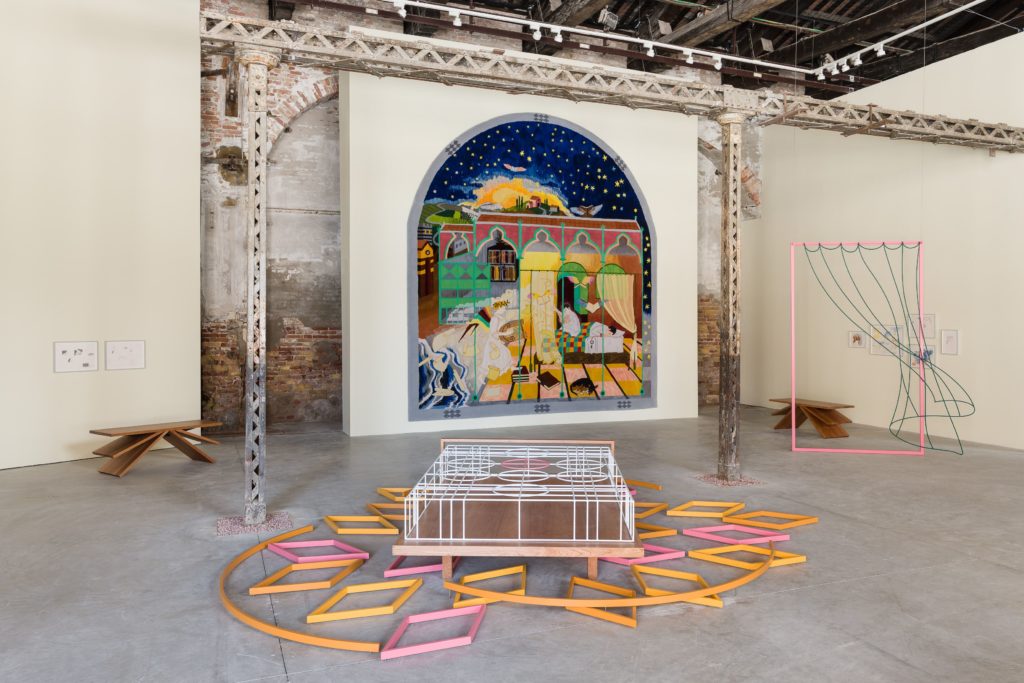
Beneath a star-speckled sky and canopied bed, one Manuzio sleeps with a key dangling from his wrist. The other sits at the foot of the bed, hunched over a text he appears to be reading, his outstretched hand summoning winged books, curling pages, and a lyre-bearing angel from a wave breaking at the edge of the frame. Some of the books’ wings bear eyes, referencing interpretations of angels derived from biblical descriptions.
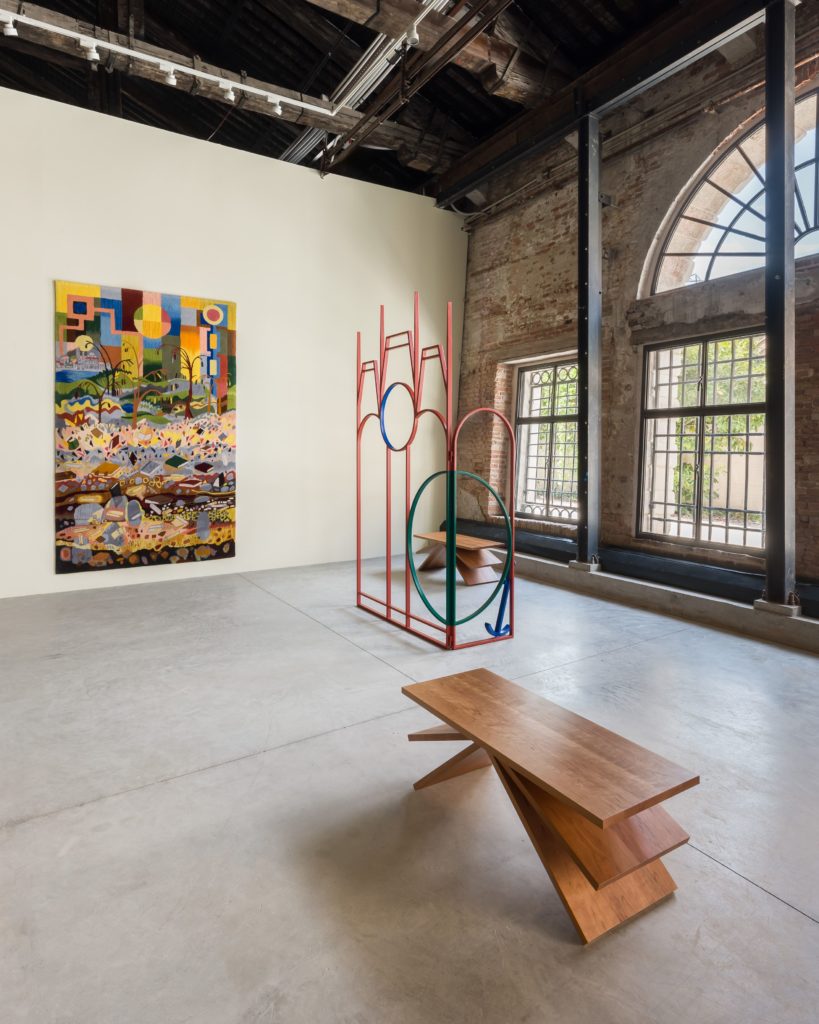
Manuzio’s dreaming figure connects the Irish Pavilion to the city of Venice while bridging the realms of dreams, religion, and lived experience. By invoking a figure who devoted his life to disseminating texts he considered significant, Nolan points to the power of written knowledge to shape reality. In the ontological proposition advanced by her tapestry, she does not privilege one source over another as the origin of truth. Instead, she suggests that our understanding of the world emerges from the intermingling of accumulated beliefs and recorded ideas. In this framework, the story in a book, the angel that answers our call, and the house on the hill may all belong equally to what we consider “real.”
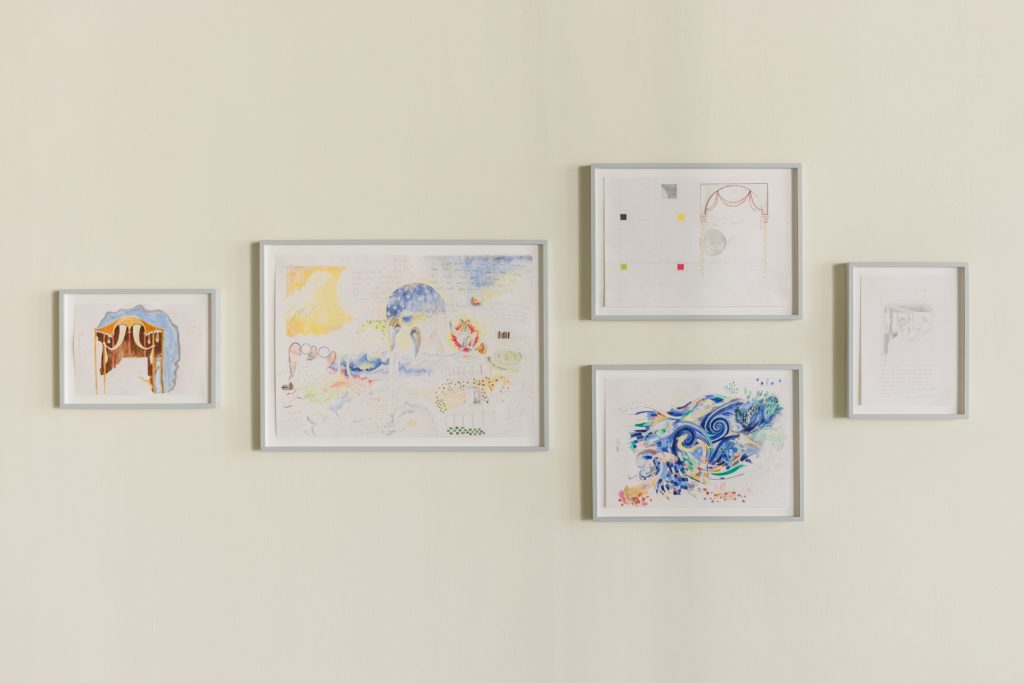
Ultimately, Nolan uses the threshold of dreams to open a broader discussion about the acquisition of knowledge and what it means to “know” — or, more precisely, to be cognizant of — the elusive mechanisms underlying what we have come to call reality. Rather than attempting to prove that the ground is solid and the sky is blue, her work inhabits the fluid territory of dreams in order to reconsider truth, perception, and existence.