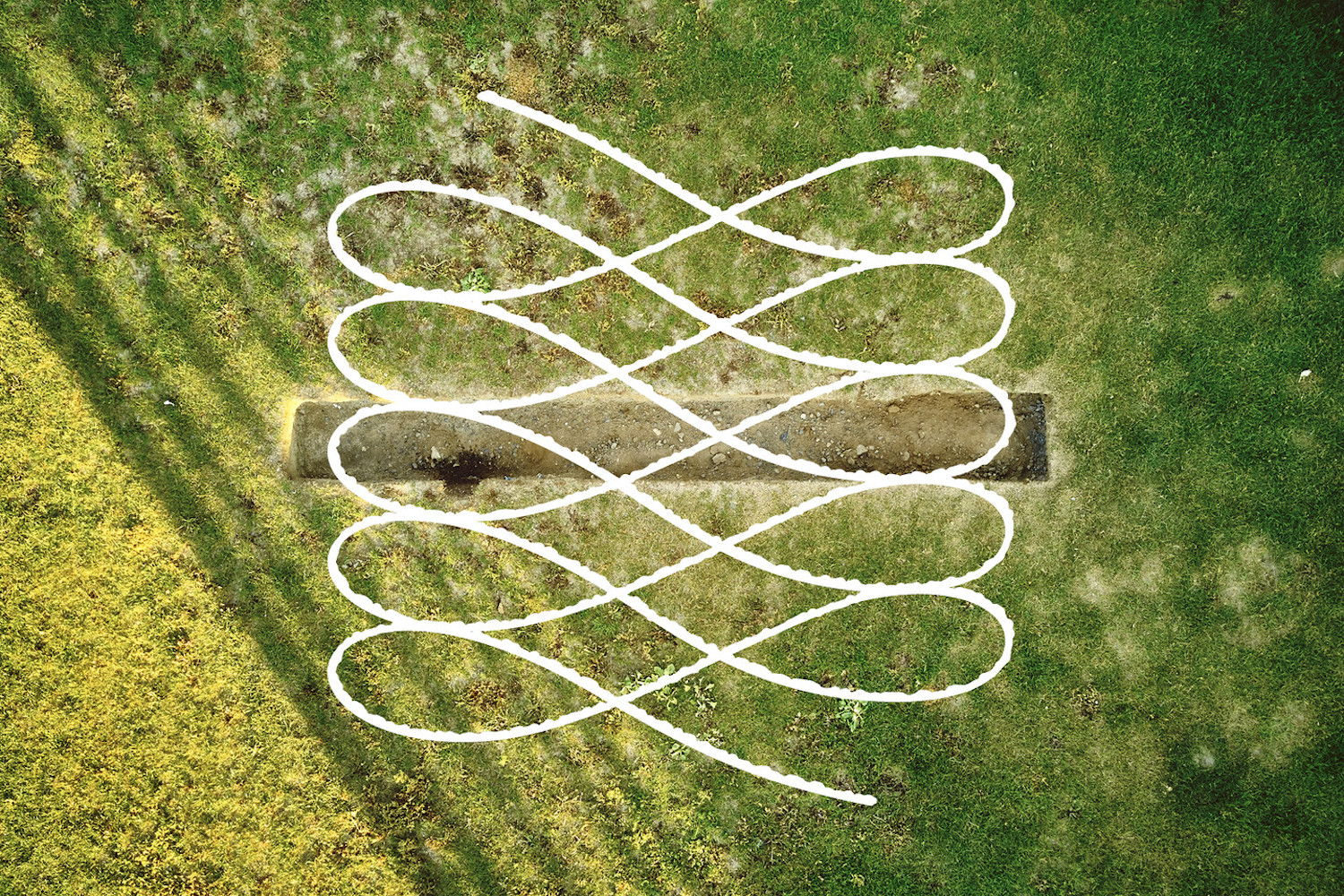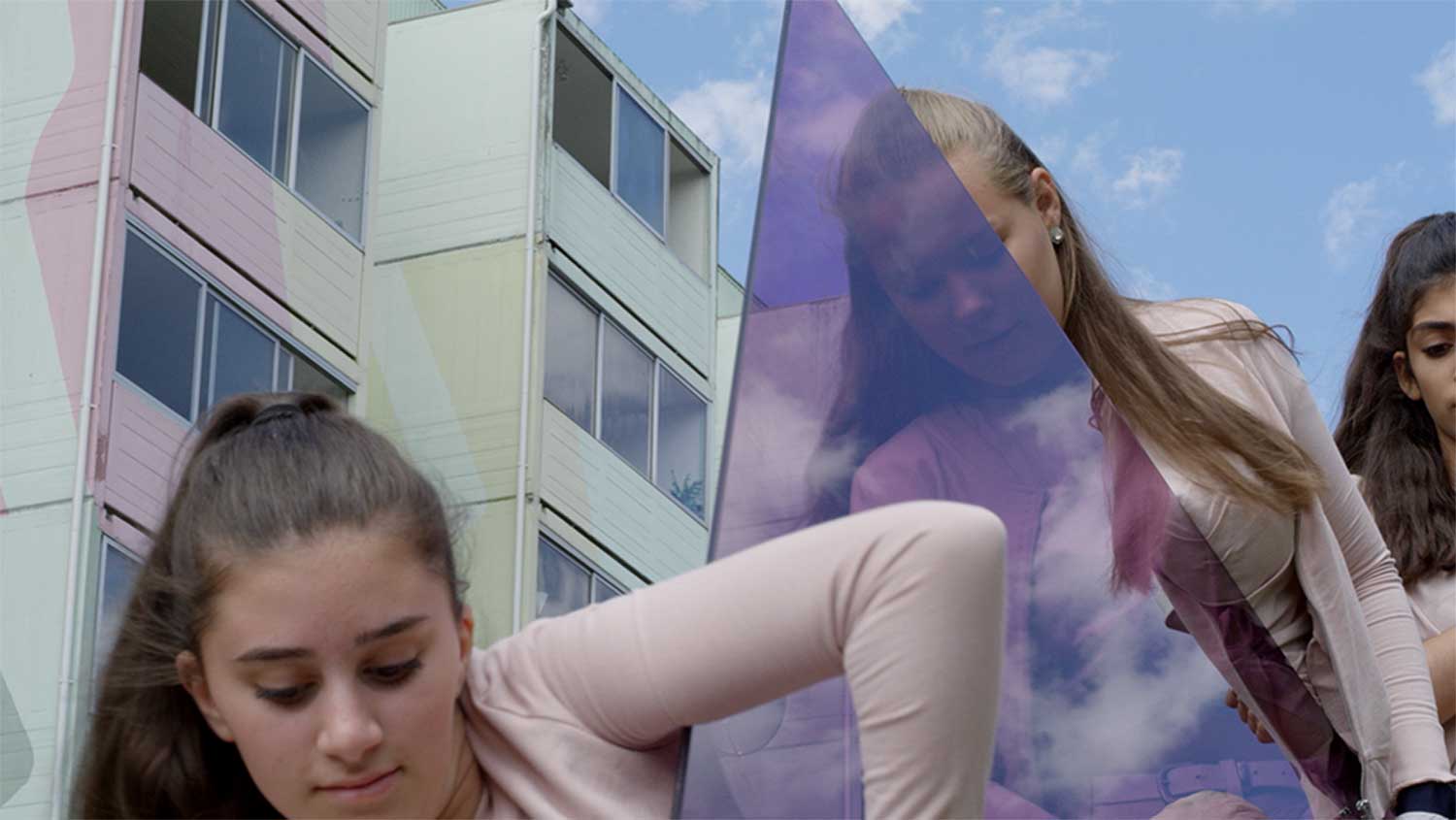
“Majority rule no longer means anything when nobody trusts anybody. Doing something just because 51% of those who voted said so is starting to feel really, really stupid. No idea is now too stupid to fail,” an unidentified voice remarks from a toilet stall during a summer party in 2016 in Pedro Gossler’s three-channel video installation Fanfictional Politics (2022), presented at Theatro Circo as part of the third edition of the INDEX Biennial of Art and Technology in Braga, Portugal. As though the monologue were unfolding in the viewer’s own mind, reality is transformed into a dreamlike atmosphere drenched in green light, while David Guetta’s 2009 hit song “Sexy Bitch” pulses faintly in the background.
Intending to explore the multiple relationships between technological development and its influence on the social, cultural, and political formations that shape our contemporary condition — as well as the inequalities that emerge from them — this edition of INDEX, featuring an exhibition program curated by Joel Valabrega, addresses topical issues on algorithmic violence, surveillance, and domination through a range of artistic and discursive perspectives. Although Valabrega introduced the exhibition by warning audiences that it would offer more questions than answers, the fragmented exhibition nevertheless advances a clear and bold methodological proposition: while power structures continue to threaten social justice and interpersonal — as well as interspecies — relationships, they also generate the conditions for new forms of resistance.
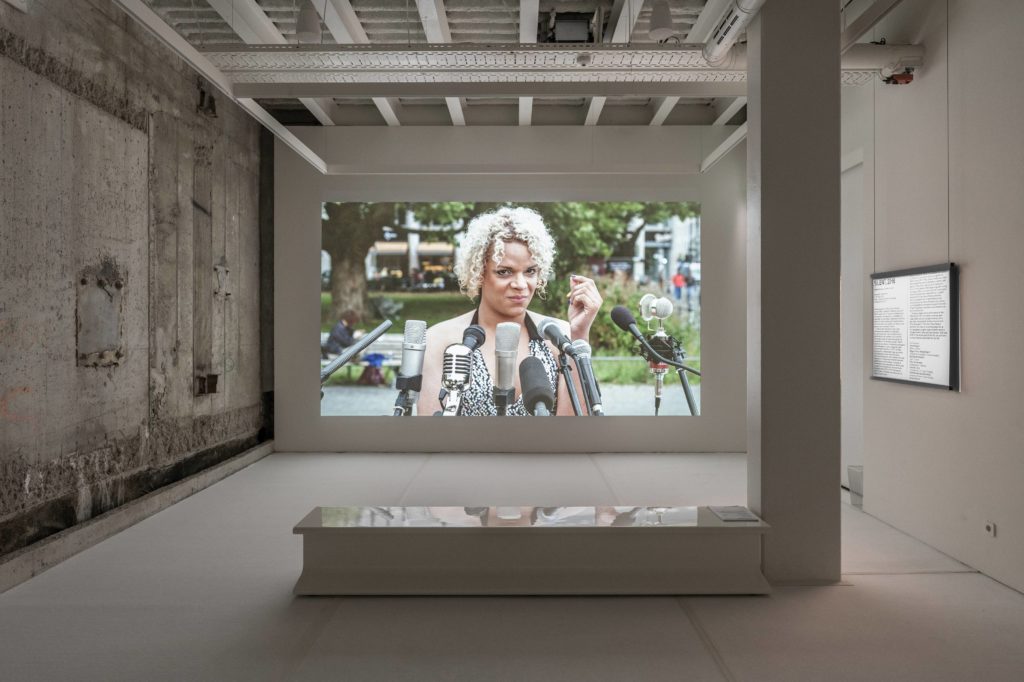
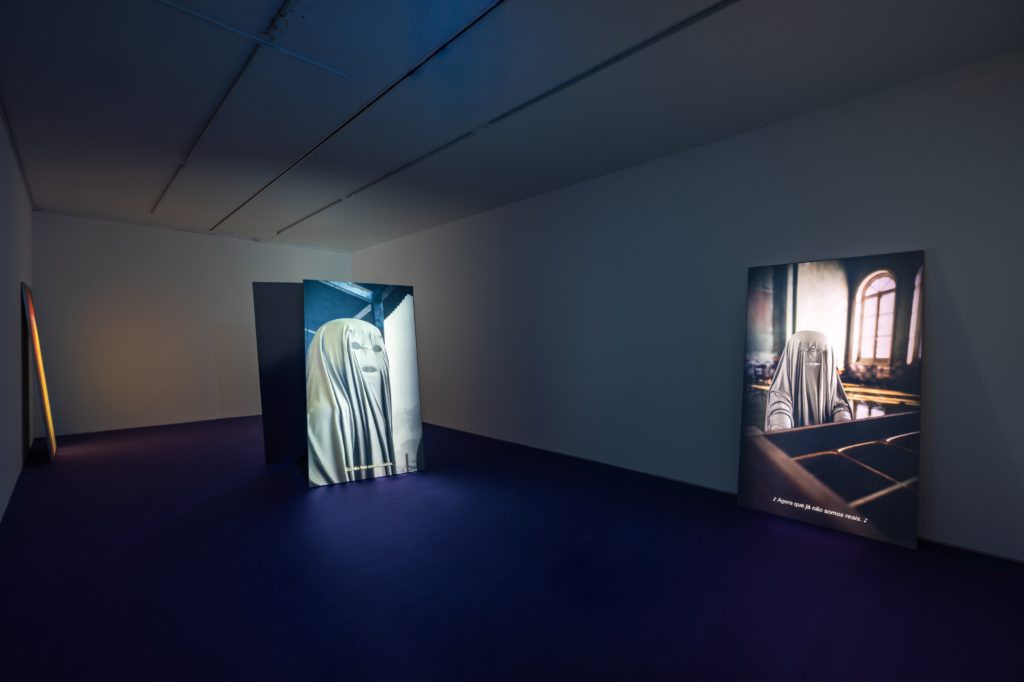
Moving through the five venues of the exhibition, one question keeps resurfacing: Are fictional narratives ultimately the most effective way to reflect on reality? This hypothesis emerges not only from the growing difficulty of distinguishing fact from fiction as our material and digital realities become increasingly intertwined, but also from the difficulty of imagining a resolution during a time when the magnitude of terror continues to expand beyond comprehension. Because power so often operates through invisible, diffuse, and difficult-to-grasp mechanisms, our understanding of it — from surveillance technologies to internalized patterns of consumption — frequently depends on speculation. Throughout the biennial, artists attempt to decode power and its structures. These dynamics are directly explored in the two installations presented at Forum Braga, albeit through opposing dialogical structures. In Gabriel Abrantes’s Bardo Loops (2024), ghosts debate the complexities of contemporary social and interpersonal dynamics. The voices emerging from the four-channel installation overlap and dissolve into one another, filling the space with a discursive polyphony that intertwines the cartoonish with personal drama and intergenerational trauma. Conversely, in Jonna Kina’s video work Secret Words and Related Stories (2016), children gain access to adults’ most intimate confessions through digital passwords shared online: personal secrets are read aloud, reclaimed, and transformed into scripts for a collective performance.
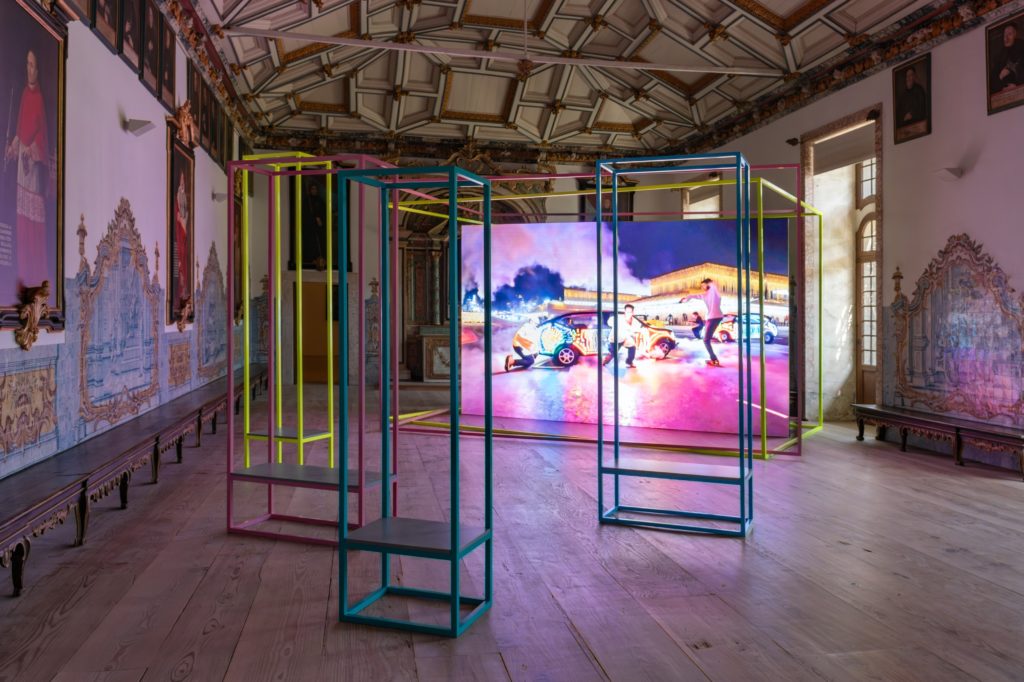
Death permeates all five venues of the exhibition, appearing both as a violent consequence of human action and an unavoidable condition of bodily existence. Death is approached here in a twofold manner. While it is inevitably embedded in the politics and inequalities shaped by power, it is also a field onto which humans and civilizations have projected speculation, belief, and imagination for centuries. Stuart McLean writes that modernity “with its social upheavals, its armed conflicts, its military technologies, and its mass media, has produced not only death but also the spectacle of death on an unprecedented scale,”[1] while simultaneously diminishing the social presence of the dead. Yet throughout INDEX, the dead continue to inhabit the same spaces as the living spectators, resisting “the forensic turn in contemporary humanities [that] has contributed to the shift towards a more ontological and empirical approach to the past.”[2]
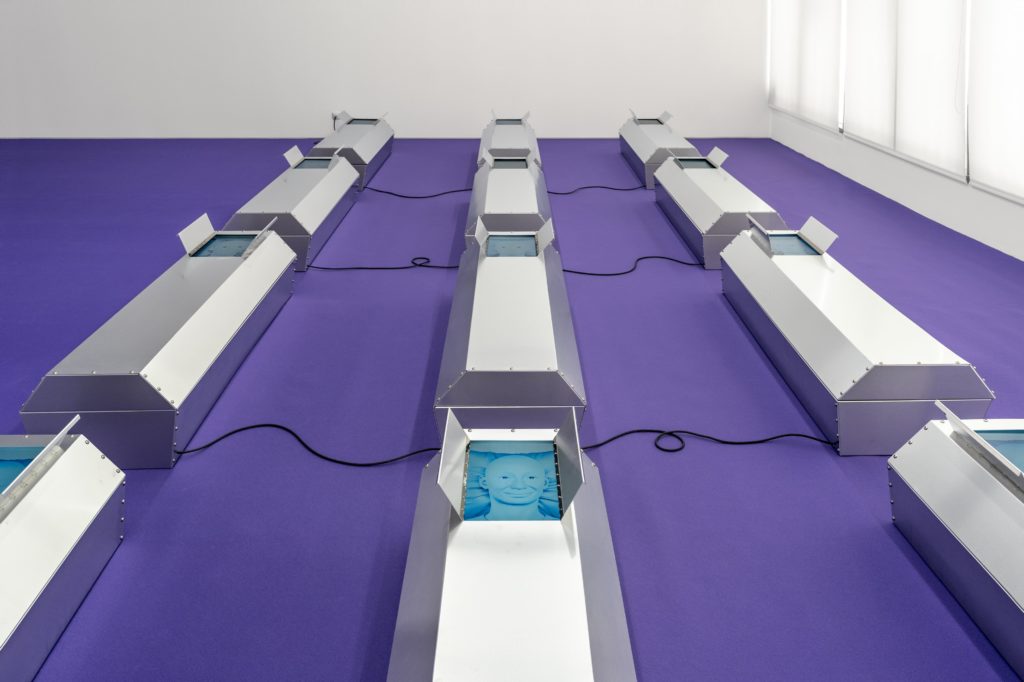
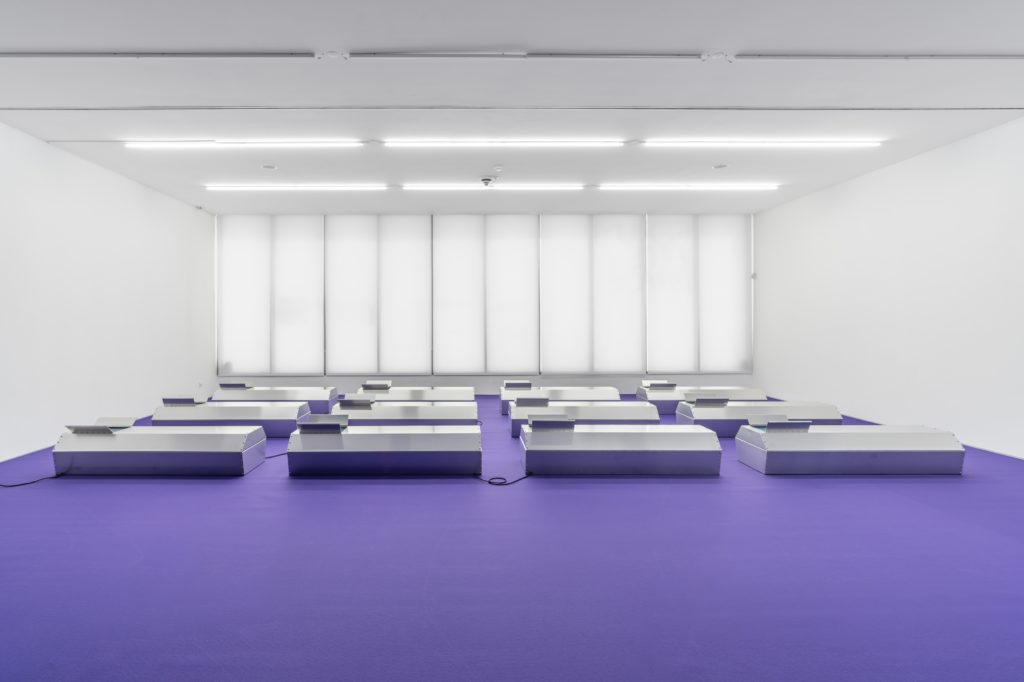
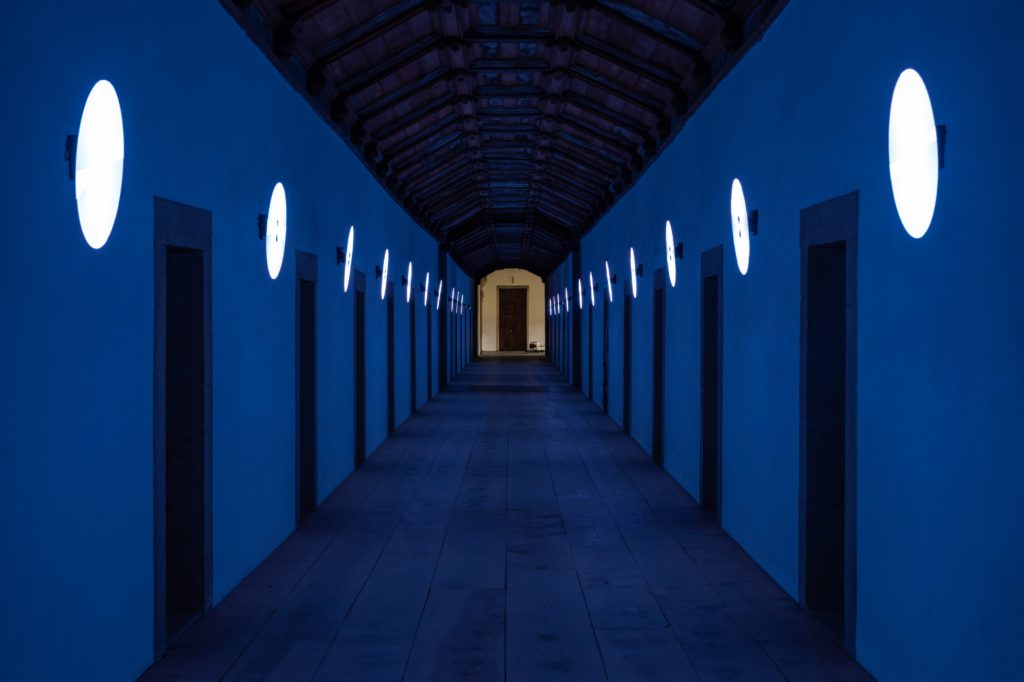
Scattered on a deep purple carpet, twelve metal griefbots compose Stine Deja’s installation GRAVE MATTERS (2025): hybrid technological coffins that embed screens displaying AI-generated simulations of deceased loved ones. Accompanied by a soundscape featuring the chirping of birds and organ music, grief, wellness, and contemplation merge into an unsettling atmosphere of post-human sanitation: the sound diffused throughout the space blends natural elements with artificial manipulations, evoking practices of meditation and their attendant forms of consumerism, suggesting that technology, in its apparent omnipotence, can now do everything — even reconcile us with those who are no longer here. By contrast, the sonic environment created by Mira M. Yang’s sculpture series “rain real soon” (2024), echoing through the corridors of the Mosteiro de Tibães, evokes the traces of past lives through both discarded urban materials collected from the streets of Paris and the resonant rhythms of pungmul percussion. Rooted in shamanic traditions as well as the student uprisings of 1980s Gwangju, these sounds transform the monastery into a space haunted by both memory and resistance.
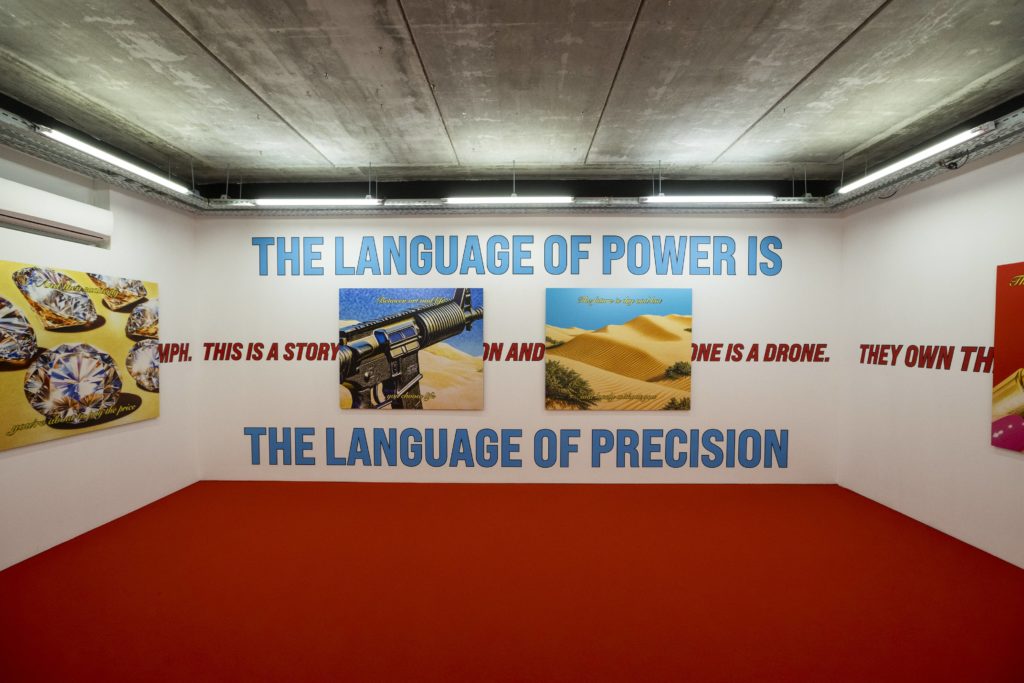
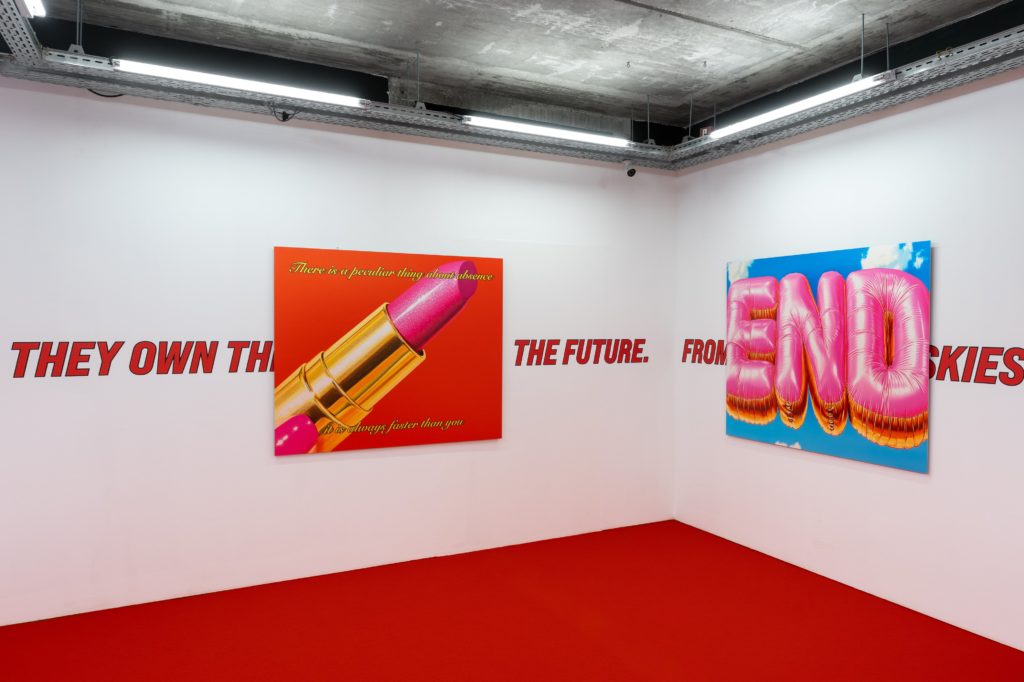
Reflections on our relationship with — or subjugation to — different forms of power are often approached through a sense of humor that oscillates between exhilarating and deeply uncomfortable. Whether a tool for coping or for resisting in a place of struggle, irony is strongly present in many works. Cemile Sahin’s BB – Born to Bloom (2025) TikTokifies the relationship between militarization and nature across Switzerland and Kurdistan, both in the layout of the projected videos, which recalls the vertical format of a smartphone screen, and in the rhythm established through the editing, which pairs pulsating music with a rapid succession of images. Combining references that range from Grimes to Hello Kitty and Heidi in a postmodern pastiche, the glittering two-channel installation destabilizes dominant narratives that frame the Swiss Alps as a site of militarized neutrality and the Kurdish mountains as a heavenly land, as if nature’s wilderness could anticipate a desired freedom.
“Am I free? Are you free? Are we free? Are we too free?” The voice in Fanfictional Politics continues from within the toilet stall. If death persists as a pervasive and violent presence, it may also become an opportunity to reconsider our relationship to the afterlife. If social media increasingly blur the distinction between critique and propaganda, they can also provide a shared language through which power can be ridiculed and destabilized. And if the contemporary art world itself appears increasingly paradoxical and inadequate as a framework through which to confront these issues, then we might as well allow ourselves to have some fun.
[1] Stuart McLean, Fictionalizing Anthropology: Encounters and Fabulations at the Edges of the Human (University of Minnesota Press, 2017), 114.
[2] Ewa Domanska, “Dehumanisation through Decomposition and the Force of Law,” in Zuzanna Dziuban, ed., Mapping the ‘Forensic Turn’: Engagements with Materialities of Mass Death in Holocaust Studies and Beyond (New Academic Press, 2017), 83.