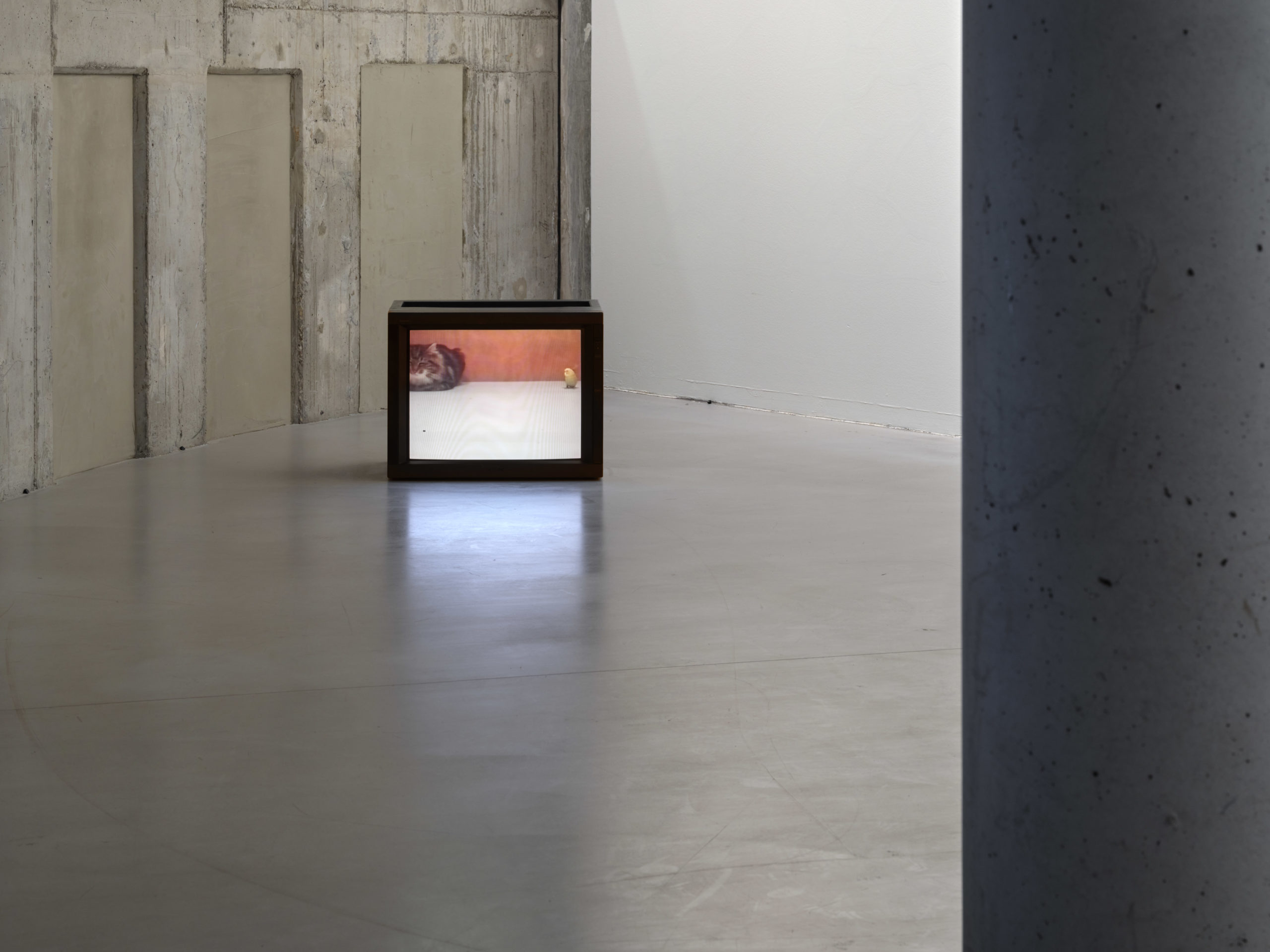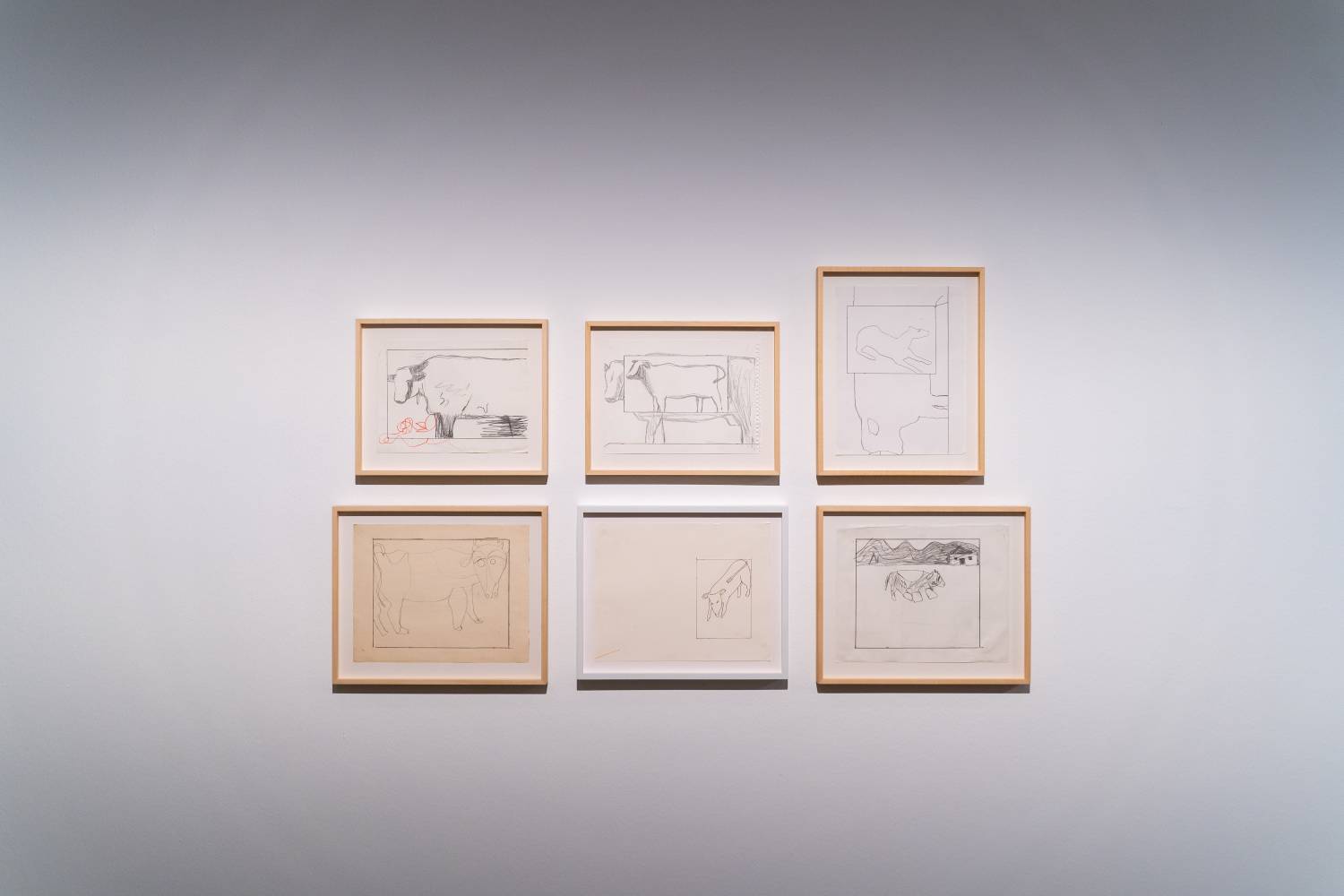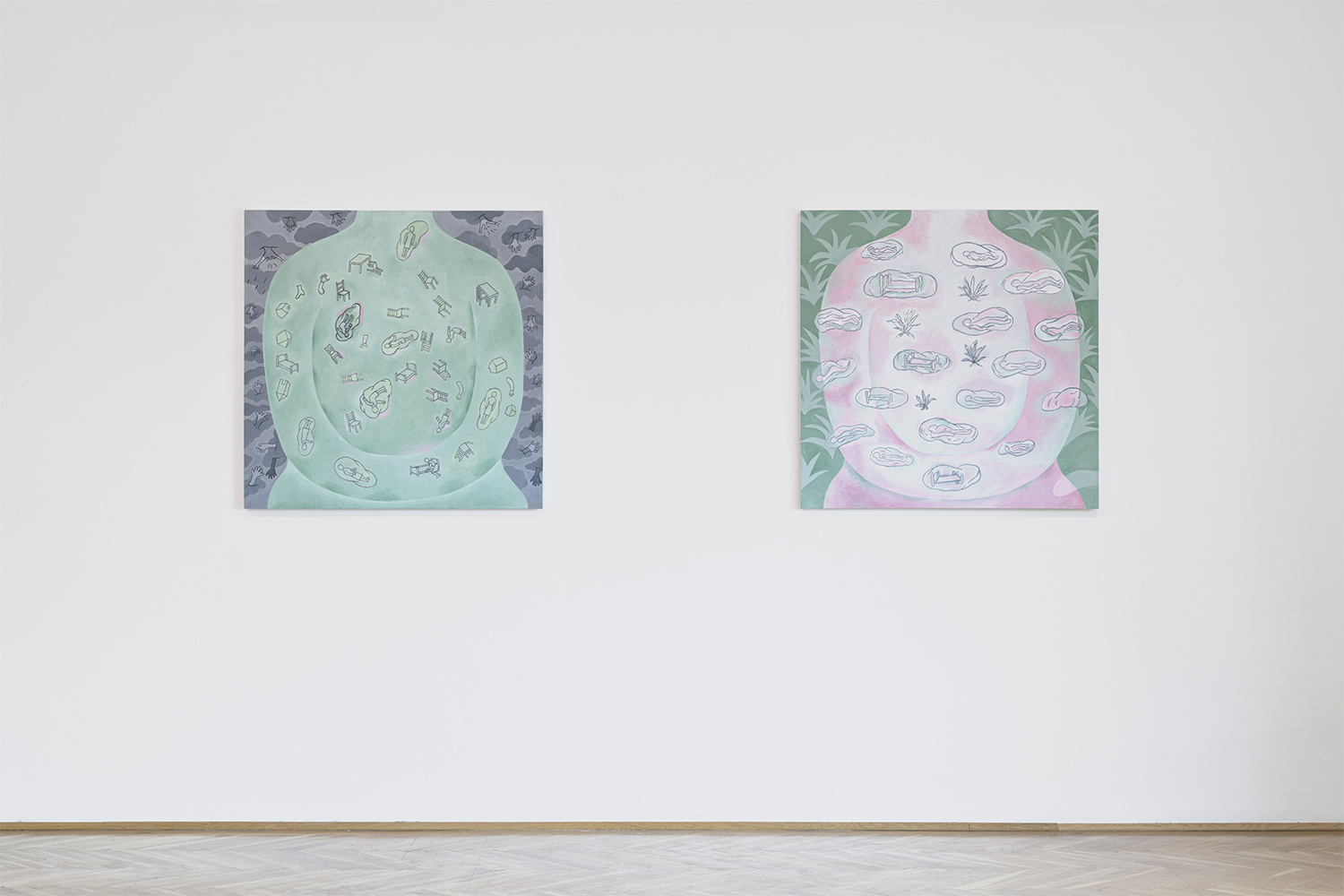
Located less than half an hour south of Luxembourg City, the small town of Esch-sur-Alzette could be regarded as something of a working-class underbelly of the tidy, bourgeois capital. Since opening just five years ago, in the stripped-back premises of a furniture store, the Konschthal Esch has presented an ambitious program featuring notable national artists such as veteran Bert Theis and newcomer Vera Kox, as well as internationally renowned figures such as David Claerbout and Titus Schade. The current exhibition, “état bruit,” combines homegrown and international talents in a thematic group show, presenting, as the press text puts it, a contemporary survey on art reflecting the “channels, signals, and background noises” of present-day life.

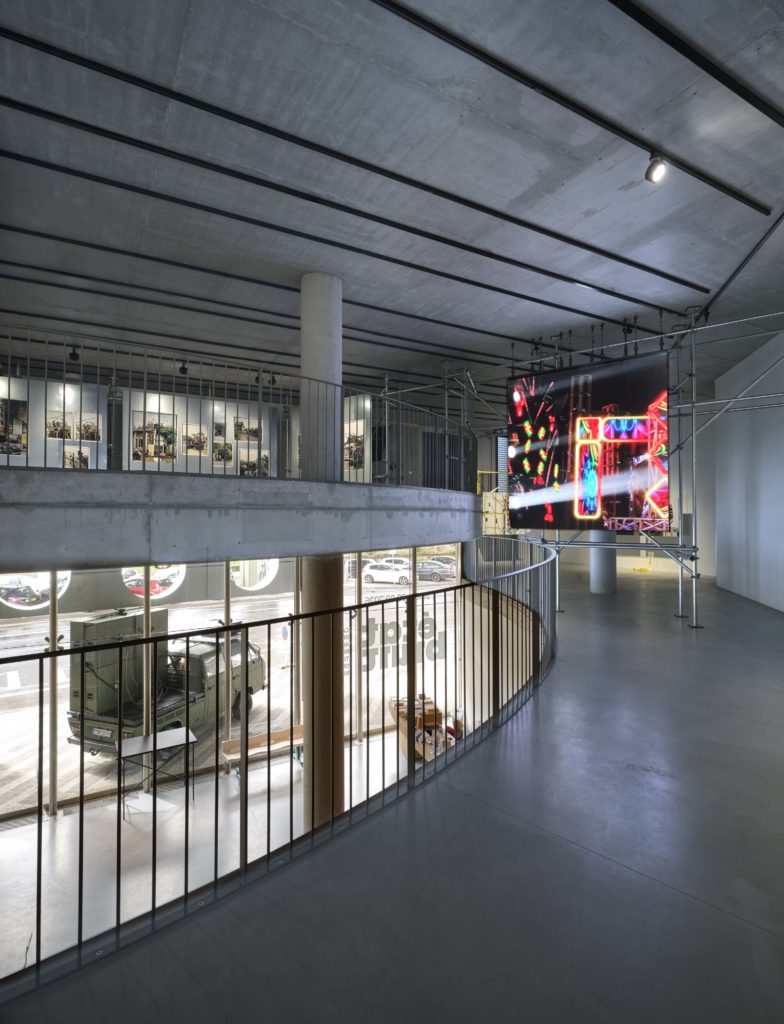
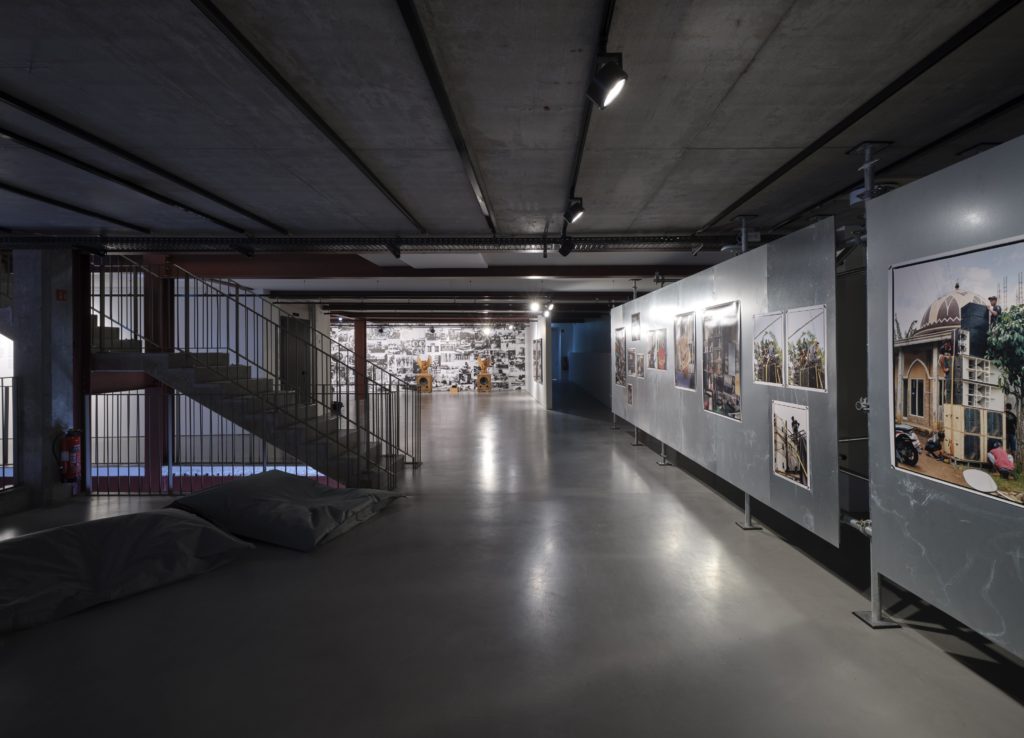
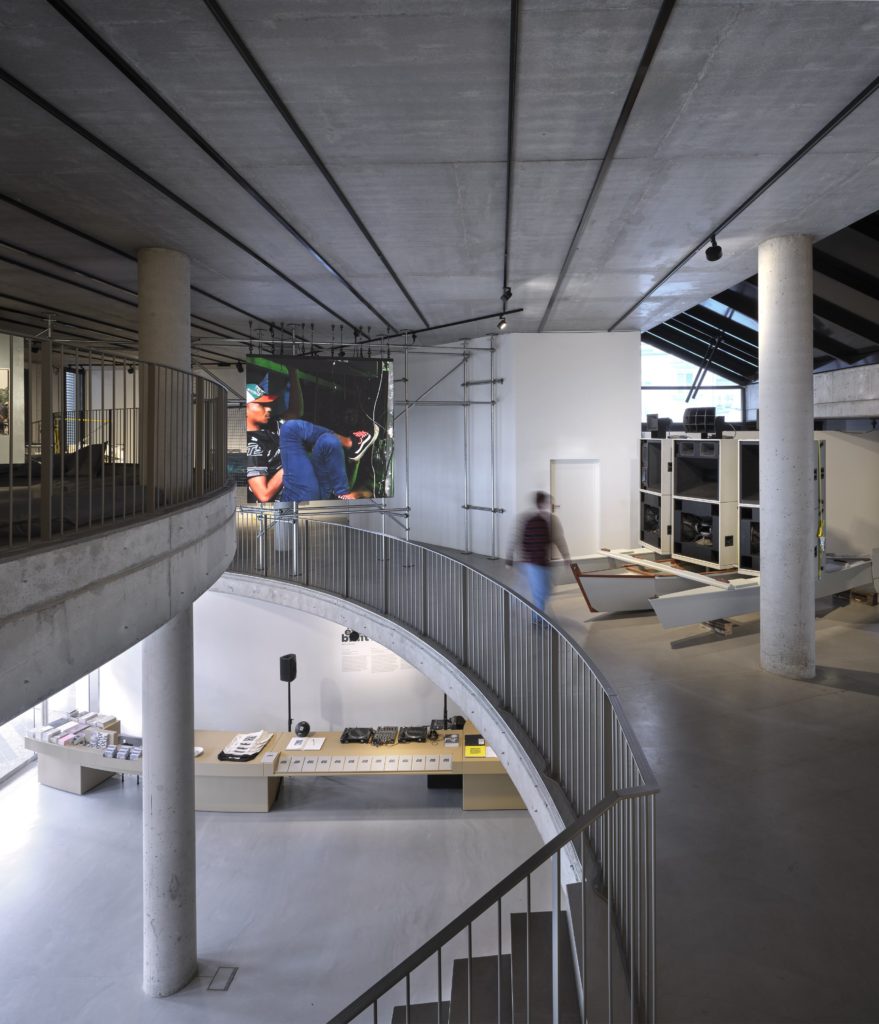
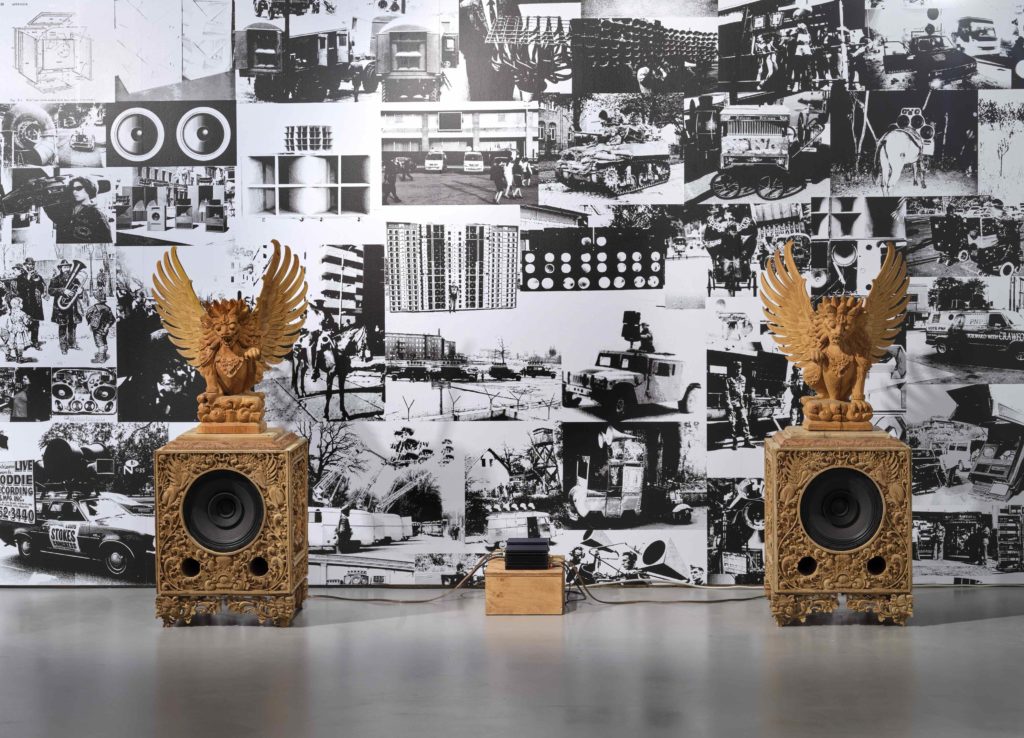
Parked in front of the Konschthal entrance, Nik Nowak’s van-turned-sound-sculpture, Hantu Sound System (2026), drones noisily, competing with the traffic from the busy street and the railway overpass outside. It sets the scene for a sprawling installation spanning two whole floors, including another of the artist’s sound systems — a converted boat — and videos of his research into Indonesian sound horeg. These precariously assembled sound systems, mounted on trucks and traveling across East Java, bring village life to a standstill through their deafening musical disruptions. Archival and documentary material from the artist’s recent research into historic sound systems, speakers, and listening devices fills the walls.
Upstairs, Ukrainian collective Open Group presents their work Repeat After Me II (2022–24), one of the stand-out works of the Venice Biennale 2024. The installation recreates a karaoke bar with videos of Ukrainian refugees using their voices to imitate the sounds of war: gunfire, shelling, and sirens. By inviting viewers to participate and echo these sounds into provided microphones, the artists not only encourage reflection on the existential experience of war, but also its theatrical and absurd echo in media. Seeing it again, the work has come to function not only as a contemporary monument to this war, but also, through its absurdity, a striking rendering of both its victims and the tragic physical and culture aftermath wrought by machineries of destruction. It carries a level of empathy that feels noticeably absent from Nowak’s presentation.
In comparison, Nika Schmitt’s installation of two series of minimalist kinetic machine-objects –– either self-destructive or self-propelling –– (harm, 2022) appears merely quirky. On the same floor, Tintin Patrone’s playful and absurd AI-generated musical, birth of a nation (2026), performed by a choir of four stones, a singing hologram, and an aimlessly wandering mechanical sheep on a pink carpet, expands on local prompts to form a robotic variety show of fakelore. In stark contrast, a completely darkened space houses the installation 24H Silence (2020/2026) by Brognon Rollin, illuminated only by the lights of two operational vintage jukeboxes. These allow viewers to play historic recordings of broadcast minutes of silence, commemorating tragic events such as the death of Lady Diana. The work requires time and patience: only gradually do the odd background noises –– a bird’s chirp, a cough –– emerge, allowing the listener to imagine the circumstances of the original recording. Yet the piece ultimately succeeds.
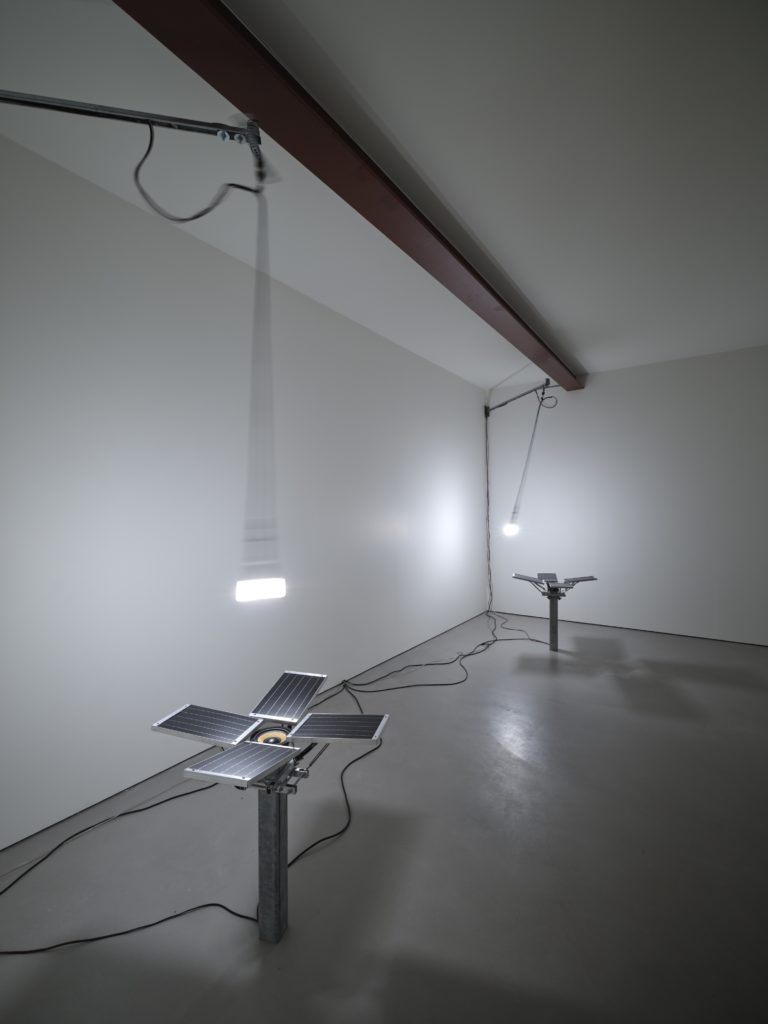
The final floor presents research-oriented projects. The three-channel video installation Warnings in Waiting (2024) by Aura Satz beautifully depicts the production, placement, and disposal of actual sirens in an alluring visual essay on the structure of time. More specifically, her video examines the creation of awareness in moments of emergency, which divides time into a before and an after –– into past, future, and imminent emergencies. Gabriela Löffel’s video takes a different route: in Grammar of calculated ambiguity (2024), we watch a group of specialists discuss the recording of a speech delivered in relation to the publication of the Pandora Papers — a trove of documents, leaked in 2021, revealing the concealed dealings of prominent politicians, businesspeople, and celebrities. The speech addressed insiders within the financial services industry: the architects of offshore financial structures that enable tax evasion and extreme concentrations of wealth. By having social scientists, legal experts, and phonetic specialists analyze both what is explicitly said and what is merely implied, the work exposes the underlying discourses of financial transactions. Reflecting on the way international financial transactions are facilitated and orchestrated, the piece demonstrates how rhetoric and speech construct credibility and, ultimately, reality — much as shadowy financial transactions shape the transformations of the places we collectively inhabit. It’s here that the exhibition’s sound-related ideas become most compelling, with the power of metaphor ultimately prevailing over the purely sensory.