It is a compelling pairing: as part of this year’s edition of “Various Others,” Lohaus Gallery, Munich, and Mennour, Paris, present works by two Berlin-based, internationally acclaimed women artists whose practices and subjects intersect in striking ways.
Though working in different media, Ilit Azoulay and Alicja Kwade share an interest in perception, materiality, speculative histories, physical phenomena, and cosmic orders. Both are research-driven artists who investigate the symbolic and spiritual dimensions of materials, artifacts, and images.
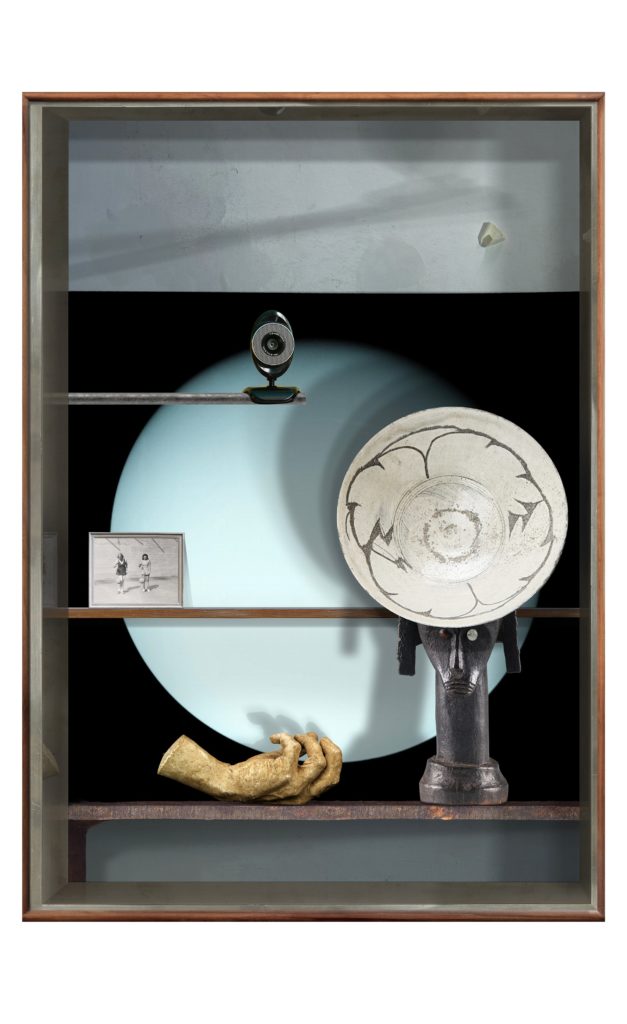
Azoulay’s Future Ancestors (2024–26) and Kwade’s Silent Matter (2022) both operate according to the logic of collage — whether in two or three dimensions — creating new meanings through unexpected combinations of images or objects. Both invite us on a journey between prehistoric times and speculative futures, between Earth’s interior and the vastness of the universe.
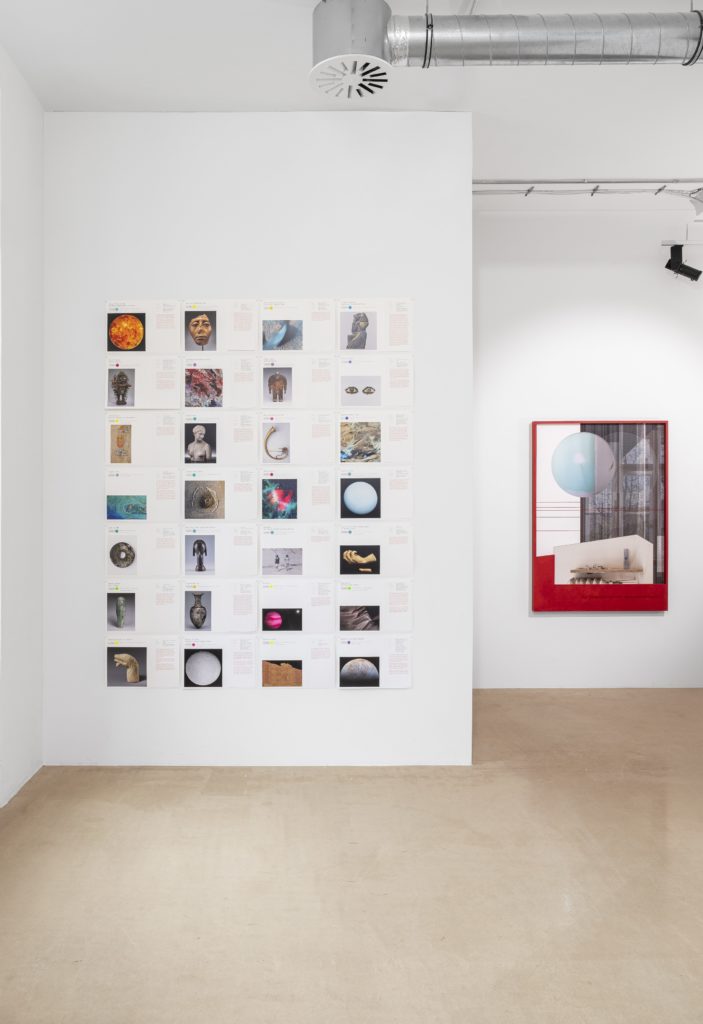
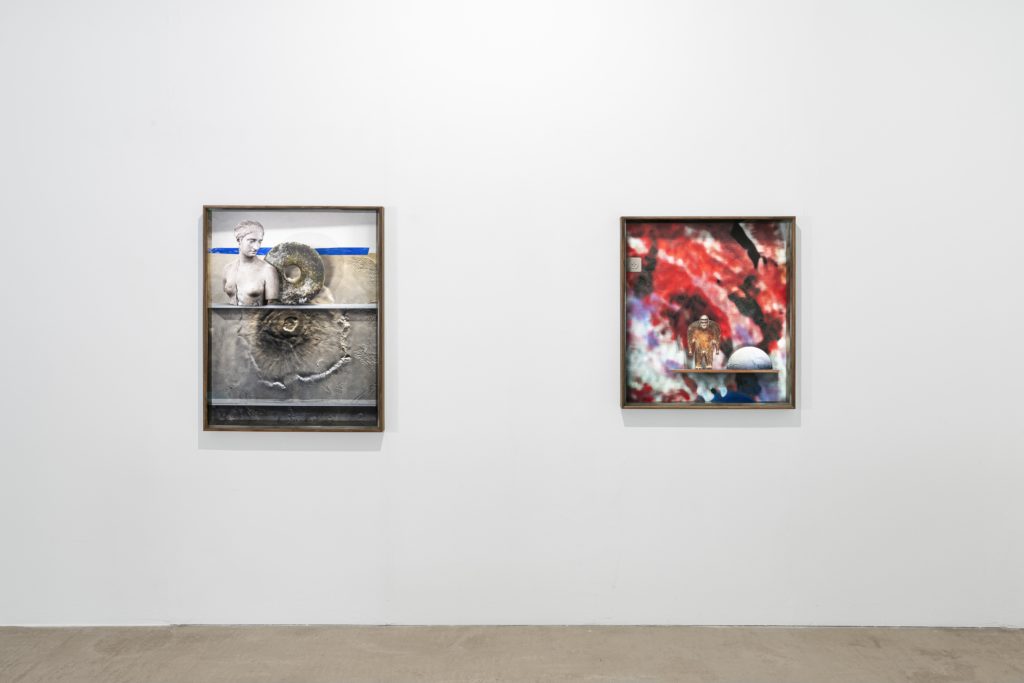
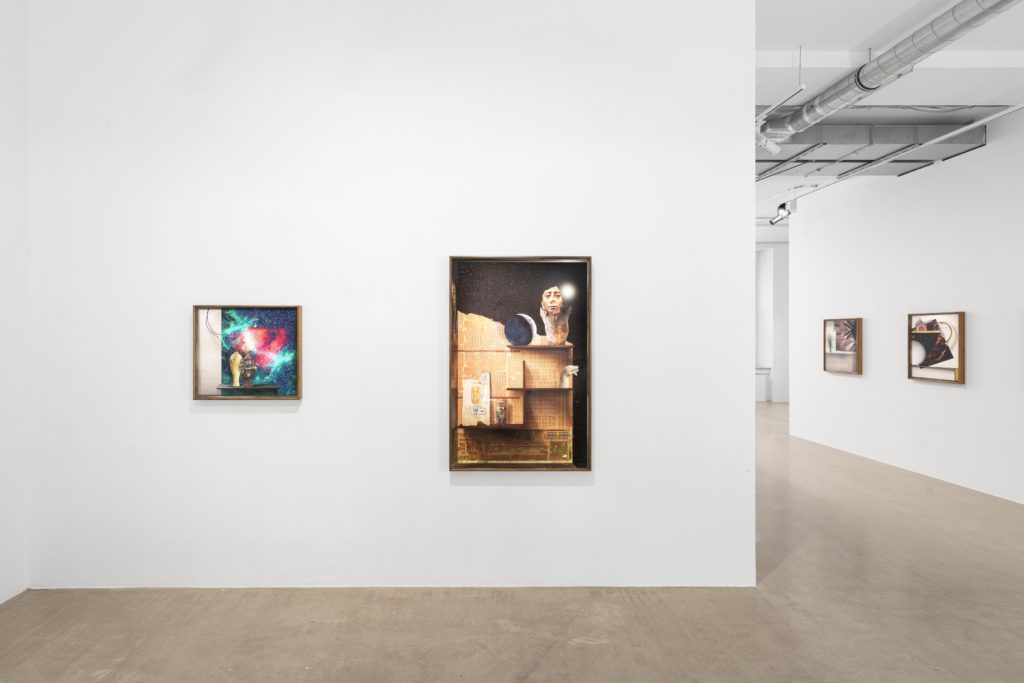
At first glance, Azoulay’s seventeen-part series of digitally composed inkjet prints resembles a sequence of domestic still lifes. Artifacts, cult objects, and planetary models rest on shelves set against backgrounds dominated by celestial bodies and cosmic landscapes sourced from NASA’s open-access image archive. Titles such as KERANA, LAYALA, or ORMEL evoke distant planets, posthuman civilizations, or science-fiction heroes. Yet these images are carefully constructed collages composed of photographs of objects and landscapes that originated in vastly different periods, geographies, and cultural contexts. They ultimately invite us to join a mental game: “To think as a future ancestor means to act in the present as if memory had already begun,” the artist is cited in the press release. Looking back from a distant future, we are confronted with questions such as: What traces of our carefully preserved heritage will remain? Which stories will be told, and which truths will endure?
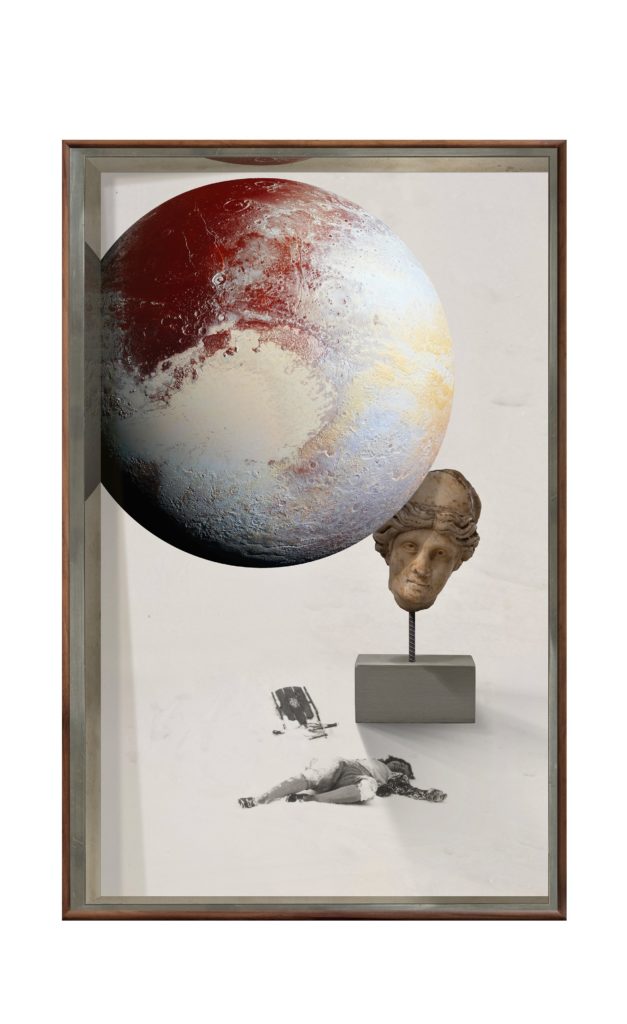
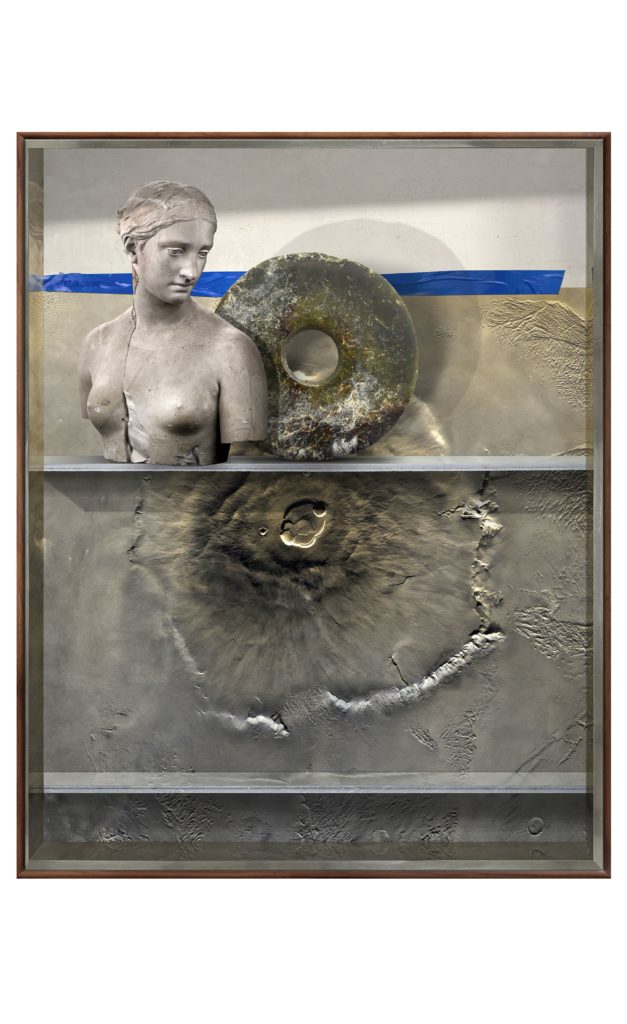
Azoulay’s practice rests on the understanding that history itself is a process of selection and thereby a construction. Narratives become accepted truths through repetition and circulation of particular facts. In a similar way, the artist constructs possible truths in her images while demonstrating how meaning emerges through the combination of carefully selected elements. An accompanying archive lists every component used in the collages, and additionally includes an image source, date, place of origin, inventory number, objective description of what is depicted, as well as a personal note explaining this element’s role within the series.
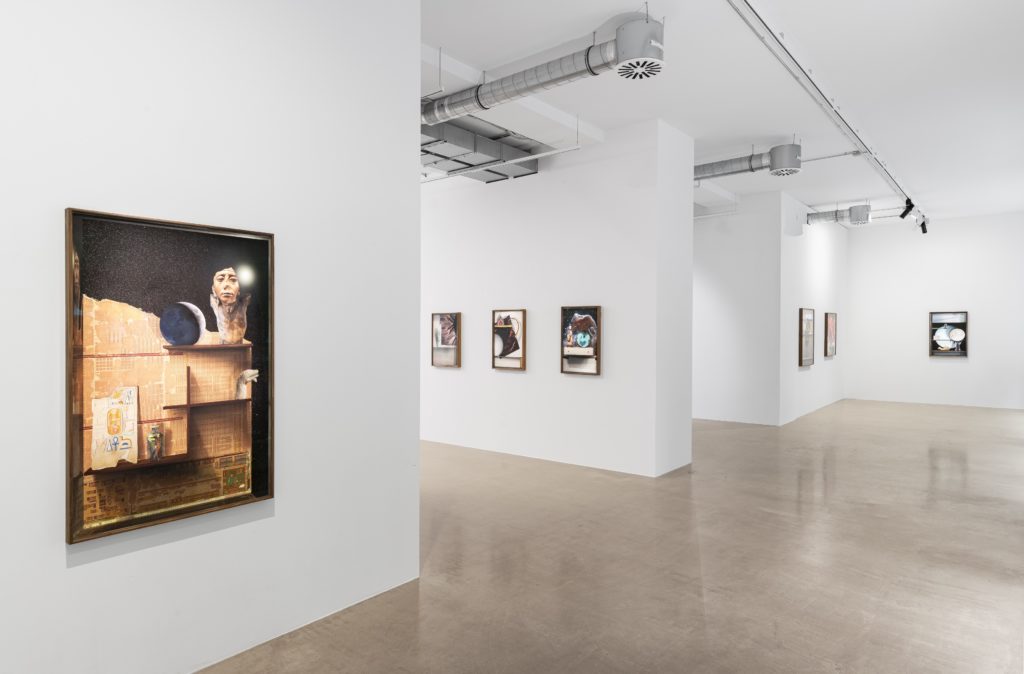
One entry, for example, identifies the background of ORMEL as the Eagle Nebula, located some seven thousand light-years away. Azoulay describes it as “a field of unseen creation and destruction.” We also learn that this formation of stardust, a place where stars are born and die, is located in the Serpens constellation. At this point, one possible thread connecting the work’s disparate elements becomes apparent: in ORMEL we are confronted with the snake as mythological figure that forms part of so many creation myths. It appears in a jade vase from the Chinese Liao dynasty, in the form of dragons, and even in the work’s title, which echoes the Old Norse word ormr for serpent. Such connections emerge gradually, rewarding sustained attention. Azoulay fosters a critical visual literacy that feels particularly urgent today. Yet one should remain cautious: while she does cite her sources, she plays with the veracity of her seemingly realistic digital collages by simultaneously constructing and deconstructing everything we have just learned.
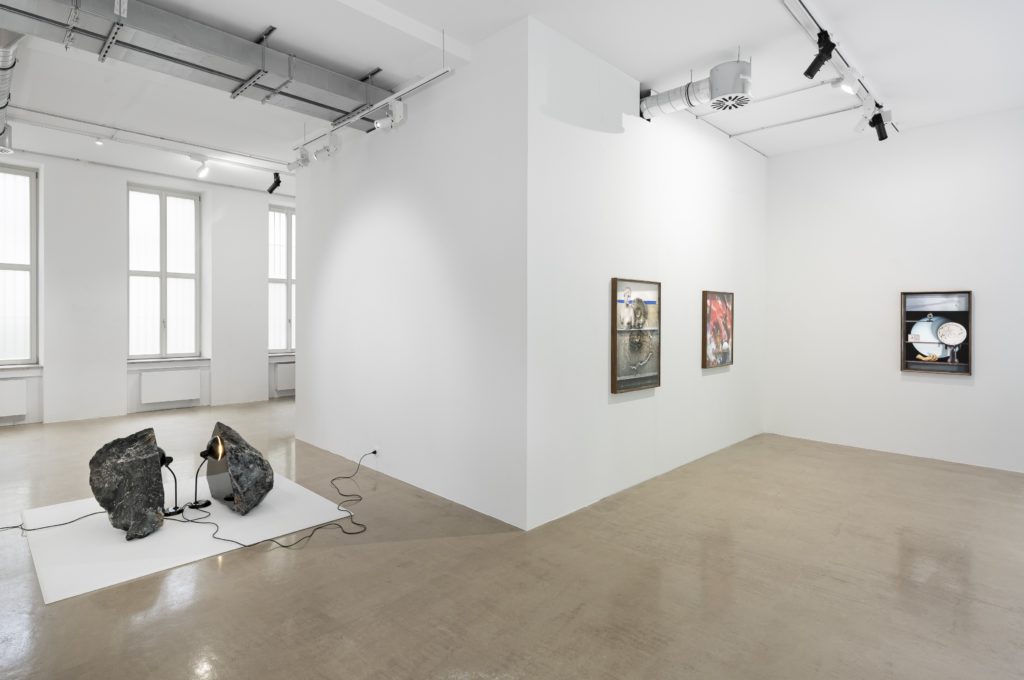
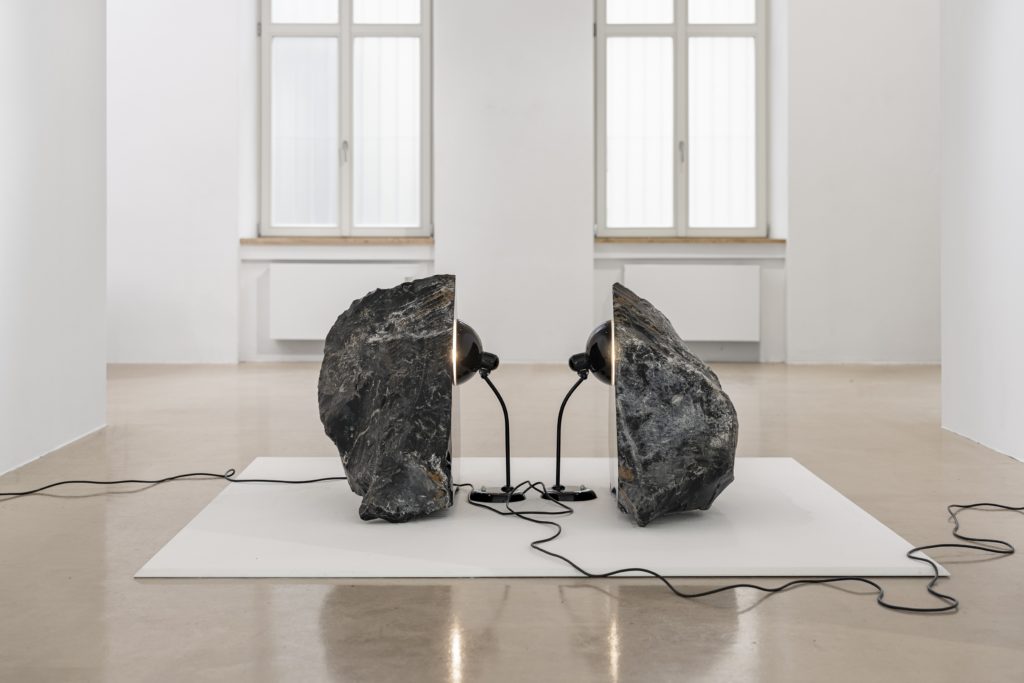
Where Azoulay dissects and exposes, Kwade allows matter itself to speak — or to remain silent. Silent Matter consists of a large rock of obsidian — a naturally occurring volcanic glass formed when lava cools extremely rapidly — split into two halves and placed directly on the floor. Sourced in Mexico, it has been cut and polished so that the opaque black surfaces function as a mirror at the center of which stands a black Kaiser Idell lamp, positioned right up against the obsidian. Each lampshade is completed by its reflection to form a sphere, while the light gets swallowed up by the deep black of the material and appears merely as a faint corona. The reflections multiply endlessly, extending the scene into a seemingly infinite space.
Kwade’s installation likewise reflects on humanity’s origins, history, and a distant future. The material itself once emerged from the Earth’s interior, yet here it becomes a model of the ever-expanding universe and its multiplying galaxies. Obsidian also played an important role throughout human history. Owing to its razor-sharp edges, it was used to make tools in prehistoric times, and later was invested with spiritual significance, particularly for the Aztecs.
By positioning modernist design icons before these primordial stones, Kwade further creates a symbolic scene for humanity’s enduring search for answers — represented quite literally by light and the typical location of these lamps, namely a scholar’s desk. At the same time, she evokes the limits of human understanding, symbolized by the pitch-black surface of a material — glass — that is typically associated with transparency.
With regard to the exhibition, one might wish for a slightly more courageous presentation that more clearly foregrounds the dialogue between the two works. Nevertheless, the artworks open up a fascinating space-time continuum in which linear histories dissolve and different temporalities overlap. Together, Future Ancestors and Silent Matter propose a universe in which past and future, matter and myth, fact and speculation merge rather than contradict one another.