There is a particular elegance in the way Julian Charrière approaches catastrophe: never head-on, never didactic, but through a slow drift across temporal scales that quietly destabilize our certainties. His collaboration with Ruinart unfolds precisely in this suspended register, where deep time seeps into the present and renders the contemporary moment strangely provisional. Beneath the vineyards of Reims lies the memory of the Lutetian Sea — a submerged world whose residues persist in chalk, fossils, and now, in Charrière’s work, in sound, image, and matter itself.
Rather than illustrating climate change, Charrière displaces it — stretching perception across millions of years, collapsing distinctions between organic and mineral, presence and disappearance. Corals become archives, pigments become sediments, and images themselves begin to erode. What emerges is less a warning than a recalibration: an invitation to perceive the Earth not as a backdrop, but as a dense, unstable continuum in which human time is only a brief interruption.
Charrière reflects on Chorals (2025) and Veils (2025), two bodies of work that extend his ongoing inquiry into what he calls “living geology.” Between the acoustic memory of reefs and the spectral fading of coral images, the dialogue unfolds at the limits of visibility and comprehension — where art does not explain the world, but exposes the fragile conditions under which it can still be sensed.
Timothée Chaillou: Forty-five million years ago, the Champagne region was submerged beneath the Lutetian Sea, a warm sea that covered part of Europe. This is the starting point for all your projects for Ruinart in 2025. Evoking this natural past, devoid of human presence, allows us to see current climate changes anew as well as anticipate our future. How do you position yourself with regard to climate change denial?
Julian Charrière: One way to approach it is to first imagine the planet forty-five million years ago, and then, from the vantage point of the present, speculate on what it might become forty-five million years into the future. The former is a world-without-humans, but the latter (if we do not radically transform our relationship to the environment) would instead leave us as humans-without-a-world –– inhabiting a climate likely too hot, too chaotic, to sustain the stability we have come to expect and project onto our everyday life.
But in terms of looking at the past, at least for me, there is no “natural” past, per se. No pristine state of perfect equilibrium –– life, whether plant-based or in the form of animals, has competed for resources on this planet since it first emerged. The difference is that we are the first Earth-dwellers, as far as we know, who can dwell on this more personally and question the structures and industries that drive it forward.
Obviously, climate change denial isn’t a good thing, but when it comes to the role of art the responsibility is perhaps not to convince the public of facts, but rather to prepare us in a more abstract and emotional way for understanding the interconnectedness of our planet. To open an inlet into an enormously entangled and complex issue.
TC: So there is the aforementioned commission Chorals in the cellars in Reims, but for the art fairs where Ruinart participates there are also constellations of wall works and sculptures centered around corals and reefs.
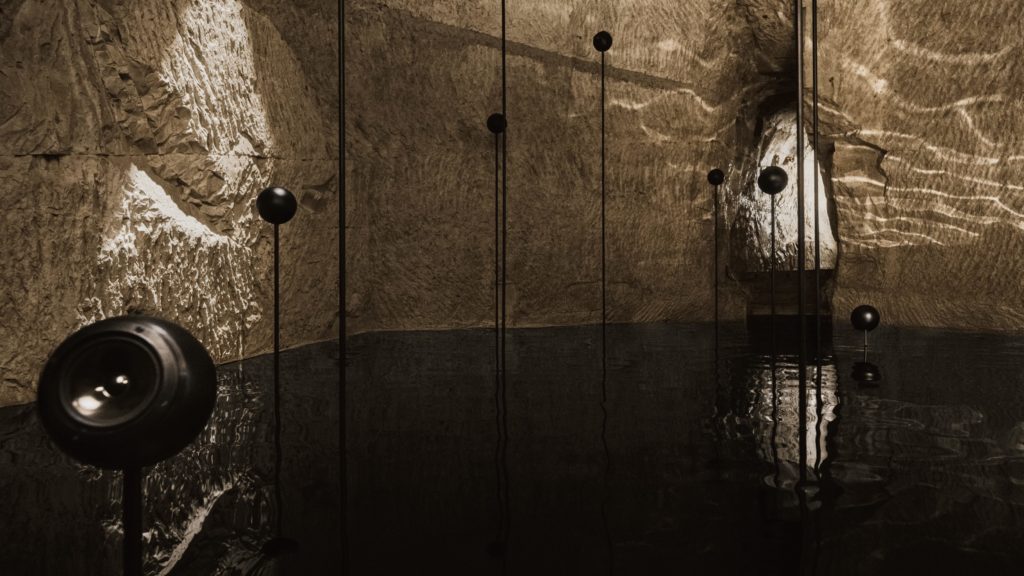
JC: There is something poignant about having part of the project burrowed in the cellars at Reims, while other elements of it travels. Some presentations at the fairs acted as preludes to the permanent installation as well, forming a hexagonal chamber of infinite reflections, the mirrors of which vibrated arrhythmically to the amplified recordings of ocean reefs. The traveling nature of the installation speaks directly to the idea that sound carries; it crosses vast distances, which is why it is so critical as a form of communication in the ocean. Scientifically, bioacoustics has also become an important ecological tool to understand not only what life is present, but what might be disappearing. It forces us to listen, something human beings do not always excel at. Similarly, in terms of presence and absence, the sculpture features some forty-million-year-old fossils from when the Lutetian sea covered the region; drawing parallels between the life worlds of the past and present — and possible futures.
TC: With Veils you chose to create images not only of coral reefs, but also with corals. Tell us about the dialogue this creates with the marine past of the Champagne region.
JC: The coral reefs in Veils enter into dialogue with Champagne through a shared geological past. While geographically distant, both coral formations and the region’s chalk and limestone subsoil originate from accumulated marine life — remnants of ancient seabeds shaped over deep time. In this sense, corals can be understood as contemporary representatives of those ancient seas, giving form to processes that also underlie Champagne’s terrain. I feel this connection is echoed in the work’s material process: pigments derived from coral and limestone-based lithography embed marine matter directly into the image. As a result, the works do not simply depict reefs but reactivate a common geological memory –– a kind of dreamspace in which the tides of past oceans rise and fall beneath the vineyards.
TC: For the series of images, you chose photolithography, a nineteenth-century printing technique.
JC: Though I work across multiple media, I do have a foundation in photography, and a technical as well as cultural interest in the photographic process. As a species, we format and formalize the world through images. Take a reef for instance, the way we understand a coral reef is usually through colorful high-definition photography. But this is not reflective of the reality of the coral, but mediated. How can we collapse this distance? With photolithography, I found it beautiful that it is printed with limestone, so first off we have another marine mineral present, but the pallor of the pigments also directly reacts against the human framing. This white and grayness is of course also indicative of something dystopian as well, with the threat of warming waters and acidification leading to bleaching events.
TC: So, just as you are bringing an ancient geological era into the present, you are also bringing an ancient technique into the present.
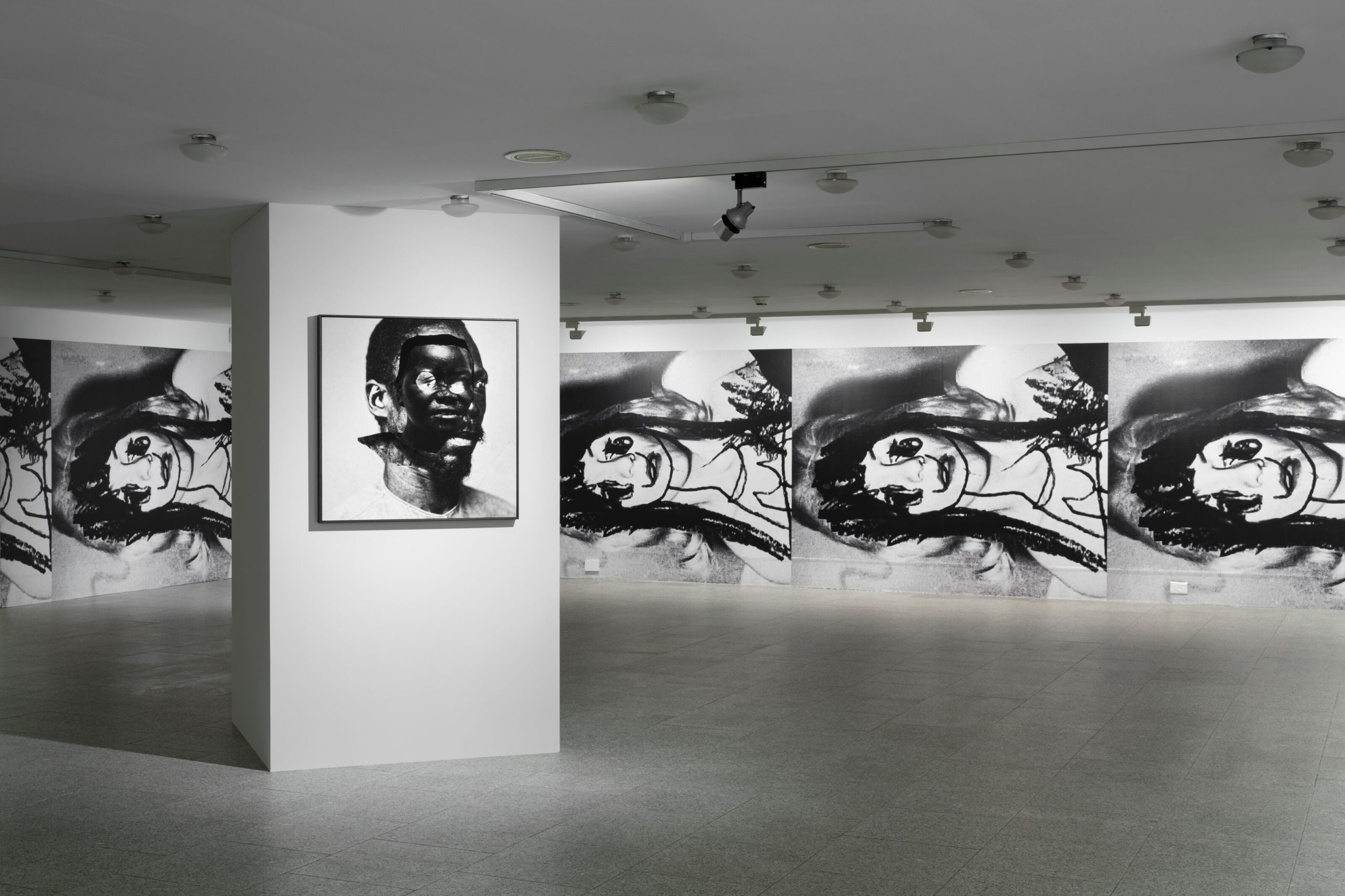
JC: That material history of image-making is baked into many of my projects, because, for me, it is also the history of reality-making. Our world, more than ever, is constructed through images. But while today we are inundated by “immaterial” pictures, it was once a laborious task to document and reproduce the world around us. Whether creating a print or a photograph, it takes natural resources. Even now, we mine rare earth metals to power our smartphones, with which we collectively document the world on mass. Bringing older techniques, such as lithography, into the present demonstrates how foundational it has been for our species to capture the world around us — to try to hold onto a moment, if not time itself.
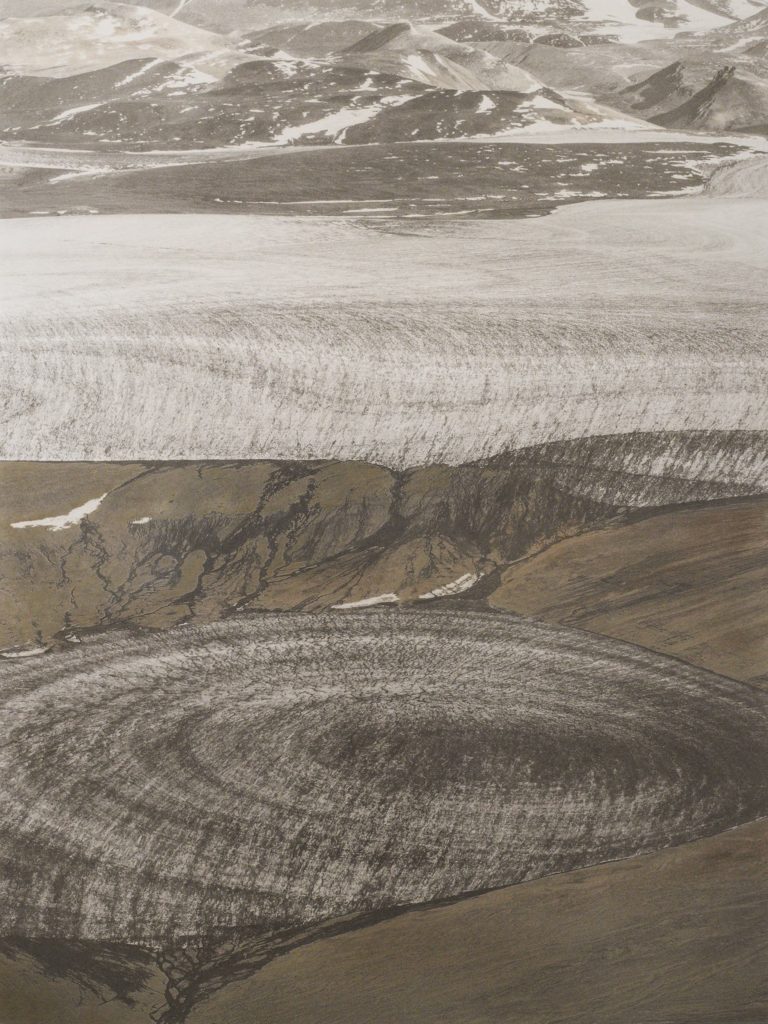
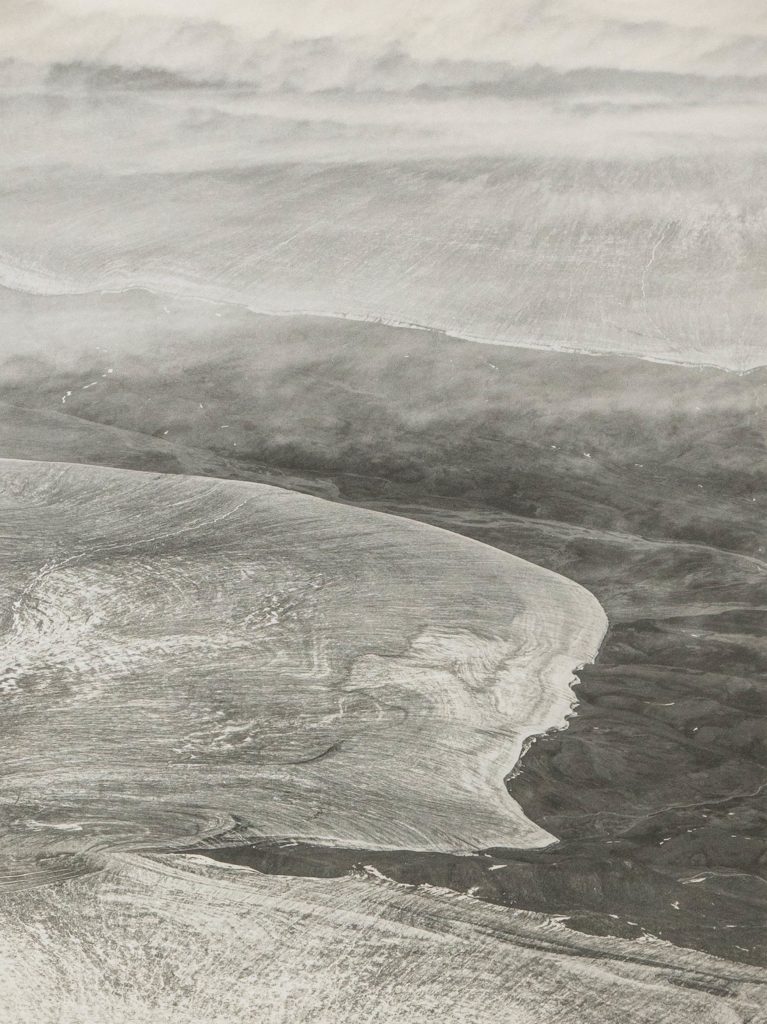
TC: The result is a series of images with pale, almost spectral tones, as if seen through a veil or bleached. You draw a connection with the bleaching of coral reefs and their decline.
JC: There is something uneasy about the beauty of coral reefs as we have come to know them — hyper-saturated, luminous, almost excessive. That image is already a construct. What interested me with Veils was what happens when that image begins to fail, when color withdraws rather than seduces. The bleaching of coral is not only an ecological event, it is also an optical one: a loss of intensity, a draining of the visible. The works lean into that threshold where the image is still present, but only just — where it hovers on the edge of disappearance. In that sense, the “veil” is both a filter and a condition: something that obscures, but also something that reveals the fragility of what is being seen.
The palette emerges directly from this logic. By deriving pigments from the coral skeleton itself, the images are not simply about reefs, but materially of them. What we perceive as these almost ghostly tones is not an aesthetic imposed onto the image, but a consequence of its own matter. Color ceases to be descriptive, becoming instead residual –– what remains after transformation, erosion, or collapse. In my photogravure series “Limen” from 2021, for instance, pigments were produced from glacial sediments to construct color profiles rooted in specific sites, while in the 2024 piezography work Sun Sets in Stone, coal-based pigments represented the idea of fossilized plant life. In both cases, the pigments are not neutral but act as carriers of geological and ecological memory. What changes in Veils is perhaps the degree of attenuation –– the way the image begins to withdraw as the material it is made from signals its own vulnerability.
So the bleaching you mention is not illustrated so much as enacted. The image does not represent decline; it undergoes a parallel condition. It becomes quieter, thinner, less certain of itself. And in doing so, it asks us to look differently, not for spectacle, but for trace, for what persists at the limits of visibility.
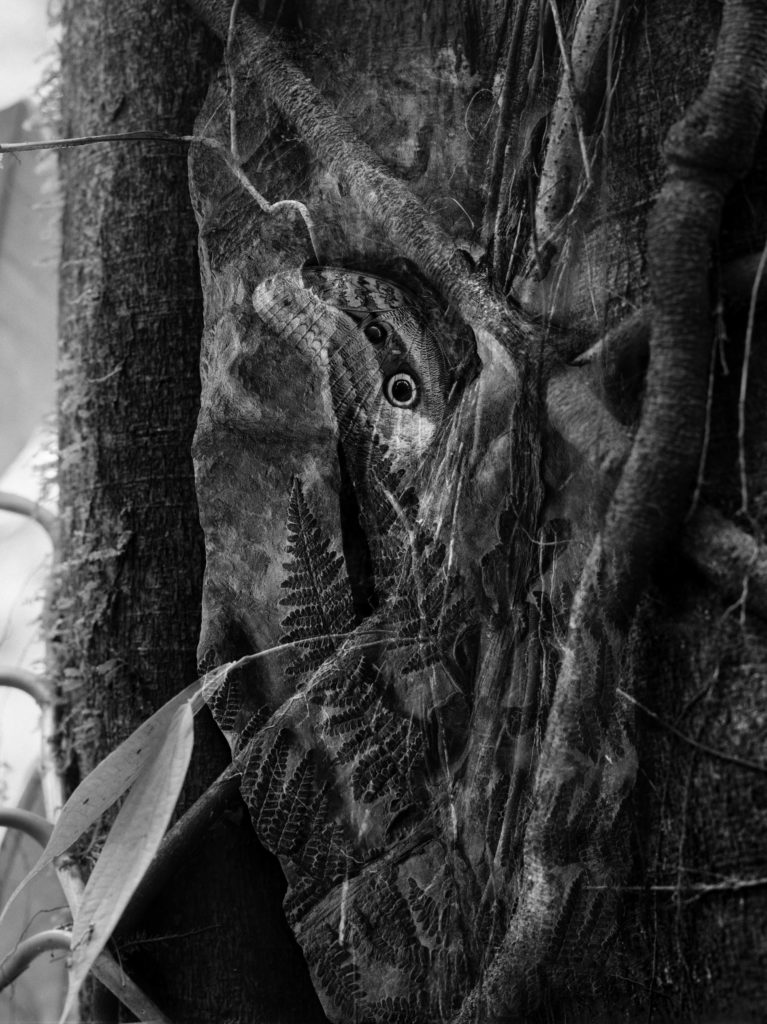
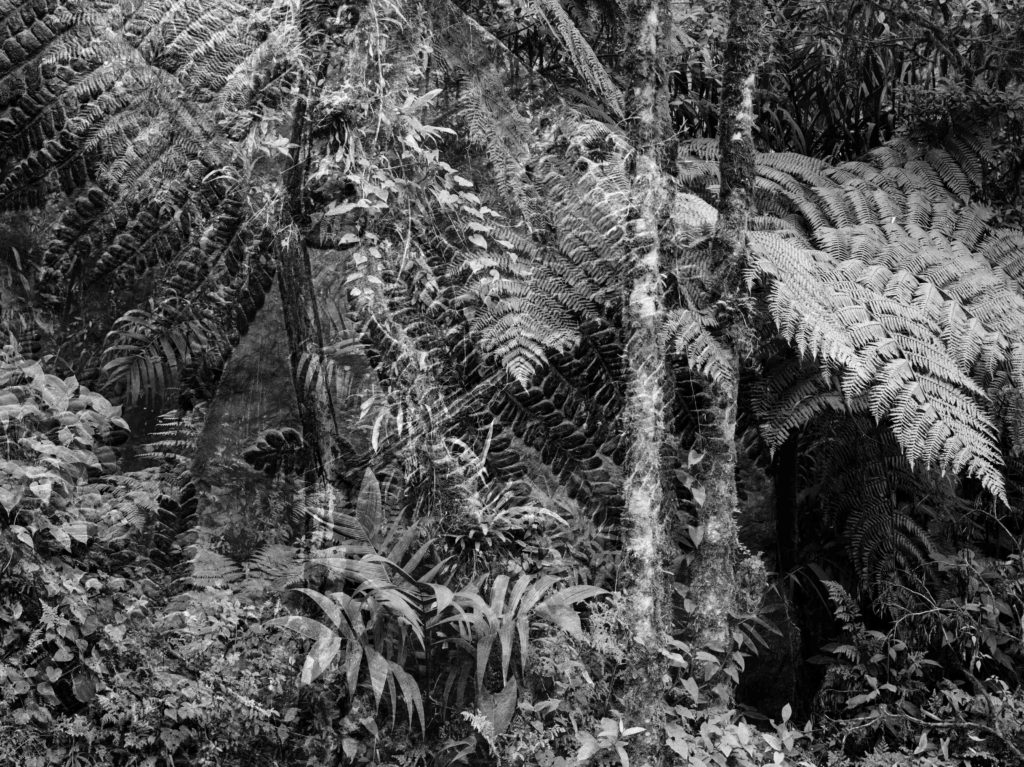
TC: In the chalk caves, visitors hear a sound piece that evokes the murmurs of ancient seas: Chorals. How did you obtain and work with these sounds? Is there a refrain? There is also a play on words between choir and coral?
JC: Since Cousteau’s Silent World (1956),we have often imagined the ocean as a mute expanse, but in reality it is structured as much by sound as by sight and light, if not more. In reefs, where visibility is limited, acoustics are an important part of orienting, communicating, and surviving — a reef can be heard before it is seen.
For Chorals, I worked with hydrophone recordings gathered in and around such reef ecosystems, capturing this layered bioacoustic activity — from the percussive crackle of crustaceans to the more tonal signals of fish and the distant presence of larger marine mammals. The composition is spatial rather than melodic; it reconstructs an ecology of sound that surrounds the listener. Within the chalk caves, these frequencies resonate through an ancient mineral architecture, as if the space itself were holding an acoustic memory of its submerged past.
If there is a refrain, it is this persistent crackling often associated with a healthy reef, something that begins to thin out as ecosystems degrade, where the silence itself embodies a loss. The work moves between these states of presence and absence. The title Chorals plays on this duality, too: a choir suggests a collective voice, more than the sum of its parts, and coral refers to a colonial organism — both forms of distributed bodies.
What interests me is how this collectivity can be sensed rather than seen, as a fragile polyphony that is continuously forming, and increasingly at risk of fading.
TC: For Bruno Latour, the critical zone refers to the thin layer of the Earth — a few kilometers at most — where the atmosphere, soil, water, living organisms, and human activities interact. It is neither the planet as a whole nor a simple natural backdrop, but the concrete space where the conditions for life occur and where the effects of human actions are directly manifested. Latour uses this concept to shift our perspective: instead of thinking of “nature” as a distant exterior or an abstract totality, he invites us to understand that we live and act within this fragile, limited, and politically exposed zone, whose equilibrium depends on complex interactions between human and non-human beings.
JC: Latour’s notion of the critical zone resonates strongly with how I approach the natural world — not as a backdrop, but as an active, entangled field of relations in which we are inevitably embedded. I have often been interested in dissolving this persistent fiction of separation between humans and what we call “nature.” In many ways, his thinking articulates something that is also present in my work: that there is no exterior vantage point from which we can observe the world neutrally. We are always inside, materially and temporally implicated.
What I find particularly compelling is this shift in scale and attention — from the planetary abstraction to the thin layer where life actually unfolds. Much of my practice operates within this compression of timescales and materials: drilling into geological strata, working with fossils, ice, or coral, or engaging with sites where human and non-human forces collide. These are all ways of encountering what Latour describes, not as theory, but as something physically legible. The ground beneath us becomes a kind of archive, but also a site of ongoing transformation, where past and future are continuously negotiated.
At the same time, I’m less interested in illustrating such concepts in a literal way, and more in staging an experience where they can be felt –– encounters that reorient perception and allow for really feeling that what we call environment or landscape is not something we look at, but participate in and with. The challenge, then, is not to represent the critical zone, but to reveal our condition within it — to make perceptible this dense web of interactions that both sustains and exceeds us.
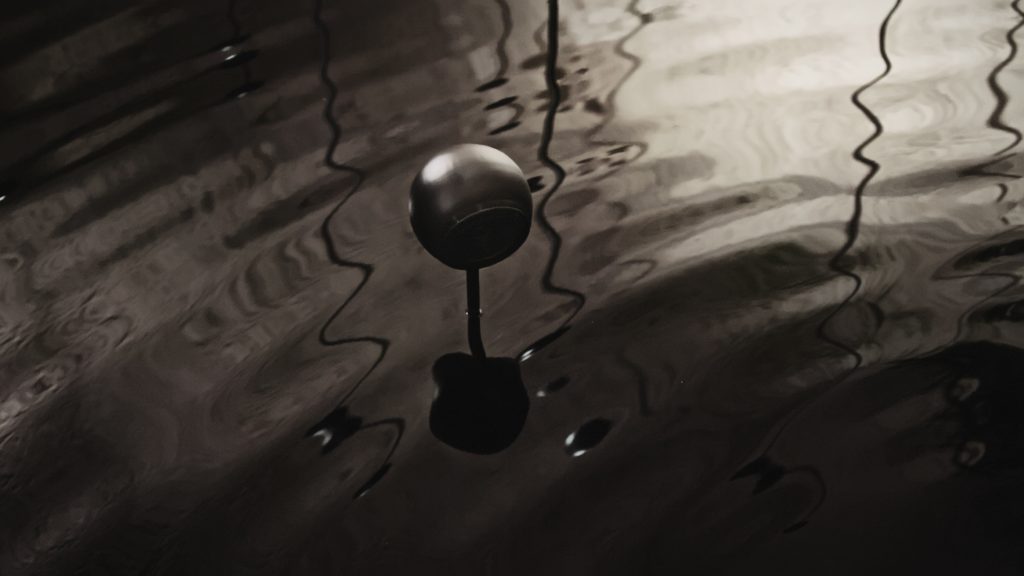
TC: Now that the past year has passed, how do you look back on all these projects and how have they guided your work in a new direction?
JC: Looking back, it feels significant and poignant that this collaboration wove together pre-existing, though previously distinct, threads in my work. For instance, in terms of geology, I had been thinking how to commune with the enormous forces that govern the underworld, which manifested in “Stone Speakers” (2024–25) at Palais de Tokyo. There it was the real-time voices of volcanoes that spoke. At the same time, I have sought to open channels of communication with the inhabitants of the sea. It is a curious dialectic, because on land, volcanoes are louder than us, yet in the ocean it is us who roars, disrupting habitats through industrial noise pollution.
What is interesting though is that these different “domains,” the earth and the sea, are not actually distinct, though our hominid temporality makes them appear so. The hydrosphere feeds into the atmosphere, which feeds into the lithosphere, turning together with other biogeochemical systems, like the nitrogen cycle and, of course, the carbon cycle, and her dark twin, the deep carbon cycle, round and round these energies envelop the world, breaking through the thresholds we project upon them. This project was, in a way, a concession to a more complex and shifting reality, where when you look through deep time the world ceases to be so divided; rather it appears continuous: coral as living geology, stone as the residue of ancient life.
Works like Veils and Chorals, alongside earlier explorations into underwater and subterranean life worlds and soundscapes, led me to become increasingly interested in this threshold where the organic and mineral converge, where life becomes sediment and mineral matter retains traces of life. It is a shift toward zones of transfiguration, of different kinds. I would like to investigate the sites where this is felt most keenly, like in a caldera, or in the cave –– and other portals of exchange, spaces between biology and geology, speculation and science, signal and substance, past and future, and the now. That’s probably where I am heading, or returning, depending on how you see it.