I.
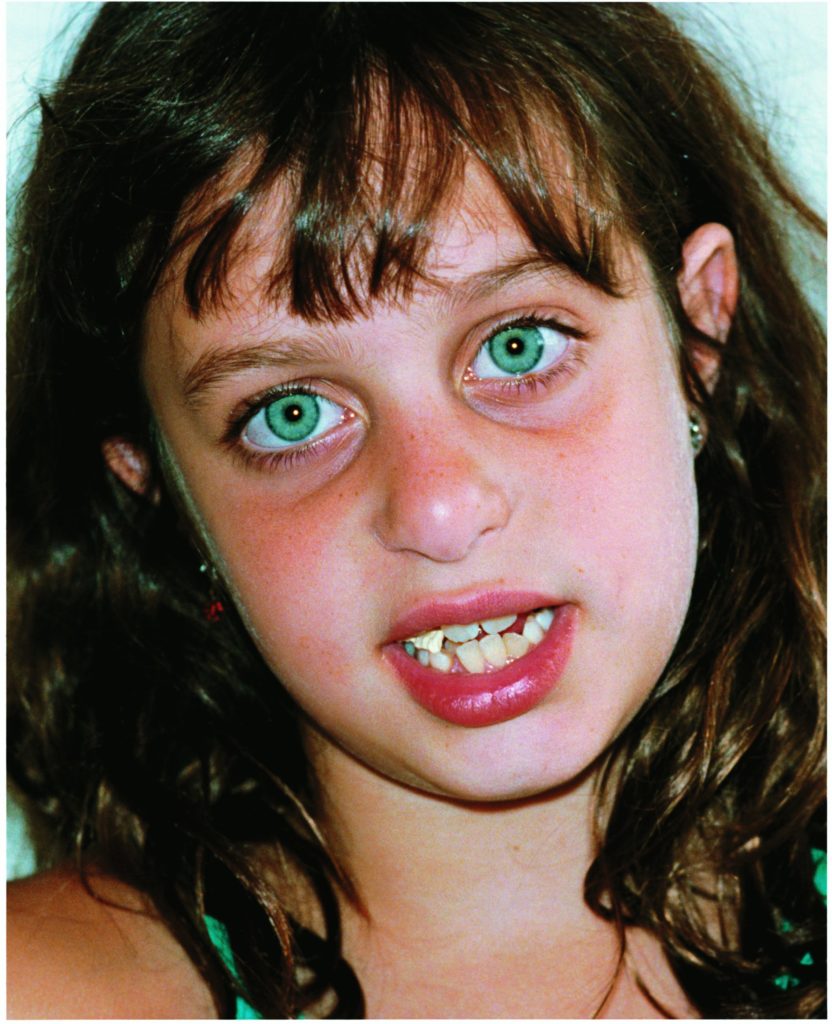
It is easy to start with the eyes. My first encounter with the work of Roni Horn involved an inadvertent staring contest with the young girl who appears on the cover of Horn’s book, This is Me, This is You (1997–2000). I picked up the book in a bookstore, and was not much older than the girl on the cover. The stark, confident portrait left me with many questions. I would encounter it again years later, then acquainted with Horn’s practice, but no less transfixed.
The subject is Horn’s niece, Georgia, who, across ninety-six images taken with a point and shoot camera, allows Horn to photograph her in various states of posing and repose. The sessions happened over a span of two years and were informal. There is an ease and trust embedded within these portraits, perhaps nurtured by the bonds of family, or perhaps driven by the lack of vanity typical of a seven to nine-year-old. This apparent comfort fosters a sense of direct confrontation with the camera, and thus, the viewer.
Georgia has exceptional eyes, large and ice blue. All of the fluctuating trappings of pre-teenhood (plastic necklaces, hooded sweatshirts, Halloween costumes) seem to orbit around her unchanging eyes. In one image, she uses her hands to mimic glasses, framing these vessels for sight.
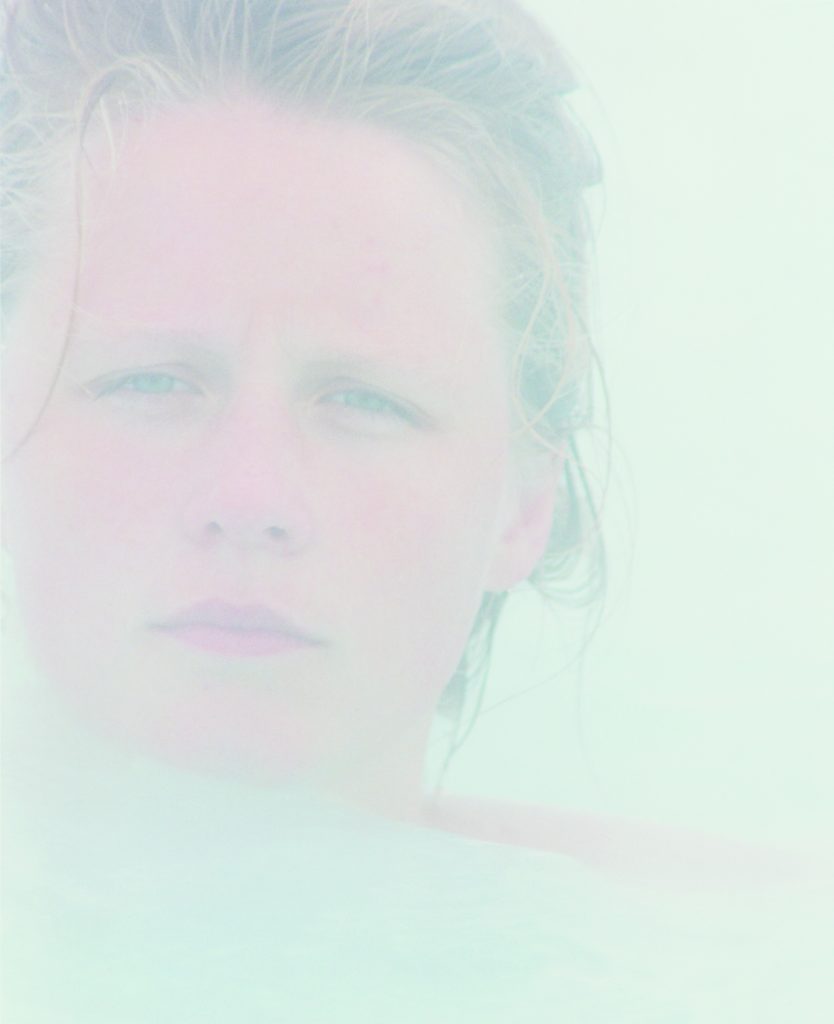
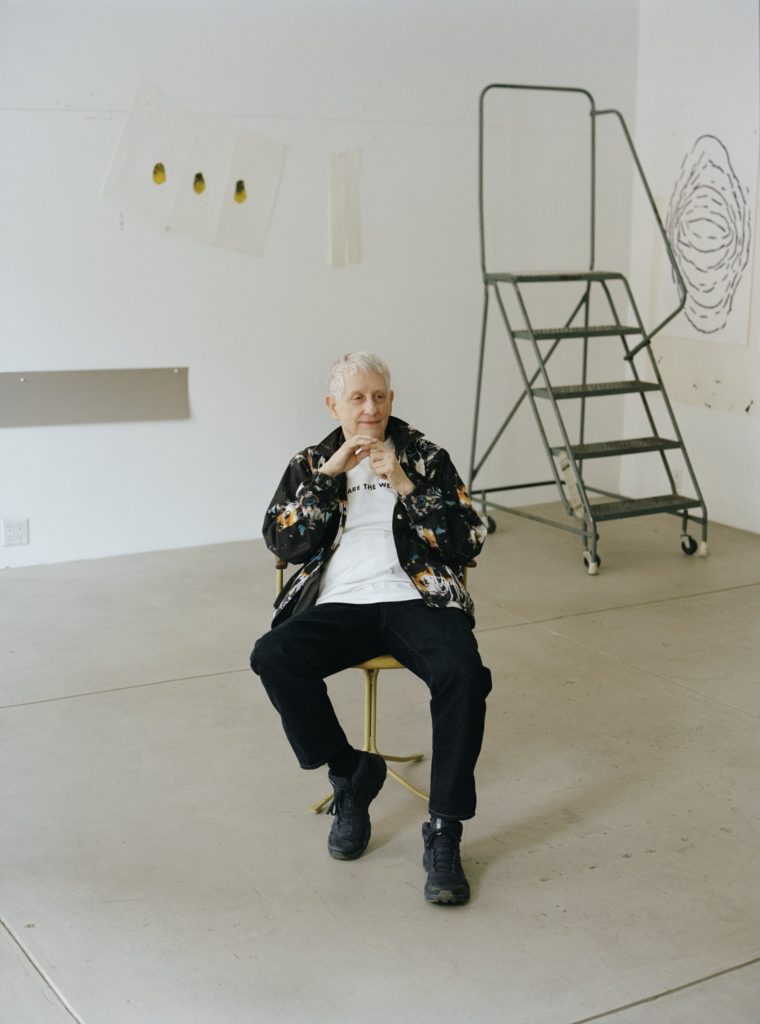
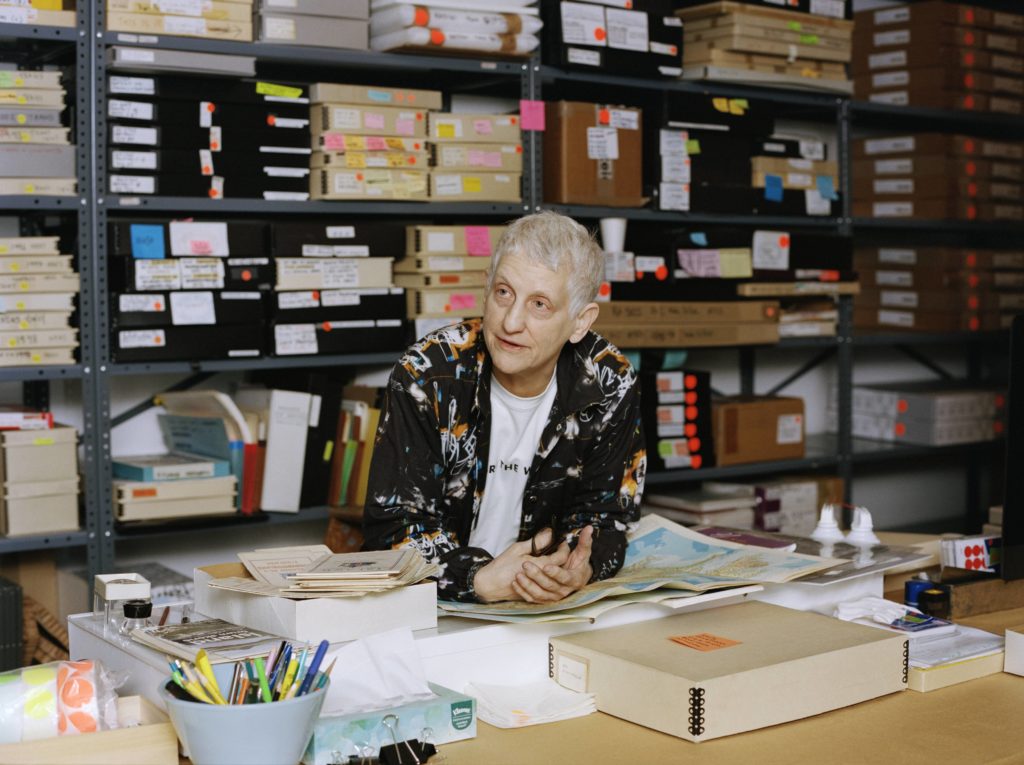
Horn bears a remarkable resemblance to her niece. Twinned things loom large within her practice, so this likeness deepens her formal commitment through genetic chance. Their shared attribute is their eyes. Horn’s may be a less vivid shade of blue, but they are no less soulful. They appear again — though often with looks cast aside — in a.k.a. (2008–9), a suite of fifteen pairs of found photographs of Horn throughout her life. We see her as a baby, a rakish butch, a pre-Raphelite-esque young woman, a distinguished artist; across these excerpts in self-presentation, she maintains a legibility and steadiness, rooted in her gaze.
It is hard not to associate these juxtapositions with the famous line delivered by Margaretha Krook in Ingmar Bergman’s Persona (1966): “The hopeless dream of being — not seeming, but being. At every waking moment, alert. The gulf between what you are with others and what you are alone.” a.k.a. feels like an intentional narrowing of that gulf. In a later conversation, Horn explains to me that “some people don’t change much. They’re not inflected by their surroundings or their inner psychology, they don’t share that on their face. I noticed, for example, people who are really, really sensitive psychologically, their face changes enormously. My face changes a lot, but it doesn’t change at all in the big picture. It’s very consistent.”
The gaze, for Horn, is important as a means of “for basic understanding and communion.” It is foundational for human relationships, which is perhaps why there are so many instances in which the subject gazes straight back at the viewer. The clearest example is Margret, Horn’s protagonist in You are the Weather (1994–6), whose face is spread across one hundred photographs in the series. Framed and illuminated by the water of Iceland’s hot springs, Margret’s face is transformed by Horn into an erotic landscape; her anonymity only underscores the particularity of Horn’s devotion.
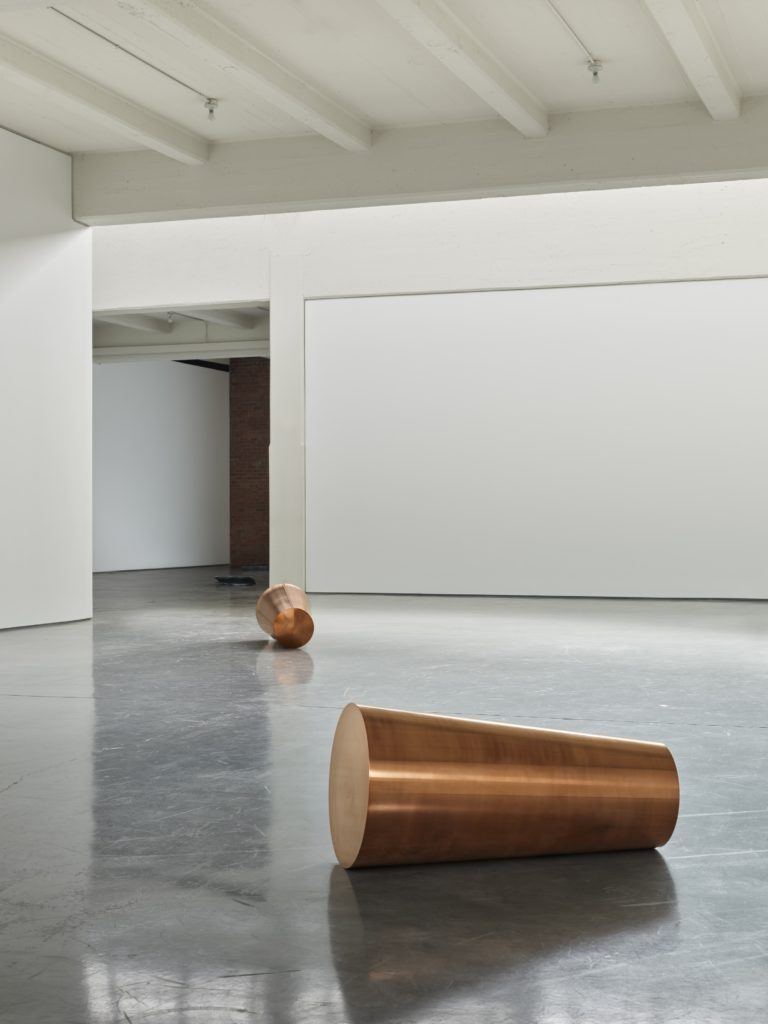
Thousands of miles away from Iceland, in the desert-cum-artisticexperiment of Marfa, Texas, Things That Happen Again (A Here and There) (1986) sits on the grounds of the Chinati Foundation in a building that was once part of a military base. Still early in her career, she traveled there to install the sculpture at the invitation of Donald Judd in 1988. The work is made of solid copper, machined into identical, truncated cones.
The Chinati work is part of a suite of four pairs of these copper sculptures, each installed in different sites around the world as physical expressions of sameness with endless potential for reconfiguration. But each pair harbors the possibility of four different relationships, each presenting a different identity. In their consistency, in their subtle tapering, the forms feel like eyes, or depictions of sight. It is difficult not to connect them back to Horn’s own eyes. The sculptures remain one of her longest-standing installations, and in interviews, Horn has expressed delight in their unexpected permanence.
II.
Imagine the wettest spring in Iceland. You are on a motorcycle at night, pelted by raindrops. You carry a tent but little more. Such were the early days of Roni Horn’s ventures into Iceland, a location that shaped her worldview and expanded her artistic practice. These experiences and reflections are chronicled in an ongoing series of books, collectively titled “To Place.”
Horn recalls going days without seeing another person in Iceland. In his book-length essay on Horn, Gary Indiana notes that “these writings reproduce the experience of being alone—profoundly alone—alone in one’s head, alone in a body in space, with so few points of reference in or out of the immediate material world that the uncanny fills the gaps of the unspoken.”[1]
The ferocity of Iceland’s weather, along with its expanses of absence (of people, of sunlight) provided Horn with opportunities to contemplate unknown forces. In a series of couplets published in a recent essay on her travels, Horn writes:
“The open space.
The nothing of open space.
The accumulation of nothing.
The nothing plus nothing that is still nothing.
The nothing plus nothing that is still transparent.”[2]
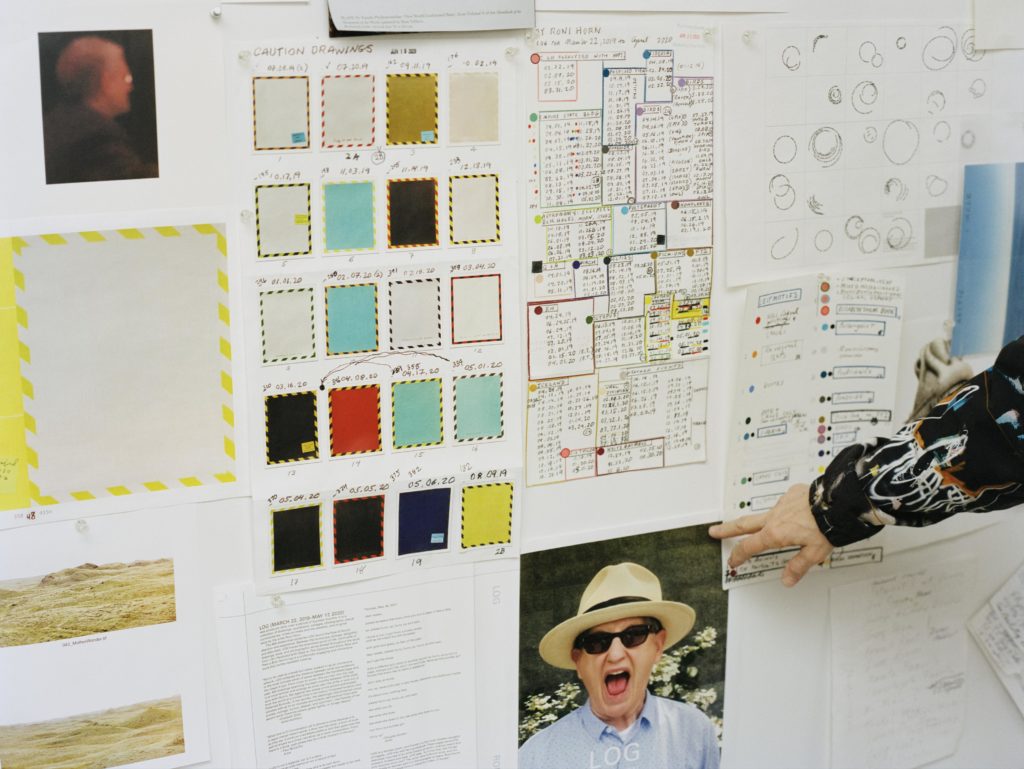
Traces of Henry David Thoreau’s Walden (1854) echo through Horn’s writing, though the links between solitude, fear and resolution are less linear. He writes “for an hour, I doubted if the near neighborhood of man was not essential to a serene and healthy life. To be alone was something unpleasant… In the midst of a gentle rain…I was suddenly sensible of such sweet and beneficent society in Nature.”[3] In listening to Horn speak about her experiences in these locations, nature is not a proxy for humanity, but rather a power that guides intuition and feeling and instigates acts of faith and expressions of awe. Impervious to comfort, nature shapes the self. I ask her if navigating weather created a collective culture, or a shared devotion, in Iceland. After a pause, she counters that “You are on your own with awe.”
Horn shared with me that the anxious undercurrent of mid-day darkness remains one of her most salient memories of those early days in Iceland. The world you are able to inhabit under those conditions feels both open and invisible.
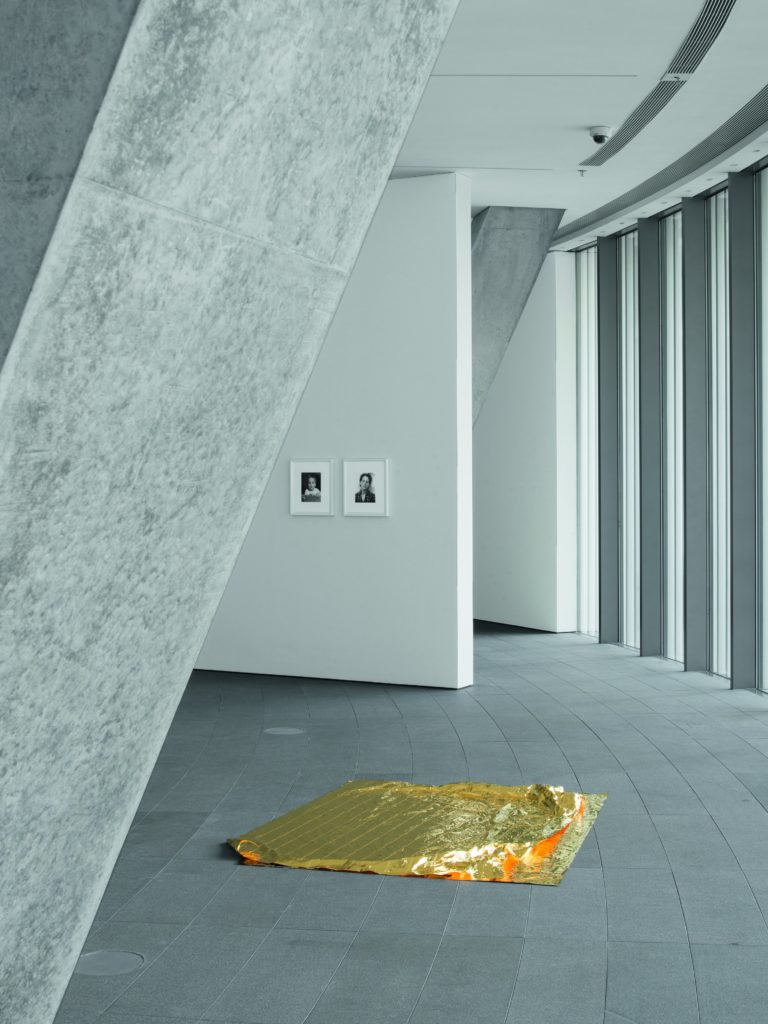
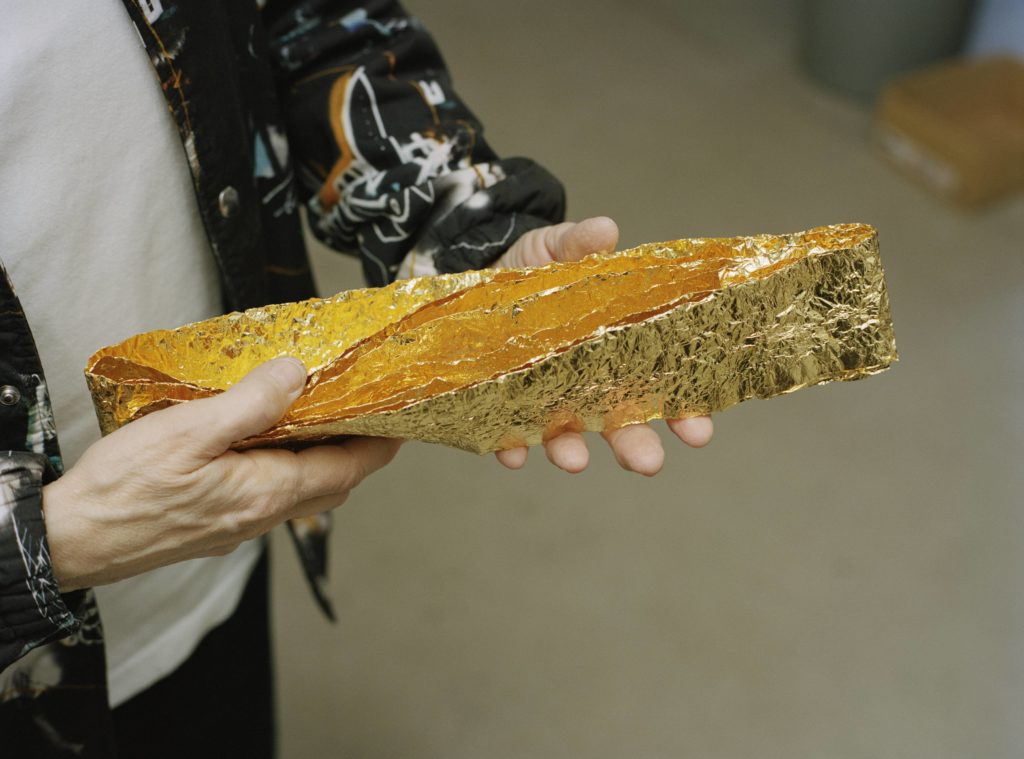
The extreme sense of possibility articulated in Horn’s Iceland travelogues is also invoked in writing by Felix González-Torres on Horn’s Gold Field (1980/2), an ultra thin sheet of pure gold laid on the floor. In 1990, ten years after the work was made, González-Torres and his partner Ross Laycock encountered Gold Field at the Museum of Contemporary Art in Los Angeles.
In an oft-quoted excerpt detailing the approach, González-Torres views the work, “sitting on the floor, ever so lightly. A new landscape, a possible horizon, a place of rest and absolute beauty. Waiting for the right viewer willing and needing to be moved to a place of the imagination… This showed the innate ability of an artist proposing to make this place a better place. How truly revolutionary.” This seismic shift for González-Torres would lead to a years-long friendship between the artists, that has been examined by art historians for decades since. Horn’s own offering to the couple Gold Mats, Paired—For Ross and Felix (1994/95), was made after Laycock’s death but before the passing of González-Torres.
Consisting of two identical gold sheets laid atop one another, it is tempting to anthropomorphize this sculpture, or even situate it in a lineage of GonzálezTorres’ own stacked works. Yet, the pairing of material creates another kind of void — an unknowable synapse between the mats that emphasizes the “nothing of open space.” The mid-day darkness of Horn’s Iceland lives within that sculpture, a volume of reverence never to be accessed in its entirety.
Not long after this work was made, while reading the eulogy at
González-Torres’ funeral, Horn said, “I am cast into an abrasive and exquisite consciousness. Everything of me, everything outside of me is tempered by it. I am laid open. My skin, my consciousness are turned to glass. The only risk left now is that of openness.”[4]
III.
Horn is not interested in movements, and she is not interested in producing work through incremental shifts. Hers is a practice guided by solitude and a hyper-responsive inner world tempered by a need for steadiness.
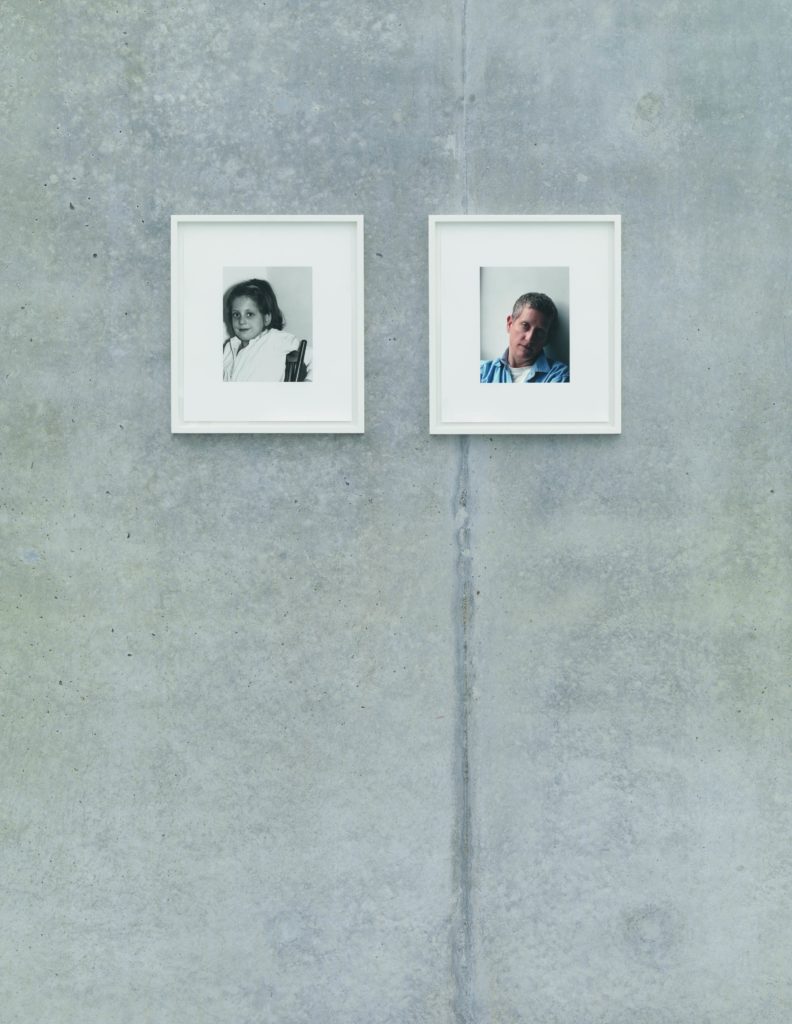
A diptych portrait from 2009, Dead Owl, v.2, shows two identical images of a young Horn around the same age as Georgia when she appeared in This is Me, This is You. It’s a found image with unclear origins, though its composition evokes the clinical framing of a passport photograph. It is hard to determine if it is candid as Horn’s gaze meets the camera head-on.
The work sits between Dead Owl (1997), which features the titular taxidermied subject, and Dead Owl, v.3 (2014–15), a similar, though more deliberate self-portrait taken in 2014, when Horn was fifty-eight.
Prompted by these overt looks toward the viewer, one ponders the trajectory of an artist like Horn, an artist driven by instinct and need, and a one-to-one connection with the Earth. In this light, one wonders what that young version of Horn does not yet know, and how she will contend with uncontrollable forces as the future becomes the present.
[1] Gary Indiana, Going North: Roni Horn (Glenstone Museum, Prestel, Delmonico Books, 2017), 37.
[2] Roni Horn, Island Zombie: Iceland Writings (Princeton University Press, 2020), 3. https://press.princeton.edu/ideas/roni-horns-reflections-on-iceland?srsltid=AfmBOooPKz FMcXFiTr9iX-5594KfI7P0rqEoHno09BMCjifN6Et_6rzp
[3] Henry David Thoreau, Walden and Civil Disobedience (Penguin, 1983), 177
[4] Excerpt from An Uncountable Infinity – For Felix Gonzalez-Torres, February 1996.