Leaving Berlin during Art Week last September felt almost like an act of disobedience. The city was still vibrating with its usual excess of openings, conversations, parties, and competing cultural propositions when I boarded a train at Ostbahnhof, heading south toward Luckenwalde. As the train moved away from the city, the familiar urban landscape gradually gave way to the flatness of the Brandenburg countryside, a territory that still carries traces of its former life as part of East Germany. The journey took less than an hour, but the change of atmosphere was considerable. Luckenwalde, the administrative center of the Teltow-Fläming district, seems to belong to another time: a place suspended somewhere between a past that has not entirely disappeared and a future that has yet to arrive.
When I got there, the streets were almost empty. Apart from my fellow travelers, there was very little sign of the international crowd that had taken over Berlin. We began to wander around, looking at shop signs and buildings that seemed to belong to another world. There is something both disorienting and strangely liberating about an encounter with a place that operates according to a different rhythm. It is precisely this distance from Berlin, geographical as much as psychological, that makes the journey worthwhile.
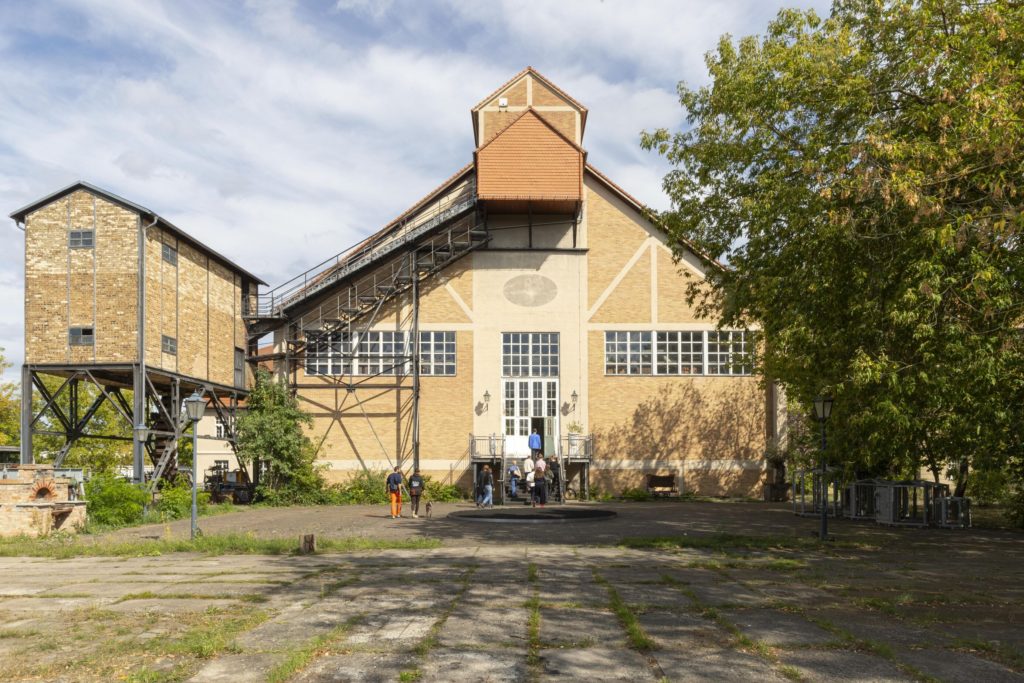
The reason for coming to Luckenwalde, however, is energy. More precisely, E-WERK, an extraordinary experiment that brings together a functioning power station, a contemporary art center, and a laboratory for alternative models of cultural production. Originally built in 1913 as a coal-fired power station, the building was acquired in 2017 by artist Pablo Wendel, who, together with curator Helen Turner, set out to reactivate its industrial infrastructure under entirely different ecological and economic conditions. Today, E-WERK produces renewable electricity and heat through solar energy and wood-gas pyrolysis. The energy powers the institution itself, while surplus electricity is fed into the national grid; these revenues, in turn, help finance its artistic program. The ambition is deceptively simple: rather than merely exhibiting art that addresses the climate crisis, the mandate is to rethink the material and economic conditions under which art is produced in the very first place. Here, sustainability is not a curatorial theme but an operative principle. The institution doesn’t simply talk about energy, but it generates it, distributes it, and makes it the foundation of its own experience.
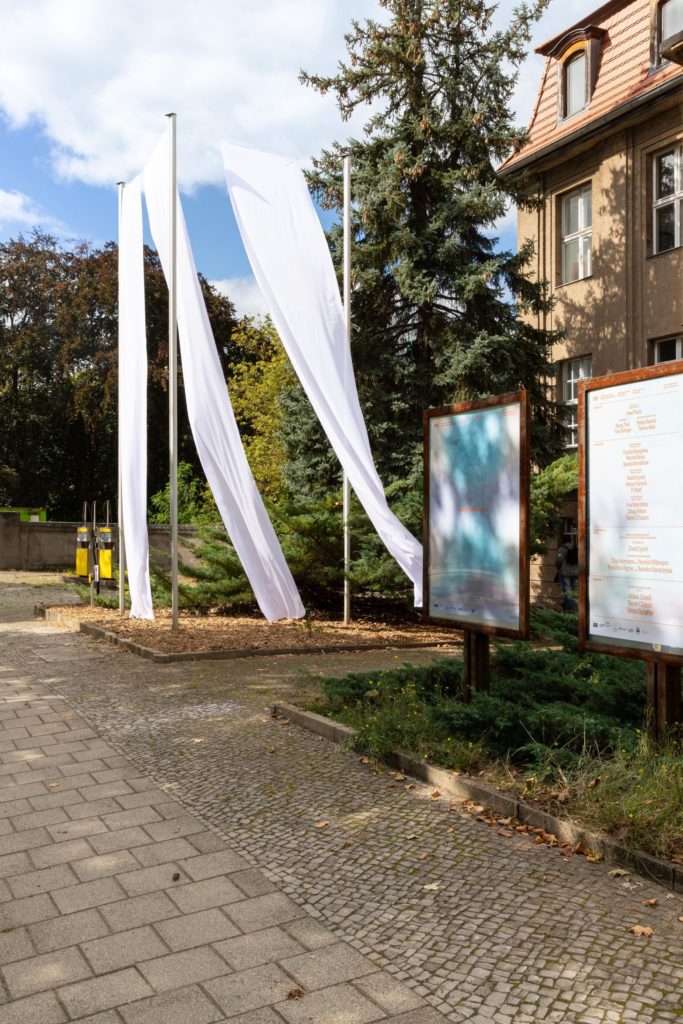
It’s within this peculiar ecosystem that Asad Raza’s “Electricity” (2026–27) takes place. Raza doesn’t treat electricity as an invisible utility, a technological achievement, or a resource to be consumed, but approaches it as a force that moves through bodies, materials, and environments. The exhibition proposes a broader understanding of conductivity: the capacity of things, living or otherwise, to receive, transform, and transmit energy. The power station, in this sense, is not just a backdrop but the show’s main protagonist.
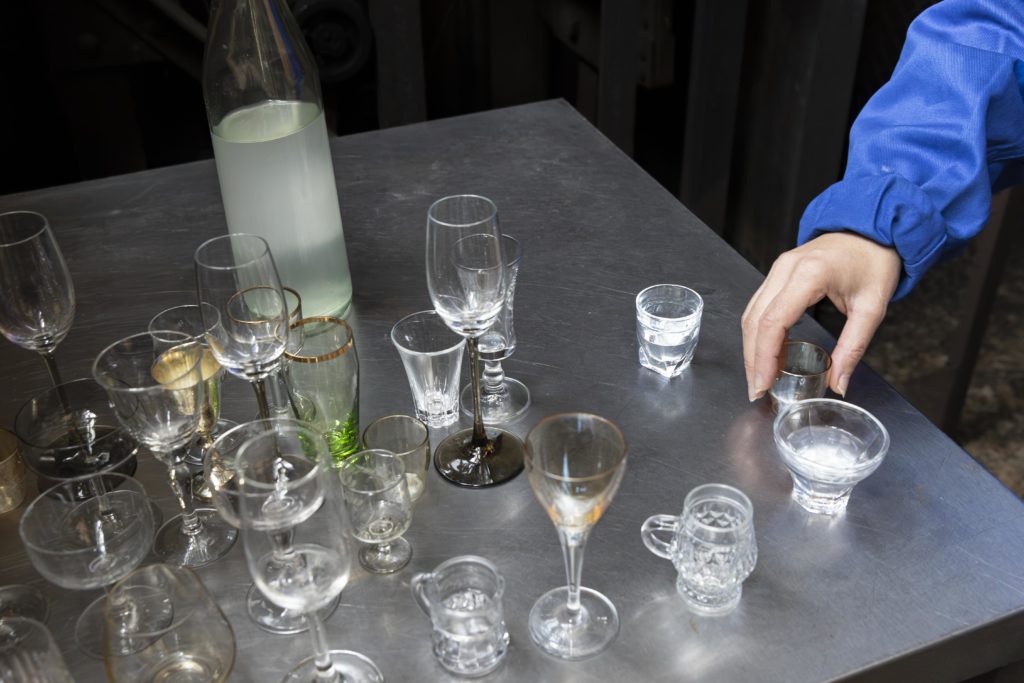
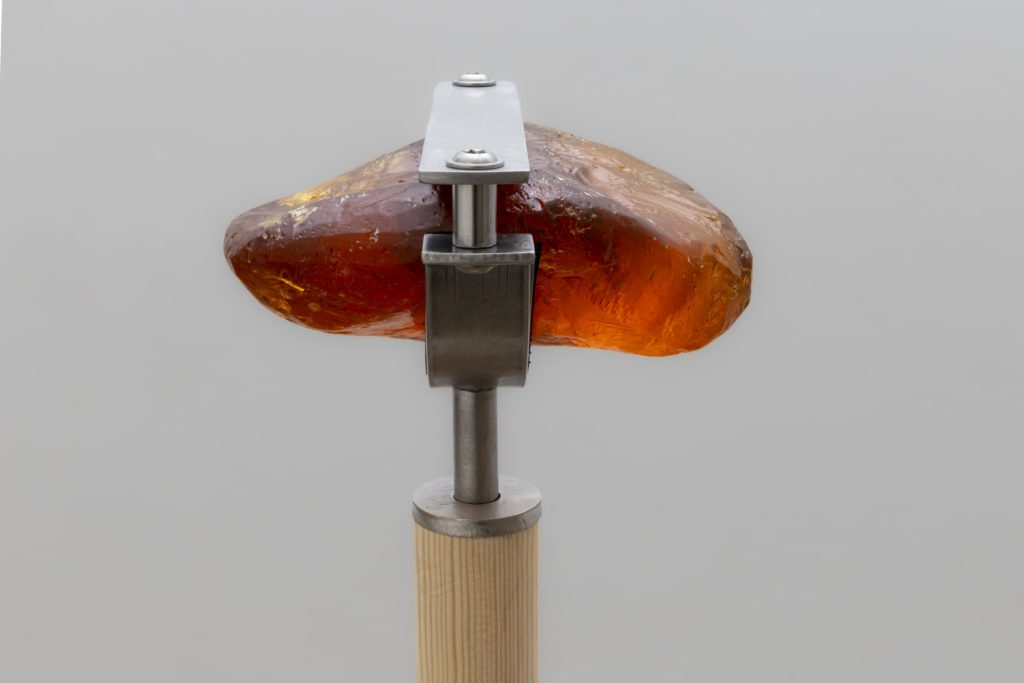
The visit itself takes the form of a guided journey through the building, led by a “conductor” — a guide who is also, in a sense, a performer. Moving between the different spaces of the power station, the conductor introduces and activates the works, offering explanations, anecdotes, and invitations to participate. At one point, for example, we are offered a glass of water, which turns out to be one of Raza’s artworks, Electrolyte (2026). Made with water, salt, and lemon, the drink is a seemingly simple and modest gesture that carries a more complex proposition. Electrolytes are minerals that, when dissolved in water, produce electrically charged particles capable of conducting electrical impulses through the body. What might initially appear as a simple act of refreshment thus becomes a lesson in the body’s own electrical nature. Drinking is no longer simply a pause in the exhibition but another way of entering it, of taking its subject matter inside ourselves. Electricity, Raza appears to be suggesting, is not something external to us. Our bodies are conductive systems, constantly exchanging and transmitting energy, connected to the same material processes that animate the world around us.
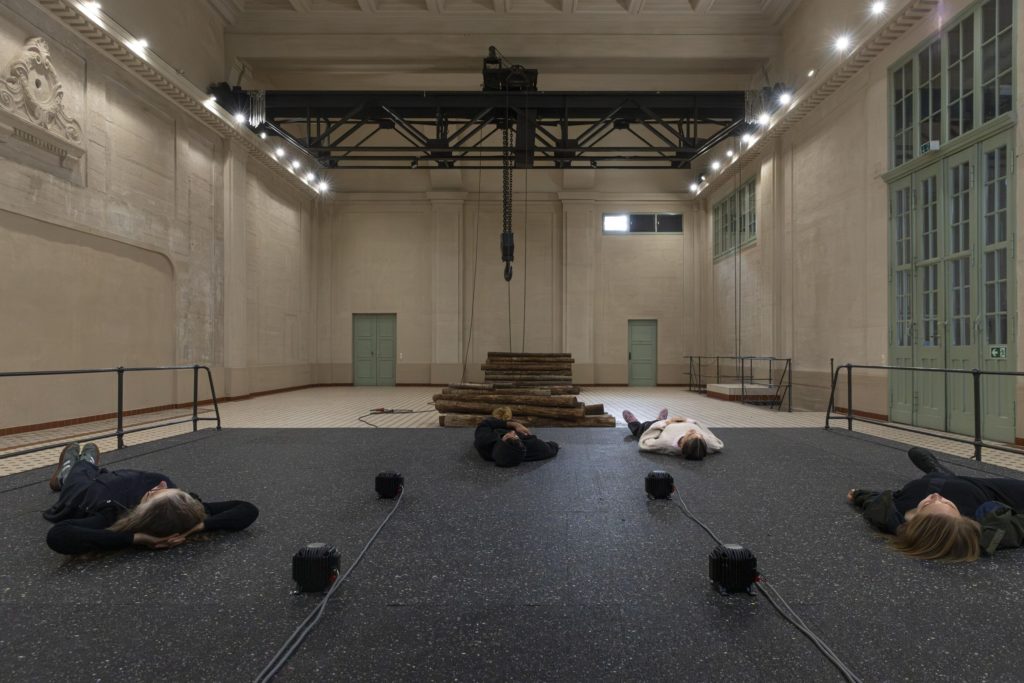
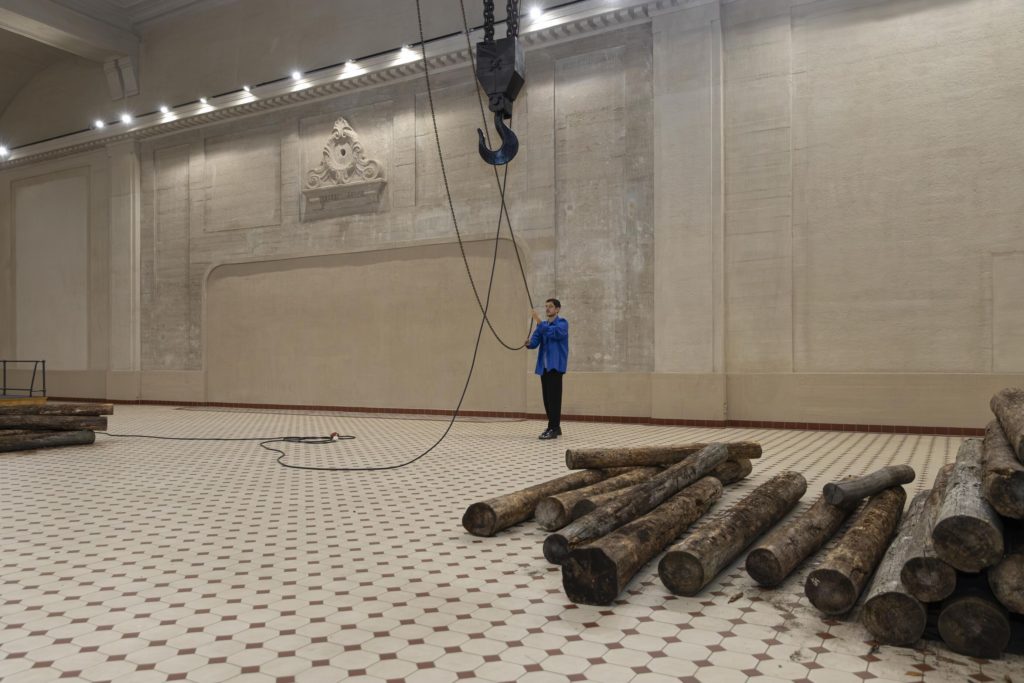
Two other artists are involved in the exhibition, and they are equally important to this expanded dramaturgy. The journey begins with Sung Tieu’s Song for radio (2021/2026), an intervention involving a VEB Stern-radio that transmits recordings associated with the factory where it was manufactured. The radio introduces another history of industrial production into the building, connecting the power station to the material and political infrastructures of everyday life. At the other end of the exhibition, Tino Segal’s () kWh (2002–9) brings the experience to a remarkable conclusion. As the light are switched off, the conductor begins to sing the amount of electricity saved through the simple act of keeping them off. Suddenly, energy becomes perceptible through its own absence. What we normally take for granted emerges as something fragile, measurable, and deeply entangled with our habits. The gesture is economical and theatrical at once: a reminder that even the smallest decision to consume — or not consume — is part of a much larger system.
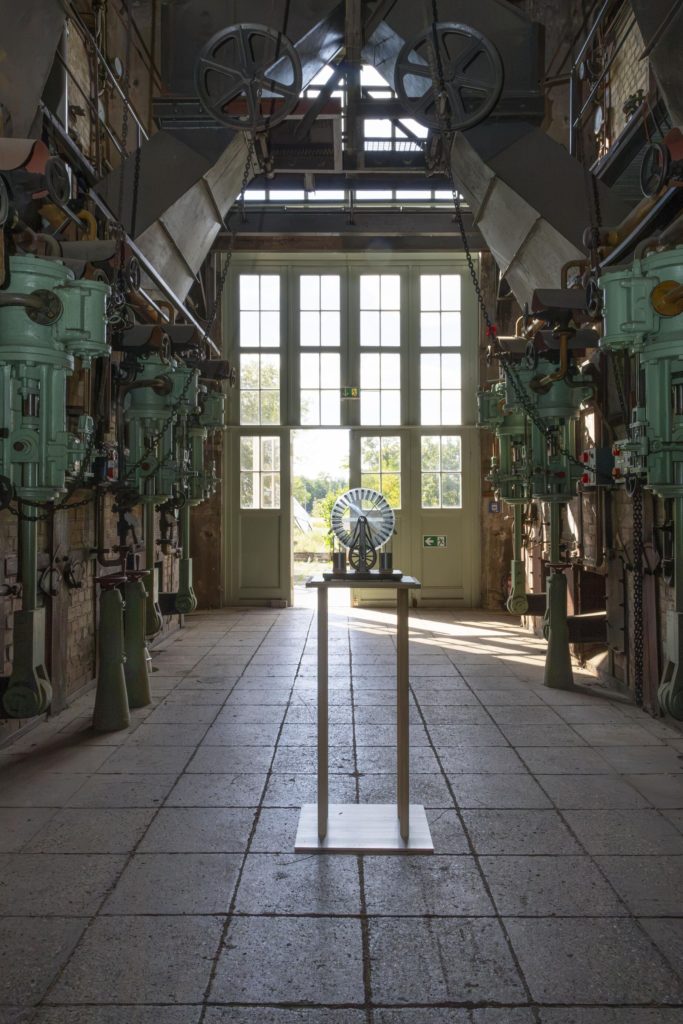
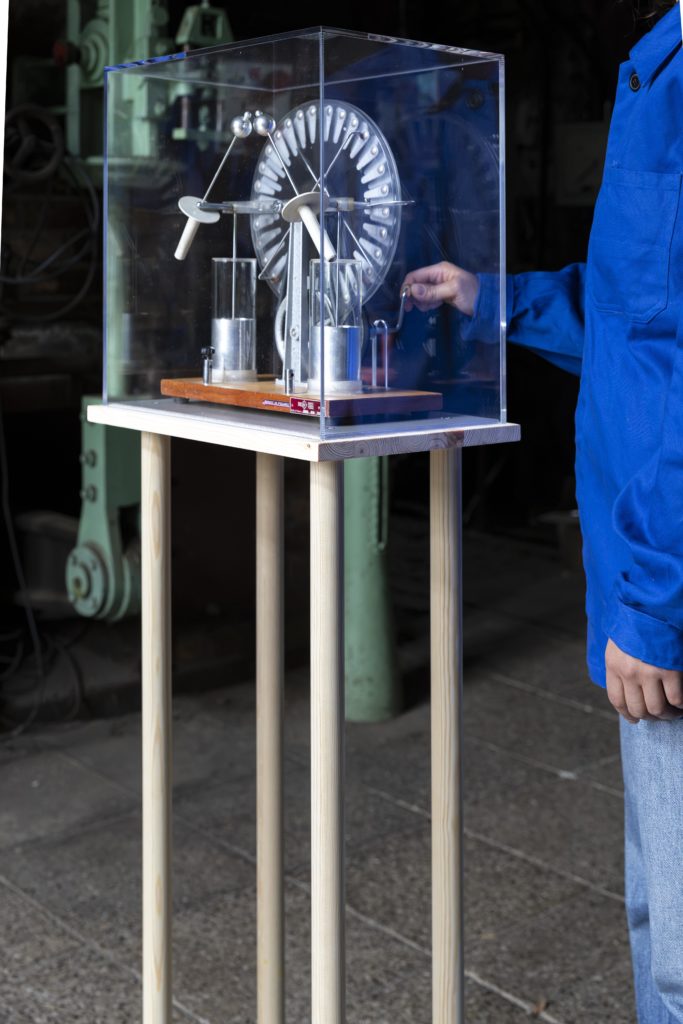
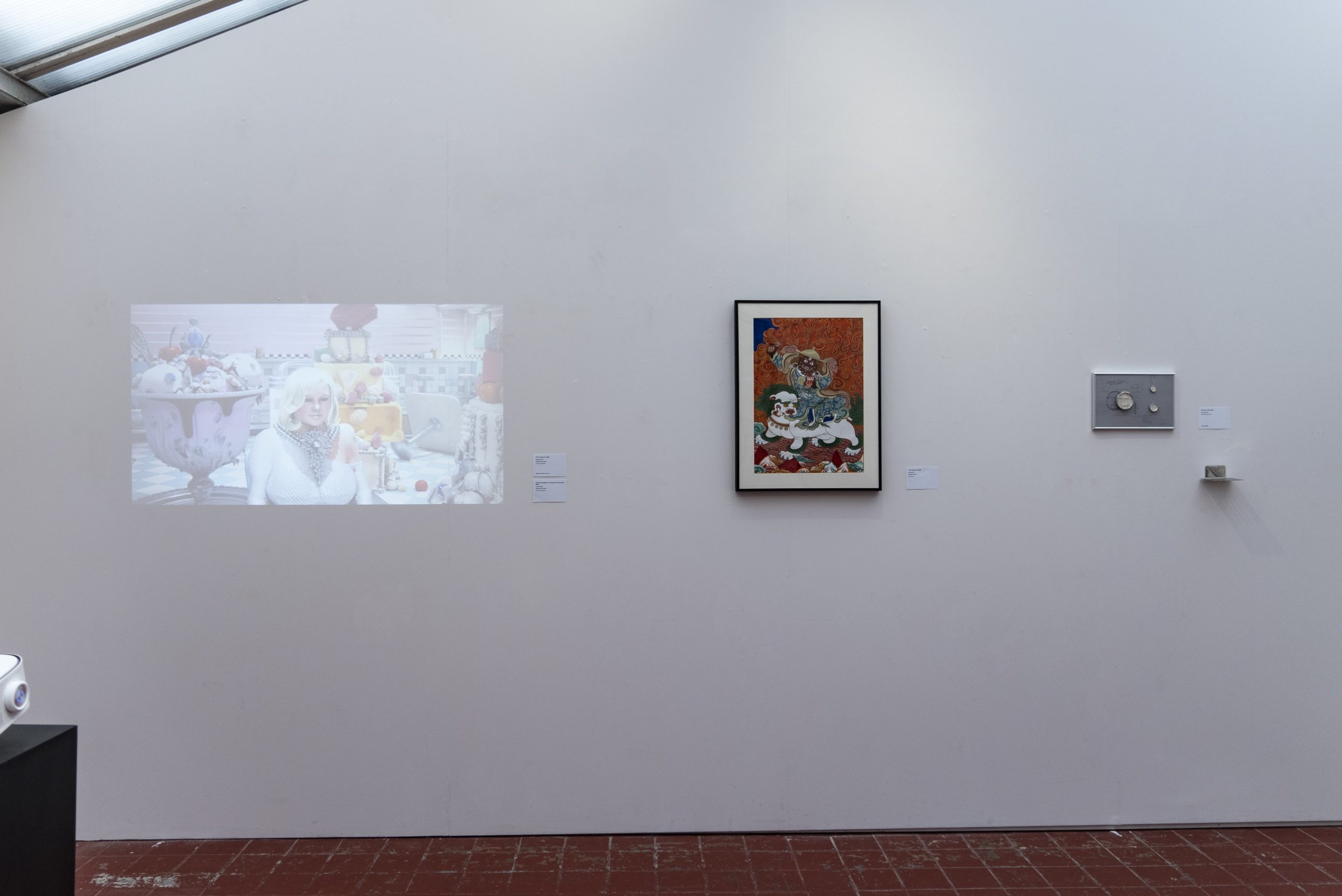
The exhibition is accompanied by a rotating film program, organized into three chapters: “Electric Sublime,” “Electric Power,” and “Electric Earth.” During the first chapter, works by Saodat Ismailova, Cecilia Bengolea, and Rachel Rose extend Raza’s investigation toward the mystical, the bodily, and the cosmic. These screenings open up further associations, allowing electricity to be understood as something that exceeds the boundaries of technology and industrial production.
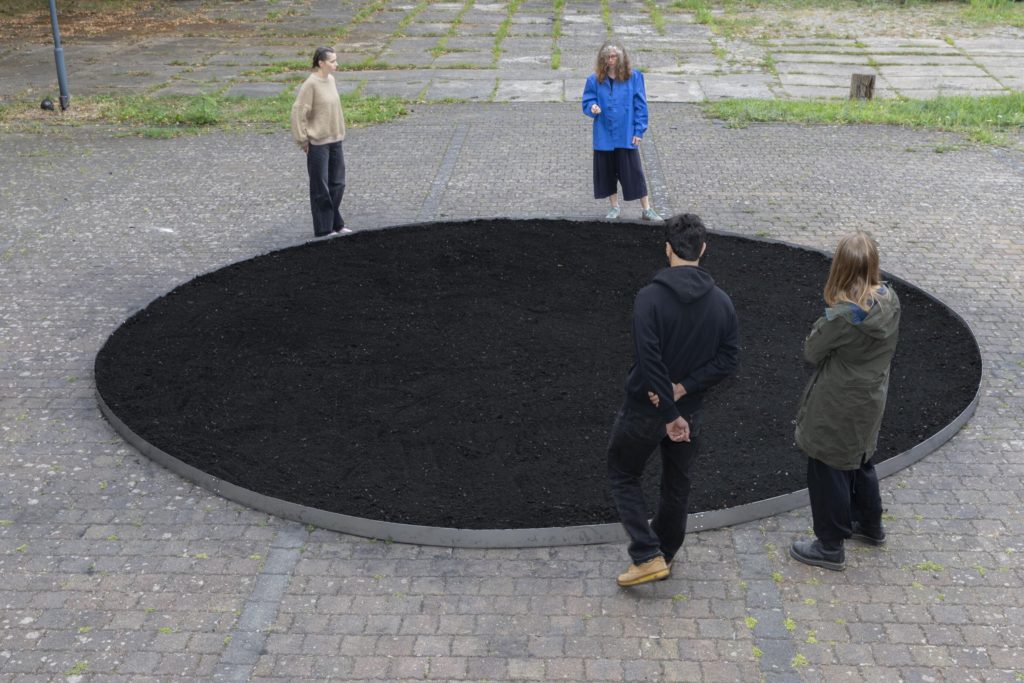
What remains particularly compelling about “Electricity” is the way it makes its subject inseparable from the conditions of its own presentation. The building processes the energy that sustains the institution; the institution transforms that energy into a space for artistic and collective experience. Raza’s exhibition moves within this circular system, asking us to reconsider the relationships between bodies, machines, nature, and the infrastructures that connect them. Leaving Luckenwalde and returning to Berlin, the city’s familiar intensity feels different for a moment. Perhaps the most interesting thing about electricity is not that it makes things visible, but that it embodies all the invisible connections through which the world already moves.