“Mother died today. Or maybe yesterday, I don’t know.”[1]
Albert Camus, The Stranger (1942).
From 2011 onward, a poster depicting Amy Winehouse hung on the wall of my teenage bedroom. I was nine at the time, and neither a fan of her music nor a grand connoisseur of her persona, but, once she passed away, her face on every magazine cover, I somehow felt the need to be part of a worldwide mourning. “Nothing personal,” indeed.
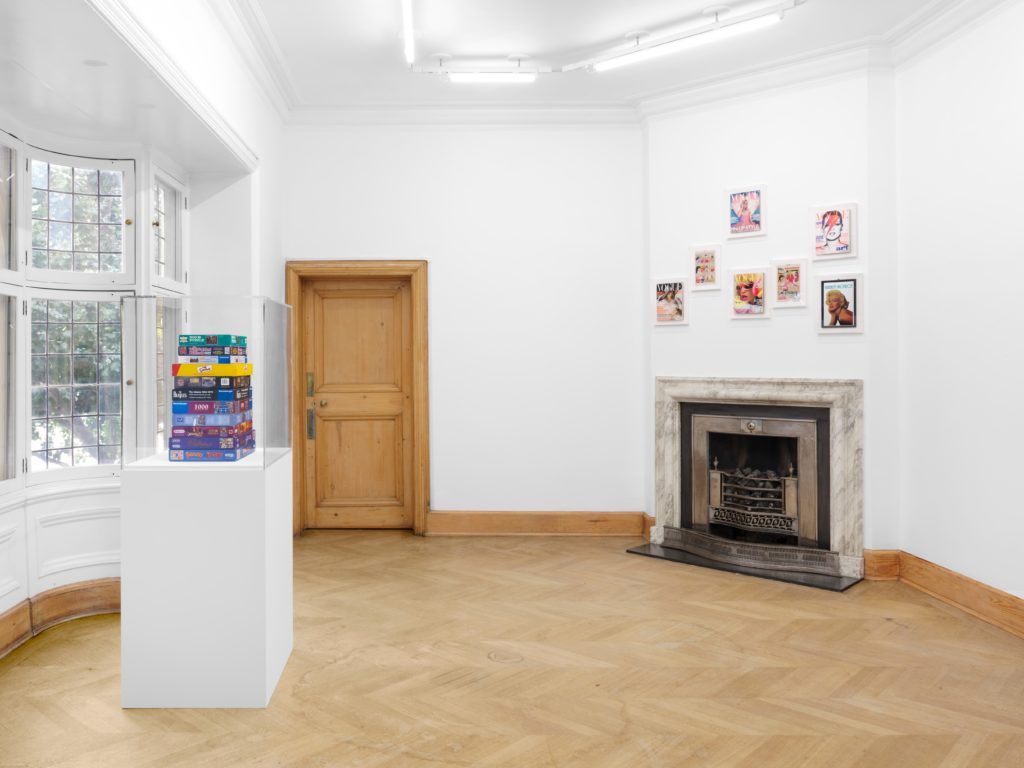
What is also impersonal is the show now taking place, through January 26, at London’s Nicoletta Fiorucci Foundation. Featuring works by Alex Margo Arden and curated by Vittoria de Franchis, the show is the consequence of Arden winning the 2025 Nicoletta Fiorucci Foundation Prize at Frieze London, awarded in conjunction with Ginny on Frederick. It takes a moment’s wondering before it becomes clear that everything in the gallery is a head-to-toe copy of Winehouse’s possessions, meaning that none of the objects has ever been touched by her or even existed in her immediate surroundings. Arden dramatically spent the past decade looking through Winehouse-related visual material and tracking all the auctions of the star’s chattels. Getting inside John Malkovich’s head always struck me as a chore; getting inside Amy Winehouse’s, it turns out, is way easier. Everything in this show concerns the air around the woman who isn’t in it. What is the sense of exhibiting the life of a woman for whom exposure was a working condition, whose front door needs no knocking, because there was no front door to knock on?
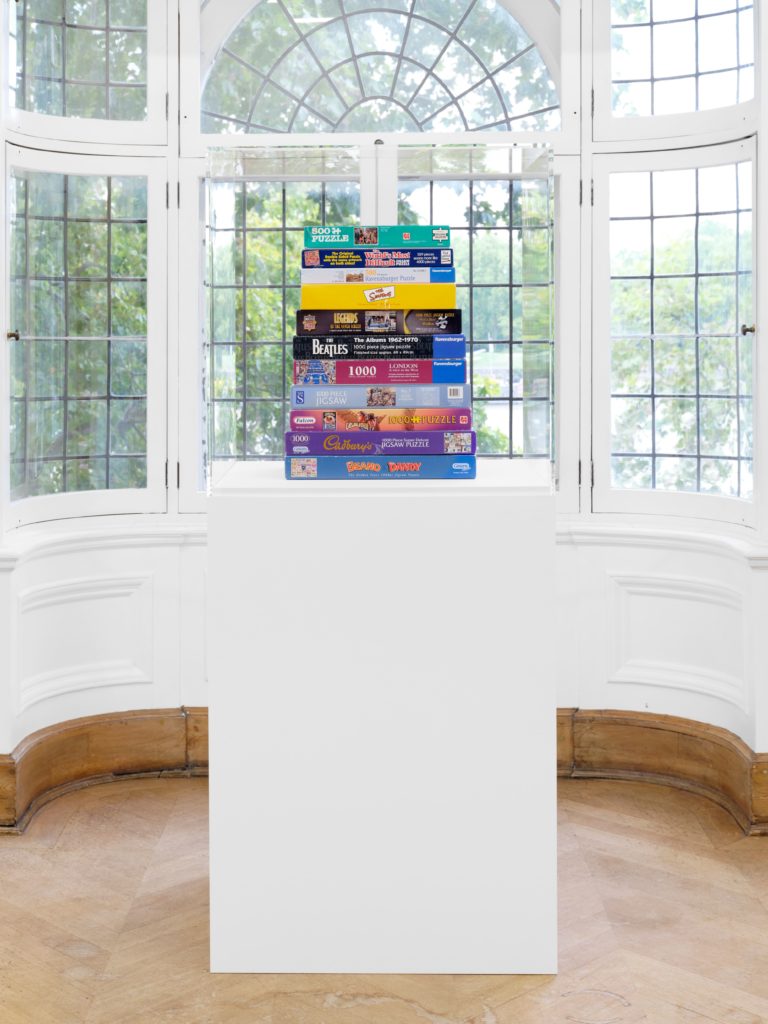
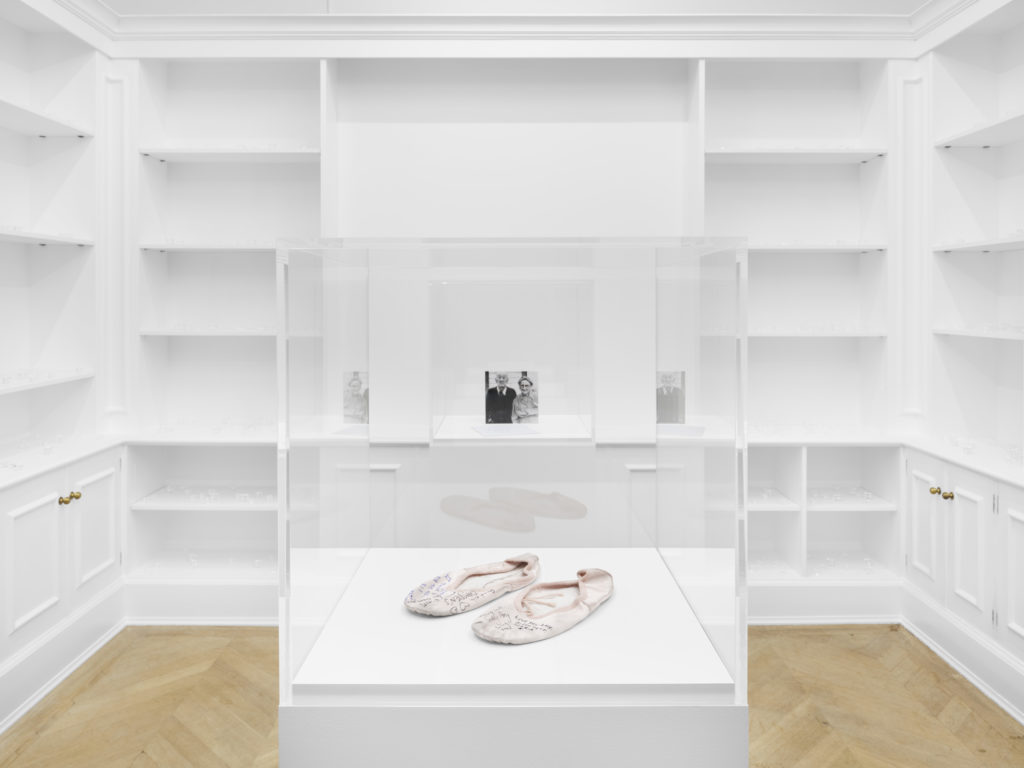
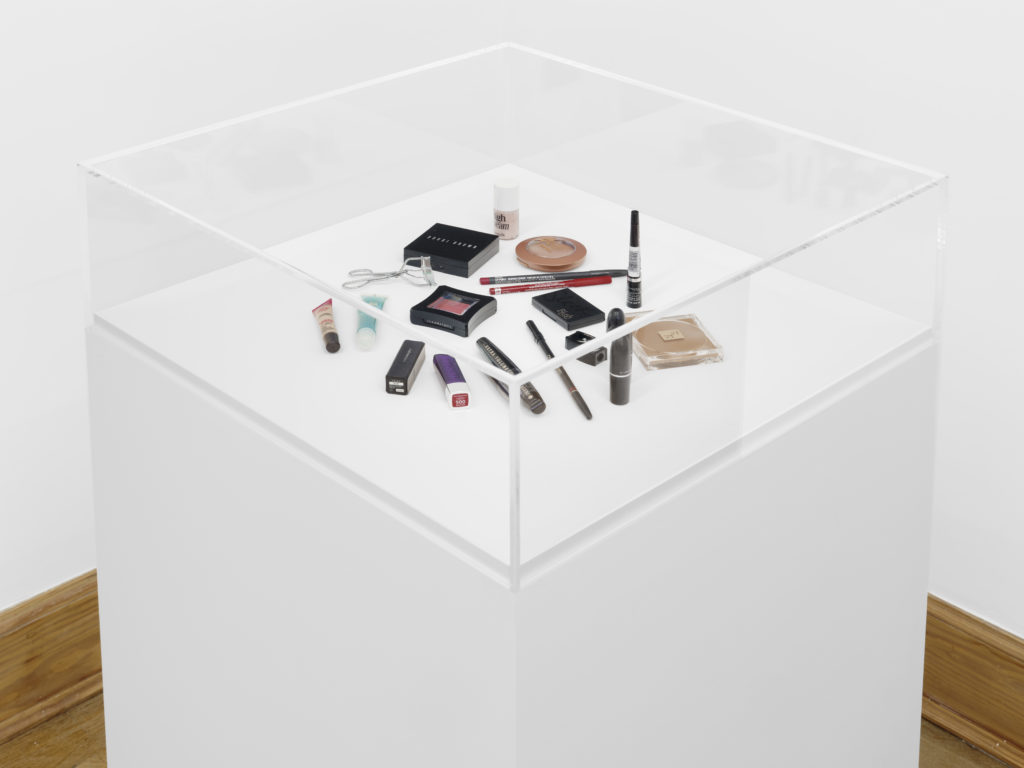
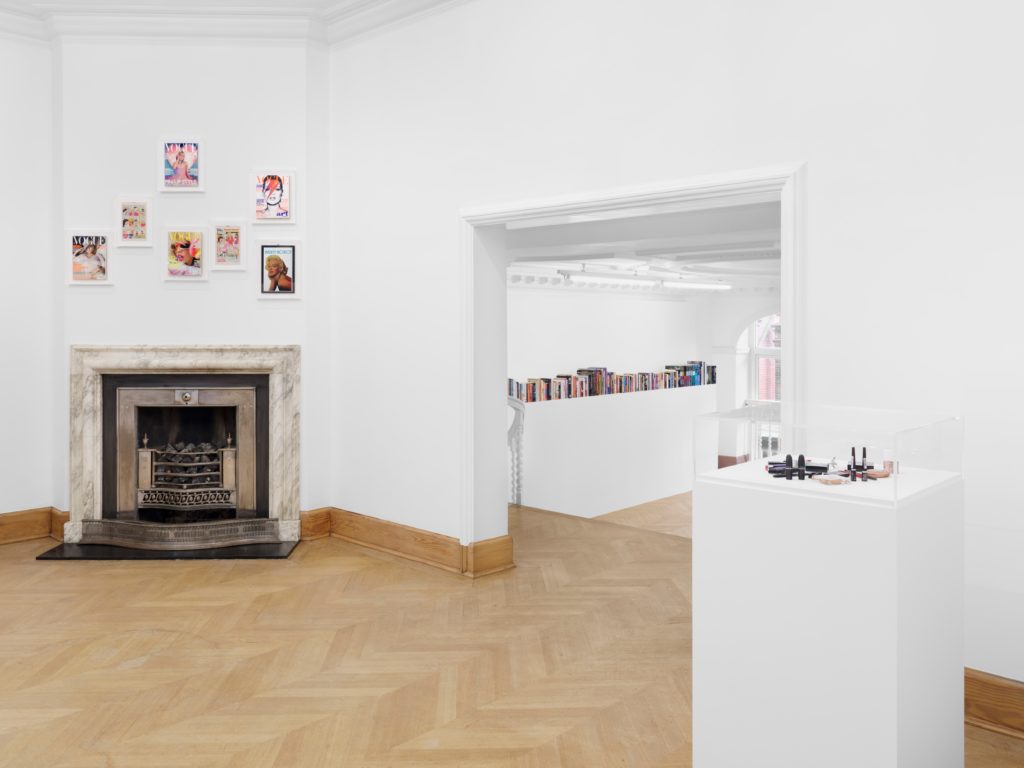
The exhibition unfolds across two large rooms, both of them white down to the cornices, the ceiling rose, and the small-paned windows with their fanlights. The rooms are empty enough that you can hear your footsteps on the herringbone flooring, worn pale along the paths people walk. The first room contains Winehouse’s books, displayed in two long rows atop built-in shelving. In the second, a scattering of tiny clear blocks lies along the empty ledges and, on white plinths, acrylic cases. In one of them, jigsaws are stacked (Jigsaws, 2026 — a recovering addict’s first aid accessory). Propped upright inside its own case are: a black-and-white postcard portraying an elderly couple standing in a doorway; a birthday letter addressed to Winehouse, meant to be put in a bedside table and forgotten, signed by Adele and Mark Ronson (Sent Otherwise, 2026); a pair of pale pink satin ballet slippers covered in handwriting — Sleep well lovely Amy, LOVE YOU AMY. SLEEP TIGHT. MARIA x, Good nite Camden Sweetheart, MISS YOU SO MUCH, FOR THE MUSIC, R.I.P. xxxx — in blue and black ink, left on her doorstep by fans after her death, in keeping with the millions of girls who bought Miu Miu ballet flats just to get them dirty and thus get “the Winehouse look”; mascara, lipsticks, compacts, and tweezers (Makeup, 2026); and a white, automatic perfume dispenser with an LCD timer, placed right at the entrance: the scent greets you when you arrive and travels out with you when you leave (Perfume said to have belonged to Amy Winehouse [I–IV], 2024–26).
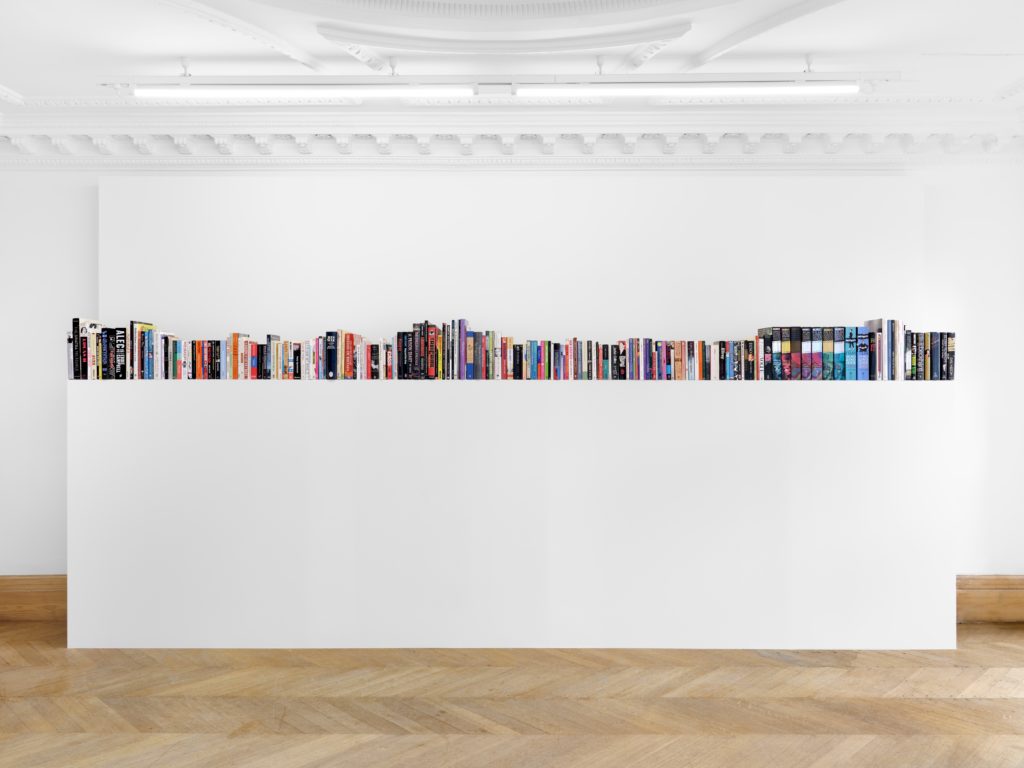
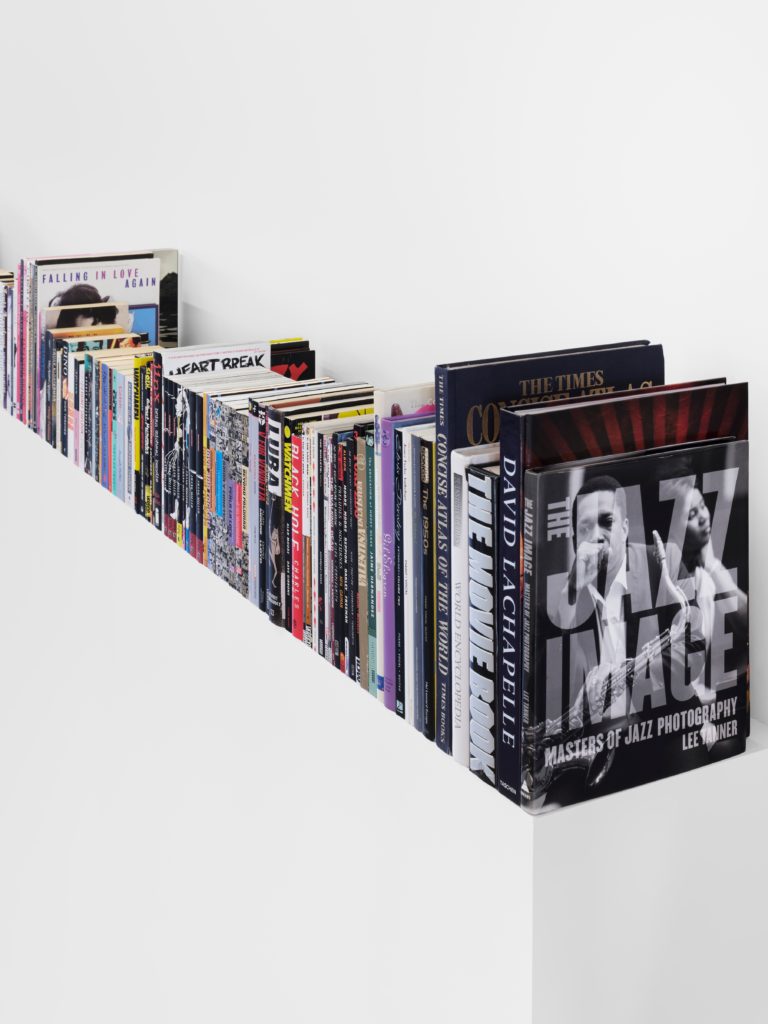
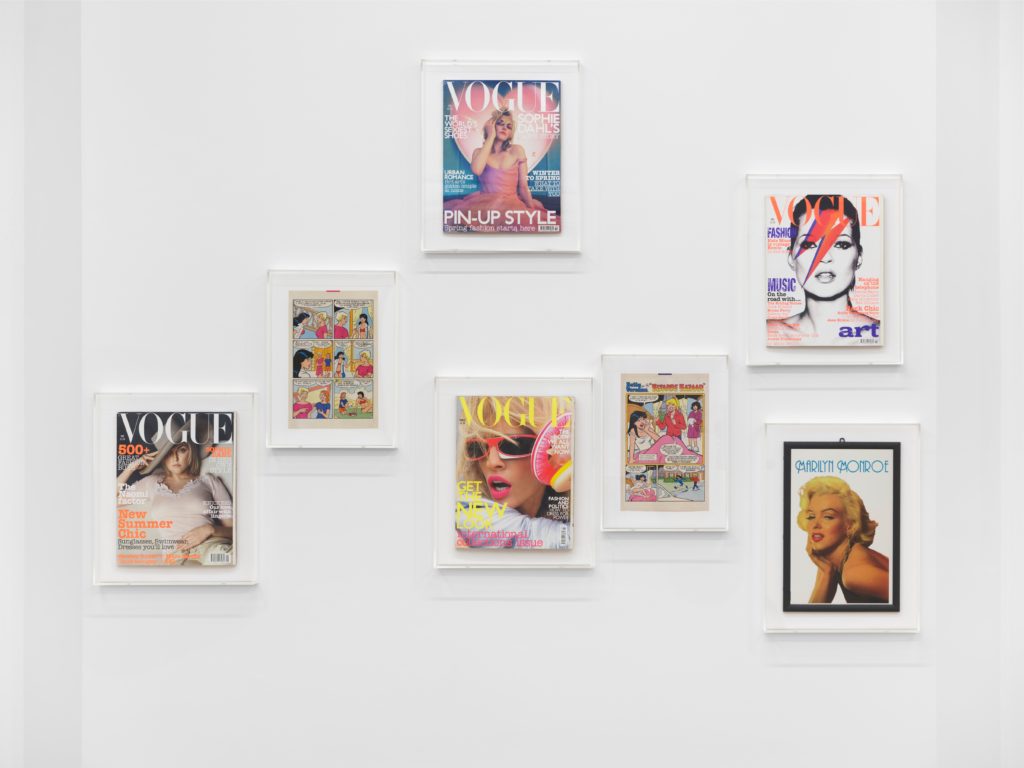
The most colossal work of research is Library (2026), which consists of more than four hundred second-hand books, each sourced in the exact same edition as Winehouse’s documented copy, their spines out in two long bands of different fonts and colors. Claudia Roden’s The Book of Jewish Food, Roy Keane’s autobiography, Jeffrey Archer’s A Prison Diary, Reg and Ronnie Kray’s Our Story. Somebody who wanted to cook, to follow football, to know how crime works, to get the language right. Libraries say a lot, as the pandemic showed: companies sprang up offering shelf curation as a service, down to the loaning of books for the sole purpose of satisfying the prying eyes of a video call. A mute resume, filed under the house motto that goes, “What you say is not as important as the bookcase behind you.” The transparent numbered blocks on the shelves, the kind used as forensic evidence markers in crime-scene photography, are the only thing here that is not a simulacrum. A number turns a shelf into a scene, and the victim of the case is the person whose life is being reconstructed. Arden’s method is Sturtevantian, minus the wrist work. In terms of devotion, the mirrors are one of the sharpest things here, revealing Winehouse’s obsession with Monroe (Same Otherwise, 2026) and James Dean (James Dean, 2026). Taking the form of reflective surfaces bearing their faces, checking herself inevitably meant checking herself against them. A young celebrity in the 2000s looking into Monroe’s face to see her own is a kind of receiver who unfortunately also goes early.
Across high-profile estate auctions for objects owned by known figures, buyers pay more for those items they imagine had the most contact with their former owners. Arden’s objects score zero on that test. A sterilization experiment confirms that the belief in contagion drives the bidding — the well-liked celebrity’s sweater, sterilized, is worth markedly less. Aesthetic matters come later; although the flats are one of the hottest things in Winehouse’s estate, she never touched or saw them. If contact were the operative variable the flats would be the cheapest objects but instead they are the dearest, and this against a posthumous market in which, contrary to most of the literature, prices decline by seven percent on average in the twenty years following the death of an artist. Contemporary art has developed a “complex play” of removing and reloading aura: since the historical avant-garde the work has been systematically stripped of the attributes that once guaranteed its authenticity, so that the closer an art object gets to an object for use (the closer the flats come to the commodity they resemble), the more necessary it becomes to certify and guarantee its uniqueness, until it is the certificate rather than the object that one owns. Aura (a term nowadays so abused it makes me reluctant to employ it), removed at the level of the object, is reloaded at the level of paperwork. Their price is a price paid for the guarantee, and the hand that never touched them is, in the end, beside the point. Today, at Fiorucci Foundation, the only jigsaw piece left out of the vitrine is us, standing there, wanting it. The Guardian found it “a weirdly cold, unemotional display.”[2]
I guess some, unlike Billy Wilder, like it COLD.
[1] Albert Camus, The Stranger (New York: Alfred A. Knopf, 1967).
[2] Eddy Frankel, “A tour around Amy Winehouse’s private junk: five free art exhibitions to see,” The Guardian, October 15, 2026.