“It’s my first painting show,” states Oscar Murillo, referring to his new exhibition at David Zwirner in Paris. For an artist whose understanding of the medium reaches far beyond the canvas, the idea of presenting paintings in a more traditional exhibition format is indeed rather unusual. Although painting lies at the center of his practice, it encompasses works on paper, sculpture, installation, actions, live events, and video — often developed through collective production processes involving the public that have become central to his exhibitions and installations. This time, however, the creative process remains undisclosed, or “buried,” as the artist puts it. Yet traces of the multiple collaborations Murillo has cultivated with people around the globe during the past decades, notably in his series “Frequencies” and “Social Mapping,” are omnipresent.
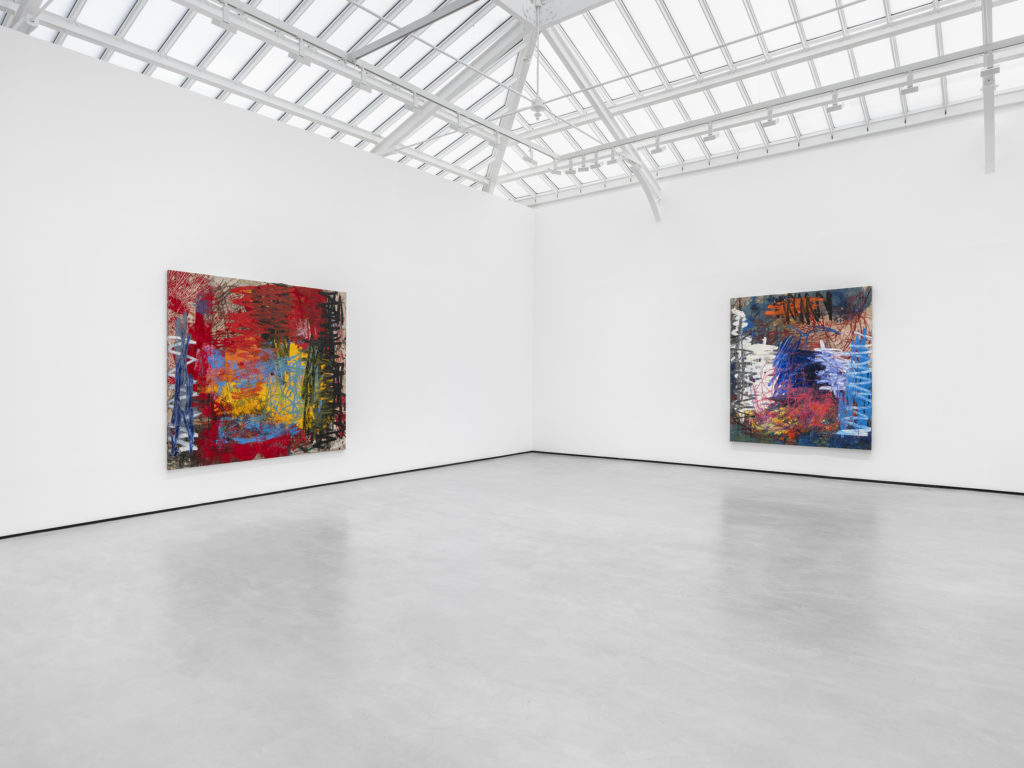
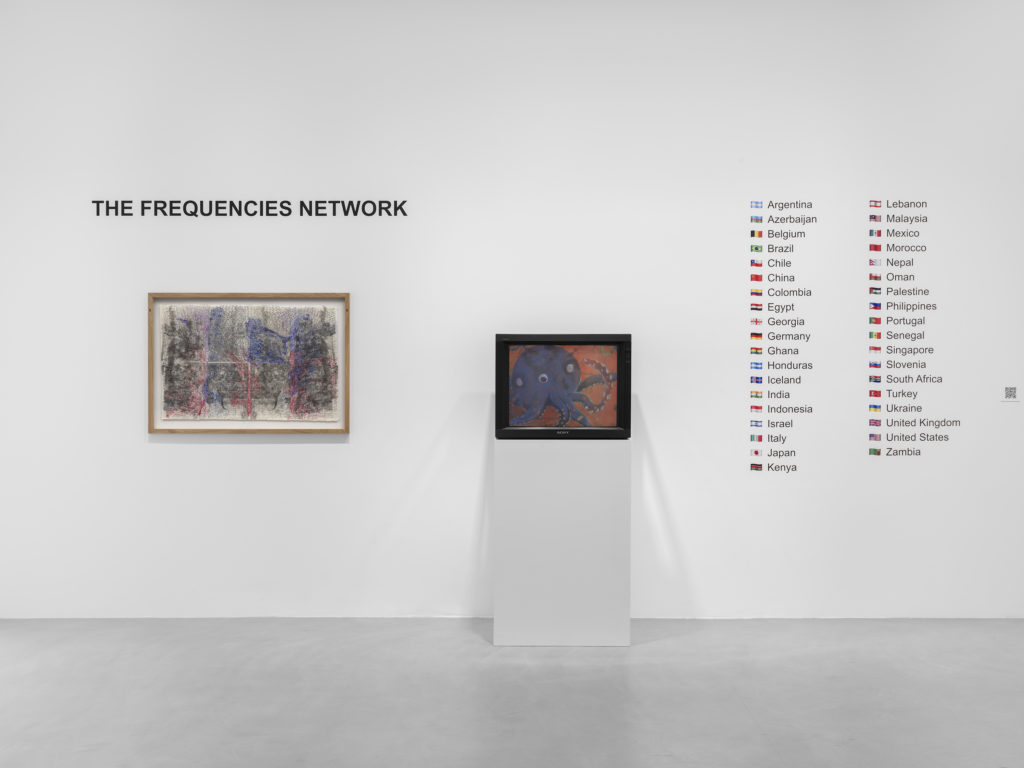
The exhibition “Unfinished thinking: Paintings and Social Maps” features new abstract paintings by the artist, mainly from his series “Disrupted Frequencies,” “Scarred Spirits,” and “manifestation.” These vibrant, large-scale canvases are united by what Murillo describes as the “utterance of love, protest, an emoji, a sea of marks, condensed time — the harnessing of thoughts, energies, spirits, all manifestations in color.”
A single artwork sets the stage for this journey: Nothing gold can stay (portraits of our current selves) (2026) consists of a set of three golden frames fitted with mirrored glass, allowing visitors to see themselves and their surroundings as they look at the painting mounted in the center. The work invites us to reflect not only on its context, but also on our own role within it. On the day of the opening, this meant looking into the mirror and confronting the surreal situation of visiting Paris Art Week shortly after a peak in protests by the young generation against the shortcomings of the French education system. At that moment, the golden glow of this highly romanticized city had given way to the sight of burned-out barricades and ash-strewn streets.
However, this is just one example of how Murillo opens up his works, allowing different contexts to be inscribed within them, either directly or indirectly. Through their materials and references, as well as the distinctive style and traces of the artist and his collaborators, the works bear witness to Murillo’s transcultural and transnational perspective — and to the fluidity with which diverse backgrounds permeate both his artistic practice and his private life. “Speed of flight, 600 mph, the sea, geographies, terrain. Labor! repetition, people, many, more public, more people, profound statements,” he writes.
The sea — or, more precisely, water — has become a significant theme in Murillo’s work. At the center of Nothing gold can stay (portraits of our current selves) is Study for social cataracts (2025), a work reminiscent of Impressionist studies of water, flecked with flashes of white, yellow, pink, and red. It alludes to Murillo’s ongoing engagement with the legacy of Claude Monet and his groundbreaking “Water Lilies” cycle (1914–26). The French painter created this series in the final years of his life, when cataracts clouded his vision and he eventually underwent surgery. Given the profound influence of this visual impairment on Monet’s painting, Murillo takes it as a metaphor for reflecting on both the consequences and the possibilities inherent in a socially clouded vision — or social blindness.
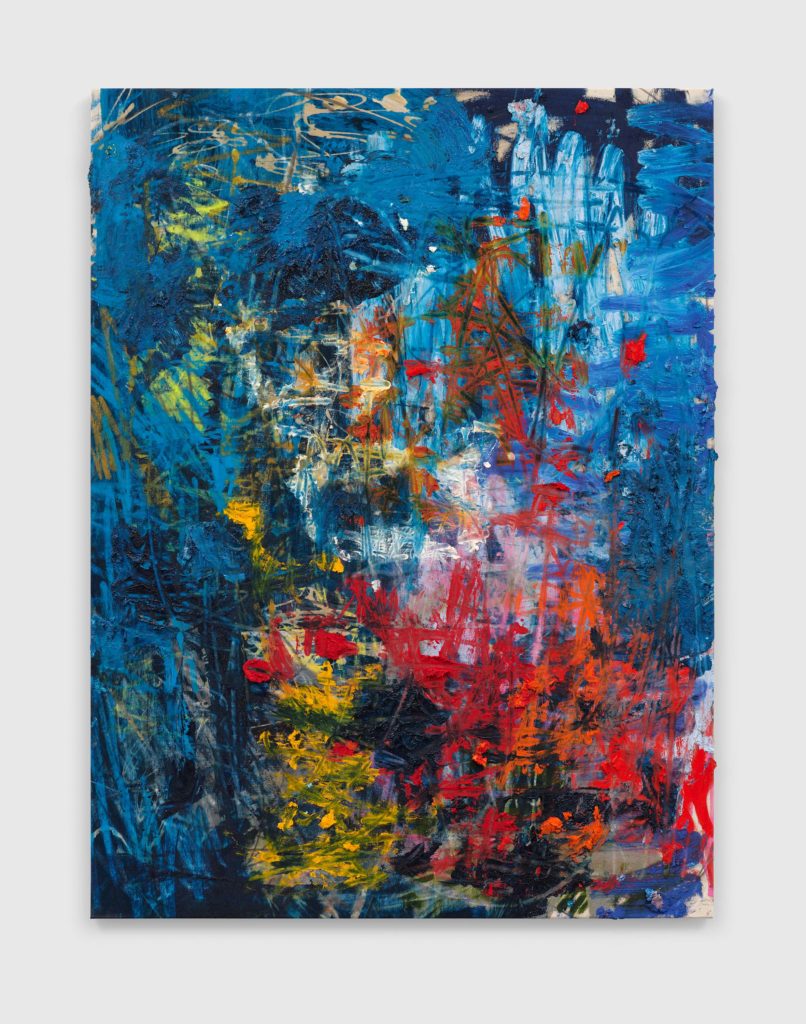
Another process associated with water has become central to the conceptual understanding of the artist’s oeuvre: osmosis, through which differences in concentration are gradually balanced across selectively permeable membranes. While the function of such membranes can be transferred symbolically to art institutions, in Murillo’s work it is also people of all ages, from all over the world, as well as the artist himself, who act as membranes, filtering the flood of impressions before they take shape on canvas and paper.
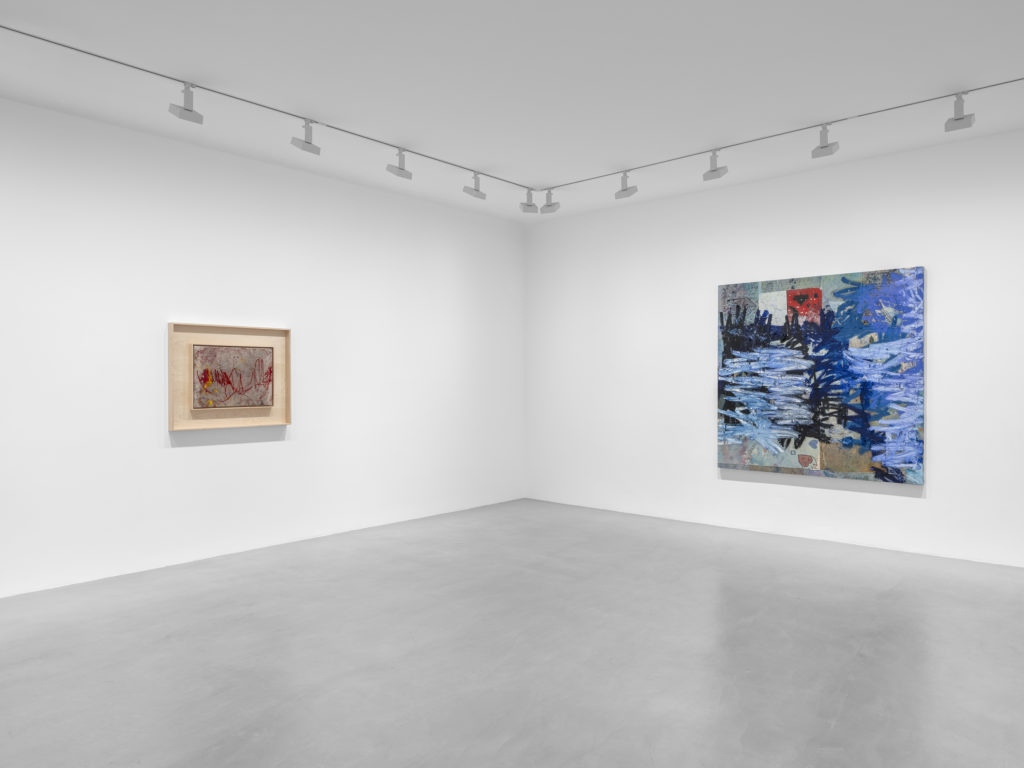
Further insight into the ideas and symbols underpinning Murillo’s painterly practice can be found in the first of the three exhibition rooms. On display here is a work from his “flight” series, which the artist creates on airplanes, in the geographically undefined space of air. In flight #74 (2019), the most frequently used pen colors — blue, red, and black — dominate the paper, evoking the technique of automatic writing practiced by the French Surrealists.
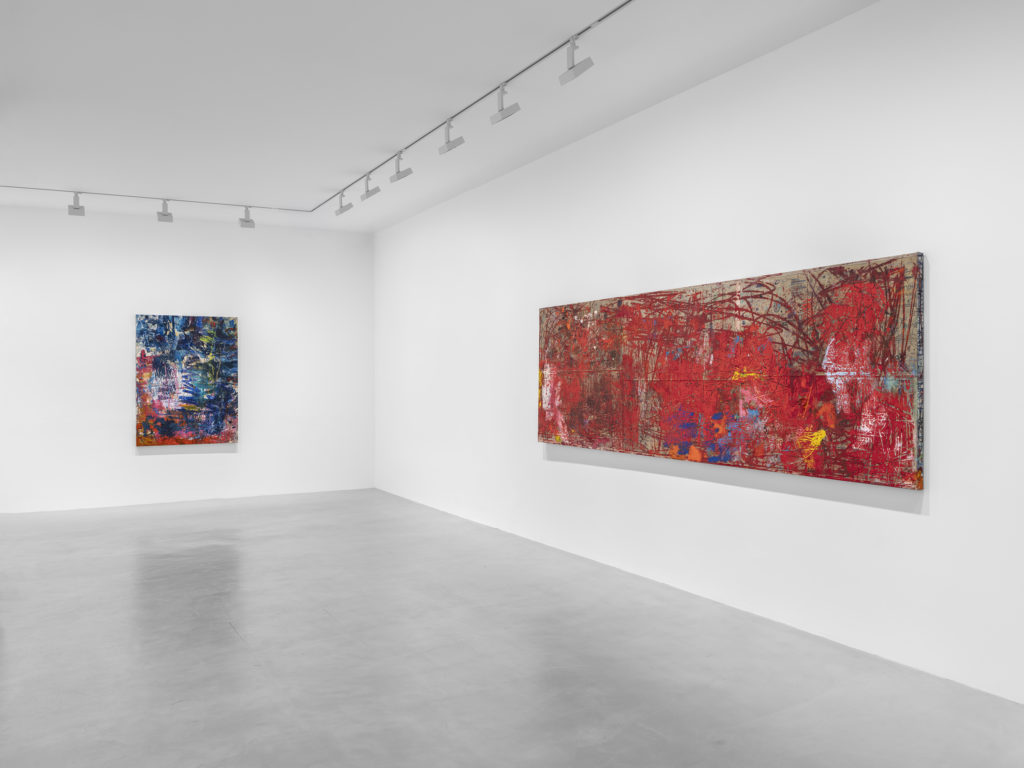
Also featured is the “Frequencies” series, conceived in 2013, and run by the artist, his studio, and his family. This project consists of a physical and digital archive of thousands of canvases on which schoolchildren aged ten to sixteen from around the world have left their thoughts, messages, scribbles, and marks after they were placed on their school desks for approximately six months. In the gallery, all the countries where this project has been carried out are listed, and one finds a link to the project website (www.frequenciesproject.org), where all the canvases are gradually being made available online.
Another work in this room that deserves special mention is A Telegram to Angelus Novus (2013–24). Referencing Paul Klee’s 1920 monoprint Angelus Novus, it connects the “Frequencies” series with the fascination that many avant-garde artists of the early twentieth century felt for children’s unmediated approach to the world, as yet unshaped by formal education. Klee’s work depicts an angelic figure emerging from darkness. The naively drawn angel recalls the children’s drawings and scribblings found in “Frequencies.” Klee’s artwork also appears to have influenced Murillo on a technical level: it was created using an oil-transfer technique that the artist invented in 1919, combining painting, drawing, and printmaking. More than a century later, Murillo, too, incorporates an oil-printing technique into his practice.
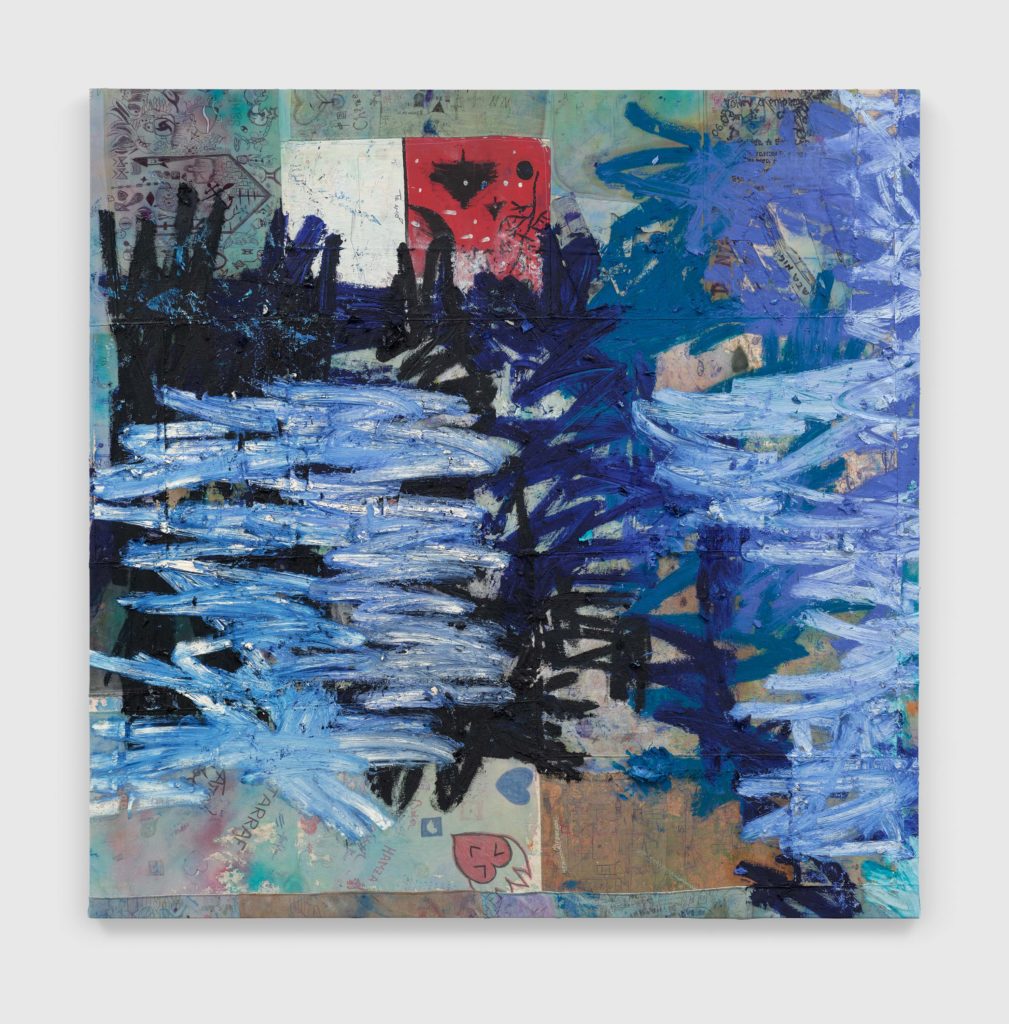
disrupted frequencies (Germany, Lebanon, Kenya, Morocco, India, Georgia, Japan, Ghana, Colombia, China), 2013-2025. Oil, oil stick, ballpoint pen, fountain pen, graphite, felt tip pen, highlighter pen, permanent marker, paint, crayon, staples, natural pigments, debris, and mixed media on canvas. 185 x 185 cm. Photography by Nicolas Brasseur. Courtesy of the artist and David Zwirner. © Oscar Murillo.
Following the course of the exhibition, the paintings gradually draw the viewer toward the central space. The “Frequencies” remain present at first, merging, transforming, and living on in series such as “Disrupted Frequencies” or “fields of spirits.” These works are assembled from canvases produced in different countries — as indicated in parentheses in their title — in an arbitrary act of “uniting states,” which Murillo sees as both utopian and violent. The seam, in this sense, becomes a symbolic wound, a dark or blind spot –– each of which carries the potential for new beginnings. Through the artist, the “Frequencies” undergo a second form of osmosis: He remixes them, rechanneling their energies, or frequencies. In some places, flowers, smiles, and hearts shimmer through the powerful and symbolic gestures or patches of color in oil paint which stretch across the canvases, recalling the techniques described earlier. To cite Murillo, these works contain the “scars of people as well as terrain… surface residue, euphoric emotion, color, line, more scars, Colombia, Cameroon, Ivory Coast, Philippines, UK, Poland, Germany so much more — the collective is a field of Spirits. Perpetually.”
Perhaps little more needs to be said about how all these “spirits,” gathered throughout Murillo’s oeuvre, come together and manifest themselves in the vibrant, large-scale abstract paintings of the “manifestation” series at the heart of the gallery. Created solely by the artist, these works nevertheless embody everything described so far: the countless stories of people and places around the world, the countless movements, the flights, the past, the now and the future, the wounds, and the possibilities. Rendered in a bright palette, these paintings provide a true finale to the exhibition. Their sheer vitality animates the clean white walls, while a frenetic, pulsating density of energies and colors bursts from the pictorial surfaces, flooding the gallery spaces.
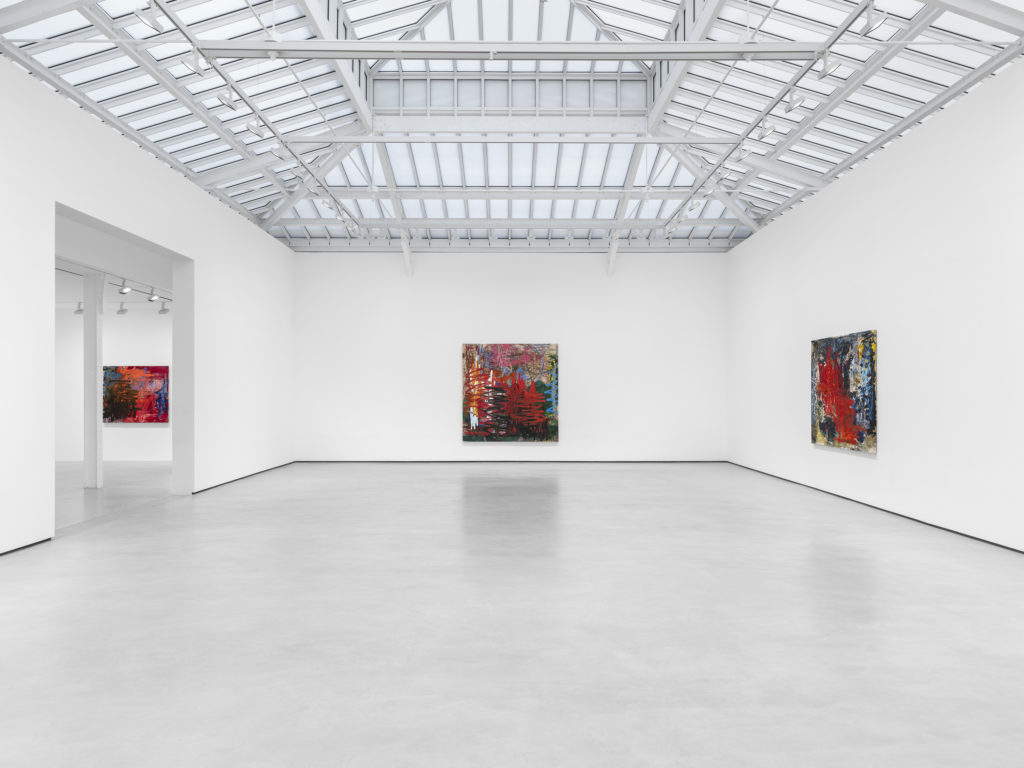
“Unfinished thinking: Paintings and Social Maps” becomes a concentrated journey through the artist’s painterly oeuvre, developed over the past decades. Looking back to the beginning of the show, it seems as though a touch of Monet and Parisian art history have found their way into the final room. The French painter not only created the “Water Lilies” but also defined the exhibition spaces at the Musée de l’Orangerie where they are still displayed today — an artistic act to which Murillo has made specific reference in the past, and which may have prompted this exhibition to separate the main gallery from the entrance, in order to create a sheltered setting for focused contemplation and for the multitude of “spirits” that inhabit his new works.