London is enjoying an unusually generous spell of October sunshine. The sky is crystal clear, the streets of Fitzrovia are busy, and Frieze Week has brought its familiar procession of collectors, dealers, and art professionals back to the city. A short distance from the tents in Regent’s Park, Minor Attractions has taken over The Newman, a newly opened hotel on Newman Street. Now in its fourth edition, the fair brings together more than seventy-five galleries from around the world, with exhibitions unfolding across the hotel’s first floor and bedrooms.
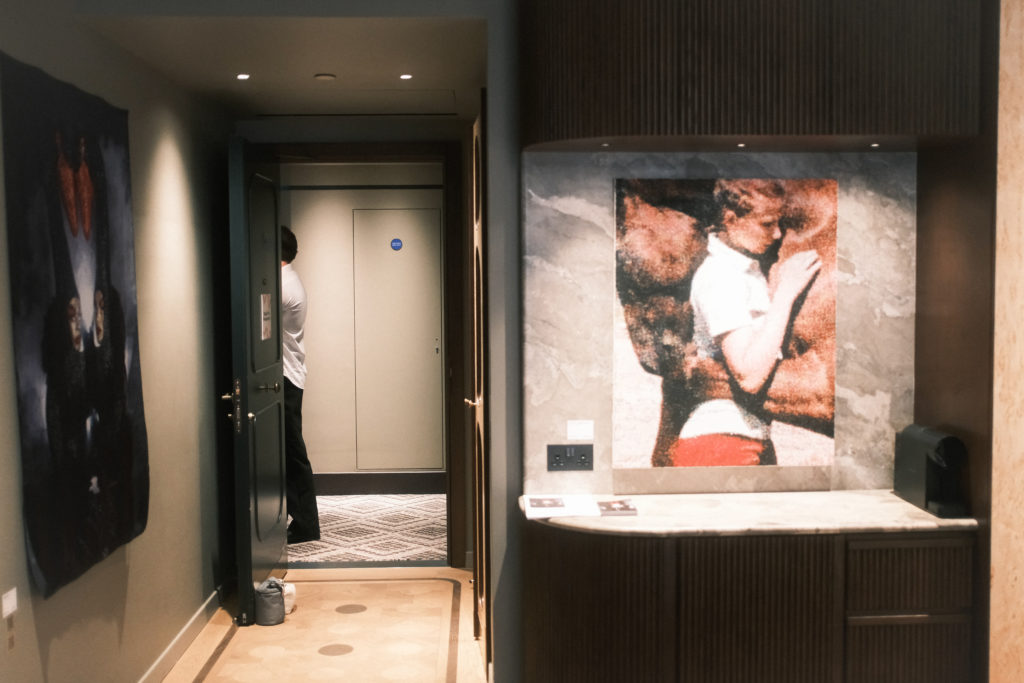
The change of venue feels like an improvement on previous editions. At The Mandrake, the hotel’s elaborate, heavily decorated interiors often competed with the works themselves, occasionally becoming more memorable than the art on display. The Newman, with its more restrained, Art Deco-inspired interiors, gives the presentations room to breathe. Visitors take the lift upstairs, where gallery signs hang on bedroom doors and artworks occupy desks, bedside tables, wardrobes, and bathrooms. There is something entertaining about entering a stranger’s bedroom to look at art, particularly when the works appear where personal belongings would ordinarily be found.
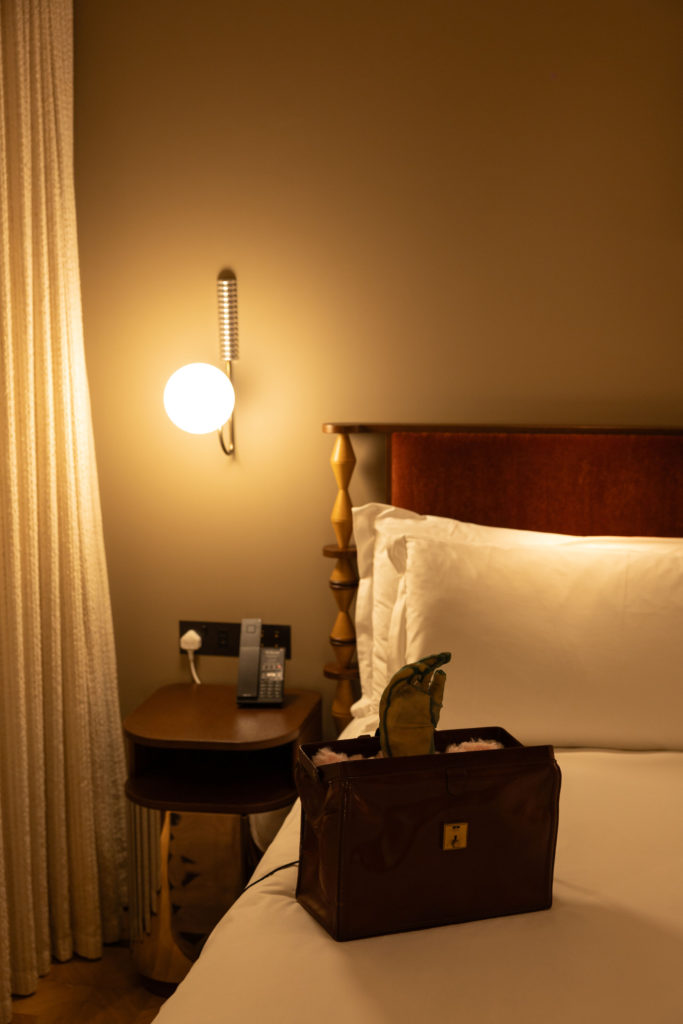
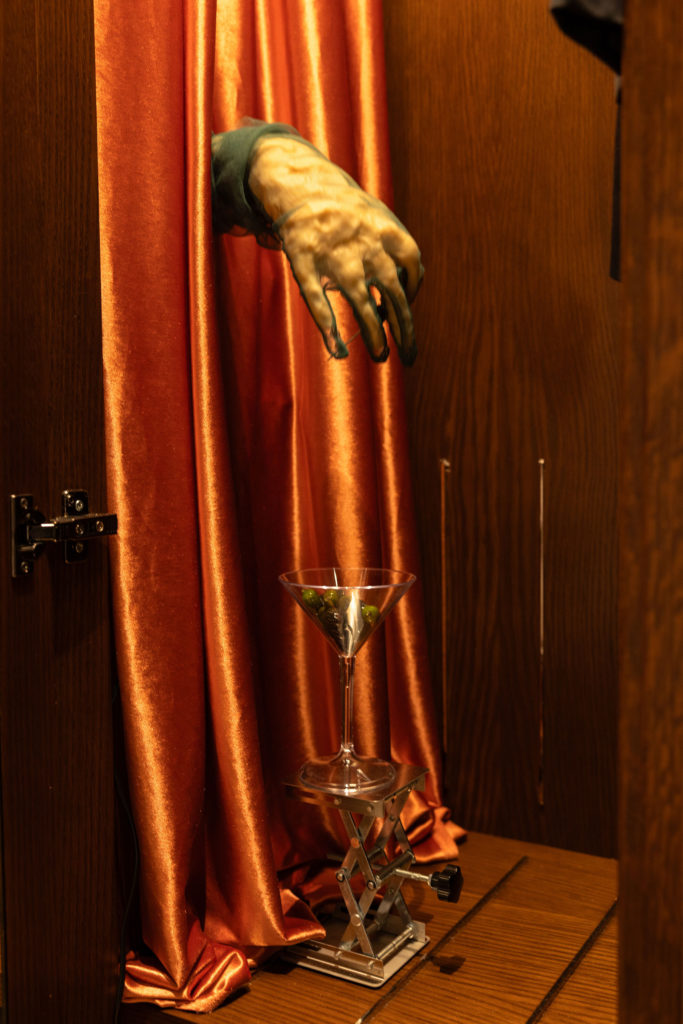
Among the more memorable presentations is a collaboration between Singaporean artist Moses Tan and Philip Steele, presented by starch in Room 102, which they share with LAILA. In Tan’s You Had Me at Hello and Goodbye (2026), a greenish, monster-like hand emerges from a vintage leather bag on a neatly made bed, waving at visitors. Another reaches through a salmon-colored curtain inside an open wardrobe, hovering above a martini glass filled with olives. The effect is somewhere between a horror film and a joke at its own expense. There is something genuinely eerie about the disembodied hands, although their theatrical gestures make them difficult to take entirely seriously.
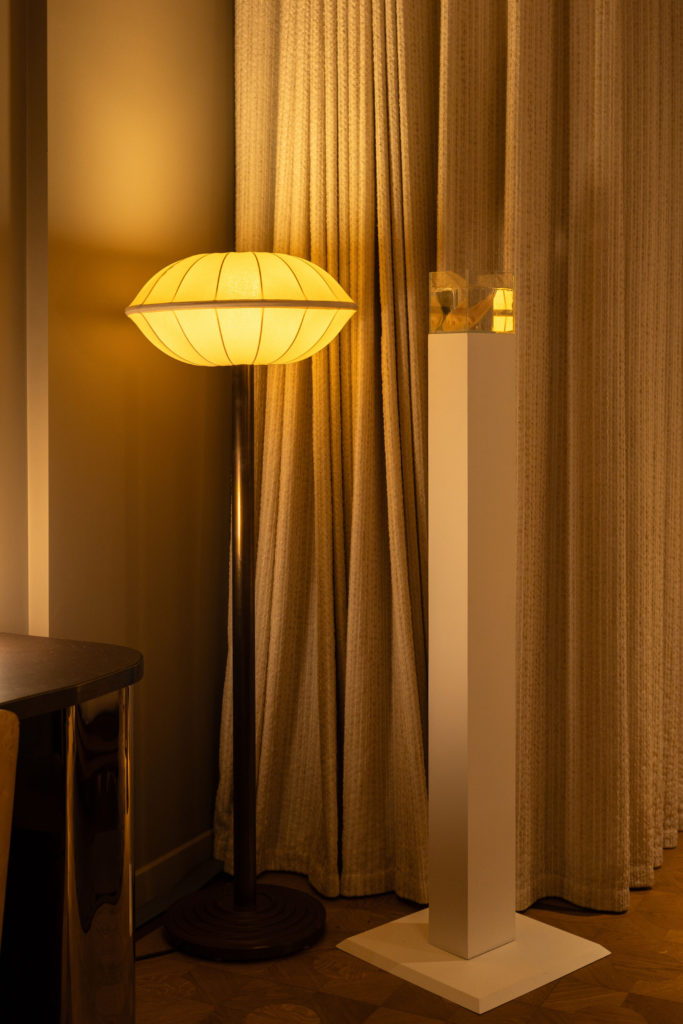
Tan’s practice engages with queerness, censorship, and the experience of being perceived as monstrous, particularly within Singapore’s social and political context. The absurdity of the hands consequently acquires another dimension. Their gestures suggest both an invitation and an intrusion, as though the figure they belong to is attempting to make itself welcome somewhere it does not quite belong. In the bathroom, Steele’s sculptures take a different approach to bodily absence. Black Prada heels rest on a leather case beside neatly stacked towels, while a white handbag sits inside the shower, each incorporating a water fountain. The luxury accessories look strangely abandoned, their associations with glamour complicated by Steele’s interest in grief.
Some of the strongest moments at Minor Attractions occur in these smaller encounters, where artworks resemble personal possessions and demand the kind of close attention easily lost at larger fairs.
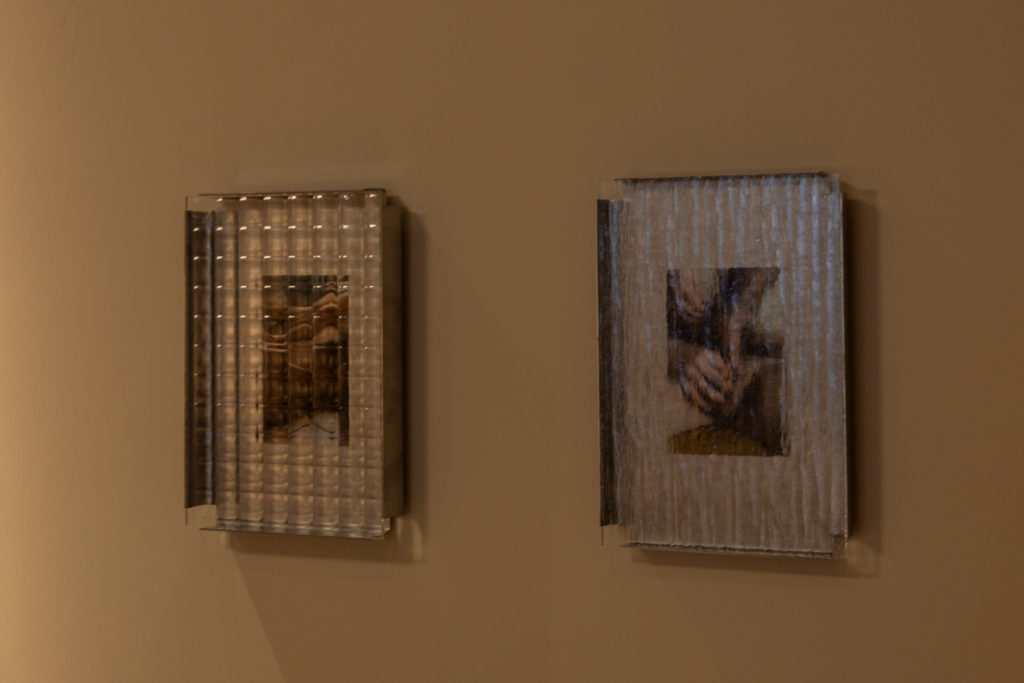
In Room 101, Marco Siciliano’s photographs, presented by FRENCH PLACE, make a compelling case for this kind of looking. His two works, -3.40 and -1.95 (both 2026), place digital photographs behind ornamental glass held in stainless-steel frames. The titles refer to degrees of myopia: each prescription value determines, in centimeters, the distance between the photograph and the glass. In -3.40, intertwined limbs are visible through a grid of small circular distortions. In -1.95, a hand holding a narrow object appears behind vertically striated glass, its contours stretched into wavering lines. This type of privacy glass, commonly used where discretion is desired, interrupts the images and makes their intimate subjects difficult to access. Surrounded by ordinary hotel furnishings, the photographs have the atmosphere of private images encountered almost accidentally, as though the viewer has stumbled upon something they were never meant to see.
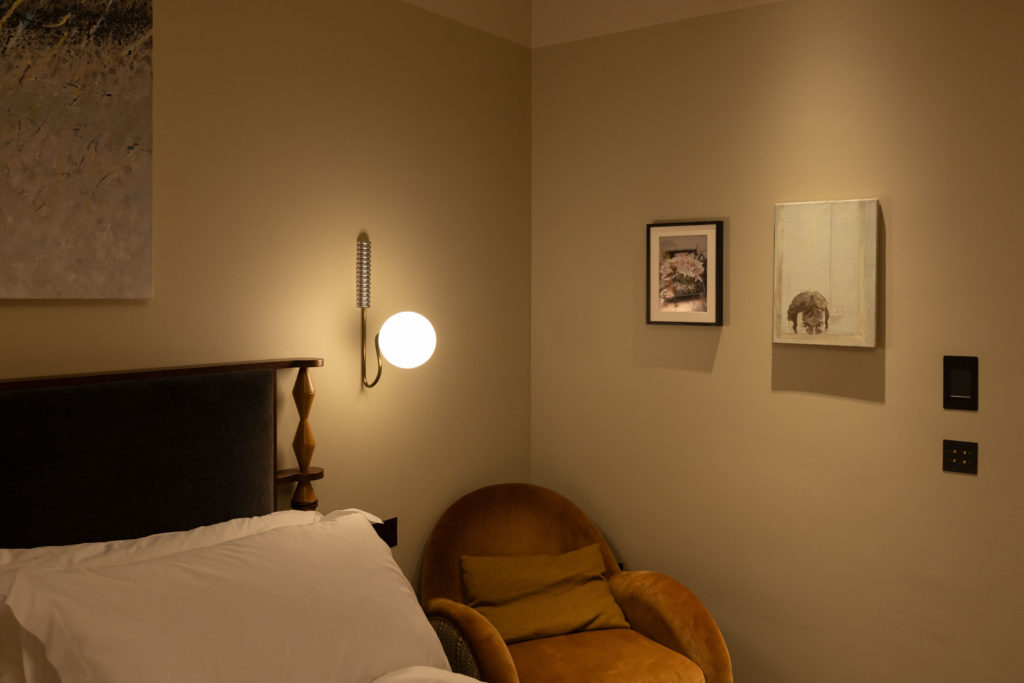
Nearby, Scarlett Griffiths’s for forever albums (2026), presented by KINDRED, depicts a bouquet of pale pink and white flowers, its surface covered with hand-processed circular marks. These gather densely around the centre and disperse towards the edges, disrupting the sentimental familiarity of the floral arrangement. The photograph recalls an image preserved in a family album, although its physical alteration makes that act of preservation seem uncertain. The flowers remain visible, but their appearance has been punctured and partially erased.
Elsewhere, Benjamin Slinger’s Empire (2026), presented through his design project Slinger Copyright, brings a more playful register to the bedrooms. The lamps are constructed from vintage McDonald’s and Burger King paper bags collected over approximately three decades, their colorful graphics stretched over wire frames. Installed on bedside tables, they resemble eccentric pieces of commercial design that might initially be mistaken for part of the hotel’s furnishings.
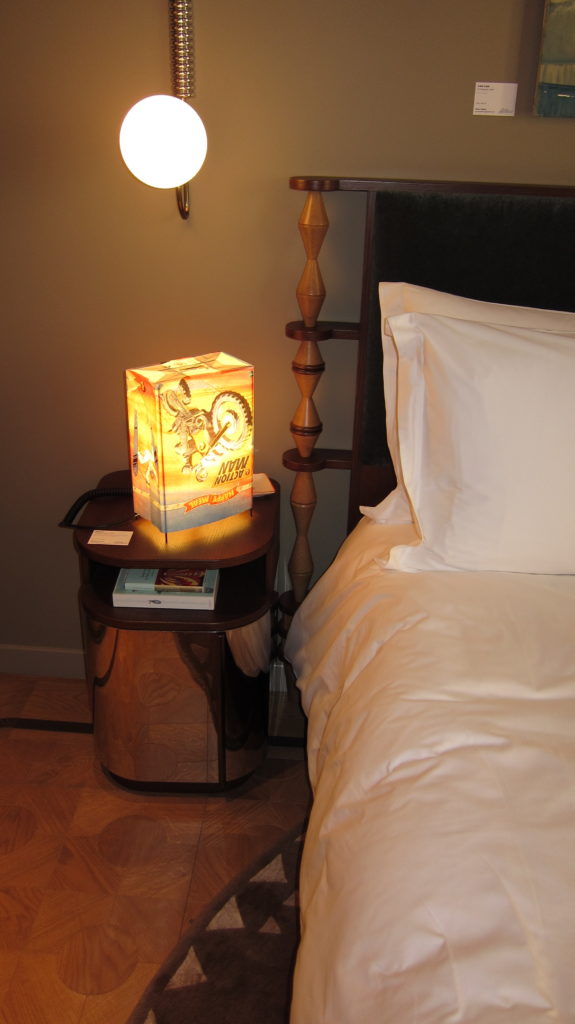
Slinger draws on the familiar form of Isamu Noguchi’s Akari lamps, replacing their delicate washi paper with the printed packaging of multinational fast-food chains. The comparison is amusing. Both belong to instantly recognizable visual cultures, although their associations with craftsmanship and mass consumption could hardly be further apart. Illuminated from within, the disposable bags acquire an unexpected warmth, their cartoon characters and corporate logos glowing like decorative motifs. Packaging designed to be discarded after a meal becomes a desirable object, complete with the visual authority of a design classic. Through Slinger Copyright, Slinger also explores the mechanisms through which objects acquire value and circulate within systems of branding and consumption.
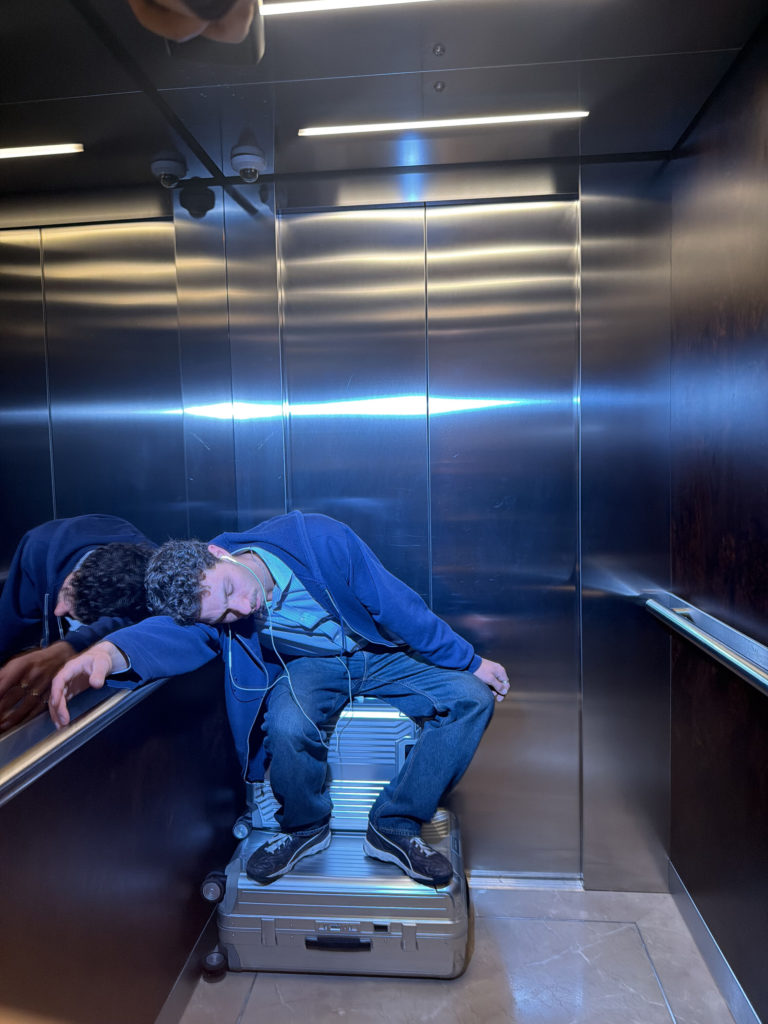
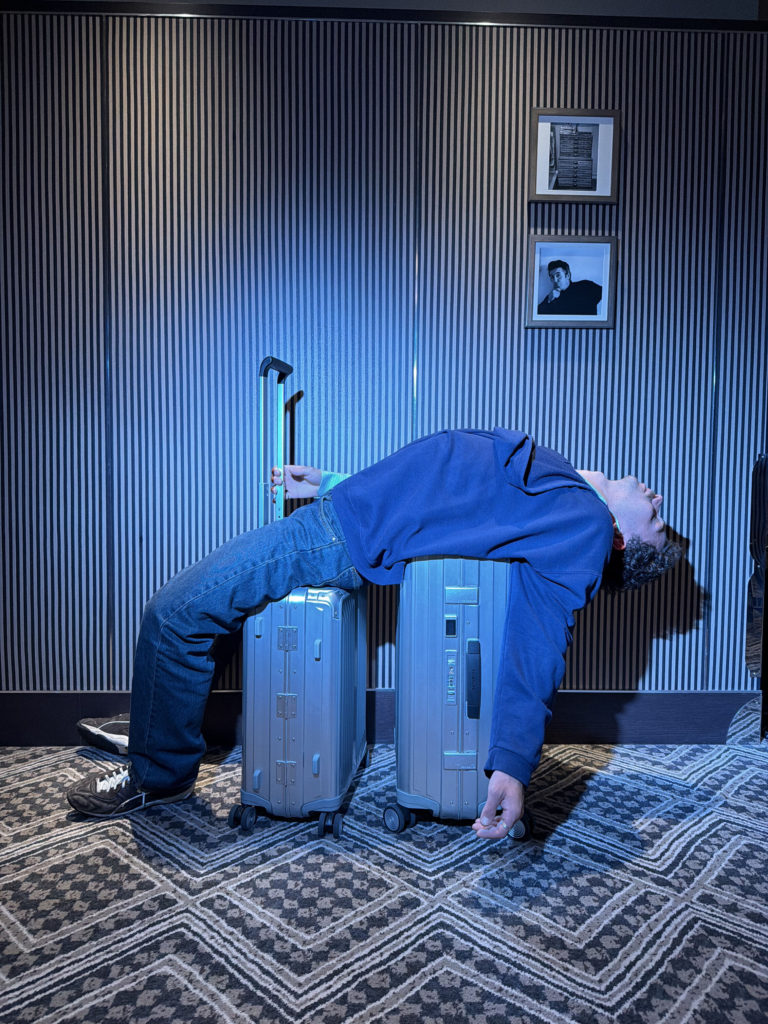
Performance also makes its presence felt throughout the building. The Amsterdam-based platform Trespassing presents ETA (2026), a durational work in which a solitary figure carrying luggage moves through corridors, stairwells, and rooms without ever arriving at a destination. As exhaustion takes hold, the performer pauses in temporary sleeping positions, folding himself around his luggage. It is a fitting intervention in a building designed around arrivals, departures, and temporary occupation.
Beyond the individual presentations, Minor Attractions offers younger artists and independent galleries exposure during one of the most commercially concentrated weeks in the art calendar. Admission by donation and the informal setting encourage conversations between exhibitors and visitors, while the bedroom format makes the experience considerably less intimidating than a conventional fair.
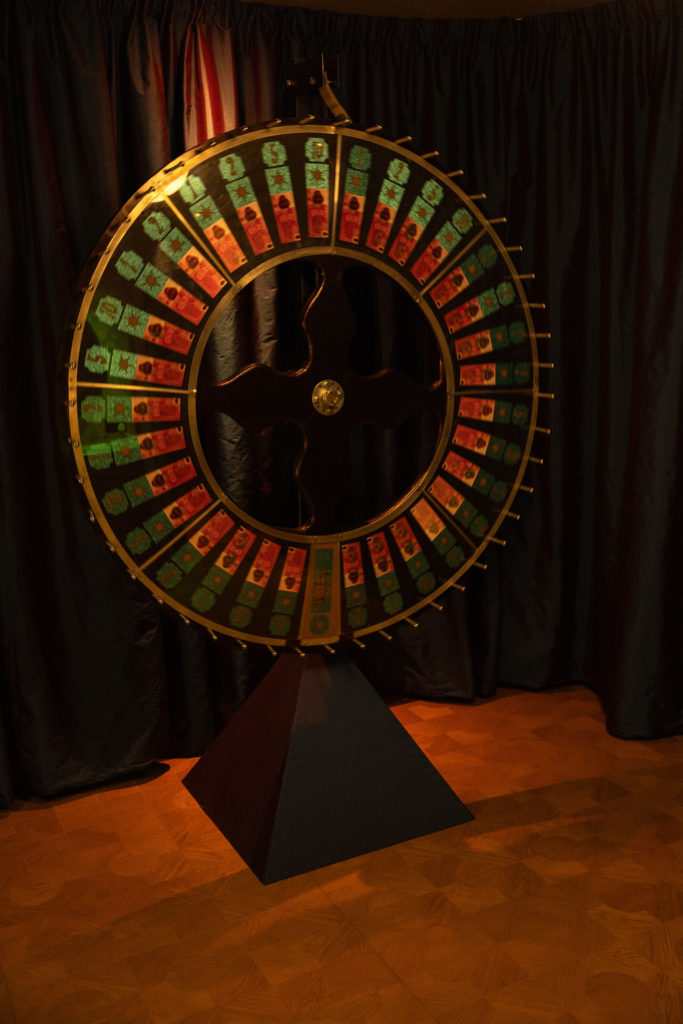
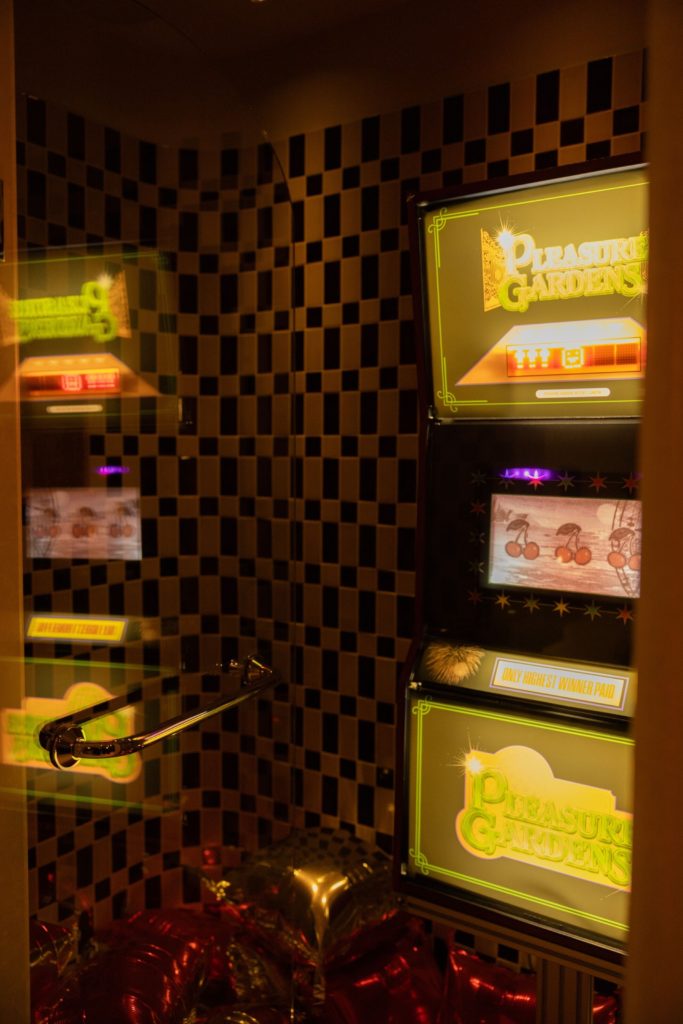
This year also sees the introduction of Major Futures, a charitable fundraising initiative supporting independent curators, nonprofit art spaces, and cultural programmers. Its first three beneficiaries are Plicnik Space Initiative, which presents a room; independent curator Jean Watt, who contributes A Place to Rest as a single-work presentation; and Fiona Ye and Umi Ishihara of FLATLINE CITY, who produce a performance and film event. Fundraising, including a September charity auction and visitor donations, helps cover the costs of their participation. For smaller galleries and independent spaces, the financial pressures are hardly new. Rising rents, production costs, and the expense of exhibiting internationally make it increasingly difficult to sustain a program, let alone take risks on emerging artists. Major Futures acknowledges these realities, although its success will depend on what it can offer beyond Frieze Week.
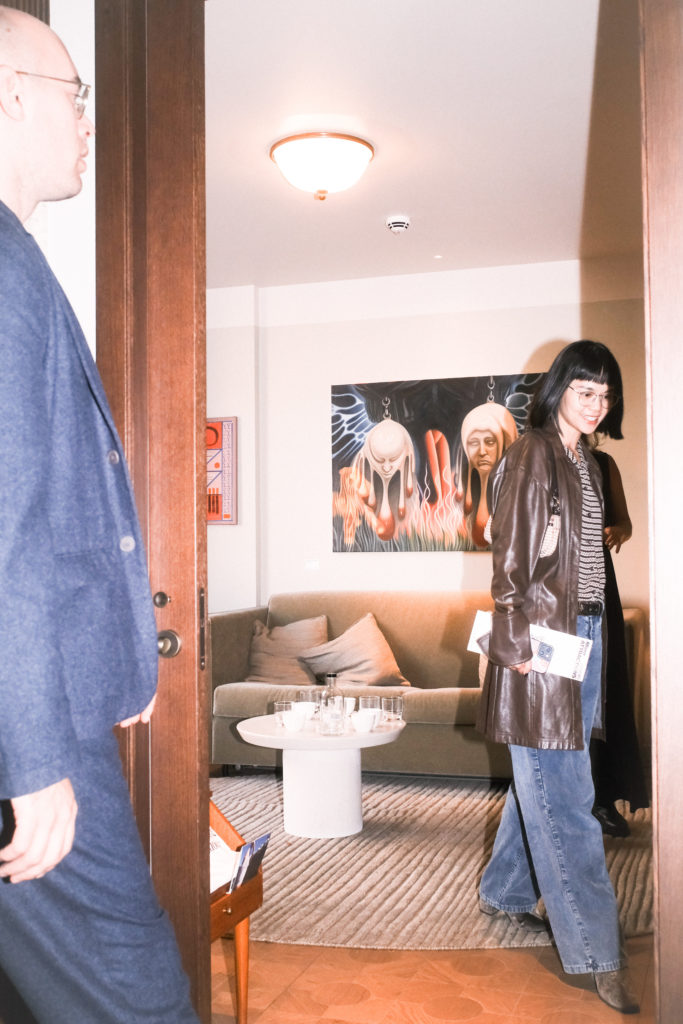
The Newman is a better home for Minor Attractions. Its quieter interiors give the works the space they need, while the bedrooms retain a sense of intimacy and intrigue. As visitors move from room to room, the hotel gradually sheds its familiar identity, becoming a place of unexpected encounters, curious discoveries, and, occasionally, genuine surprise.