Slightly blurry, I was on the 7:00 a.m. Bakerloo line, heading back to the vast tents in Regent’s Park. Beside me, a copy of The Standard lay abandoned on the seat, its pages fluttering in the worryingly warm autumn air. The new climate has taken hold. The newspaper’s front page featured black-and-white portraits under the headline “The 15 Coolest New Art Stars in London.” Looking at it, I found myself thinking about how artists have become personalities, how scenes are packaged into recognizable casts of characters, and how the mediation of the Young British Artists (YBA) era seems to have resurfaced alongside a global appetite for 1990s nostalgia.
The YBA era helped reestablish the artist as a public persona in Britain and beyond, someone whose image, character, and media visibility could become almost as legible as the work itself. Today’s celebration of emerging art “stars” seems to revive that logic, turning a diverse generation of practitioners into a cast of recognizable cultural figures.
But is it cool to be the coolest? While many artists have exciting, critically engaged practices, and a buzz surrounded these emerging “stars,” three days into Frieze London 2026, I became more interested in how artists and gallerists played with the fair’s conventions: its architecture, display systems, and pressure to impress before viewers or prospective clients moved on.
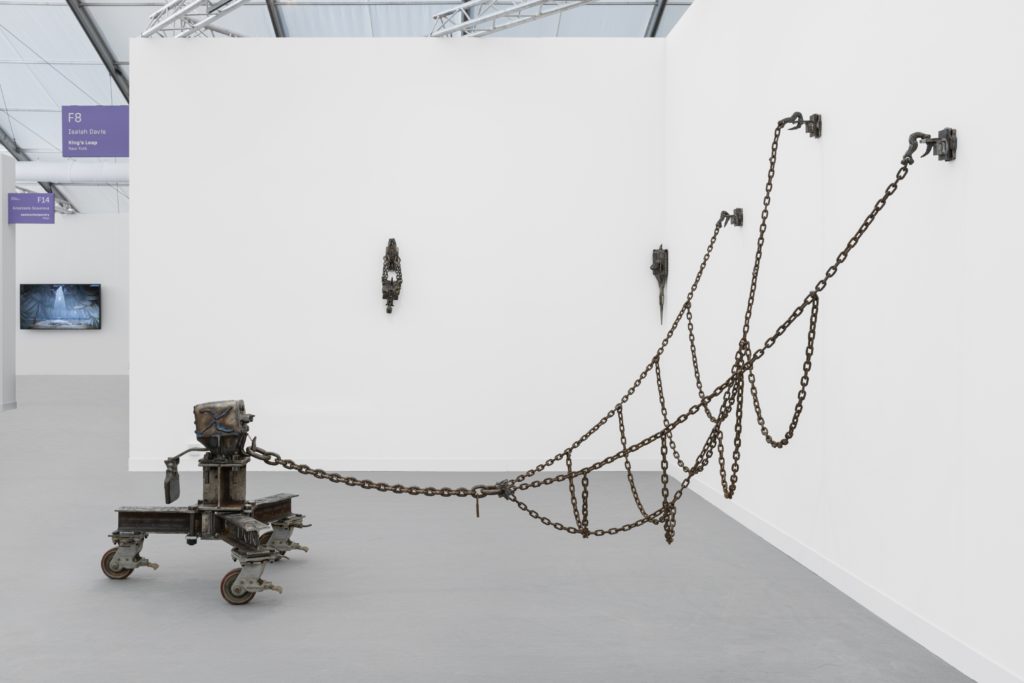
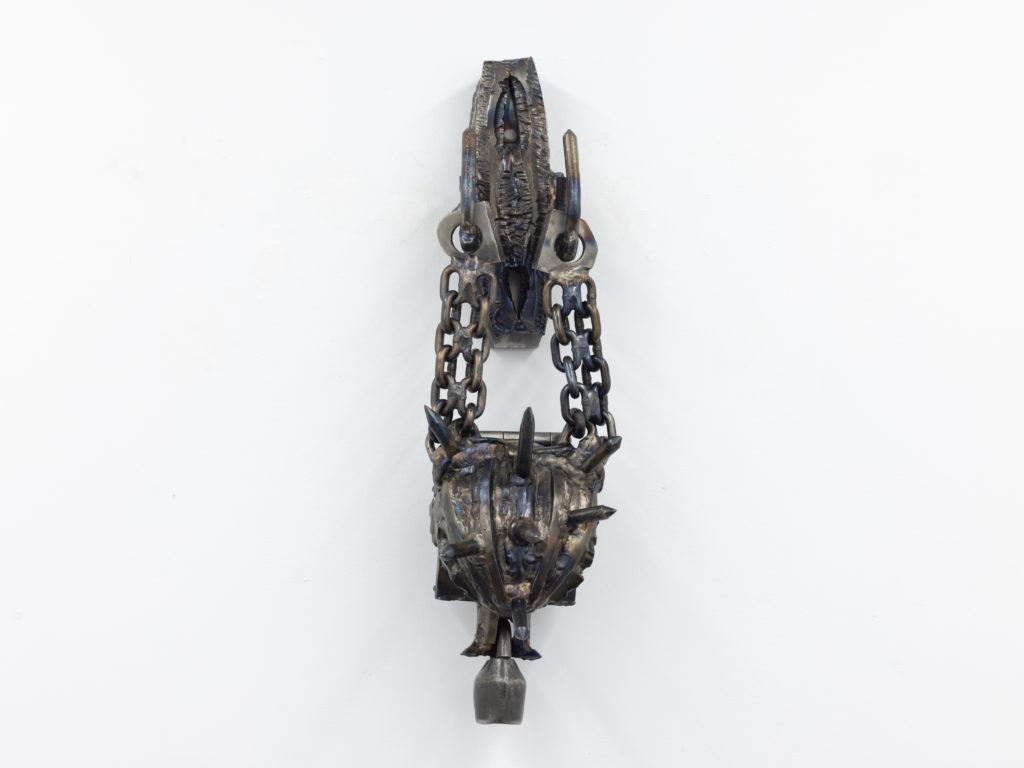
At King’s Leap, Isaiah Davis presented metal structures in welded, reclaimed steel. Chains were shackled to the wall and attached to a wheeled mechanism, suggesting the possibility of the walls being torn down, a revolution. Loud and threatening in its potentiality, the installation, titled “Undertow,” disrupted the fair’s carefully contained spaces. More of this, please.
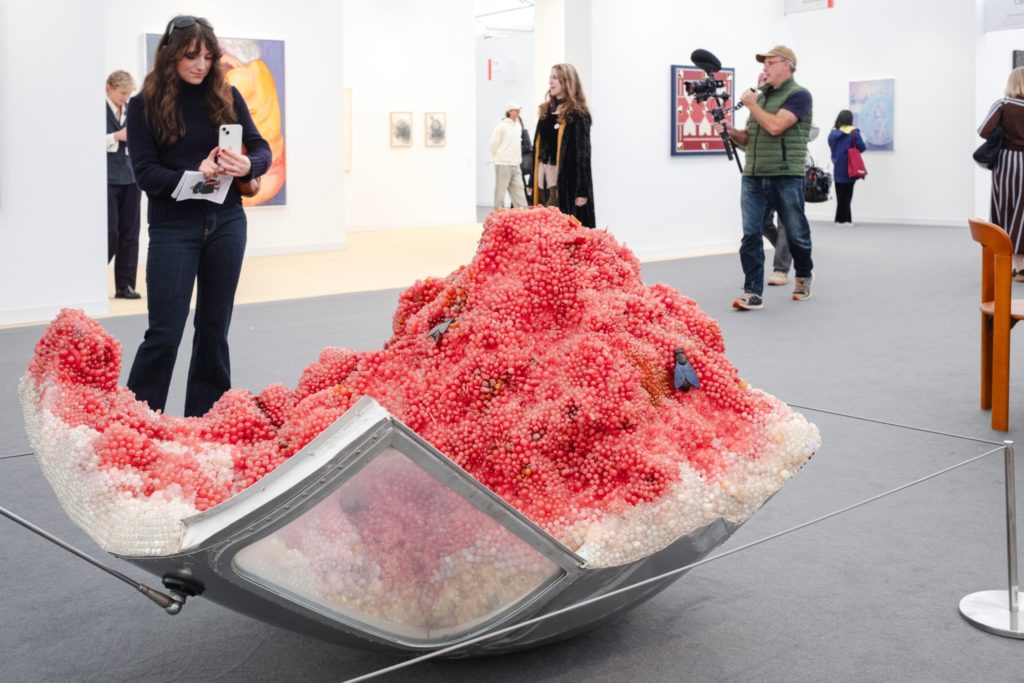
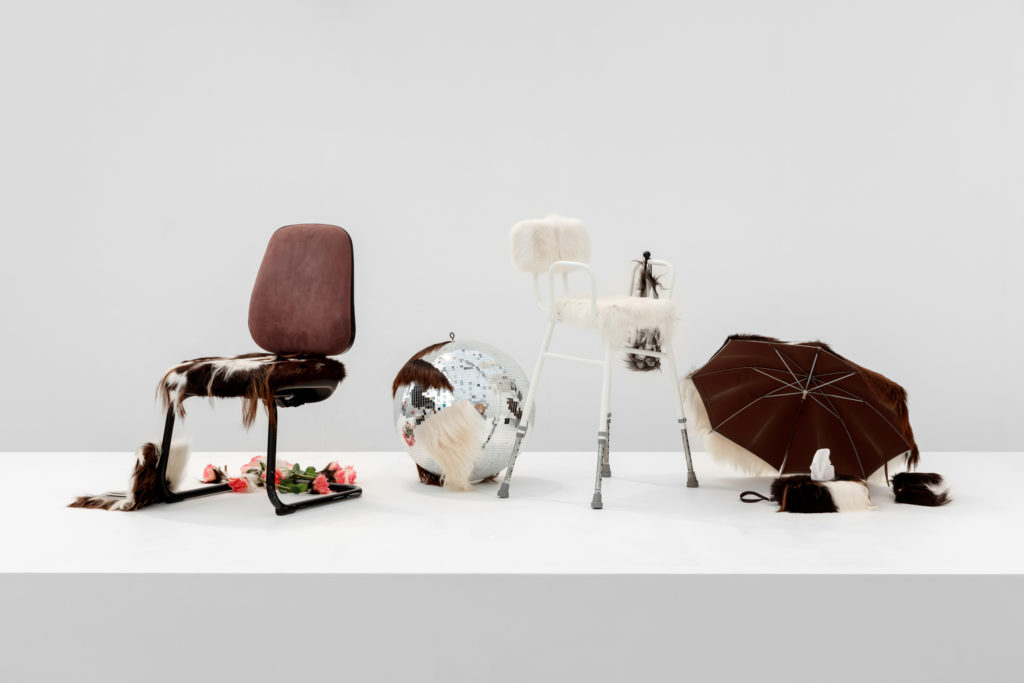
At Rose Easton, Amanda Moström’s “Bikini Bottom”transformed numerous objects — including an office chair, an umbrella, and a tissue box alongside a disco ball partially covered in goatskin — into a shifting installation that momentarily cast patches of reflected light across the booth. Changing daily, it felt refreshingly unburdened by the prevailing stasis of the art fair, where objects are typically presented as discrete, self-contained entities, overwhelmingly rectangular, held in place by the conventions of display. Against the fair’s largely static arrangements, Moström’s installation introduced a sense of movement and impermanence, suggesting an alternative to the orderly, object-centered logic that governs so many booths, and the world at large.
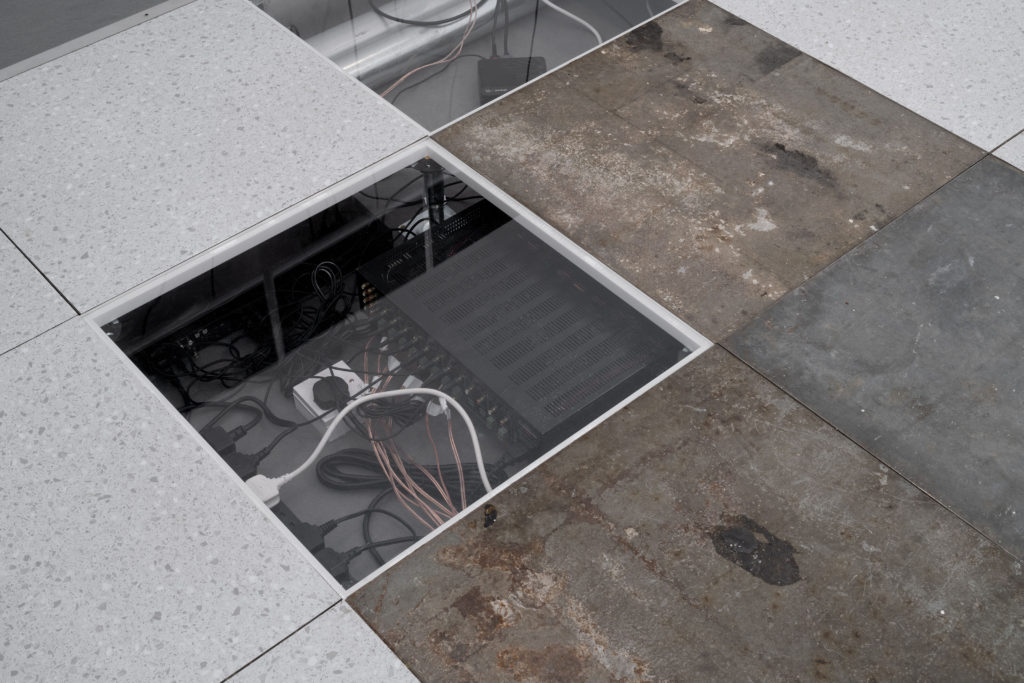
undercover training period at Stellar Op OnlyFans Chatter Agency, androstenone (C19H28O),
water (H2O), BC40 Bubblegum Odour Control (industrial concentrate odour mask and
deodoriser), steel-encapsulated access floor panels repurposed from data centres, perspex
access floor panels, linoleum panel covers, underfloor Xcite XT Exciters, Heavy Duty Bass
Shakers, pipes, cables, brushed stainless steel, unique in a series of 3. 360 x 360 x 25 cm. Installation view of Frieze London 2026 with Ehrlich Steinberg, Los Angeles. Photography by Dominique Croshaw. Courtesy of the artist and Ehrlich Steinberg, Los Angeles.
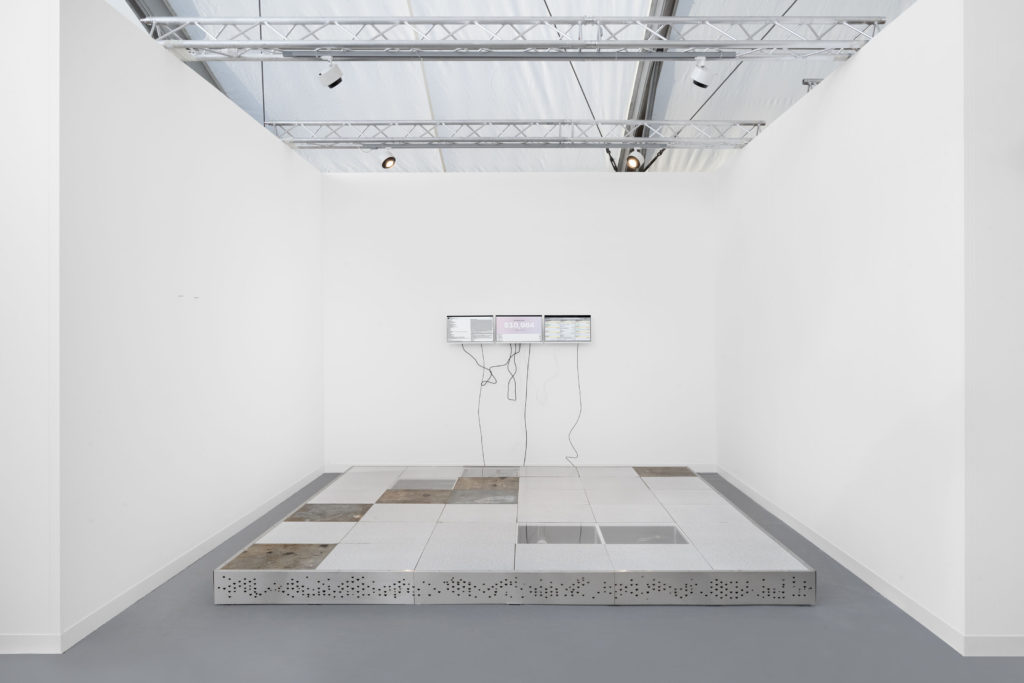
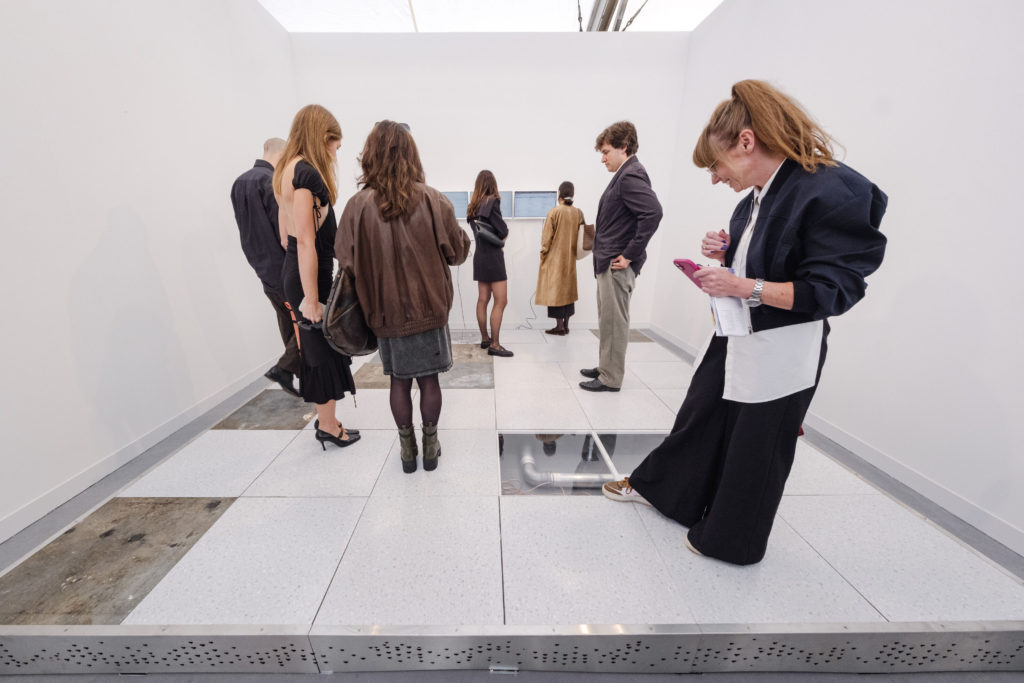
Ehrlich Steinberg’s presentation of Ella Fleck’s Training Material (2026) similarly disrupted passive looking. Directional audio and vibration accompanied recordings of men reading online sexual-fantasy scripts, with sound traveling through a platform beneath the viewer’s feet.
At Edel Assanti, Marcin Dudek drew on the domestic space of his childhood home in a Kraków housing estate, turning the booth which contained works by many artists into an environment to enter. Its compressed architecture invited viewers to perhaps consider the context from which artist emerge. The smell of fresh carpet threatened to undermine the class dynamics the presentation seemingly sought to explore.
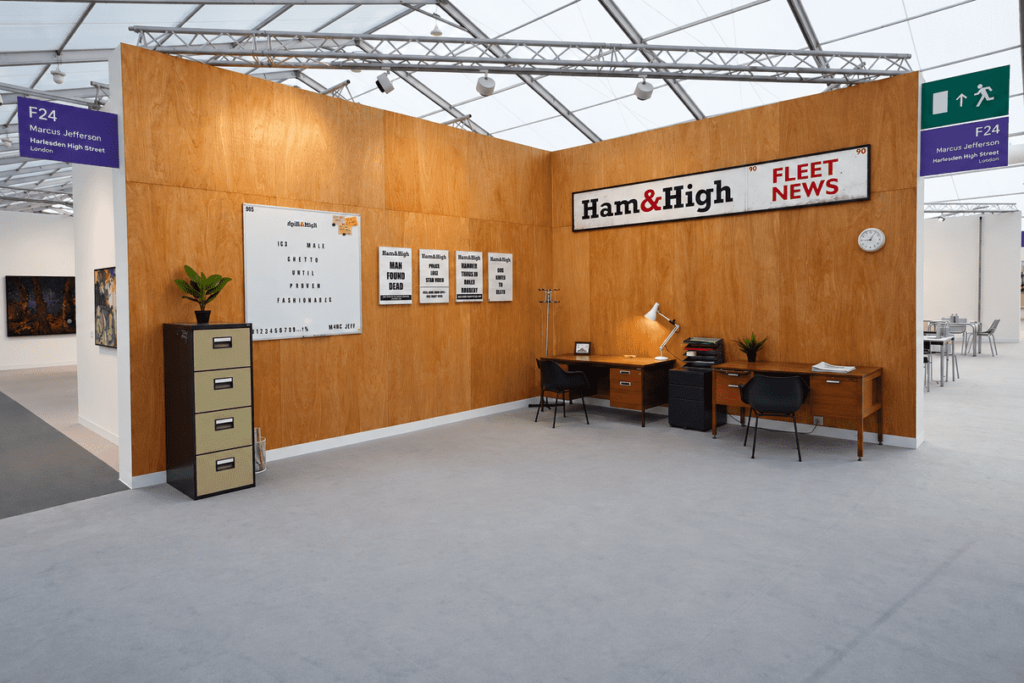
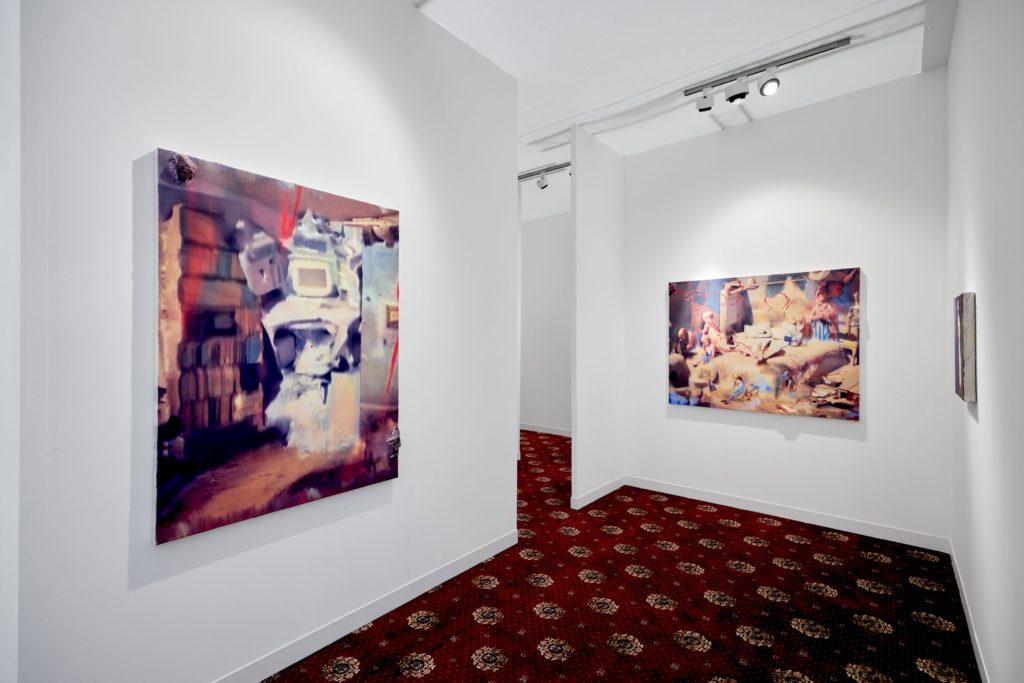
Harlesden High Street brought the outside world into Frieze with Marcus Jefferson’s life-sized newspaper office installation, which incorporated his satirical Ham & High project. Set against the fair’s clinically commercial atmosphere, the makeshift workplace introduced a dose of everyday social and cultural reality. Jefferson transformed the stand into a de facto newspaper bureau, complete with a 1970s filing cabinet, desks, and newsstand posters advertising stories from the local London paper dating back to 2013. The absurd headlines, including “Hammer thugs in Rolex robbery,” lent the installation a distinctly edgy quality, exposing the strange intersection of everyday news, identity, and humor.
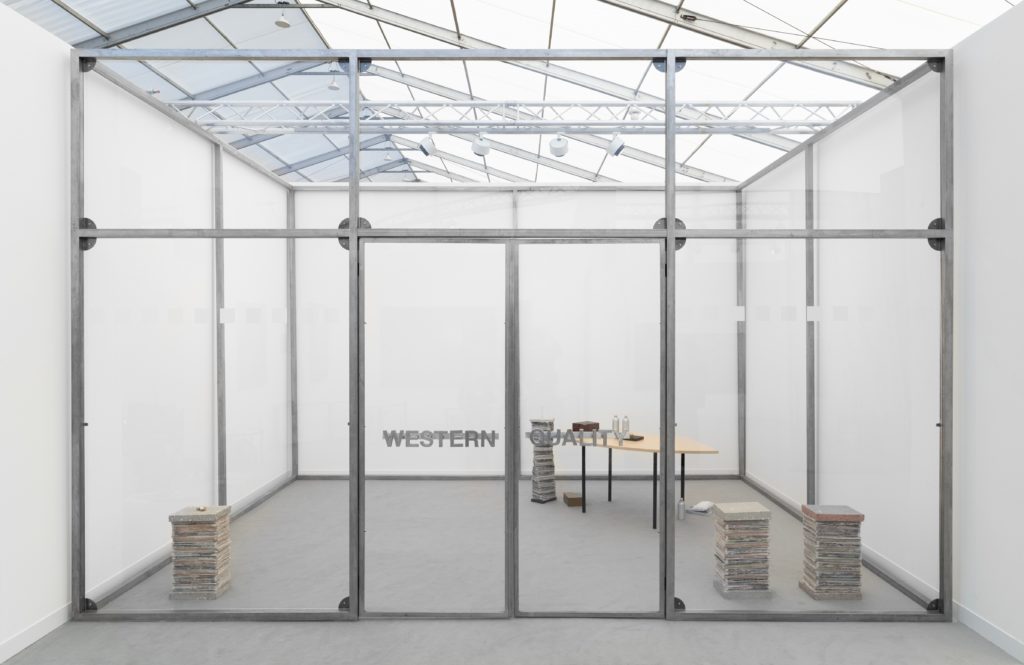
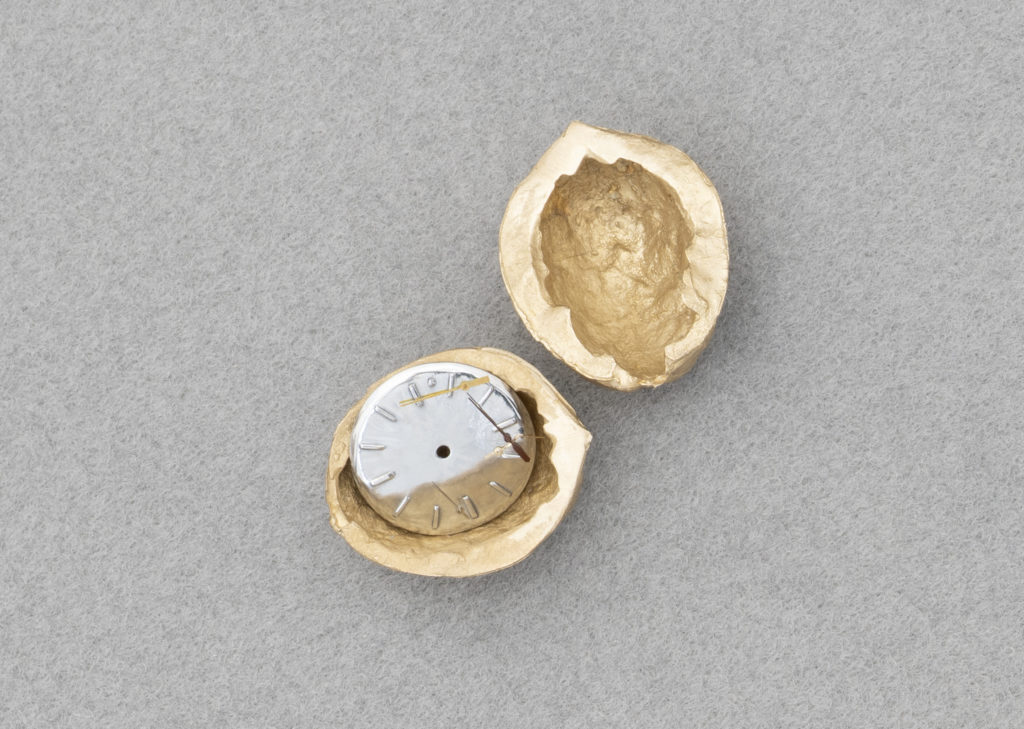
At Galerina, Ewa Poniatowska turned the commercial context of the fair into the subject of her presentation. Visitors passed through transparent doors resembling those of a luxury boutique, emblazoned with the words “WESTERN QUALITY.” Inside, clock faces were embedded in cast walnuts, while gallerists in white gloves presented the objects to curious viewers, performing the rituals of precious display. The combination of retail architecture, careful handling, and everyday imagery both reflected and satirized the lifestyles and expectations of the fair’s clientele. Yet the irony was knowingly contradictory: the work critiqued the rituals of luxury display while participating in the very market it puts under scrutiny, offered for sale within the fair itself. Conceptually assured and deftly executed, the presentation made this tension part of its appeal. Elsewhere in the booth, sculptures incorporated terrazzo and free newspapers. The gallerists drew attention to these materials as a way of revisiting the role of the press in shaping the Brexit vote, ten years on from the referendum.
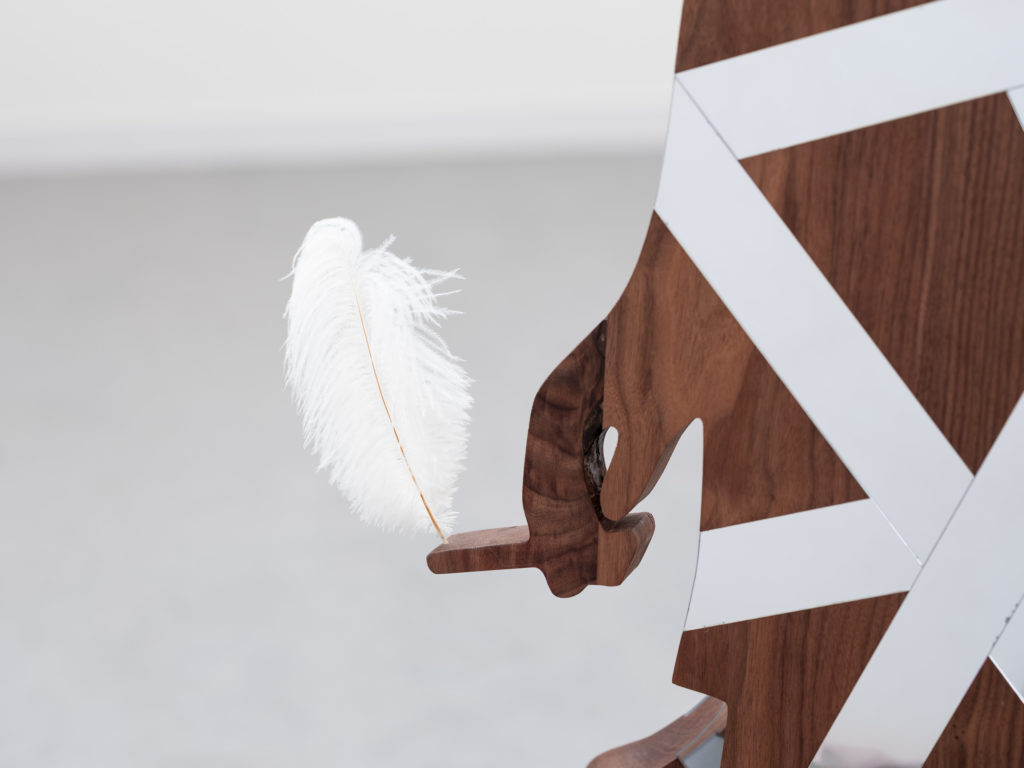
Walnut full stave, inlaid mirror perspex, old hook, GQ Parachute LTD parachute from 1999, fibreglass rods, old feather
Fauns: 183 x 70 x 40 cm
Parachute: 300 x 180 x 155 cm. Installation view of Frieze London 2026 with 243 Luz & Co, London. Photography by Ollie Ollie Harrop. Courtesy of the artist and 243 Luz & Co, London.
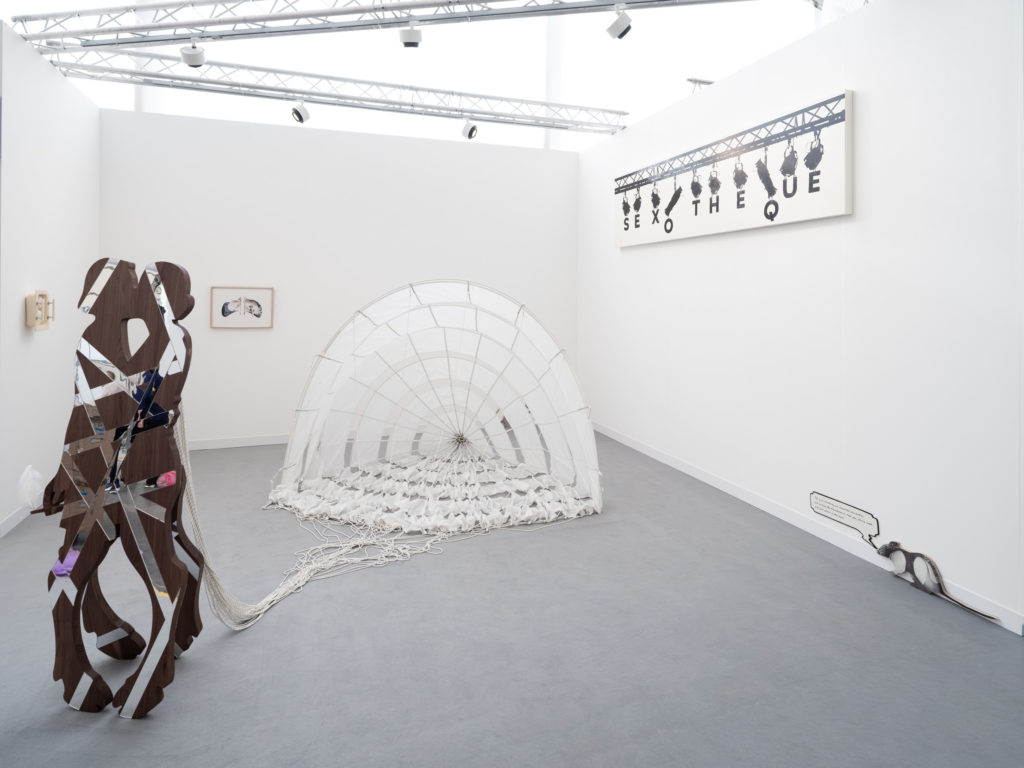
At 243 Luz & Co, I. W. Payne’s booth “We fucked a flame into being” explored intimacies, queer sensibilities, and associations through a theatrical arrangement. A partially arched parachute occupied much of the space as if it had just parachuted in, alongside a range of works and objects, including a wooden sculpture of two figures embracing, with a feathered protrusion suggesting cigarette smoke.
At TINA, Karim Boumjimar’s presentation combined handmade terracotta pots with drawings and a site-responsive mural. Drawing on queer kinship, mythology, and devotional imagery, the work populated its setting with hybrid beings that resisted fixed identities and normative hierarchies. The relationship between the ceramics and the mural created a hallucinatory world of bodies and symbols, suggesting alternative forms of social relation through moments of expression and pleasure. The mural spilled out onto the booth’s signage with a painted dagger beneath the gallery’s name.
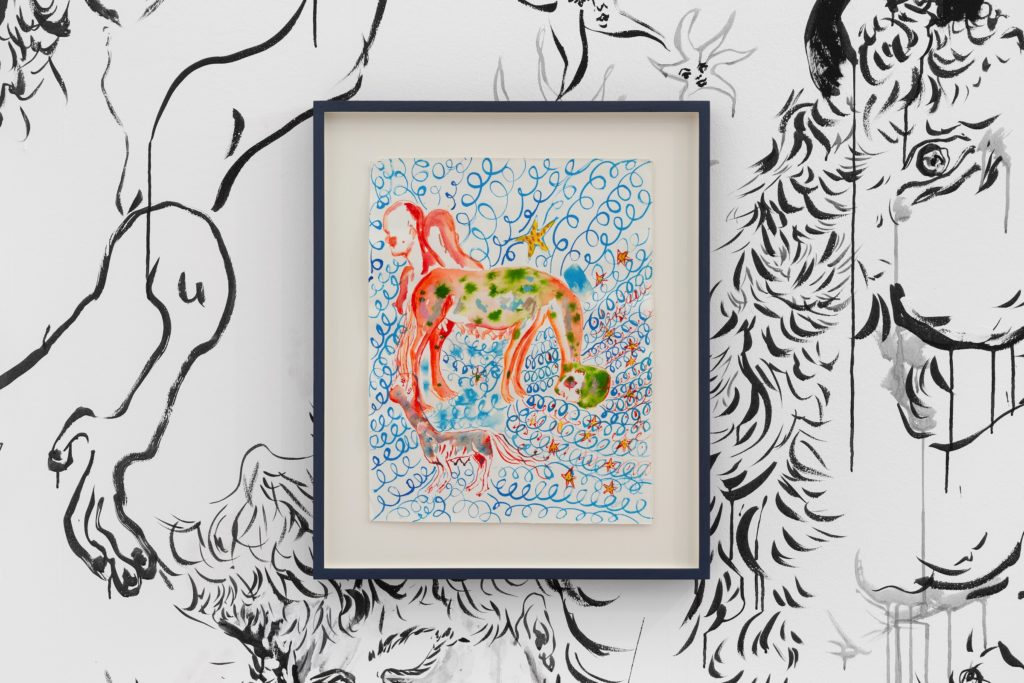
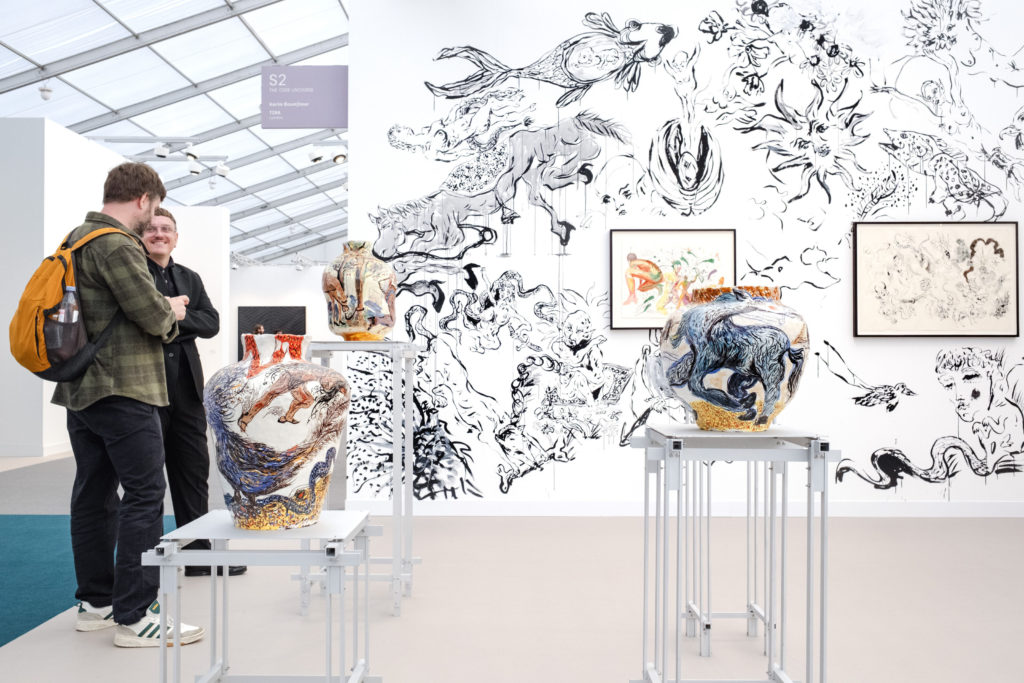
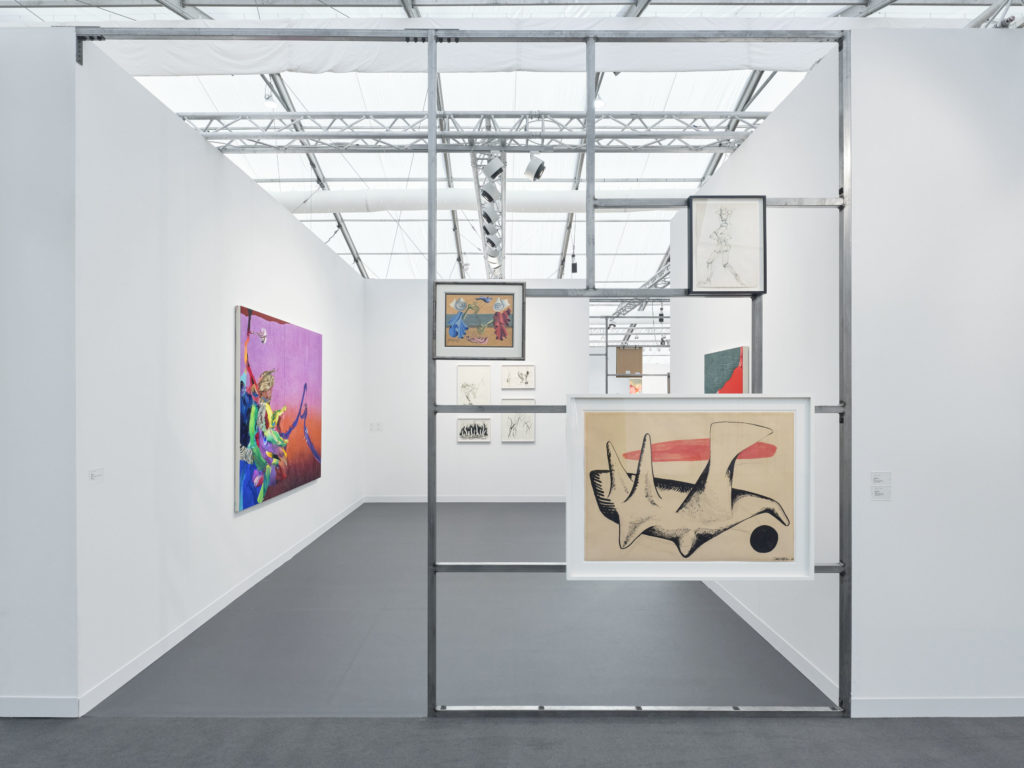
Some of the larger galleries also experimented with display. White Cube devoted its booth to Ilana Savdie, presenting new paintings and works on paper alongside historical works by artists including Louise Bourgeois, Salvador Dalí, Hans Bellmer, and Leonor Fini. An open lattice served as both a physical and conceptual filter, mediating the encounter between Savdie’s intensely colored, hybrid bodies and the artists presented as her historical interlocutors. Yet the connections felt somewhat overdetermined, as though the juxtaposition sought to secure Savdie’s practice within an established canon rather than allow its particularities to speak for themselves. Such gestures of art-historical legitimation risk narrowing the work’s interpretative possibilities, subordinating its unruly visual language to a lineage that may ultimately explain less than it claims to.
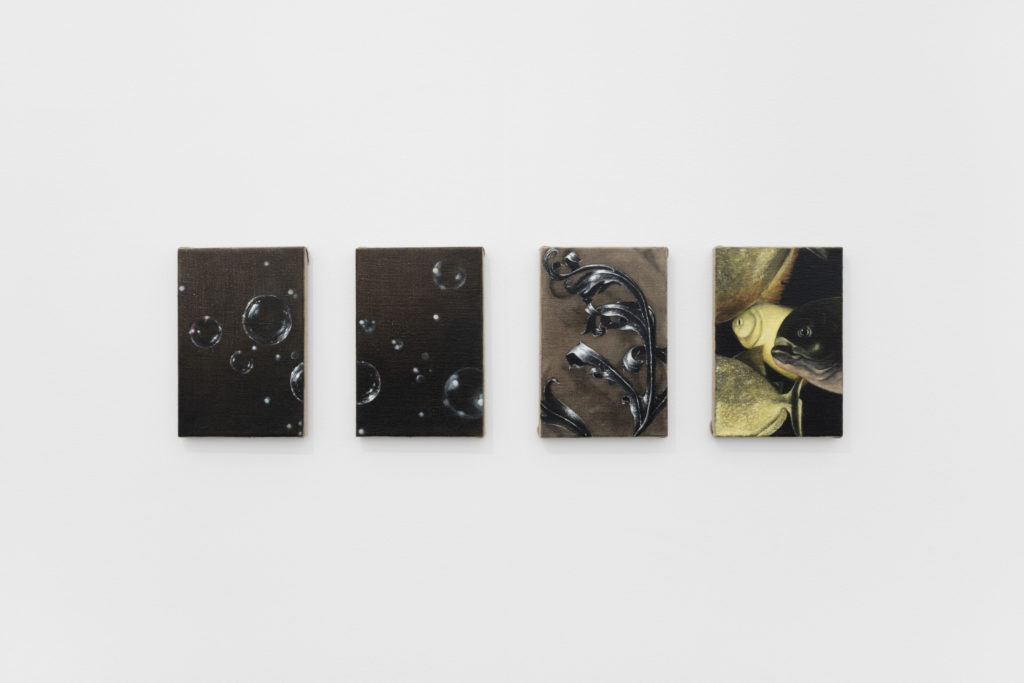
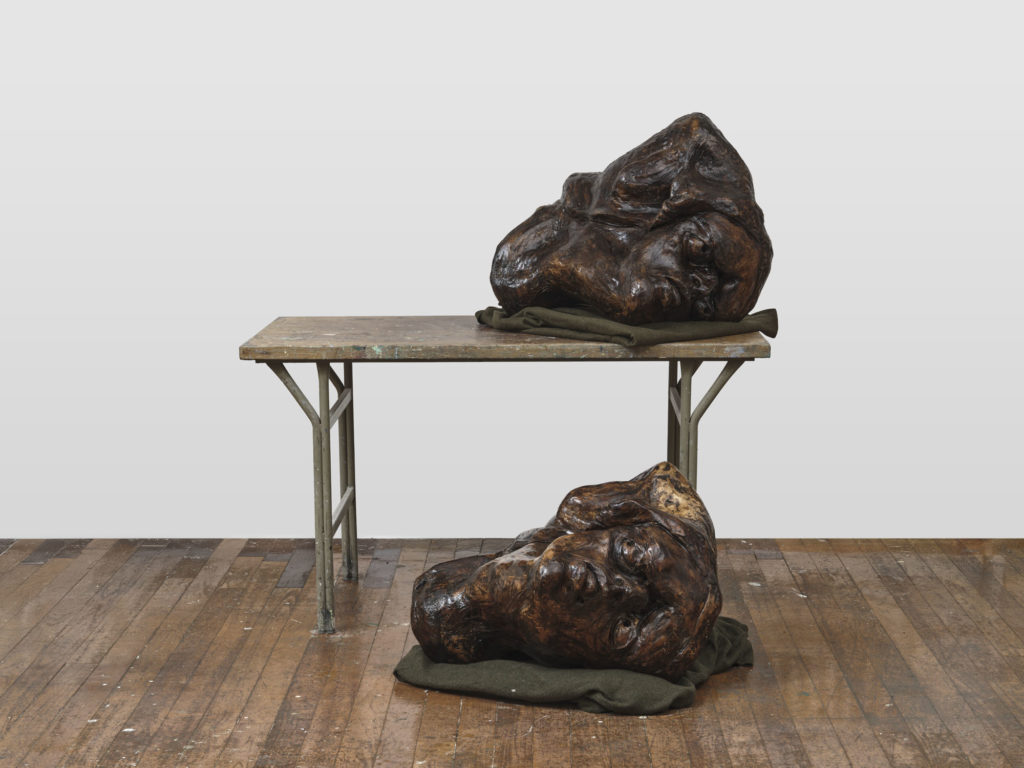
Alongside these more immersive presentations were subtler interventions. At Gianni Manhattan, Alex Macedo’s paintings explored transparent boundaries through images of gates and other natural and architectural divisions. Their treatment of thresholds suggested a practice in which painting could question the structures it represented. Having previously worked with materials such as copper, Macedo offered an intriguing example of how a more traditional medium can continue to evolve. At Galerie Nordenhake, Benjamin Orlow’s Untitled (Two Heads) (2026) comprised two monumental heads that recalled the sculptural language of his contribution to the Venice Biennale. Their imposing presence offered a welcome counterpoint to the smaller, more contained works in many of the booths.
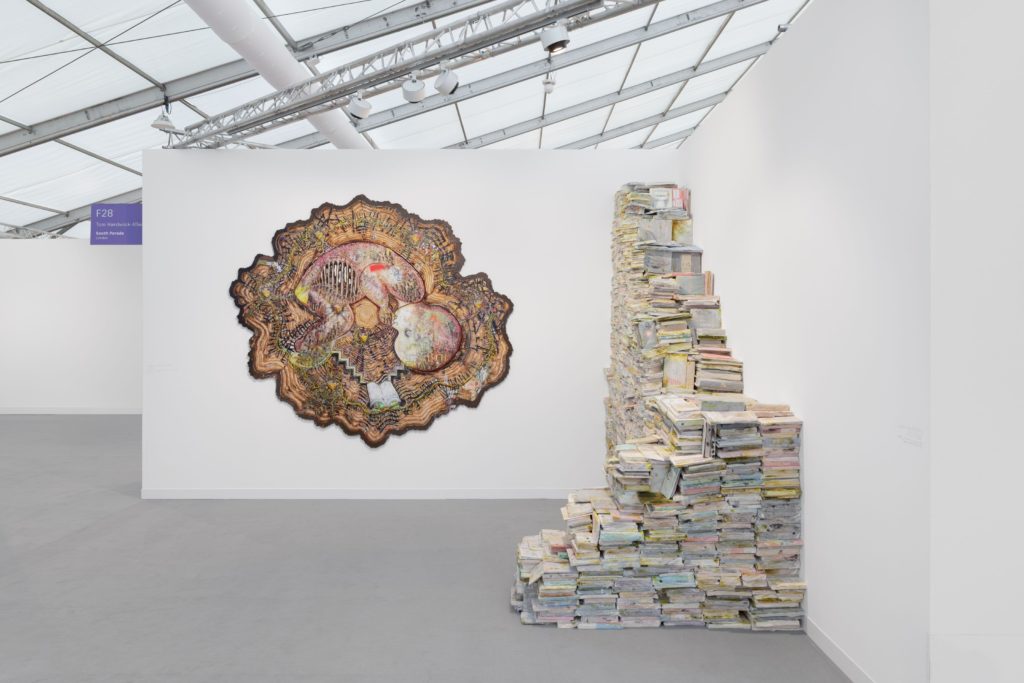
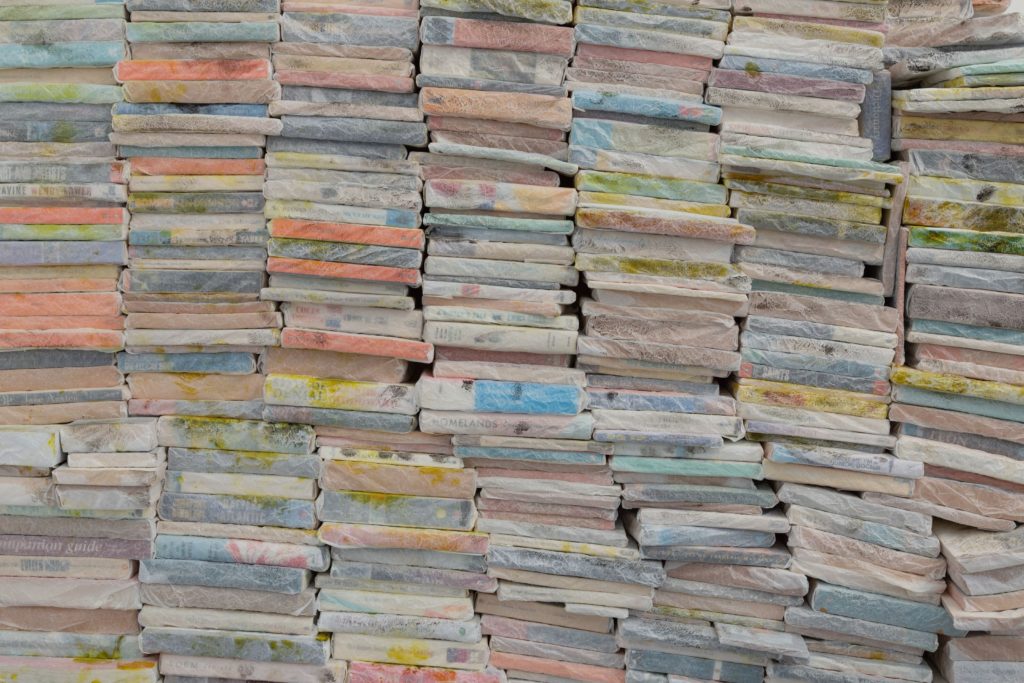
Tom Hardwick-Allan’s solo presentationat South Parade explored imprinting and the transmission of knowledge. Engine of Sickness and Light (2026) is composed of nine interlocking panels depicting a cross-sectioned tree. Its carved rings incorporate imagery drawn from embryonic development, numerology, and augury. Hidden in plain sight, a curled-up fetus appears nestled within the work’s intricate layers. In Secrets of the Fruitfly (2026), stacked books wrapped in distressed glassine conceal their contents, making withholding as significant as visibility.
Perhaps this was where coolness began to lose its critical purchase. The most compelling presentations at Frieze did not necessarily reject visibility or marketability, but complicated and conflated the terms on which artists become visible and their work acquires value. News and newspapers emerged as recurring motifs in this approach. At Eli Kerr, Simon S. Belleau dismantled the familiar newsstand format, pairing its fragmented structure with a slowed down live feed of headlines from international news outlets, including The Guardian, The Wall Street Journal, and The New York Times. The work exposed the language and theatricality through which information acquires authority, drawing attention to the systems that determine what is seen, circulated, and believed. Against this, The Standard’s confident declaration of London’s “coolest” artists seemed to flatten a complex artistic landscape into a marketable list.
The question is not whether artists should be “cool” or like Britney Spears, as Mike Kelley once suggested, nor whether they should resist the attention of the market, but what kind of visibility their work makes possible. At its most engaging and beyond the peacocking, Frieze offered an alternative to the frictionless consumption of artistic identities: practices that turn the structures of display, circulation, and cultural value into subjects in their own right. If coolness still has any critical force, it may lie less in being recognized than in making the terms of recognition visible and resisting them at all costs.