Yue Zhou’s End of Rooms (2025-2026) seems to explore the perceptual and psychological dimensions of interior space through an attentiveness to light, surface and architectural detail. The works initially evoke the photographic language of Luisa Lambri, whose images of architectural interiors often reduce the space to its essential elements, allowing light to become both subject and medium. In End of Rooms, almost as with Lambri photographs, the near-absence of objects and the bluish saturation demand an intensified act of looking: the viewer is invited to attend to subtle variations in texture, reflections, tonal shifts and the elusive presence of mirrors.
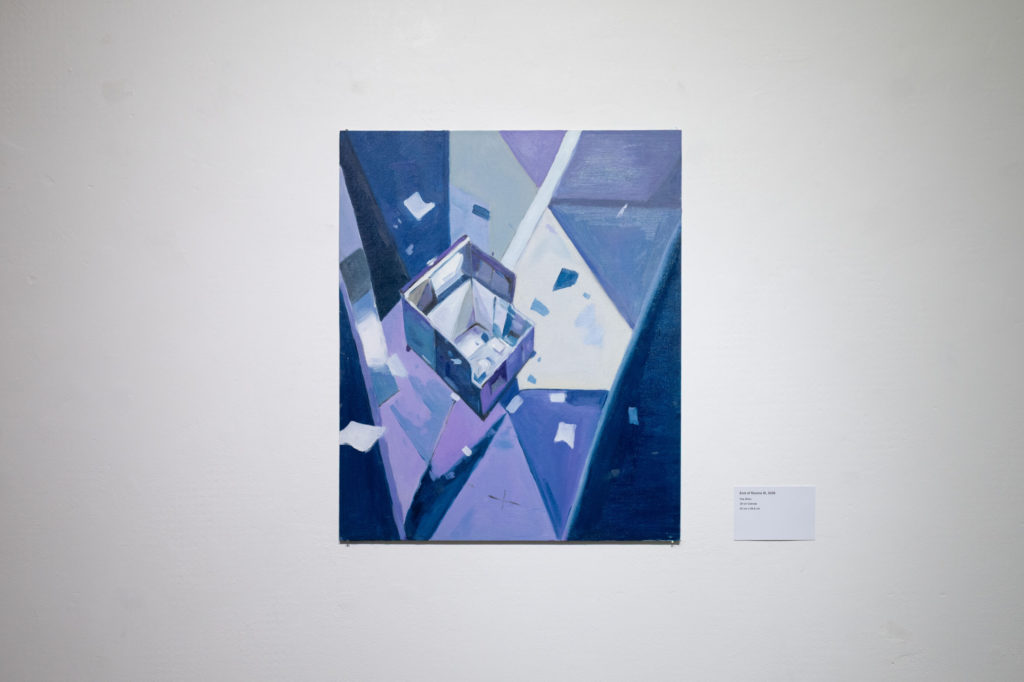
However, what initially appears almost empty gradually reveals itself as a universe of visual and material complexity, in which perception is less a matter of recognition than of sustained attention. Zhou’s sensitivity to architecture also finds an unexpected resonance in Maria Helena Viera da Silva’s paintings. Like Vieira da Silva, Zhou appears interested in the architectural organisation of space as a means of negotiating the relationship between perceptions, memory and abstraction. The image becomes a constructed environment, simultaneously intimate and disorientating.
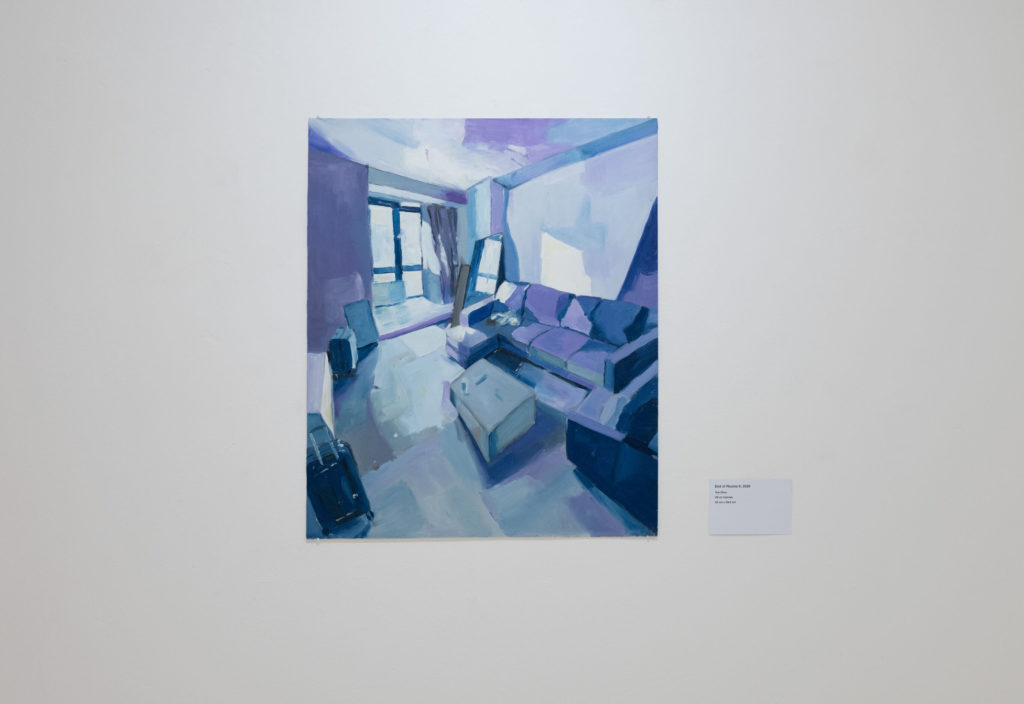
The mirror in the paintings becomes the opening into a universe of irregular geometries and tonal variables; the picture-within-a-picture introduces the possibility of framing, limiting or restraining our view, recalling the spatial conditions of viewing the world at the safe distance afforded by a screen.
There is, however, a certain coolness to Zhou’s visual language. Whether this derives from London’s grey, humid atmosphere or caused by a distance between the artist’s present environment and the warmer conditions of her place of origin remains an open question. This restraint might be understood not simply as an aesthetic limitation but as a productive tension: an emotional reserve through which the works negotiate belonging, displacement and the experience of inhabiting unfamiliar spaces.
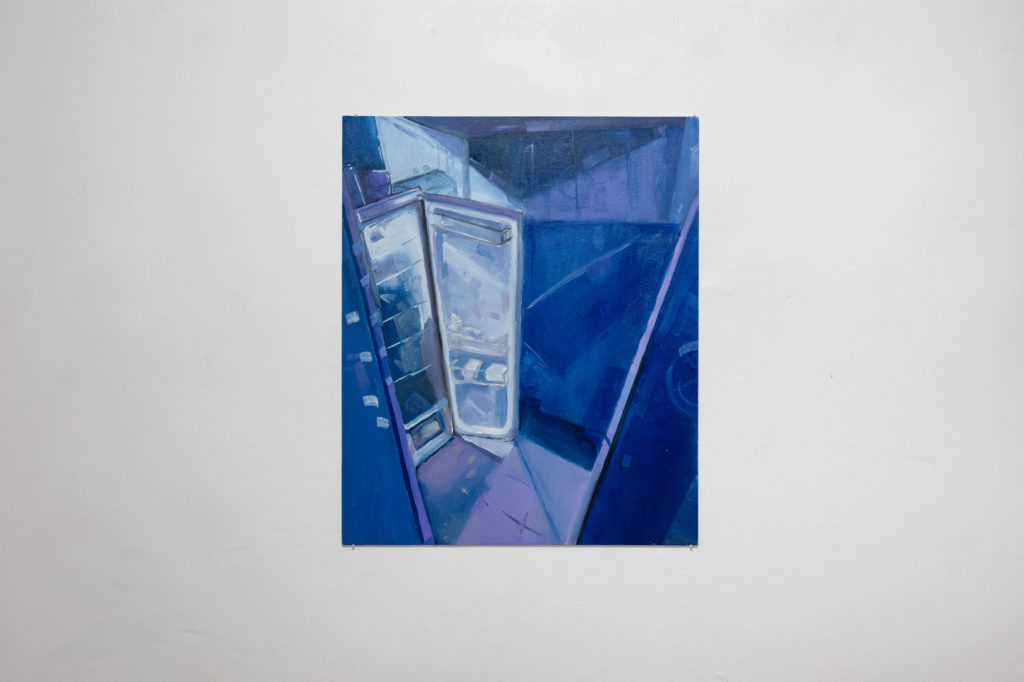
In Another Window (2025), Zhou’s practice will become more compelling when considered collectively. Individual works may appear relatively self-contained, their strength may emerge through their relationship with one another. An assemblage established a visual and conceptual rhythm through which viewers can begin to apprehend the artist’s personal narrative, her understanding of reality and the conditions that shape her experience of life. The work operates less as autonomous statements than a fragment of a larger account, whose meaning gradually unfolds through juxtaposition.
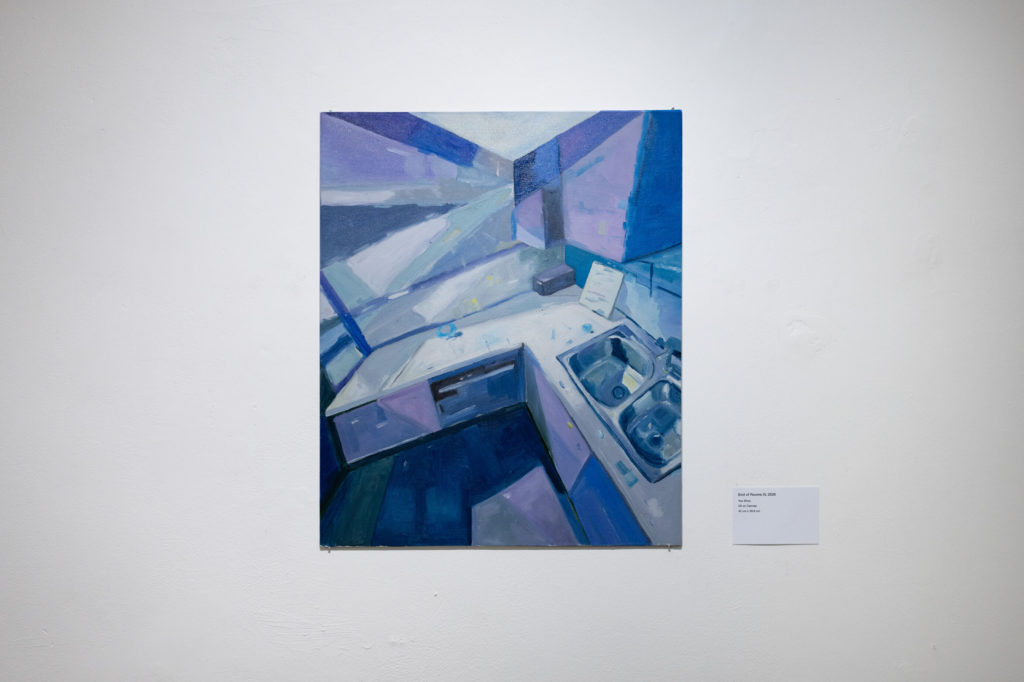
It is within this constellation of an inhabited private space that Zhou’s artistic endeavour becomes most perceptive: not in the production of individual images, but in the sustained process of bringing an interior vision into existence and making it communicable. Her work ultimately asks us to consider how personal experience can be translated into visual language, in particular an experience of being in transit, of moving away, of being without, of loss, and how the seemingly minimal elements of a room might disclose the complex, often invisible structures through which we understand ourselves and the world.