Amidst the hyper-accelerated logistics of the Venice Biennale – a circuit where private capital and institutional spectacle perform a seamless collapse into branding – Kuboraum Editions and Innerraum’s We Travel To Know Our Own Geography functioned as a necessary friction. Hosted within the repurposed remains of the Pier Fortunato Calvi school in Castello, the four-day activation resisted the transparency of contemporary “programming,” opting instead for an opaque, evolving ecology of ritual gesture and sonic contamination that interrogated the city’s capacity for subcultural survival.
The project’s nomenclature suggests a radical re-mapping: geography as a psychic and corporeal terrain rather than a consumable destination. Across the four-night trajectory, artists navigated states of spiritual and somatic collapse, utilizing works that systematically dismantled the binaries between audience and participant, institutional concert and collective séance.
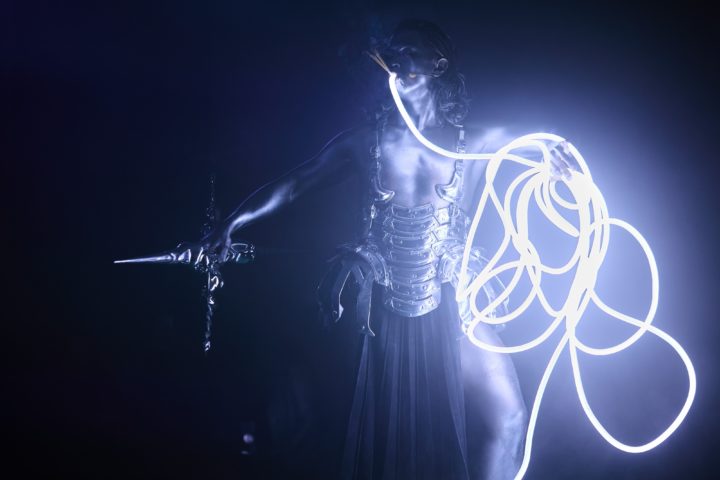
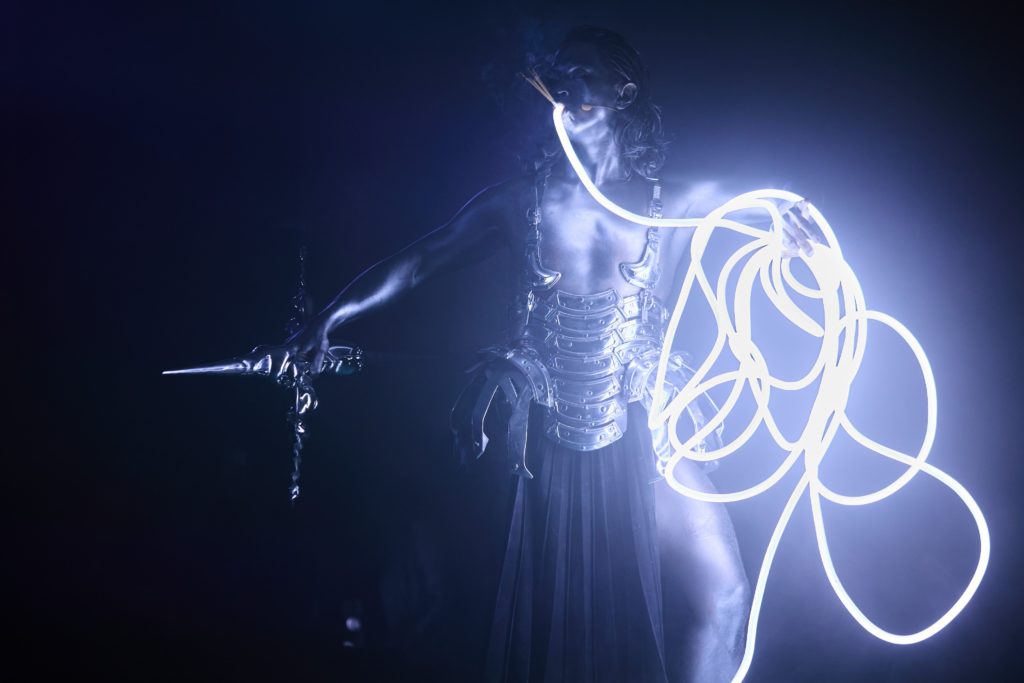
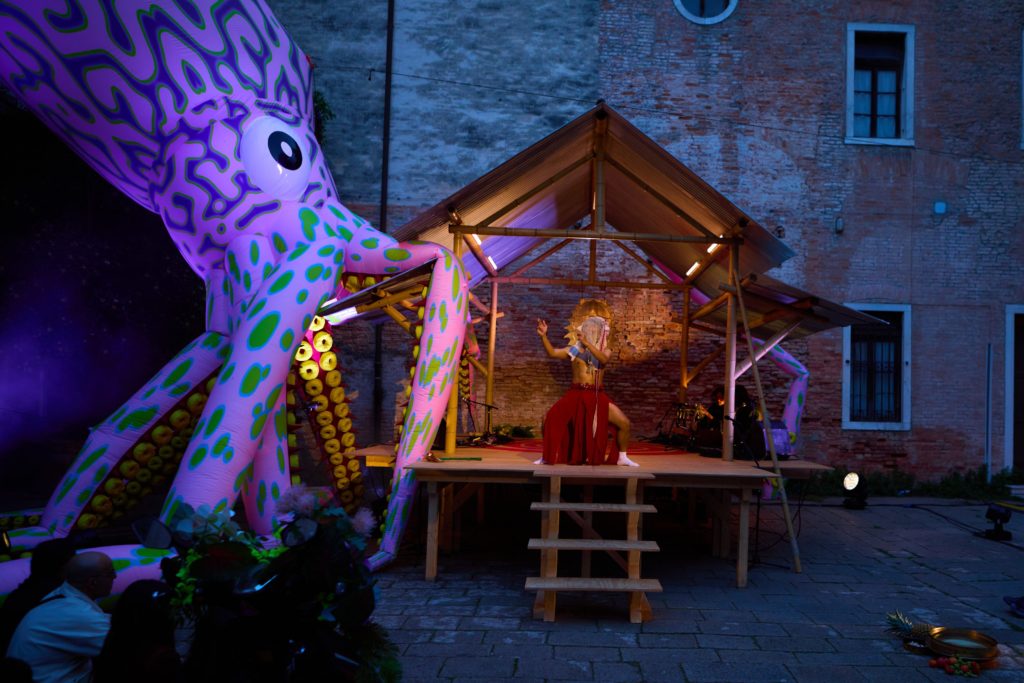
The festival opened on Wednesday with Emiliano Maggi’s Estasy, a work that immediately established the event’s interest in transformation and altered perception. Maggi’s practice – suspended between mythology, theatricality, and grotesque sensuality – activated the courtyard space through an atmosphere that felt simultaneously archaic and futuristic. Rather than presenting performance as spectacle, Estasy unfolded like an unstable apparition, blurring sculpture, costume, sound, and bodily ritual.
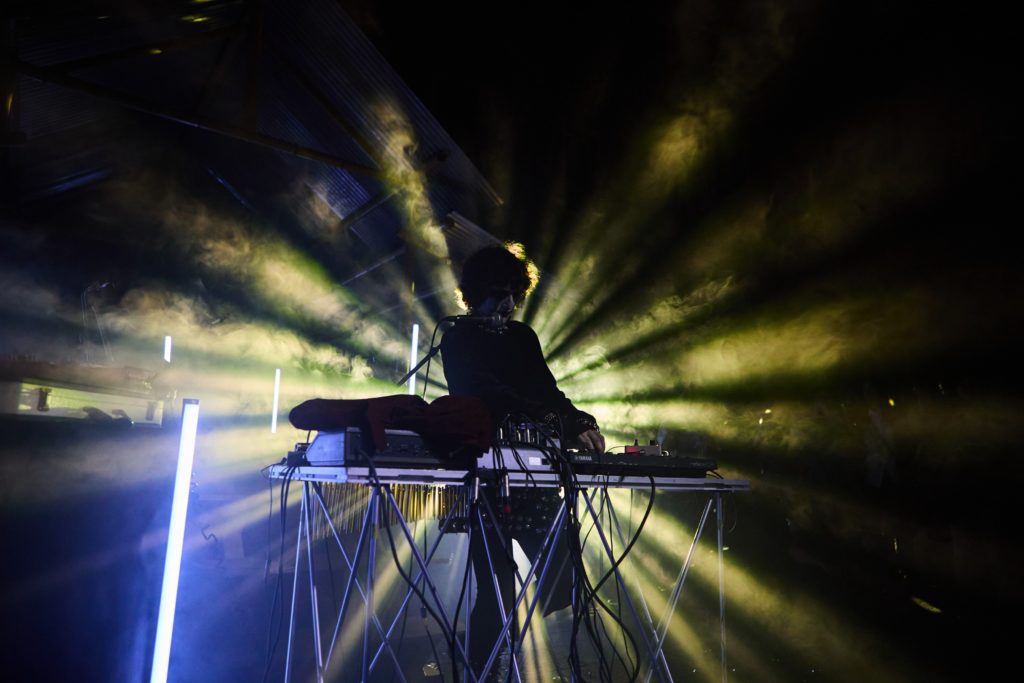
Inside, Joshua Serafin presented Relics: An Eye Once Blind alongside Görkem Şen and Pierre Bayet. Serafin’s work, rooted in questions of colonial spirituality, diasporic memory, and queer embodiment, transformed the indoor environment into a suspended ceremonial landscape. Bodies appeared fragmented, haunted, and continuously mutating, while sound operated less as accompaniment than as an atmospheric force capable of destabilizing spatial and temporal orientation itself.
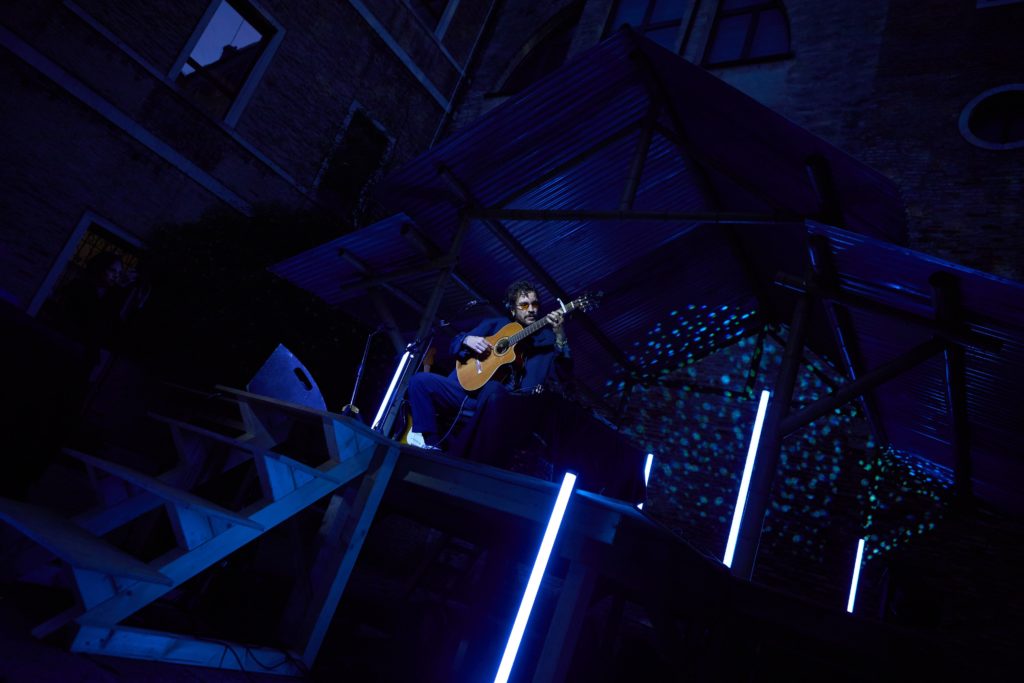
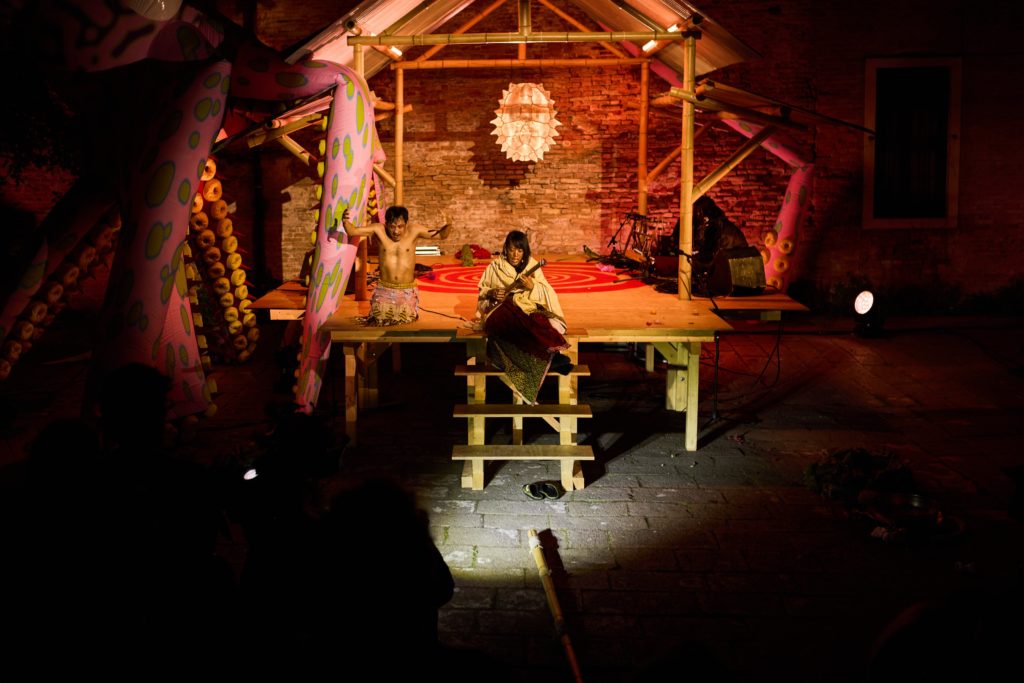
Thursday expanded the festival’s sonic vocabulary through a guitar solo performance by Romain Azzaro, whose intervention introduced a more intimate and meditative register before the evening shifted toward the ecstatic hybrid universe of Tianzhuo Chen – also known as ASIANDOPEBOYS – and Siko Setyanto’s Moyang 先祖 & Seaman 漁師. Their project merged club culture, animistic ritual, speculative theater, and post-internet aesthetics into an intentionally unclassifiable experience. Mythological figures, ancestral references, and hyper-contemporary sonic textures coexisted without hierarchy, proposing identity itself as fluid and performative.
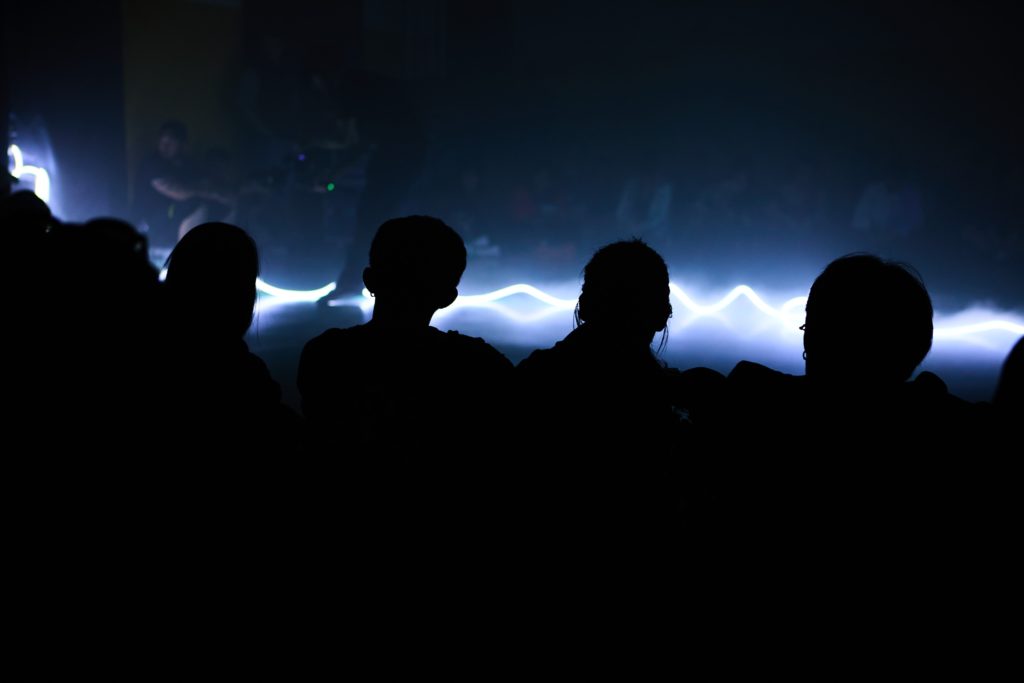
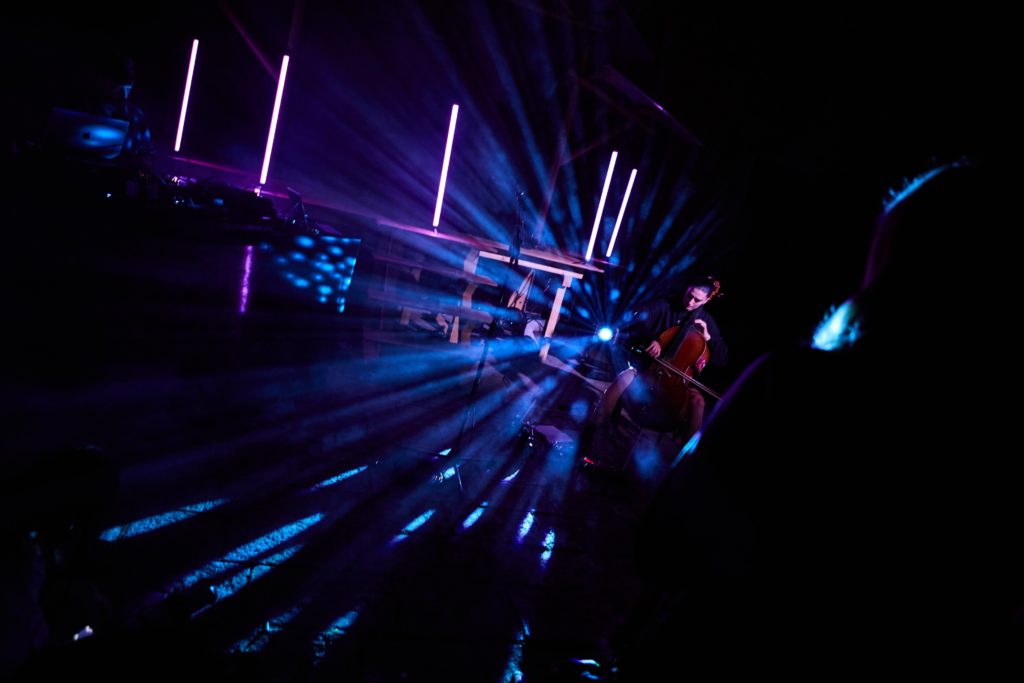
By Friday, the festival reached its densest and perhaps most immersive configuration. Joshua Serafin’s Relics: An Eye Once Blind returned like a recurring invocation, while Kianí del Valle and Ziúr’s DE BRUJAS Y FANTASMAS intensified the evening into something physically overwhelming. Combining choreography with Ziúr’s fractured electronic sound design, the performance transformed movement into percussion and exhaustion into resistance. Del Valle’s body oscillated between possession and control, ritual and collapse, while the sound environment compressed the audience into a state of collective tension.
Simultaneously, ASIANDOPEBOYS and Siko Setyanto reactivated the courtyard with Moyang 先祖 & Seaman 漁師, further reinforcing the sensation that the festival operated through repetition and return rather than linear scheduling. Performances echoed one another across different nights, generating an unstable continuity closer to a dream cycle than to standard event programming.
Saturday extended these tensions into the festival’s final act. Emiliano Maggi’s Estasy resurfaced once again, this time feeling less introductory than accumulative, as though the work itself had evolved through the previous nights’ encounters. DE BRUJAS Y FANTASMAS also returned, reaffirming the festival’s interest in recurrence as ritual practice rather than repetition.
The closing courtyard performance, McArthur by FRANKIE and Kelman Duran, shifted the atmosphere toward a darker and more emotionally charged sonic territory. Duran’s practice – known for collapsing reggaeton, ambient textures, experimental bass, and fragmented club music – introduced a melancholic intensity that resonated throughout the final evening.
The experience eventually migrated beyond Castello toward the aftershow at ARGO16 in Marghera, where the boundaries between performance and nightlife fully dissolved. ASIANDOPEBOYS’ DJ set initiated the transition into nocturnal release, followed by Ziúr and Sandi’s Home with Martina Bertoni and Sara Persico, which maintained the festival’s haunting emotional register while translating it into a more openly club-oriented format. Kelman Duran’s DJ set extended the sense of destabilization through fractured rhythms and immersive low frequencies before Cosimo Damiano closed the night – and the festival itself – in the early morning hours.
What distinguished We Travel To Know Our Own Geography from many interdisciplinary programs orbiting contemporary art was its refusal of clean categorization. Fashion was present, but not as branding exercise; music was central, but never reducible to entertainment; performance escaped theatrical containment altogether. Kuboraum and Innerraum approached the festival less as cultural programming than as world-building – constructing a temporary zone organized around masks, altered identities, sonic immersion, and collective disorientation.
In a Venice increasingly saturated by visibility and institutional choreography, We Travel To Know Our Own Geography instead embraced opacity, atmosphere, and transformation. By the festival’s conclusion, geography no longer referred to place alone, but to the unstable emotional and psychic territories collectively inhabited over those four nights.
Kuboraum Editions’ We Travel To Know Our Own Geography Turns Venice into a Ritual Space
Inside a former school building in Castello, away from the polished exhaustion of Biennale openings and luxury-brand activations, Kuboraum Editions and Innerraum’s We Travel To Know Our Own Geography proposed something far stranger: a four-day gathering where performance, sound, mythology, and nightlife collapsed into one continuous psychic environment.
Friday’s program perhaps offered the festival’s clearest articulation of this intent. Rather than operating as a conventional lineup, the evening unfolded like a choreography of altered states, moving between speculative ritual, corporeal vulnerability, and sonic possession.
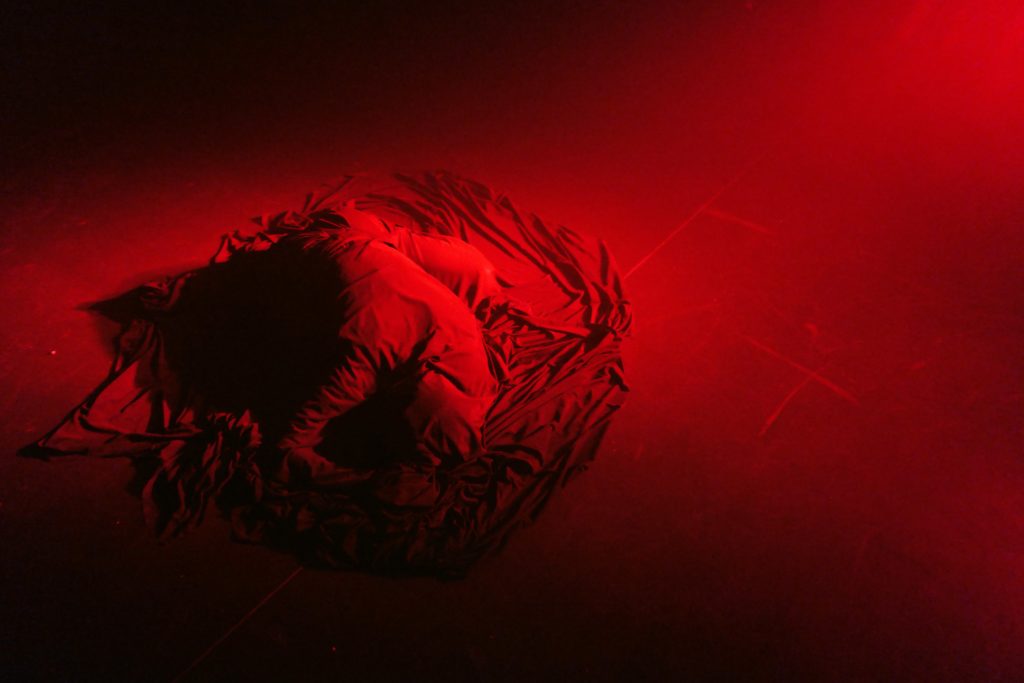
Joshua Serafin’s Relics: An Eye Once Blind, presented with Görkem Şen and Pierre Bayet, transformed the indoor space into a suspended ceremonial landscape. Serafin’s practice consistently interrogates colonial spirituality, queer embodiment, and diasporic memory, and here the performance seemed to oscillate between invocation and collapse. Bodies appeared less as stable identities than as vessels haunted by inherited histories. Sound functioned not merely as accompaniment but as an atmospheric force, destabilizing the audience’s sense of temporal orientation.
If Serafin’s work operated through introspection and trance, DE BRUJAS Y FANTASMAS by Kianí del Valle and Ziúr pushed the evening toward a more visceral and confrontational register. The collaboration merged choreography and experimental electronic composition into an overwhelming sensory encounter where movement became percussive, almost exorcistic. Del Valle’s physical vocabulary resisted spectacle in favor of tension and fragmentation, while Ziúr’s dense sound design transformed the room into a pressure chamber of low frequencies and ruptured rhythms.
Meanwhile, in the courtyard, Tianzhuo Chen (ASIANDOPEBOYS) and Siko Setyanto’s Moyang 先祖 & Seaman 漁師introduced another cosmology altogether. Their work blurred club culture, folk ritual, and speculative theater into a hybrid language that felt deliberately unclassifiable. Throughout the evening, Venice itself became strangely unstable: no longer the romanticized backdrop of the Biennale circuit, but a liminal territory populated by ghosts, ancestors, and fragmented identities.
What distinguished the festival from many interdisciplinary programs orbiting contemporary art was its refusal of clean categorization. Fashion was present, but not as branding; music was central, but never reducible to entertainment; performance escaped theatrical containment. Kuboraum’s long-standing interest in masks, transformation, and alternative subjectivities permeated the entire event, giving the gathering a coherence that exceeded curatorial structure.
By the end of the night, it all felt less like an event than a temporary community organized around shared disorientation – one where geography became emotional, spiritual, and psychological rather than physical.