Now here’s a lesson: “The only thing you got in this world is what you can sell,” utters Charley, one of the characters in Arthur Miller’s Death of a Salesman (1949), a classic takedown of the American Dream if ever there was one.[1] Yet it could easily be a mantra for today’s doomscrolling, fast-paced, rat-pack society. In Miller’s play, Willy Loman is the aging salesman in question, increasingly weighed down by the sample case that he drags around with him from house to house, in search of the next big order. His mind is starting to slip away, but his unwavering belief in the power of his charm and optimism to bring him riches keeps his momentum going. Yet he can’t escape the realities of life — unpaid bills, unfaithfulness to his wife — so he turns to memories and delusions to combat any feelings of failure, until he begins to fully lose touch with reality. It’s a tragic tale of an all-too-ordinary man, spurred on by the false promise of a better life and a better version of himself achieved through the powers of consumerism, a dream that he doggedly follows until it destroys him.
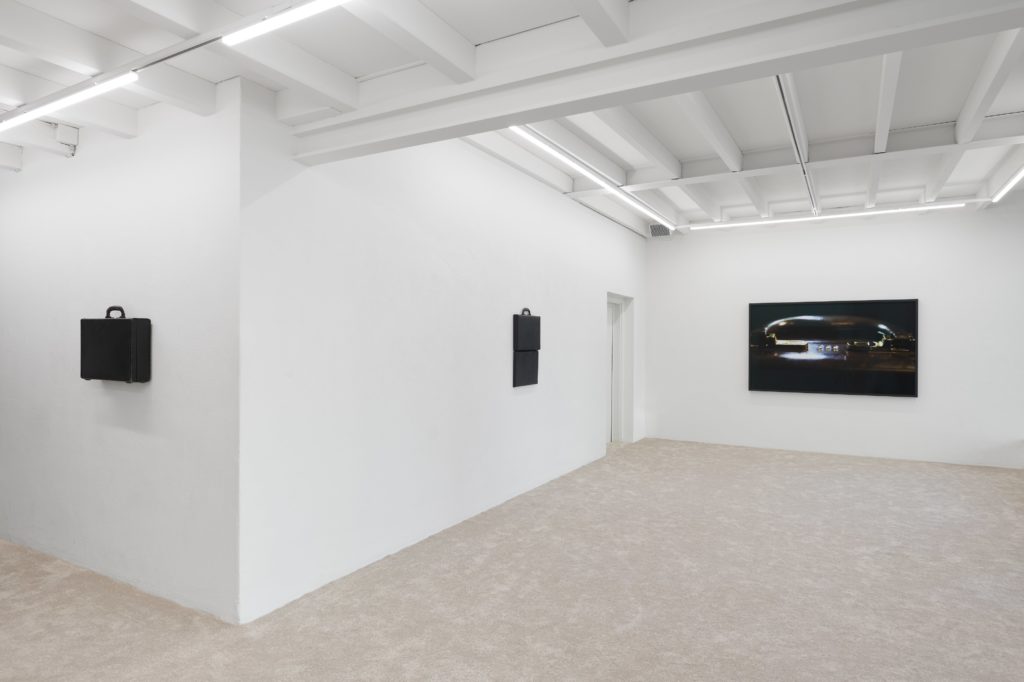
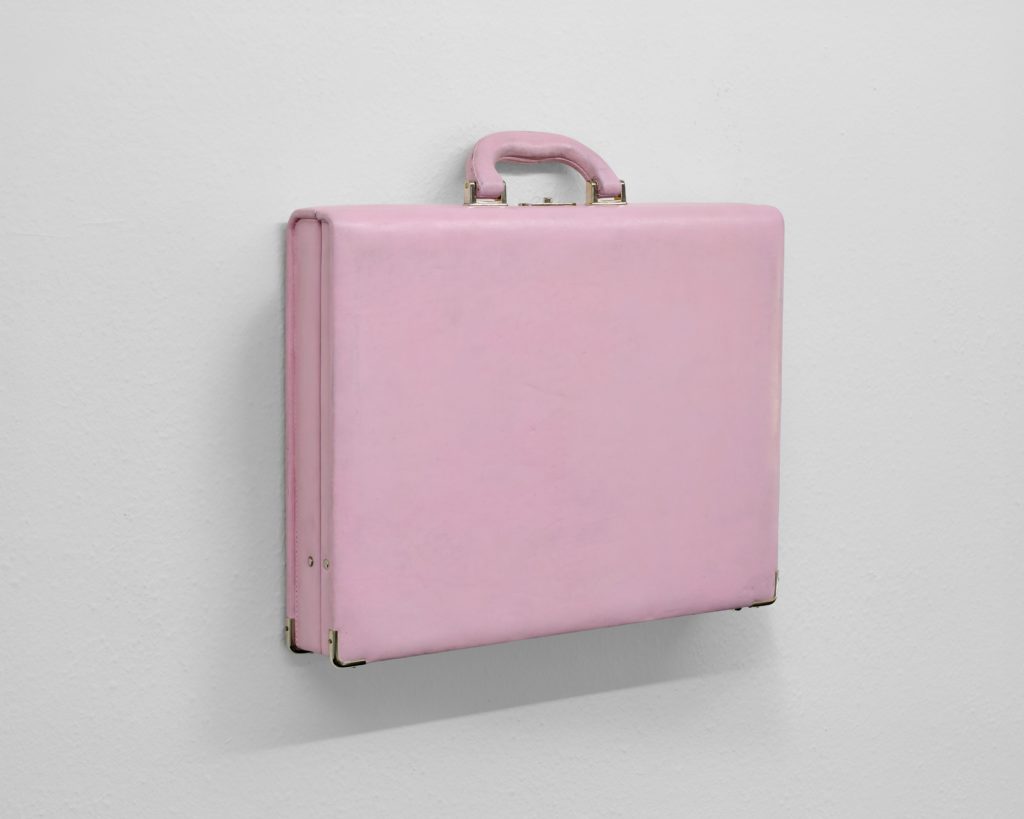
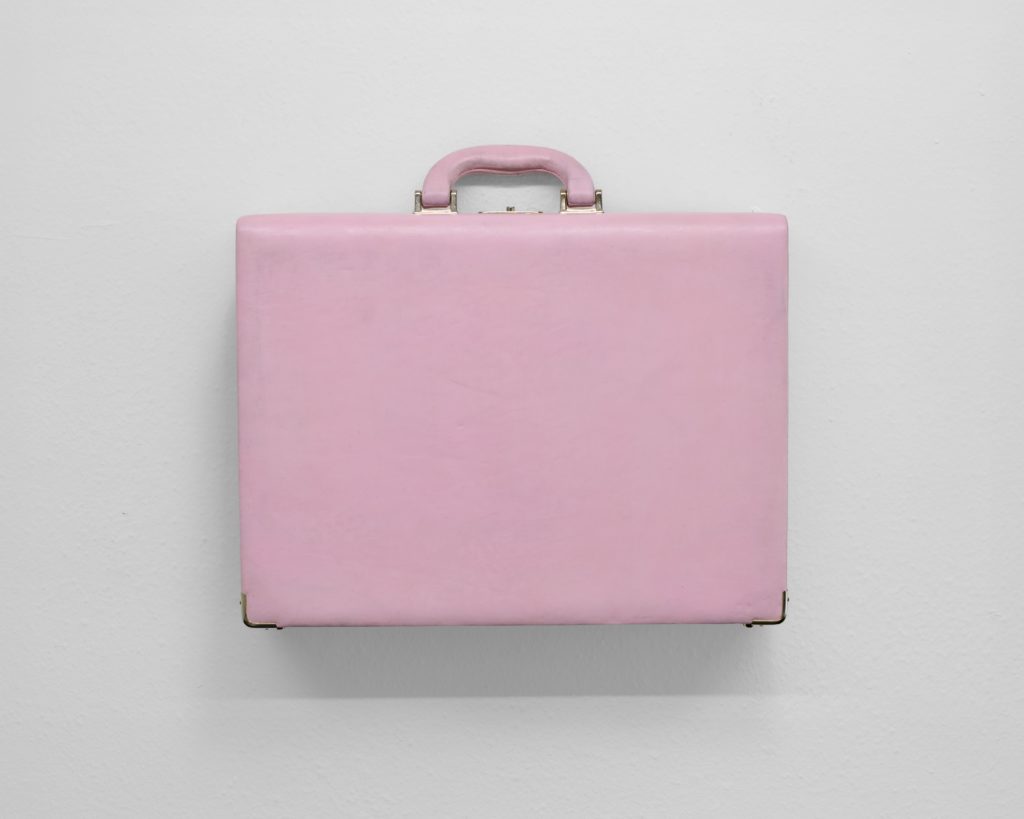
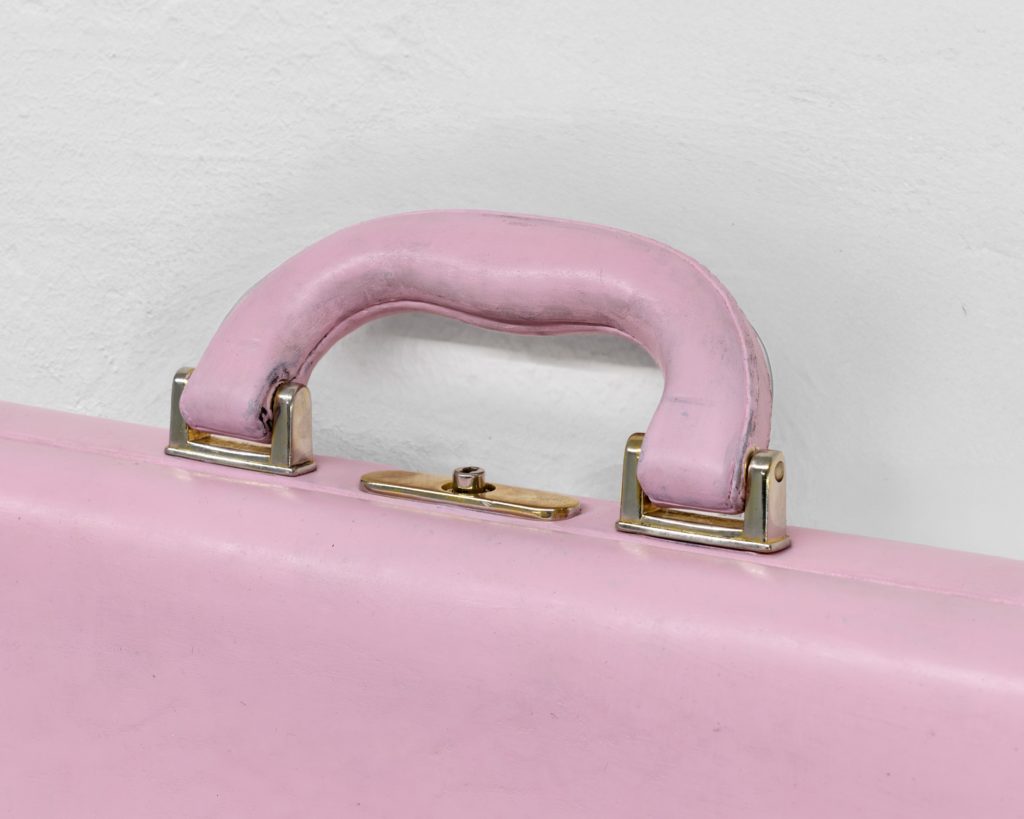
I think back to poor Willy as I try to discern the contents of the four wall-mounted attaché suitcases that form the core of Julian-Jakob Kneer’s cryptically titled exhibition “Gestalt” at Blue Velvet, Zurich. Simply mounted, they punctuate the two floors of the gallery, refusing to reveal anything of themselves. Remembering that the show’s title comes from the German word for “pattern” or “figure,” and that it is more commonly known as a psychological concept addressed toward a form whose meaning is always greater than the sum of its parts, I consider reading the show as a doctor (or therapist) would a patient. Easier said than done. As if further wishing to dispel any attempt to penetrate beneath and beyond what is given to see, Kneer has only gone and covered the already opaque leather surface of each object with a paint so matte that it deflects light.
Directly facing the entrance to the gallery, Briefcase (Attaché, Black) (all works 2026) hangs unlocked with its contents, if there are any, pressed snugly against the wall. The only telltale sign that any manhandling has taken place comes in the form of a faint handprint on its bottom half. It’s giving part crime scene, part seedy sex. Around the corner, what looks like an exact replica, painted over with the same dull black as its sibling, is hanging, but this time with its shape kept fully intact, its innards under lock and key. The work list tells me that these two works are completed, respectively, by semen (whose? the artist’s?) and ethanol, while a Barbie-pink suitcase upstairs, in keeping with its pretend girlishness, contains perfume. I can’t confirm any of this as either true or false, which leaves me feeling that either I’ve been had or that Kneer is channeling a Manzoni-esque level of commodity fetishism. Given the artist’s penchant for exploring fame, artifice (or we could call it “make believe”), and the madness caused by believing it all too much, these would-be boîtes-en-valise are a projection screen for the narrative of our own choosing.
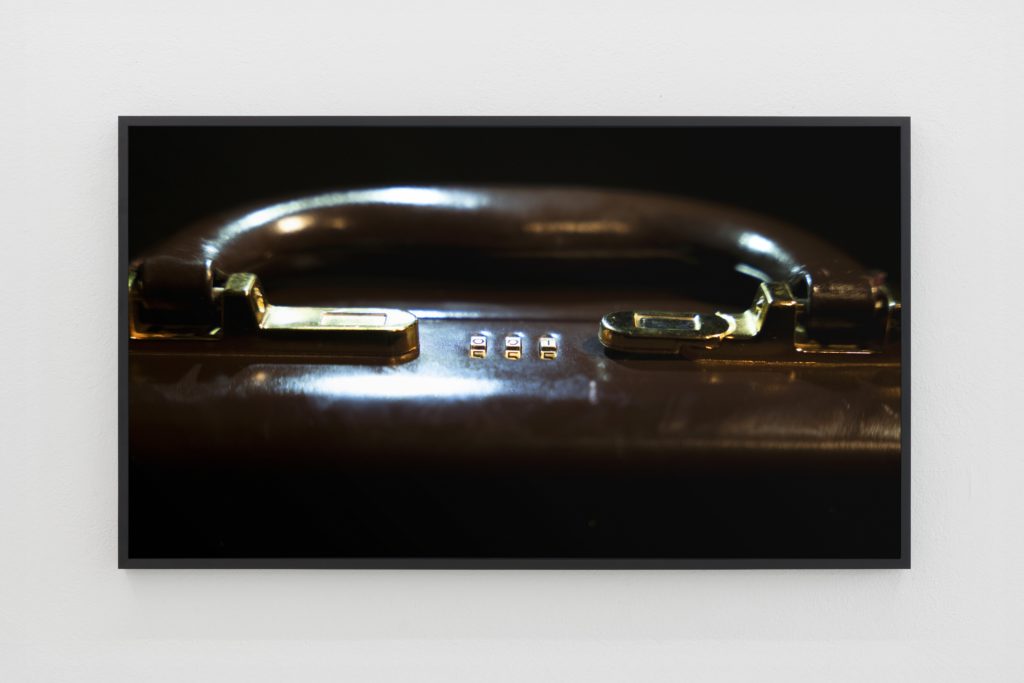
Each sculpture is accompanied by its own flattened image, a large-format color photograph that lovingly picks out the details of a built-in combination lock (Briefcase (Still, Brown)) or proffers a teasing half-glimpse into an equally pitch-black interior (Briefcase (Still, Pink)). Kneer is clearly playing on the innate human desire to need and to want to be in control, to know, to be one step ahead. This is a minimalist show, in the sense that there is little to see. Instead, the artist opens up a playing field for fantasy, one without any rules or boundaries or endpoint in sight.
[1] Arthur Miller, Death of a Salesman (New York: Viking Press, 1949).