I might eventually get used to the opulence of Venetian palaces, their centuries-long accretion of stucco, pigments, and gold. Still, as I climb the stairs of the Biblioteca Marciana on my way to its new exhibition, set in the frame of this year’s Biennale and promoted by Fondazione Bvlgari, I’m filled with that familiar feeling of awe. The painted scenes lining the way up to the Vestibolo — allegories of the spirit’s ascending journey through the exercise of classical virtues — culminate in Titian’s La Sapienza (1560): enthroned on a cloud, the woman — wisdom personified — gazes down at a putto, a large tome open in his hands.
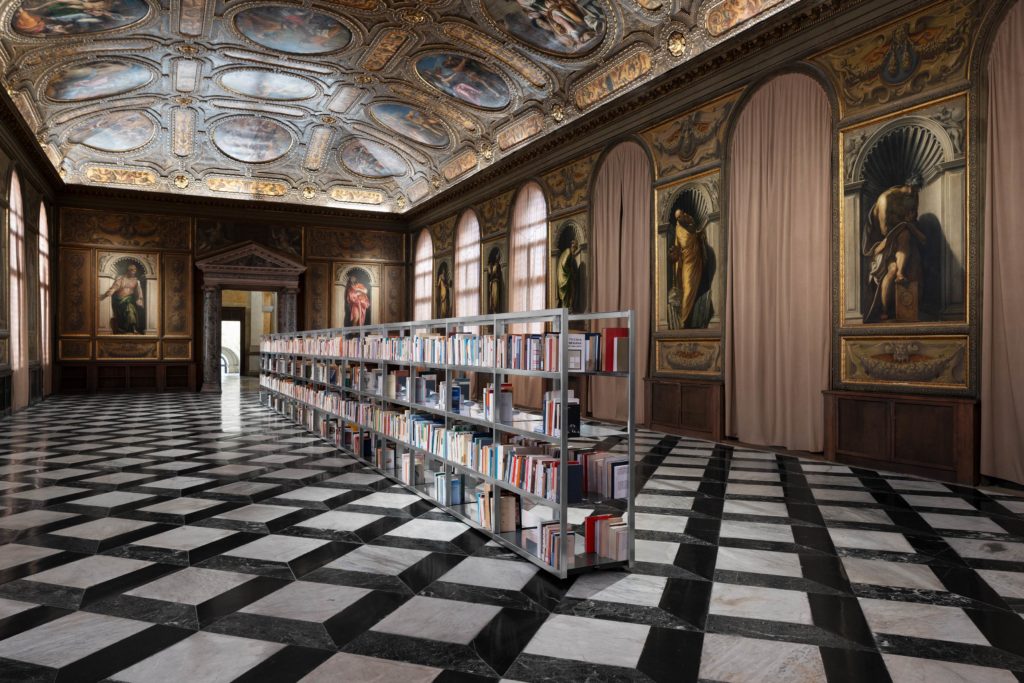
Every library — its architecture, dimensions, material qualities — is the concrete expression of its owners’ ideals of knowledge, mediating access to the information it holds while determining how that information is encountered and used. In the case of the Biblioteca Marciana, the accompanying art serves a similar purpose: Titian and the other Renaissance masters whose works surround it capture in their canvases the tight, aristocratic bond between knowledge and power in the Venetian Republic of their times. It is within this tradition that the exhibition is situated: both Monia Ben Hamouda and Lara Favaretto, whose works currently occupy the library’s two main halls, take the organization of knowledge as a material for their practices, questioning the tradition of which the Marciana is part.
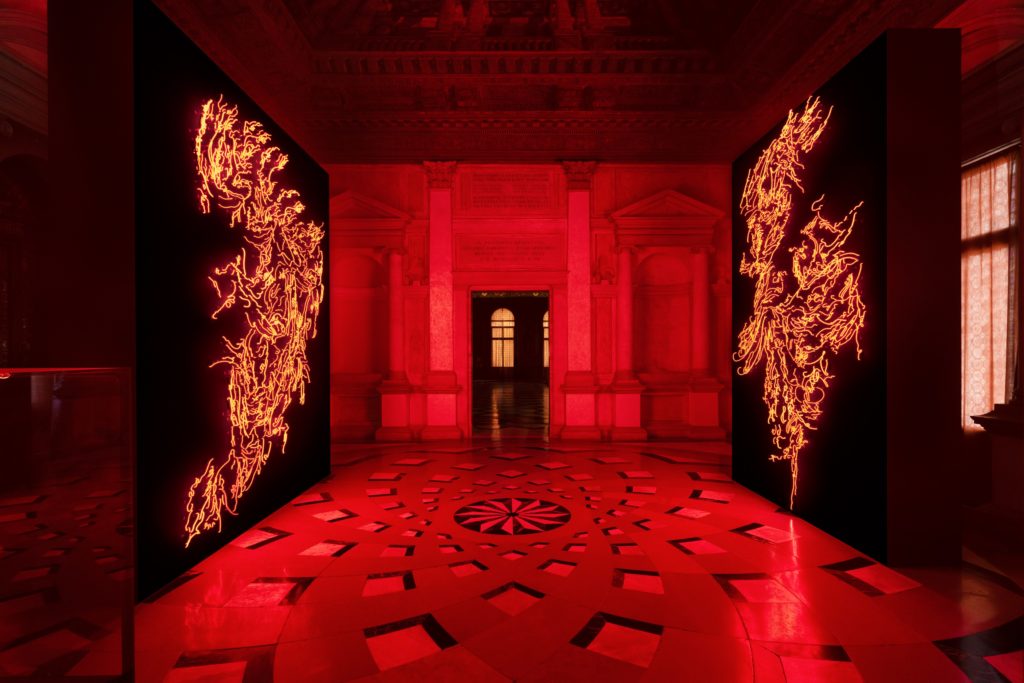
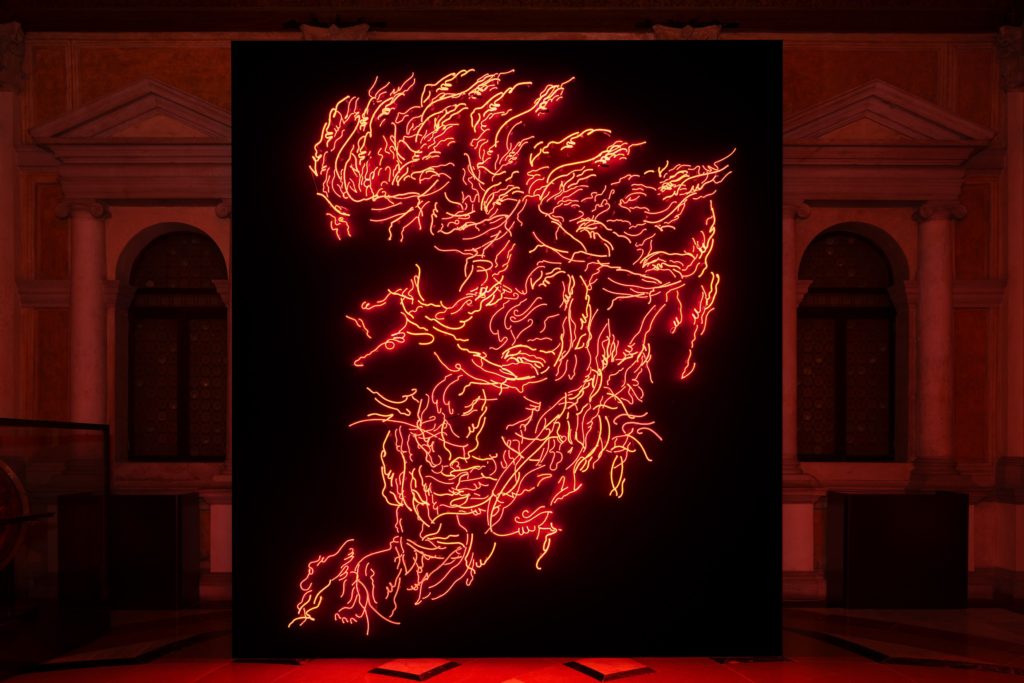
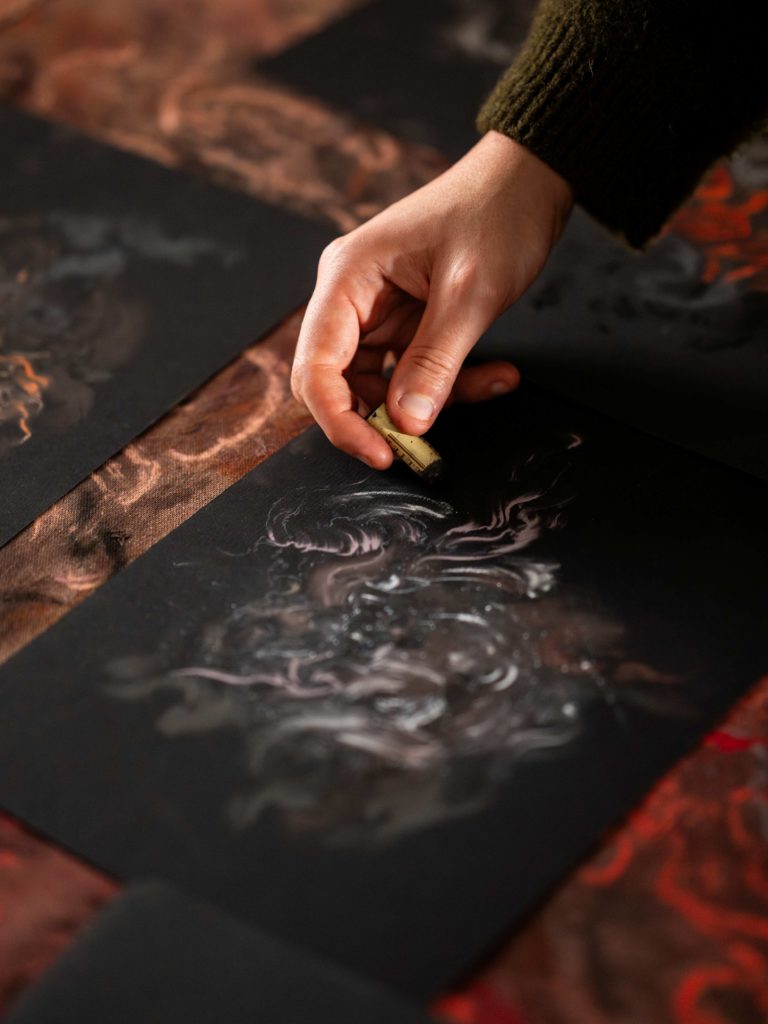
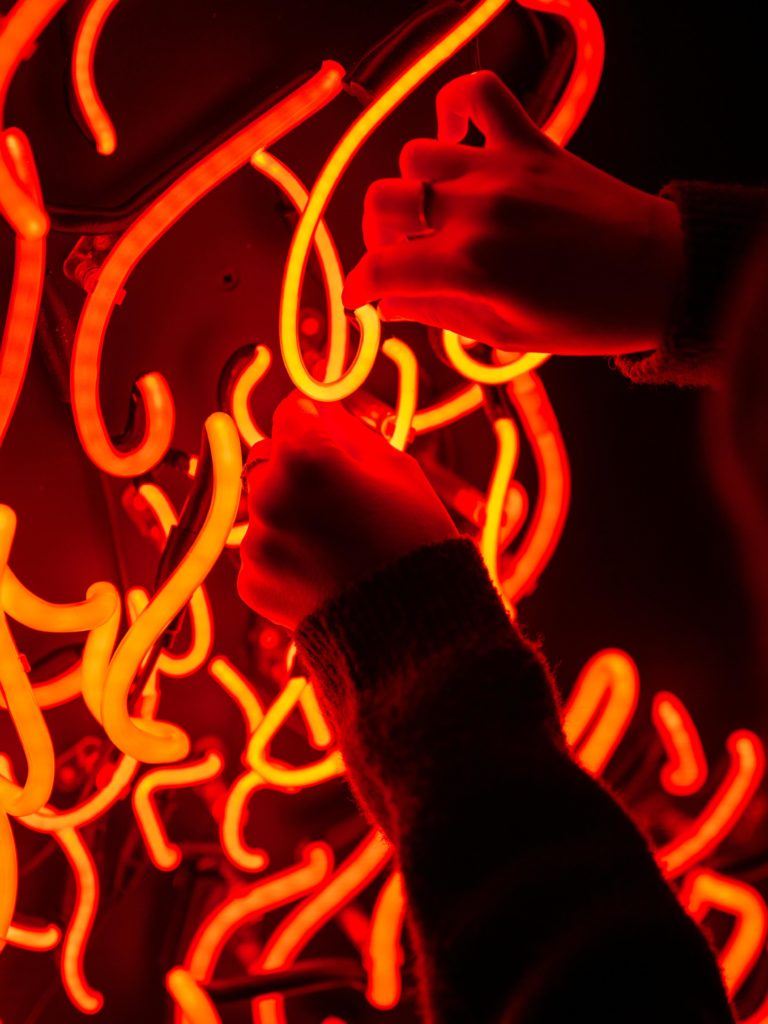
Hamouda’s Fragments of Fire Worship (2026) consists of two large neon sculptures facing each other to form a corridor. The work is inspired by her father, an Islamic calligrapher: suspended somewhere between writing and drawing, they could be maps or stretchmarks; each attempt to discern meaning goes up in smoke. As explained by the exhibition text, Hamouda acknowledges language as “among the first territories to be occupied” in the face of a culture’s military destruction. My eyes move around the hall, its walls painted red by the light of Hamouda’s sculptures, as if engulfed by flames, the air filled with the cicada-like buzzing and heat of the neon. Libraries are built on the hopeful promise of preserving and providing access to knowledge; Hamouda’s image of entropy stands in stark contrast to that promise.
The next room hosts Favaretto’s monolithic bookshelf, the last iteration of the series “Momentary Monument –– The Library” (2012–26). The project brings together books donated by local institutions (such as libraries and universities) after being deemed no longer relevant and therefore useless. Each book contains a picture from Favaretto’s own personal archive, and is free for visitors to take. Favaretto binds these literary leftovers together to create an unlikely, eclectic corpus — a collection that spans medieval history, chemistry, and romance. Where Hamouda considers the dispersion and opacity of knowledge, Favaretto takes its waste as a starting point: arranged on the metal, minimalist bookshelves, her library is a parody of erudition — but also an interrogation of how knowledge is selected and distributed, and by whom.
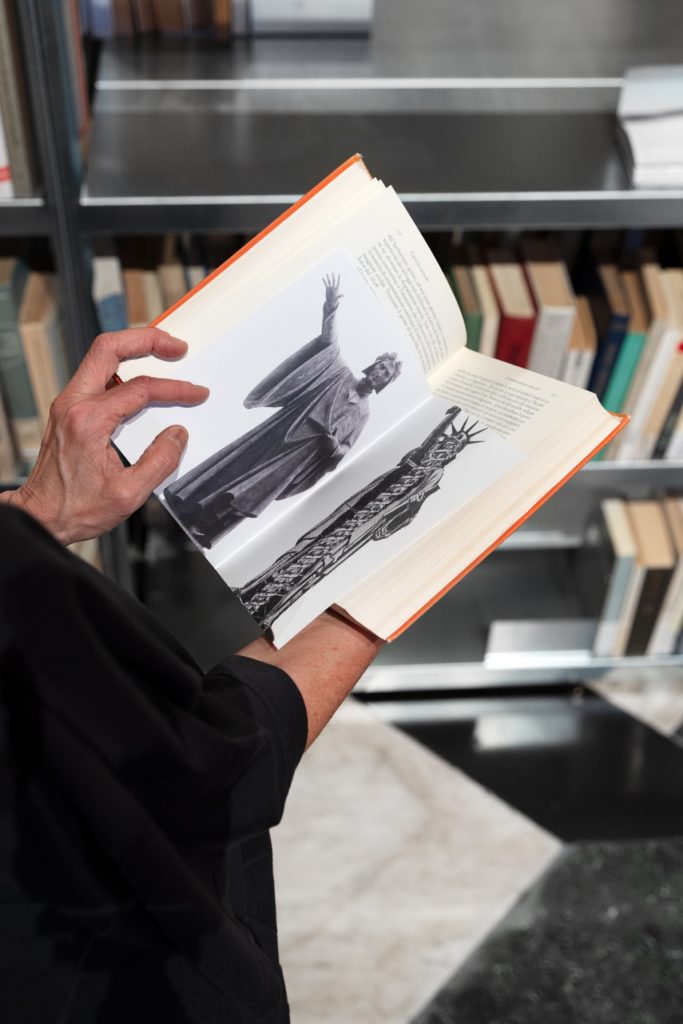
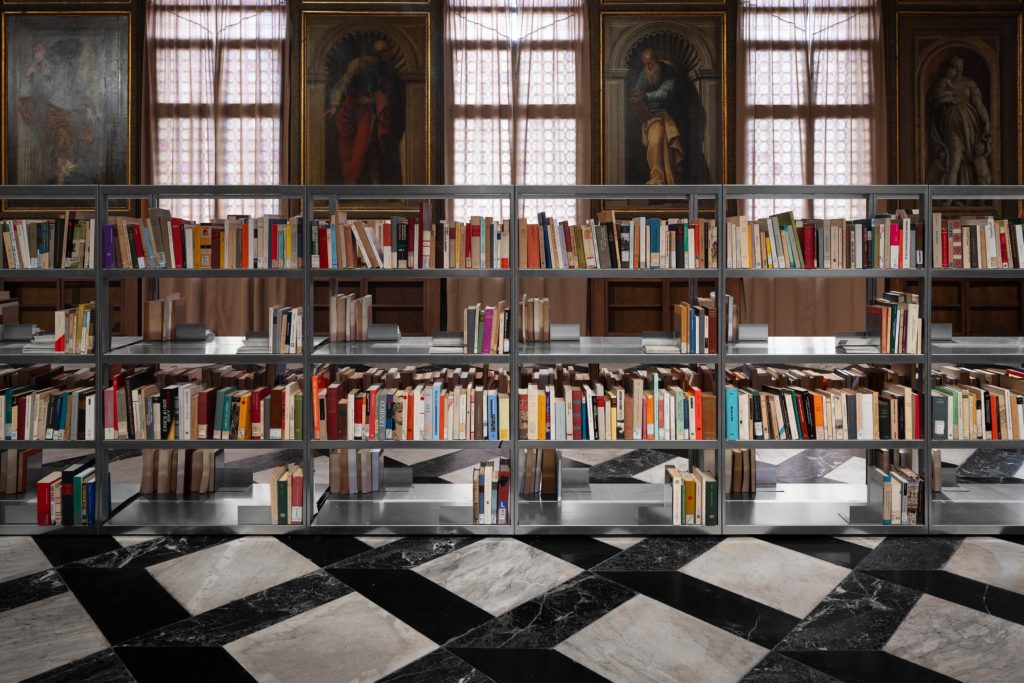
As I browse Favaretto’s collection, I let myself meander from one book to another, running my fingers over their worn covers and antiquated titles, wondering about the new life that awaits them. After all, the Biblioteca Marciana, too, traces its origins to a generous act of sharing: in 1486, Cardinal Bessarion — a Byzantine intellectual in exile — gave his vast collection of Greek manuscripts to the city of Venice. The donation was part of his lifelong mission to safeguard Greek classics and Neoplatonic ideals after the fall of Constantinople in 1453, and played an important role in the development of humanist thought. My mind turns to the recent scandal surrounding Anthropic’s industrial-scale destruction of printed matter, and to its irreversible judgement of what is worth preserving and what is not. Against such arrogance, Hamouda and Favaretto’s model grounds itself in the bodily, relational nature of knowledge: a language may die when the community that speaks it is fractured and lost; a book is more than the information it contains, carrying the traces of every hand that has creased its pages.