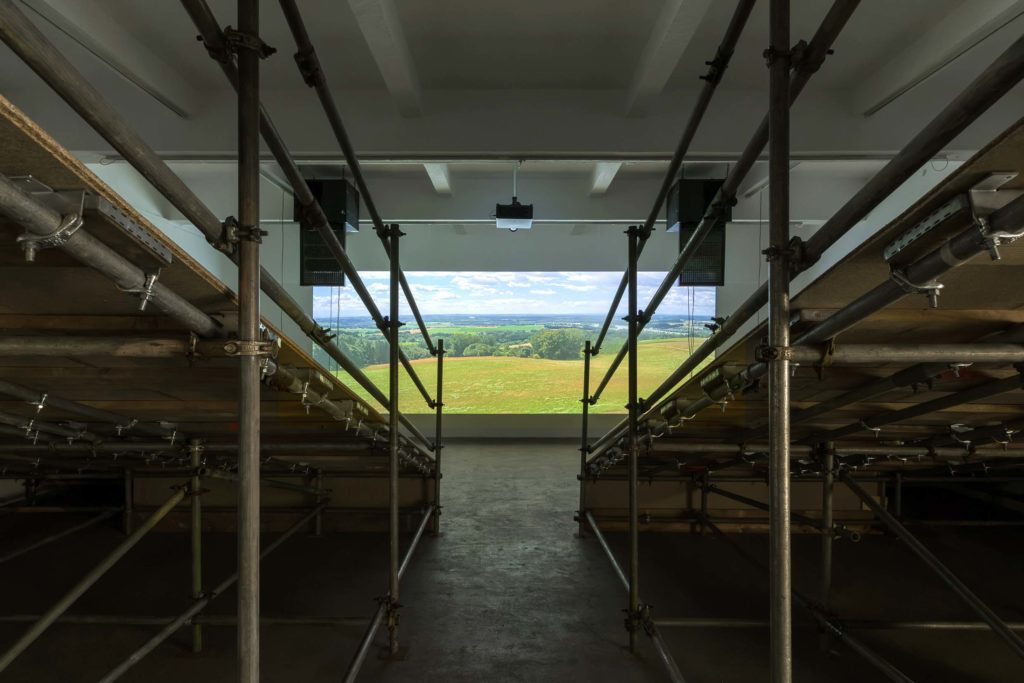
Entering Chisenhale Gallery in London, a scaffolded passage opens onto a huge screen. On it a landscape scene appears, stays for thirty seconds or so, then changes to another. A lake. Hills. At night, streetlights trace roads into tributaries of orange light. Occasionally these exteriors are replaced by interiors: a chicken coop, a parking lot. Or by what seem like abstract images: black-and-white static, soft colors. I say “seems” abstract as these are real cameras in real places: it’s all live footage the artist Jasper Marsalis has found online, accessing unsecured IP cameras from other parts of the world. This, along with a sound installation, makes up “Still Life.”
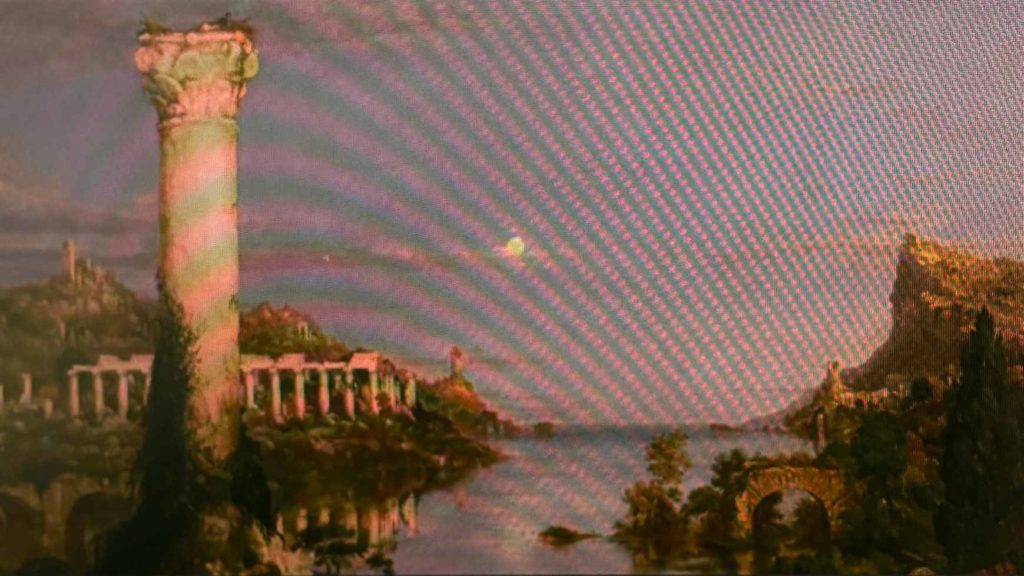
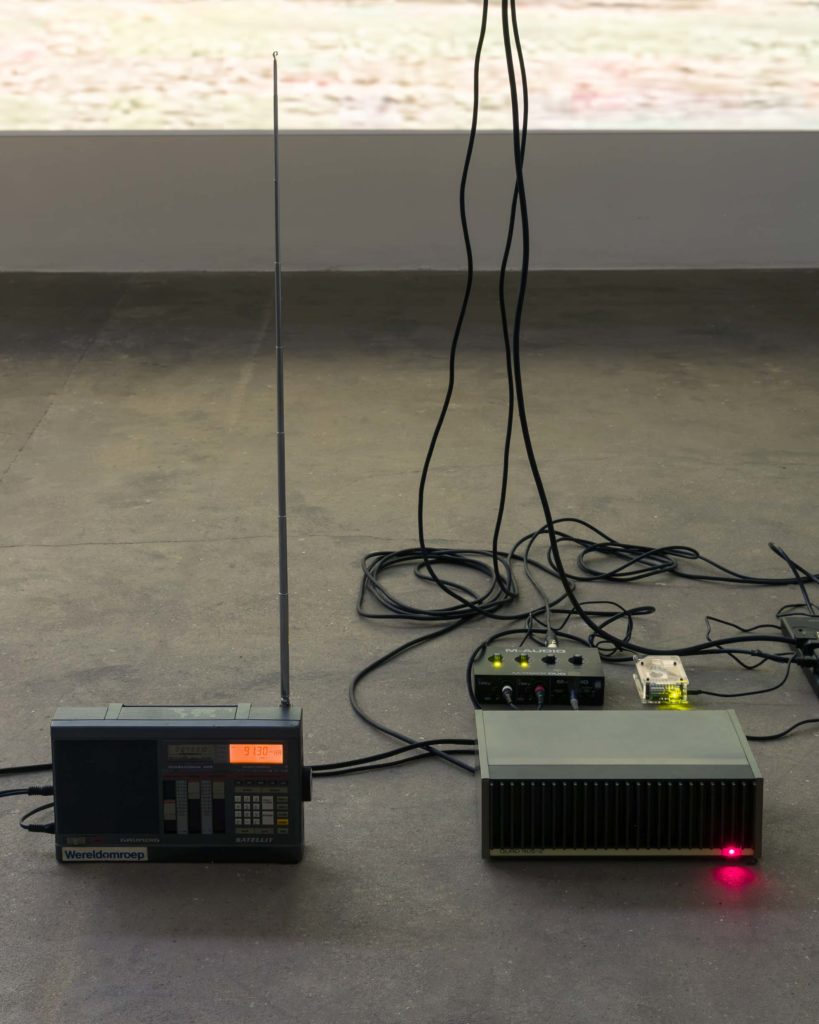
Even without knowing these are IP cameras you sense these images are not “made” in any conventional sense, but tapped into. Modulated, not controlled. The conceptual apparatus matters, but it is not ultimately the point. Marsalis’s algorithm chooses which cameras to tap into and when, but what the cameras see is something unauthored, unauthorable. The same is true of the sound work: four unwieldy hanging speakers take live FM radio signals and turn them into heavy clouds of droning sound, slowly passing above, solid. As much atmosphere as soundtrack. The setup is fascinating: signals are tuned into and reinterpreted at different intervals. Yet the sound itself remains untethered from that process — open to chance, uncontrolled, like the video. What is this sound? Where is this image? Why is there a camera in this place? What is it meant to be seeing? There is no answer.
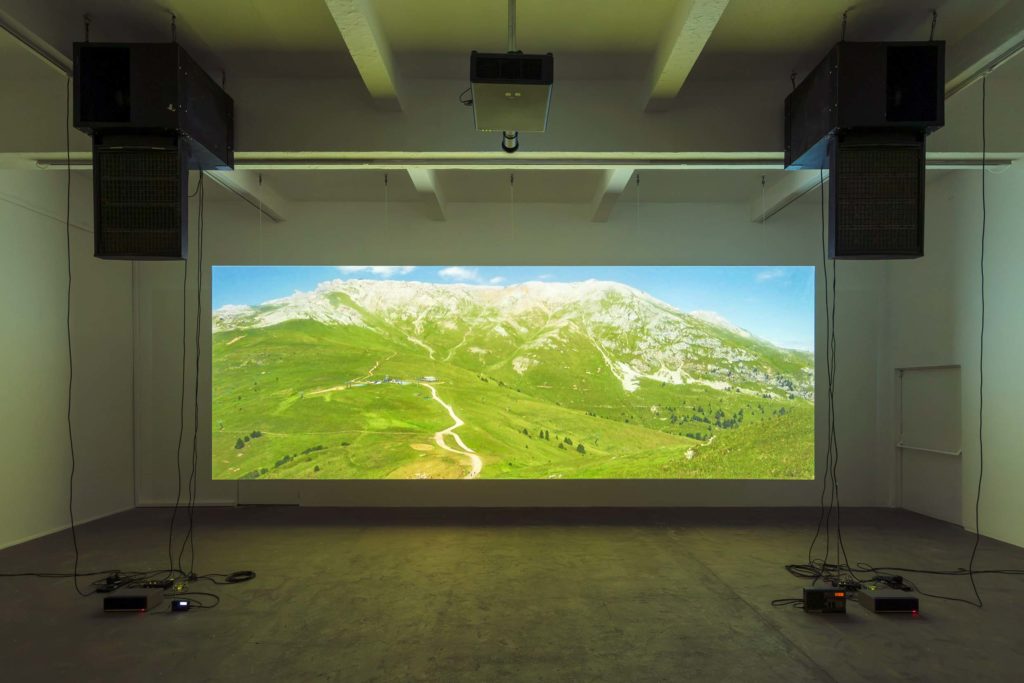
The enigma of other minds. Or, less glamorously, the fact of other minds. Or other things to mind. These cameras may have been placed by someone once, but they are more than possessions. They do more than possess their views: they become inseparable from them. Whirring on. Not even “obsolete” works as a word to describe them; obsolete from what? The nature of these IP cameras means motion shows in jolts, not fluid movement. A vehicle passes in jumping intervals of seconds. A bird passes in a string of freeze frames. Occasionally a human figure or two dots the scene, walking along a beach. Beautiful, but not the idea of beauty. There’s a famous 1818 painting by Caspar David Friedrich, Wanderer above the Sea of Fog, that reveals the bravado hiding in the humility of the Sublime: a man surveys a landscape from a mountain top; the vastness is his achievement and no one else’s. He is in awe of nature, yet nature also becomes the measure of his awe. This show is not that painting. Even the more conventional landscapes of sunsets or rolling hills are modulated by something other than the idealized image of one eye: pylons, concrete, industrial farming equipment. Animals, roads, distant towns and lights humming. Compression artifacts turn patches of the footage into blocks and patterns of color, giving skies and water a perversely painterly quality, without a painter, rhythmic. Unlike David Friedrich’s Wanderer, the atmosphere is experienced as a separate force, not as interior reflection or achievement. This is not something you can have.
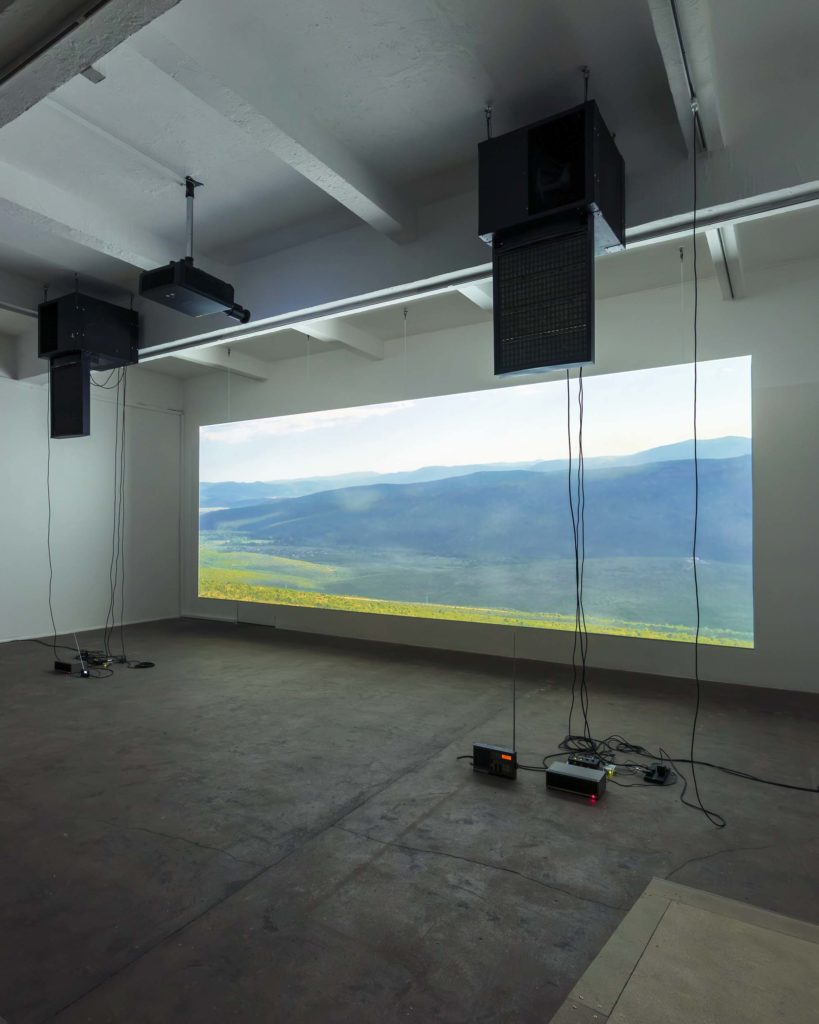
Leading down to the screen is a steep wooden ramp held up by scaffolding, like the tiered seating of a theater, only with no seats. You’re left with little choice but to sit or lie down on the hard board, or else stay slightly unsteady on your feet. It tempers the space, breaking from the flatness of the conventional gallery as somewhere to see and be seen in equal part. It offers seclusion, play. There’s perhaps a risk of falling into the sleepy voyeurism of cinema, where the surrendered and still body turns the screen into its own projected dreams and imaginings; but then there’s the brute fact of these four heavy speakers, their implacable sound; and the sheer otherness of these live scenes, somewhere else entirely, never to be seen again.
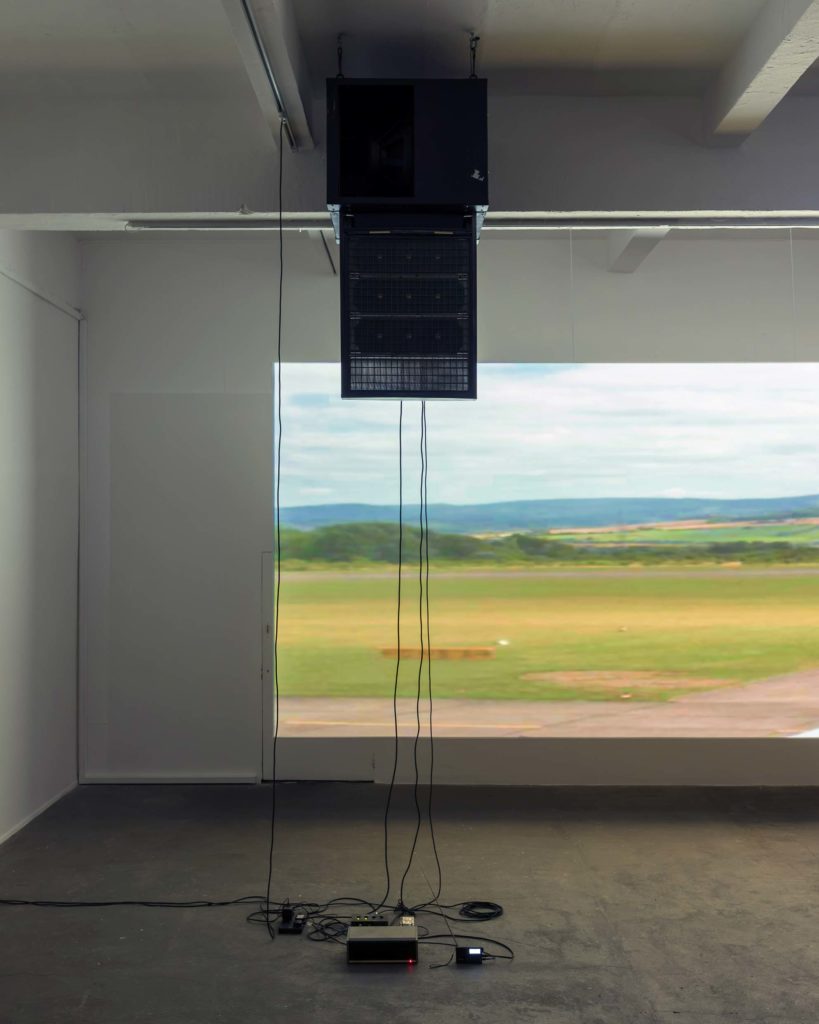
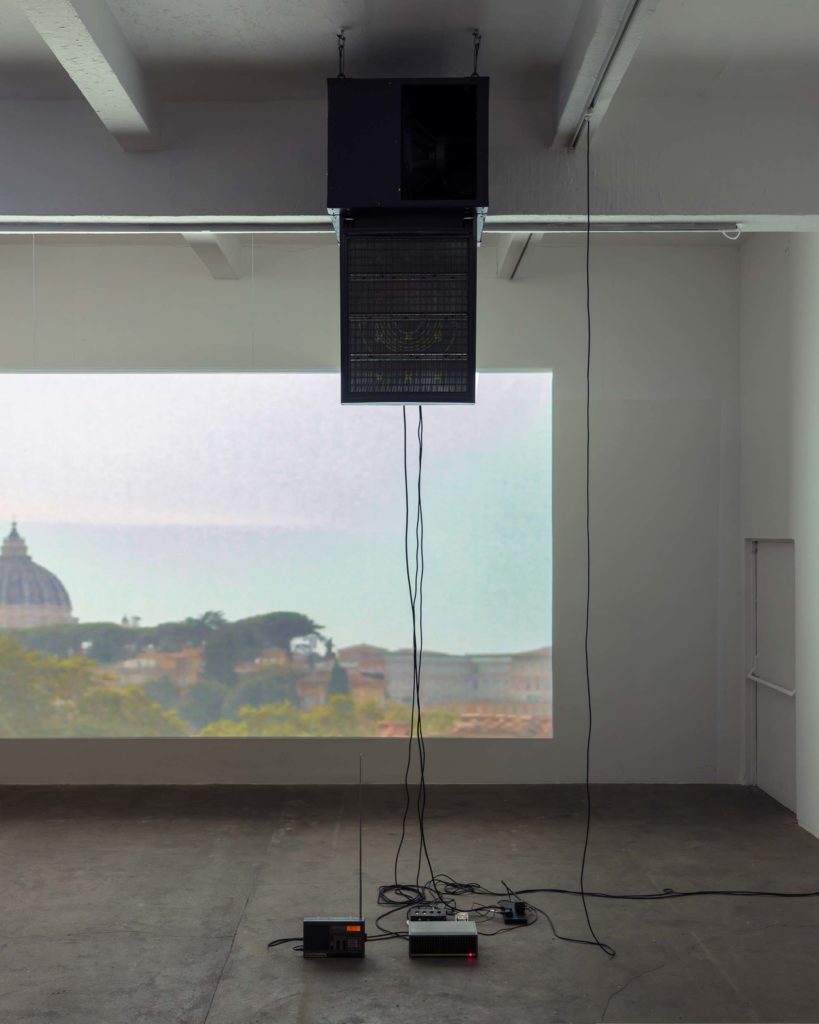
Recent concerns around data and tech have led some to recoil into a cultural conservatism that defines creativity in terms of individual ownership and private property, fearing that, without possession, something will be lost. Those concerns are understandable. Yet I also find this tendency suspect, arriving at a moment when it feels imperative to acknowledge that the world belongs to nobody, and never should have been treated as though it did. Marsalis, here, suggests that even the most singular creative project remains tuned to the other people, systems, and forms of life that make up the world. Creation is never fully autonomous because the world it draws upon never belonged to anyone in the first place.