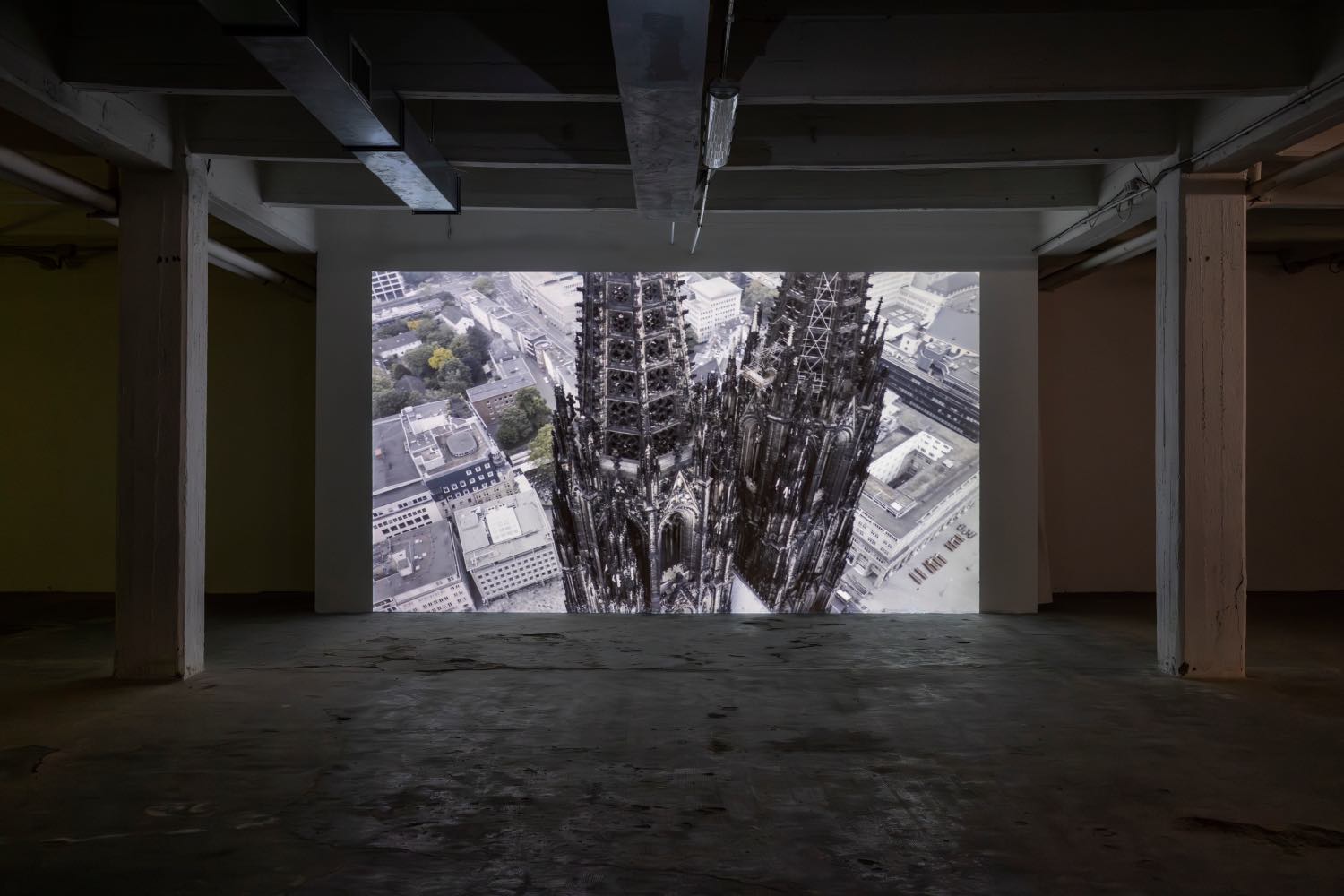
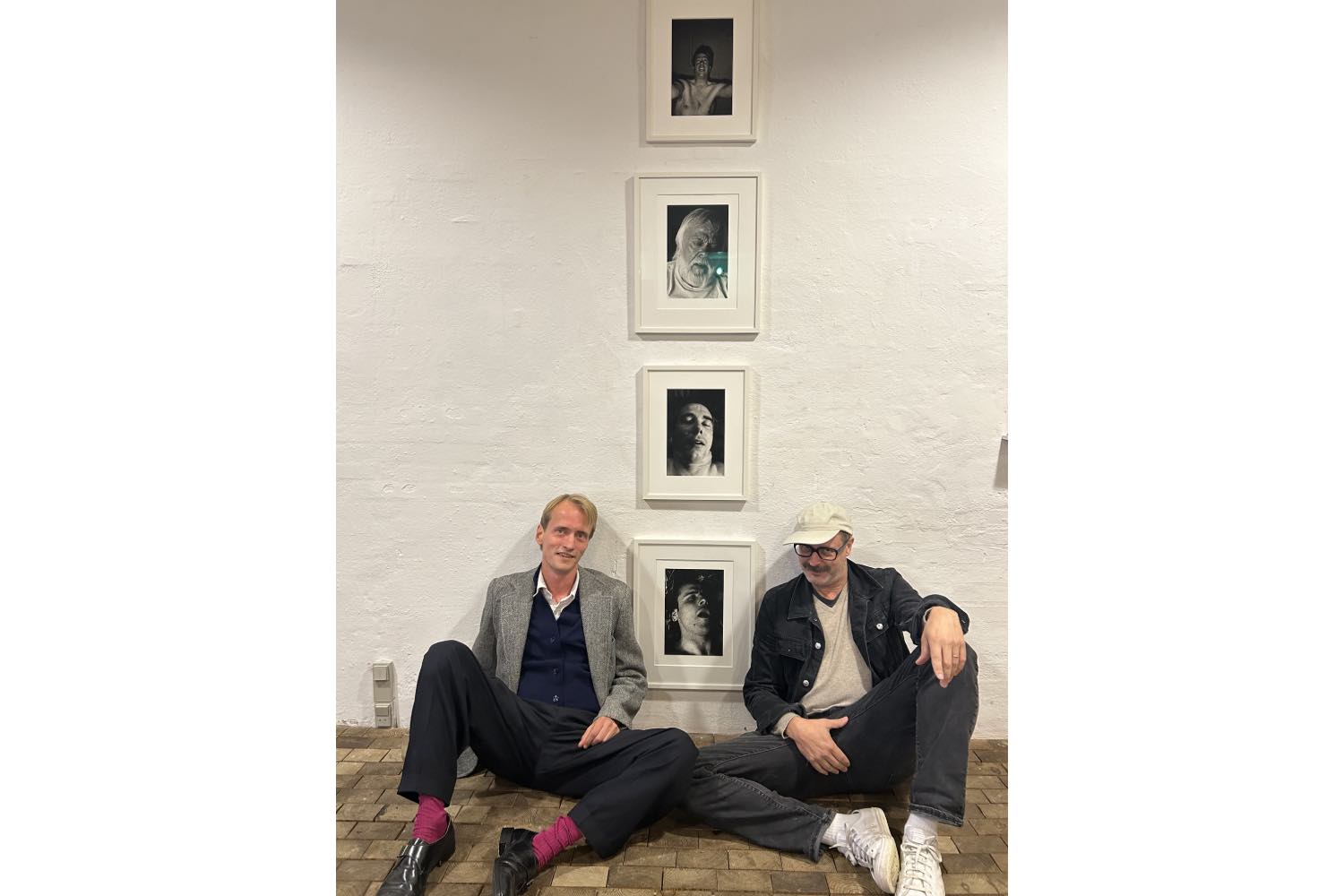
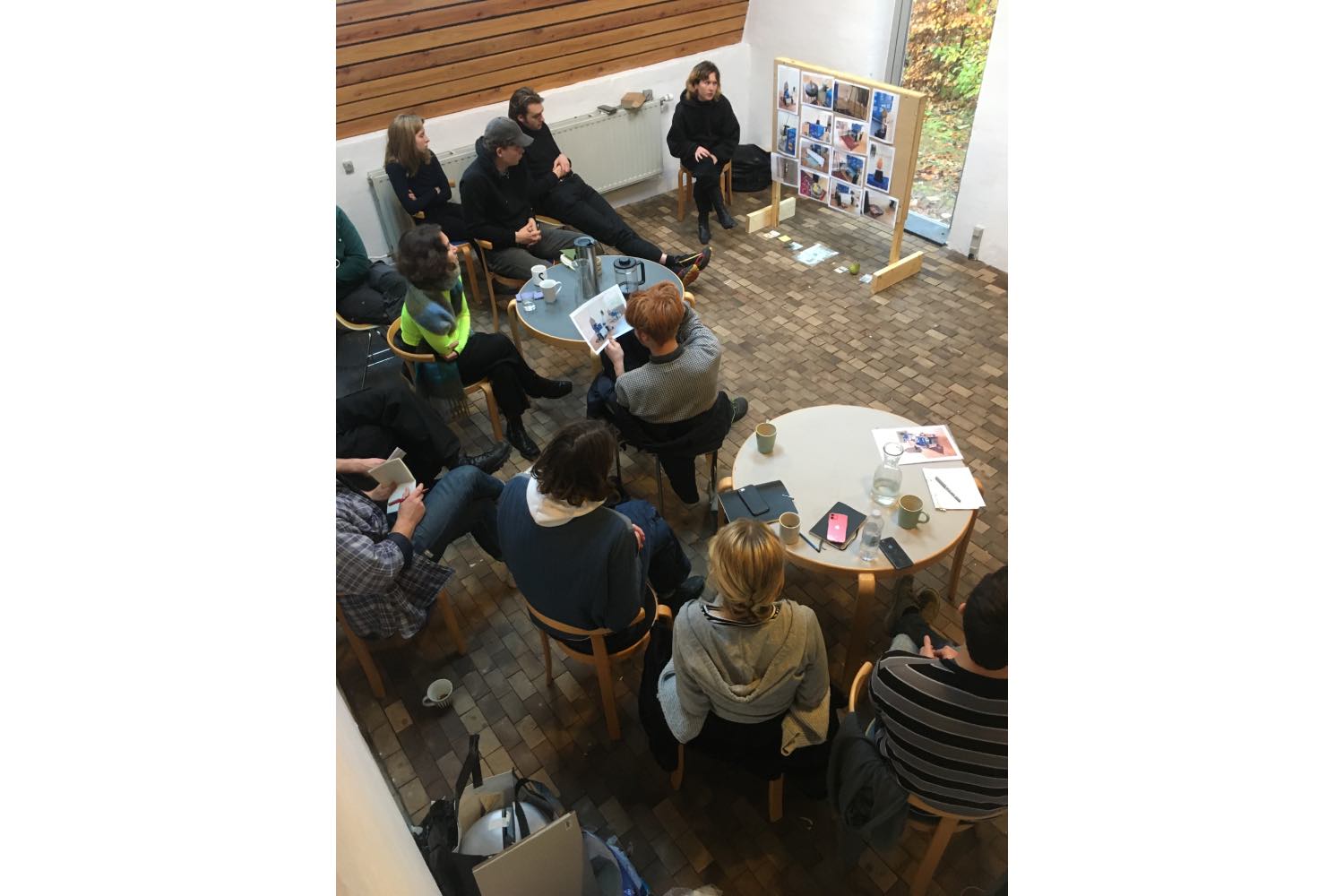
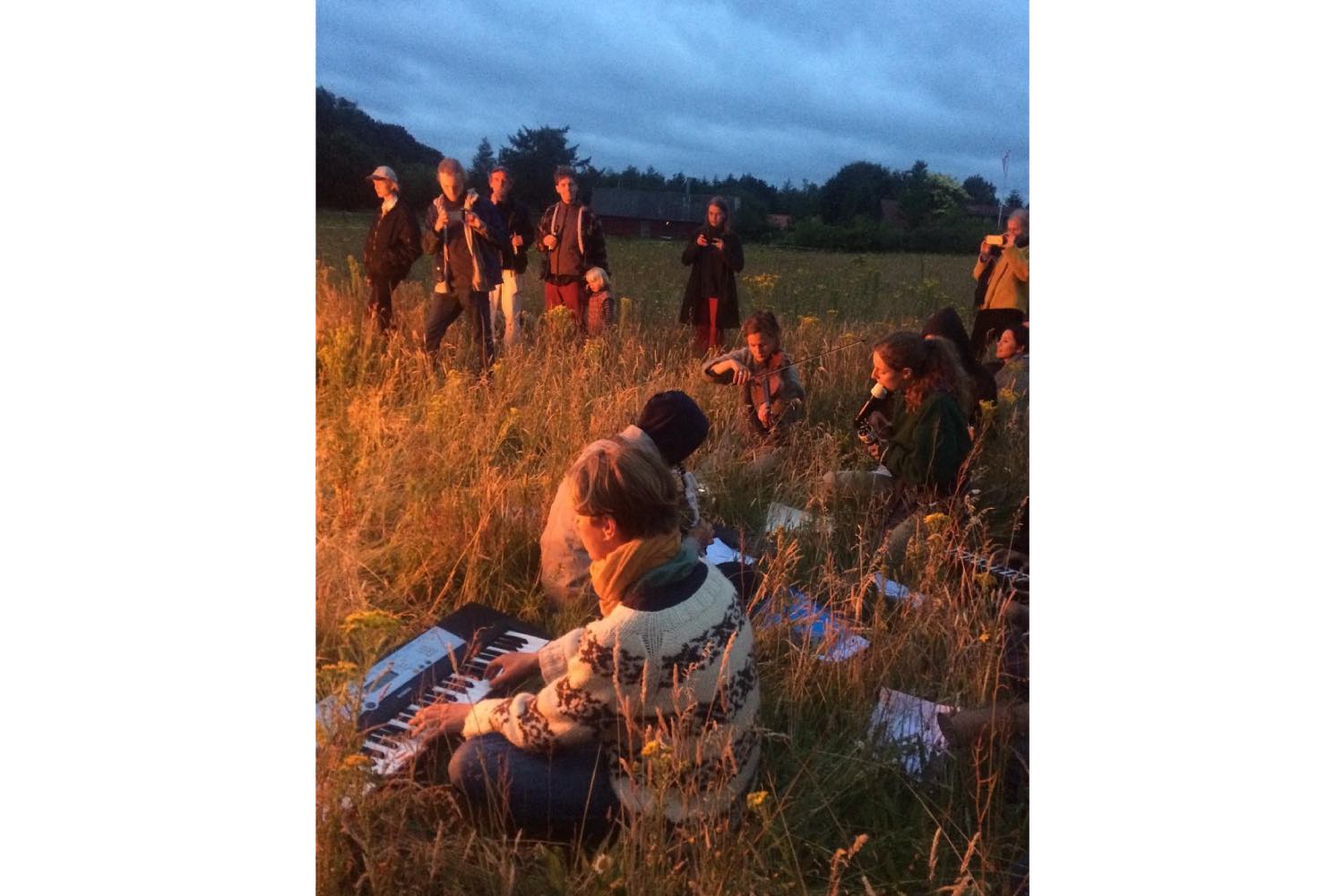
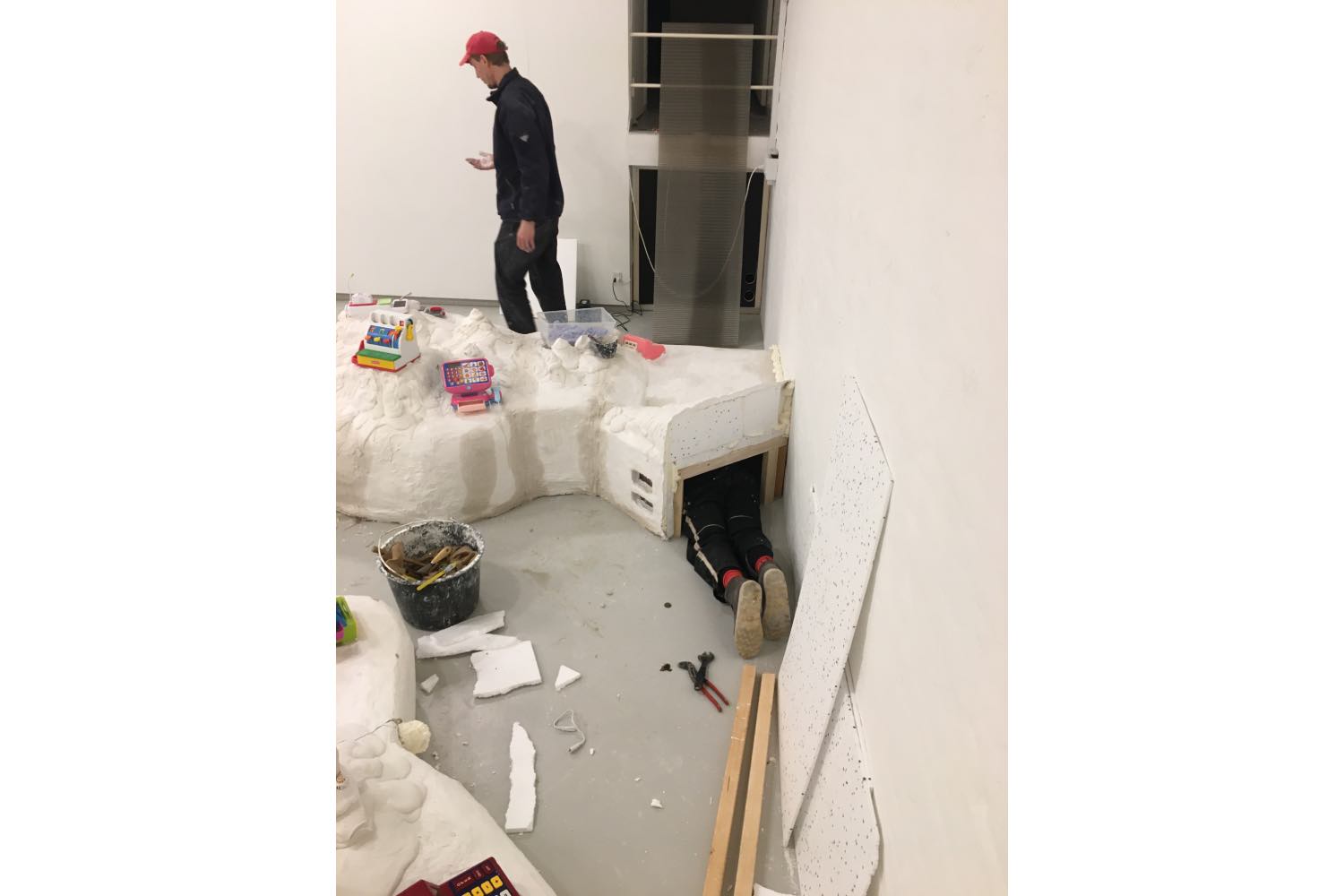
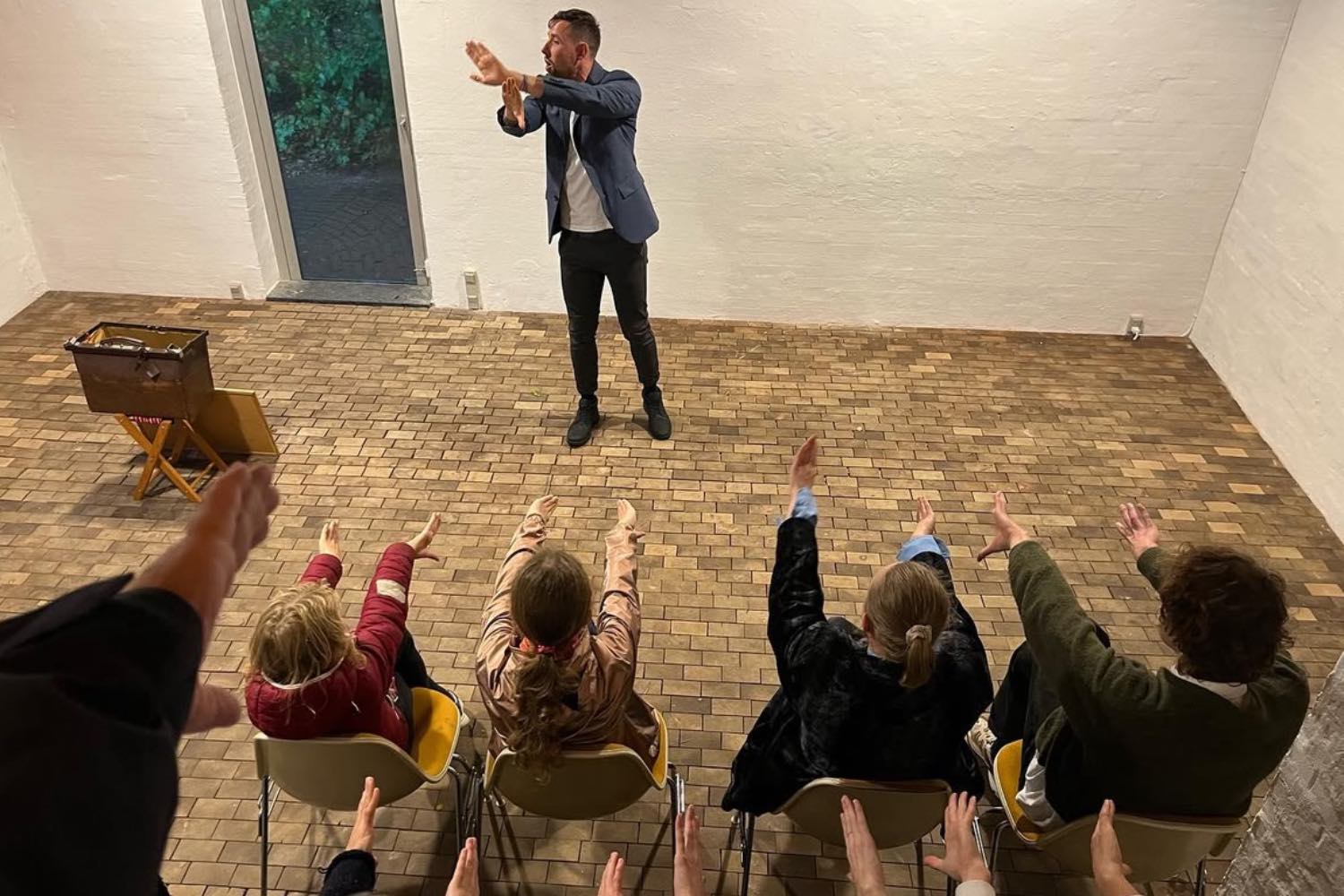
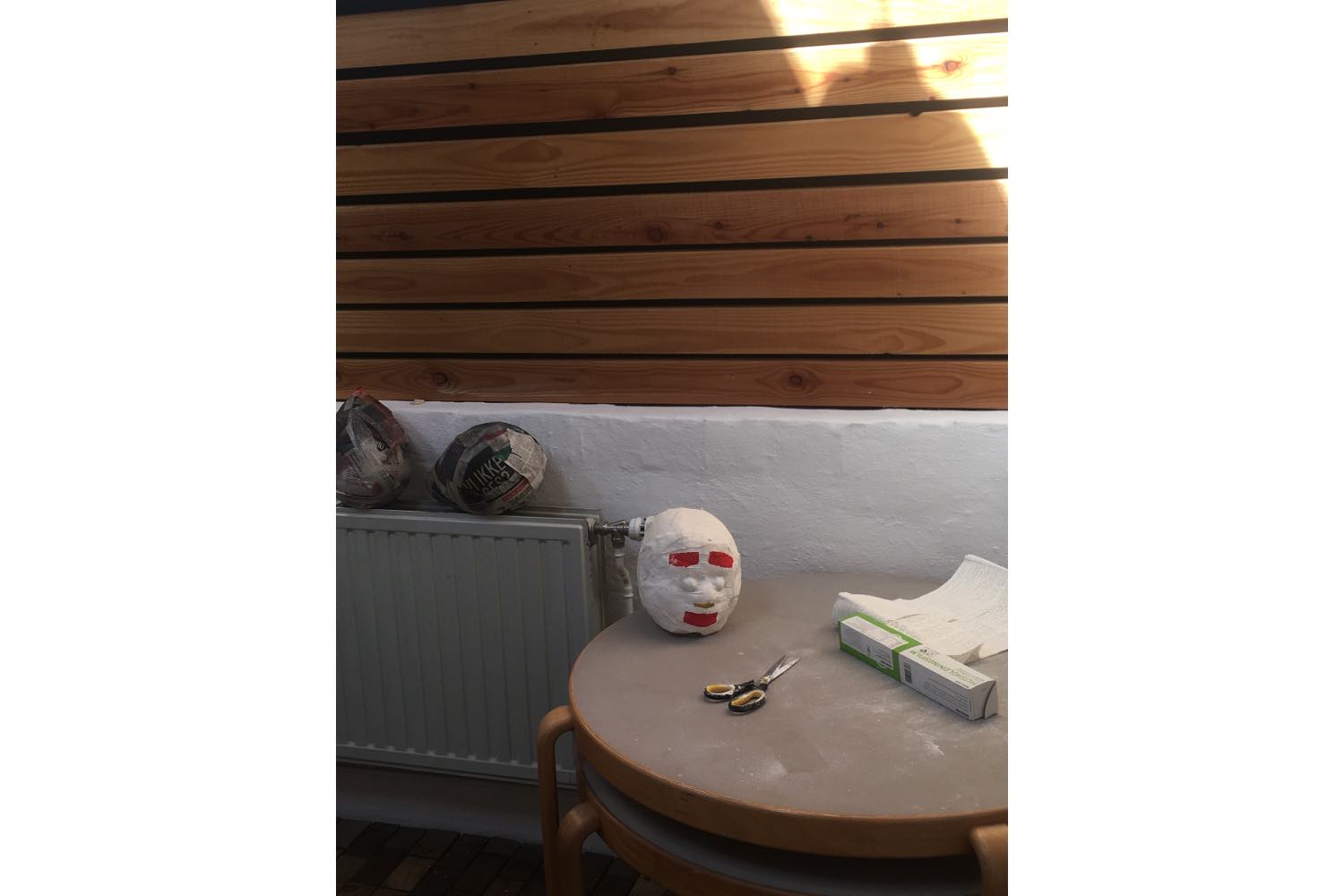
What do we do with what we are born into? This question lingers in the air at Institut Funder Bakke (IFB), a nonprofit exhibition space nestled between trees at the edge of the forest in the small Danish town of Funder, in Silkeborg. After the passing of his father, the painter Kai Führer, Andreas Führer — founder and director of Institut Funder Bakke — began converting his father’s former artist studio into what would become IFB. With the help of friends and YouTube tutorials, he renovated the space, which officially opened its first exhibition in 2019. IFB doesn’t present itself as an institution in any conventional sense. It has no bureaucratic infrastructure, and no permanent collection to sustain (except for the private collection of his father’s works). It resists institutional formalization, and yet, paradoxically, its existence depends on the very institutional legacy it seeks to subvert. In this, a familiar tension emerges: to critique something from within often means to become it, at least in part. This is the joke of many revolutions — and perhaps families too. The resistance to a formal structure extends into the program, which remains responsive to its natural and social surroundings. Its activities follow a seasonal rhythm, with two main exhibitions in spring and summer (plus a third for spontaneous ideas), along with podcast a, “Tell, No Show,” wine tastings, workshops, performances, and fashion shows with local students. So, what do we do with what we are born into? Perhaps we try to tilt it ever so slightly in our favor — and, as sometimes happens, in favor of others as well.
Fafaya Mogensen: Before your father, Kai Führer, passed away, did the two of you ever talk about turning the place into an exhibition space?
Andreas Führer: No. I think he was actually considering selling it for years, mostly because he had a girlfriend in Copenhagen and was just fed up with living in Jutland since the 1960s. He was originally from Copenhagen, and I think, in the end, he couldn’t really take it anymore. He ended up living this kind of parody of the artist’s life, and when you’ve got a place that old, you need to maintain it — and by the end, he just couldn’t keep up with it. I also think he had some vague idea that maybe I’d take it over.
FM: So he was right then?
AF: Yeah, he was. And maybe he also just couldn’t be bothered with the idea of actually selling it.
FM: So, you grew up with art, but what was the way in which you came to work with art yourself?
AF: Well, I played music when I was young — I was in a collective called yoyooyoy, and we actually lived off that from our twenties into our thirties. A lot of the stuff we made became too big and weird to fit into a “traditional” concert format, so it ended up becoming more like museum performances. And eventually, I started participating in actual exhibitions, even though I had sworn I’d never make art.
FM: Why had you sworn that?
AF: Because I was the son of an artist, and I thought artists were idiots. It’s painfully predictable, really: my mum owned the local record shop and my dad was a visual artist.
FM: I have to ask: Why name the exhibition space Institute Funder Bakke? It feels very tongue-in-cheek. Is there a subtle commentary on institutional norms hidden in plain sight?
AF: It’s the name of the place. We are basically situated on top of a hill known as Funder Bakke. And the conversation around a name very intentionally shied away from any “sexy” type of name, as they have a tendency to be fun for a while, and then not very fun after that. So better to stick with a naff one. Also, it plays on the general “ICA” (as in, “Institute for Contemporary Art”), and these kinds of cool cool but old-school places named “institutes” in major cities, not tiny villages in Jutland!
FM: This might be a bit of a pedestrian question, but do you see yourself as a curator?
AF: No, but that’s kind of bullshit, right? I’ve curated twenty-five exhibitions. It’s hard to pretend that that’s not what I do. But I think I wish to keep that slippery freedom – to stay more in the realm of being an “artist,” and avoid having to plug everything into some art historical narrative, like many curators love to do. You know, connecting the dots with that one and that one and that one until it all lines up.
FM:I hear you, but at the same time, art history seems to play a pretty foundational role in the program.
AF: True. Just considering the recent show “We haven’t opened yet, but we are working on it and we are doing our best to meet your expectations…” included an archival press release from Metro Pictures Gallery — which was co-run by Helene Winer, who was also the director of Artists Space during the “Pictures Generation” show that included works by Jack Goldstein, as this exhibition did — and the “Pictures Generation” included Louise Lawler, who was also in the show. So there’s that whole web of references hanging around. It’s not that I don’t like art history; it’s just that I’ve maybe been more excited about the way some galleries and less institutional spaces allow a different kind of show coherence to exist.
FM: Given IFB’s location, what kind of community has emerged around the space?
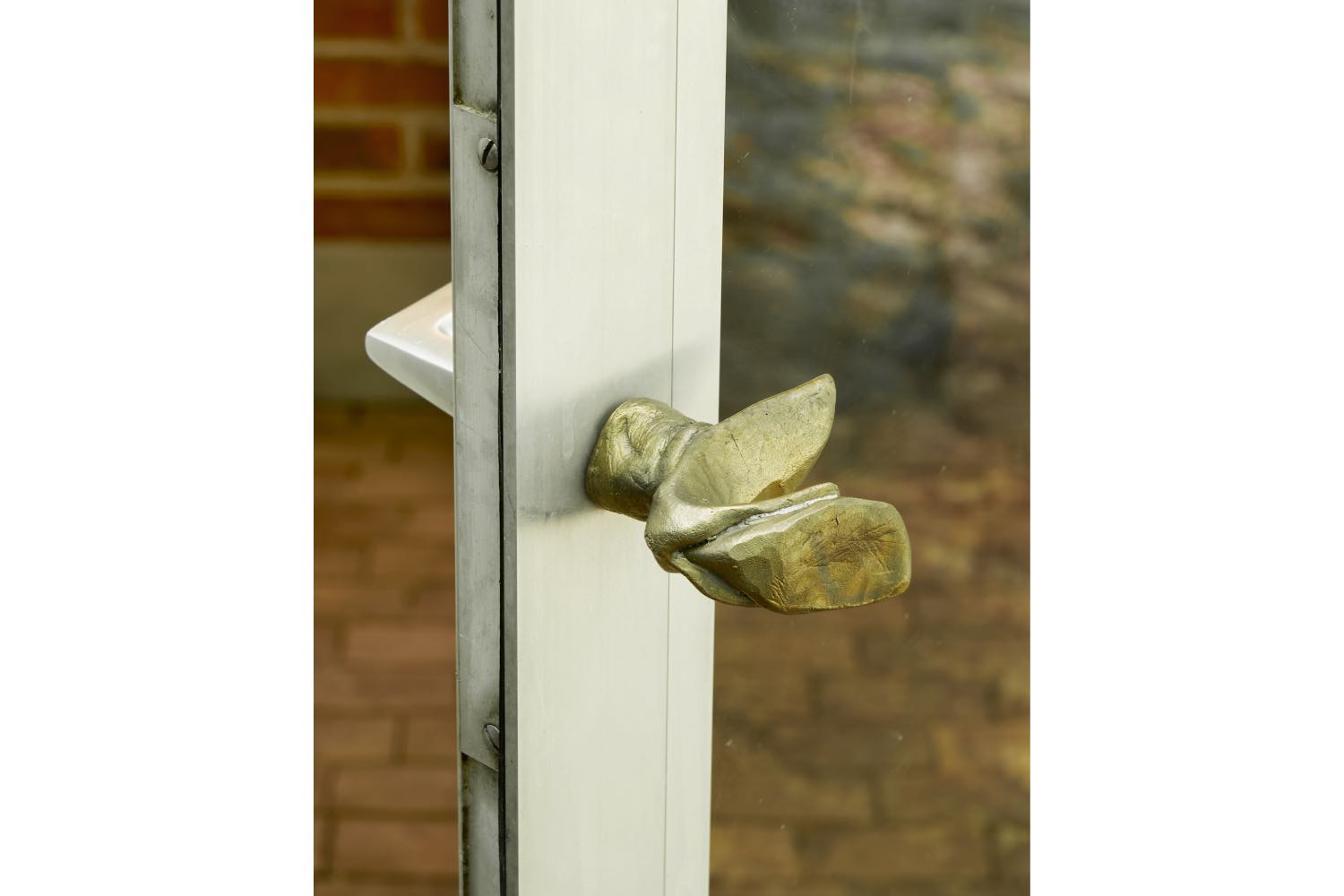
AF: It’s a weird, eclectic one consisting of multigenerational friends and neighbors invested in the space because of its history and vibe. Local art students, Jutlandish misfit kids, cultured local folks, art world people, and old ladies out in the garden, smoking fags – loads of my dad’s old friends who don’t seem to care that there’s a new owner. One of them is called Uncle Dina. She is the kind of person who, back in the day, would carry a screwdriver in her bag just in case she spotted a beautiful door handle – then she’d unscrew it and take it with her. She told me that one thing she really likes about the Den Frie exhibition space in Copenhagen is that they’ve gone back to the original paint color. It’s a deeply conservative statement – but quite lovely, in a way – that speaks to a kind of conservatism in exhibition practices. It’s just so solid.
FM: Transparency in the art world is such a hot topic these days, yet the process of exhibition-making feels anything but transparent. So, I’m curious: hat informs your thinking when selecting artists and curating shows?
AF: IFB often puts on group shows that are heavily narrated and deal with very specific themes and issues of the times. This means that the artist needs to be interested in entering a conversation not only about their work, but also about the way the work will lend itself to a montage with other works. In choosing artists, it’s a puzzle; the work needs to hold all the qualities mentioned above. But on top of that, I want to show work that is unpredictable and thorough. And, within an anti-institutional institutional framework, we do aim to be mindful when balancing artists from different periods and backgrounds, as we believe mixing can be a strength.
FM: Could you share a few examples?
AF: “A Sock in the Eye” was part two in a series about the impact made by Danish legislation for architectural conservation. The upside of that was the “Man In House” show. It dealt with Copenhagen’s Danner House, a refuge for women who suffer from domestic violence, which was saved by the Danish women’s movement, who occupied it and had it protected. That show was a timeline, and group material-esque, that followed the house’s crazy history, but also was about the invisibility of domestic violence and the many internal issues and generational conflicts within the women’s movement, and also the maybe even more difficult question of what makes violent relations desirable. In this show, this was beautifully showcased in Nancy Lupo’s work Escape Handle 3 (2023), a bronze door handle molded as a cast of the space of a hand being held, which serves as the door handle of the studio. A show like that can be dangerous, and it relies on the work being able to fulfill its part in the narrative of the show while still maintaining its own internal agendas. Difficult, but when it works, it is amazing. Because there’s something at stake in how the works are shown and experienced.
FM: So, using Uncle Dina — who “steals” beautiful door handles —as a metaphor, I might re-cast her actions as a kind of “public service” to preserve these objects. It’s a bit of a segue into how the preservation of objects, spaces, or even methods, sometimes ends up making it harder for people to literally get through the door. How do you handle issues of access and audience in a more remote place like Funder?
AF: The studio is old-school modernist style, built in the early 1970s with two levels, and so one of the first things we did was to make an access ramp to the back door. Very inspired by the work of Park McArthur, and, by coincidence, this project collided with a show of Per Kirkeby’s brick sculptures at the local museum, and so I kept pestering them to get the bricks, and finally they gave in, and we collapsed these sculptures into a brick accessibility path.
In regards to the subject of audiences more broadly: To me, art remains one of the few fields I know where you’re actually allowed to have a completely antagonistic relationship with your audience, with your customer. Honestly, I’m not even sure I’m interested unless that’s the case. Almost everything else today starts from the idea of the customer. Like, if no one wants to buy the product, does that mean it’s no good? I’m not so sure about that. So IFB tries to allow for the works and the shows to be both antagonistic and humorous. On a social scale, the space is almost jovial in its attempt to make people feel welcome, and to generate a hospitable and anti-snobbish atmosphere around the place, and whenever you as an audience come here, I always give a tour of the show and try to help people to fully experience the show.
FM: On the subject of the product, you’re showing at Liste Art Fair during Art Basel for the first time this year. How do you feel about that?
AF: I feel very good about it.
FM: That makes sense, it’s an exciting moment! What’s behind the feeling this year? Why does it feel like a good time to be showing at Liste?
AF: Because I got invited – and I think it’s quite sexy to be based out in Funder and still be showing at Liste alongside Gallerina from London and The Wig from Berlin. It also feeds into the fact that I’ve wondered why I often prefer seeing shows at galleries, and I’m curious as to why the object of the (mass) market of libidinal desire driving the commercial scene doesn’t get tied to this sort of folksy arena that nonprofit spaces like Institut Funder Bakke belong to.