“I am not tragic. I am not beautiful. I am not a symbol. I am simply too much — too alive, too changed, too hard to look at and too impossible to ignore.”1
— Imogen Binnie, Nevada, 2013
I just learned that I can mutate more than others. I can split myself apart, stretch in and out of my own skin, completely and irrevocably destroy my biome.
I walk into the sacred with blood on my fingertips and shadow stitched into my skin. I am not writing, I’m mapping a wound. This isn’t a study. This is me clawing through the bark of language, trying to name the unspeakable things that live beneath. I am a manufactured woman; therefore, I am a grotesque body.
The grotesque, as an aesthetic and conceptual category, has long occupied a space at the margins of beauty and horror, distortion and revelation. Rooted in the Italian grottesca (referring to the fantastical art found in ancient Roman grottoes), the term originally described decorative motifs that intertwined human, animal, and botanical forms in bizarre, hybrid configurations. In literature and visual art, the grotesque often denotes bodies or scenes that are exaggerated, deformed, or transgressive, eliciting fascination and discomfort in equal measure. Writers like Mikhail Bakhtin have traced its cultural power to moments of inversion and subversion, where hierarchies are unsettled and the “low” (bodily functions, physical excess, monstrosity) erupts into view.2 In modern and contemporary contexts, the grotesque is not merely an aesthetic of horror or absurdity, but a radical mode of visibility: a way to expose the mechanisms of normativity, confront the politics of embodiment, and render the unspeakable, the abject, the nonconforming, powerfully legible.
There was a time when I thought performance could save me. When the lights hit the stage, you could watch a body fall apart and be born at the same time. Ron Athey taught me that. He showed me that the body isn’t just flesh; it’s a manuscript written in scabs, in rite, in agony so meticulous, it becomes divine. Watching him bleed wasn’t witnessing suffering; it was witnessing rebirth. His form, a reliquary. His wounds, stained glass. I saw the architecture of absence in a queer figure, and it was oozing. Athey doesn’t flinch from the spectacle of brutality. He doesn’t look away. He lets the rupture speak. His blood, especially during the apex of the AIDS epidemic, was a sermon. A liturgy. A reckoning. He took the shame imposed upon the queer body and turned it incandescent. For Athey, the uncanny form was a mirror to the divine. A crimson-soaked psalm that defied every sterilized expectation. He didn’t simply perform, he sanctified. He rendered agony luminous, unforgettable, alive.
Athey’s work doesn’t just sit in the body; it tunnels through it. One of his most searing pieces, Four Scenes in a Harsh Life (1993), features self-flagellation, piercing, and bloodletting rituals performed with a spiritual gravity that ruptures Western taboos around pain and transcendence. The infamous moment where blood was blotted on paper towels and pulleyed above the audience caused public outrage—not because of gore, but because of what it exposed: the latent fear of queer, HIV-positive flesh. His body becomes both altar and threat, a living manuscript inscribed with suffering, desire, and defiance. To watch Athey is to see someone pray with open wounds.
And boychild – the first time I saw boychild move, I cried. Not because it was beautiful, but because it haunted me. Because they moved like something trying to remember what human once meant. Because they blurred the divide so thoroughly between machine and flesh, I felt time bend. They are distortion incarnate: a nonbinary, flickering oracle. A kinetic rite of becoming. Twitching, fast moments; a fragile form finding strength, inverted. Everything reborn in the unraveling. They are irreverent only in the way something artificial can be exalted. Exalted because they are too real for this world. boychild wears their cyborg skin like gospel. Their movements are data-soaked prophecies, each convulsion a tear in the fabric of binary gender.
Watching them is like watching gender dissolve in real-time: not male, not female, but electric code. Their eccentricity transcends the body, is posthuman, post-binary, post-form. They aren’t performing a self. They are shedding one. Every gesture is a new syntax. Their Untitled Lip-Sync (2012–18), is an embodied seizure of gendered code: a sequence of distorted lip-syncs, LED-lit contortions, and digital stutters that feel like prophecy filtered through a dying machine. The body flickers, spasms, becomes data and spirit. They channel posthuman ecstasy, not as cold futurism, but as holy rupture. They don’t emulate the future; they leak it.
The semantics must be discussed: grotesque as distorted, ugly, or bizarre, absurd. I reject these definitions, even as I bleed under them. I am called grotesque not because I am monstrous, but because I defy the shape of legibility. My body doesn’t conform. It coils. It spills. It disrupts. It denies symmetry. The grotesque isn’t a defect; it’s a method. A dialect of those of us never meant to speak. When they call me abject, they mean I remind them of the limits of their imagination. They mean I fracture their mirrors. They mean I am ungoverned.
Then there’s Juliana Huxtable. A goddess from the internet’s underbelly, rising with hair like a flare and eyes like encrypted prophecy. Her avatars — surreal, stretched, celestial — seem to hover between Afrofuturism and dream-scarred reality. She makes me wonder what happens when a body expands beyond containment, too queer for chronology. She turns the visceral into a blade, a shield. The unreadable becomes sacred, the sanctified rewritten in her digitized rebellion. Huxtable performs abundance. She doesn’t present a single self; she delivers a collection. Blackness, transness, parable, circuitry: she conjures them into something feral and radiant. She is what it looks like when the grotesque is not something done to you, but something you forge. She is venerated excess, a seer for what comes next, muttering blessings through corrupted code.
Huxtable isn’t simply an artist: she is an event, an archive, an eruption. Her self-portrait Untitled (Psychosocial Stuntin’) (2015) is a mythic rendering of herself: hyper-surreal, nude, alien, divine. She creates herself through digital distortion — Afrofuturist, trans-femme, cyberpunk — shattering the normative gaze. There’s power in how she warps the limits of portraiture, how she refuses containment. Her poetry, too — especially in Mucus in My Pineal Gland (2017) — spins a grotesque kind of scripture: a mutated syntax of longing, theory, slang, and spellcraft. She doesn’t offer identity; she offers multiplicity, glitch, swarm.
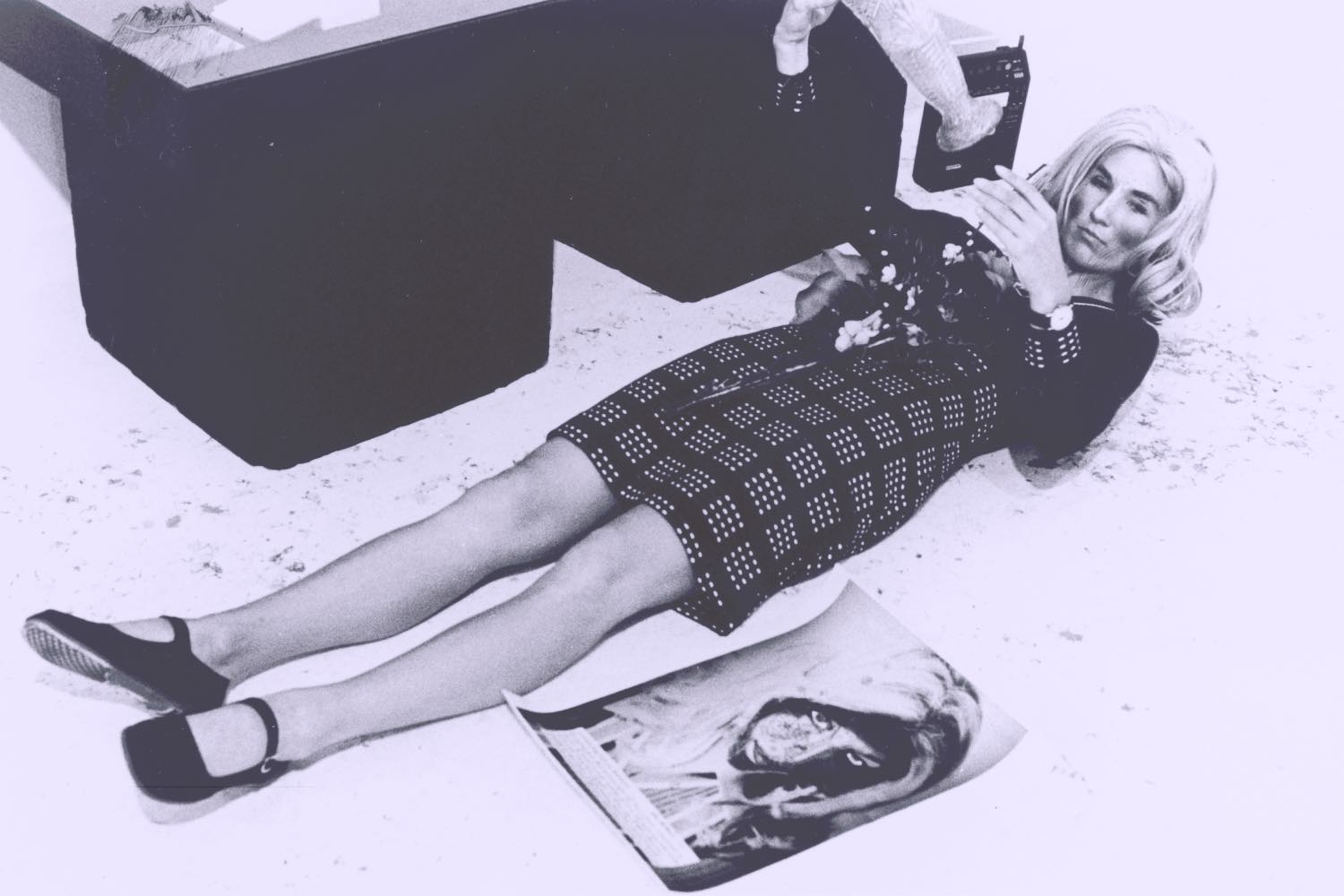
Lynn Hershman Leeson foresaw the whole terrain. The echoing double of digital life. The fraudulence of a fixed gender. The future lived as an avatar. Roberta Breitmore wasn’t just a persona. She was a signal, a warning, a spell cast into bureaucracy. Hershman Leeson stepped into the breach, where womanhood becomes surveillance, simulation, story.
If transness is often accused of being “artifice,” then Hershman Leeson shows how all identity is. Her “Roberta Breitmore” series (1973–78) was more than performance: it was the haunting of a social construct. Roberta had credentials. She had a driver’s license, a therapist, and prescriptions. She applied for credit cards. She wore the costume until it fused with her. Isn’t that what they say trans women do? That we fabricate? That we pretend? But Roberta was artificial by intention. She is the uncanny made flesh, highlighting how womanhood itself is performed and produced by societal norms, institutions, and visual codes: constructed, watchful, volatile. She doesn’t stand in for a body; she reveals the machine dreaming it. Hershman didn’t just pretend to be Roberta; she became her, proving that womanhood itself could be manufactured. Years before internet avatars, she foreshadowed how digital life would blur with lived identity. In Lorna (1983), one of the first interactive video artworks, she creates a clickable psychological landscape for a woman trapped in her apartment. It’s eerie and intimate, a prototype of the internalized digital prisons we now call “the feed.”
This is where the exalted meets the abject.
This aesthetic isn’t about gore. It’s about revelation. About seeing too far, feeling too much, becoming too fully. The grotesque is what happens when the mirror shatters and you crawl through the fragments anyway. Transness is grotesque not because it is ugly, but because it overflows in beauty, in violence, in want. We do not accept containment. Our bodies are ongoing rites of refusal. Our stages are altars for disobedience.
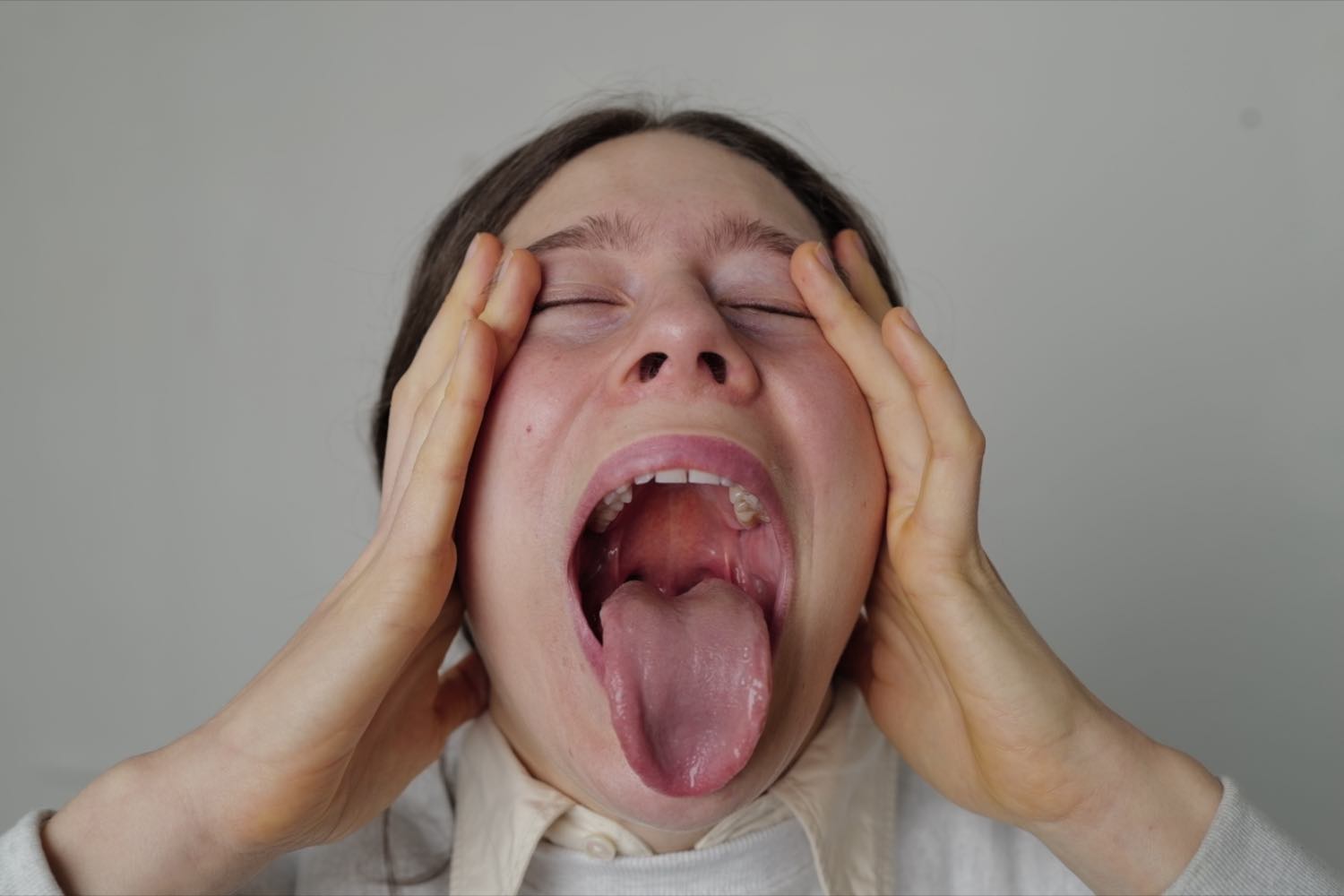
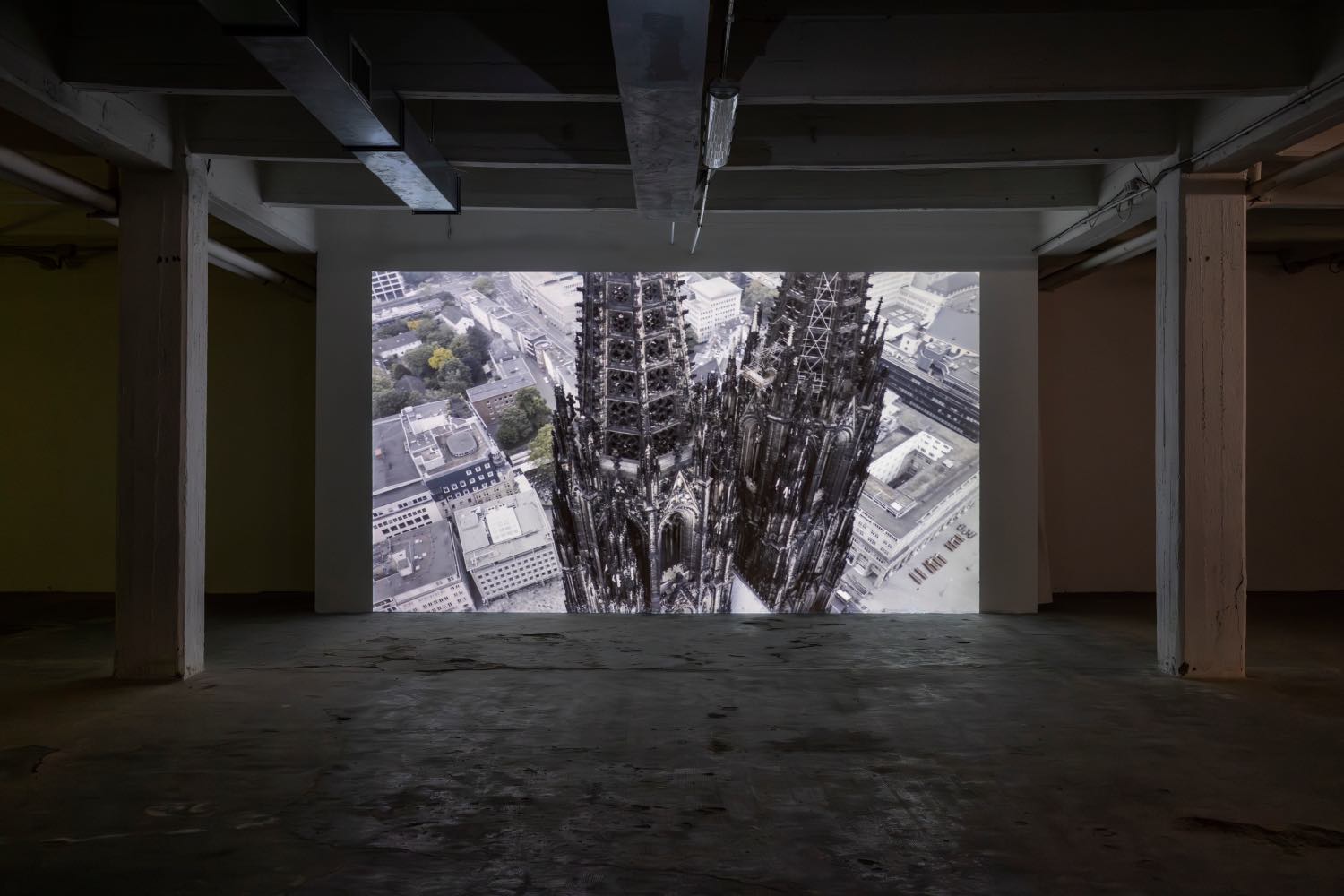
My form isn’t coherent. My voice won’t stabilize. My beauty doesn’t ease consumption. I remain obscured. But not in the way they fear. I am grotesque like a cathedral: intricate, haunted, divine. My cells split. My outline flickers. I demand recognition in a language you haven’t yet learned. So I offer it in movement.
Germaine Greer once wrote, “The essence of the grotesque is that it invites us to look at what we have been taught not to see.”3 This feels like a skeleton key for everything I’m trying to say. The grotesque, in its truest sense, isn’t about horror or disgust; it’s about confrontation. It forces the gaze where it’s been trained to avert. The trans body, the queer body, the body that refuses neat borders or sanctioned scripts: these are the grotesque forms that Greer names, not as threats, but as revelations. In showing what’s been repressed or rendered illegible, we reveal the machinery behind so-called normalcy. Our bodies become the stage for that reckoning. To be grotesque is to be too real, too raw, too much—and therefore, necessary. We are the object they smash so they don’t have to see themselves fractured. But the grotesque reflects anyway.
They told me to hush. Said I was too loud. Too warped. But warping is intelligence, not convolution. Ache is an incantation. The trans body is haunting: blood on the floorboards, sodden dust in the cracks, silence humming under the eaves. We ignite small fires. We name them art.
“What exactly is frightening about the human body?” David Wojnarowicz asks. Maybe it’s that it doesn’t stay still. That it defies, betrays. That it reminds us we are flesh first: seeping, pulsing, decaying. That the body speaks in ways no institution can mute. For the trans body, the horror isn’t in the transformation; it’s in what that transformation reveals: that the body was always a lie waiting to be rewritten. That we are proof that binary consumption is, and has never been, real. The terror, then, is not of our bodies, but of what they expose: the fragility of order, the myth of normalcy, the quiet truth that everyone, somewhere inside, is already split open. Now, trans bodies are asked to be clean. Polished. Buyable. Normalized. But the grotesque says no. The grotesque says: rupture anyway. The grotesque demands: become in front of them. This isn’t style, this is endurance, revolt. This is the sanctuary of the wild and the ruined.
“Let me begin again. Let me be a different boy. Let me pretend I was not born to this body.”5 Ocean Vuong doesn’t perform pain, he reconstitutes it, rendering it cellular. This is not numbness; it is intimacy with suffering, the kind learned over time, across thresholds of misrecognition. For the trans and gender nonconforming body, these words don’t simply resonate, they map. They name the dissonance of being made and unmade by a world that misreads us on contact. Pain, here, is not symbolic; it is structural. In the grotesque body, pain becomes something else: it becomes language. While we may not hope in the ways we’re told to, we endure. We turn sharpness into ritual. We reject the anesthetic of performative optimism. We carve new modes of being from the shrapnel. In that refusal, we find a kind of hope they don’t recognize: not clean, not linear, but molten. It underpins the bureaucratic humiliations, the legislative abandonments, the daily rituals of translation and defense. Where Vuong’s voice speaks in lyric, our bodies speak in scars, not as spectacle but as syntax. This isn’t the nihilism of detachment, but the ache of surviving in a world where even existence is contested. And yet, through that ache, we do more than survive. We shape new grammar, we refuse the anesthetic of false comfort. We make kin with sharpness and sculpt from it a future. Not clean or whole, but feral, and ours.
José Esteban Muñoz wrote that queerness is not yet here.6 That it hovers at the edge. I believe the grotesque is how we breach it. Not with clean palms, not with rehearsed grace, but with bodies that crack, that tremble, that burst open. The grotesque is how we tear a hole in the present.
When I watch Athey, boychild, Huxtable, Leeson, I see shards of that future, the blessed collapse of the body in the consecrated disintegration. I see prophecy etched in scar tissue.
This isn’t a critique. It’s a litany. A confession, a curse wrapped in tulle and wire, a vow to the grotesque. To my sisters with shattered teeth and gold running through their scars. To my siblings who speak with needles, with shadow, with ritual of transdermal application. To what waits beyond the now.
Let the grotesque be a compass.
Let it take us somewhere savage.
Let it be hallowed, spoken from the stone stuck in our throats.
Let us be beloved.