“I alone (well, probably not) know the great secret of this existence, and I’ll have to live out the rest of my life keeping it at all costs.”
— Izumi Suzuki, Terminal Boredom
Elizabeth Jaeger and I talked about maddening contempt, Shanghai, and transcendental pelicans in a dimly lit art bar in Hell’s Kitchen, sipping chaste music and graveyard beer. Taking rationality and smoky melancholic sculptures to their furthest dissolution, Jaeger creates miniature blackened worlds in which we lose ourselves. Poetic ontological inflections that solemnly disavow the imposition of any sort of reality being either impossible or necessary — humans are always stacked against existence. In Colin Thiele’s book Storm Boy (1964), a child befriends a pelican, merging the human essence with the animal soul, affirming that the material body is a malleable constraint that yearns for liberation because it wants to see, know, and contemplate pure irreducibility. Jaeger, too, takes rational existence and reduces it aesthetically until it can reduce no more — thought that simply accepts reality as given has been given no thought at all. Recently, on a trip to Baja, Jaeger encountered a saffron-beaked pelican in an inspiring anthropologic exchange that flew her ideas all the way to China.
Estelle Hoy: So what’s the story with your pelican? Was he glad to be alive?
Elizabeth Jaeger: I traveled to Baja with a group of friends this winter and found myself alone on the water with a group of pelicans. Do you know how they hunt? They use their bodies like a dagger from the sky, colliding with the water’s surface, harpooning their necks under, and deftly spearing fish they’ve seen from above. Operatic ballet. In any case, I’m in this sun-bleached kayak, and I just suck at rowing. I let my athletic friends go ahead. One of them swam from Capri to Naples the summer before, and another is a paddleboard champion who went from Bermuda to Florida in pitch darkness and was proposed to underwater — these people are basically fish, so it’s easy to accept my fate of idly floating towards this island overtaken by birds: Bird Island.
Bird Island is this rocky mass in the middle of a bay. Fourteen-foot cactuses shoot out of every crevice, with seagulls perched on the top of each. At the tideline, a flurry of disgruntled fowls nest on rocks covered in their own shit — it’s otherworldly. Each day, as the others departed on their marathon adventures, I drifted back to Bird Island. The sunbathing pelicans were apprehensive of me — but not scared. Maybe more disdainful than anything — probably because they loomed over me on their guano-covered thrones, and I just bobbed around beneath them like a hot mass of seaweed. When we made eye contact, they didn’t look away — it felt like they could see right through me. Like I was coming to them in a sort of pilgrimage they disapproved of. This image stuck with me, this flock of giant-beaked extraterrestrials telling me I was the alien.
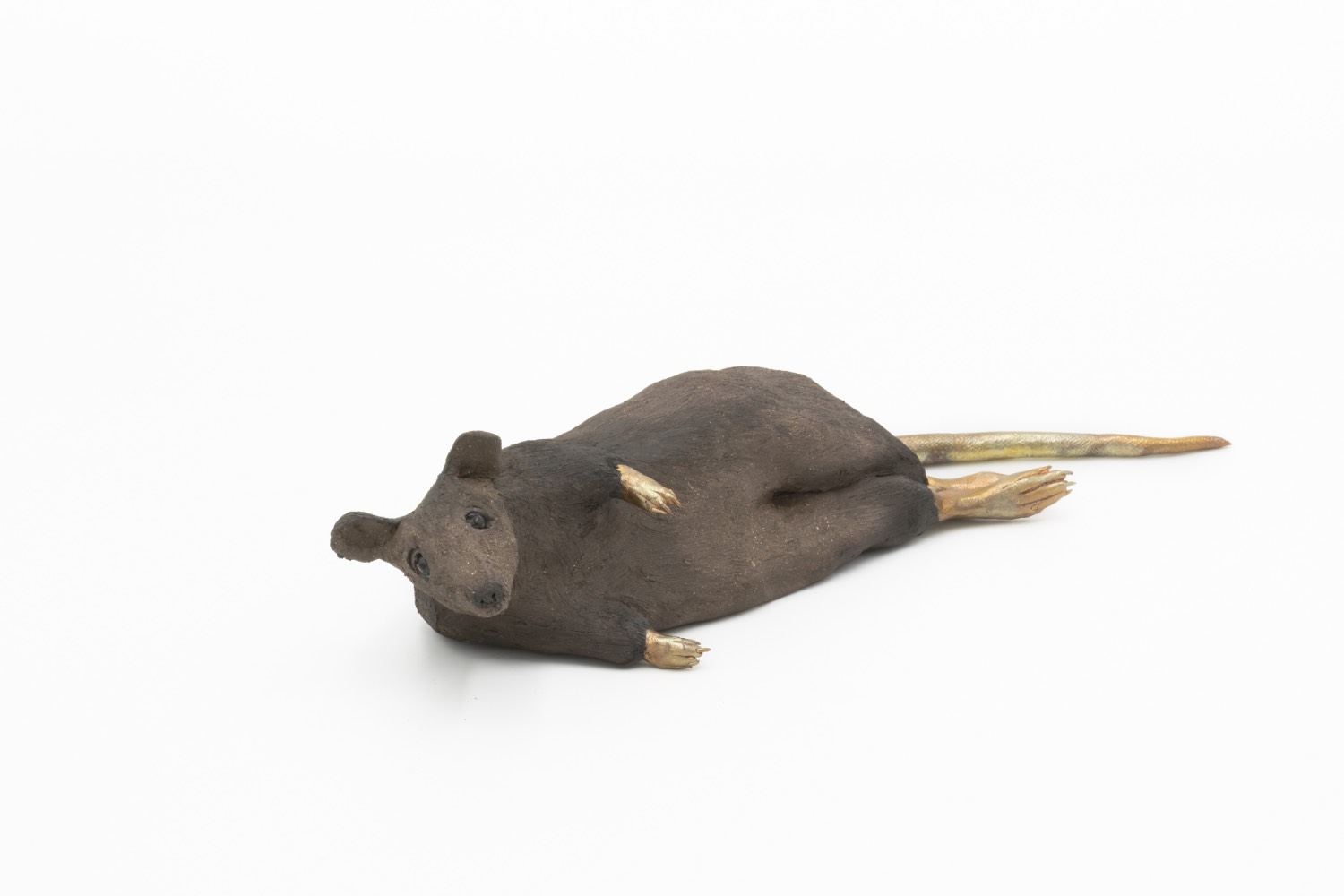
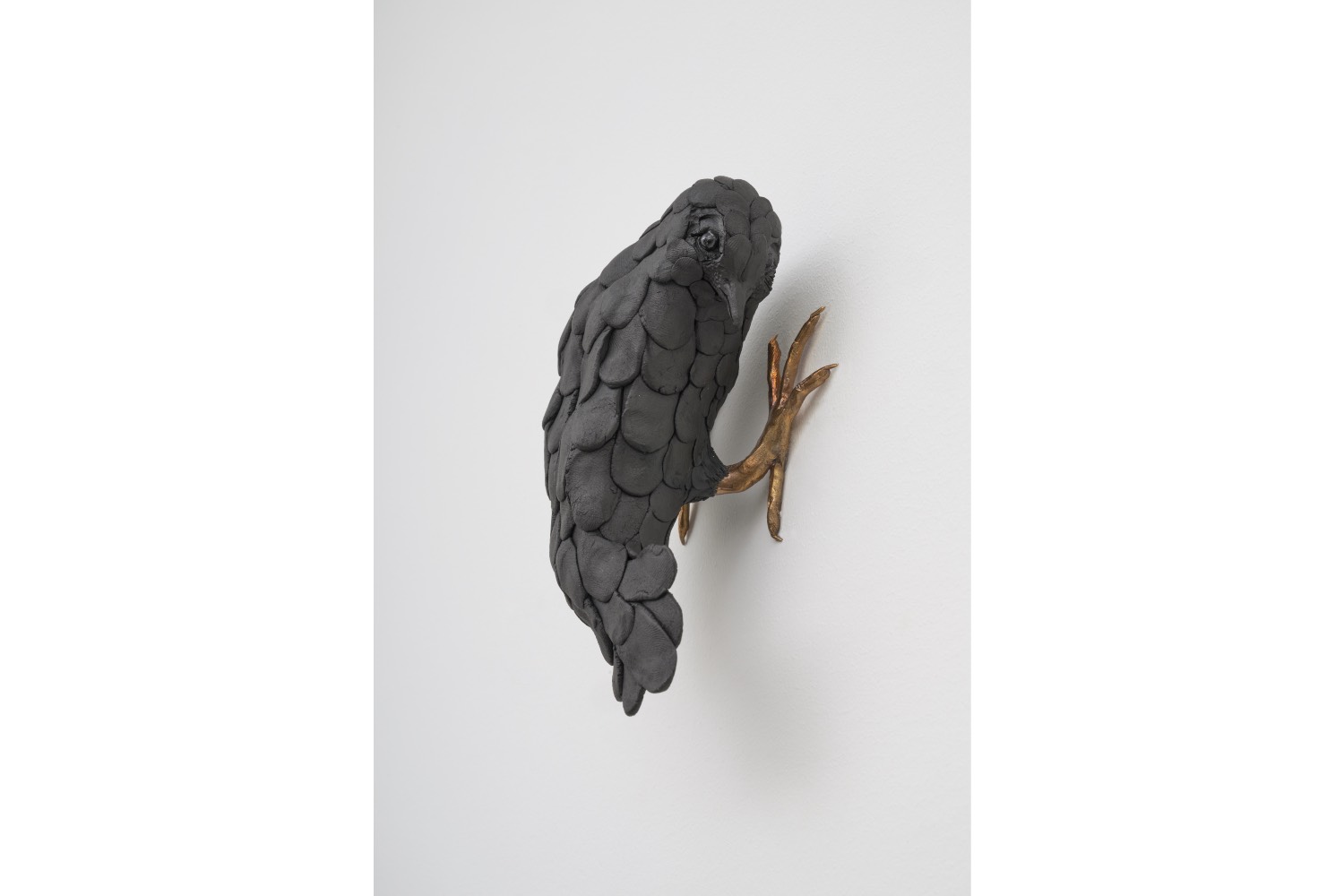
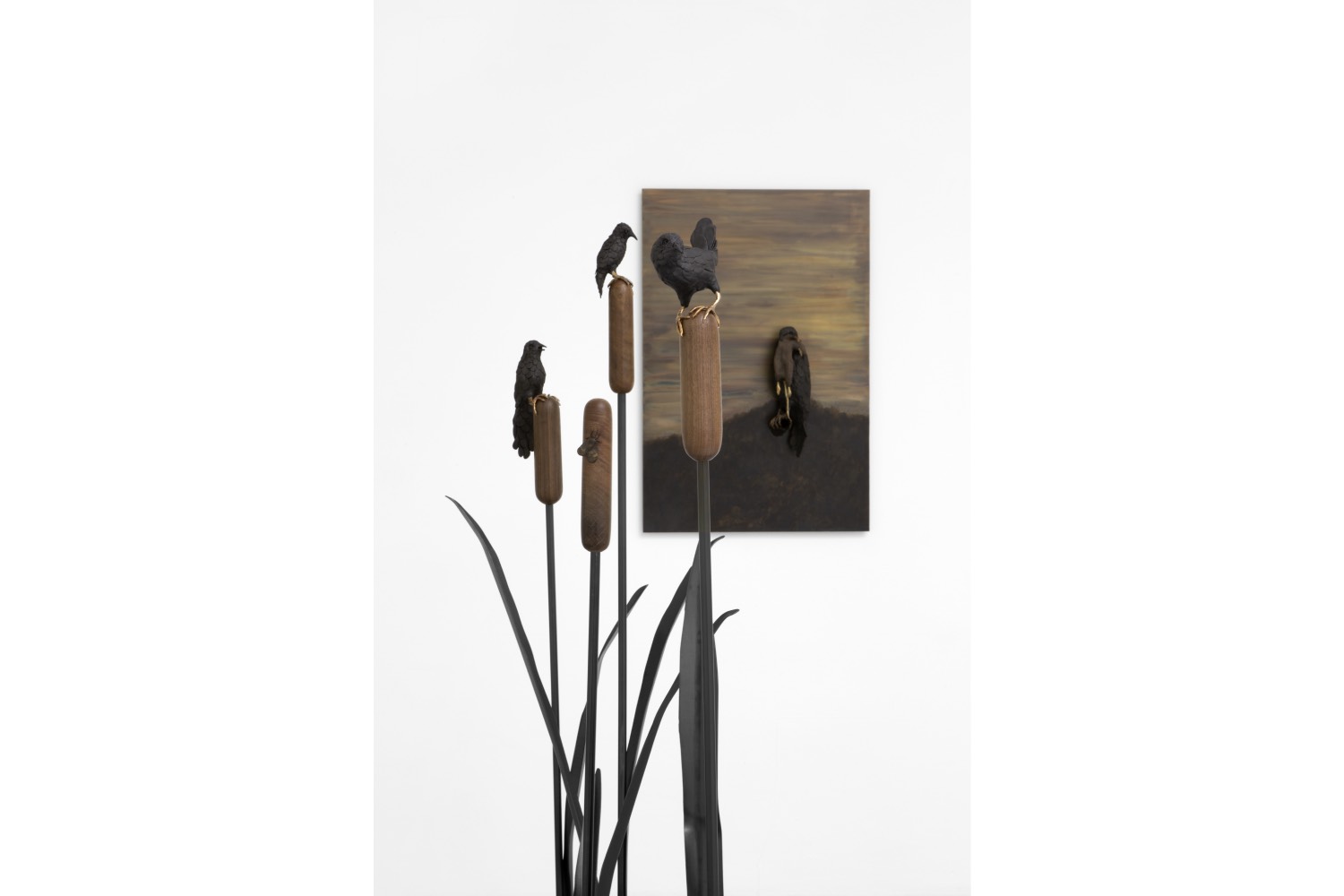
Giorgio Agamben’s The Open (2002) greatly influenced my work. He reframed that animals are more in tune with the world than humans and possess a wholeness that we’ve lost. We’re not special; we’re broken. I started with sculptures of companion dogs in 2014 as an interest in pets that know our world, us, our routines, and our bodies better than we do. Whereas they experience their senses as fact, we are distracted by conscious thought. I then included city birds after having a relationship with a house sparrow that tracked my every move on a porch. I was being monitored, and migratory birds’ diminishing bone density is used to monitor ecological collapse. They are the CCTV of the natural world, screeching an alarm when predators arrive. These last few years, New York experienced a multilayered pandemic that included an explosion of rats. But aren’t they directly proportional to our inability to clean up after ourselves? They are fastidious creatures. Our proximity to truth is not through ideas but in our understanding of our disjointed connection to reality — we have so much to learn. When an animal looks you in the eye, they let you in on their proximity, at least the taste of it. There’s a knowingness in their black marbles. I don’t think of animals in my work in the category of animals — they’re more like mirrors. The kind of mirror that shows you reality in a new way.
EH: And it’s some reality indeed! There’s no way anyone could live in a world like this with a fully functioning mind. You’d only found yourself feeling contemptuous from dawn to dusk. How much contempt is real, and how much is put on?
EJ: I’m still trying to explore this. I realized I was thinking of “contempt” in a post-patriarchal, anti-hierarchical way. A contempt for the court because we know this system isn’t equitable yet remains, yet controls us. A state of rage. And also, a stage of grief? We’re in global telecommunications time when, as civilians, we’re aware of an enormity of tragedies unfolding all over the world in real time, and it doesn’t seem like any amount of acting up is ameliorating the frequency and pervasiveness of imperialist cruelties. There is anger or depression, and contempt has a little of both. But you also wouldn’t feel anything if you didn’t have an intense love for the world, people, and living things. Maybe contempt is a state of devotion for the way things could have been if we hadn’t fucked them up? Is sitting in contempt also a small form of accepting accountability? It didn’t have to be this way, yet it is, complicity — a state of despaired rage and love.
I called my show at Capsule Shanghai “Contempt” to explore the psychological landscape of living in a world where living beings suffer and structures remain. Humans poison everything around us, and we poison ourselves. Our life in the Western world depends on suffering “elsewhere,” as if “elsewhere” isn’t also here.
Today, I was walking down 42nd Street near Times Square, and I crossed a man walking with one pant leg substantially longer than the other and carrying a liter-sized bottle of apple juice. I thought to myself: Is he crazy? Moments later, he runs into the intersection and throws his Mott’s juice up in the air so that it sloshes out and rains down all around him. He’s dancing in it, amber droplets catching the light and sparkling. He’s stomping up and down on the bottle; it’s spritzing everywhere, somehow upwards, like it’s lifting him. Is he floating? Traffic has stopped, pedestrians are fleeing; we are horrified but also… dazzled. It’s 9 AM. I look over to an older New Yorker with a mesmerized smile on my face, I’m with him in his joy and rebellion, and she just looks me dead in the eye and says: “That’s piss.” I spent the rest of my day thinking, maybe he’s more honest than the rest of us. It’s the world that’s crazy.
EH: Whenever I look at your miniature traffic-stopping landscapes, I think of a quote by writer Izumi Suzuki: “Unfettered spaces scare me. I’m not used to scenes that aren’t in a frame. Looking at a picture inside a border always calms me down, whether it’s an ultravista or the real thing. It’s probably from all the TV.” How do framing and gaze function in your work?
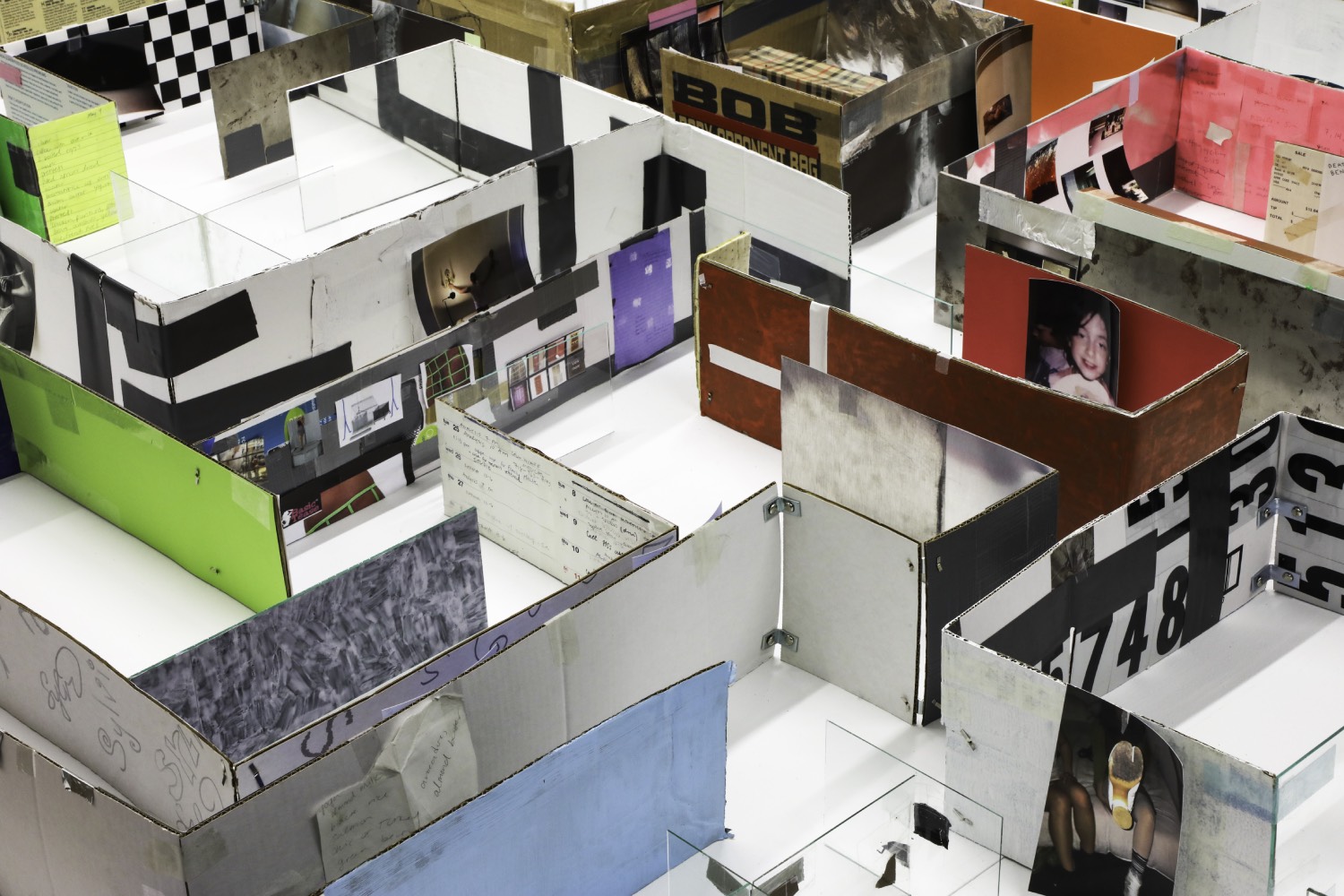
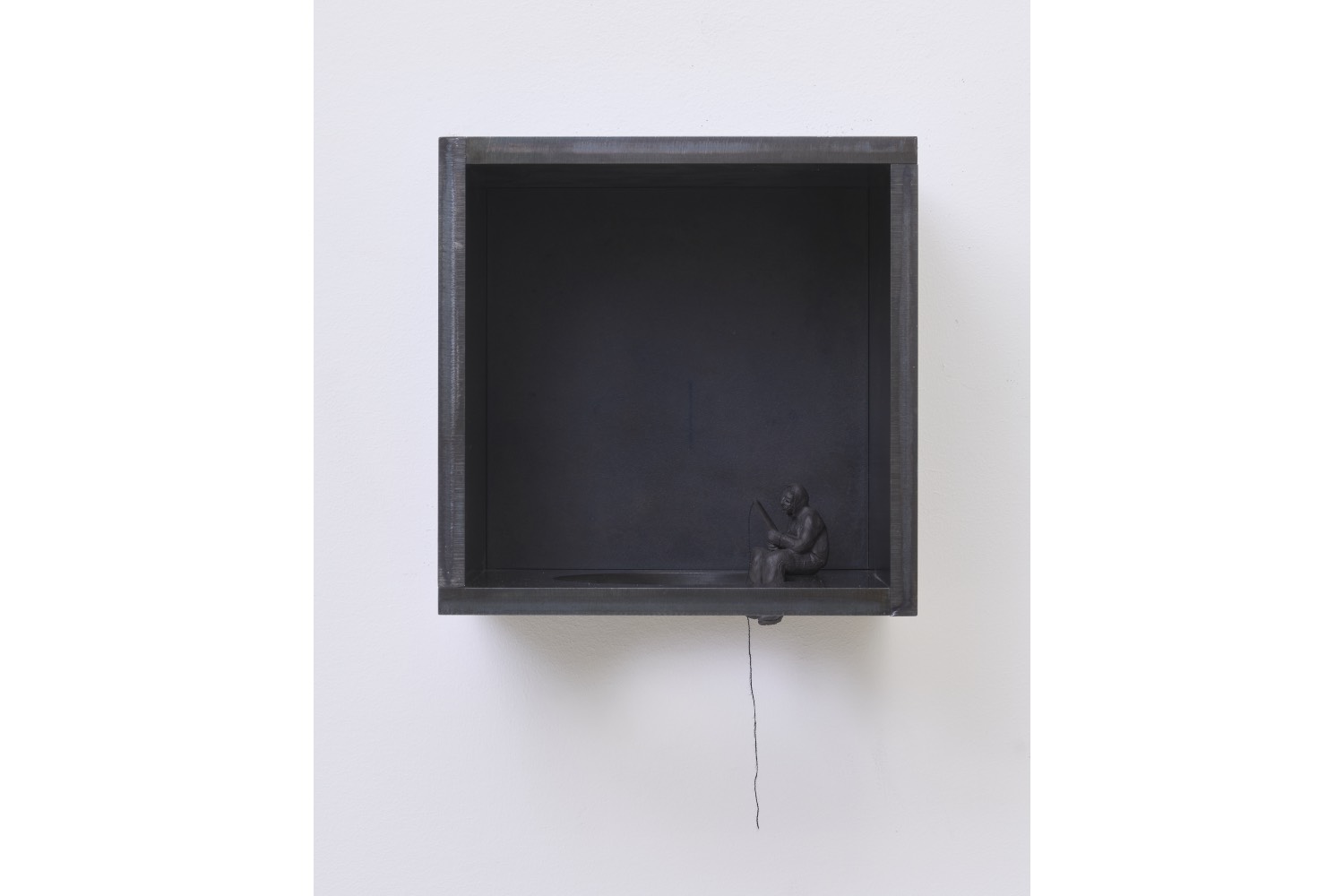
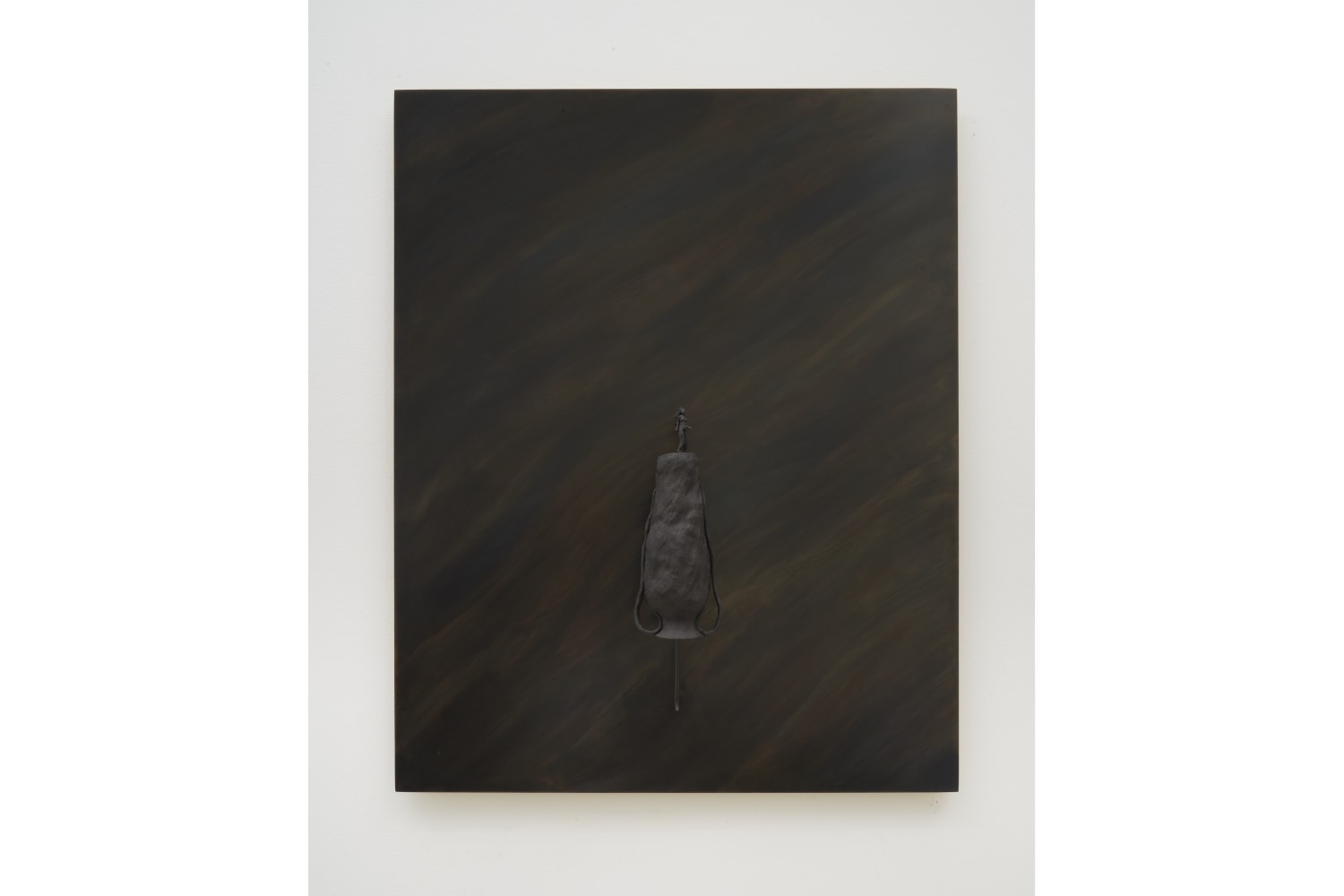
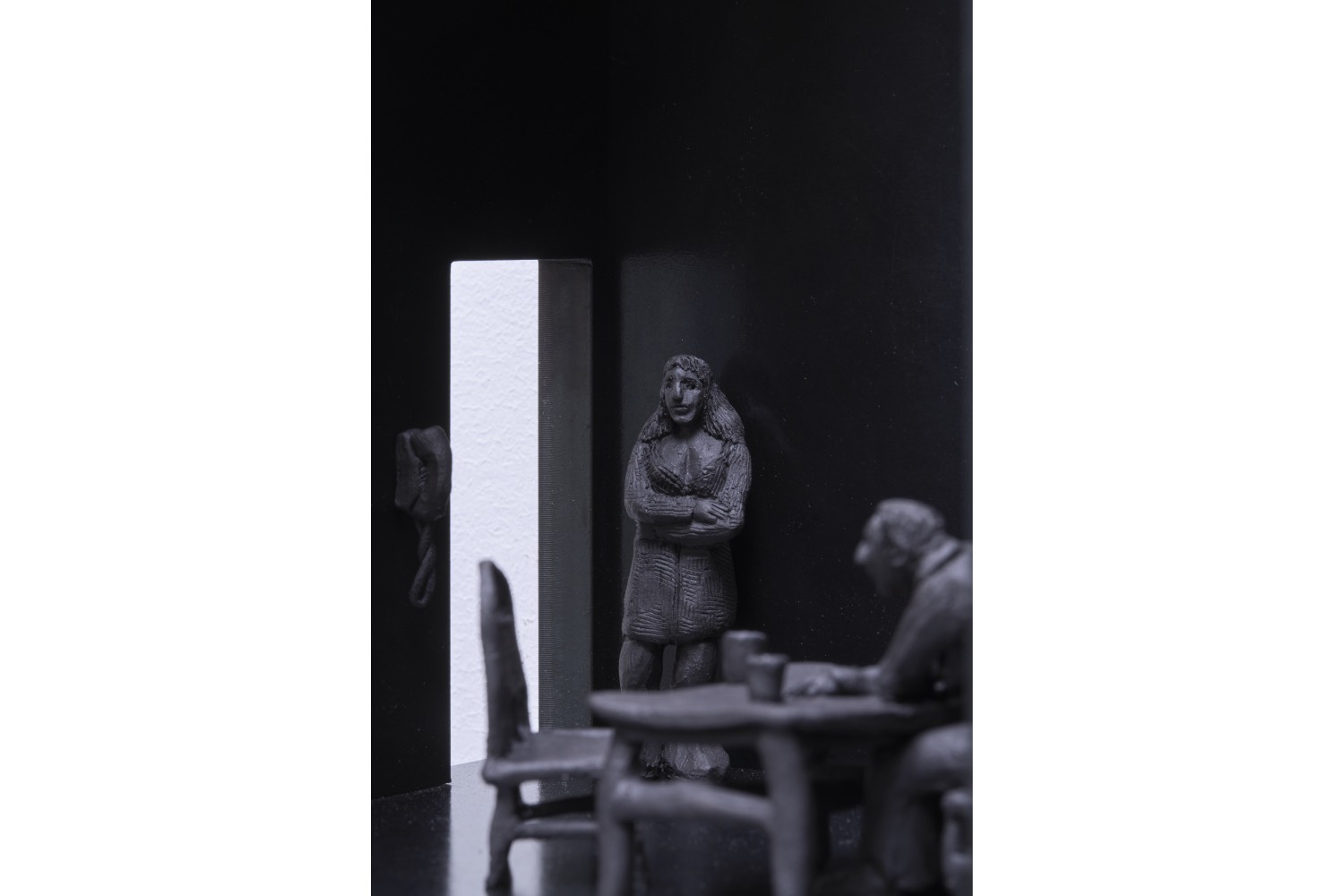
EJ: New loft buildings are horrifying and spectacular; I love catching glimpses into other people’s windows, and I love what they choose to display. Is it an advertisement? And for what? I’m outside in the cold, but mentally, I’m inside their home and I’m warm. I’m fascinated by people and often find myself eavesdropping in public; my work reflects this. My recent solo “prey” at Mennour, Paris, was a marriage between the Covid-exaggerated feeling of urban isolation and the experience of going into the cacophony of nature. The room you’re referring to had identical minimalist boxes with different “scenes” inside. The props and figures informed differences in architecture and scale. The frame remained constant; everything else changed. Like when you look at a column of windows in an apartment building, and everyone has their couch in the same place — a multiplicity of life dramas happening on identical stages. I wanted to share the pleasure of wondering about strangers with these works. Invite the viewer to really indulge in gazing, as the details only blossom as your eyes adjust. I imagine a percentage of people didn’t even look inside these things and thought I was making an homage to Judd — I like that, too.
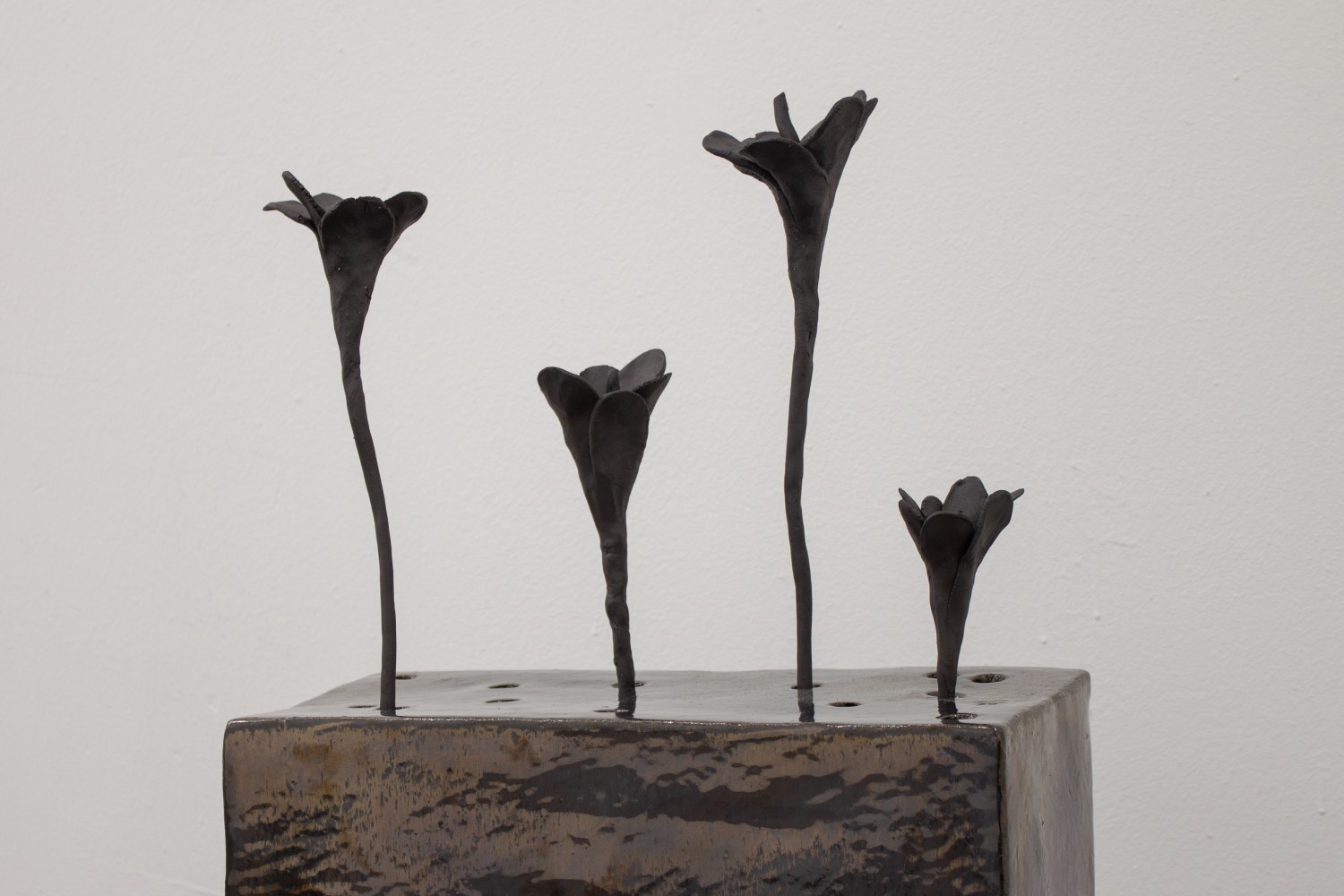
EH: I’m not sure if you remember, but we were at Callie’s in Berlin, and you gifted me a charred frangipani sculpture. I love it with a parade of tears. You told me it was to be mounted upside down: maybe it’s pretty normal to see the world that way? The ceramic flowers were for “Carte Blanche” (2022), the Mennour show, but wild frangipanis have followed you to your solo garden show at Capsule. The works are unflinching in their examination of desperation and self-deception in the emotional vacuum of modern consumer society. Can you tell us about the exhibition?
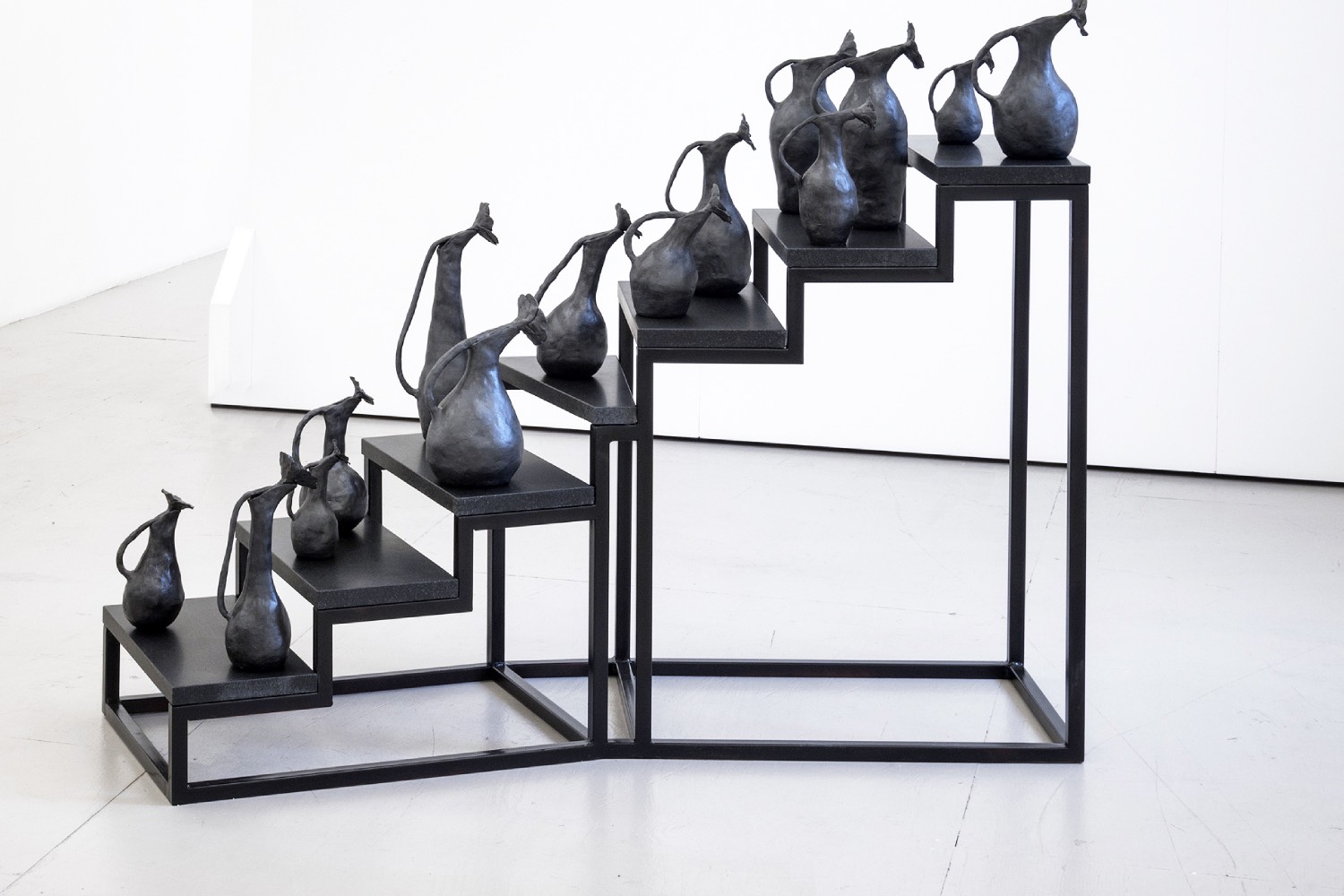
EJ: I started making the charred flowers in my early twenties as a way of grieving fertility. Not fertility as making babies, but fertile as producing abundance. An exasperated response to the “you can do anything if you put your mind to it!” mentality. They first appeared in a sculpture called Ashes in 2015, where a dozen or so flower vases were climbing the stairs to nowhere. Their handles were blossoms that plugged the spout and whose stamen looked like nipples. Flowers of the body. No one talks about how, in heartbreak, you experience this intense rush of the world (coming back). A kind of gushing that can feel intimate. Heartbreak also means heart-break-open, and the flowers concretize that for me. An acknowledgment of how bad things can feel but staying hopeful in a nihilist optimism.
The frangipanis, as you call them, have evolved since also to embrace fragility, tenderness, and precarity. The opening room of “Contempt” is a room of these flowers shooting out of elevated ceramic boxes, like deranged raised beds, but also visual songs. The ceramics each have fitted blackened steel stands that I and my team split skin over, which make them feel even more precarious, teetering. The flowers loosely rest in holes, making it impossible to exhibit the sculpture the same way twice. I like this lack of control, but also claiming randomness as poetic and part of the work. As for the rest of the show, the following four rooms continue from here. There’s the room of three tiny women flirting with the edge. A room of dogs stuck in fences, possibly being eaten by beetles. Maybe the beetles are eating everything. If you look closely, groups of them spell out “L O S E R,” so maybe they’re eating our confidence as well. And there’s the final room of a big metal machine spinning like crazy, playing a score of anxious windchimes between a freaky, angry mirror figure and a terrified-looking dog. The show is a reflection on how I’m feeling about the state of things (before looking for solutions.)
A psychological landscape of being alive in America today.