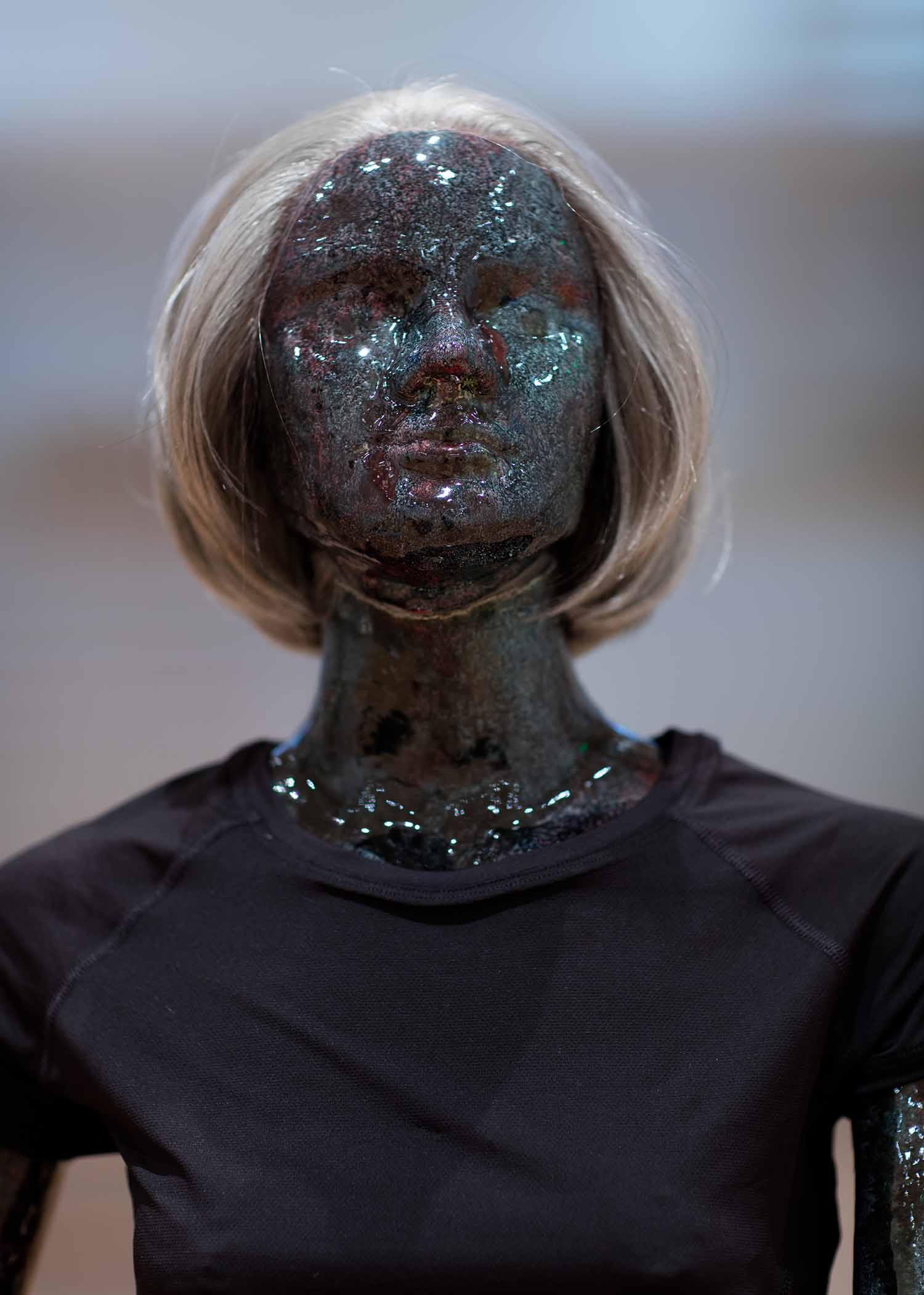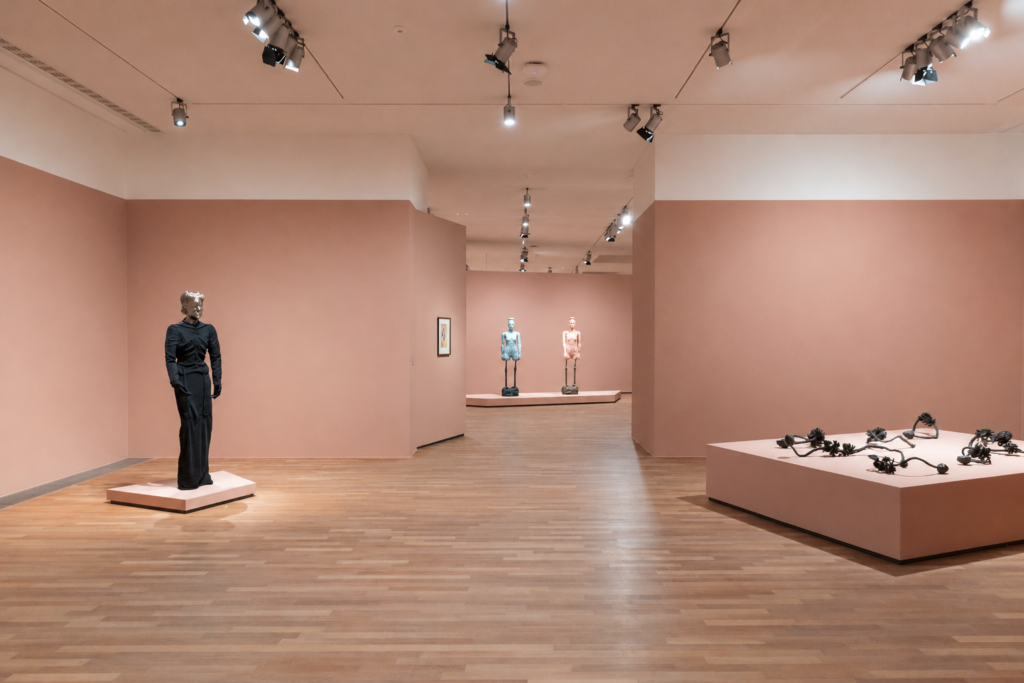
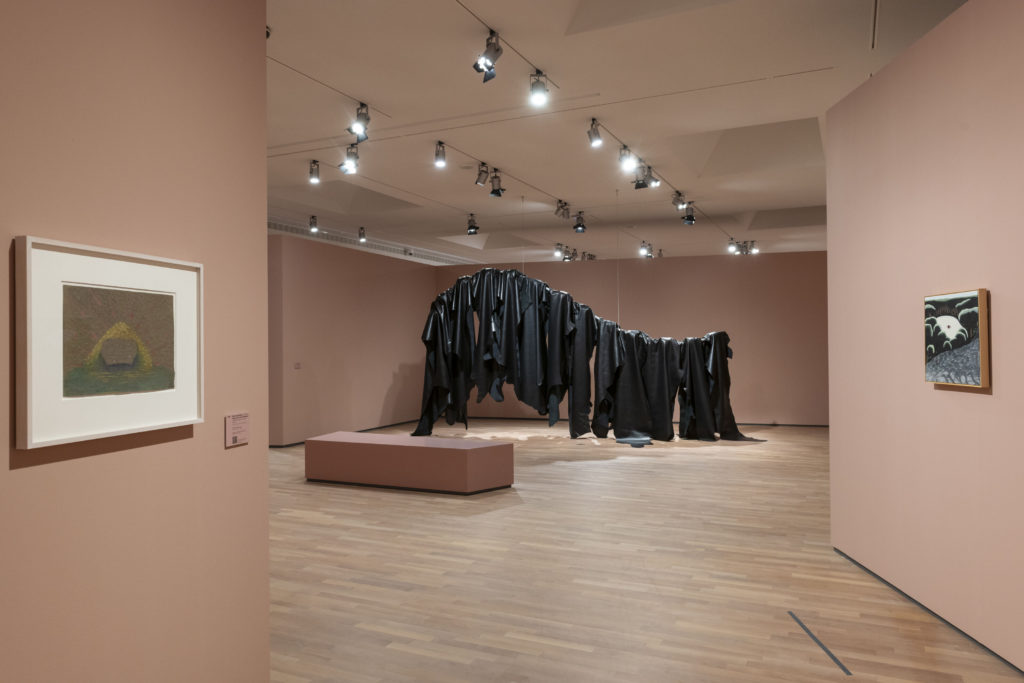
The walk to MASI Lugano from the railway station began under a sky that seemed determined not to clear. Rain fell steadily throughout the day, turning the descent toward the lake into a small exercise in evasion: puddles to dodge, impatient drivers to avoid, the occasional splash threatening to undo any attempt at keeping dry. I took the steps alongside the old funicular tracks, slowly making my way to the waterfront. There was something unmistakably Swiss about the landscape unfolding around me, something particular to these pre-Alpine stretches where mountains and mist dissolve into one another, their boundaries softened by the rain. For a moment, the view took on the peculiar quality of a souvenir snow globe (minus the snow), one of those tinted miniature landscapes sold in tourist shops, in which an entire world appears suspended under glass. Lost in this thought, I eventually reached MASI, where “RE-IMAGININGS,” the first exhibition organized under the museum’s new director, and curator of the show, Letizia Ragaglia, brings together Mai-Thu Perret and Una Szeemann. The show is not a conventional two-person exhibition. It unfolds as two distinct solo presentations in dialogue with selected works from the museum’s collection. In this sense, the museum itself becomes part of the conversation: not simply a container of artworks, but a microcosm in which the physical landscape outside its walls meets a wider cultural and historical one. The collection becomes a way of reading the present, while the present, in turn, offers new possibilities for looking at the past.
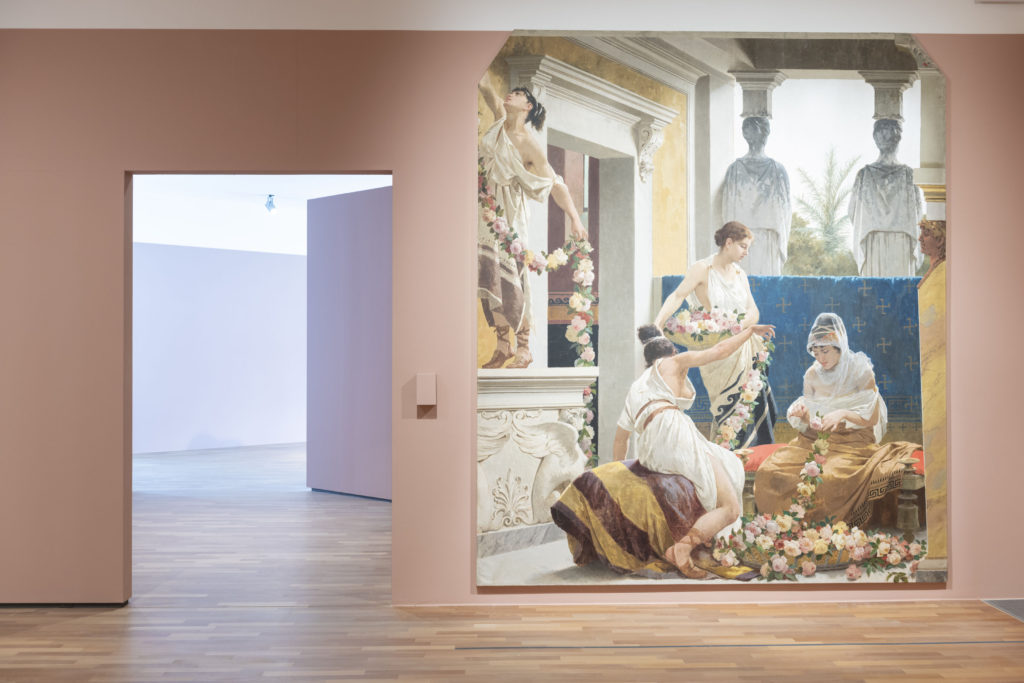
Both artists were invited to bring together existing works and new productions conceived for the occasion, creating a dialogue with museum’s collection and its geographical and cultural context. Works by Leonor Fini, Carol Rama, VALIE EXPORT, Ulla von Brandenburg, Adelaide Maraini-Pandiani, and Meret Oppenheim are among those chosen to provide a historical framework for this encounter. Yet it is Fini’s La Radeau (1940–43), positioned at the beginning of the exhibition, that offers the most interesting point of departure. Depicting two women aboard a raft, the painting speaks of a world suspended between catastrophe and deliverance. The sea is eerily calm, although a distant storm threatens the horizon; the two figures inhabit a condition of both vulnerability and strength. Painted as Fini was forced to flee the German invasion of southern France, the raft also carries the weight of exile and displacement. Its protagonists seem to rely on one another rather than await external rescue: theirs is an image of female resilience, but also an alternative form of coexistence. Fini, who remained independent from the predominantly male Surrealist circle, consistently placed the female figure, mythology, and the dreamlike at the center of her visual universe. From this precarious vessel, the show’s wider concerns begin to emerge.
Across Perret’s and Szeemann’s practices, felinity is less a fixed identity than a way of relating to the world. Their work is animated by an interest in cyclical time, matter, and feminine iconographies, where mythology, nature, dreams, and the unconscious become interconnected systems of knowledge. The human figure is not necessarily the center of the universe, but part of a wider ecology in which bodies, objects, and landscapes continuously shape one another. It’s a vision that resists rigid distinctions, favoring what might be described as a philosophy of the “in-between.”
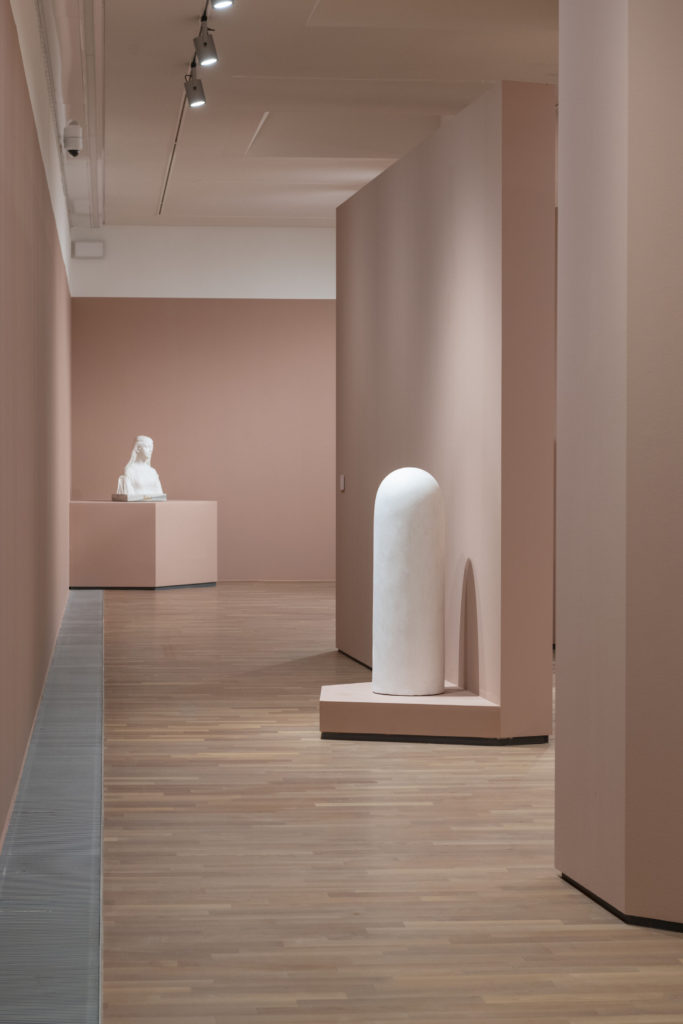
Perret’s Nut I and Nut II (2026), for example, draw on ancient cosmologies and the Egyptian goddess Nut, whose arched body stretches across the heavens, embodying the connection between the earthly and the celestial. The myth becomes a way of thinking about the body as both landscape and cosmos. Her newly commissioned The Garden (2026) further expands this interest in the relationship with the feminine and the natural world. The garden, traditionally a space of cultivation and transformation, becomes another site in which nature and human imagination meet. In Perret’s universe, sculpture and installation become ways of constructing alternative imaginaries, where historical references and speculative narrative coexist. Szeemann, meanwhile, approaches these territories through As Above So Below and Divine Anomalies (both 2026), two new commissions that explore the correspondence between earthly and celestial dimensions — visible and invisible. Working through material traces and elusive phenomena, her installations evoke forms of parallel thinking that unsettle the boundaries between matter, perception, and the unconscious.
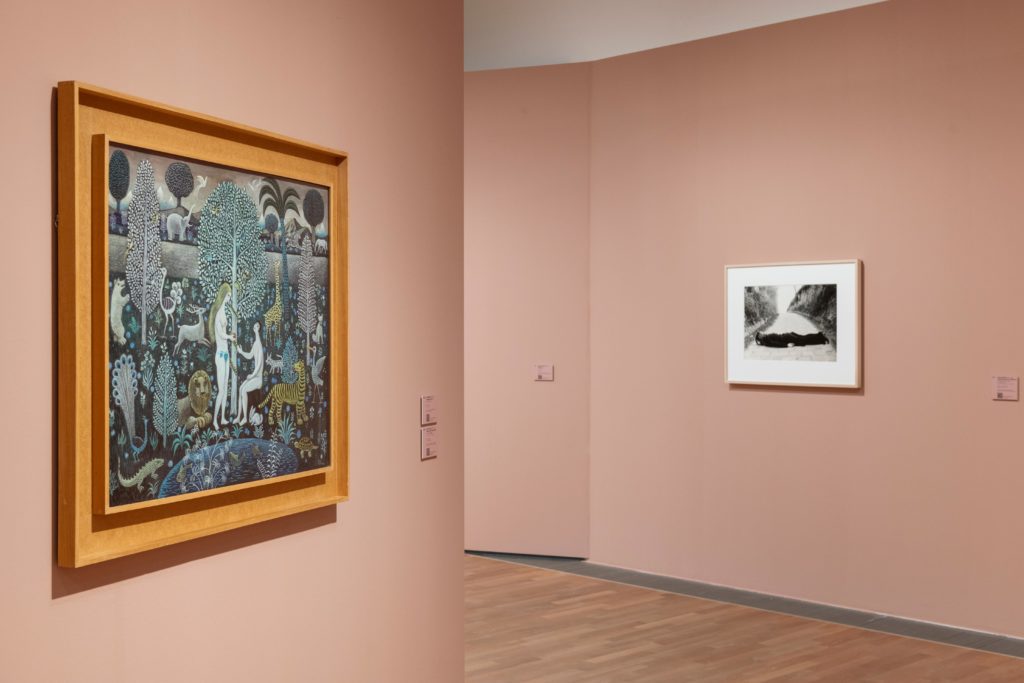
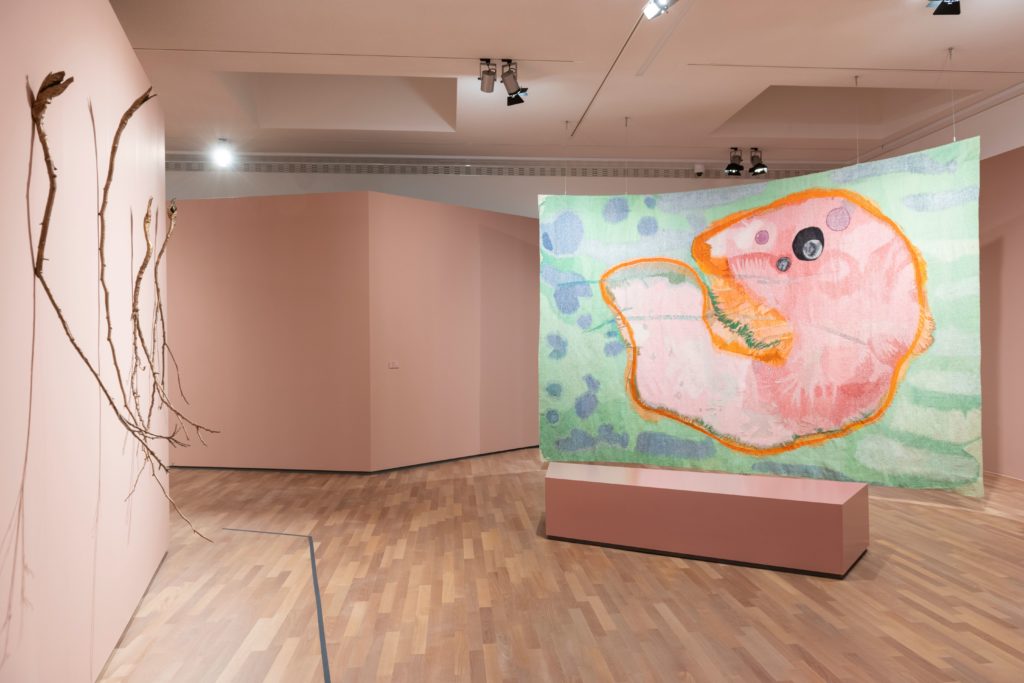
The title, “RE-IMAGINING,” suggests precisely this possibility of looking again: at history, at the collection, and at the narratives through which we understand the world. Ragaglia’s curatorial premise also gestures toward MASI’s dual identity, balancing its local roots with an international outlook, while presenting the museum as a living institution rather than a static repository. It is an ambitious proposition. The dialogue between the contemporary commission and the historical collection does not always develop with the same intensity. At times, the connections feel more intuitive than fully articulated. Still, the exhibition’s most interesting moments emerge in these intervals, where different artistic languages meet without necessarily resolving such differences. Like the landscape outside the museum’s walls and doors, “RE-IMAGININGS” ultimately invites us to inhabit a space of transition, where boundaries are porous and other ways of imagining our place in the world begin to take shape.