During my long-haul flight to Austin, I found myself reading articles about the city’s famous slogan, “Keep Austin Weird,” which has been part of its identity for decades. The notion immediately captured my imagination: some ineffable thing worth preserving in a place known for live music, colorful characters, independent businesses, and, more recently, a rapidly growing technological infrastructure. But what was this thing?
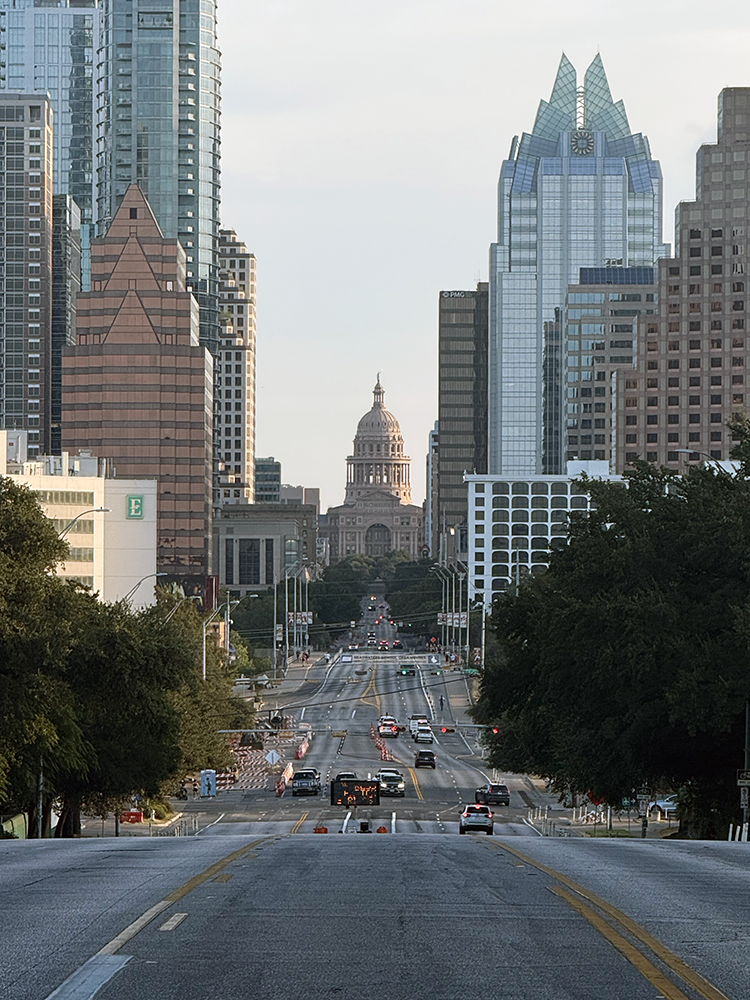
By the time I left the airport and headed toward downtown, the question was already beginning to answer itself. Austin seemed to be presenting two versions of itself at once. On the road, a futuristic gold Tesla Cybercab offered a glimpse of a city racing toward tomorrow, carrying tourists and locals through streets increasingly shaped by technology. Yet beyond it stood the older Austin: weathered buildings and the graceful silhouette of the Texas capitol, holding its ground against the city’s rapid transformation. It was an uneasy coexistence of memory and ambition.
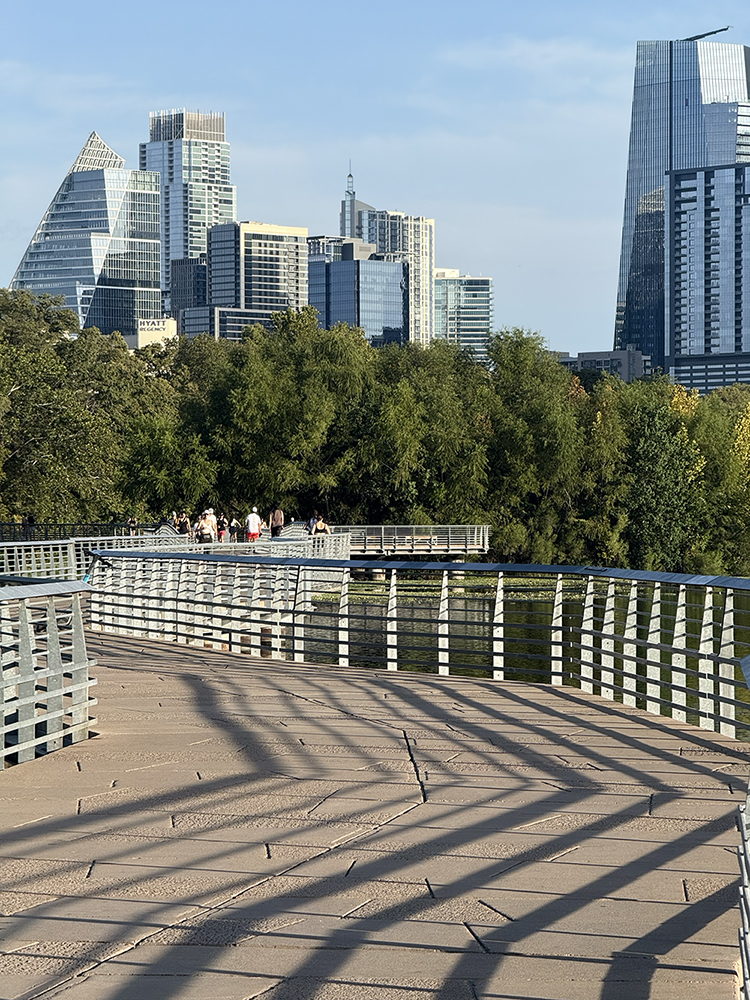
There was barely time to stop at the hotel. I took a moment to catch my breath before heading back toward East Austin for the grand opening of Ostillo, a new art foundation founded by developer and art collector René Campos together with art advisor Sacha Zerbib, who now serves as Ostillo’s founding director and chief curator. After the long journey and my first glimpse of Austin’s restless mix of old and new, arriving at Ostillo felt like stepping into yet another facet of the city: a striking, all-black, hangar-like structure that serves as a meeting point where Austin’s cultural community can encounter artistic perspectives from around the world.
Zerbib describes their objective: “We developed this ambitious and thought-provoking collection with the intention of sharing it with the public. At a time when many are seeking connection and inspiration, our goal is to create a welcoming space with a program that addresses pressing social issues through artistic expression and resonates with both local audiences and visitors from around the world.”
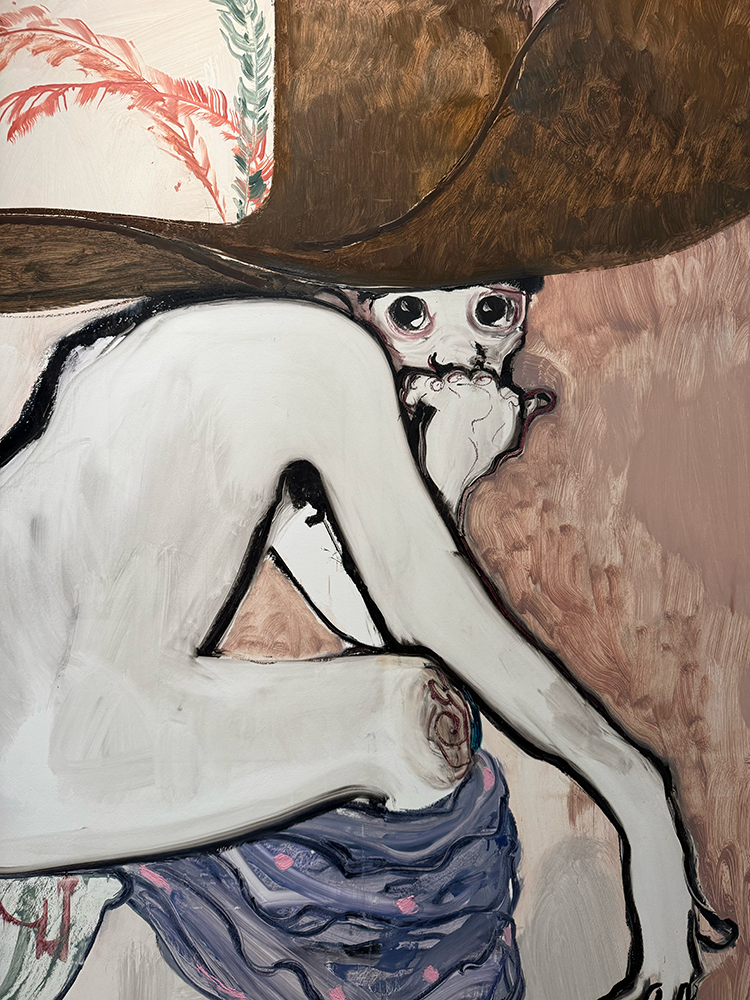
The opening exhibition, “Masquerade” (2026), brings together painting, sculpture, and photography by fourteen artists, each approaching the enduring idea of the mask from a different perspective. The exhibition includes works by Kader Attia, María Berrío, Marlene Dumas, Evan Holloway, Sanya Kantarovsky, Glenn Ligon, Paulo Nazareth, Damián Ortega, Adam Pendleton, Mohammed Sami, Thomas Schütte, Sylvia Snowden, Salman Toor, and Christopher Wool. Walking through the exhibition, I am immediately drawn to Sanya Kantarovsky’s Nervous Man (2017). An oversized cowboy hat evokes a performance of American masculinity, while the unclothed subject beneath it, seated on a toilet, appears shy and withdrawn, caught in an ordinary yet intensely private moment. Through this subtle disjunction between outward appearance and inner fragility, Kantarovsky constructs a scene in which irony, discomfort, and emotional exposure quietly unfold.
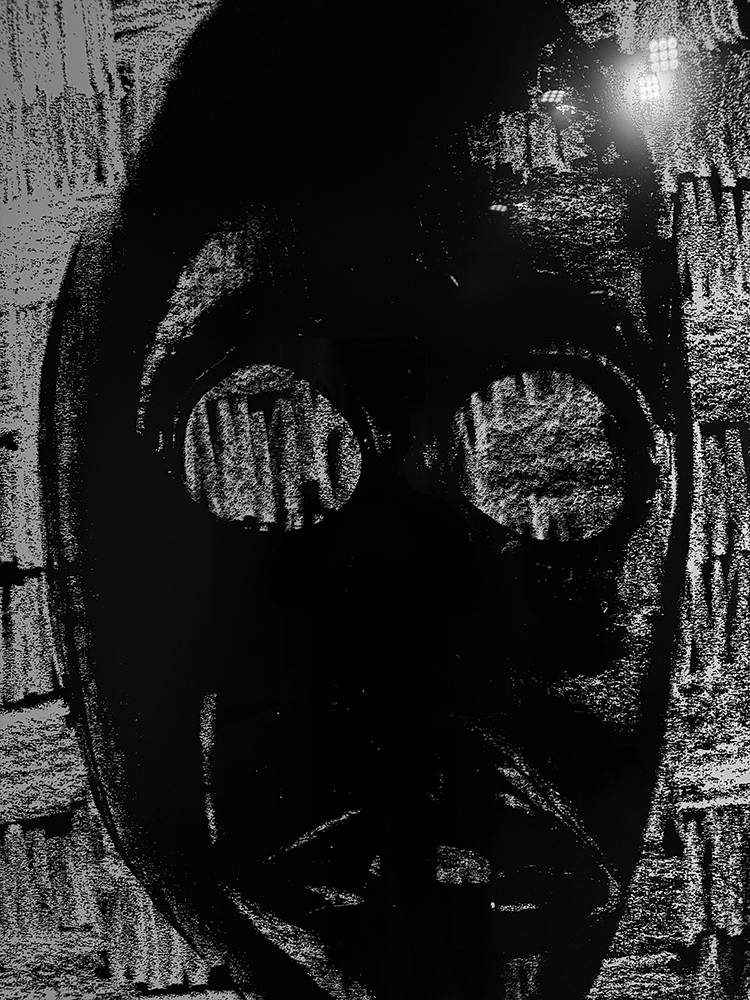
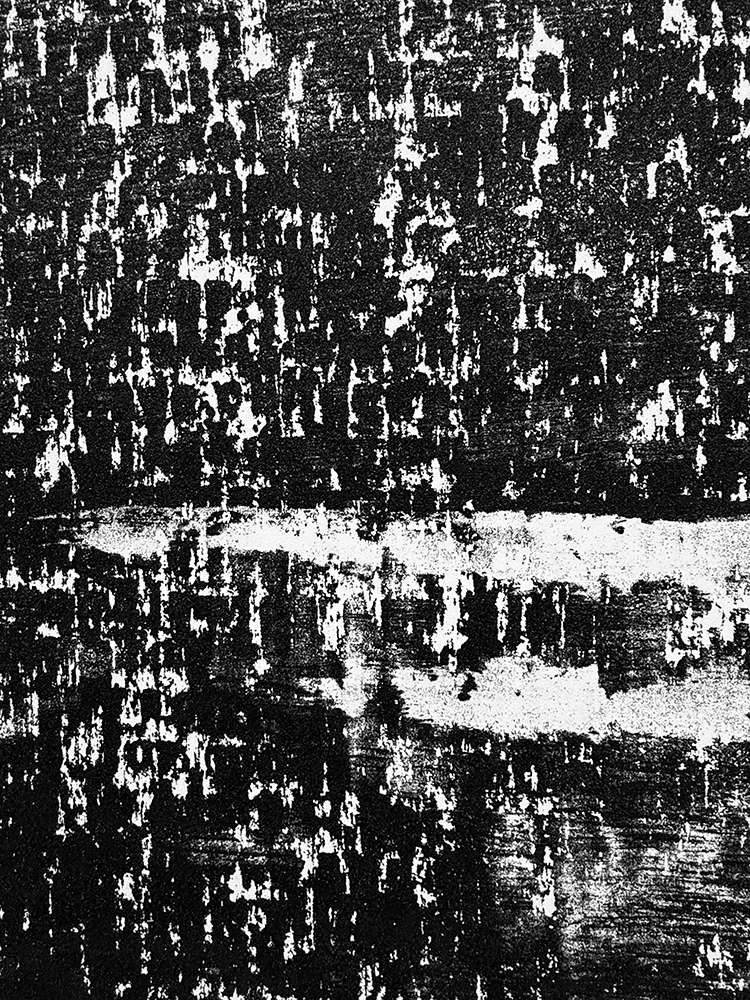
Right beside it is Glenn Ligon’s Masquerade #9 (2006), from a series inspired by James Baldwin’s 1953 essay “Stranger in the Village.” Using a silkscreen process, Ligon transfers passages of Baldwin’s text onto the work’s canvas surface, combining ink and coal dust into dense, almost impenetrable fields of language. In an adjacent room, Adam Pendleton’s Untitled (masks) (2018–19) belongs to a group of Mylar works in which images are reproduced onto transparent sheets. A motif inspired by a Dan mask from Liberia is printed on four separate sheets, each overlaid with a distinct abstract design. The interplay between the printed panels, displayed in a single row, generates shifting effects of transparency and opacity, moving the motif from background to foreground and back again.
This idea of the image being repeatedly mediated and transformed continues in Christopher Wool’s Untitled (2018). A nearly symmetrical form dominates the composition, its rounded shape evoking a head, mask, or bodily presence without resolving into a stable figure. Areas of dense black pigment lie alongside expanses of exposed linen, creating a tension between recognition and ambiguity. Here, however, the image seems to move even further away from stable representation. The work exemplifies Wool’s sustained exploration of the transient relationship between the image, its reproduction, and its subsequent abstraction.
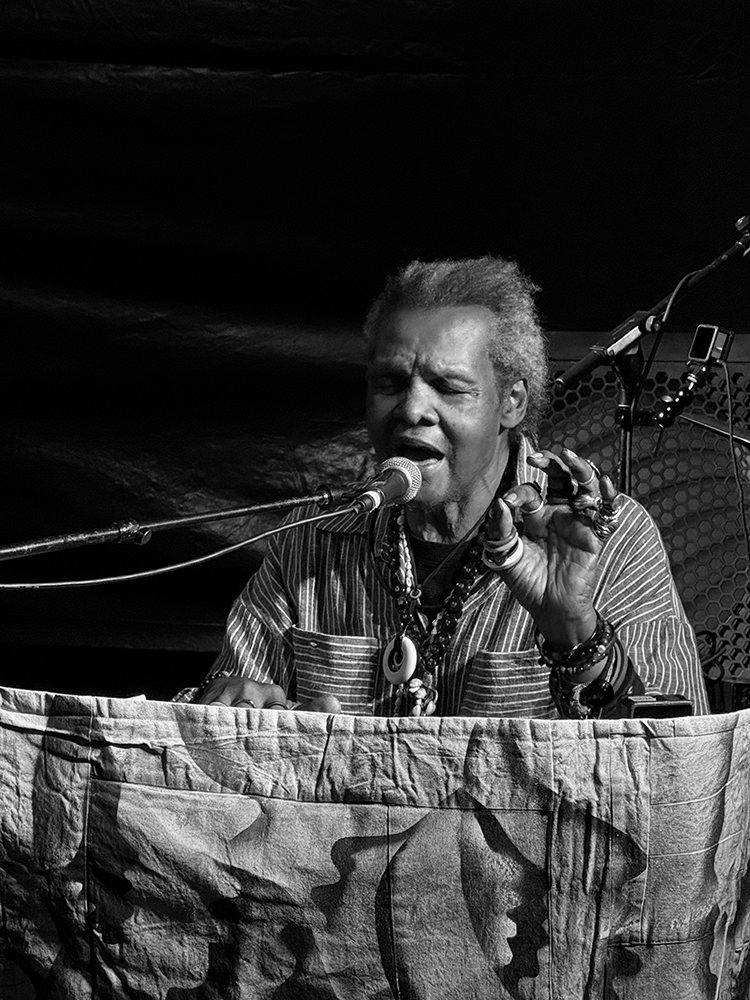
For Zerbib, Ostillo’s public role brings a new responsibility: “A private collection can be extremely personal, but a foundation must also understand where it stands, whom it speaks to, and what it can contribute. The aim is not to mirror today’s art world, but to contribute to tomorrow’s conversations.” It is an idea that places Ostillo not simply within Austin’s growing cultural landscape, but in conversation with it, using the collection as a starting point for dialogue between the city, its community, and the wider international art world. To celebrate the opening, artist and musician Lonnie Holley transformed the space, creating a charged and atmospheric experience that extended the exhibition beyond the gallery walls. His performance offered a moment of pause, allowing the atmosphere of the exhibition to settle and expand beyond the artworks themselves.
The following day, we had the chance to explore René’s family ranch outside Austin, where the essence of Texan life felt vividly present once again. Away from the city, the calm of the landscape and the persistence of local traditions offered a striking contrast to Austin’s rapid development. It was a reminder of the duality that defines the region: a city increasingly shaped by growth, alongside a quieter way of life rooted in the land and in family.
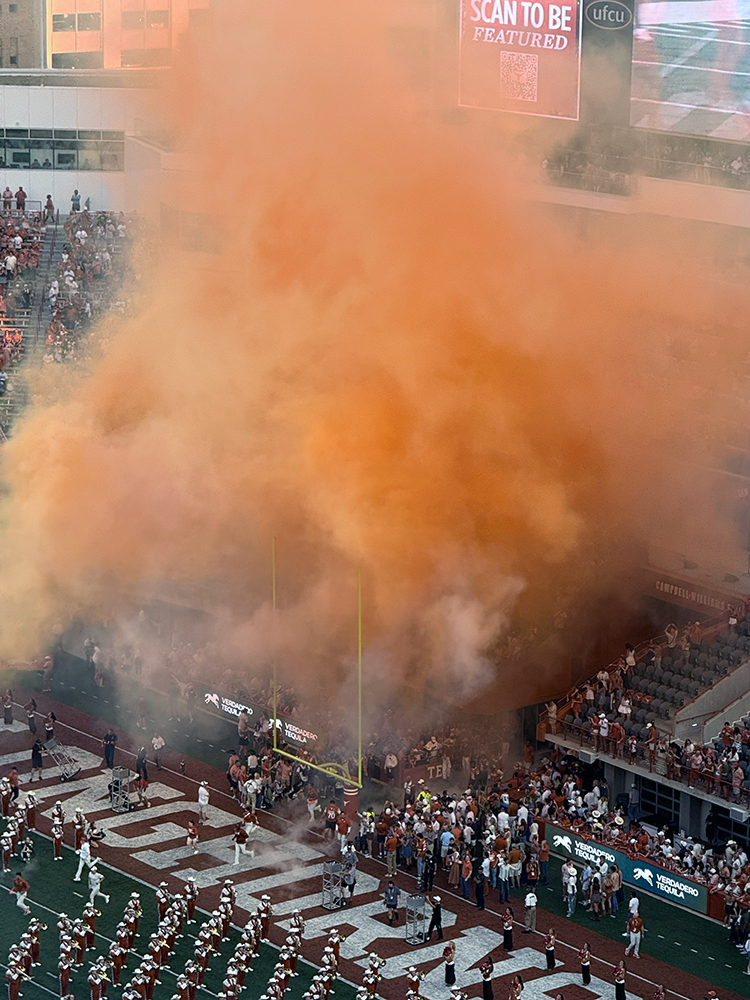
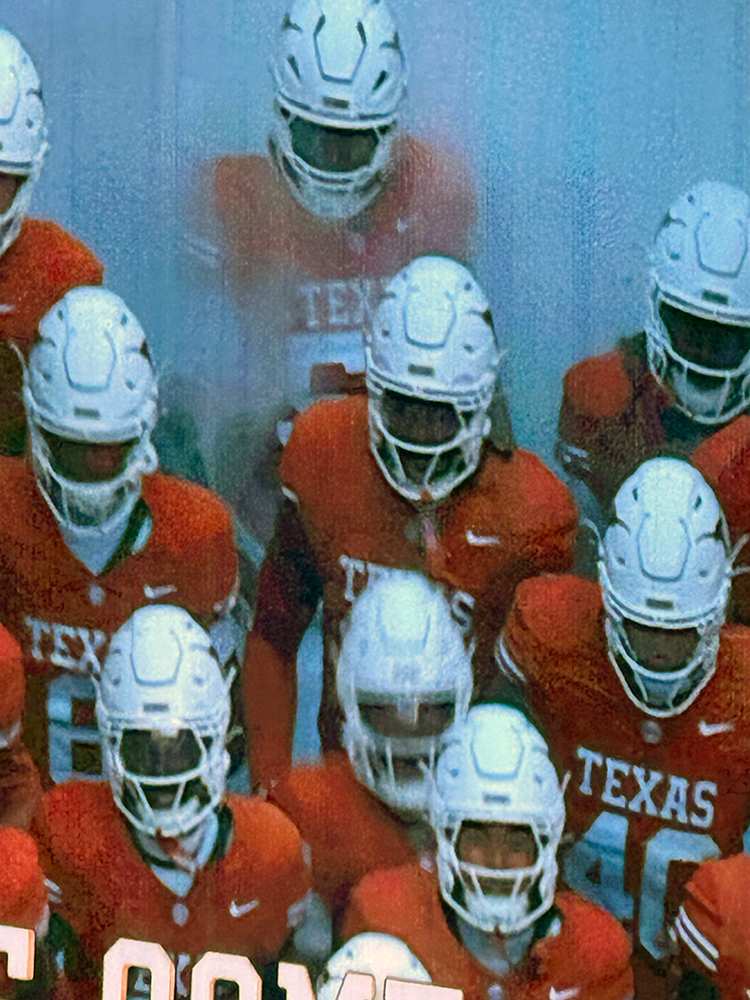
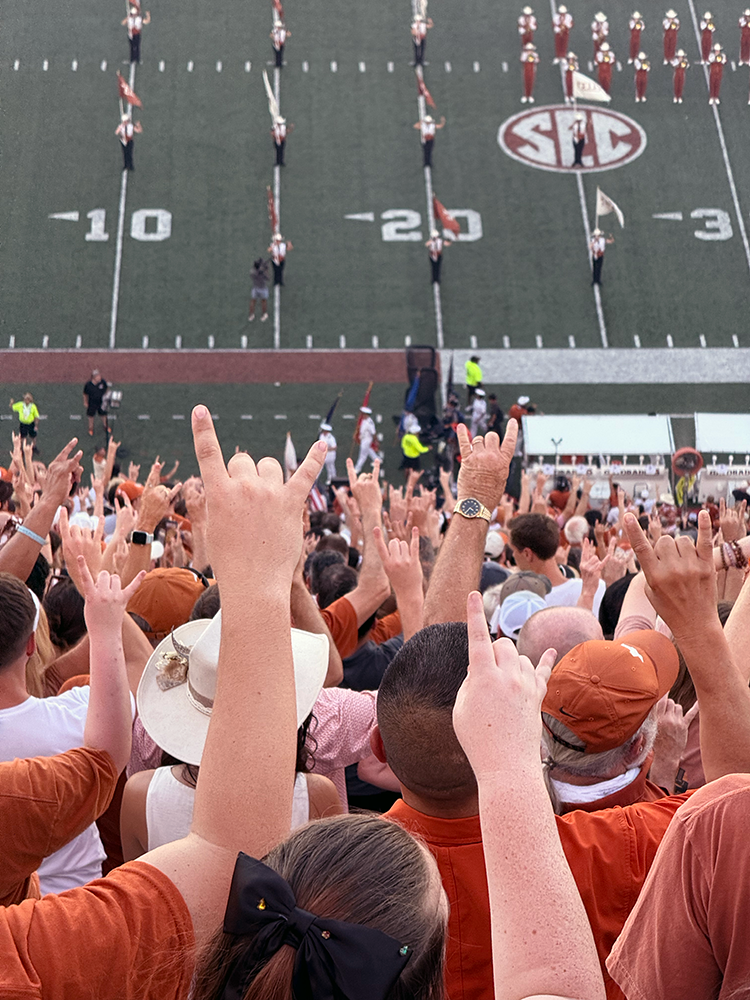
It was then time to return to the city, this time for a football game between the Longhorns, the local university team, and UTSA. At the stadium, more than one hundred thousand fans gathered to cheer for their team, turning the game into a collective celebration that extended far beyond the field. Around the stadium, families gathered in parking lots, grilling barbecue and spending time together before and during the game. Football here felt less like a sporting event and more like a deeply rooted social tradition — a ritual that brings together community, family, and an unmistakable sense of Texas identity.
The experience reminded me that one of Ostillo Foundation’s missions is to create a space where students can spend time together, exchange ideas, and engage in conversation.
On my last day, I had the chance to explore the city through its beautiful landscapes, incredible tacos, and a visit to the Blanton Museum, one of Austin’s most important art institutions. Looking back on my forty-eight hours on the ground, my experience at Ostillo became an important thread connecting these different encounters: art, music, food, sport, community, and the distinct traditions of Texas. Moving between the foundation, the city, and the countryside, I began to see Austin as a place where different histories and ways of life constantly meet and overlap. I left with the feeling that this sense of exchange and reinvention is perhaps what makes the city so compelling.