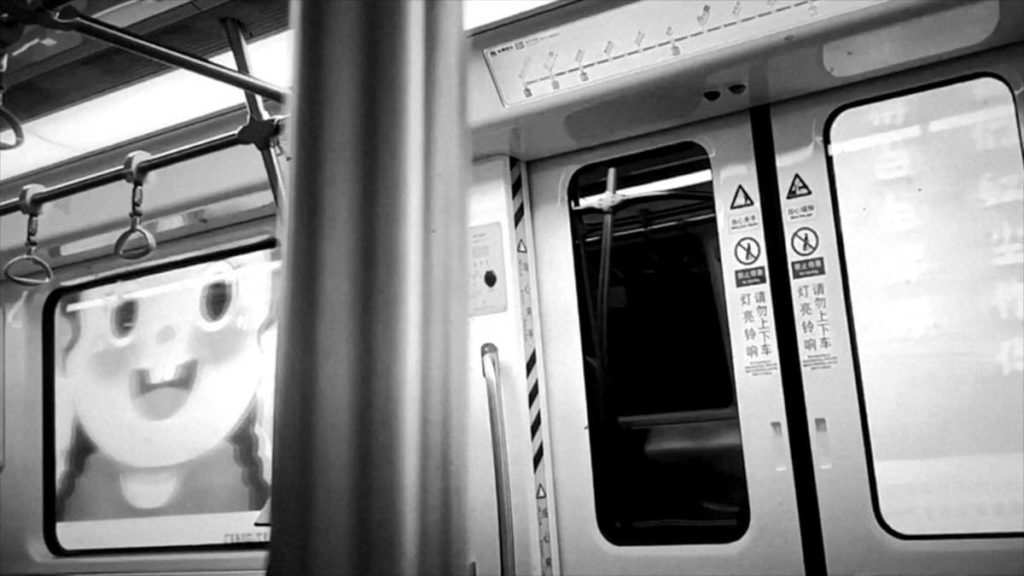
“People Planet Profit” brings together several groups of works from the past decade, which Peter Fischli has combined into a cohesive presentation. These pieces are mostly observations of the globalized world – tourism, travel, and everyday encounters – like dispatches from airport lounges, subway stations, and electronics megastores. The exhibition at LUMA Foundation in Arles provides an aesthetic experience that at times resembles being stranded in an airport, subject to the whims of an international, hypersensitive network, where disruptions result in delays and missed connections.
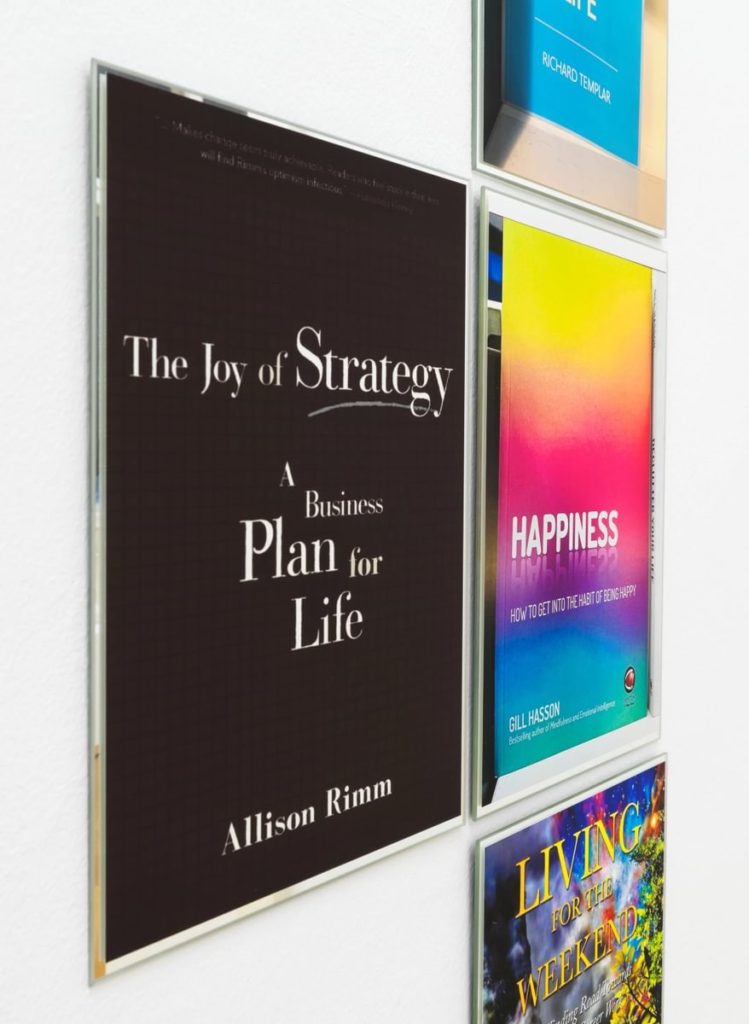
The title of the show is taken from a piece first exhibited at Galerie Buchholz in Berlin in 2021, composed of a collection of self-help book covers about daily life and money, arranged on several tables. An obvious reading of this would be that capitalism has permeated every aspect of our lives: love, religion, community – nothing escapes commodification. Titles like How Real Estate Developers Think (2015), Surviving Business Travel (2020), Dealing with Difficult People (1999), A Business Leader’s Guide to Philosophy (2023)make that clear. The idea might risk being didactically heavy-handed, but among the poorly designed covers, the installation reveals a longing for meaning and a sadness that can’t be suppressed even in the most finance-minded airport bookshop. Fischli did not attempt an indictment of late-stage capitalism. Instead, he asks: How do we endure it?
New York.
The low tables invite close inspection, but if your gaze drifts, they begin to resemble an almost ornamental grid of turned-up colors and vague typography. Left unattended, the piece is inconspicuous – much like the vinyl floor covering right at the entrance of the exhibition. This floor also forms a grid of black-and-white images: food, dogs, cappuccino, cityscapes – arranged like the smartphone camera roll or the décor in a corporate coffee shop, the kind replicated in every metropolis. That aesthetic, though, has been replaced by a different kind of airspace minimalism lately, which is the same everywhere too, until the black-and-white look has come to denote the provincial. But Fischli’s interest lies elsewhere. He thinks of the continuous creation of the grid as a matrix for the world, in whose creation we participate.
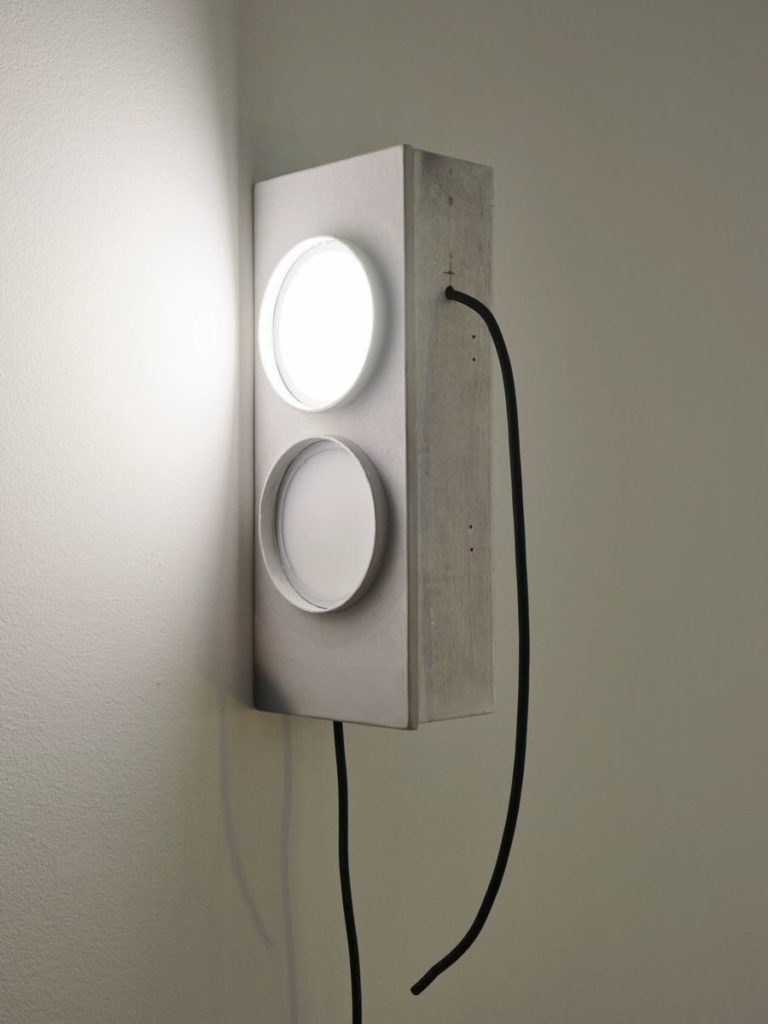
Fischli’s descriptions of his own work occasionally echo late twentieth-century media theory – Baudrillard, the simulacrum, the empty signifiers that mediated our experience of reality. Perhaps the pieces that most recall Fischli’s older work are the untitled pieces (all 2025) from the ongoing series “Signal Sculptures,” large, dysfunctional traffic lights fashioned out of wood, cardboard, and metal. Their white or dim yellow glows and vaguely anthropomorphic forms suggest trees, gallows, or abstract figures trying – and failing – to transmit a message.
This interplay of reality and artifice has underpinned Fischli’s practice for decades, and it started when he was one half of the duo Fischli/Weiss, who collaborated until David Weiss’s passing in 2012. The two met at the end of the 1970s amid the turmoil of the Zurich punk scene, and in true DIY fashion they started constructing cityscapes, burning high-rises, and little set pieces from what was at hand — sausage and cardboard, mainly — and photographed the assemblages. They later filmed The Point of Least Resistance (1981) on 8mm in Los Angeles, dressing as a bear and a rat. “I hate the chaos in this world. Nothing works, everything is hopeless and sad,” says the bear. In 1987, they followed with The Way Things Go (1987), a Rube Goldberg Machine-like kinetic contraption that, step by step, self-destructs and disintegrates into controlled chaos in little over half an hour.
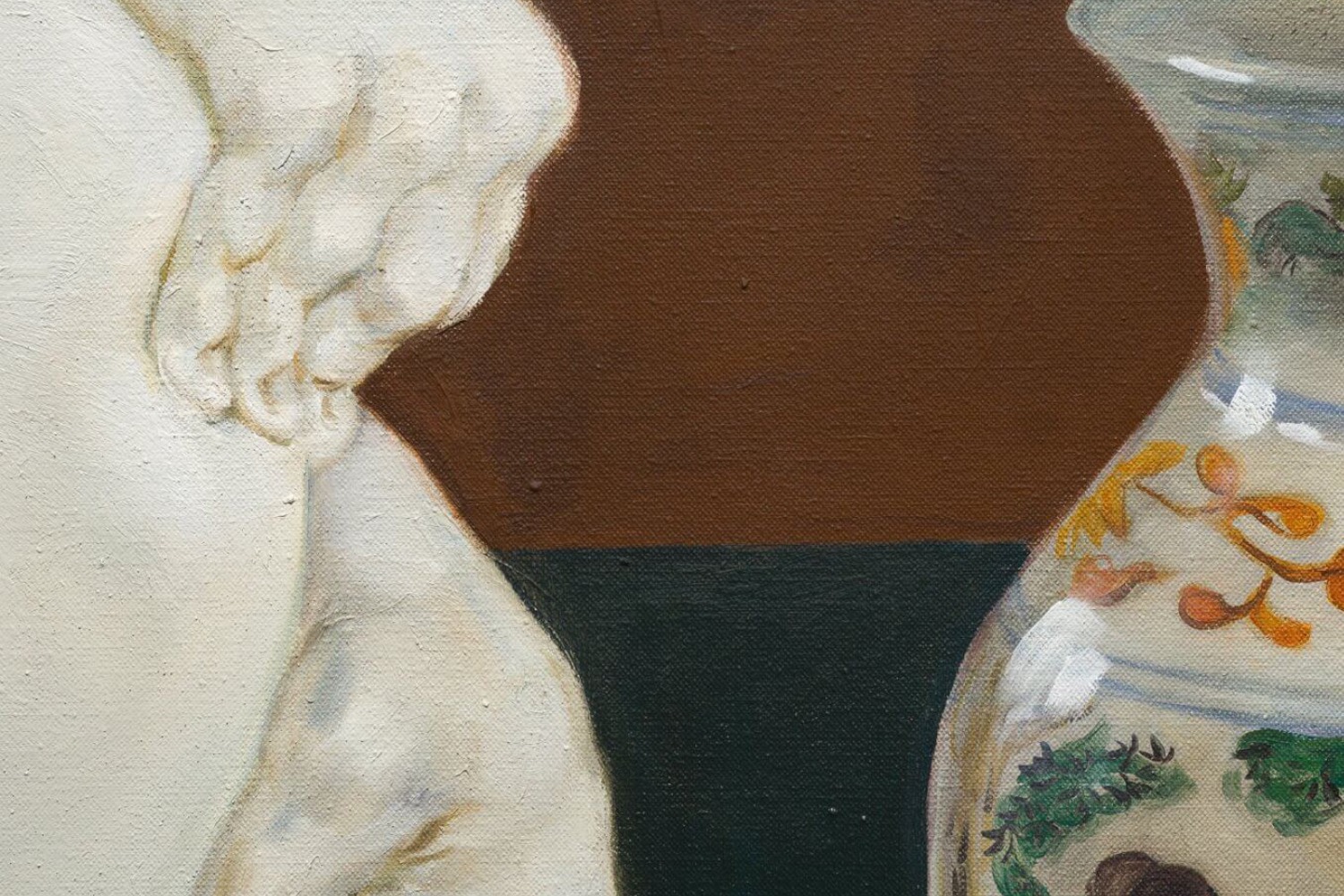
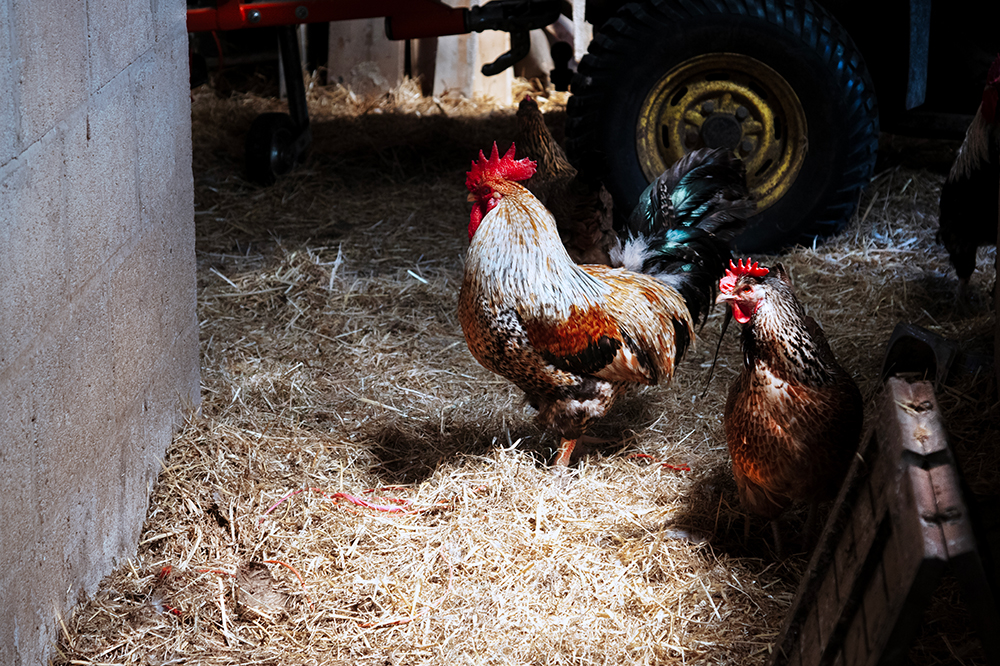
Fischli and Weiss, already known for their tinkering, became recognized as creators of simulacra with sculptures that pretended to be real objects. But unlike the trompe l’oeil of baroque painting, a work like Raum unter der Treppe (1993) in Frankfurt am Main’s Museum für Moderne Kunst does not seek to capture attention. It strives to remain unrecognized, and it could easily be mistaken for a messy janitor’s closet, except all the crafting supplies, snacks, and clutter in it are modeled out of painted polyurethane. There is no fast track from image to idea, or even meaning. Fischli and Weiss’s hyperrealist sculptures are not ready-mades, but they are imitations of ready-mades.
Setting aside theoretical intricacies, the duo also mastered the art of finding humor in mediocrity. Take their deadpan-titled 1992 book Airports, filled with images of planes on runways, waiting for takeoff. Director John Waters once wrote that “purposeful mediocrity is the only way left to be new.” In Arles, too, Fischli returns to that interest in mass tourism, travel, and the non-heroic, unglamorous object, as seen in his photo installation Trackless Train (2025).
Sixty desaturated panels snake through the exhibition space – a former workshop for train cars – depicting a motorized train that awkwardly mimics a steam locomotive. These tourist trains, often seen in amusement parks or historical sites like Arles, with its Roman arena, impose a very specific way of seeing. They diminish everything around them into a consumable, mundane, small-scale version of itself. Chopped into individual panels, Fischli’s images suggest a parody of Giacomo Balla’s speed-intoxicated crystalline depiction of treni, his aggressive paintings of trains from the late 1910s, made in an age when train travel induced a newly fragmented way of seeing the modern world.
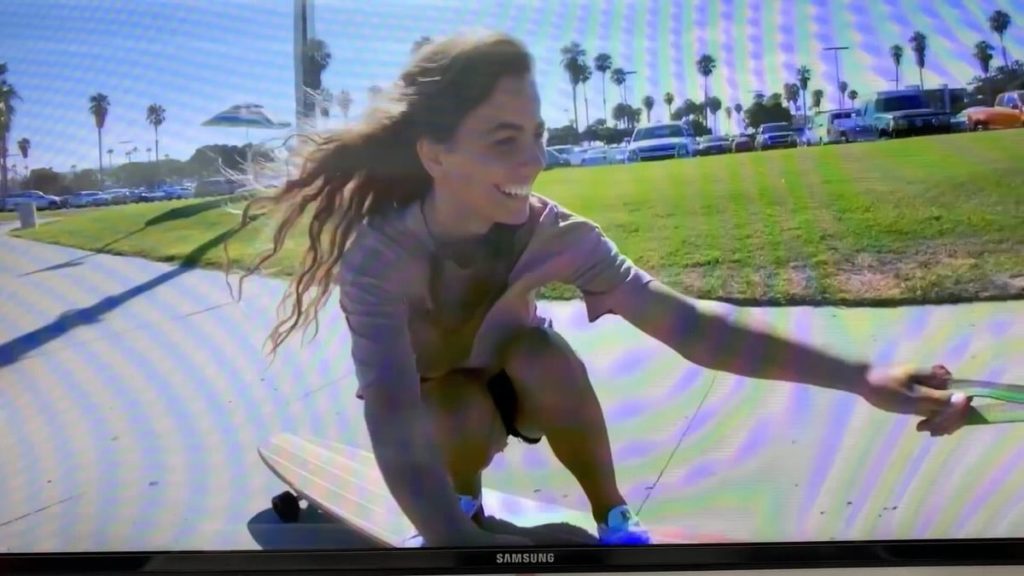
The show in Arles captures new ways of seeing. For a symposium, Fischli created the video Work, Summer 2018 (2018). He went to an electronics store and filmed the sample videos for digital cameras. The studio-made clips usually show people busy on vacation, and in a Brechtian move, Fischli would sometimes pan his phone camera across the store, to show how they are displayed. The piece, with its slowed down ambient soundtrack, evokes what came to be known as Vaporwave in the 2010s, an aesthetic interested in the sites of capitalist consumption, a hazy, often nostalgia-tinged interzone where leisure, labor, and commerce flow into one another.
There is potential for condescending irony in how Fischli treats his subject matter. It takes me a moment to realize that “People Planet Profit” does not simply recreate the experience of navigating the reliably disappointing real world — which we are complicit in creating anyway. Instead, the show demands a gaze that is sensitive to the melancholy and quiet yearning behind corporate mediocrity and mass tourism. Perhaps this total absence of cynicism is the true merit of Fischli’s work.