The peppered moth was once almost entirely pale, flecked with minute dark spots that camouflaged it against lichen tree bark and stone. During the Industrial Revolution, its coloring darkened in response to soot and polluted air, only to lighten again as pollution declined. While the insect is an example of environmental adaptation (it is often cited as Darwin’s moth), it is also a useful model for thinking about black-and-white negative photographic processing. Living organisms are shaped by their environments, and photographs, likewise, are records of exposure to certain conditions such as light. Through different light registers, an image can become visible, altered, or disappear altogether.
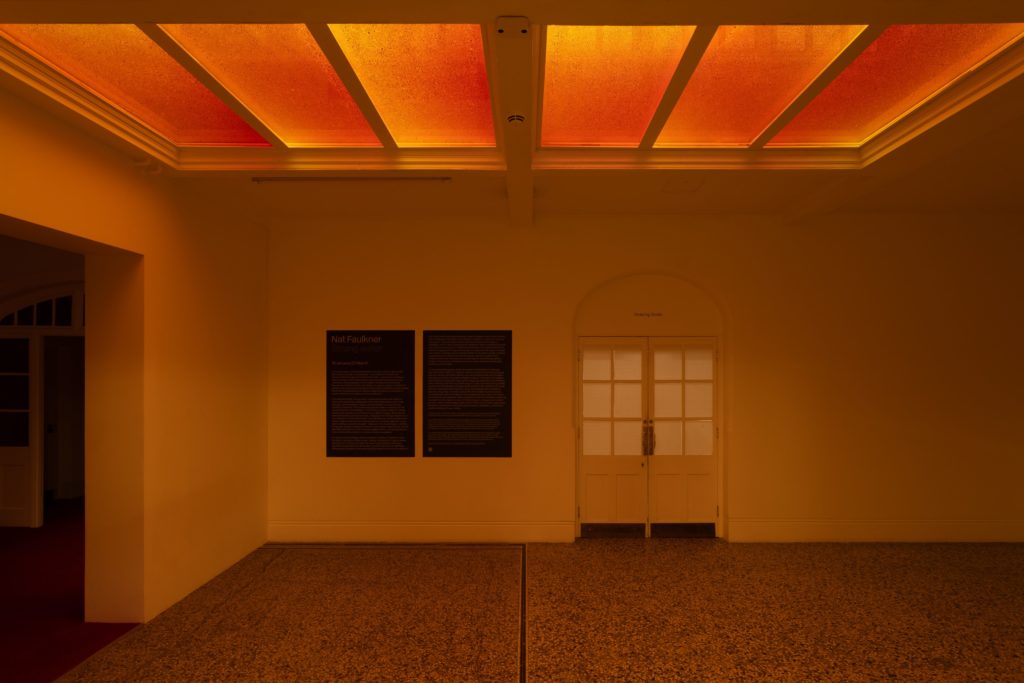
It is within this understanding of photography that Nat Faulkner’s “Strong water” at Camden Art Centre unfolds. There is an ethics of slowness with Faulkner’s work, away from photography within an overproduced visual economy. Rather than relying on grand gestures, the exhibition builds meaning through small shifts in light, material, and attention, allowing images to emerge gradually from the conditions that shape them. Light is not merely a tool in this exhibition; it is a necessary collaborator. Light shifts and withdraws across the space, shaped by the architectural framing of the historic building, the time of day, and chance elements that determine when and how images come into view. “Strong water” resists the saturated visual economy in which photographs are expected to appear instantly and remain endlessly legible. The viewing experience is contingent upon conditions beyond the artist’s control. Daylight passes through the Victorian window frames, refracts into a sharp light that moves across the silver frottage works — sculptural inversions of the artist’s studio space — and softens as it spills across the large-scale prints on panel, casting the shadows of window panes. These uncontrolled variables parallel the darkroom printing process, in which chemistry, timing, and chance co-determine the final image.
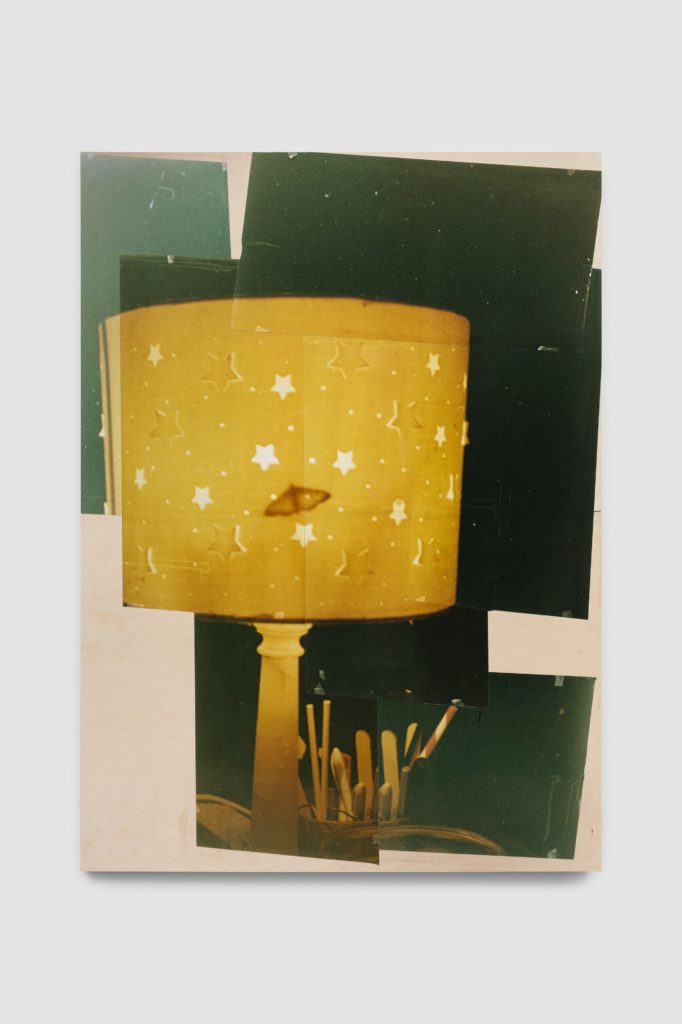
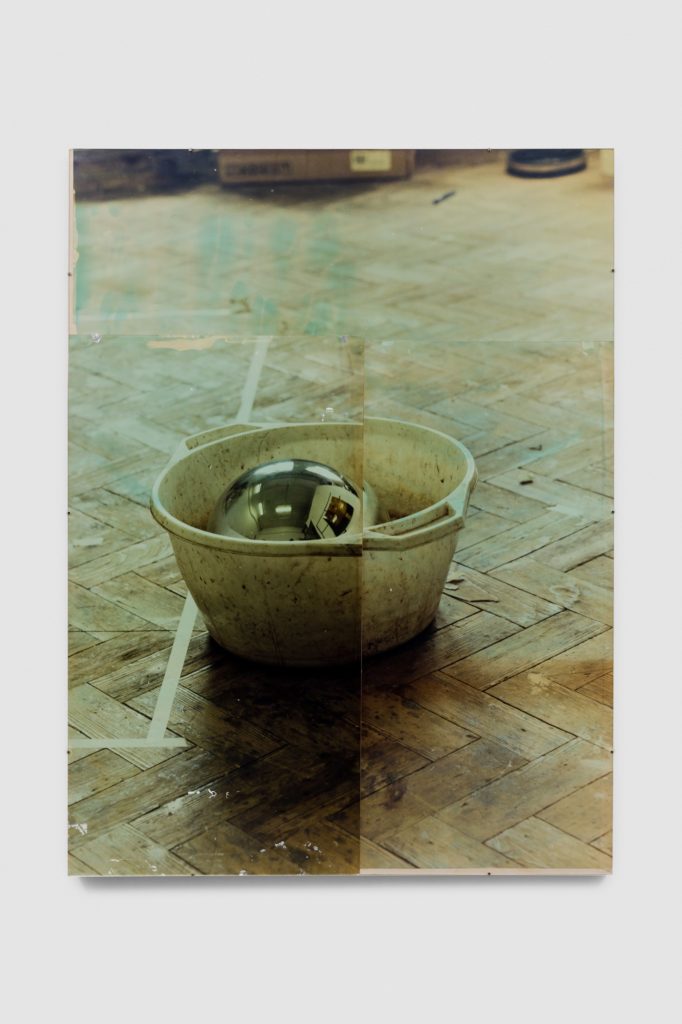
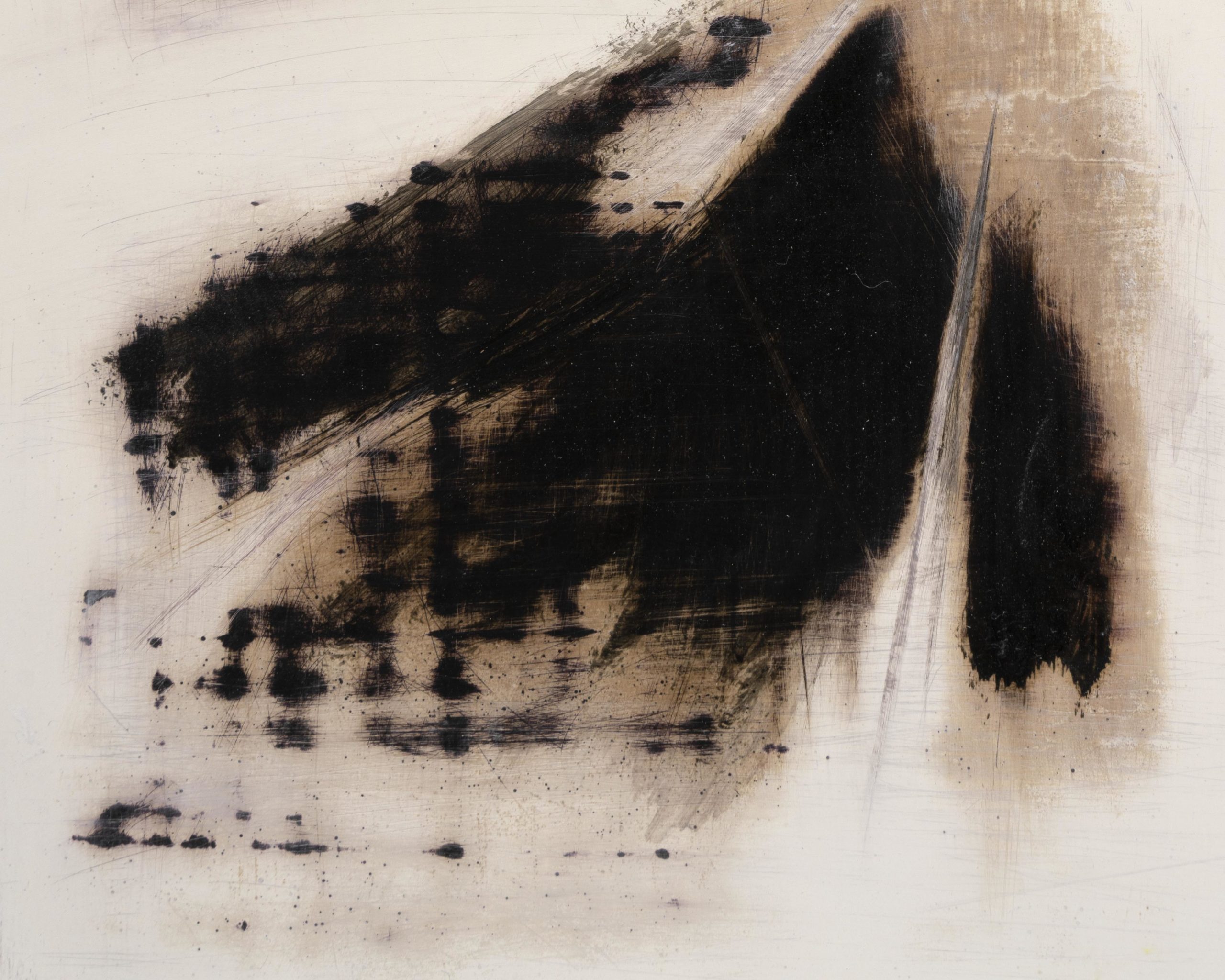
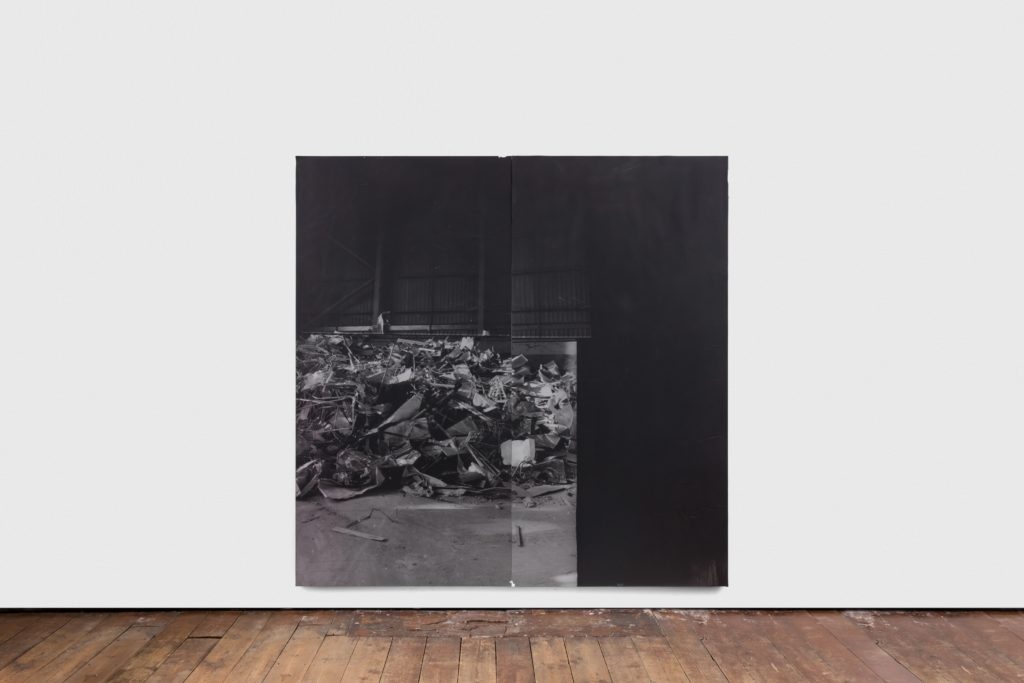
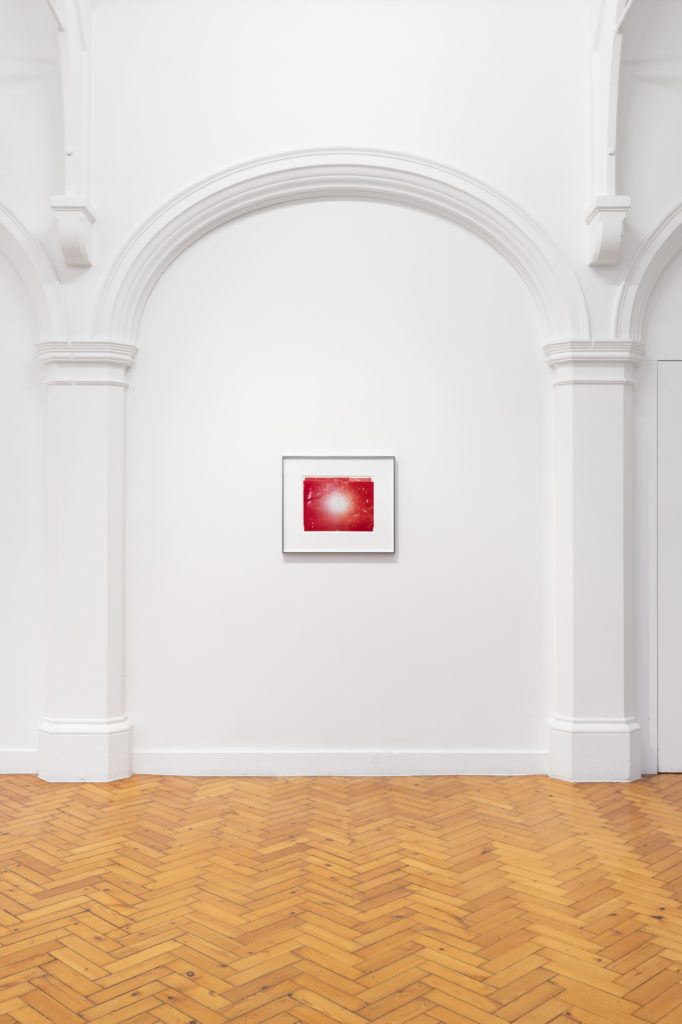
“Strong water” begins with an iodine-filtered ceiling aperture, bathing the entrance room in a yellow- orange hue that immediately alters perception. This gesture operates on multiple levels: iodine’s role in early photographic processes situates the viewer within photography’s material lineage, while its association with healing introduces the body into what might otherwise appear a purely optical encounter. The filtered light does not simply illuminate the space; it conditions how the space is seen. As artist Sean Steadman writes in an essay included in the exhibition catalogue, “The invention of photography is less about the lens than about the introduction of memory: a surface capable of fixing an inverted beam of light and making it readable.” Our experience of perception is mediated through memory: an entropic and creative process shaped by a number of variables, including architecture, accident, health, and chemistry. The iodine screen functions as such a mediating surface: a porous threshold that both filters and protects between outside and inside, exposure and preservation, much as memory intervenes between experience and its recollection. In the main exhibition room, Untitled (Biston betularia) (2026) hangs almost touching the floor. As daylight filters through the large Victorian windows, light falls across it in such a way that the moth seems to hover on the surface of a window frame. The moth is never fixed; it shifts as the daylight changes. One of the largest works — also black and white — scales the far wall, depicting a vast landfill site in Cremona, Italy. A mound of discarded objects is left to decay in the open. What makes the image compelling is not its scale alone, but its emotional ambiguity. Waste is deeply personal, as the remnants of daily life are gathered and compressed before being recycled into another form. Here, however, it occupies a public, exposed landscape, where nothing is hidden as it slowly decomposes. In one corner, a panel carries the artist’s fingerprint, a small trace of touch. Faulkner often uses multiple sheets of developing paper, sometimes fanned out or layered, and fixed with aluminum tape, leaving behind visible marks from the darkroom, thereby foregrounding the labor and contingency of the photographic process.
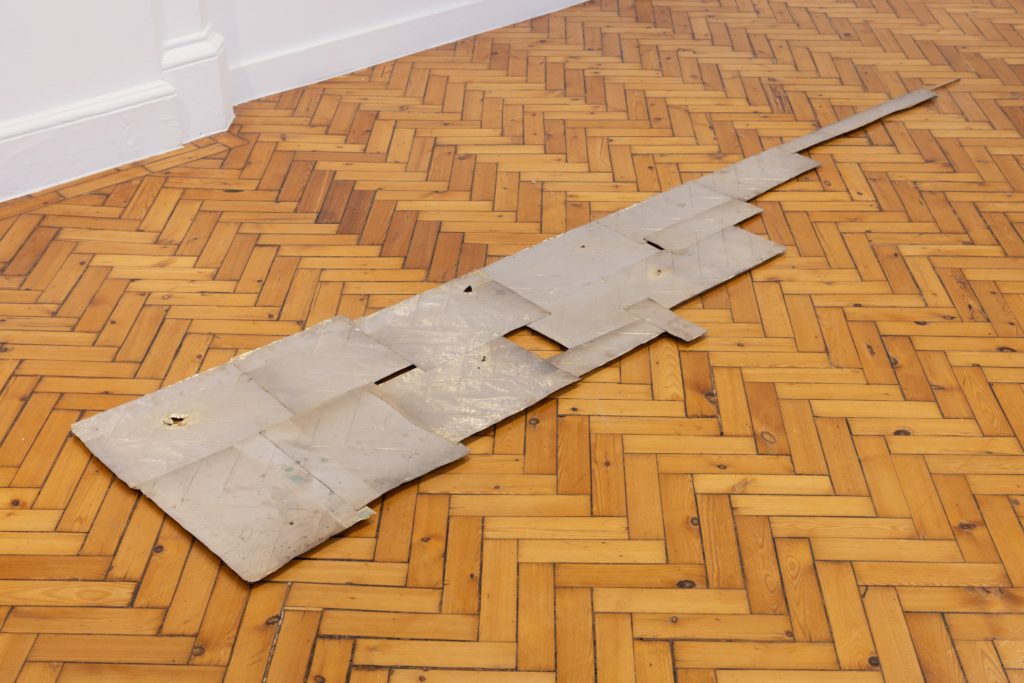
Interspersed throughout the exhibition are frottages of herringbone wooden flooring, a double-paneled window with a projecting ledge beneath, and brickwork with indented graffiti, taken from the surfaces of the artist’s studio. Made from silver salvaged from old NHS X-rays, the works carry the traces of bones and bodily scans, recycled and transformed. The studio becomes a ghostly archive, where histories of the body and of material life linger, reconfigured into a new, spectral substance.
The reliance on external variables reflects the exhibition’s broader sensibility: a willingness to work with uncertainty rather than against it. The images do not assert mastery; rather, they register a responsiveness and openness, adapting to or working with their environment. Can we set conditions to change things, or must we simply evolve to fit the world? In an AI-driven moment, where almost any image can be conjured into a photograph, Faulkner’s focus on process, labor, and chance feels pointed and necessary. He is doing this in a way that feels vital for contemporary photography, a practice often sidelined in the art context. “Strong water” is restrained, yet its strength lies in allowing small, ordinary phenomena to accumulate into something atmospheric and resonant. It feels complete not because it resolves every question it raises, but because it sustains a consistent ethical and aesthetic stance. In a cultural landscape dominated by scale and spectacle, that decision is at once modest and quietly radical.